
REVIEW · SHANGHAI STREET FOOD TOURS
Make Soup Dumpling: Vegan or Pork in Shanghai Shikumen
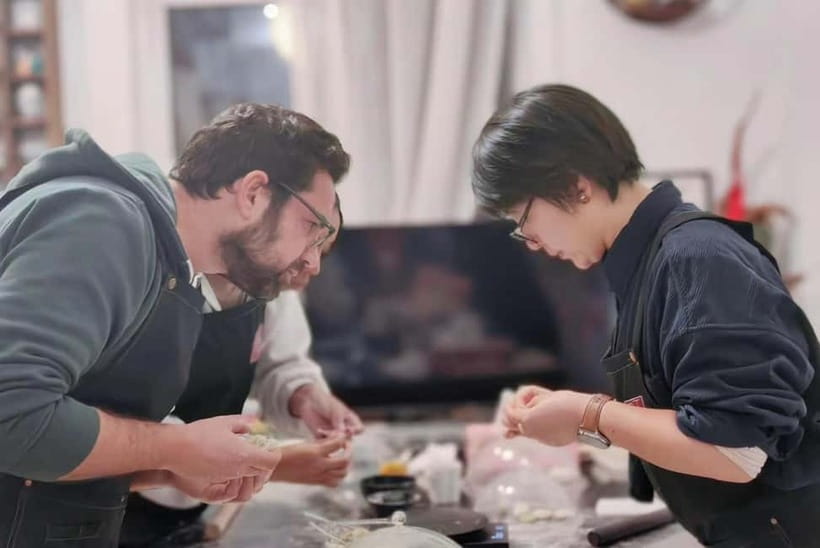
Shanghai soup dumplings are small, delicate, and far trickier to make than they look. In a historic Shikumen lane house, Chef Yin shows you how to make the dough, roll thin wrappers, add soup-filled filling, and shape the famous 18-fold crown.
I like the hands-on coaching and the choice between vegan or pork xiaolongbao. I also like that the class takes place in a real lane-house kitchen rather than a polished cooking school. The main drawback is time: the dumplings take patience, and the finished vegan version may taste mild if you expect a strong broth.
Key Points at a Glance
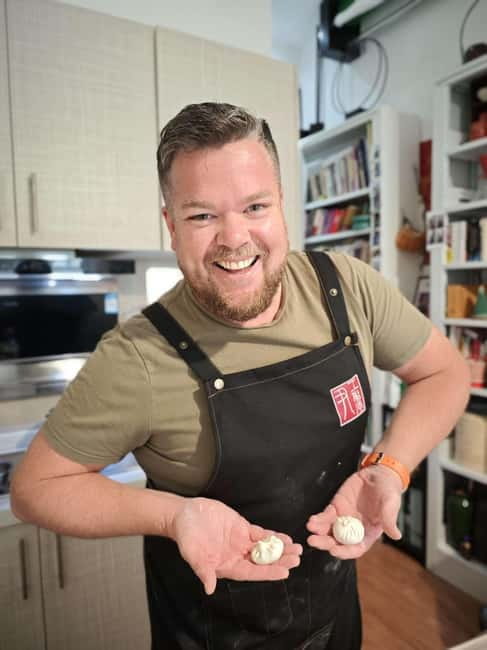
- Make the full dumpling from scratch: You work through dough, wrappers, filling, shaping, steaming, and eating.
- Choose your filling: The base price includes either vegan or pork. Make both with the $20 per person add-on.
- Learn the 18-fold pleat: Chef Yin gives hands-on corrections so your dumplings can hold their soup.
- Cook in a Shikumen home: The class takes place in a traditional Shanghai lane-house setting.
- Expect cultural conversation: Yin discusses tea, Chinese food customs, and Shanghai life as you cook.
- Plan for the meeting point: The central location is easy to reach by public transport, but the workshop room can be hard to find without the advance video directions.
Why Soup Dumplings Are Worth Two and a Half Hours
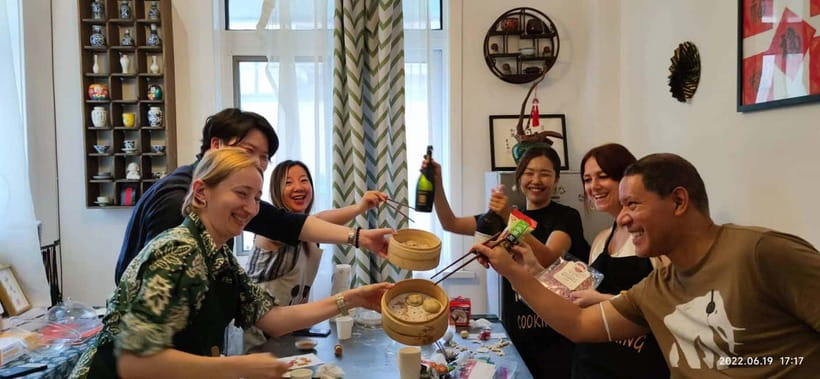
Xiaolongbao are not simply steamed buns with a bit of meat inside. Their appeal comes from the hot broth trapped under a thin wrapper. To eat one properly, you place it on a spoon, pierce the skin, let the steam escape, sip the soup, and then eat the rest with ginger and black vinegar.
Making one is a useful lesson in balance. The wrapper must be thin enough to feel delicate, but strong enough to carry wet filling. The pleats must seal tightly. The filling needs enough liquid to create that familiar soup burst without breaking the dumpling before it reaches the steamer.
That is why this class has more value than a quick dumpling demonstration. You are not just watching someone fold food at high speed. You are working through the awkward early attempts yourself, then seeing how small changes in dough, wrapper thickness, and pressure affect the result.
The session lasts 2.5 hours, which gives you enough time to work at a sensible pace. It is not a rushed stop between sightseeing visits. Plan your afternoon or evening around it, especially if you add the second filling and extend the class by 30 minutes.
More Dumpling and Dim Sum Tours in China
- Xi’an: Great Tang Dynasty Night Show & Dumpling Meal Option
★ 4.4 · 177 reviews - Top-Rated Hong Kong Tour: Peak Tram, Dim Sum & Cultural Sights
★ 4.5 · 99 reviews - Organic Chinese Dumpling Class with Market Walk
★ 5.0 · 88 reviews
Entering a Shanghai Shikumen Kitchen
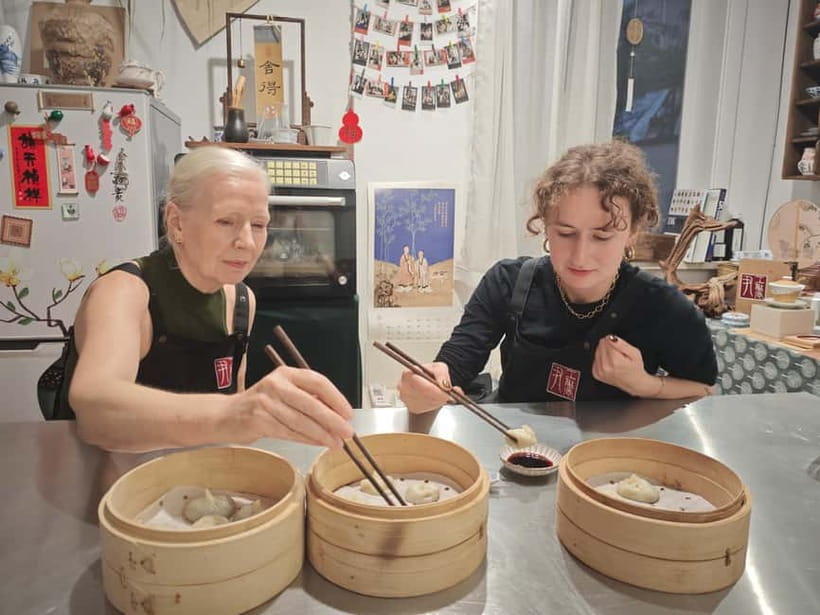
The setting is one of the strongest parts of the class. Shikumen homes are a distinctive Shanghai building style, with stone gateways, narrow lanes, and compact living spaces that blend Chinese and Western design touches. Here, the cooking takes place in a private apartment within a traditional compound.
You are not being shown a staged old-style kitchen built only for tourists. The lane-house setting gives the class a sense of daily Shanghai life, even though the main event is cooking. It also makes the session feel more personal than a large studio class.
The workshop room is centrally located and reachable by public transport. Finding the exact door can be difficult, though. Yin sends detailed directions and a video before the class, and she may meet you on the street to guide you in. Save the directions before leaving your hotel and allow a little extra time for the final approach.
This is the kind of activity where arriving flustered can take the shine off the first few minutes. The meeting point matters more than it might for a restaurant reservation because you need to arrive ready for a lesson with several stages.
Starting With Dough and Water
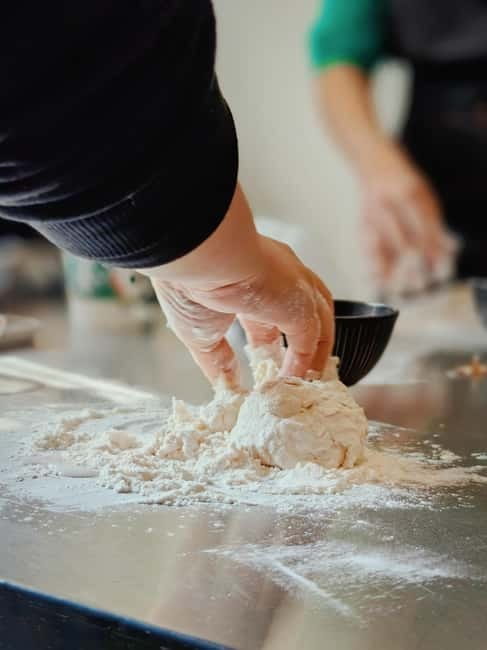
The class begins with the foundation: flour, water, and careful kneading. Yin demonstrates the water-to-flour balance and explains how the mixture becomes elastic as you work it.
This stage is simple in theory but physical in practice. You knead the dough, allow it to rest, and then handle it again once it has relaxed. The resting period matters because dough that is too tight can spring back while you roll it.
I like this part because it gives you a useful skill you can repeat at home. You are not relying on ready-made wrappers, and you see why soup dumplings need a wrapper with both flexibility and strength.
Do not expect instant perfection. Your first dough may feel too dry, too sticky, or uneven. That is exactly where Yin’s coaching helps. She can point out what to change before you reach the wrapper stage, when a small mistake becomes harder to fix.
Rolling Wrappers Thin at the Edges
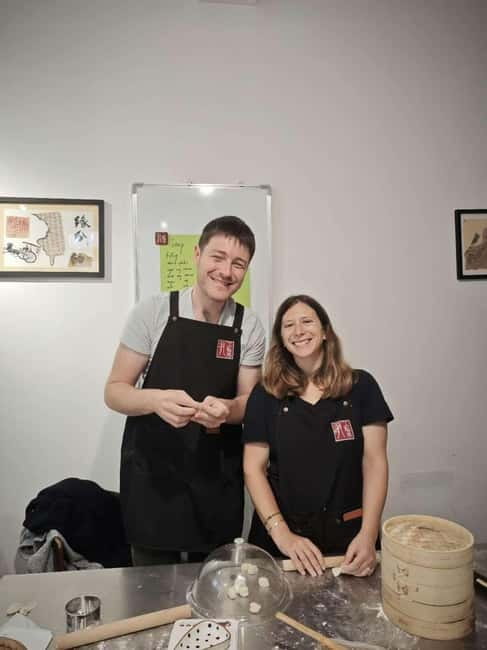
Once the dough has rested, you shape it into palm-sized wrappers. The goal is not an evenly flat circle. The center needs more thickness to support the filling, while the edges should be thinner so they fold without becoming bulky.
This is one of the more technical parts of the class. If the wrapper is too thick all over, the dumpling can feel heavy. If the center is too thin, it may split when you add the wet filling or lift it into the steamer.
The translucent appearance is part of the appeal. A well-made wrapper lets you see the shape and, sometimes, a hint of the filling beneath it. But you should not judge yourself by the first few wrappers. Uniformity comes with practice, and the class gives you a better sense of what to aim for.
This step also explains why restaurant xiaolongbao can seem so effortless. Skilled cooks roll and turn the dough quickly, but the technique depends on control rather than speed. At home, you will probably make fewer dumplings and take longer. You will also appreciate the work much more.
Same city, a different plate:
- Authentic Local Food Tour in Central Shanghai
★ 5.0 · 1,382 reviews - Shanghai: 3-Hour Local Food Tasting Tour
★ 4.9 · 806 reviews - Beijing Private Hutong Food Walking Tour
★ 5.0 · 299 reviews - Small Group Kowloon Michelin Rated Street Food and Culture Tour
★ 5.0 · 170 reviews
Choosing Vegan or Pork Filling
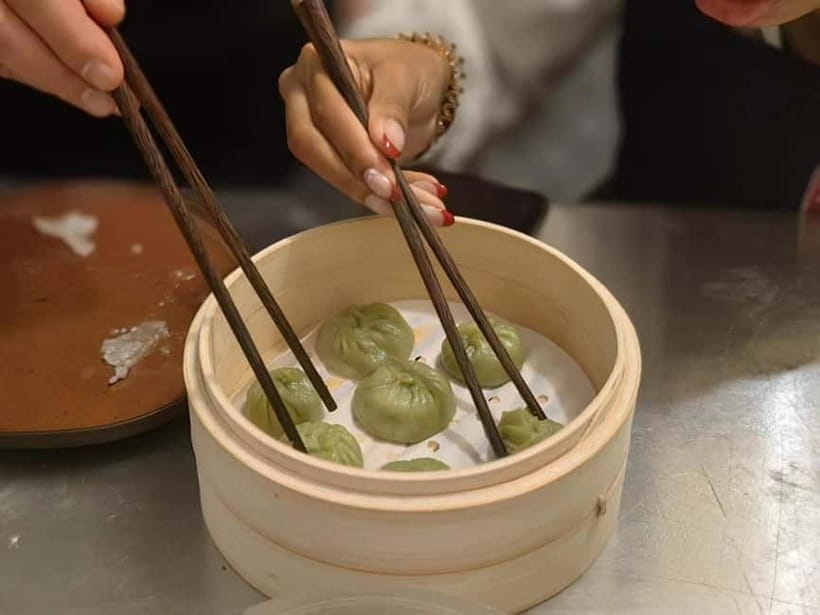
The base price includes one filling, so make your choice before booking if possible. The vegan option is cooked in class, with mushrooms and vegetables sautéed in an umami-rich broth. You take part in preparing it rather than simply receiving a bowl of filling.
That makes the vegan choice especially suitable for plant-based diners who want to cook every part of their meal. It is also a good option if you prefer not to handle raw meat. One practical point is worth noting: the vegan dumplings may taste fairly mild, and the soup inside may be less pronounced than the pork version.
The pork option uses raw minced pork mixed with ginger, scallions, and aspic. Aspic is broth that has been set into a jelly, usually with gelatin. When the dumpling steams, the aspic melts into liquid, creating the soup inside.
The pork mixture is raw when you prepare it, but it cooks safely in the steamer later. If you choose this option, follow Yin’s instructions on handling and sealing the filling. A dumpling that leaks before steaming loses the very liquid you are trying to keep inside.
For an additional $20 per person, you can make both fillings. The dual-filling option adds 30 minutes to the class. I see this as worthwhile for couples or small groups with different diets, and for anyone who wants to compare the two styles directly. If you are mainly interested in learning the folding technique, one filling is enough.
Learning the Famous 18-Fold Pleat
The defining moment is shaping the dumplings. Yin teaches the 18-fold method, guiding you through adding filling, gathering the wrapper, twisting the top, and sealing the crown.
This is harder than it looks. You must hold the wrapper, keep the filling from spilling, and make repeated folds without tearing the dough. The first dumpling may look more like a small pouch than a neat restaurant xiaolongbao.
That is not a problem. The value is in the correction. Yin works beside you and shows where to pinch, how to turn the dumpling, and how much pressure to use. Real-time help is more useful here than a printed recipe because your hands need to learn the movement.
The pleats are not just decoration. A good seal keeps the broth inside during steaming. Too much filling makes the top difficult to close, while too little produces a dumpling with less soup and less flavor.
Give yourself permission to make imperfect shapes. The class is not a competition, and the best memory may be the slightly crooked dumpling that still holds its broth. You leave with a practical method, not the false idea that restaurant-level folding is easy on the first attempt.
Steaming, Eating, and Avoiding a Burnt Tongue
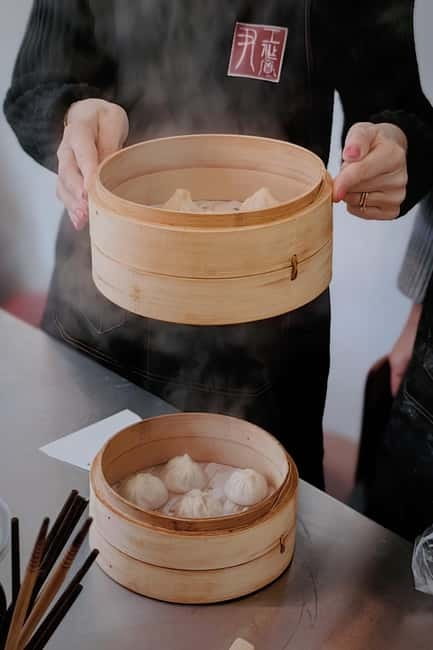
After shaping, you place the dumplings in bamboo baskets for steaming. This is the point when the raw pork filling cooks and the aspic melts. It is also when the wrappers firm up and the dumplings become ready to eat.
Soup dumplings need care at the table. They are hot inside, so let the steam escape before taking a full bite. Black vinegar and ginger provide the classic match, cutting through the richness of the pork and adding sharpness to the softer wrapper.
Tea is served with the meal. The tea gives the final part of the session a calmer pace, and Yin uses the time to talk about Chinese tea and food customs. You are eating what you made, but you are also learning why the dish is prepared and served in a particular way.
The class includes good-quality tea, all materials and tools for one filling, and a studio gift. Recipes are also provided, so you have a guide for trying the dumplings again at home. That follow-up matters because the technique is unlikely to become automatic after one session.
What the Food Is Likely to Taste Like
The pork dumplings are designed around the classic soup-dumpling idea: savory pork, ginger, scallion, and broth released from the filling. The aspic is the key ingredient for that soup effect.
The vegan dumplings rely on mushrooms, vegetables, and broth for flavor. They can be satisfying, but the finished result may be gentler than you expect. If you want a bold, highly seasoned filling, keep your expectations moderate and use the black vinegar and ginger at the table.
This is a cooking class first and a meal second. You make the dumplings yourself, so the texture and appearance will depend on your skill that day. That is part of the point, but it means the food may not match the precision of a specialist xiaolongbao restaurant.
One useful tip is to eat a small snack before you arrive. The preparation takes a while, and you may spend much of the session handling dough before the dumplings reach the steamer. Arriving extremely hungry can make the waiting feel longer.
Chef Yin’s Teaching Style and Languages
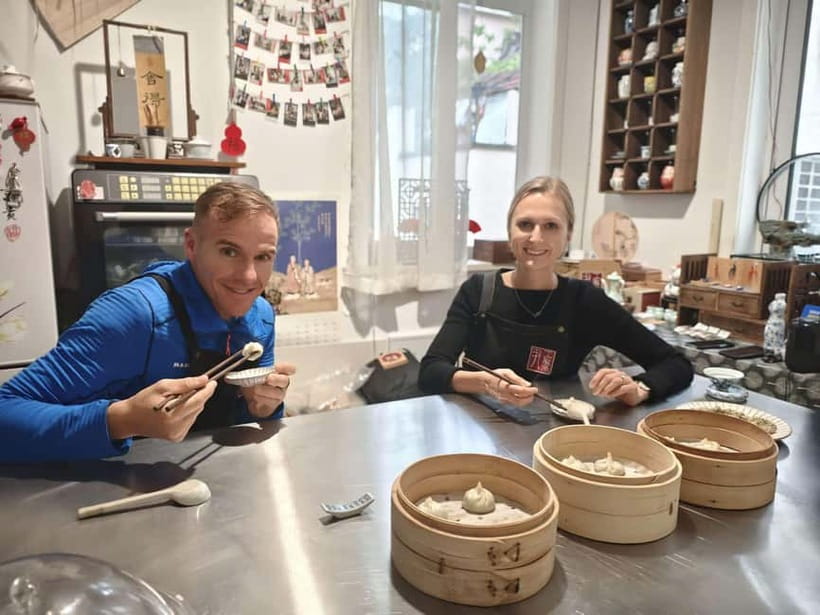
Yin teaches in English, Japanese, and Chinese. Her approach is warm and personal, with clear explanations and plenty of help during the difficult steps.
Her strongest role is as a coach at the work surface. She can correct your wrapper thickness, show you how to control the filling, and help rescue a pleat that is beginning to open. That attention is particularly useful for first-time cooks.
The cultural side also adds value. Yin talks about Shanghai, Chinese food customs, and tea as you work. The conversation keeps the class from feeling like a mechanical recipe lesson, while still leaving plenty of time for the cooking itself.
Past scores have been very strong, at 4.9 out of 5 from six ratings. The praise centers on Yin’s kindness, preparation, clear instruction, and willingness to share stories about Shanghai. One practical criticism concerns the vegan flavor and soup level, not the teaching.
Is $120 Per Person Good Value?
At $120 per person, this is not a cheap meal or a quick market activity. You are paying for 2.5 hours of instruction, ingredients, tools, tea, a studio gift, and the chance to cook in a traditional Shanghai home setting.
The value is strongest if you care about process and personal teaching. You get a full lesson from dough to finished dumpling, rather than a short demonstration followed by a tasting. The recipe gives the class some use after your trip, although you will need practice before your homemade dumplings look polished.
The setting also helps justify the price. A cooking class in a Shikumen compound offers a connection to Shanghai that a generic kitchen may not. You are working with a local instructor in a real lane-house environment, with food and tea conversation woven into the activity.
The price is less compelling if you simply want to eat excellent xiaolongbao. Shanghai has many restaurants where you can buy dumplings for far less. Book this for the learning, the setting, and time with Yin, not as the most economical way to fill your stomach.
The $20 dual-filling add-on is sensible if you want both vegan and pork versions. It adds half an hour, lets you compare the two preparations, and makes the class more useful for a mixed-diet group. If you are happy with one style, keep the base booking and spend the difference elsewhere in Shanghai.
Who Should Book This Class?
I would recommend it to first-time visitors who want an activity tied closely to Shanghai food culture. It suits couples, families, solo cooks, and friends who enjoy learning by doing rather than watching a guide perform every task.
It is also a strong choice for vegetarians and vegans, since the vegan filling is a planned option and is cooked during the class. If someone in your group eats pork and someone else does not, the dual-filling option solves that neatly.
You should be comfortable with a fairly hands-on session. There is dough to knead, wrappers to roll, filling to prepare, and repeated pleating to practice. The work is not strenuous, but it requires patience and focus.
I would hesitate to book it if your schedule is packed tightly or if you dislike cooking activities. The workshop room can take time to find, and the process is deliberately slower than ordering dumplings at a restaurant.
Cancellation is free up to 24 hours before the start time, and you can reserve now and pay later. Check the available starting times before planning the rest of your day.
Should You Book the Shanghai Xiaolongbao Workshop?
Book it if you want more than a food stop. Chef Yin’s patient instruction, the Shikumen setting, and the chance to make soup dumplings from raw ingredients give this class a clear sense of place.
Choose pork for the most traditional soup-dumpling result, vegan for a plant-based cooking lesson, or both if your group wants a side-by-side comparison. Arrive with a small snack in you, save the location video, and expect your first few dumplings to look homemade.
Skip it if you only want a fast, inexpensive meal or if you need a perfectly predictable dining experience. For curious cooks with 2.5 hours to spare, this is a useful and memorable way to understand why Shanghai’s little soup-filled dumplings take so much skill.
FAQ
How long does the soup dumpling class last?
The class lasts 2.5 hours. The dual-filling option adds 30 minutes.
How much does the class cost?
The price is $120 per person. Making both vegan and pork fillings costs an additional $20 per person.
Can I choose between vegan and pork dumplings?
Yes. The base price includes your choice of one filling: vegan or pork.
What is included in the price?
Materials and tools for one filling, good-quality tea, and a studio gift are included. Recipes are also provided for making the dumplings again at home.
Is the pork filling cooked when I prepare it?
No. The pork is mixed raw with ginger, scallions, and aspic, then cooks safely during steaming.
What languages does Chef Yin speak?
The class is offered in English, Japanese, and Chinese.
Can I cancel and receive a refund?
You can cancel up to 24 hours in advance for a full refund. You can also reserve now and pay later.
More Vegan and Vegetarian Tours in China
- Shanghai-Cooking Dumpling & Meal in Local Family-w/Vegan
★ 4.9 · 36 reviews - Vegan Street Food & Stories of Hanoi
★ 5.0 · 282 reviews - Hanoi: Vegan Street Food & Stories
★ 4.9 · 201 reviews - Mexico City Vegan & Vegetarian Street Food Adventure
★ 5.0 · 176 reviews
Just added around China
- Private Kowloon Michelin Rated Street Food & Culture Tour★ 5.0 · 42 reviews
- Kowloon Street Food Tour Private & Personalized with a Local★ 4.5 · 20 reviews
- Organic Combo Dumplings & Xiao Long Bao Class with Market Walk)★ 5.0 · 12 reviews
- Hong Kong ‘Aqua Luna’ Dim Sum Cruise★ 5.0 · 34 reviews
- Top-Rated Hong Kong Tour: Peak Tram, Dim Sum & Cultural Sights★ 4.5 · 99 reviews
- Hong Kong Private Food Tour with Michelin Street Food★ 5.0 · 6 reviews
- Hong Kong Private & Personalized Street Food Tour with a Local★ 4.5 · 6 reviews
- Cantonese Dim Sum Dinner with Pearl River Night Cruise in Guangzhou★ 4.5 · 3 reviews
Shanghai Street Food Tours, compared.
Authentic Local Food Tour in Central Shanghai
Read our review →

Private Shanghai Evening Street Food Walking and Cruise Tour
Read our review →
Shanghai-Cooking Dumpling & Meal in Local Family-w/Vegan
Read our review →
Shanghai Evening Tour: Huangpu River Cruise and Street Food
Read our review →
Shanghai Local Food Taste in former French Concession
Read our review →Browse the lists this tour appears in