
REVIEW · ROME STREET FOOD TOURS
Rome: Campo de Fiori & Ghetto Street Food Sightseeing Tour
Rome makes a strong first impression through its food, and this tour puts that idea to work. In 2.5 hours, you move from Campo de’ Fiori to the Jewish Ghetto, stopping for supplì, pizza by the slice, fried artichoke, cured meat, wine, beer, and gelato along the way. The walk also brings in Pompey’s Theatre, Largo Argentina, and the story of Giordano Bruno.
I like the useful mix of eating and sightseeing, and I like that the food is served at local stops rather than presented as one formal meal. Guides such as Andrea and Marco add solid Roman context, explaining how ancient sites and modern neighborhoods connect. The main drawback is that vegans and people with lactose intolerance should choose another tour, and vegetarian guests need to request suitable food ahead of time.
Key points at a glance
- A full Roman tasting route: Try supplì, pizza al taglio, cured meat, fried artichoke, artisanal gelato, wine, and beer.
- Two historic districts in one walk: The route links Campo de’ Fiori with Rome’s former Jewish Ghetto.
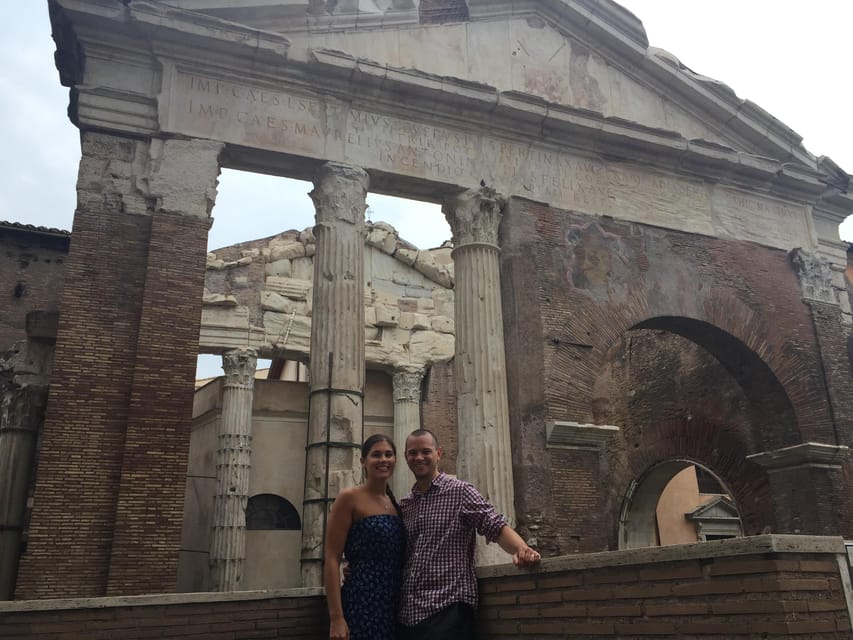
- Ancient sights between bites: See the Theatre of Pompey, Largo Argentina, Portico d’Ottavia, and the Great Synagogue of Rome from outside.
- Guides who add context: Andrea and Marco have led tours praised for clear explanations, humor, and strong knowledge of Rome.
- A good-value introduction: At $41 per person, the tour combines several tastings with a guided city walk.
- Best for flexible eaters: Vegetarian options require advance notice, while vegan and lactose-free diets are not suitable.
Why this food walk works in central Rome
Many food tours leave you full but unsure where you have been. This one uses food as a thread through some of Rome’s most interesting central streets. You begin at the statue of Giordano Bruno in Campo de’ Fiori, then walk through narrow lanes toward the former Jewish Ghetto and finish at Largo di Torre Argentina.
That route matters. You are not simply going from restaurant to restaurant. The stops give you reasons to look up at old façades, pause beside archaeological remains, and understand how Rome’s layers sit on top of one another. A guide can explain Julius Caesar in one moment, Giordano Bruno in the next, then point out how the Jewish Ghetto shaped the neighborhood around Portico d’Ottavia.
The price is $41, which is reasonable if you want both food and orientation. You receive multiple tastings, a wine sample, a beer sample, and a professional English-speaking guide. It is not an all-you-can-eat event, and extra food or drinks cost more, but the portions have been described as generous enough to keep you full for much of the day.
The tour lasts 2.5 hours. That is long enough to build a meal from several small bites without taking over your entire day. You will want comfortable shoes, since the experience is entirely on foot and includes several short transfers between stops.
A few more street food tours around Rome worth a look
- Rome: Street Food Tour with Local Guide
★ 4.8 · 4,077 reviews - Rome: Trastevere & Campo de Fiori Street Food Walking Tour
★ 4.9 · 2,768 reviews - Rome Street Food Tour with Local Guide
★ 5.0 · 2,361 reviews
Starting at Campo de’ Fiori
Meet at the Giordano Bruno statue in Piazza Campo de’ Fiori. This is an easy landmark, but give yourself a little time to find it because the square can be crowded and active.
During the day, Campo de’ Fiori serves as an open-air market. The tour includes a market visit, with morning departures offering tastings of truffles, olive oil, and balsamic vinegar. That morning option gives you a closer look at the market side of the square before the main food route gets underway.
The square also carries a darker historical note. Giordano Bruno was burned here in 1600, and his statue has faced the square since the nineteenth century. Your guide uses that setting to introduce the political and religious tensions that shaped Rome. It is a sharp reminder that this pleasant food stop has a serious past beneath it.
Your first food samples may include cured meat and other regional products. The market setting helps you understand the ingredients before you taste the prepared dishes later. If you are booking a morning tour, the oil, vinegar, and truffle tastings are a useful extra. Evening departures will have a different feel, with the square acting more as a social meeting place than a market.
Supplì, wine, and the first local stop
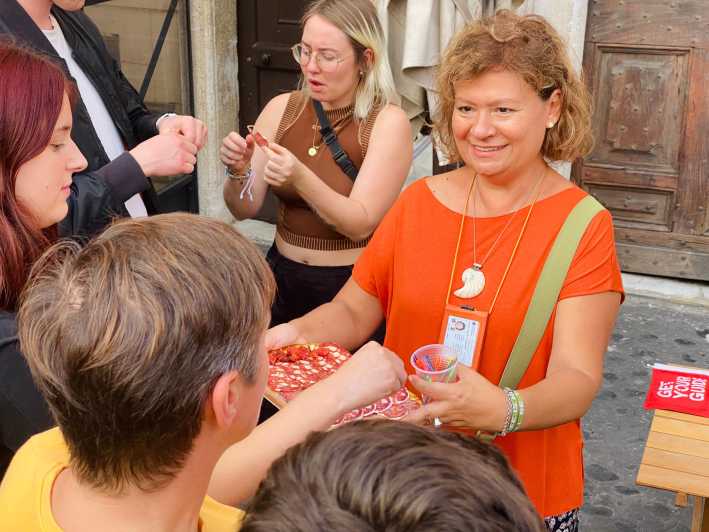
After Campo de’ Fiori, you walk only a few minutes to a local restaurant. Here you taste Roman food and sample wine. The short distance keeps the pace easy, and the restaurant stop gives you a place to slow down after the market.
Supplì is one of the key foods on the route. It is a deep-fried rice ball, usually prized for its crisp outside and soft center. For a first-time visitor, it is a better introduction to Roman street food than a familiar slice of pizza alone. You get a sense of the city’s fondness for fried snacks and practical, filling food.
The included wine sample adds a local drink to the meal, though you should not expect a full wine tasting. The same applies to the beer sample later. These are part of the food experience rather than a separate drinks tour.
The stop also shows why this tour suits people who want guidance at the table. Your guide can explain what you are eating, how it fits into Roman food culture, and what makes it different from dishes you may have tried elsewhere in Italy.
Narrow lanes and the Theatre of Pompey
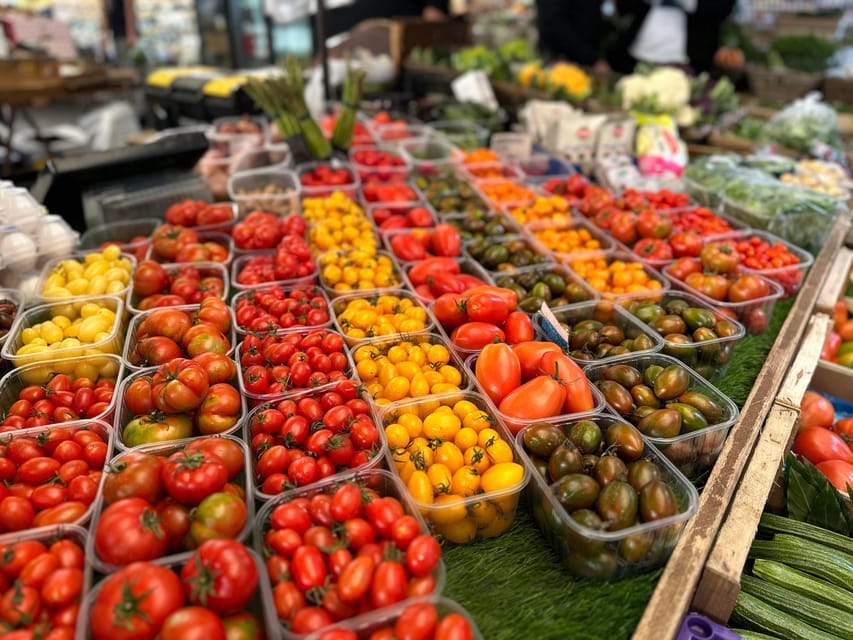
The route then turns through a short guided section and a local bakery. You will stop for another food tasting while the guide points out sights along the way. The bakery visit helps break up the fried foods with a different kind of Roman staple, though the exact bakery selections can vary.
Via dei Chiavari provides a scenic stretch between stops. It is the sort of street where the value lies in the walk itself. You pass through an older part of central Rome instead of staying on a single major avenue, and the guide can draw your attention to details you might otherwise pass without a glance.
The Theatre of Pompey is one of the most important historical sights on the route. This was the setting where Julius Caesar was assassinated in 44 BC, though much of the original theatre is now incorporated into later buildings. The tour does not present this as a long archaeological visit. Instead, you see the remains and hear the story while moving through the neighborhood.
That format suits Rome. You do not need every ancient site to be a full museum stop. Sometimes a clear explanation from the pavement helps you place the city’s past more effectively than another long indoor visit.
Same city, a different plate:
- Rome: Guided Food Walking Tour with Wine in Trastevere
★ 4.9 · 3,105 reviews - Rome: Trastevere Street Food Walking Tour with Local Expert
★ 4.8 · 1,784 reviews - Roman Food Tour with Visit to the Trionfale Food Market
★ 5.0 · 471 reviews - Trevi Fountain, Pantheon, and Campo Dei Fiori Market Food and Wine Tour
★ 5.0 · 320 reviews
Pizza al taglio and the Jewish Ghetto
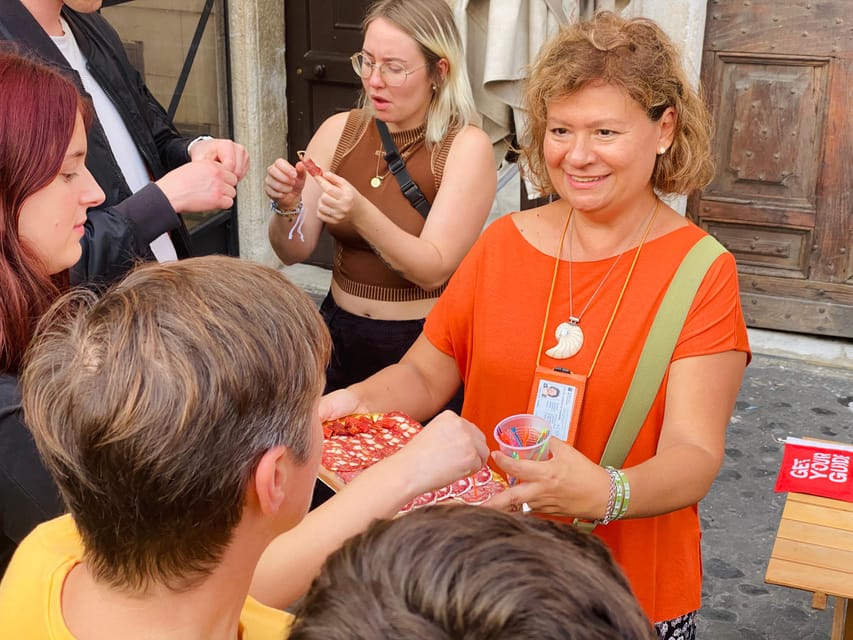
A second local restaurant provides more street food and regional dishes. Pizza al taglio is a central part of the tasting plan. This is pizza sold by weight or by the slice, usually baked in a rectangular tray and cut to order. The tour describes it as thin and crisp, making it a useful contrast with supplì.
You will have eaten several savory items by this point, so this is where pacing matters. The food is designed as a series of tastings, not one giant serving at every stop. Still, the portions have been described as generous, and one review noted that the meal can keep you full all day. If you plan a substantial dinner afterward, keep that in mind.
From there, you walk about four minutes to the Jewish Ghetto. The neighborhood is one of the most important parts of the tour because its food and streets are tied closely to local history. Your guide explains the Roman Ghetto and leads you through the area rather than treating it as a quick photo stop.
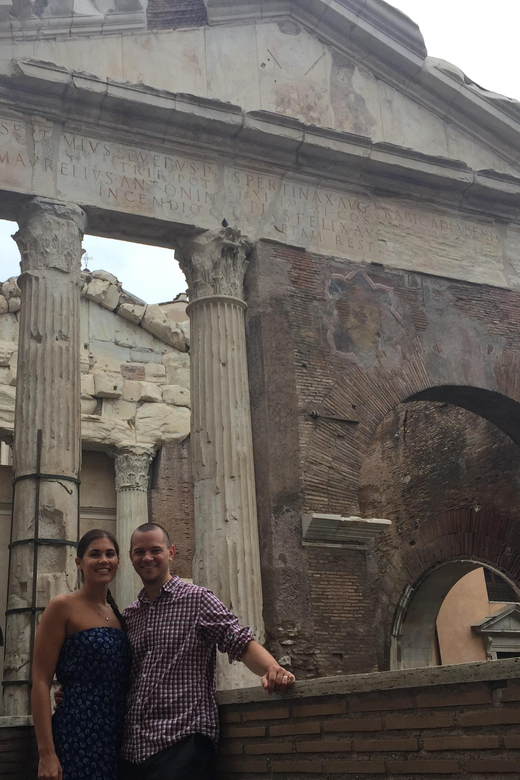
The route includes Portico d’Ottavia, a surviving ancient structure that later became part of the Jewish quarter’s setting. You also pass the Great Synagogue of Rome. The synagogue is a pass-by sight rather than an interior visit, so you should book this tour for street-level context, not for a synagogue tour.
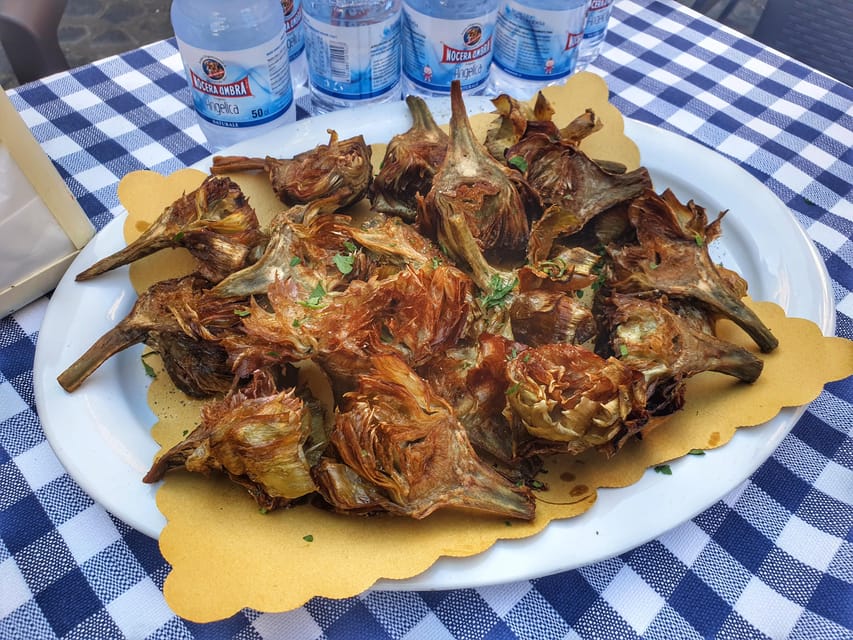
The Jewish Ghetto is also where the fried artichoke becomes especially relevant. Carciofi alla giudia, or Jewish-style fried artichokes, are one of the signature Roman dishes included on the route. The preparation gives the artichoke a crisp texture and makes it far removed from the soft vegetable side dishes many people know.
Fried artichoke, architecture, and Rome’s layers
The fried artichoke is more than another snack. It connects the food portion of the tour to the neighborhood’s Jewish Roman traditions. That link gives the tasting more meaning than a random sample of fried vegetables.
You also get a chance to see how different periods of Rome sit side by side. Ancient columns and porticoes appear near later streets, religious buildings, restaurants, and modern daily life. The guide’s job here is important. Andrea has been praised for making complicated Roman and Italian history easy to follow while still giving thorough explanations. Marco has also been praised for explaining architecture and Roman history in an engaging way.
The strongest part of the experience may be this balance. You are not asked to listen to a long lecture before eating. Instead, the story arrives in short sections as you walk, with food giving you a reason to pause and stay interested.
This is also where the tour feels less polished in a good way. The route moves through working streets and local businesses, not only famous monuments. You see Rome as a place where people shop, eat, worship, and live beside ancient remains.
Gelato at Largo Argentina
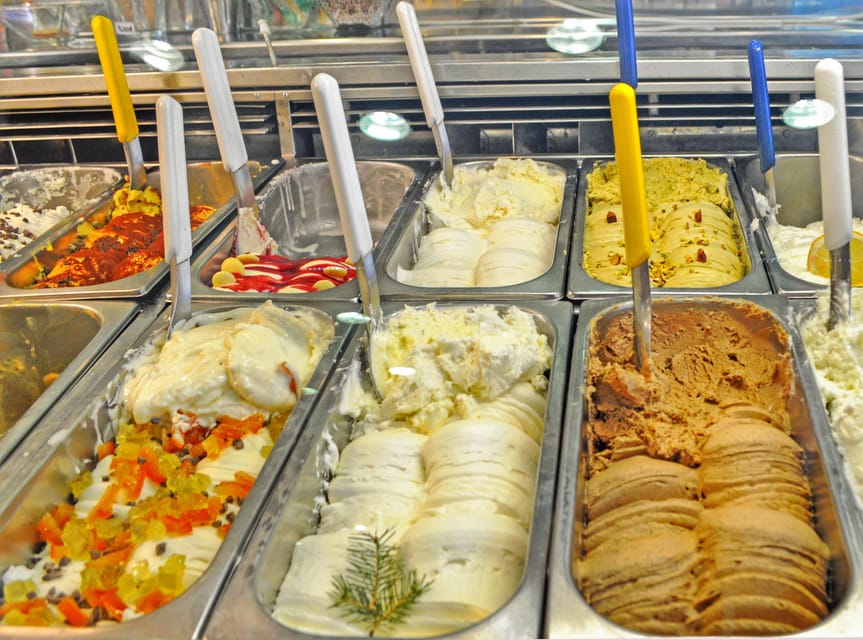
The final food stop comes near Largo di Torre Argentina, where you finish with dessert. The tasting is artisanal gelato, a fitting end after the salty fried foods, pizza, and cured meat.
Largo Argentina is one of Rome’s most striking archaeological areas. The exposed ruins show several ancient temple structures, and the site is linked to the assassination of Julius Caesar. It is a strong finishing point because the tour brings you back to one of its main themes: food and everyday streets set against the remains of imperial Rome.
The itinerary ends at Area Sacra di Largo Argentina, not back at Campo de’ Fiori. That is useful for planning the rest of your day. You are still in central Rome, and the finish puts you close to more sightseeing and food options, but you will need to arrange your own way onward.
The gelato stop is not merely a sweet reward. It also gives the group a relaxed final moment to ask questions or review the sights. If you have a sensitive stomach, note that the tour includes several fried foods and dairy-based items. People with lactose intolerance are specifically advised not to book, and vegans are not suitable for this experience.
What the $41 price really buys
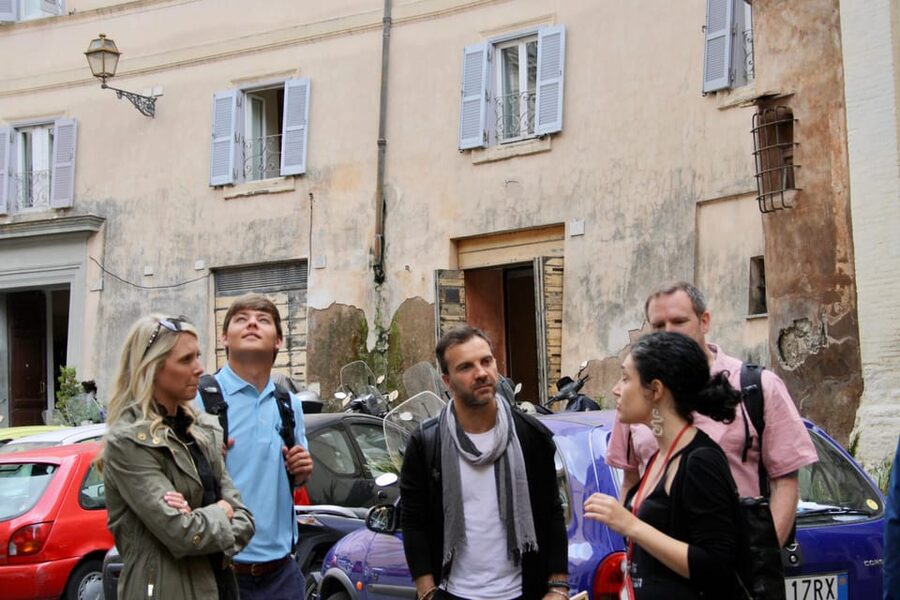
At $41 per person, the value depends on how you use the tour. If you want a guided walk and would otherwise pay separately for several snacks, the cost is fair. You receive food at multiple stops, wine and beer samples, and a guide who connects the tastings with Roman history.
The tour also saves you from guessing which Roman foods to order. Supplì, pizza al taglio, carciofi alla giudia, cured meat, and gelato give you a broad first taste of the city. You can then return to the dishes you liked best later in your trip.
Do not treat the price as covering every drink or an unlimited meal. Additional food and drinks are not included. Vegetarian food can be arranged only with advance notice, so mention it when booking rather than hoping for an easy change on the day.
The tour has earned a perfect rating across five recorded ratings, with especially strong praise for the guides. The useful pattern is clear: the food matters, but the guides make the experience work. Andrea has been praised for clear, thorough explanations, while Marco has been praised for strong knowledge of Rome, architecture, and local food. Another guide was described as funny and engaging, which matters during a walking tour with many short stops.
Who should book this Rome food tour
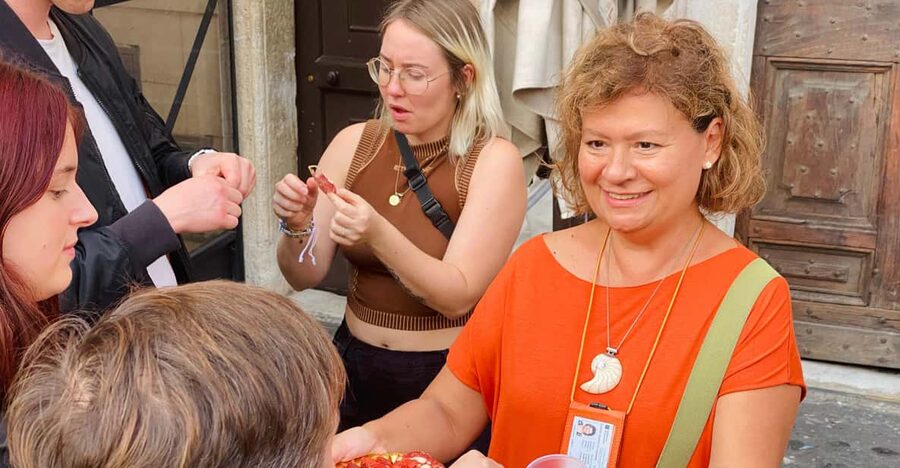
I would choose this tour for a first or second visit to Rome, especially if you want a quick introduction to Roman food without spending a full evening at one restaurant. It works well for curious eaters who like to walk, listen, and sample several dishes rather than order one large meal.
It also suits history-minded visitors who do not want a formal archaeology tour. The Theatre of Pompey, Portico d’Ottavia, Great Synagogue of Rome, and Largo Argentina give the walk real substance. You get useful context without giving up the pleasure of eating.
Families and mixed-interest groups may find the format helpful because the route keeps changing. One person can focus on food, another on architecture, and another on Roman stories. Still, the food is central, so anyone with a vegan diet or lactose intolerance should skip it.
Book a morning departure if the market and tastings of truffles, olive oil, and balsamic vinegar appeal to you. Choose another time if you prefer the social feel of Campo de’ Fiori later in the day. Starting times vary, so check availability before you plan nearby reservations.
Should you book it?
Book this tour if you want a compact introduction to Roman food and central Rome’s past. The route is varied, the price is sensible for the number of tastings, and the food stops are strengthened by stories about Caesar, Giordano Bruno, the Jewish Ghetto, and Largo Argentina.
Skip it if you need vegan or lactose-free food, dislike walking between several stops, or want a sit-down meal with full portions and your own choice of drinks. For everyone else, it is a practical way to get your bearings, eat well, and learn which Roman dishes deserve a second try.
FAQ
Where does the tour meet?
The meeting point is at the Giordano Bruno statue in Piazza Campo de’ Fiori.
Where does the tour finish?
The tour finishes at Area Sacra di Largo Argentina.
How long does the experience last?
The tour lasts 2.5 hours.
What language is the tour conducted in?
The live tour guide speaks English.
What food is included?
The tour includes street food such as supplì, pizza al taglio, cured meat, fried artichoke, and artisanal gelato. Morning tours also include truffle, olive oil, and balsamic vinegar tastings at the local market.
Are drinks included?
A wine sample and a beer sample are included. Additional food and drinks are not included.
Can vegetarian guests join?
Yes, vegetarian options are available if requested in advance. The tour is not suitable for vegans or people with lactose intolerance.
Just added around Rome
- Testaccio Experience: Street Food, Market and Traditions★ 5.0 · 4 reviews
- Taste of Rome: Food Walking Tour & Sightseeing with expert★ 5.0 · 2 reviews
- Rome: Vegan Street Food Tour with Local Guide★ 5.0 · 37 reviews
- Eat & Walk : Street Food in the Center & Trastevere★ 4.9 · 6 reviews
- Rome: Trastevere & Tiber Island Street Food Tour at Sunset★ 4.9 · 71 reviews
- Rome: Vatican Street Food and Wine Tour with Farmers Market★ 5.0 · 37 reviews
- Rome: Trastevere Food Walking Tour with Beer and Wine★ 4.9 · 71 reviews
- Rome: Trastevere Quarter Street Food Tour with Sightseeing★ 4.9 · 21 reviews
Rome Street Food Tours, compared.
Rome: Guided Food Walking Tour with Wine in Trastevere
Read our review →
Rome: Trastevere & Campo de Fiori Street Food Walking Tour
Read our review →
Rome: Trastevere Street Food Walking Tour with Local Expert
Read our review →
Roman Food Tour with Visit to the Trionfale Food Market
Read our review →
Trevi Fountain, Pantheon, and Campo Dei Fiori Market Food and Wine Tour
Read our review →
Trastevere Like a Local Food Tour with 7+ Food Tastings & Wines
Read our review →Browse the lists this tour appears in