
REVIEW · SHANGHAI STREET FOOD TOURS
Shanghai Local Food Taste in former French Concession
Shanghai is at its most enjoyable when you are eating something hot from a small local shop, then turning a corner into a quiet, tree-lined street. This private tour pairs classic Shanghai street food with a walk through the former French Concession, so you get both the city’s everyday flavor and its grand old architecture.
I like the mix of many small tastings and the personal guide. You are not left to decode a menu or guess how to eat soup dumplings. I also like the short rides and walks through Xuhui, where Wukang Road, old villas, churches, parks, and Tianzifang add context to the food.
The main consideration is pace. The tour covers a lot in four hours, and the food arrives in several rounds. If you prefer one long meal or a slow museum visit, this may feel quick. The listed price is $95 per person, so its value depends on how much you want help with food, transport, language, and local orientation.
Key points at a glance
- Start with Shanghai breakfast favorites: Taste shengjianbao, jianbing guozi, youtiao, tofu flower, and ci fan gao.
- Try two types of soup dumplings: The route includes both pan-fried shengjianbao and steamed xiaolongbao.
- Walk through historic Xuhui: See Xujiahui Cathedral, Wukang Road, Wukang Building, and the Song Qingling Former Residence area.
- Use a private English-speaking guide: A guide such as Jenny can explain dishes, local customs, landmarks, and practical Shanghai tips.
- Finish with local life and old lanes: Tianzifang and Xujiahui Park show two different sides of the city.
- Plan for an active food stop: Tell the operator about allergies or dietary restrictions before you go.
Why this food and architecture pairing works
Many Shanghai food tours focus only on eating. This one uses food as the entry point, then shows you the streets and buildings that make the city easier to understand. That matters in Shanghai, where a modern office tower may sit beside a low old lane, and a polished shopping district can be a few minutes from a humble breakfast counter.
You begin at your central hotel at a time you choose. From there, transportation is by Uber or Didi taxi, with hotel pickup and drop-off included for central Shanghai locations. That saves you from working out several subway connections while carrying a growing appetite.
The guide is the key part of the experience. Jenny is named as one of the guides associated with this tour, and she is described as especially helpful with food explanations, city tips, and practical assistance. Your guide can also help you understand what you are eating, which is useful when a dish arrives with unfamiliar fillings, sauces, or textures.
The format is private, so the day can feel more personal than a large group food walk. You can ask questions about Shanghai, request help with later plans, and spend more time on a dish or landmark if the schedule allows. One recent outing ran beyond the planned four hours, but you should treat that as a generous possibility rather than a promise.
A few more street food tours around China worth a look
- Authentic Local Food Tour in Central Shanghai
★ 5.0 · 1,382 reviews - Shanghai: 3-Hour Local Food Tasting Tour
★ 4.9 · 806 reviews - Shanghai: Half-Day Biking and Local Food Tour
★ 4.9 · 170 reviews
The first taste: shengjianbao and Shanghai breakfast culture
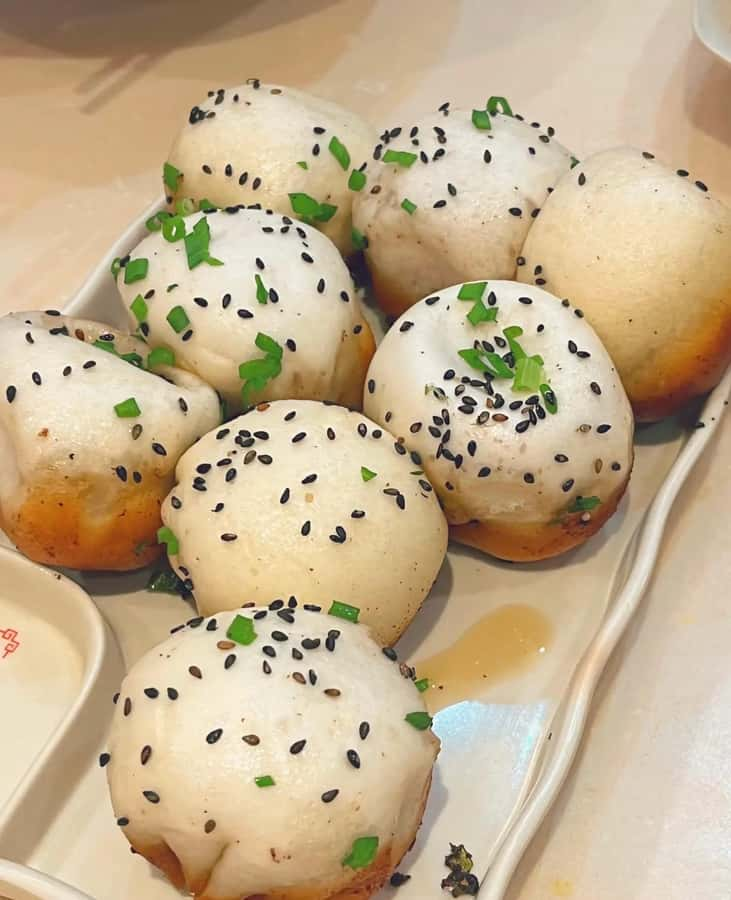
The food begins with shengjianbao, one of Shanghai’s signature snacks. These dumplings are pan-fried, giving them a crisp base, while the upper part stays soft. Inside, you get seasoned pork and hot broth.
Use care with the first bite. The liquid inside can be very hot. A good approach is to nibble the top, let some steam escape, and then taste the broth before eating the rest.
Shengjianbao gives you a quick lesson in Shanghai food style. The city likes contrast: crisp and soft, savory and slightly sweet, rich filling and light dough. It is filling, but the portion is usually suited to sharing space with the other tastings ahead.
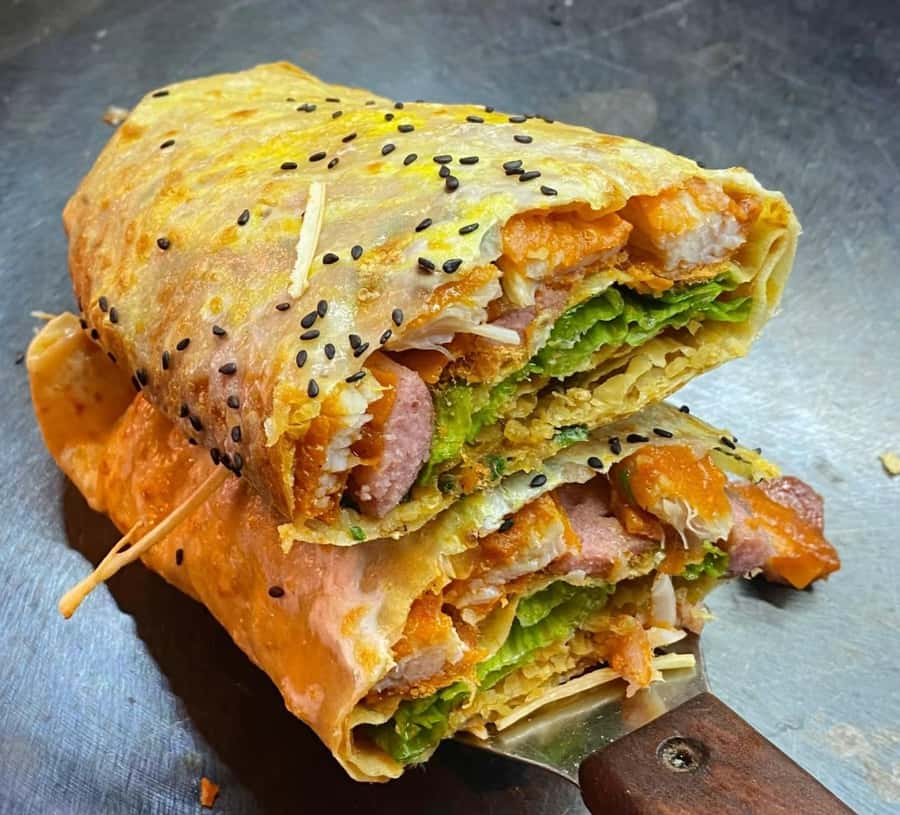
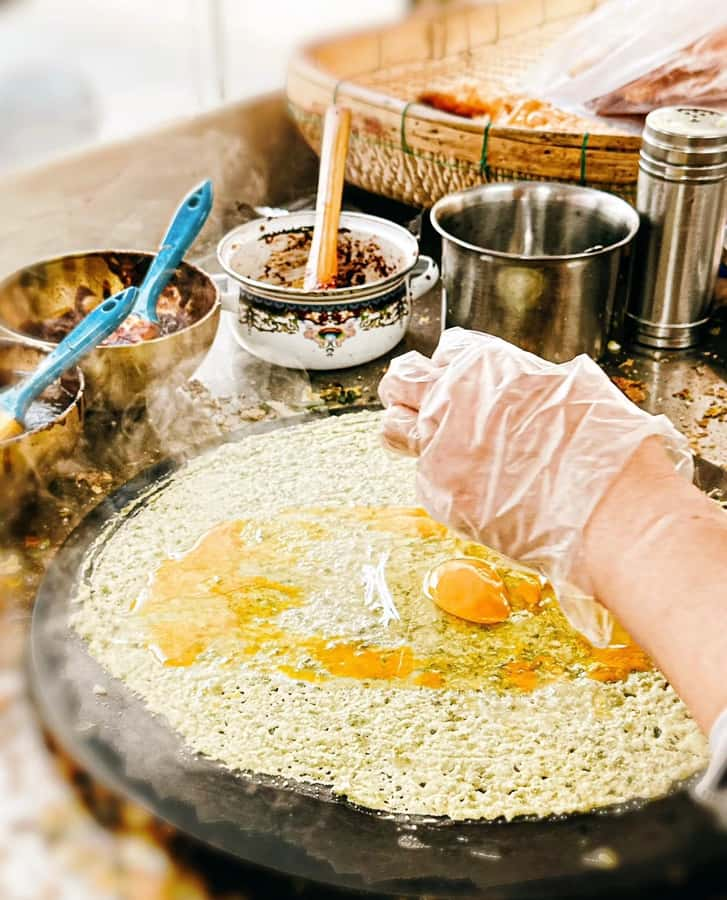
Next comes jianbing guozi, a thin Chinese breakfast pancake rolled around several fillings. You may choose ingredients such as egg, herbs, crispy wonton, pickled vegetables, or meat. The result is soft, crunchy, salty, and fresh all at once.
This is one of the more useful stops for understanding everyday eating in Shanghai. Jianbing is not a formal restaurant dish. It is a quick meal assembled around you, with texture doing much of the work. If you have a strong preference for meat, vegetables, or a lighter filling, make your choice clear to the guide.
Xiaolongbao, wontons, and the art of hot broth
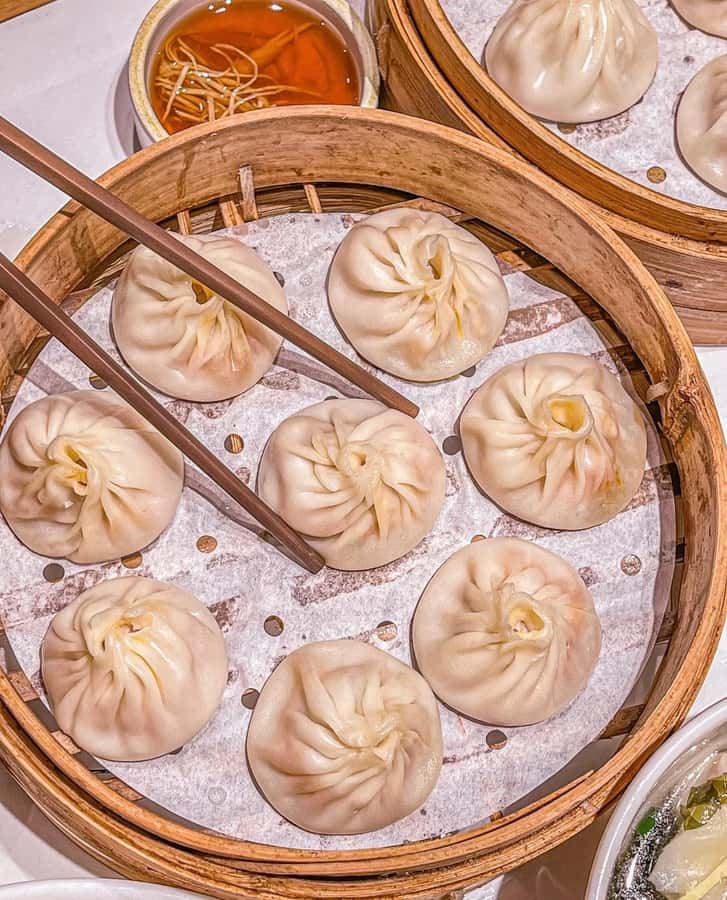
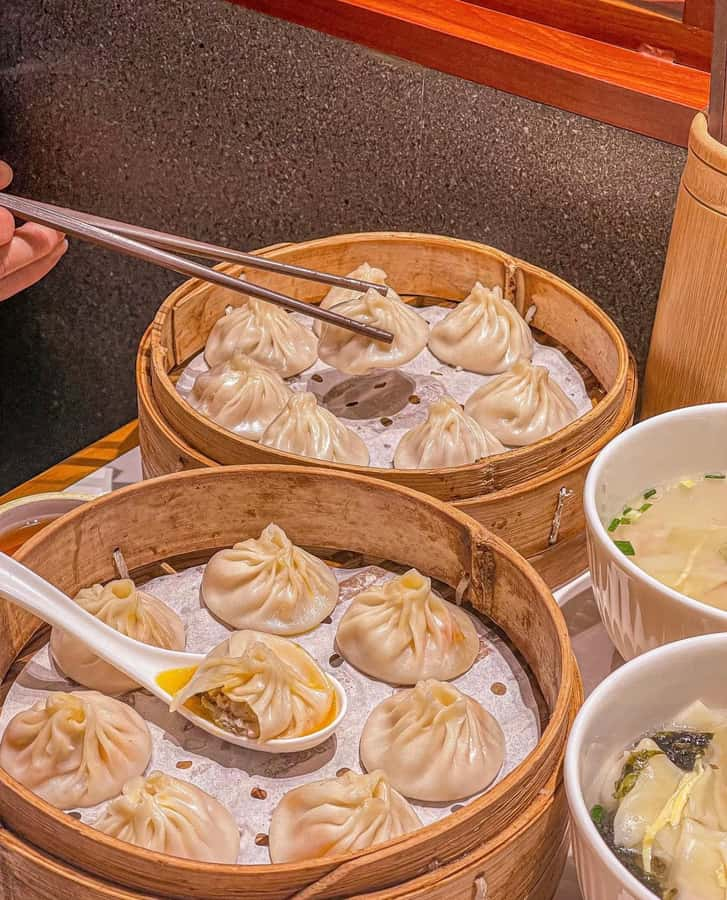
The next major stop is xiaolongbao at a long-established local restaurant. These steamed soup dumplings are smaller and more delicate than shengjianbao. They contain seasoned pork and broth, and they are generally eaten with a dipping sauce.
The usual method is simple: lift the dumpling carefully, place it on a spoon, open a small hole, sip the broth, then eat the dumpling. You can ask your guide to demonstrate if you are unsure. It is a small detail, but it makes the meal less messy and more enjoyable.
Having both shengjianbao and xiaolongbao in one morning or afternoon is useful. They are often grouped together by people unfamiliar with Shanghai food, yet the cooking methods create a different experience. One has a crisp fried base. The other is steamed and softer. The tour lets you compare them directly rather than relying on a description.
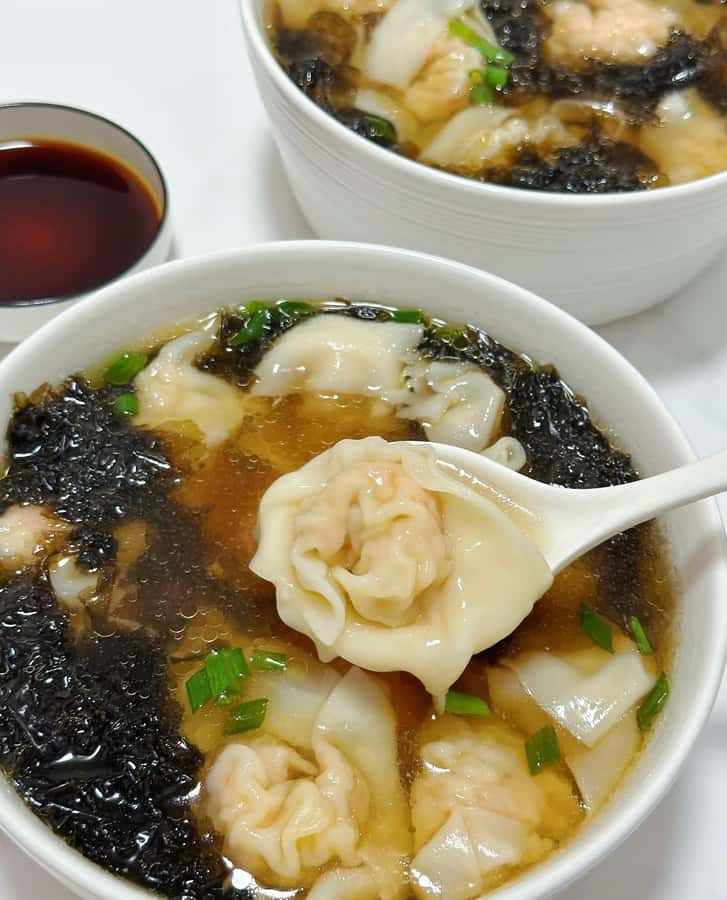
Shrimp and pork wontons bring another change in texture. These are served in a light, aromatic broth, with a gentler flavor than the richer dumplings. The dish can feel comforting after the stronger tastes and fried foods.
The food list is generous for four hours. You also try salty tofu flower, youtiao, ci fan gao, and an old Shanghai fried pork chop. Because the meal comes as a series of snacks, you may want to pace yourself instead of treating each stop as a full plate.
Salty tofu flower, youtiao, ci fan gao, and fried pork chop
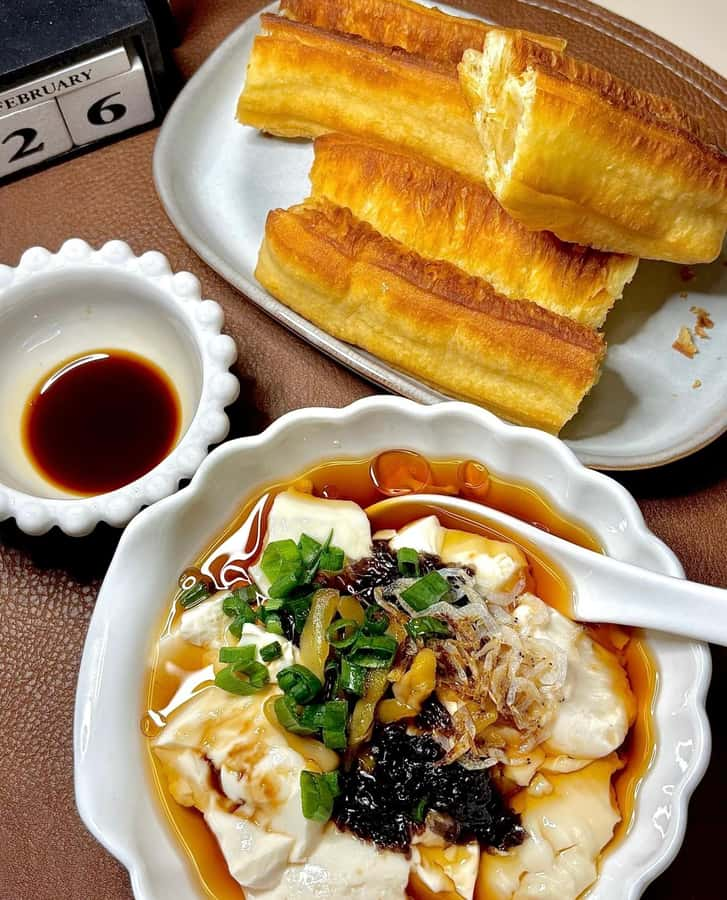
Salty tofu flower is soft tofu served with savory broth. It is a useful contrast to the crisp items on the route and gives you a look at a familiar Chinese breakfast food in its Shanghai form.
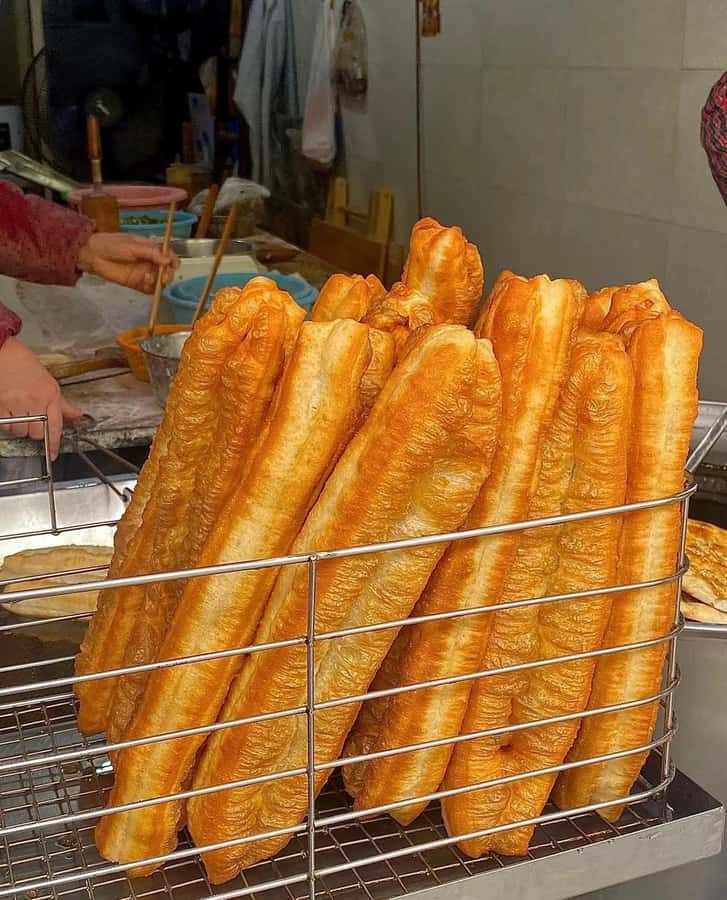
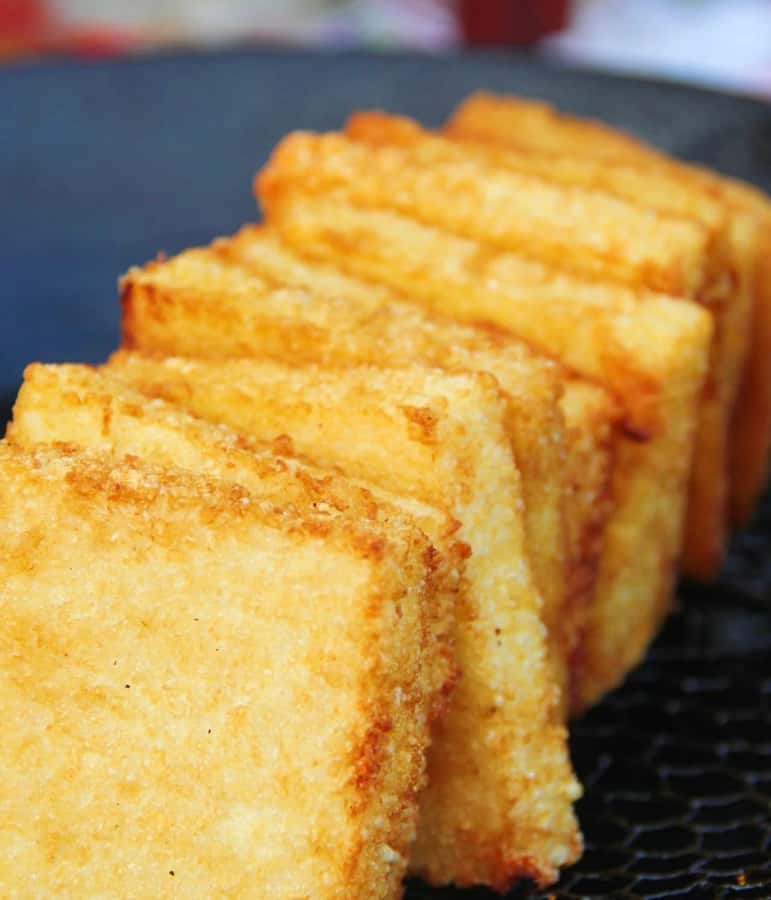
Youtiao are crisp fried dough sticks. They are often paired with breakfast dishes because they add a light, crunchy bite. Ci fan gao, made from sticky rice, is denser and more substantial. Together, these items show how Shanghai breakfast can shift between soft tofu, fried dough, sticky rice, and dumplings.
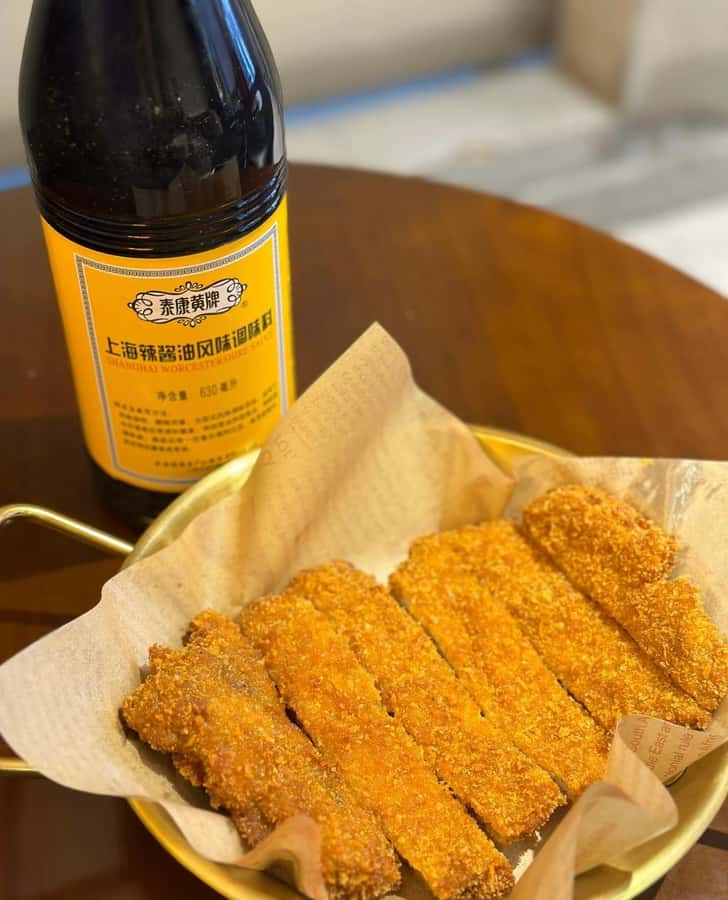
The old Shanghai fried pork chop is likely to be one of the more substantial tastings. It offers a crisp exterior and juicy meat, giving the food portion a more familiar shape for anyone who finds a dumpling-heavy meal a little repetitive.
You should tell the guide about food allergies or dietary restrictions in advance. The menu contains pork, shrimp, gluten-based dough, fried foods, and several mixed dishes. The supplied details do not promise substitutions, so it is sensible to ask what can be changed before booking.
Same city, a different plate:
- Beijing Private Hutong Food Walking Tour
★ 5.0 · 299 reviews - Xi’an: Great Tang Dynasty Night Show & Dumpling Meal Option
★ 4.4 · 177 reviews - Small Group Kowloon Michelin Rated Street Food and Culture Tour
★ 5.0 · 170 reviews - Biking Real Shanghai& Enjoy Local Food
★ 4.5 · 141 reviews
Walking the Xuhui Hengfu Historic District
After eating, the tour shifts to the Xuhui Hengfu Historic District. This part keeps you outdoors and adds the architectural setting that food alone cannot provide. The district is known for French-style buildings, old villas, shaded streets, and a slower residential feel.
Xujiahui Cathedral is one of the major landmarks. Also called St. Ignatius Cathedral, it is a Gothic-style church and one of the area’s most striking buildings. Your guide can place it within the broader story of Xuhui and explain why this part of Shanghai contains such a strong mix of Chinese and European design.
Wukang Road is made for walking. Trees shade the street, and older villas give it a calmer character than Shanghai’s major commercial avenues. The Wukang Building is another well-known stop, with its unusual shape and long connection to the city’s built history.
The route also includes the former residence of Song Qingling, the wife of Sun Yat-Sen and an important figure in modern Chinese history. The tour does not include admission fees if any are required, so check whether you will view the site from outside or wish to enter and pay separately.
This is where the guide adds value beyond navigation. Without context, an old villa can look like an attractive building and nothing more. With a short explanation, you can understand why the district matters and how its streets differ from Shanghai’s newer commercial zones.
Tianzifang and Xujiahui Park
Tianzifang brings a different mood. It is known for its Shikumen buildings, narrow lanes, small shops, and art-focused atmosphere. Shikumen architecture combines traditional Chinese elements with Western influences, and the lanes offer a close look at a style that shaped parts of old Shanghai.
Tianzifang can be busy and commercial, with shops aimed at people looking for gifts, crafts, food, or photographs. That is part of its appeal, but it also means the area may feel less quiet than Wukang Road. I would treat it as a lively contrast rather than the most untouched section of the tour.
Xujiahui Park gives you a chance to slow down. Local residents use the park for exercise, tai chi, and leisure activities. This is not a major monument, but it may be one of the more useful stops if you want to see ordinary city life rather than only famous architecture.
The park also helps balance the food portion. After several tastings and a series of short rides or walks, you may appreciate an open place to sit, watch local routines, and ask your guide about what you have seen.
What $95 per person covers
At $95 per person, this is not a low-cost snack crawl. You are paying for more than the food itself. The price includes a private English-speaking guide, hotel pickup and drop-off in central Shanghai, Uber or Didi transportation during the tour, and the listed food tastings.
That can be good value if you are new to Shanghai, do not read Chinese, or want a private introduction without spending time planning each stop. It is also useful for solo visitors and couples who would rather ask questions freely than follow a large group.
The price is less compelling if you already know Shanghai’s food districts, are comfortable ordering on your own, or mainly want a cheap breakfast. In that case, you could spend far less by choosing individual stalls yourself, though you would lose the explanations, transport, and historic walking route.
The tour has received a perfect rating from six verified bookings, with repeated praise for the guide’s English, food knowledge, kindness, and practical help. One person noted that the guide ate quickly, a small but useful warning if you prefer to take your time at every stop. You can simply ask to slow the pace.
Timing, transport, and comfort
The advertised duration is four hours, with starting times available according to the schedule you choose. Since the route includes several food stops and multiple sights, your actual pace may depend on traffic, queues, walking speed, and how long you spend at each location.
Pickup is included from hotels in the city. Pickup from Shanghai suburbs or airports costs extra, so confirm the price if you are staying outside central areas. Drop-off is available at your downtown hotel or another downtown location you request.
The tour is listed as wheelchair accessible. Still, the experience includes street-food stops, old lanes, sidewalks, parks, and transportation by taxi, so you should tell the operator about your mobility needs before departure and confirm how each part will work for you.
Cancellation is free up to 24 hours in advance, and you can reserve now and pay later. Those policies help if your Shanghai schedule depends on train times, weather, or a changing work trip.
Who should book this Shanghai food tour?
I would recommend it most to a first-time Shanghai visitor who wants an easy introduction to local food without giving up sightseeing. It also suits couples, families, and small private groups that value flexibility and direct help from an English-speaking guide.
Food lovers will appreciate the range. You sample fried, steamed, sticky, soft, meaty, and broth-filled dishes rather than eating only one type of dumpling. Architecture fans get a useful walk through Xuhui, while people interested in daily life see parks and ordinary residential streets.
I would be more cautious about booking if you have strict dietary restrictions, dislike pork or seafood, or prefer a quiet sit-down meal. Ask about possible adjustments before paying. The supplied food list is broad, but it is not designed as a vegetarian or allergy-specific menu.
Should you book it?
Book this tour if you want food, history, transport, and local orientation in one private outing. The best reason to choose it is the combination of hard-to-order snacks and a guide who can connect them to Shanghai life, then lead you through Xuhui’s older streets.
Skip it if your main goal is the lowest possible food cost or a slow architectural tour with long indoor visits. For most first-time visitors, though, $95 is a fair price for a four-hour introduction, especially when hotel transport and all listed food are included.
FAQ
How long does the Shanghai food tour last?
The scheduled duration is four hours. Some outings may run longer, but you should plan around the advertised four-hour period.
Where does the tour begin?
Your private English-speaking guide meets you at your central Shanghai hotel at your preferred available start time.
What food is included?
The tastings include shengjianbao, jianbing guozi, xiaolongbao, salty tofu flower, youtiao, ci fan gao, an old Shanghai fried pork chop, and shrimp and pork wontons.
Which sights are included?
The route includes Xujiahui Cathedral, Wukang Road, Wukang Building, the Song Qingling Former Residence area, Tianzifang, Xujiahui Park, and the wider Xuhui Hengfu Historic District.
Is transportation included?
Yes. Hotel pickup and drop-off are included for central Shanghai locations, and transportation during the tour is by Uber or Didi taxi. Suburban and airport pickups cost extra.
Can I tell the operator about allergies or dietary restrictions?
Yes. You should inform the operator in advance about any food allergies or dietary restrictions.
Just added around China
- Private Kowloon Michelin Rated Street Food & Culture Tour★ 5.0 · 42 reviews
- Kowloon Street Food Tour Private & Personalized with a Local★ 4.5 · 20 reviews
- Organic Combo Dumplings & Xiao Long Bao Class with Market Walk)★ 5.0 · 12 reviews
- Hong Kong ‘Aqua Luna’ Dim Sum Cruise★ 5.0 · 34 reviews
- Top-Rated Hong Kong Tour: Peak Tram, Dim Sum & Cultural Sights★ 4.5 · 99 reviews
- Hong Kong Private Food Tour with Michelin Street Food★ 5.0 · 6 reviews
- Hong Kong Private & Personalized Street Food Tour with a Local★ 4.5 · 6 reviews
- Cantonese Dim Sum Dinner with Pearl River Night Cruise in Guangzhou★ 4.5 · 3 reviews
Shanghai Street Food Tours, compared.
Authentic Local Food Tour in Central Shanghai
Read our review →
Private Shanghai Evening Street Food Walking and Cruise Tour
Read our review →
Shanghai-Cooking Dumpling & Meal in Local Family-w/Vegan
Read our review →
Shanghai Evening Tour: Huangpu River Cruise and Street Food
Read our review →
Make Soup Dumpling: Vegan or Pork in Shanghai Shikumen
Read our review →Browse the lists this tour appears in