REVIEW · STREET FOOD MARKET TOURS
Sofia: Flea and Food Markets Tour
Sofia’s markets tell the city’s story better than a row of polished monuments. On this walking tour, you move from flea stalls and antiques to food counters and neighborhood markets, while your guide links each place to a different chapter of Bulgaria’s past. Four food stops keep the history grounded in things you can taste.
I especially like the mix of local food and city history, and the way the route includes major sights such as Alexander Nevsky Cathedral, the Roman ruins, and Banya Bashi Mosque. It is also a smart first-day activity because it helps you get your bearings and points out places you may want to revisit.
The main caution is the walking. You cover about 3 kilometers, or 2 miles, with stops, and the tour is not suitable for wheelchair users or people with mobility impairments. Also, one past booking started much later than expected, so confirm the start time and leave room in your evening plans.
Key points to know before you book
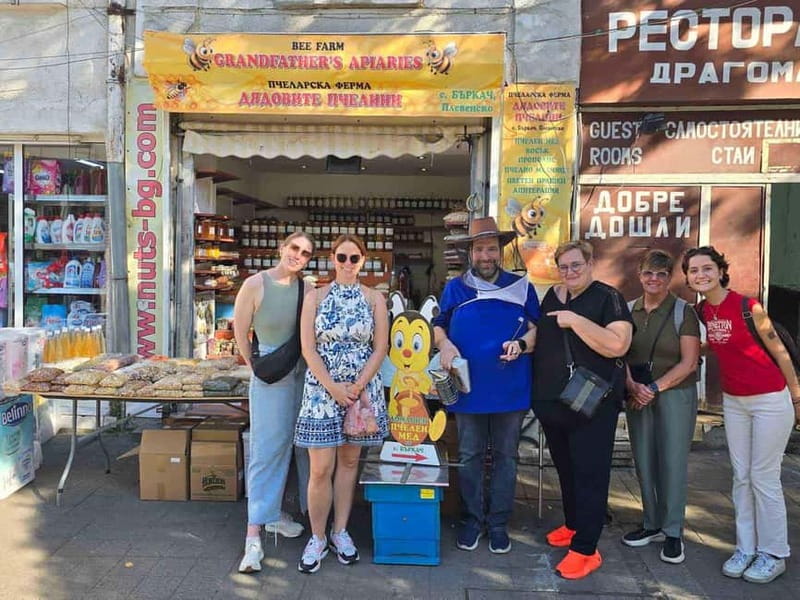
- Four markets, four historical periods: The route connects the Flea Market with the postcommunist era, the Central Market Hall with Communism, the Hali Market with the Kingdom period, and the Women’s Market with Ottoman influence.
- Four food stops: You taste traditional Bulgarian food and drinks along the way, with a soft drink included at the final stop.
- About 3 kilometers of walking: Wear comfortable shoes and expect a city walk with frequent pauses.
- A strong first-day orientation: The route passes Alexander Nevsky Cathedral, Saint Sofia Church, The Largo, Roman ruins, Banya Bashi Mosque, Sofia Synagogue, Lion Bridge, and other central sights.
- Guides add a personal touch: The guides named in past bookings include Theodora, Nesi, Ivo, Daniella, Dany, and Danny.
- Good value at $50: The price covers the guide and four food stops, making it more than a basic sightseeing walk.
Why Sofia’s markets make a smart city introduction
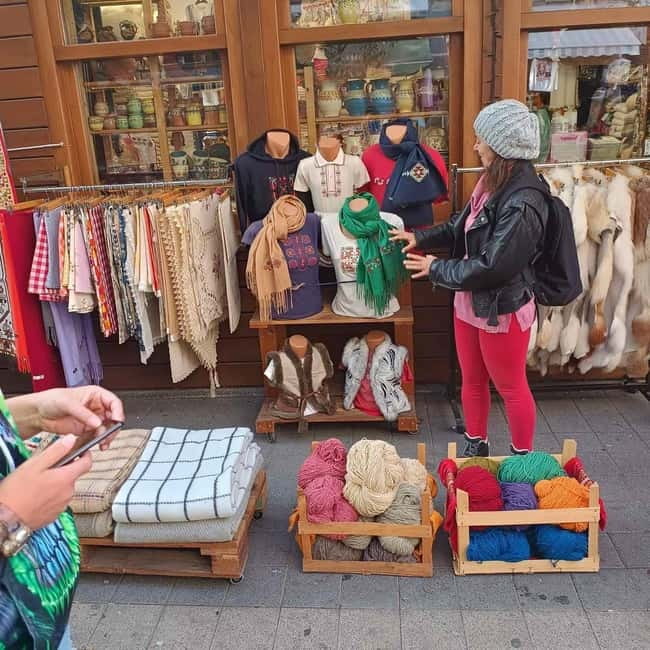
Sofia can feel like several cities layered on top of one another. Roman ruins sit near modern streets. Churches, a mosque, and a synagogue stand within a compact central area. Market stalls add another layer, showing how people shop, eat, and trade rather than simply posing for photographs.
This tour uses that compact center well. Instead of treating the markets as separate shopping stops, the guide explains how each one reflects a particular period in Bulgaria’s past. That approach gives the walk a clear purpose. You are not just looking at old objects or buying a snack. You are seeing how political change shaped everyday life.
I would choose this tour early in a Sofia visit. The route passes many of the sights you will want to locate, including Alexander Nevsky Cathedral, Saint Sofia Church, The Largo, the Roman remains, Banya Bashi Mosque, Sofia Synagogue, and Lion Bridge. You will not receive a full guided visit inside every landmark, but the outside explanations can help you decide which places deserve a longer visit later.
The English-speaking guide is a major part of the experience. Past guides have included Theodora, Nesi, Ivo, Daniella, Dany, and Danny. Names can vary by date, but the tour depends on having someone who can explain the food and the city in plain terms. The strongest descriptions of the experience point to friendly guides who answered questions, discussed Bulgarian traditions, and made the walk feel personal.
More Market Food Tours in the world:
- Seoul Street Food Market Tour
★ 5.0 · 1,226 reviews - Venice Street Food Tour with Local Guide with Local Food Market Visit
★ 5.0 · 822 reviews - Cancun Street Food Tour with Food Stalls, Local Market and Murals
★ 5.0 · 723 reviews
The Flea Market and Sofia’s postcommunist side
The Flea Market is the most casual stop on the route. You can expect a mix of small objects, souvenirs, and older items, with the possibility of finding antiques or unusual gifts. It is a place to browse rather than a formal museum, so the pleasure comes from looking closely and asking questions.
The guide places this market within the postcommunist period. That context matters because a flea market can reveal changes in ownership, shopping habits, and personal possessions in a way a grand building cannot. The market gives you a sense of a city adjusting to new economic conditions and new forms of trade.
I would keep your souvenir expectations sensible. The information provided does not promise a particular item or a guaranteed antique find. You might discover something worthwhile, but the market is best approached as a chance to browse. If you see an object you like, ask the guide about it, then compare prices before buying.
This is also one of the places where a local guide can be useful. You may not know which objects have real local meaning and which are simply generic souvenirs. A guide can add context, even when the purchase itself is small.
Central Market Hall and the communist period
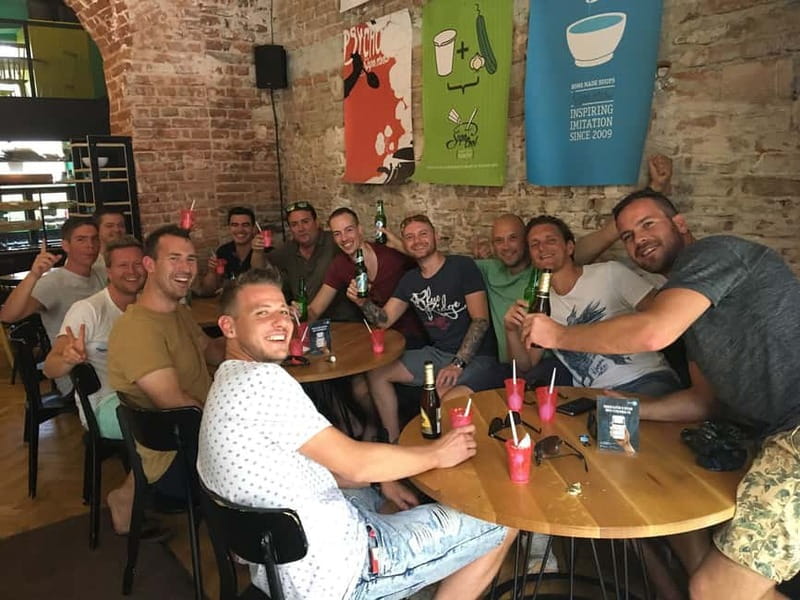
The Central Market Hall gives the tour a more structured market setting. Here, the focus shifts toward food and public shopping, with the guide explaining its connection to the Communist period.
That historical link helps you read the building and its role in daily life. Markets are practical places, but they also reflect how a government organizes food supply, how people shop, and what products are available. The guide’s job is not only to point out stalls. It is to explain how this market fits into the larger story of Bulgaria.
This is one of the tour’s strongest ideas: history arrives through ordinary details. You hear about political periods while standing among food counters and shoppers, rather than only in a lecture hall. For anyone trying to understand Sofia beyond its postcard sights, that is useful.
The Central Market Hall also helps bridge the history portion and the tasting portion. The tour does not treat food as an afterthought. Bulgarian cuisine is presented as part of the country’s cultural story, with explanations about local traditions and the origins of dishes.
Hali Market and the Kingdom period
Hali Market represents the Kingdom period in the tour’s historical framework. The stop gives your guide another chance to show how commerce and public life changed across different eras.
The name and setting can be easy to skim past if you explore Sofia alone. With a guide, you have a reason to pause and consider the market’s place in the city. The route is not simply a list of stops. It is a timeline you walk through, with food and shopping providing the connecting thread.
The four market stops also keep the pace varied. You are not spending the whole day in one indoor hall or walking from monument to monument. You move between different kinds of urban spaces, stopping often enough to hear the explanation and sample food.
If you enjoy museums and formal historical tours, this market-based approach may feel less detailed than a dedicated history walk. If you prefer learning through daily life, it should suit you well. The tour gives you a broad picture rather than a specialist study of one building.
Same city, a different plate:
- Reykjavik Food Walk – Local Foodie Adventure in Iceland
★ 5.0 · 18,952 reviews - Dubai: Old Town, Creek, Museums, Souks, & Street Food Tour
★ 4.8 · 10,816 reviews - Ho Chi Minh City Street Food Tour & Sightseeing By Motorbike
★ 5.0 · 9,413 reviews - Medellin: Comuna 13 Graffiti Tour, Cable Car & Street Food
★ 4.8 · 9,046 reviews
Women’s Market and the Ottoman influence
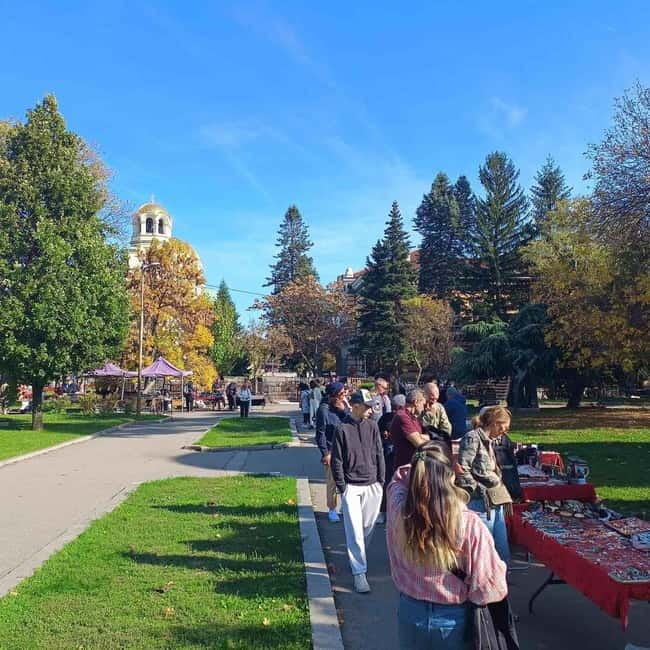
The Women’s Market is connected with Ottoman presence in Bulgaria. This part of the route brings food, trade, and cultural exchange into the same conversation.
That connection is especially helpful because Sofia’s history did not begin with modern Bulgaria. The city has been shaped by several empires, religions, and political systems. The market offers a practical setting for discussing those influences, especially as the guide explains how traditions and ingredients developed over time.
The Women’s Market can also be a good place to pay attention to local life. You are not only looking at architecture. You are watching a working market and seeing the kinds of places that serve residents. The tour presents this as part of Sofia’s identity, not as a staged attraction.
Do not expect a fixed shopping list or a guaranteed set of vendors. Markets change, and the supplied details do not specify exact stalls or products. The value is in the setting, the guide’s explanation, and the chance to see a side of central Sofia that you might otherwise pass without stopping.
Four food stops, and why the tasting matters
Food is the backbone of the tour. You stop four times for local dishes and drinks, and a soft drink is included at the final stop. The exact dishes are not specified in advance, so you should think of this as a sampling route rather than a fixed menu.
The portions have been described as plentiful, which is useful advice: arrive hungry. The tastings are not just small decorative bites. If you have a light breakfast, you may find yourself comfortably full by the end.
The food stops also make the history easier to remember. A conversation about Ottoman influence has more meaning when you are discussing food traditions. A note about Bulgarian culture becomes more concrete when you are tasting something local. One past booking specifically appreciated learning about Bulgarian yogurt and spring water, along with the country’s connection to the Ottoman Empire.
I like that the tour includes four stops rather than putting all the food at one restaurant. You get variety, and you see how food fits into different parts of the city. The tradeoff is that you do not control the menu in the same way you would at a restaurant you choose yourself. If you have allergies, dietary restrictions, or strong dislikes, ask for details before booking, since the provided information does not explain substitutions.
The final soft drink is included, but other drink arrangements are not fully specified. Bring water for the walk, especially if the weather is warm, and treat the included tastings as the main food value of the tour.
The landmark route between market stops
The sightseeing is not a separate monument circuit, but it adds real value. Along the way, the guide discusses Alexander Nevsky Cathedral, Saint Sofia Church, The Largo, the Roman ruins, Banya Bashi Mosque, Sofia Synagogue, Lion Bridge, and other important sights.
This gives you a useful central-Sofia overview. Alexander Nevsky Cathedral and Saint Sofia Church introduce the city’s religious and architectural story. The Largo and Roman ruins point to older layers beneath the modern center. Banya Bashi Mosque and Sofia Synagogue help show the mix of religious communities that shaped the city.
Lion Bridge adds another recognizable point to the route. Taken together, these sights give you a mental map. You may not spend long at each one, but you leave knowing where they are and how they relate to the markets.
I would not book this as your only major sightseeing tour if you want long visits inside monuments. The strength is the connection between landmarks, markets, history, and food. It is a broad orientation with plenty of context, not a detailed architectural tour.
What the pace and group experience are like
The tour lasts one day and involves about 3 kilometers of walking with stops. That distance is manageable for many people, but the repeated standing, city surfaces, and time on your feet still matter. Comfortable shoes and comfortable clothes are specifically recommended.
The pace appears to be leisurely enough for food and conversation. One booking described the route as a relaxed tour, while another noted that the group covered a lot of ground. Both can be true: you walk a fair distance, but frequent stops break it up.
Group size may vary. One past booking was run for only two people, while other groups had enough members to create a typical guided walk. A small group can make it easier to ask questions and adjust the conversation. You should not assume a private tour, but a small group is possible.
The meeting point is the Stefan Stambolov Monument in Crystal Park, described as a sculpture of a split head. Arrive 10 minutes early. That is worth doing because the meeting point is distinctive, but a late arrival can still be stressful in a city center.
One caution deserves attention: a booking in May 2023 started much later than expected and ended late enough to affect evening plans. This may have been an isolated timing problem, but I would avoid scheduling a tight dinner reservation or evening performance immediately afterward.
Is $50 a fair price?
At $50 per person, the price is reasonable if you value explanation and food as much as sightseeing. You are paying for an English-speaking local guide, four food stops, and a full walking route through several markets and central landmarks.
A self-guided market walk would cost less, of course. But you would need to research the historical links yourself, choose food stops, and work out how the markets connect with the Roman ruins, churches, mosque, synagogue, and other sights. The $50 fee pays for that structure and for the tastings.
The value is strongest for a first visit to Sofia, for people who like trying food without planning every stop, and for anyone interested in how history affects ordinary life. It is less compelling if you want a short stroll, a fixed restaurant meal, or a focused tour of one major monument.
Free cancellation up to 24 hours before the activity and the option to reserve now and pay later make the booking less rigid. The activity is offered in English, and availability and starting times should be checked for your date.
Who should book this Sofia market walk?
I would recommend it to first-time visitors, curious eaters, and people who like a guide who can connect everyday places with national history. It also suits couples, friends, and younger groups who want an easy way to get oriented. A past group ranging from ages 21 to 28 found it a good first-day choice, but the food and history work for a wider age range.
You should think twice if walking 3 kilometers is difficult, if you use a wheelchair, or if you need a highly predictable schedule. The route is not suitable for people with mobility impairments or wheelchair users. You should also ask about food arrangements before booking if you have dietary needs, since the available details do not list a set menu or substitutions.
Should you book the Flea and Food Markets Tour?
Book it if you want Sofia presented through markets, meals, and the city’s layered past. The strongest parts are the four historical market stops, the four food tastings, and guides such as Theodora, Nesi, Ivo, Daniella, Dany, and Danny, who have been praised for making the history clear and the conversation friendly.
I would schedule it near the start of your stay, arrive hungry, wear good shoes, and keep your evening open afterward. At $50, it is a solid choice for an informative food walk that gives you both something to eat and a better sense of where you are.
FAQ
How much does the Sofia Flea and Food Markets Tour cost?
The tour costs $50 per person. The price includes an expert local guide and four food stops with local dishes.
How long is the tour?
The activity is listed as valid for one day. The walking portion covers about 3 kilometers, or 2 miles, with stops.
Which markets does the tour visit?
The route includes the Flea Market, Central Market Hall, Hali Market, and Women’s Market.
What food and drinks are included?
You receive local dishes at four food stops. A soft drink is included at the last food stop. The exact dishes are not specified.
What language is the tour offered in?
The tour is conducted in English with a live guide.
Where does the tour meet, and what should I bring?
Meet at the Stefan Stambolov Monument in Crystal Park, a sculpture of a split head. Arrive 10 minutes early and bring comfortable shoes and comfortable clothes.
Just added around the world
- 1 Istanbul Tour: Highlights, Street Food & Hidden Pearls★ 5.0 · 9 reviews
- Evening Hyderabad Street Food Walk with Hyderabad Biryani★ 4.5 · 24 reviews
- Hyderabad Street Food Crawl (2 Hours Guided Food Tasting Tour)★ 4.0 · 5 reviews
- Japanese Street Food Class in Beech Grove★ 5.0 · 9 reviews
- Small-group Street food tour in Ischia★ 3.5 · 2 reviews
- Hyderabad : Evening Street Food Tasting with Guided Old City Tour★ 5.0 · 10 reviews
- Hyderabad Street Food Experience with Local Expert★ 4.5 · 2 reviews
- Hue Street Food On Foot (Daily Tour – Group Tour | 12 pax max)★ 5.0 · 15 reviews
Street Food Market Tours, compared.
Tokyo Tsukiji Fish Market Food and Culture Walking Tour
Read our review →
London Bridge & Borough Market Food Tour with 7 Authentic Dishes
Read our review →
Tokyo: Tsukiji Fish Market Food and Walking tour
Read our review →
Small Group Cooking Class & Market Food Tour in Florence
Read our review →
Tokyo: Tsukiji Fish Market Guided Walking Tour
Read our review →
Nishiki Market Brunch Walking Tour (7 Tastings + Brunch)
Read our review →