
REVIEW · BUENOS AIRES STREET FOOD TOURS
BA: Empanadas and Alfajores Cooking Experience in Palermo
Argentina’s favorite comfort foods become much more memorable when you make them yourself. In this small Palermo cooking class, you prepare empanadas, shape them according to their filling, and finish with dulce de leche alfajores while a local host explains the customs behind both dishes.
I like the choice of beef or vegan lentil empanadas, and I like that the class works well for families, solo visitors, and couples. The main thing to know is that the hands-on work can vary: some sessions involve chopping, cooking, rolling, and filling, while others use premade pastry shells and leave much of the work to one participant.
Key points
- Two Argentine staples in one class: Make savory empanadas, then assemble dulce de leche alfajores.
- Meat and vegan choices: Beef and lentil fillings are available, making the class easier to share across a mixed-diet group.
- Small-group format: The maximum is 10 people, so conversation and individual help are possible.
- Local guidance: Hosts such as Tomas, Valentino, Carolina, Catalina, and Cata have led sessions, adding food stories and family traditions.
- Cultural details with your meal: Learn about empanada shapes, mate, regional food customs, and the role of home cooking.
- Recipes to use later: Recipes are sent by WhatsApp after class, a useful extra for anyone who wants to recreate the meal.
Palermo cooking with a local point of view

This is not a restaurant meal with a quick demonstration. The goal is to put you at the counter and show you how two everyday Argentine foods come together.
The class takes place at Gorriti 4882 in Palermo, a neighborhood location near public transportation. You meet there and return to the same point at the end. Transportation is not included, but the fixed meeting place keeps the plan simple. Allow about two and a half hours, since the food needs time to cook, cool, and be assembled.
The class is capped at 10 people. That number matters. You are not signing up for a large cooking show where you watch a chef work from across the room. At its best, the group size gives you room to ask how to seal an empanada, how much filling to use, or how to handle the fragile alfajor cookies.
Hosts have included Tomas, Valentino, Carolina, Catalina, Cata, and Thomas. The exact instructor depends on the date, but the format remains similar: a native Buenos Aires host leads the preparation and adds context about Argentine food and daily life.
More Cooking Classes in the world:
- Florence: Cooking Class with Local Food Market Tour
★ 4.9 · 407 reviews - Street Food Cooking Class
★ 5.0 · 125 reviews - Busan Local Food Cooking Class with Market Tour
★ 5.0 · 53 reviews
Starting with empanadas, Argentina’s edible calling card
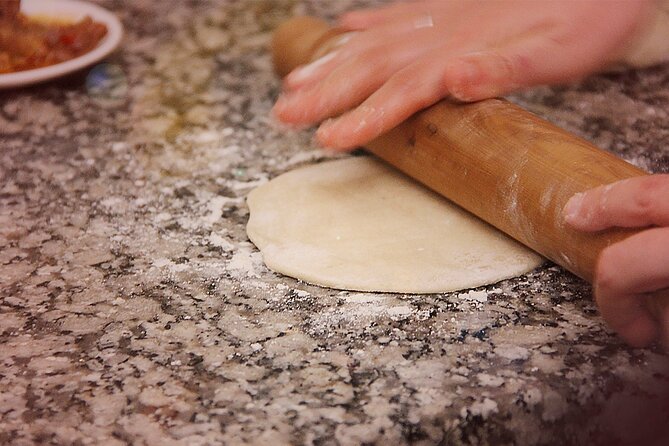
Empanadas are the main event here. They are found all over Argentina, but fillings, folding styles, and shapes vary from place to place. That makes the class more useful than simply handing you a recipe.
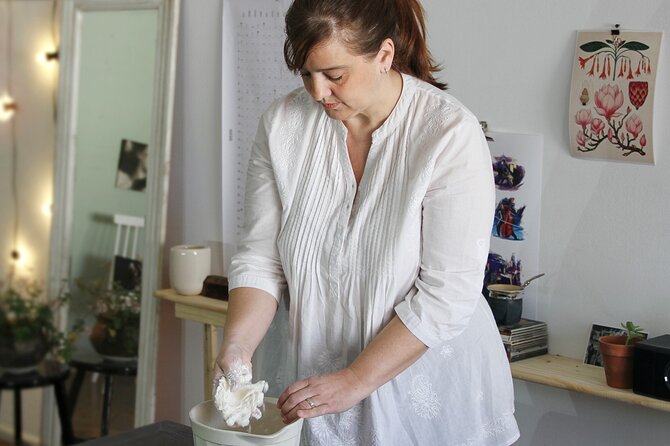
You begin by preparing the filling. Depending on your choice, this can involve chopping vegetables and meat or working with the lentil mixture for the vegan option. A short stovetop cooking step follows, and then the filling needs time to cool before it goes into the pastry.
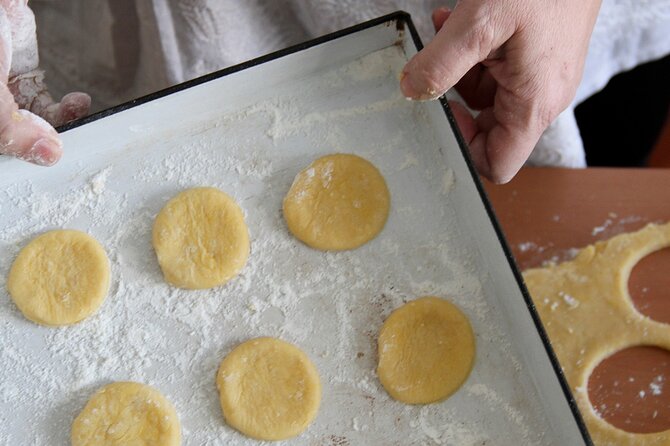
You may work with premade empanada shells rather than making the dough completely from scratch. This is worth knowing if you want a serious pastry course. The class focuses more on the filling, assembly, folding, and cultural meaning than on a full dough-making lesson.
The folding is where the Argentine character comes through. The shape and edge pattern can identify the filling. One practical lesson from the class is that beef and lentil empanadas may be folded differently, so you can tell them apart before they reach the oven.
That sounds simple until you try it. You must place enough filling inside without tearing the shell, then seal the edge firmly and neatly. The class gives you a chance to practice instead of treating the fold as a minor finishing touch.
For families, this is often the most engaging part. Children can help fill, press, and shape the pastries, but adults should take charge of chopping with sharp knives. A family of five has enough room to participate, though the instructor may still need to divide tasks so everyone gets a turn.
Beef or lentil filling for a mixed group
The meat choice is the traditional crowd-pleaser, but the vegan lentil option is more than an afterthought. It lets vegetarians and meat eaters share the same activity without splitting the group into separate menus.
If your party includes different diets, mention that when booking or at the start of the class. The supplied information confirms meat and vegan options, but it does not promise every possible dietary accommodation. You should not assume that gluten-free, dairy-free, or allergy-specific versions are available.
The food is generally described as delicious and satisfying, with several sessions praised for the flavor of both the empanadas and alfajores. Still, the recipe can feel plain to someone expecting a heavily seasoned cooking workshop. One session received a lukewarm assessment for mild flavors and heavy use of sunflower oil.
That is a fair limitation to keep in mind. This is an approachable home-style class, not a chef’s tasting menu. The recipes are designed to be friendly to beginners and easy to repeat at home. If you prefer bold spice, complex sauces, or advanced knife work, you may find the cooking less demanding than expected.
Alfajores and the careful art of dulce de leche
After the savory preparation, the class turns sweet. Alfajores are delicate sandwich cookies filled with creamy dulce de leche, one of Argentina’s best-known sweets.
The process includes mixing, baking, and assembling the cookies, although the precise amount of work can differ by session. Some classes have used prepared cookies for the final assembly, with participants spreading dulce de leche and rolling the edges in coconut. Other sessions have involved making more of the recipe from scratch.
Handle the cookies gently. They can be fragile, and pressing too hard can crack them or squeeze out the filling. This is a small but useful lesson, especially for children who may want to build the tallest or most heavily filled alfajor.
The alfajores give the class a slower, more relaxed second half. While fillings cool or cookies bake, the host can talk about family traditions and Argentine food customs. One memorable story involves children being expected to whistle while working in a grandmother’s kitchen, so she knew they were not sneaking bites of the filling.
That kind of detail is what makes the activity more than a recipe exchange. You are learning how food is passed through families, not just how much dulce de leche to spread between two cookies.
Same city, a different plate:
- Reykjavik Food Walk – Local Foodie Adventure in Iceland
★ 5.0 · 18,952 reviews - Dubai: Old Town, Creek, Museums, Souks, & Street Food Tour
★ 4.8 · 10,816 reviews - Ho Chi Minh City Street Food Tour & Sightseeing By Motorbike
★ 5.0 · 9,413 reviews - Medellin: Comuna 13 Graffiti Tour, Cable Car & Street Food
★ 4.8 · 9,046 reviews
Mate, coffee, tea, and the social side of the class
Mate is included and is described as Argentina’s most famous infusion. It is an important part of the experience because it gives you a small window into a social custom that is easy to miss during a normal sightseeing day.
Coffee and tea are also listed among the included drinks. Some sessions have included wine, and people have enjoyed pairing it with the food, but wine is not the dependable inclusion described in the booking details. Treat it as a possible extra rather than a guarantee.
The drink service also shapes the mood. You are given time to talk with the host and with others at the table instead of rushing from one recipe to the next. Solo visitors can meet people from different countries, while families can use the relaxed pace to talk about what they have just learned.
Do not expect a formal lecture. The cultural information appears during the work: while chopping, folding, waiting for food to cool, and eating the finished dishes. Hosts have discussed Argentine geography, food origins, city history, family cooking, and regional differences in empanadas.
The quality of that commentary depends on the individual host. Tomas and Valentino have been praised for patience and clear instruction, while other sessions have offered less explanation. If cultural background is a major reason you are booking, ask questions as you work. A good host can turn a basic recipe into a much more rewarding conversation.
How hands-on is the cooking?
This is the most important point to clarify before you book. The experience is advertised as hands-on, and many sessions do include chopping, stovetop cooking, rolling, stuffing, folding, baking, and alfajor assembly.
But the amount of active cooking is not perfectly fixed. One family session involved limited cooking, with prepared shells, a quick filling, and simple cookie assembly. In another, the group made almost everything from scratch. At times, one person may do a task while the rest watch.
For a first cooking class, that lighter format can be a benefit. You are unlikely to feel lost, and the host can keep the food on schedule. It also works well if you are jet-lagged or want a low-pressure afternoon activity.
If you are an experienced home cook, you may want to ask for a turn at each stage. Say clearly that you would like to chop, fold, or shape rather than simply observe. The small group makes this request more realistic than it would be in a large class.
The strongest part of the instruction is practical. You learn how much filling fits, how to avoid tearing the pastry, how to identify varieties by their folds, and how gently to handle the alfajor shells. These are the small tricks that a printed recipe usually does not explain well.
The meal at the end, and what you take home
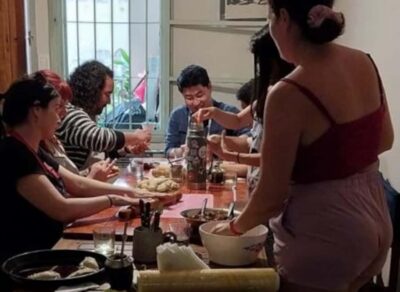
The best reward is eating what you have prepared. The finished empanadas and alfajores are served during the class, giving you a chance to judge the techniques while they are still fresh.
The meal is casual rather than elaborate. You are not receiving several courses or a long wine pairing. You are eating the food made during the session, with drinks and conversation around the table.
The recipes are sent through WhatsApp afterward. That is a useful benefit, especially because folding and assembly are easier to remember when you have just practiced them. Save the message before leaving Argentina, and take a quick photo of your finished empanadas if you want a visual reminder of the shapes.
The recipes are also likely to appeal to beginners. The class is not built around difficult equipment or rare ingredients. You receive the cooking tools and ingredients during the experience, while transportation and gratuities are not included.
Is $49 a fair price?
At $49 per person, this is not the cheapest way to eat empanadas in Buenos Aires. You can buy them from a bakery or casual restaurant for far less. The value comes from the instruction, the food, the local conversation, the small group, and the recipes you can use later.
The two-and-a-half-hour duration helps the price make sense. You are not paying for a short demonstration followed by a quick bite. You are getting a full activity that can fill much of an afternoon, with two iconic Argentine foods and a drink ritual included.
The value is strongest for couples, families, and solo visitors who want a social activity with a clear result. It is also a good choice near the start of a Buenos Aires stay because the host may help you understand other local foods and customs.
For a family, the cost adds up quickly. Children aged 10 and 13 have enjoyed the class, but younger children may need close help with knives and may have less patience during cooling or baking time. I would book it for a family that enjoys sitting down together, not for children who need constant motion.
For serious food students, the value is less certain. The class may not include full dough preparation, advanced technique, or a detailed study of regional empanada styles. It is better viewed as a friendly introduction than as professional training.
Who should book this Palermo experience?
I would choose it for:
- Families wanting an activity that is social, edible, and easy to understand.
- Couples who want more than a restaurant meal.
- Solo visitors who enjoy meeting people over a shared task.
- Vegetarians traveling with meat eaters.
- First-time cooks who want simple instruction and recipes for home.
- Food lovers who want family stories and cultural context with their meal.
I would think twice if you need a fully structured professional cooking course, strict dietary customization, or guaranteed wine. I would also be cautious if you dislike group activities or prefer to control every step yourself.
The host makes a large difference. The best sessions have a warm, patient instructor who keeps everyone involved and explains why the food is shaped or prepared in a certain way. The less successful format is one where you mostly watch while another person handles the cooking.
One practical point: free cancellation is available up to 24 hours before the start time. Changes or cancellations inside that window are not accepted for a refund. Since the experience is often booked well ahead, check your schedule carefully before committing.
My call: book it for culture, not culinary school
I recommend this class if you want to connect Argentine food with family customs, mate, and local conversation. The small group, meat and vegan choices, recipes sent afterward, and two-part menu make it a useful value for most visitors.
Go in expecting a friendly cultural cooking session, not a rigorous pastry workshop. Ask to take part in every step, help your children with knives, and do not assume wine is included. If you keep those expectations in place, the experience gives you something better than another meal: a skill you can repeat at home and a clearer sense of why empanadas and alfajores matter in Argentina.
FAQ
Where does the cooking experience begin and end?
It begins at Gorriti 4882, C1414BJN, in Buenos Aires. The activity ends back at the same meeting point.
How long does the class last?
The experience lasts approximately two hours and 30 minutes.
How many people can join the class?
The maximum group size is 10 people.
Are vegetarian or vegan empanadas available?
Yes. You can choose between a meat option and a vegan option. The vegan filling described for the class is lentil-based.
What food and drinks are included?
Ingredients for the empanadas and alfajores, cooking tools, and a professional native host are included. Coffee or tea and mate are listed as included drinks. Wine may be offered in some sessions, but it is not the stated guaranteed inclusion.
Is transportation included?
No. Transportation is not included. You are responsible for reaching the meeting point at Gorriti 4882.
What is the cancellation policy?
You can cancel up to 24 hours before the experience start time for a full refund. Cancellations or changes made less than 24 hours before the start time are not accepted for a refund.
Just added around the world
- 1 Istanbul Tour: Highlights, Street Food & Hidden Pearls★ 5.0 · 9 reviews
- Evening Hyderabad Street Food Walk with Hyderabad Biryani★ 4.5 · 24 reviews
- Hyderabad Street Food Crawl (2 Hours Guided Food Tasting Tour)★ 4.0 · 5 reviews
- Japanese Street Food Class in Beech Grove★ 5.0 · 9 reviews
- Small-group Street food tour in Ischia★ 3.5 · 2 reviews
- Hyderabad Street Food Experience with Local Expert★ 4.5 · 2 reviews
- Hyderabad : Evening Street Food Tasting with Guided Old City Tour★ 5.0 · 10 reviews
- Hue Street Food On Foot (Daily Tour – Group Tour | 12 pax max)★ 5.0 · 15 reviews
Buenos Aires Street Food Tours, compared.
Buenos Aires: Empanadas and Alfajores Guided Cooking Class
Read our review →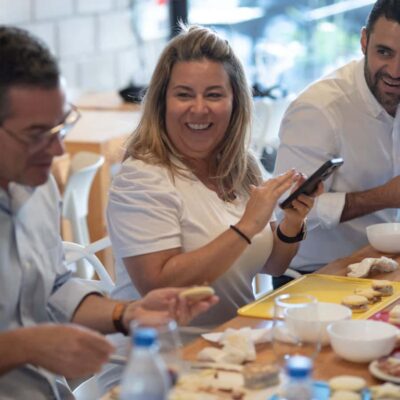
Buenos Aires: Empanada & Alfajor Cooking Lesson in Palermo
Read our review →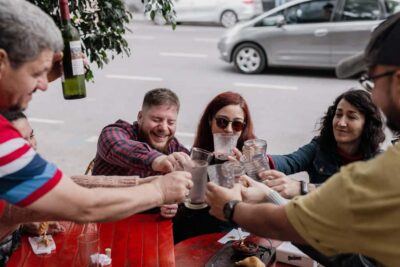
San Telmo: Historical Guided Tour with Street Food & Drinks
Read our review →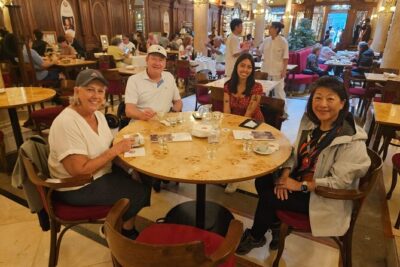
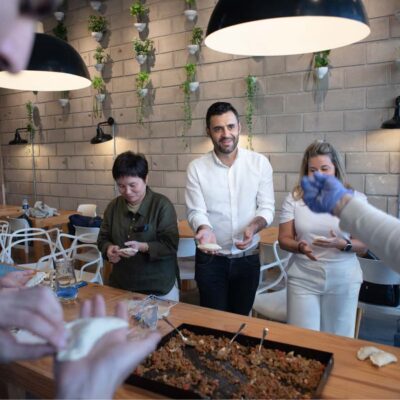
Argentinian Empanadas Cooking Experience in Palermo, Bs As
Read our review →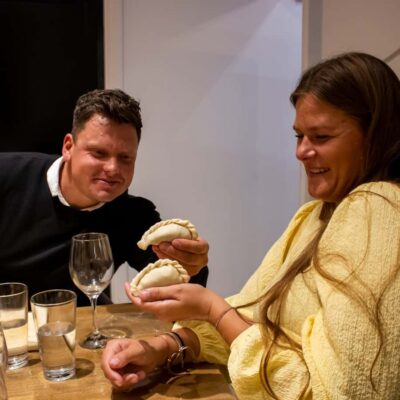
Premium Empanadas Cooking Class & Wine Tasting Experience
Read our review →
5hs Small Group City Tour of Buenos Aires with Street Food
Read our review →
Browse the lists this tour appears in