
REVIEW · HANOI STREET FOOD TOURS
The 10 Tastings of Hanoi With Locals: Private Street Food Tour
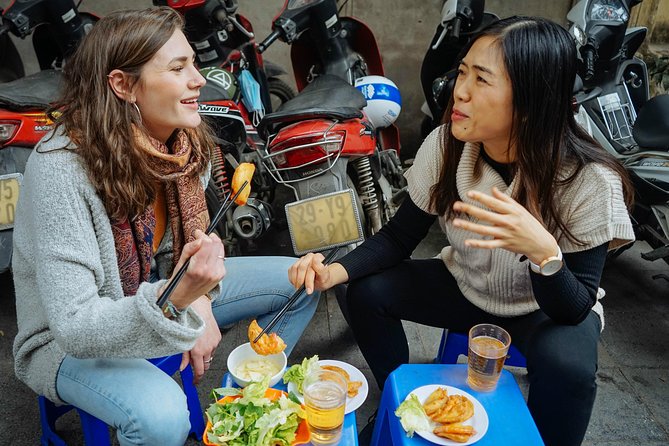
Hanoi’s best introduction may be eaten one small plate at a time. This private three-hour walk takes you through the Old Quarter for 10 food and drink tastings, with stops for pho rolls, bún chả, bánh mì, fruit dessert, and the city’s famous egg coffee.
I like the one-on-one format, which gives your guide room to adjust dishes, explain local customs, and help with dietary needs. I also like the mix of food and city sights, including Ba Da Temple, old French-style houses, and the traditional medicine street. The main drawback is the pace: ten tastings in three hours can leave you very full, and the experience depends heavily on how talkative and engaged your assigned guide is.
Key points at a glance
- Ten tastes in three hours: Expect a generous run of Hanoi specialties rather than one large restaurant meal.
- Private guiding: Only your group and the local guide participate, so food choices can be adjusted more easily.
- Strong guide reports: Lien, Jessica, Ha, Leanne, and Annie are praised in individual feedback for warmth, local insight, and good food choices.
- Good for dietary needs: Vegetarian alternatives are offered, and one guide handled a gluten-free request with care.
- Old Quarter context: The route adds temples, colonial architecture, traditional medicine shops, and family-run food places between bites.
- Come hungry, but not starving: One person advised asking for smaller portions if you want to finish every stop.
Why this private Hanoi food walk works
I like food tours that help you eat with confidence, not just point at dishes and name them. Hanoi’s Old Quarter can feel confusing at first, with narrow streets, tiny eateries, unfamiliar menus, and food stalls that may not explain what is being served.
This tour gives you a local guide to handle that first layer of uncertainty. You can ask what a dish contains, how to eat it, and which flavors are typical in northern Vietnam. The private setup matters here. If you dislike an ingredient, need a vegetarian substitute, or have a food restriction, your guide can focus on your group instead of trying to satisfy a large crowd.
The route also offers more than a checklist of famous dishes. You walk through streets linked to traditional medicine, French architecture, old temples, and everyday Hanoian life. That makes the food easier to understand. A bowl of pho means more when you have just seen the street life around it.
The tour costs $78.52 per person. That is not a cheap street-food crawl by Hanoi standards, since individual dishes in the city can cost far less. You are paying for the private guide, the planning, the explanations, the food, and the ease of moving between places. For a first evening in Hanoi, that can be fair value, especially if you want a local to choose the stops and explain what you are eating.
If you already know Hanoi well and are comfortable ordering from small eateries, you could spend less by exploring on your own. If you want a relaxed introduction without having to research every dish, the price is easier to justify.
A few more street food tours around Hanoi worth a look
- Private Hanoi Street Food Walking Tour With Real Foodie
★ 5.0 · 1,042 reviews - Private Street Food Tour – Walking Hanoi Old Quarter
★ 5.0 · 294 reviews - [Hi-end] Private Hanoi Street Food Tour With Real Foodie
★ 5.0 · 154 reviews
Starting beside Hoan Kiem Lake
The meeting point is at 16 P. Lê Thái Tổ, near the Thang Long Water Puppet Theater and Hoan Kiem Lake. You meet your guide at the entrance area, then begin on foot.
This is a useful starting point because Hoan Kiem sits beside the Old Quarter and gives you quick access to several food streets. Your guide may also explain the nearby area before the tastings begin. The water puppet theater itself is a meeting landmark, but admission to a performance is not included.
The opening stop includes Ba Da Temple, one of Hanoi’s four sacred temples. It is an old, modest religious site rather than a large showpiece. I would treat it as a quiet pause before the food route picks up, and as a reminder that the Old Quarter is not only about shops and restaurants.
The itinerary also includes Ba Da Pagoda later in the walk, described as a small Buddhist temple built in 1056. The two temple references may represent nearby or related stops, so you should not expect a long temple visit. Their value is in the atmosphere and the brief cultural context your guide provides between meals.
Pho rolls and shrimp pastry on Lý Quốc Sư Street
The first food section takes you to Phố Lý Quốc Sư, where you warm up with a pho roll. Instead of a bowl of noodles in broth, this dish uses soft pho sheets wrapped around beef and herbs.
That makes it a smart first taste. You get the familiar ingredients associated with pho, but in a lighter, more portable form. It also shows how Vietnamese food can use one basic ingredient in several ways.
A shrimp pastry is part of this stretch of the route as well. The exact serving size and vendor can vary, but the point is to try a local specialty in a casual setting rather than at a formal restaurant. You should expect short stops, quick tasting, and room for your guide to explain what is on the plate.
Lý Quốc Sư is also associated with pho, so the street itself helps set up a later tasting. I like the progression: you first meet pho in a rolled form, then later try the classic soup. That comparison gives you a better feel for the dish than a single bowl would.
French architecture at 8 P. Chân Cầm
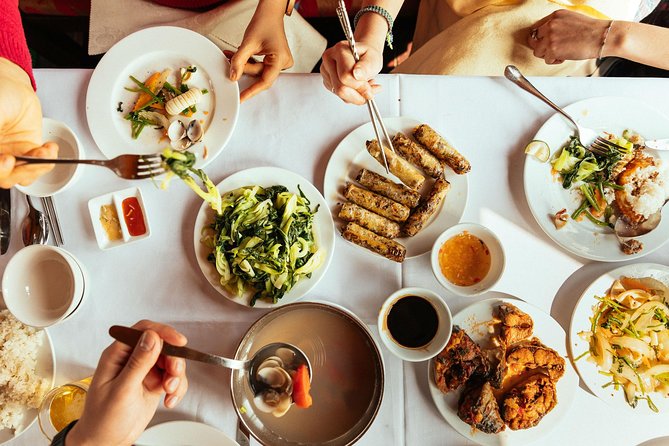
Not every stop is about eating. At 8 P. Chân Cầm, you pause near a villa built in 1930 in the French architectural style.
The guide explains how the building was used and how local people come together there now. The stop is brief, about 15 minutes in the listed schedule, but it adds a useful layer to the walk. Hanoi’s food culture developed through many influences, and the baguette used in bánh mì is one clear example of French influence.
You should not expect a full architecture tour or entry into every building. This is a street-level look at the Old Quarter, with the guide filling in the story. For me, these short pauses keep the tour from feeling like a nonstop eating contest.
Same city, a different plate:
- Small Group Hanoi Street Food Tour with a Real Foodie
★ 5.0 · 4,682 reviews - Hanoi: Street Food Tour with Train Street & Hidden Alleyways
★ 5.0 · 2,831 reviews - Hanoi: Guided Street Food Tour with Train Street Experience
★ 4.9 · 2,479 reviews - [HOT] Hanoi Old Quarter Walking Street Food – Small Group Tour
★ 5.0 · 2,163 reviews
Bún chả on Đường Thành
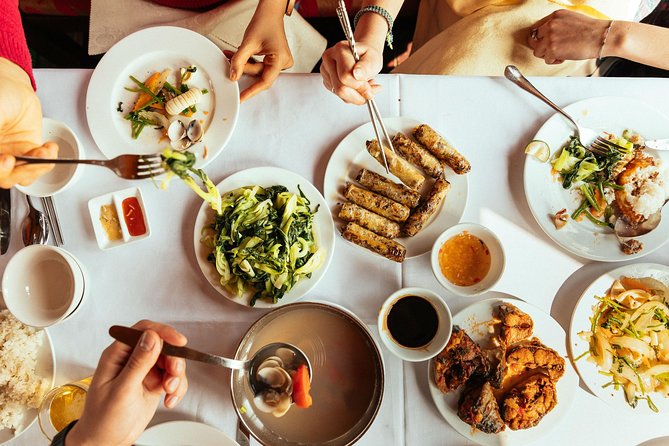
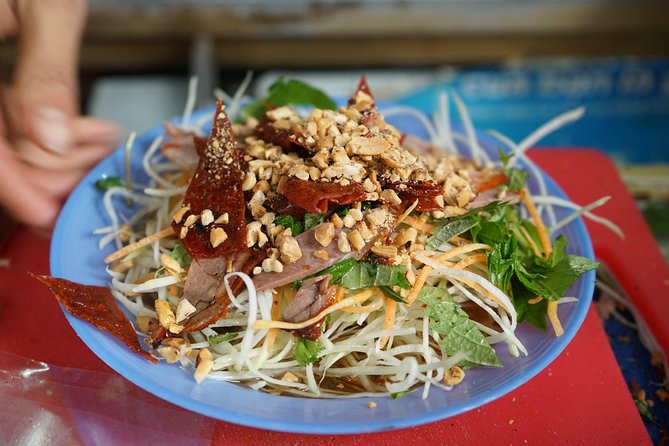
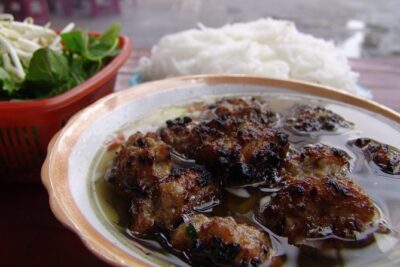
On Phố Đường Thành, the menu turns to bún chả, one of Hanoi’s defining meals. It combines grilled pork, rice noodles, fresh pickled vegetables, and a dipping sauce.
The usual eating method is to bring the noodles, pork, herbs, and pickled vegetables together with the sauce. Your guide can show you the local way to handle the components, which is useful if you have never ordered it before.
Bún chả is a substantial stop, especially when combined with the other dishes ahead. The flavors should give you a break from the lighter snacks: grilled meat, fresh herbs, sweet and savory sauce, and sharp pickled vegetables.
This is one place where appetite management matters. The tour includes ten tastings, but tasting does not have to mean eating a full serving at every stop. If you are traveling with another person, ask your guide about sharing or ordering smaller portions. One detailed account specifically advised doing this if you are not very hungry.
Steamed rice rolls in a small Hanoian eatery
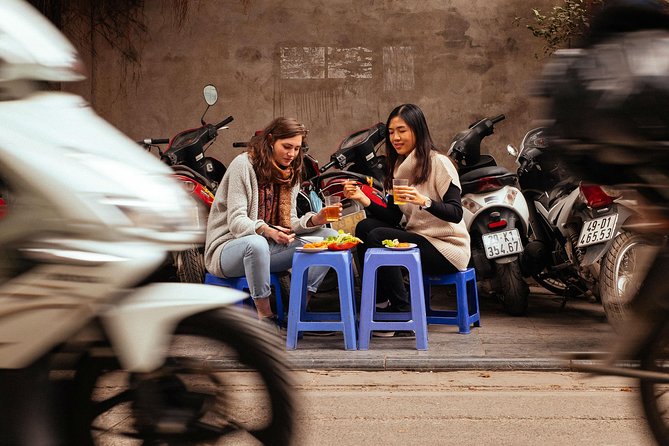
At Hàng Điếu, you step into a typical Hanoian eatery for steamed rice rolls. These rolls are filled with pork, mushrooms, or both, and often come with fried shallots.
This stop gives you a look at the kind of simple, focused food place that can be easy to miss when you walk alone. The dish is soft and delicate, with the filling and toppings doing most of the work.
The setting is part of the experience. You are not simply receiving a prepared sample at a tourist venue. You are entering a local-style eatery and seeing how a familiar dish is served in Hanoi.
As with any compact street-food stop, seating and space may be limited. The provided information does not promise a particular level of comfort, so wear shoes and clothing that make walking and quick stops easy.
Classic pho on Hàng Vải
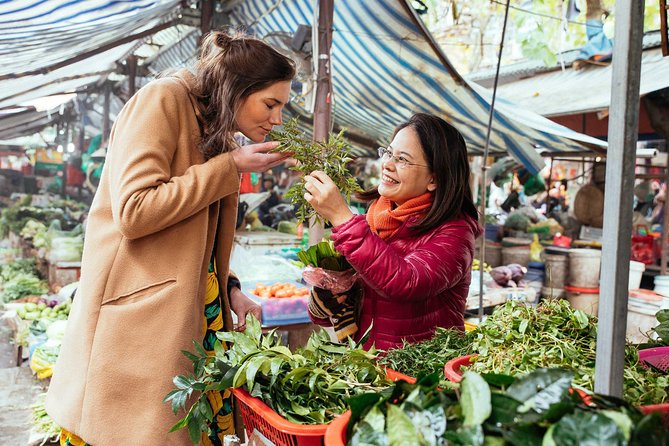
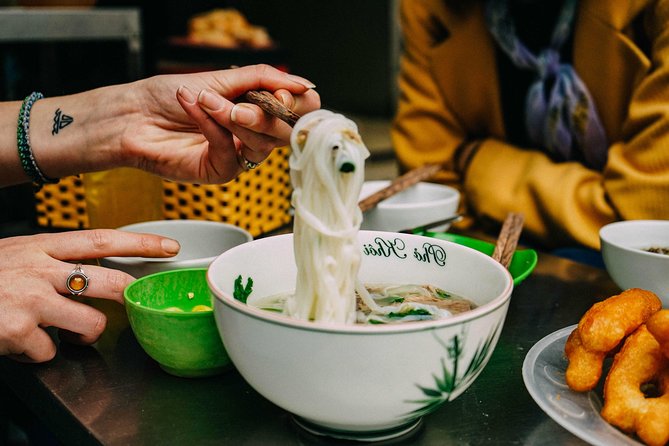
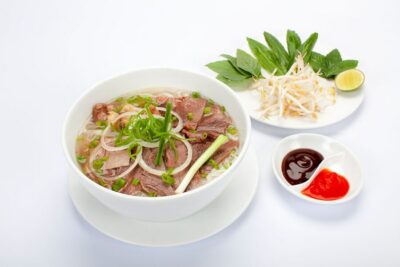
The pho tasting on Phố Hàng Vải is the tour’s most familiar dish for many people. This version uses a special broth with beef or chicken, plus vinegar, spring onions, pepper, and lime juice.
Your guide can help you adjust the bowl with the available seasonings and explain how the northern style differs from versions found elsewhere in Vietnam. The chance to compare this bowl with the earlier pho roll is especially useful.
One person who took the tour returned to the pho place the next day, which tells you something practical: the route may reveal restaurants you want to revisit. You should note the names or locations of any stop that suits your taste.
Pho can be filling, so pace yourself. If this stop comes after bún chả and rice rolls, you may be glad to share or leave some room rather than treating each tasting as a full meal.
Bánh mì and the French-Vietnamese connection
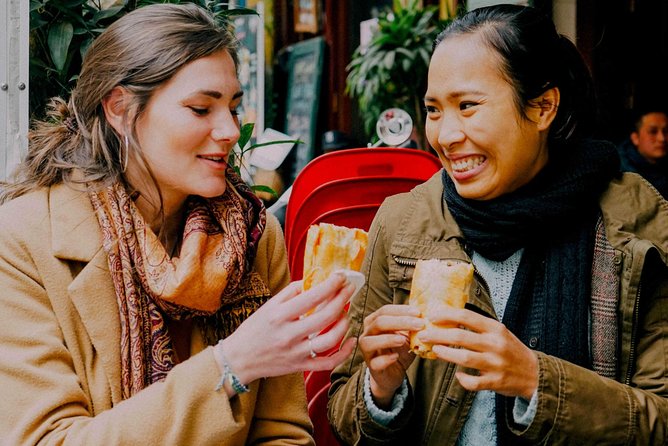
On Phố Bát Sứ, you taste bánh mì, the Vietnamese baguette sandwich. The baguette arrived during the French colonial period and became a local staple by the early twentieth century.
The appeal is in the blend: French-style bread with Vietnamese fillings, herbs, pickles, and sauces. Your guide can explain the combination and point out how a foreign ingredient became part of everyday Vietnamese food.
Bánh mì is convenient to eat while walking, though you may also stop at a food shop. It is one of the more recognizable dishes on the route, but the local preparation still makes it worthwhile. I would pay attention to the bread, the balance of fillings, and the pickled elements rather than rushing through it.
If you have gluten restrictions, tell the provider in advance and repeat the request when you meet your guide. One guide, Lien, received specific praise for handling a husband’s gluten-free needs carefully. That is encouraging, but you should still communicate clearly because bánh mì itself is made with wheat bread.
Traditional medicine on Phố Lãn Ông
Phố Lãn Ông is known for traditional medicine, giving you a short change of subject after several food stops. The street is named after a famous physician, and your guide can explain his connection to the area.
You may notice specialist shops and distinctive smells as you walk. This is not presented as a tasting stop or a medical consultation. It is a chance to see one of the Old Quarter’s historic trades still linked to a particular street.
I find this kind of stop useful because it shows how Hanoi’s streets were traditionally organized around specific industries. It also gives your stomach a moment to catch up.
Fruit dessert on Tố Tịch Street
The sweet course arrives on Phố Tố Tịch. You try a fruit dessert made with different fruits, coconut milk, condensed milk, and crushed ice.
It is a cool, sweet change after savory dishes. The fruit and ice keep the finish from feeling as heavy as another pastry would, while the condensed milk and coconut milk make it distinctly indulgent.
The exact fruits may vary, so think of this as a flexible local dessert rather than a fixed recipe. If you prefer less sweetness, ask your guide what adjustments are possible. The tour includes alternatives for dietary restrictions, though the specific dessert replacement is not guaranteed in advance.
Egg coffee at a family-run café
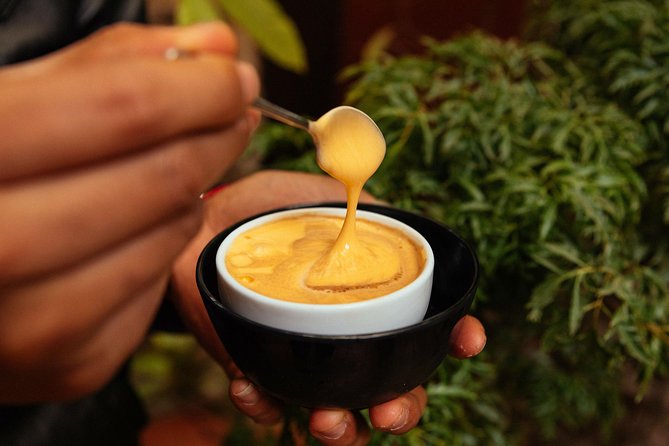
The final major food stop is egg coffee on Phố Đinh Tiên Hoàng. You visit a family-run café associated with Hanoi’s coffee culture and try the drink created in 1940, when a bartender whisked eggs into coffee.
Egg coffee is not simply coffee topped with a plain egg. The creamy egg mixture changes the drink’s texture and adds sweetness, making it closer to a dessert and coffee in one cup.
This is a good ending because you can sit and slow down after walking through the Old Quarter. It also gives your guide time to offer recommendations for other places to eat during your stay.
The café visit may be one of the more memorable moments for first-time visitors. If you have already tried egg coffee, it still provides a useful comparison with other versions in Hanoi. The family-run setting adds a personal feel that a large coffee chain cannot offer.
What the guide adds to the evening
The guide is the deciding factor in a private food tour. Food quality matters, but so does the ability to explain dishes, keep the route moving, and make you comfortable in small local places.
Specific guides praised in the feedback include Lien, Jessica, Ha, Leanne, and Annie. Lien is noted for careful handling of gluten-free food, while Jessica is described as energetic and enjoyable company. Ha is associated with a fun walking experience, and Annie received strong praise as part of a wider Vietnam food itinerary.
These names do not mean you can select one of them unless the booking process allows it. Your assigned host may be different. One less positive experience involved a guide who spoke very little and spent too much time on her phone, so I would not pretend that every guide delivers the same level of conversation.
That is the key risk of a private experience with a local host. When the match works, you get personal recommendations and an easy evening. When the guide is disengaged, there is no group energy to carry the tour.
Timing, walking, and practical value
The experience lasts about three hours and ends back at the meeting point. Pick-up and drop-off are not included, so you need to reach the Lê Thái Tổ meeting point yourself.
The route is on foot through the Old Quarter, with food stops and city sights mixed together. The listed schedule gives roughly 15 minutes to each stop, but the whole route is described as approximately three hours. You should think of the timing as a guide rather than a promise that every stop will last exactly 15 minutes.
Wear comfortable shoes and arrive with a moderate appetite. You need enough hunger to enjoy the dishes, but arriving completely empty may be a mistake because ten tastings add up quickly.
Vegetarian alternatives are offered. Dietary restrictions can be accommodated, but I would state them clearly when booking and again at the start. For more serious allergies, ask exactly what each dish contains before eating.
The tour has mobile ticketing, accepts group discounts, and is near public transportation. Most people can participate, but the supplied details do not promise step-free access or a vehicle between stops. If you have mobility concerns, ask the provider before booking.
Cancellation is free if you cancel at least 24 hours before the local start time. Inside that window, the payment is not refunded, and late changes are not accepted.
Who should book this Hanoi food tour?
I would choose this tour for a first or second day in Hanoi. You get a quick introduction to the Old Quarter, several dishes to remember, and practical ideas for places you may want to revisit.
It also suits couples, families, and small private groups who want to set their own pace. The private format is particularly useful if one person is vegetarian or needs gluten-free alternatives.
This is less suited to you if you want a slow, formal dinner with generous portions and long time at each table. It is also not ideal if you already have a detailed food plan and prefer to choose every restaurant yourself.
The tour is best understood as a guided tasting walk. You are paying for access, translation, context, and a local person who can make unfamiliar food easier to try. The value improves if you use the guide well: ask for restaurant tips, request smaller portions, and explain your tastes early.
Should you book it?
Book this private Hanoi food tour if you want to sample many northern Vietnamese dishes without sorting out the route yourself. The strongest reasons are the private attention, the range of food, the Old Quarter setting, and the chance to ask direct questions about ingredients and customs.
At $78.52 per person, it costs more than eating independently, but the price can make sense for a first evening, a special occasion, or a group with dietary needs. Go in hungry but not famished, and remember that your guide’s energy will shape the experience.
If you want ten tastes, local context, and a gentle introduction to Hanoi street food, I would book it. If you mainly want the lowest possible food bill or a guaranteed guide by name, choose another approach.
FAQ
How long does the Hanoi food tour last?
The tour lasts approximately three hours and ends back at the meeting point.
Where does the tour begin?
It begins at 16 P. Lê Thái Tổ, Hàng Trống, Hoàn Kiếm, Hanoi, near the Thang Long Water Puppet Theater.
Is this a private tour?
Yes. Only your group and your local guide participate.
How many food tastings are included?
The tour includes 10 food and drink tastings. The selection is tailored to your preferences, and extra food and drinks are not included.
Are vegetarian alternatives available?
Yes. Vegetarian alternatives are offered. You should also tell the provider about other dietary restrictions when booking.
Is hotel pick-up included?
No. Pick-up and drop-off are not included, so you need to make your own way to the meeting point.
Can I cancel for a full refund?
Yes, if you cancel at least 24 hours before the experience start time. Cancellations or changes made less than 24 hours before the start time are not refunded.
Just added around Hanoi
- Street Food by Walking Tour for 3 hours in Hanoi, Vietnam★ 5.0 · 26 reviews
- Female Riders Vespa Night Street Food + Train Street food 4 Hours★ 5.0 · 35 reviews
- Walking Street Food Tour and Hidden Music★ 4.5 · 19 reviews
- Hanoi Vespa After Dark Street food + Train Street+ Live Music★ 5.0 · 18 reviews
- TASTE OF HANOI – walking street food adventure★ 5.0 · 94 reviews
- Street food on foot with a local-Asian Promise★ 5.0 · 19 reviews
- Street Food Tour with Hanoian Snacks★ 4.0 · 2 reviews
- Hanoi Train Street Food Walking Tour★ 5.0 · 6 reviews
Hanoi Street Food Tours, compared.
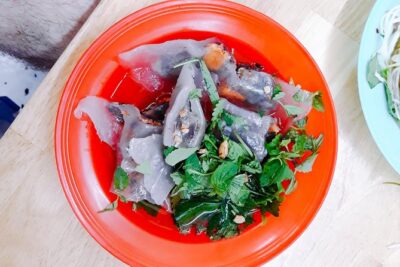
Small Group Hanoi Street Food Tour with a Real Foodie
Read our review →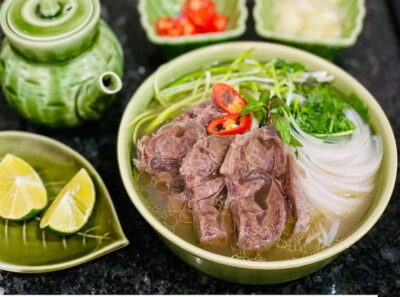
Hanoi: Street Food Tour with Train Street & Hidden Alleyways
Read our review →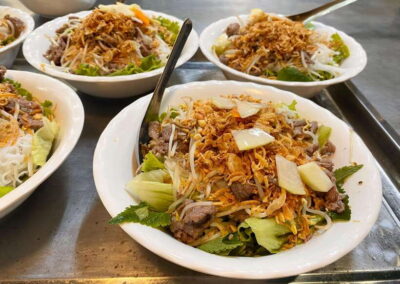
Hanoi: Guided Street Food Tour with Train Street Experience
Read our review →![[HOT] Hanoi Old Quarter Walking Street Food – Small Group Tour](https://4.streetfoodtrips.com/wp-content/uploads/hot-hanoi-old-quarter-walking-street-food-small-group-tour-400x267.jpg)
[HOT] Hanoi Old Quarter Walking Street Food – Small Group Tour
Read our review →
Private Hanoi Street Food Walking Tour With Real Foodie
Read our review →
Hanoi: Eat Like a Local Small Group Street Food Tour
Read our review →Browse the lists this tour appears in