
REVIEW · ROME STREET FOOD TOURS
Rome Street Food Tour with Local Guide
Rome’s best street food is often small, hot, fried, handheld, and eaten between ancient ruins. This 2.5-hour walk lets you try suppli, pizza, gelato, seasonal produce, and local drinks while moving through Campo de’ Fiori, the Jewish Ghetto, and Largo Argentina.
I like the mix of food and sightseeing, and I like that guides such as Ramona, Francesca, Matteo, Mattia, and Kristian add practical advice about Roman customs, public fountains, restaurants, and trains. The main catch is that this is a walking and standing tour, with no promise of seats and limited help for strict dietary restrictions.
Key points at a glance
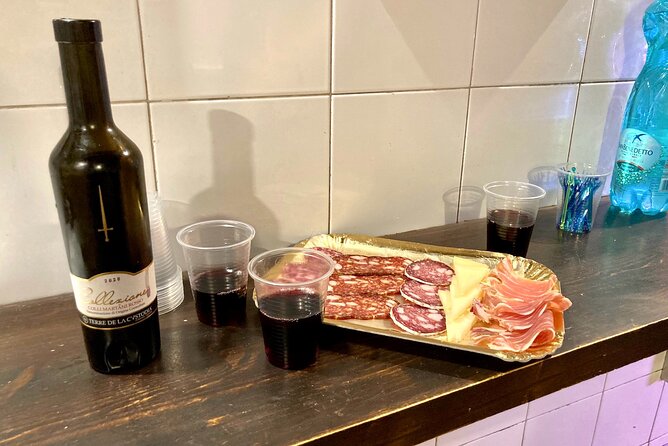
- Roman food in small, useful portions: Expect tastes of cheese, cured meat, pizza, suppli, pastries, seasonal foods, gelato, wine, and beer rather than one large sit-down meal.
- A good first activity in Rome: The route gives you food basics, neighborhood orientation, and Roman history in one outing.
- The Jewish Ghetto adds depth: You see the synagogue area, the Portico of Octavia, and a famous Roman-Jewish specialty.
- Guides shape the experience: Ramona, Francesca, Matteo, Mattia, Andreas, and Kristian have all been praised for warm storytelling and practical tips.
- Timing changes the food stops: Morning departures include Campo de’ Fiori’s market. Evening departures do not, since the market is closed.
- Dietary limits matter: Vegetarians can be accommodated only with advance notice. The tour does not officially accommodate vegan, gluten-free, or dairy-free diets.
Why this food walk works so well in Rome
At $54.42 per person, this is not the cheapest way to eat in Rome. It is also more than a simple snack crawl. Your price pays for several tastings, wine and beer, a local guide, and a walking route through some of central Rome’s most interesting streets.
I see the value in the combination. You are not only sampling food at separate businesses. You are learning what makes a Roman snack different from a generic Italian one, then seeing the neighborhoods where those foods make sense. The route connects the market square at Campo de’ Fiori with the former Jewish Ghetto and the ruins at Largo Argentina.
The food also arrives in a useful order. You begin with market products such as cheese, cured meat, wine, and seasonal fruit. Later come more filling bites, including pizza and suppli. Gelato finishes the walk. It feels more like a light meal spread across the city than a formal tasting menu.
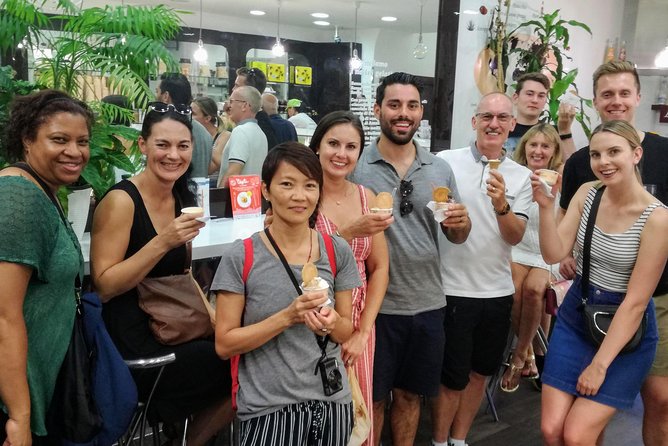
The small-group cap is 15 people. That is large enough to create a social outing, but small enough for a guide to speak with the group while walking. Several guides have been praised for remembering practical details, from where to eat later to how to use Rome’s public drinking fountains and trains.
A few more street food tours around Rome worth a look
- Rome: Street Food Tour with Local Guide
★ 4.8 · 4,077 reviews - Rome: Guided Food Walking Tour with Wine in Trastevere
★ 4.9 · 3,105 reviews - Rome: Vegan Street Food Tour with Local Guide
★ 5.0 · 37 reviews
Starting under Giordano Bruno in Campo de’ Fiori
The meeting point is Piazza Campo de’ Fiori, under the statue of Giordano Bruno in the middle of the square. This is an easy central location near public transportation, but the square can be crowded and the statue is worth identifying before your guide arrives.
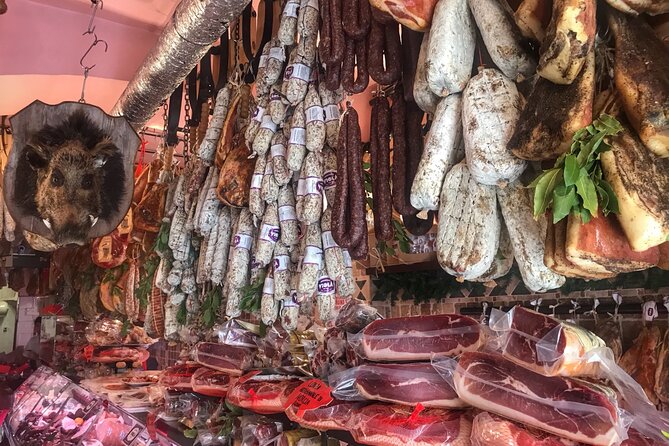
Morning departures get the fuller version of Campo de’ Fiori. The food market operates in the morning, so you can meet vendors at their stalls and taste products where Romans shop. Expect items such as cheese, cured meat, wine, and seasonal fruit. The exact selection changes with the season, which is a good thing for freshness but means no two departures will have precisely the same spread.
This first section lasts about 30 minutes, after a short 15-minute introduction. It gives you a quick lesson in Roman ingredients without asking you to sit down for a full meal.
The evening tour has a different feel. Since the market is closed at night, you lose the stall visits and market tastings. You still get the food walk and neighborhood stops, but if Campo de’ Fiori’s market is a priority, book a morning departure.
A short walk through Passetto del Biscione
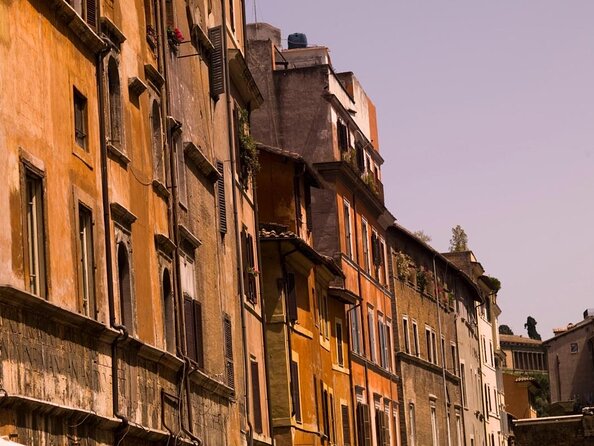
From Campo de’ Fiori, the route passes through Passetto del Biscione. This short stop, about 15 minutes, adds a quieter architectural pause between food tastings.
The appeal here is the change in pace. You are not rushing from one shop to another. Your guide can point out a less obvious corner of Rome while you taste a local street food item. The tour uses these small passages and lanes to show you how the city’s food culture fits into its older urban fabric.
Do not expect a major monument visit at every stop. This is a walking food tour, so the sightseeing comes in short pieces. That works well if you want a taste of the city rather than a formal archaeology lesson.
Pizza and suppli near the Roman Jewish Ghetto
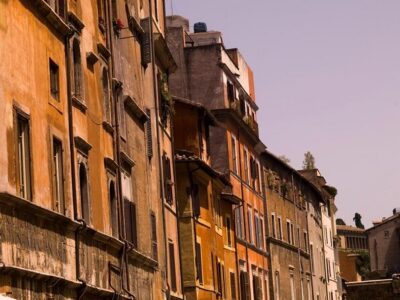
The route then enters the area known as the Roman Jewish Ghetto. Your guide explains how Pope Paul IV instituted the ghetto to segregate Jewish people, giving the food stops a serious historical setting.
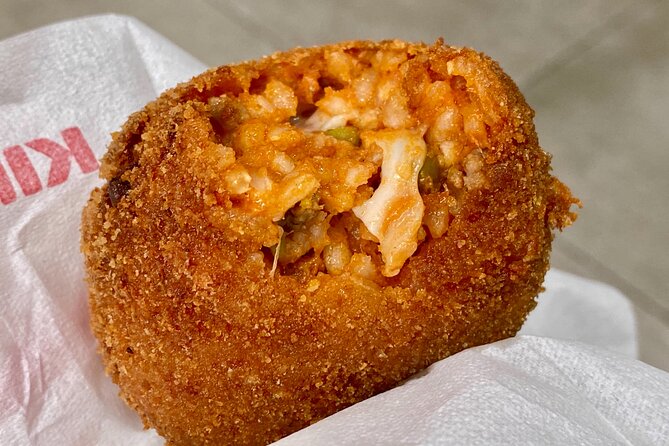
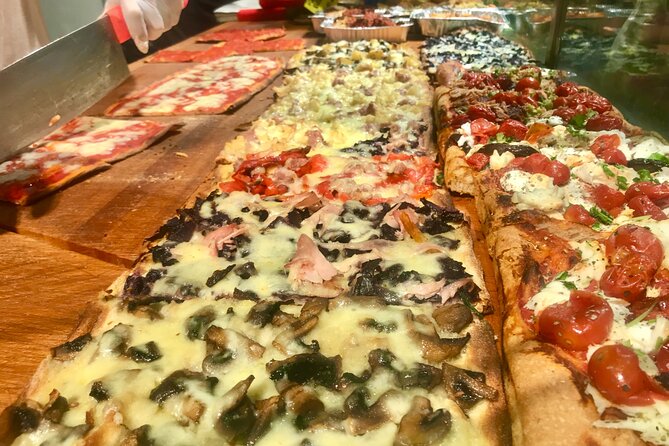
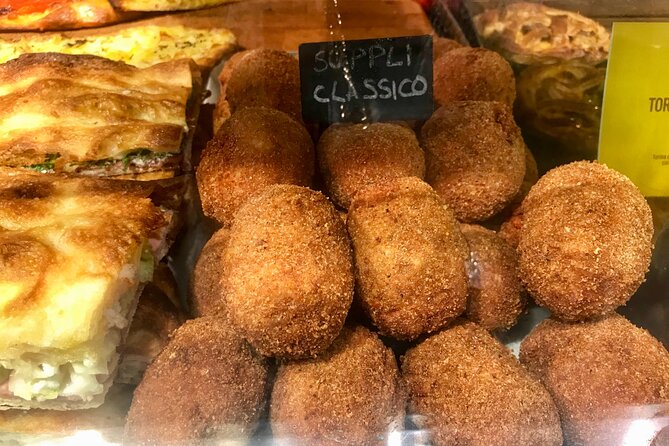
This section is one of the strongest parts of the experience because the food is tied to place. You taste a famous Roman-Jewish specialty, along with Roman street food such as pizza and suppli. Suppli is a fried rice ball with tomato and mozzarella at its center. Break one open and you get the soft, savory filling that gives this snack its appeal.
The tastings here are not designed to replace a long dinner. They are small bites, though several people found the total amount enough for a light meal. If you arrive hungry, that is useful. If you eat a full meal just beforehand, you may find the pace less comfortable.
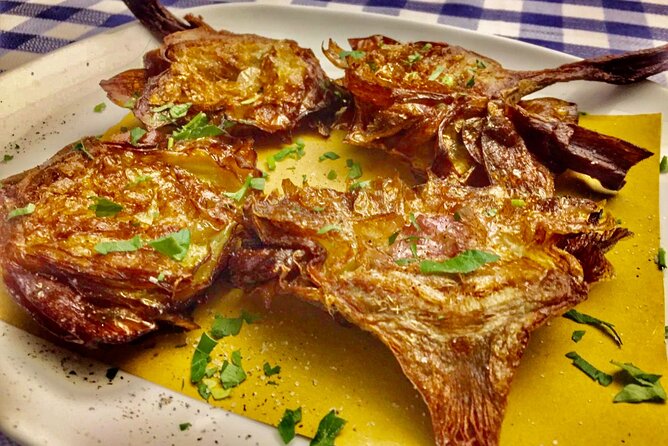
The food can also include items such as artichoke, cannoli, salami, and antipasto, depending on the departure and season. The selection is not fixed, so think of the tour as an introduction to Roman food rather than a guaranteed checklist.
Same city, a different plate:
- Rome: Trastevere & Campo de Fiori Street Food Walking Tour
★ 4.9 · 2,768 reviews - Rome: Trastevere Street Food Walking Tour with Local Expert
★ 4.8 · 1,784 reviews - Roman Food Tour with Visit to the Trionfale Food Market
★ 5.0 · 471 reviews - Trevi Fountain, Pantheon, and Campo Dei Fiori Market Food and Wine Tour
★ 5.0 · 320 reviews
Portico of Octavia and the city’s layered past
At the Portico of Octavia, you see remains of ancient monuments dating to the first century BC. The stop lasts about 30 minutes and gives the guide room to explain how the ancient and modern city overlap.
This is where the walk earns its sightseeing value. You are not being driven past ruins from a coach window. You move through the historic center on foot, stopping for food and stories as the streets change around you.
The Jewish Ghetto and Portico of Octavia are especially useful for visitors who want context without spending half a day in a museum. The information stays connected to what you are seeing and eating. You get a short history lesson, then another taste, then another street.
The route does not cover Rome’s biggest attractions, such as the Colosseum or Vatican Museums. That is not a flaw, but you should know what you are booking. This is a neighborhood walk with ancient remains, not a complete Rome sightseeing tour.
Finishing at Largo Argentina with gelato
The final major stop is Area Sacra di Largo Argentina, the archaeological site associated with Julius Caesar’s assassination. The ruins are a fitting endpoint because they provide one last reminder that ordinary Roman streets often sit directly beside major ancient history.
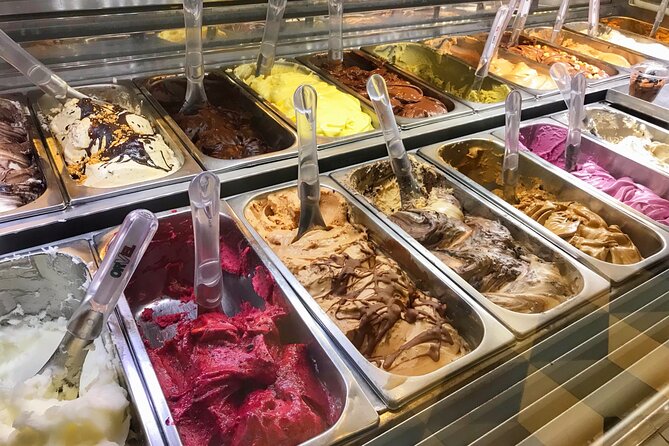
Near the site, you visit a family-run gelateria. The owner explains how gelato is made, then you get an artisanal serving to finish the tasting. The gelato stop gives the tour a lighter ending after the fried foods and savory snacks.
Many food walks finish with a dessert and send you back to your hotel. This one ends with a specific Roman setting and a little instruction from the gelateria owner. You finish at Piazza di S. Eustachio, so check the route before booking if you need to return quickly to a distant neighborhood.
Wine, beer, and the right amount of food
Wine and beer are included, while extra drinks are not. That distinction matters if you prefer to linger over a drink or want more than the planned tastings. The included pours are part of the food experience, not a full bar visit.
The food is varied enough to keep the walk interesting. You might taste:
- Cheese, cured meat, and seasonal fruit
- Pizza and suppli
- Artichoke or other seasonal produce
- Pastries such as cannoli
- Gelato
- Local wine and beer
The tour is best viewed as a light lunch or dinner. Some people found the portions generous enough to feel satisfied, while others described them as quick small bites. Your appetite, the day’s menu, and the number of tastings will affect that balance.
I would not skip breakfast before a morning departure, but I would avoid a large meal. For an evening tour, have a modest lunch and leave room for the food along the route.
What the guides add
The guide can make or break a food walk, and this one has a strong record in that area. Ramona is repeatedly praised for her warmth, passion, and ability to connect Roman food with local culture. Francesca is described as friendly and clear, with a good mix of food and history.
Matteo and Mattia have also been praised for explaining both the dishes and the city. One local guide, Matteo, was described as born and raised in Rome, which added a personal sense of place to the walk. Kristian helped with practical Rome advice, including public drinking fountains and train travel.
Andreas has been praised for giving recommendations during a morning tour. These details matter because a good guide does more than point out a pastry. You want advice you can use later, such as where to eat, how Roman foods are made, and how to move around the city.
Guide assignments can change, so you should not book expecting one particular person. Still, the range of praised guides suggests that the experience depends on a well-trained local team rather than one individual.
A practical word about diets and comfort
This tour is not suitable for everyone. The provider can accommodate vegetarians only if you give advance notice. It does not accommodate vegans, gluten-free diets, or dairy-free diets, and there is a risk of cross-contamination for anyone with a nut allergy.
Some guides have managed to find gluten-free items for individual participants, but you should not rely on that. If you have celiac disease, a serious allergy, or strict dietary rules, contact the provider before booking and treat any accommodation as uncertain unless confirmed directly.
You will spend most of the 2.5 hours walking and standing. Seats are not guaranteed. Wear comfortable shoes and prepare for rain or shine. One useful point from the experience is that a hot day can make the route feel harder, especially with fried food and alcohol, so carry water and use Rome’s public fountains when appropriate.
The tour is near public transportation, and most people can participate. Still, it is not a good choice if you have limited walking or standing capacity.
When to choose morning, lunch, or dinner
A morning departure is the best choice if you want the Campo de’ Fiori market. It gives you the most direct contact with vendors and seasonal produce.
A lunch departure works well if you want the tastings to replace part of your midday meal. You get the walk during daylight and can use the rest of the afternoon for sightseeing.
Dinner is convenient if your daytime schedule is full. The market will be closed, so the opening portion shifts away from the stalls. You still visit the historic neighborhoods, taste Roman specialties, and finish with gelato.
The tour is often booked well ahead, with an average booking time of 44 days before the activity. That suggests you should reserve early for a preferred date or departure, especially during busy periods.
Who should book this Rome food tour?
I would recommend it to first-time Rome visitors who want a quick introduction to Roman food and central neighborhoods. It is also a smart first-day activity because guides can give restaurant suggestions and practical city tips before you begin the rest of your trip.
Families can enjoy it, including teenagers who might prefer pizza, fried snacks, and gelato to a long museum visit. The social format also works well for solo visitors and couples who like meeting other people while eating.
You should choose something else if you want a long seated meal, a fixed menu, a serious wine tasting, or guaranteed options for vegan, gluten-free, dairy-free, or nut-free diets. You should also skip it if standing and walking for 2.5 hours would be uncomfortable.
Should you book it?
Book this tour if you want Roman food with a side of history, not just a list of restaurant stops. The price is reasonable for the amount of food, drink, guiding, and central sightseeing included, especially if you use the guide’s recommendations later in your trip.
Choose a morning departure for the full Campo de’ Fiori market experience. Choose lunch or dinner if you mainly want a light meal and a pleasant walk through the Jewish Ghetto and Largo Argentina. With free cancellation up to 24 hours before the start time, you have some flexibility, but changes or cancellations inside 24 hours are not refunded.
FAQ
How long does the Rome street food tour last?
The tour lasts approximately 2 hours and 30 minutes.
How much does the tour cost?
The listed price is $54.42 per person.
What food is included?
Tastings can include cheese, cured meat, seasonal fruit, pizza, suppli, pastries, seasonal produce, and gelato. The selection changes with the season.
Are wine and beer included?
Yes. Tastings of local wine and beer are included. Extra drinks are not included.
Does the tour visit Campo de’ Fiori market?
Morning departures include tastings between the market stalls. The market is closed during evening tours.
Where does the tour begin and end?
The tour begins at Piazza Campo de’ Fiori, under the statue of Giordano Bruno. It ends at Piazza di S. Eustachio.
Can vegetarians join the tour?
Yes, vegetarians can be accommodated if you advise the provider in advance. The tour does not accommodate vegan, gluten-free, or dairy-free diets.
Can I cancel for a full refund?
Yes. You can cancel at least 24 hours before the start time for a full refund. Cancellations or changes made less than 24 hours before the tour are not refunded or accepted.
Just added around Rome
- Testaccio Experience: Street Food, Market and Traditions★ 5.0 · 4 reviews
- Taste of Rome: Food Walking Tour & Sightseeing with expert★ 5.0 · 2 reviews
- Rome: Vegan Street Food Tour with Local Guide★ 5.0 · 37 reviews
- Eat & Walk : Street Food in the Center & Trastevere★ 4.9 · 6 reviews
- Rome: Vatican Street Food and Wine Tour with Farmers Market★ 5.0 · 37 reviews
- Rome: Trastevere & Tiber Island Street Food Tour at Sunset★ 4.9 · 71 reviews
- Rome: Trastevere Quarter Street Food Tour with Sightseeing★ 4.9 · 21 reviews
- Rome: Trastevere Food Walking Tour with Beer and Wine★ 4.9 · 71 reviews
Rome Street Food Tours, compared.
Rome: Guided Food Walking Tour with Wine in Trastevere
Read our review →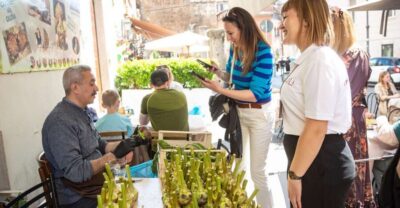
Rome: Trastevere & Campo de Fiori Street Food Walking Tour
Read our review →
Rome: Trastevere Street Food Walking Tour with Local Expert
Read our review →
Roman Food Tour with Visit to the Trionfale Food Market
Read our review →
Trevi Fountain, Pantheon, and Campo Dei Fiori Market Food and Wine Tour
Read our review →
Trastevere Like a Local Food Tour with 7+ Food Tastings & Wines
Read our review →
Trastevere & Campo de’ Fiori Street Food Tour, Eat Like a Local
Read our review →Browse the lists this tour appears in