
REVIEW · CAMBODIA STREET FOOD TOURS
The 10 Tastings of Siem Reap With Locals: Private Street Food Tour
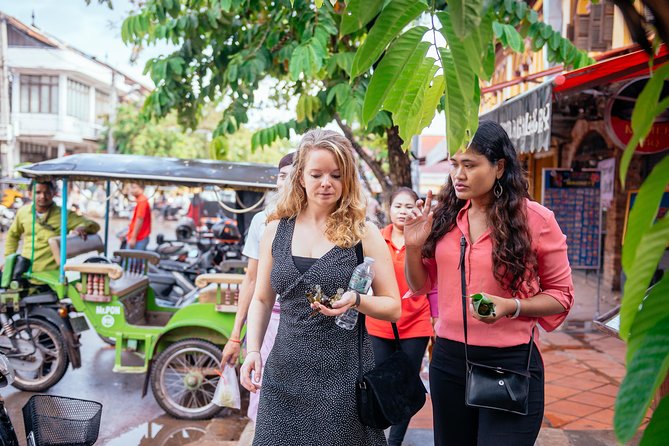
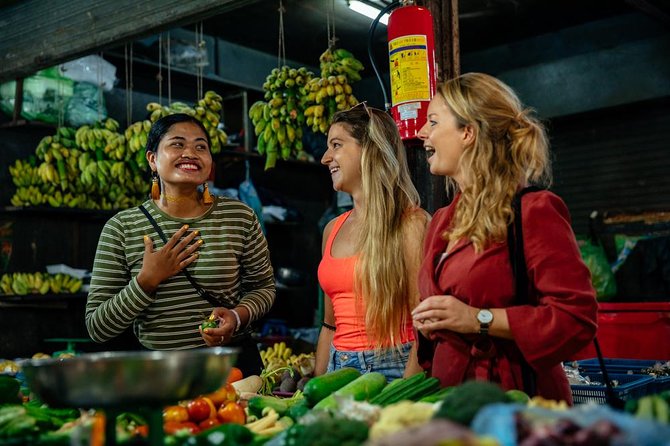
Siem Reap’s best food is often found away from the polished restaurant strip, and this private tour takes you to the stalls, small eateries, and market corners where local eating feels more natural. You may try everything from black-sesame snacks and noodles to fish curry, chive cake, tropical fruit, and sweet rice cakes.
I like the private format, since your guide can adjust the pace, answer questions, and replace dishes for vegetarians or people with dietary restrictions. I also like the mix of food and place: Psar Chaa, Kandal Village, Wat Damnak, the riverside, and nearby city sights give you more than a string of meals.
The main caution is that the experience depends heavily on the guide assigned to you. Long, Dorn, Nak, and Meng receive especially warm praise for their food knowledge and friendly manner, but a few bookings suffered from poor communication, a no-show, or a guide who could not explain the cuisine well.
Quick reasons to consider this Siem Reap food tour
- Ten tastings in about three hours: You get a broad first look at Cambodian snacks, meals, drinks, fruit, and sweets.
- A genuinely private outing: Only your group and the local guide attend, so you can ask questions or request changes.
- Market food without guesswork: Your guide helps explain what you are eating and what may suit your taste.
- Several guides earn strong praise: Long is often singled out for his food and cultural explanations, while Dorn, Nak, and Meng are also praised for warmth and flexibility.
- Food plus city landmarks: The route includes Psar Chaa, Kandal Village, Wat Damnak, the river, and areas near Angkor Archaeological Park.
- Come hungry: Several people found the portions generous, with enough food to make this feel like more than a light tasting walk.
What the $51.95 price gives you
At $51.95 per person, this is not the cheapest way to eat in Siem Reap. You could spend less by choosing dishes on your own at markets and small restaurants. The value here comes from the guide, the private setup, the range of stops, and the help making sense of unfamiliar food.
The tour includes a local guide, ten food and drink tastings, and vegetarian alternatives. That matters in Cambodia, where a market stall may have no clear English menu and where the same dish can appear in several forms. You are paying for direction as much as for the food.
The tour is also useful early in a Siem Reap stay. You can learn which dishes appeal to you, see where local people eat, and return to favorite places later without needing to guess what to order. One guide, Long, is praised for sending the names and pictures of foods afterward, a small touch that helps you remember what you tried.
There are limits. Hotel pickup and drop-off are not included, and the price does not cover food or drinks outside the stated tastings. The route may also shift. One booking included a short trip outside the central area, so you should be comfortable with some flexibility.
A few more street food tours around Cambodia worth a look
- Private Street Food Tour by Motorbike/Car with Local Students
★ 5.0 · 3,950 reviews - Private Street Food Evening Walking Tour in Ho Chi Minh City
★ 5.0 · 3,175 reviews - Private Street Food Motorbike Tour in Ho Chi Minh City
★ 5.0 · 2,180 reviews
Starting at Psar Chaa and the Old Market
The meeting point is on Pokambor Avenue, near the Siem Reap River. From there, the food trail begins around Psar Chaa, or the Old Market, one of the clearest places to get your bearings in central Siem Reap.
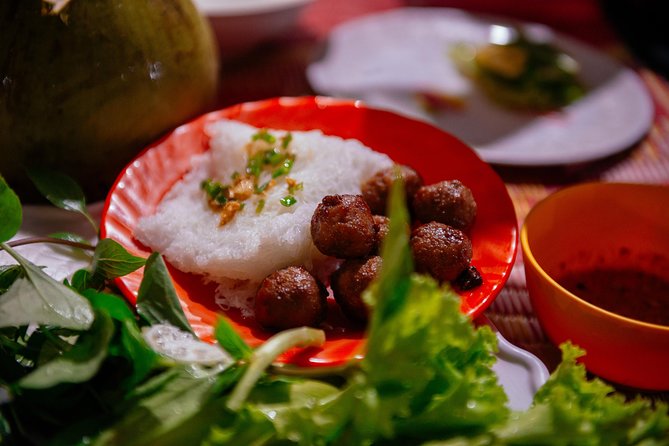
You start with a popular Cambodian appetizer featuring a mix of flavors and black sesame seeds. The exact snack is not specified in the tour details, so expect your guide to identify it on the day. You also try local-style noodles and fresh spring rolls.
This first hour is important because it sets the tone. You are not simply eating one large dish and moving on. You are sampling small portions and learning how texture, herbs, sauces, sweetness, and spice work together.
The Old Market can be busy, and this part may feel less calm than the later stops. Still, it gives you a useful introduction to everyday food shopping and the practical side of Cambodian cooking. Ask your guide what locals commonly buy for breakfast, lunch, or a quick snack.
Some food may be served in small restaurants rather than directly from a pavement stall. That is not necessarily a weakness. The tour combines simple eateries, market areas, and street-food settings, which gives you a broader picture of how people eat in town.
Kandal Village for curry and crispy cake
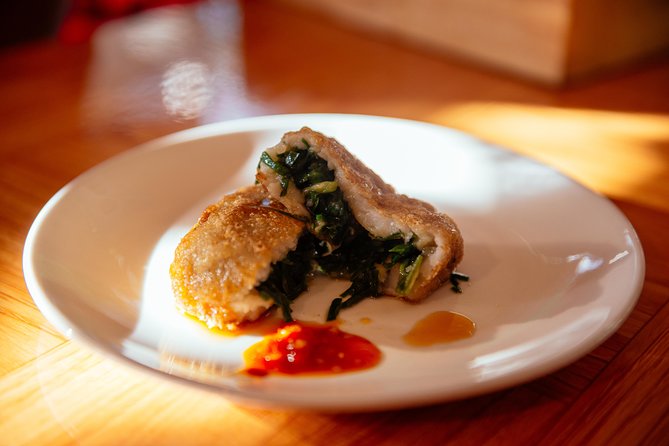
The next stop is Kandal Village, where you try a curried fish dish sometimes described as a national Cambodian food and a crispy fried cake served with sweet and sour sauce.
This is a useful pairing. The fish curry introduces you to a softer, more seasoned dish, while the fried cake gives you crunch and a sharper sauce. If you are new to Cambodian food, your guide can explain the difference between a snack and a dish meant to be eaten with other food.
The route is not built around famous restaurants. Its appeal is the chance to sit or stop at places that may be easy to pass without local help. One highly praised guide, Long, is credited with taking people to small food spots they would likely have walked past alone.
You may want to ask how the curry is normally served and what ingredients give it its flavor. The tour is at its best when you use the guide as a bridge between the food and Cambodian daily life, rather than treating each tasting as a quick bite.
Tropical fruit and papaya salad near The Heritage Walk
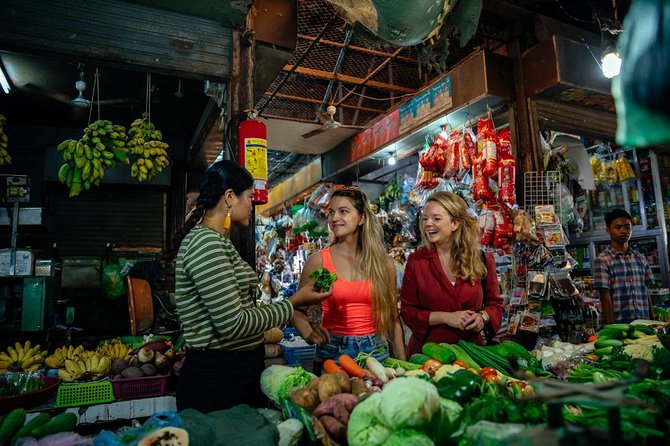
Cambodia’s tropical fruit gets its own stop near The Heritage Walk. You sample fresh, juicy fruit, then try a salad made with local papaya, tomatoes, chili, and lime juice.
This is one of the lighter parts of the route, which is welcome after fried food and curry. The fruit offers a sweet break, while the papaya salad brings acidity, heat, and crunch. If you are sensitive to chili, tell your guide at the start, not after the plate arrives.
The ability to adjust food is one of the tour’s practical strengths. Vegetarian alternatives are available, and dietary requirements can be discussed before or at the beginning of the outing. The supplied information does not promise every restriction can be handled, so be specific when you book.
This stop also shows why a food tour can add value beyond a restaurant meal. You can ask how the salad is usually eaten, which fruit is common locally, and how the balance of lime, chili, and sweetness changes from place to place.
Same city, a different plate:
- Siem Reap: Street Food Experience by Tuk-Tuk
★ 4.9 · 310 reviews - Phnom Penh’s Culinary Underground: Local Food Tour by Tuk-tuk
★ 5.0 · 234 reviews - Phnom Penh’s Ultimate Street Food Tour by Tuk Tuk
★ 4.9 · 225 reviews - Siem Reap: Local Street Food Experience by Tuk-Tuk
★ 5.0 · 141 reviews
Rice cakes and coffee near Angkor Archaeological Park
Another stop takes you near Angkor Archaeological Park for local cakes made with rice flour, sugar, and coconut milk, along with hot coffee in a local cafe.
This is the most dessert-like section of the route. Rice flour and coconut milk are common building blocks in Cambodian sweets, and the combination gives you a taste of local baking and steaming traditions without requiring a full meal.
The coffee stop also slows the pace. After several tastings, a warm drink and a seat can be a welcome pause. The stop is near the archaeological park, but this food experience does not replace a temple visit. It is better seen as a short cultural and culinary stop in the same general area.
The timing listed for this portion is about 50 minutes, making it one of the longer scheduled stops. That gives your guide room to explain the ingredients and answer questions. It also means the three-hour total is not a race through ten bites.
Wat Damnak and the riverside walk
Wat Damnak is a large Buddhist temple and cultural center with a pagoda, carved stone details, a school, and lily ponds. The tour passes by for about 15 minutes, so you should not expect a full temple visit or a detailed religious tour.
Even so, this short pause helps connect food with place. Wat Damnak is near parts of Siem Reap where small eateries and markets fit into ordinary town life. You get a brief look at a cultural site rather than spending the entire afternoon inside a restaurant.
The final listed sight is Siem Reap Riverside Park, with a walk along the river. This is another short section, but it gives you fresh air and a chance to settle after the tastings. The tour ends back at the meeting point on Pokambor Avenue.
Some accounts describe tuk tuk rides between food stops, including rides that were useful during rain. The transportation details can vary by guide and route, so do not treat a tuk tuk ride as a guaranteed separate feature. The important point is that the food stops are spread across town rather than packed into one market.
What the strongest guides add
The guide can make or break this experience. Long is the name most often praised, with repeated comments about his food explanations, Cambodian culture stories, kindness, and ability to adapt the route. He has also handled pescatarian needs and last-minute timing changes in some bookings.
Dorn is praised for humor, personal stories, family-friendly manner, and clear explanations of traditional food. Nak receives praise for adjusting the outing to suit the group and for making the experience feel relaxed and personal. Meng is associated with generous tastings and lively visits to several stalls.
These names are useful when making a request, but they are not a guarantee of assignment. If you care strongly about the guide, you can ask whether a preferred guide is available after booking. The confirmation provides contact details for itinerary changes and requests.
A private tour also gives you a better chance to shape the evening. Tell the guide at the start if you want more market food, fewer sweets, less chili, more vegetarian choices, or a slower pace. The stated option to change the itinerary is a real benefit, though changes will depend on time and what is open.
The important drawbacks to understand
Most of the problems described are not about the food itself. They concern operations and guide quality. A small number of bookings involved a guide who failed to arrive, unclear cancellation communication, or a guide who could not explain what made the dishes Cambodian.
That is a serious concern when you have limited time in Siem Reap. One poor experience ended halfway through, while other bookings involved people waiting at the meeting point without clear notice that the tour had been canceled. The provider apologized in those cases, but an apology does not restore lost sightseeing time.
You can reduce the risk by checking your confirmation carefully, confirming the meeting point, and contacting the provider if the guide has not reached you near the agreed time. Keep the confirmation email and booking details available. This does not solve a provider error, but it gives you a clear record if you need help or a refund.
Food quality can also vary by stop. The tour covers many dishes, and not every bite will suit every palate. One account found the first grilled meat stop excellent but found the next two locations disappointing. Go expecting variety, not ten personal favorites.
Who will enjoy this food tour most
I would recommend this outing to first-time visitors who want an organized introduction to Cambodian food without joining a large group. It suits couples, families, and small groups who enjoy trying many things and asking questions along the way.
It is also a good fit if you are nervous about ordering at local stalls. Your guide can point out what to try, explain the dishes, and help you avoid ordering blindly. Families with teenagers may appreciate the variety, while vegetarians can request alternatives.
You should have a moderate level of physical fitness. The route includes walking, market stops, a riverside walk, and possible transfers between locations. The schedule is about three hours, but the pace and route can change.
This is less suitable if you want a formal cooking lesson, a fixed restaurant dinner, or a guaranteed list of exactly ten named dishes. It is also not ideal if you dislike shared market settings, fried snacks, sweet flavors, or food choices that may change from one day to the next.
Booking, timing, and practical advice
The tour is booked an average of 51 days in advance, suggesting that you should reserve ahead if your dates are fixed. Confirmation is sent at booking, and the activity is available with a mobile ticket.
Free cancellation is allowed up to 24 hours before the start time. Inside that window, the amount paid is not refunded, and changes are not accepted. The cutoff follows local Siem Reap time.
The experience begins and ends at the Pokambor Avenue meeting point. Hotel pickup and drop-off are not included, so allow time to reach the start. The meeting area is near public transportation.
I would schedule this near the beginning of your stay. You will gain useful food knowledge for later meals, and the guide can point you toward dishes worth seeking again. Wear comfortable clothing, keep your appetite ready, and tell the guide about dietary needs before the first tasting.
Should you book The 10 Tastings of Siem Reap?
Book it if you want a private food introduction with local context, not just a restaurant meal. The combination of market snacks, noodles, curry, fruit, salad, sweets, coffee, Wat Damnak, and the river gives you a good first look at Siem Reap beyond the temple circuit.
I would be more cautious if reliable guide communication is your top concern or if you have only one short evening in town. The strong experiences are personal and generous, but the rare no-shows and weak guide matches matter.
For most people, the best approach is to request a guide such as Long, Dorn, Nak, or Meng if possible, state your food needs clearly, and confirm the meeting details. Come hungry, stay open to changing stops, and treat the tour as a guided introduction rather than a fixed culinary performance.
FAQ
How long does the Siem Reap food tour last?
The tour lasts about three hours.
How many food and drink tastings are included?
The experience includes ten food and drink tastings.
Is this a private tour?
Yes. Only your group and the local guide participate.
Where does the tour start?
It starts on Pokambor Avenue in Krong Siem Reap, Cambodia.
Where does the tour end?
The activity ends back at the meeting point.
Are vegetarian alternatives available?
Yes. Vegetarian alternatives are included, and dietary requirements can be discussed with the guide.
Is hotel pickup included?
No. Hotel pickup and drop-off are not included.
What locations are included in the route?
The route includes Psar Chaa, Kandal Village, The Heritage Walk, an area near Angkor Archaeological Park, Wat Damnak, and Siem Reap Riverside Park.
What is the cancellation policy?
You can cancel at least 24 hours before the start time for a full refund. Cancellations or changes made within 24 hours are not accepted for a refund.
Just added around Cambodia
- Siem Reap: Tonle Sap and Kampong Phluk Tour with Street Food★ 4.8 · 7 reviews
- Siem Reap Street Foods Tour by Tuk Tuk with Personal Guide★ 4.7 · 13 reviews
- Siem Reap’s Ultimate Street Food Tour by Tuk Tuk★ 5.0 · 2 reviews
- Siem Reap: Cambodia local street foods and local guide★ 5.0 · 3 reviews
- Phnom Penh: Authentic Walking Food Tour with Local Guide★ 5.0 · 4 reviews
- Phnom Penh: Culinary Underground Local Food Tuk-Tuk Tour★ 4.8 · 8 reviews
- Street Food Tour and Phare Circus with Tuk-Tuk Transfers★ 4.9 · 9 reviews
- Siem Reap Street Food Tour★ 5.0 · 38 reviews
Cambodia Street Food Tours, compared.
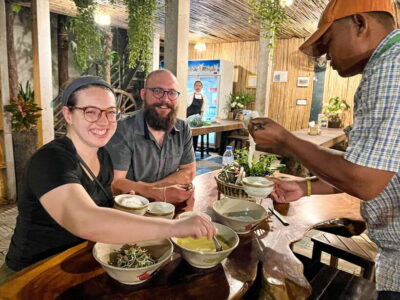
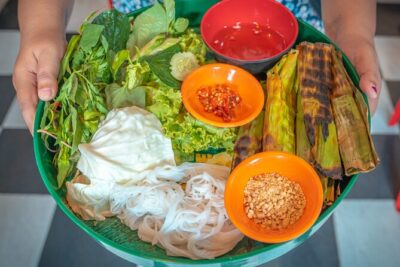
Phnom Penh’s Culinary Underground: Local Food Tour by Tuk-tuk
Read our review →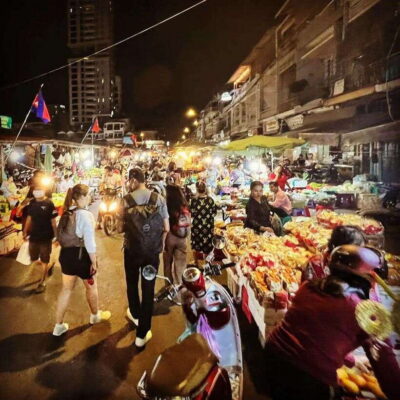
Phnom Penh’s Ultimate Street Food Tour by Tuk Tuk
Read our review →
Siem Reap: Local Street Food Experience by Tuk-Tuk
Read our review →
Siem Reap Street Foods Tour by Tuk Tuk with Personal Guide
Read our review →
Street Food Tour and Phare Circus with Tuk-Tuk Transfers
Read our review →
Phnom Penh: Culinary Underground Local Food Tuk-Tuk Tour
Read our review →Browse the lists this tour appears in