
REVIEW · BANGKOK STREET FOOD TOURS
Grand Palace, Wat Pho, and Wat Arun: Guided Tour in Spanish
Bangkok’s three essential sights fit into one well-planned half-day: Wat Pho, the Grand Palace, and Wat Arun. You walk through royal courtyards and temple grounds, then cross the Chao Phraya River by boat, using public transport to avoid getting stuck in Bangkok traffic.
I like the Spanish-speaking format, especially if you want history explained in clear, natural Spanish rather than pieced together from signs. I also like the practical route: Wat Pho comes first, the Grand Palace follows, and the river crossing finishes at Wat Arun. The main drawback is price. At $109 per person, this is not a budget temple outing, particularly if you are comfortable arranging these stops yourself.
- Wat Pho first: See Bangkok’s enormous Reclining Buddha and one of the city’s oldest, largest temple complexes.
- Royal Bangkok in one stop: Visit the Grand Palace and the Temple of the Emerald Buddha, Thailand’s most important Buddhist shrine.
- River crossing included: Take public transport and a sightseeing boat instead of relying on Bangkok taxis.
- Spanish-speaking guidance: Guides such as Nori explain Thai monarchy, religion, and temple customs in Spanish.
- Strict dress code: Cover shoulders and knees, and avoid strapless-heel shoes at the national shrine.
- Walking-heavy route: The tour lasts about 270 minutes to five hours, depending on the selected option and timing.
Why This Bangkok Temple Route Works
Bangkok can feel confusing at first. Its major sights sit close together on a map, but roads, traffic, heat, and the Chao Phraya River complicate even simple plans. This tour solves part of that problem by combining walking with public transport and a boat crossing.
You meet at the gate of Bangkok City Pillar Shrine, near the Grand Palace area. From there, the route takes you through three places that explain different sides of Bangkok. Wat Pho presents traditional Buddhist art and monastic life. The Grand Palace shows the power and ceremony of the Thai monarchy. Wat Arun adds the riverfront view and a more theatrical final stop.
The Spanish-language format is the central reason to choose this experience. A guide can explain why a particular building matters, how the monarchy connects to the palace, and why the Emerald Buddha carries such importance. The guide also helps you keep the temples in context instead of treating them as a series of gold roofs and photo stops.
The tour is described as lasting from 270 minutes to five hours. That range matters. Four and a half hours can cover the main sights, but it does not allow endless wandering, long meals, or a relaxed visit to every corner of the temple grounds. Think of this as a focused introduction to Bangkok’s historic core.
Wat Pho and the Reclining Buddha
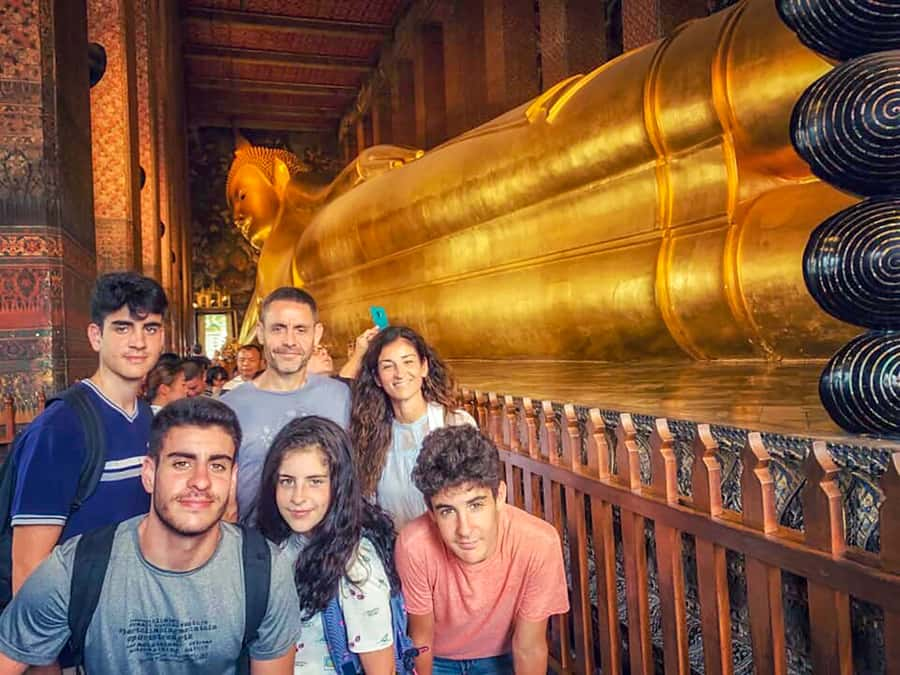
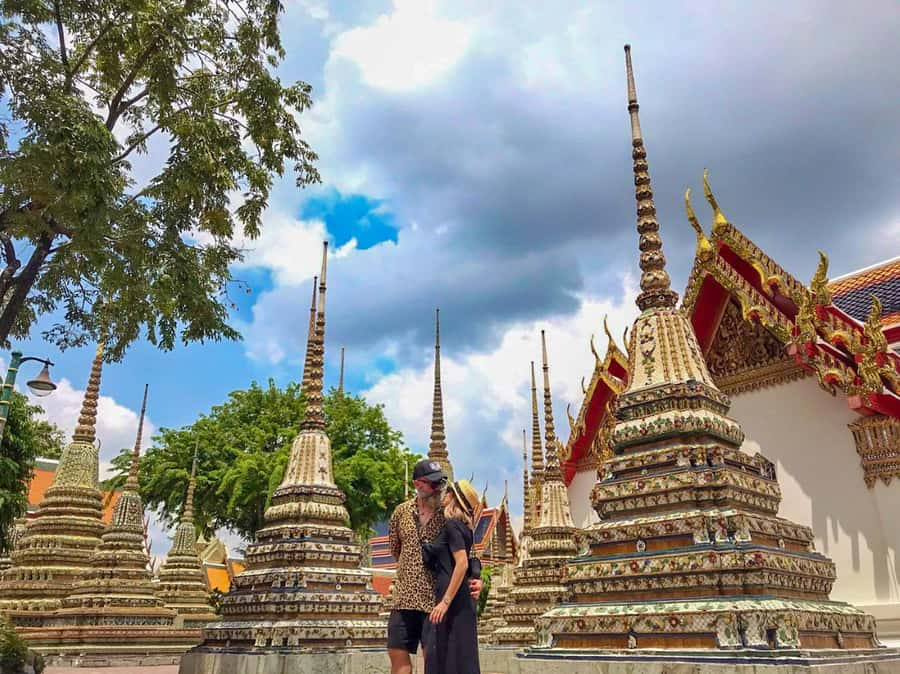
Starting at Wat Pho is a smart choice. The temple complex is known as the oldest and largest in Bangkok, covering almost 20 acres. That size gives you more than one famous statue. You get courtyards, buildings, shrines, and decorative details spread across a substantial religious site.
The Reclining Buddha is the headline attraction. Its scale makes an immediate impression, but the best part of the stop is having a guide explain what you are seeing. The Buddha’s reclining posture represents the moment before entering final nirvana, a detail that helps the statue feel like more than a spectacular object.
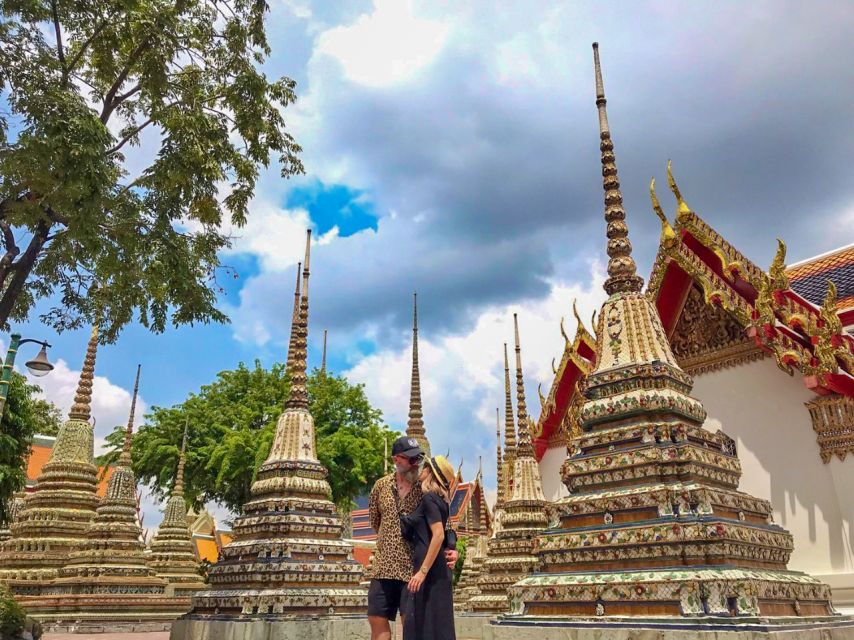
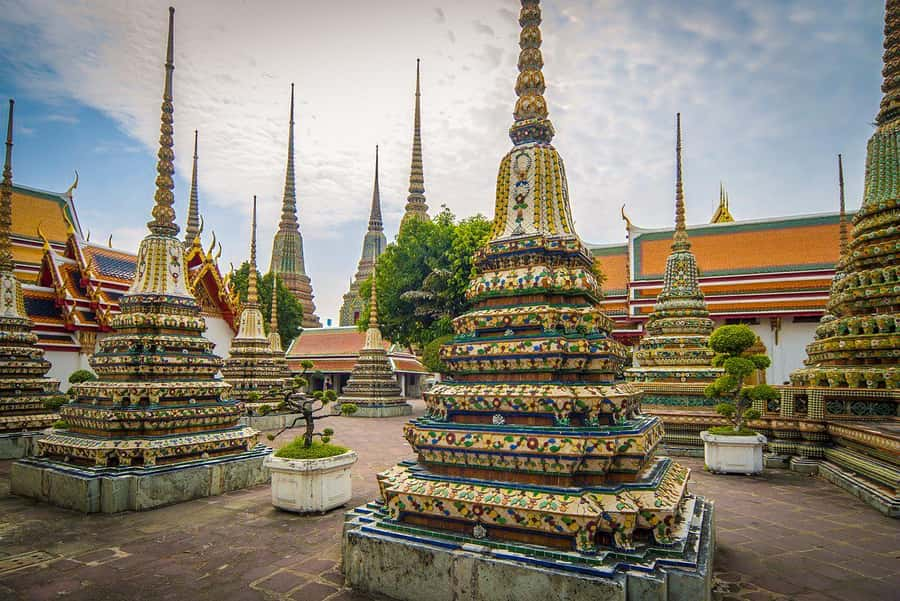
Wat Pho is also valuable because it gives you an early look at Bangkok’s temple style. Bright tiles, gold decoration, carved details, and carefully arranged enclosures appear throughout the grounds. Your guide can connect those visual details to Thai religious practice and the temple’s long role in Bangkok life.
Allow yourself to look up and around, not just toward the Reclining Buddha. The complex contains plenty of smaller details that are easy to miss when you rush toward the main hall. Since this tour covers three major sights, the guide will need to keep the group moving, but you should still have time to notice the contrast between intimate shrine spaces and the large open courtyards.
Wear practical shoes. The route is done on foot, and temple visits often involve standing, walking across open grounds, and moving between buildings. The activity is listed as wheelchair accessible, but the tour remains a walking route through historic religious compounds, so you should confirm any personal mobility needs before booking.
A few more street food tours around Bangkok worth a look
- Bangkok: Grand Palace, Wat Pho, and Wat Arun Guided Tour
★ 4.8 · 3,632 reviews - Bangkok: Wat Pho and Wat Arun Guided Walking Tour
★ 4.6 · 1,720 reviews - Bangkok: Michelin Guide Street Food Tour by Tuk Tuk
★ 4.4 · 1,274 reviews
The Grand Palace and Thailand’s Royal Center
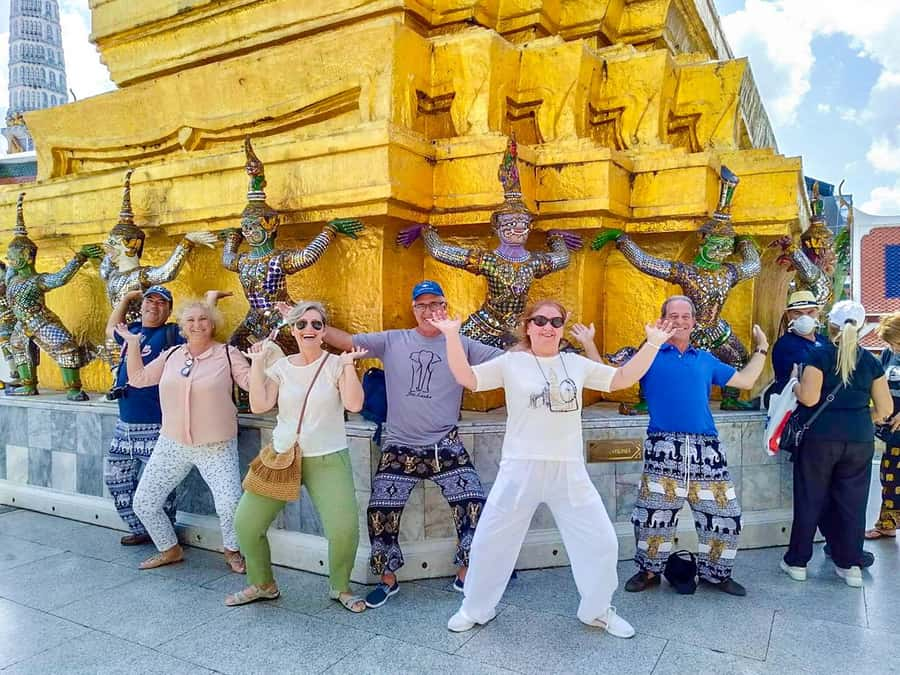
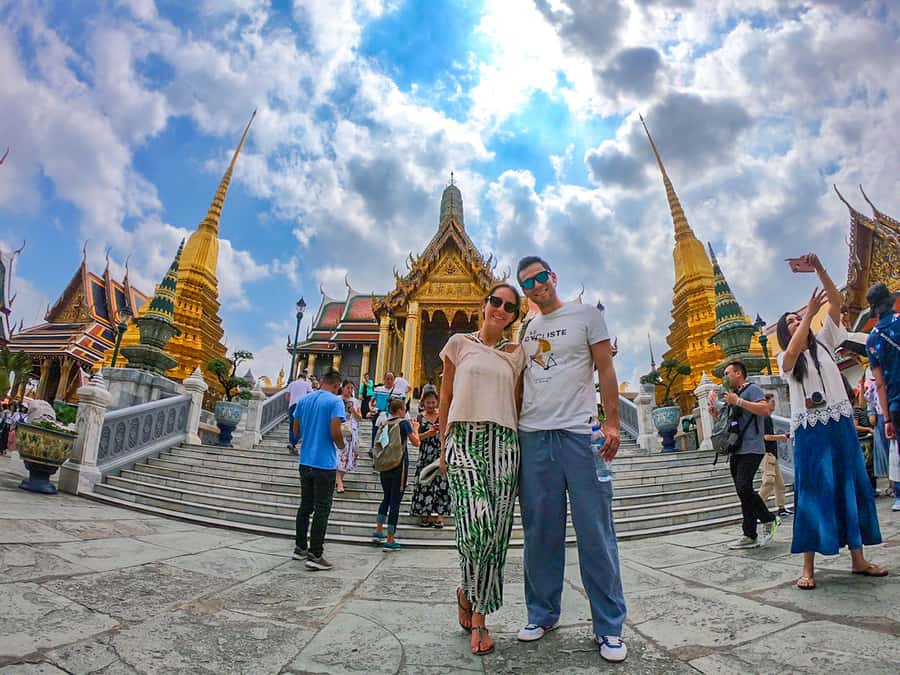
The Grand Palace is the tour’s biggest name and likely the stop you have been anticipating. It served as one of the homes of the kings of Siam, and its buildings were designed to make royal authority visible at every turn.
Expect bright walls, gold roofs, pointed spires, and glittering mosaics. The decoration is not subtle, and that is part of the appeal. The palace complex is meant to impress from a distance, then reward closer inspection with layers of color and pattern.
The guide’s role matters most here. Without context, the Grand Palace can look like a dense collection of buildings with unfamiliar functions. A Spanish-speaking guide can help explain the connection between royal ceremonies, Buddhist worship, and the palace compound’s layout.
The tour also includes the Temple of the Emerald Buddha, known in Thai as Wat Phra Kaew. Despite its name, the Emerald Buddha is a small jadeite image rather than a large statue. Its importance comes from its religious and national role, not its size. It is regarded as the most important Buddha image in Thailand, and ceremonies are still held at the temple.
This is the place where clothing rules matter most. Bare shoulders and knees are not permitted, and strapless-heel shoes are not allowed. Bring a passport or another form of identification, as well as some cash. Large bags and luggage are not permitted, so arrive with a small day bag rather than airport-style baggage.
One practical warning: royal events can change access. A recent booking had the palace portion canceled because of the passing of a member of the royal family. That was not something the guide could control, but it shows why flexibility helps. The temple visits remain worthwhile, yet the Grand Palace is the centerpiece for many people, so check current access conditions when your date approaches.
Crossing the Chao Phraya River by Public Boat
After the palace area, the tour uses public transportation and crosses the river by boat. This is more than a transfer. Bangkok’s river is part of the city’s identity, and the boat gives you a useful change of pace after several hours among temple walls.
You get views of the water, riverbank buildings, and Bangkok’s skyline before reaching Wat Arun. The crossing also avoids some of the city’s famous traffic problems. A taxi might look simpler on paper, but road congestion can eat away at a short itinerary. Public transport keeps the route tied to the city rather than sealed inside a vehicle.
The exact pace depends on the group, transport conditions, and selected tour option. Keep cash handy, as the instructions specifically recommend it. The tour covers public transportation fees, but carrying some money remains sensible for personal purchases and small needs.
The boat ride is brief compared with the temple visits, but it gives the itinerary a natural three-part structure. Wat Pho shows the traditional temple complex, the Grand Palace presents royal ceremony, and the river crossing leads you to Wat Arun’s dramatic riverside setting.
Wat Arun, the Temple of Dawn
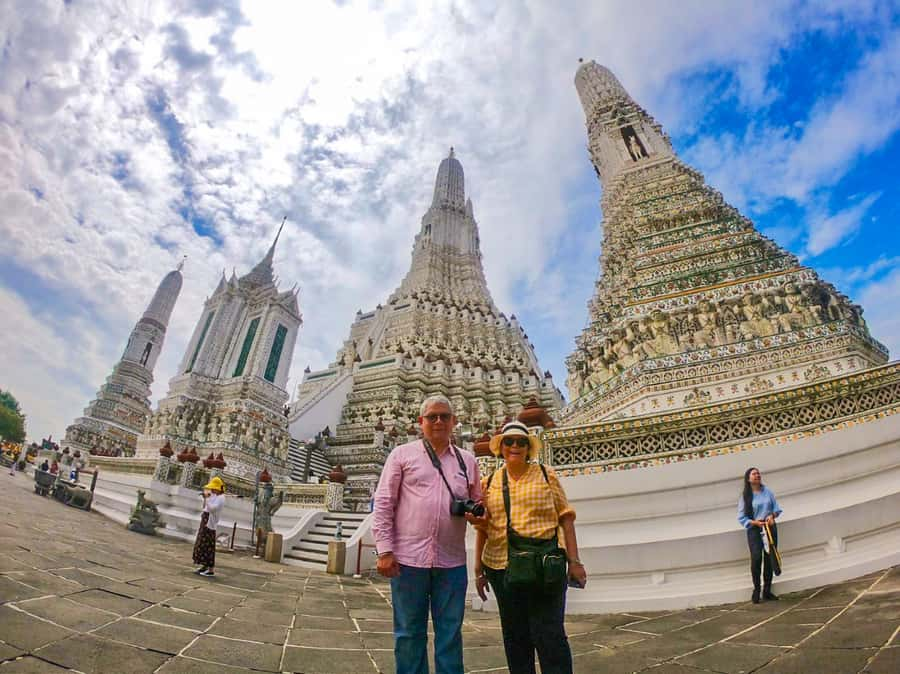
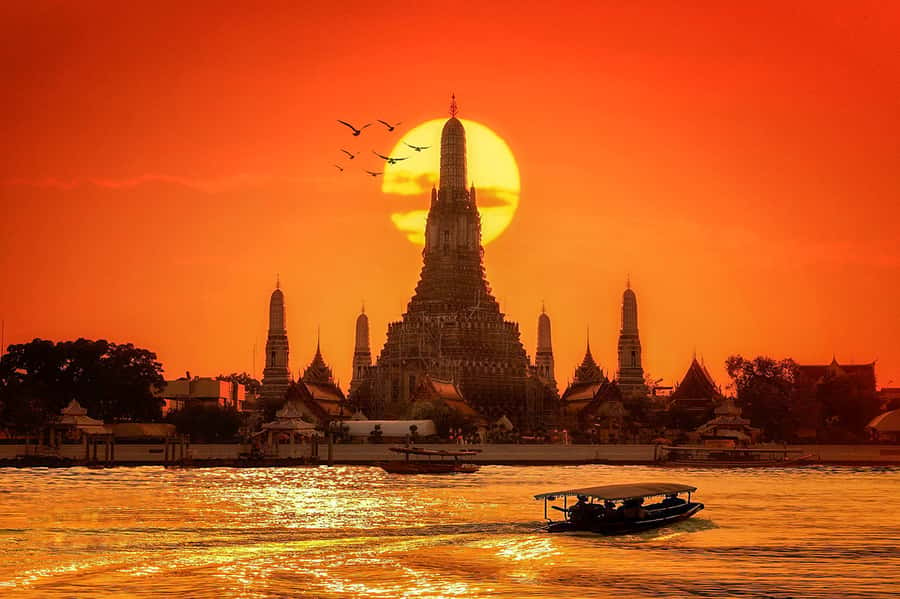
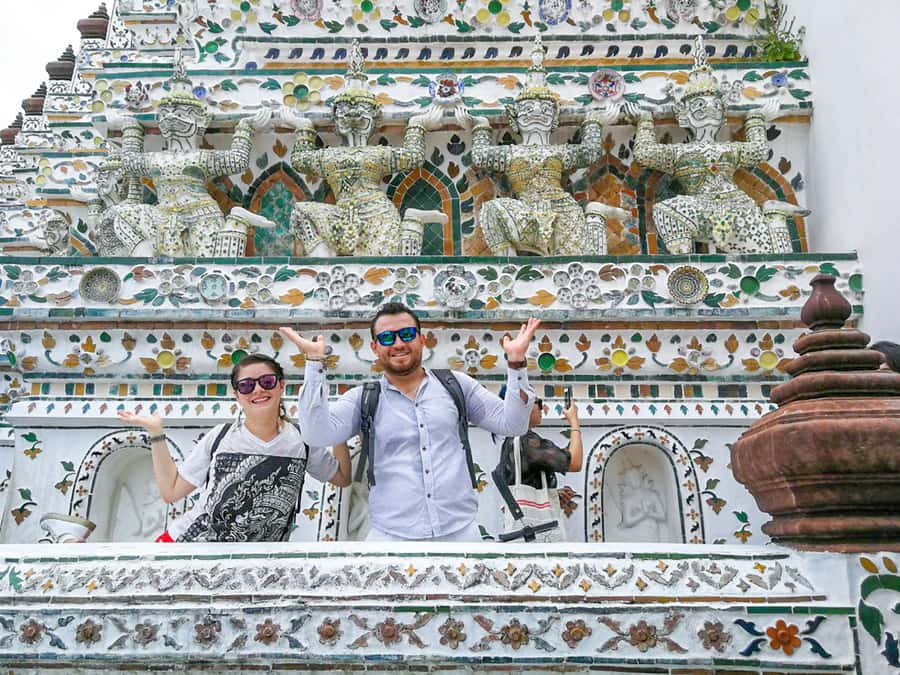
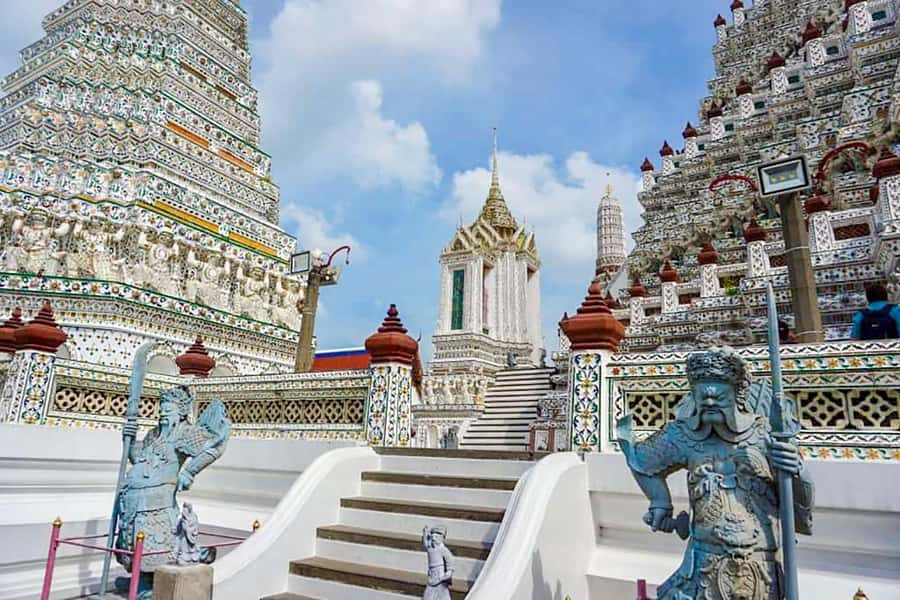
Wat Arun is often the most visually striking stop. Its central pagoda is covered with colorful porcelain tiles, creating a surface that catches the light from different angles. The temple’s silhouette is easy to recognize from the river, but seeing the decoration up close gives you a better sense of its craft.
The temple is also known as the Temple of Dawn. Your guide explains its history while you take in the pagoda, bell tower, and large statues. The experience feels different from the Grand Palace because Wat Arun opens the view outward toward the river and the city.
The tour description includes the option to climb to the top of the pagoda. If that option is available during your visit, it can provide broad views and a closer look at the structure’s decorative work. Take care on the steps and follow the guide’s directions, particularly if the surface is crowded or wet.
Wat Arun is a strong finish because it gives you a final image that is very different from the enclosed royal compound. You finish beside the river, with the pagoda’s porcelain details and tall profile providing a clear visual memory of Bangkok.
Same city, a different plate:
- Bangkok: Grand Palace, Wat Pho, Wat Arun Sacred & Local Tour
★ 4.3 · 2,256 reviews - Bangkok: Grand Palace, Wat Pho, and Wat Arun Private Tour
★ 4.8 · 855 reviews - Bangkok Authentic Tasting Thai-Chinatown Walking Food Tour
★ 4.9 · 852 reviews - Bangkok: Evening Tour with Wat Arun, Wat Pho & Tuk Tuk Ride
★ 4.6 · 701 reviews
How Much Value Do You Get for $109?
At $109 per person, the price sits well above the cost of visiting the temples independently. The fee includes a Spanish-speaking guide, entry fees, public transportation, insurance, and the river crossing. Private-tour options also include hotel pickup and drop-off.
The value depends on what you need. If you want a Spanish-speaking guide and prefer not to work out the route, tickets, transport, and temple order yourself, the price can make sense. You are paying for explanation and coordination as much as admission.
If you already know Bangkok well, speak English or Thai comfortably, and enjoy planning your own transport, the cost will feel harder to justify. The temples are famous and accessible enough that an independent visit is possible. The advantage here is having one person connect the sites and handle the route while you focus on what you are seeing.
The most positive feedback centers on the guides and the quality of the places visited. Nori receives a warm mention, and another booking specifically praised having a Thai guide who spoke Spanish. That combination is useful: you get the language you want along with a guide who can explain local customs from direct cultural knowledge.
The score is 4.5 from 57 ratings, which suggests a strong overall experience but not universal agreement on value. One booking rated the tour two out of five because the price did not feel worthwhile, even though the guide was described as kind and attentive. That is fair criticism. This is a convenience and interpretation purchase, not a cheap sightseeing pass.
Practical Tips for a Better Visit
Dress before you leave your hotel. Wear clothing that covers your shoulders and knees from the start, rather than hoping to solve the problem at the entrance. The Grand Palace and Temple of the Emerald Buddha are national religious sites, so rules are enforced.
Bring:
- Passport or identification
- Cash
- Water
- Comfortable walking shoes
- A small bag rather than luggage
Large bags are not allowed, and the route involves walking between several sites. You should also avoid planning a separate appointment immediately afterward. The tour can last five hours, and traffic or public transport timing may affect the finish.
Book this tour when Spanish guidance is important to you. The activity is not offered as a general multilingual outing, and the Spanish-speaking guide is the feature that gives the route its strongest practical reason to exist.
The tour is also suitable if you want a structured first look at Bangkok. You see the city’s best-known royal and Buddhist sites in one day without spending your first morning learning the transport system. It is less suitable if you want long, quiet periods inside each compound or plenty of time for photography.
Free cancellation up to 24 hours before the start and the reserve-now, pay-later option give you some flexibility. Those policies do not change the price question, but they make the booking less risky while your Bangkok plans are still taking shape.
Who Should Book This Spanish-Guided Tour?
I would choose this tour for a first visit to Bangkok when you want the major temples explained in Spanish. It is particularly useful for couples, families, and small groups who would rather pay for a planned route than manage admissions and transport on their own.
It also suits you if Bangkok’s traffic worries you. The use of public transportation and a river boat keeps the day moving and adds a more local element than a private car ride between each sight.
I would hesitate if your main goal is low cost. At $109, you need to value the guide and the convenience to make the numbers work. I would also hesitate if you dislike a firm schedule, since three major sights in 270 minutes to five hours means the pace will be purposeful.
The strongest part is the combination of language, location, and route. Wat Pho, the Grand Palace, and Wat Arun are not filler stops. They are the essential historic sights in central Bangkok, and each adds something different.
Should You Book It?
Book this experience if you want Bangkok’s major temples explained in Spanish, with admissions and public transport arranged for you. Nori and the other Spanish-speaking guides appear to be a key part of the appeal, and the route makes good use of the river rather than treating it as an obstacle.
Skip it if $109 feels high for a half-day of sightseeing or if you prefer to explore independently. For everyone else, this is a practical, focused introduction to Bangkok’s royal and Buddhist heart, with Wat Arun’s porcelain pagoda providing a fine final scene.
FAQ
Where does the tour meet?
You meet at the gate of Bangkok City Pillar Shrine.
How long does the tour last?
The duration is listed as 270 minutes to five hours. Starting times and the exact duration depend on availability and the selected tour option.
Is the tour conducted in Spanish?
Yes. The tour includes a live Spanish-speaking guide.
Does the tour include entrance fees and transportation?
Yes. Entry fees and public transportation fees are included. The route also includes a boat crossing of the Chao Phraya River.
What should I wear?
You should wear clothing that covers your shoulders and knees. Strapless-heel shoes are not permitted at the national shrine.
Is hotel pickup included?
Hotel pickup and drop-off are included with the private tour option only.
Just added around Bangkok
- 4-Hour Hidden Bangkok TukTuk Street Food Guided Tour★ 5.0 · 23 reviews
- 3-Hour Bangkok Walking Tour: Wat Pho and Wat Arun★ 5.0 · 102 reviews
- Bangkok 3-in-1 Tour: Longtail Boat,TukTuk & Street Food Adventure★ 5.0 · 73 reviews
- Famous Thai Street Food Tasting Experience!★ 5.0 · 4 reviews
- Thai Costume Photography at Wat Arun/Pho Temple: Bangkok★ 5.0 · 3 reviews
- Visit Wat Pho and Wat Arun with Local Expert★ 4.0 · 14 reviews
- Tuk Tuk Bangkok Private Tour: WW2 Pad Thai, 360-Viewpoint, Chinatown (Pickup)★ 5.0 · 9 reviews
- LR-01 TaLad NangLerng, ride along the old town and try local street foods★ 4.5 · 13 reviews
Bangkok Street Food Tours, compared.
Bangkok: Michelin Guide Street Food Tour by Tuk Tuk
Read our review →
Bangkok: Grand Palace, Wat Pho, and Wat Arun Private Tour
Read our review →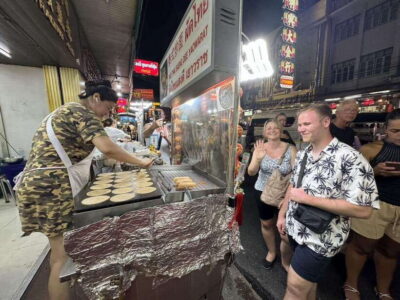
Bangkok Authentic Tasting Thai-Chinatown Walking Food Tour
Read our review →
Bangkok: Evening Tour with Wat Arun, Wat Pho & Tuk Tuk Ride
Read our review →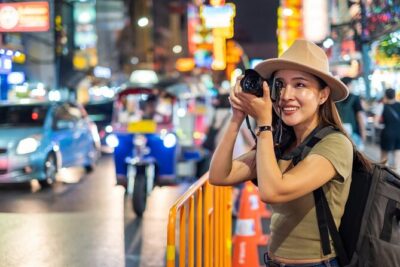
Bangkok Tuk-Tuk Tour by Night with Chinatown Street Food Meal
Read our review →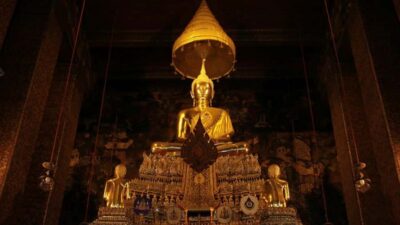
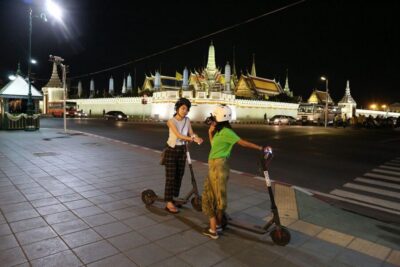
Bangkok: E-Scooter Night Tour with Local Street Food
Read our review →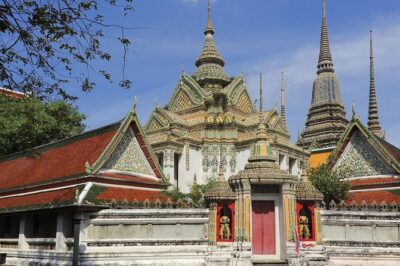
Private Tour of Bangkok’s Temples Including Reclining Buddha (Wat Pho)
Read our review →Browse the lists this tour appears in