
REVIEW · HOI AN STREET FOOD TOURS
Hoi An: Silk Process, Lantern Making Workshop & Local Food
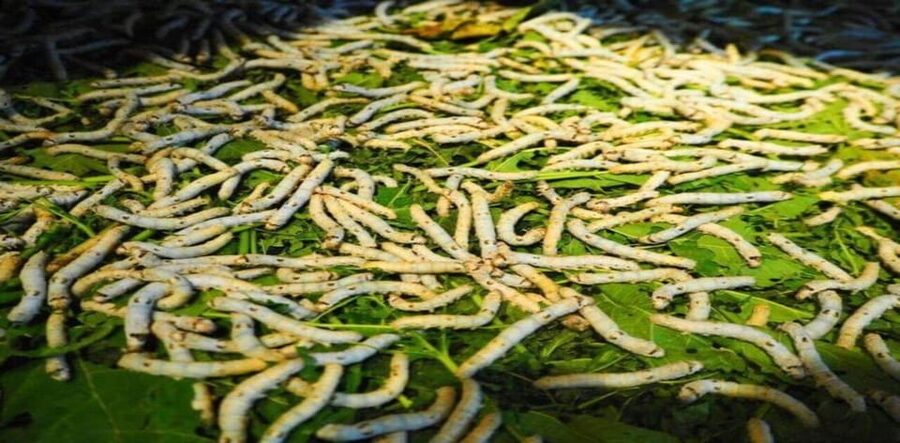
The most useful part of this Hoi An outing is seeing silk as a working craft, not just a scarf in a shop. You follow the thread from mulberry leaves and silkworm cocoons to woven cloth, then make a lantern with your own hands and finish with local food.
I like the clear, practical look at real versus imitation silk, and I like that the lantern is included rather than sold as an optional extra. The main drawback is time: 150 minutes moves quickly, and the silk shop at the end may feel commercial if you only want a workshop. English ability can also vary by guide. One guest found the guide very friendly but difficult to understand, while Thu received especially warm praise.
Key points to know before booking
- The silk process is shown from start to finish: You visit mulberry gardens, see silkworm care, watch cocoons being unraveled, and learn how thread becomes cloth.
- You make one lantern to keep: The class covers lantern history, shapes, colors, and construction before you work with the supplied tools and materials.
- Lunch is part of the price: Expect Cao Lau, deep-fried spring rolls, and fruit, with ingredients adaptable for vegan, vegetarian, gluten-free, or allergy needs.
- Hoi An Silk Village is the meeting point: Go to 28 Nguyen Tat Thanh Street. Hotel transport is not included.
- It costs $22 per person: That is a fair price for a guided craft visit, a lantern class, entrance, welcome drink, and meal.
- The activity is not suitable for wheelchair users: The tour also advises against booking if you have mobility limitations.
Why the silk process is worth your afternoon
Hoi An is known for tailoring and silk goods, but buying a finished item tells you little about the work behind it. This visit gives you the missing middle. You see how mulberry plants support silkworm breeding, how cocoons yield thread, and how that thread is woven into cloth.
That connection matters. Silk can look simple on a shop shelf, yet its production involves several careful stages. Here, you learn how traditional methods tied to the Champa and Dai Viet eras are still presented in a working village setting.
The silk village also preserves valuable mulberry genetic sources. You do not need a background in farming or textiles to appreciate that point. It simply helps explain why the mulberry gardens are part of the visit instead of being decorative greenery around a craft center.
The setting includes old-style buildings, garden areas, and traditional workspaces. A short visit cannot turn you into a silk expert, but it can change the way you judge a scarf, shirt, or length of fabric in Hoi An.
A few more street food tours around Hoi An worth a look
- Hoi An: Bay Mau Cooking Class Only and Making Pho
★ 5.0 · 10 reviews - Hoi An Cooking Class – Traditional Chinese Dumpling
★ 5.0 · 9 reviews - Coffee Making and Banh Mi Class Hoi An
★ 5.0 · 5 reviews
From Quang Nam house to mulberry garden
Begin with a welcome drink, then visit a traditional house in Quang Nam. This is where the guide introduces the local sericulture story, meaning the raising of silkworms for silk production.
The house gives the craft a human scale. Rather than starting with a technical demonstration, you first hear how the work fits into local life. The tour focuses on people, nature, and the relationship between village skills and Hoi An’s clothing traditions.
Next come the ancient mulberry gardens and the silkworm-breeding house. You learn how silkworms are fed and see the early stage of the process before the cocoon becomes thread.
This section is especially useful if you are traveling with children or anyone who enjoys seeing how everyday products begin. The activity is educational without requiring a museum-style attention span. Still, expect an introduction rather than a long agricultural lesson. The full session lasts only two and a half hours.
Watching cocoons become silk thread
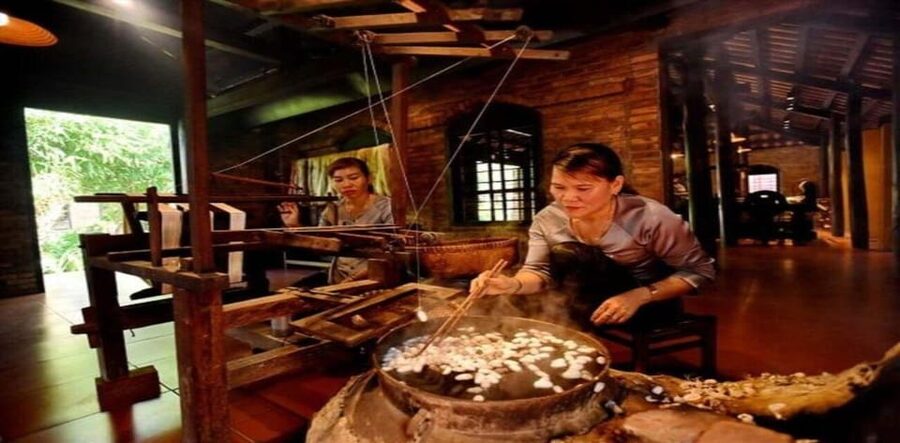
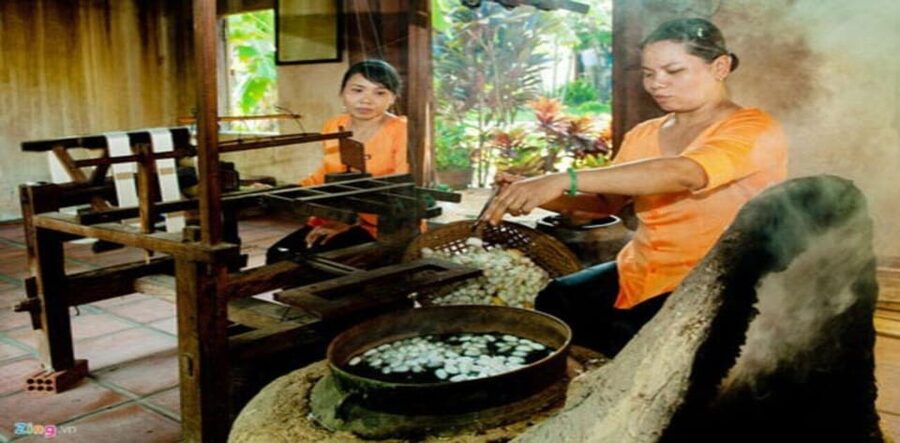
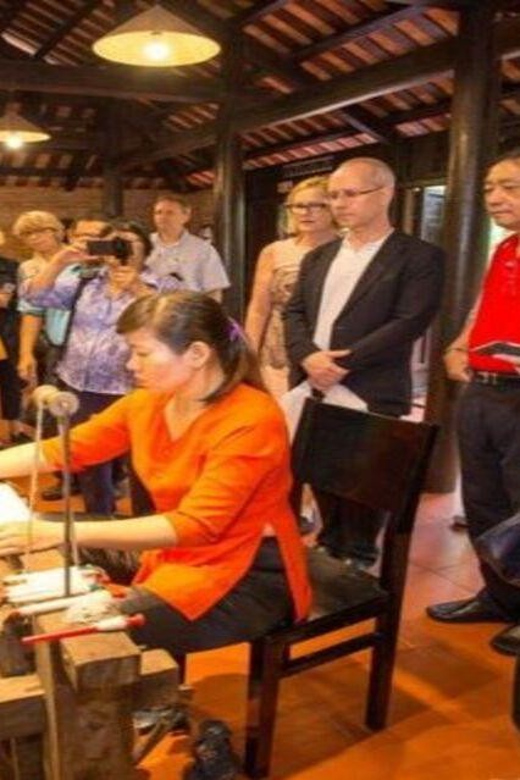
At the unraveling house, the focus shifts from the living silkworm to the cocoon. You learn how silk thread is removed from the cocoon and prepared for weaving.
This is one of the strongest parts of the visit because it answers a question many shoppers have: how does a small cocoon produce a long, usable thread? The guide explains the process while you watch the traditional method.
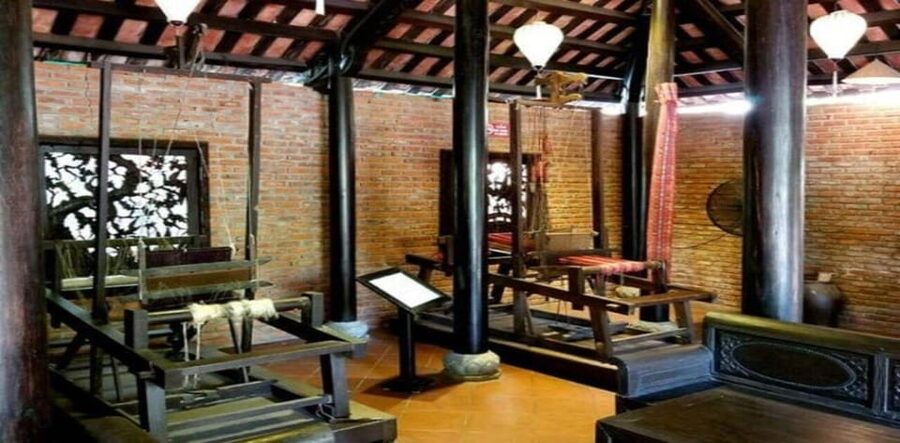
The next stop is the silk weaving house. Here you see how thread becomes fabric and learn about the handmade method linked to Champa and Dai Viet traditions. The activity also includes a look at the handicrafts of the Cham people and their traditional textiles.
The wording around cultural traditions can be broad, so do not expect a full academic study of Champa or Cham textile history. What you do get is a compact, visual introduction to techniques that are easy to miss when you only visit Hoi An’s clothing shops.
If you have questions, ask early and clearly. One English-speaking guide, Thu, was singled out for being kind, well informed, and easy to follow. Another guide was described as very friendly and eager to help, but her pronunciation made questions harder to discuss. The quality of the explanation may depend on the person leading your departure.
Learning to tell pure silk from imitation
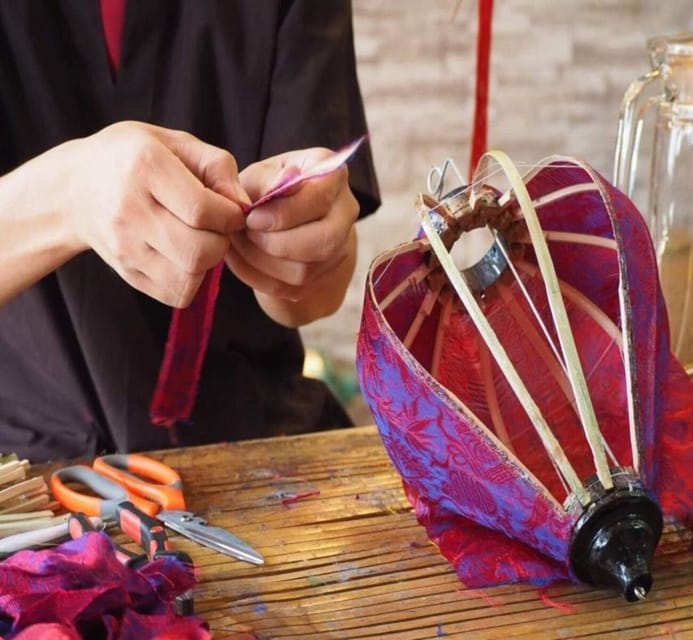
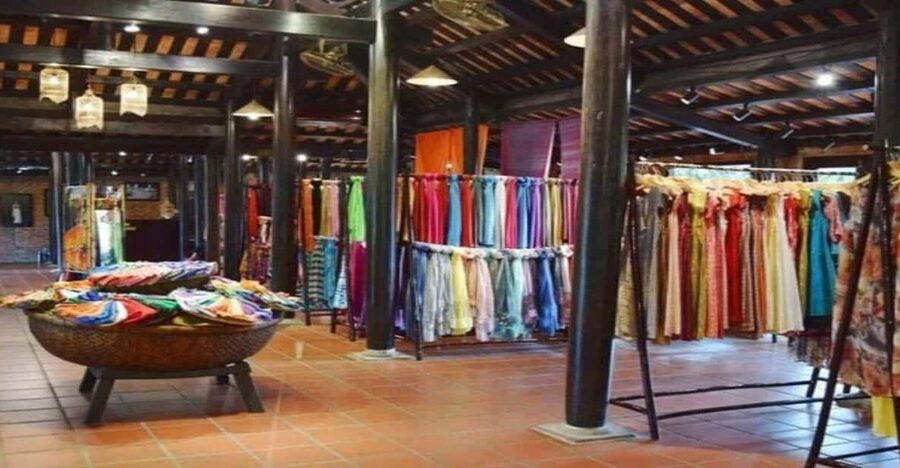
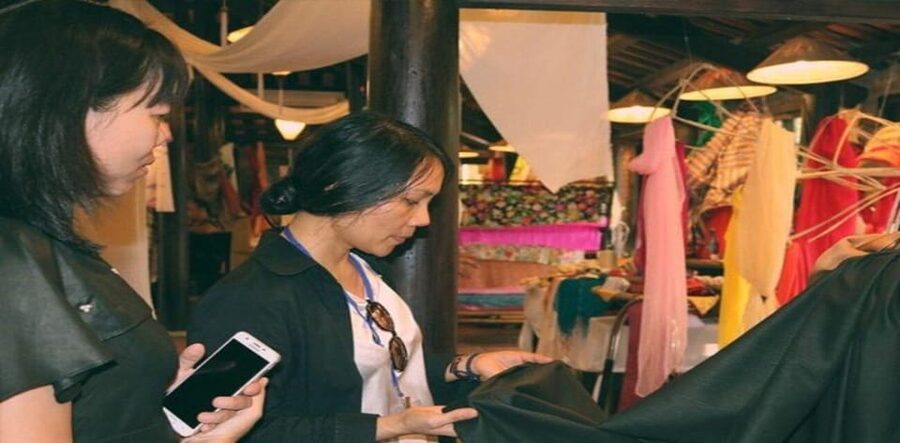
The exhibition area gives you a chance to compare pure silk with synthetic or imitation fabric. This is practical information, especially if you plan to buy a scarf, clothing, or fabric in Hoi An.
The activity does not promise a scientific fabric-testing course. Instead, you receive a basic explanation of the differences, supported by examples in the exhibition and shop area. Pay attention here, then use the information when comparing products elsewhere.
The village has a range of silk goods for people who want to shop or arrange tailoring. You are not required to buy anything. That freedom matters, since the shopping stop can be useful for one person and less interesting for another.
I would treat this section as a buying lesson, not as the main reason to book. If you are already planning to purchase silk in Hoi An, it adds real value. If you have no interest in shopping, keep your focus on the production process and lantern class.
Same city, a different plate:
- Hoi An at Sunset: Authentic Local Street Food Tour
★ 4.5 · 329 reviews - Hoi An Street Food Walking Tour with Tastings
★ 5.0 · 317 reviews - Hoi An street food tour with Billy
★ 5.0 · 273 reviews - Hoi An Night Market – Ancient Town street food tours by Night
★ 5.0 · 165 reviews
Making a Hoi An lantern by hand
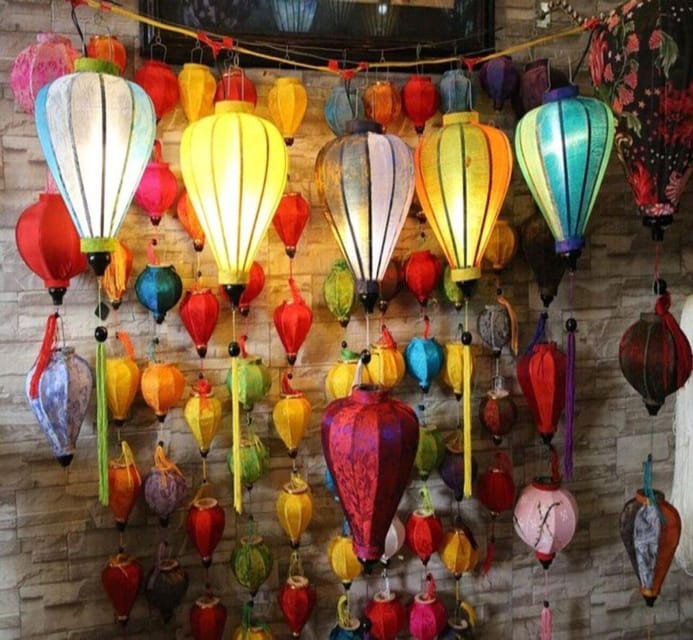
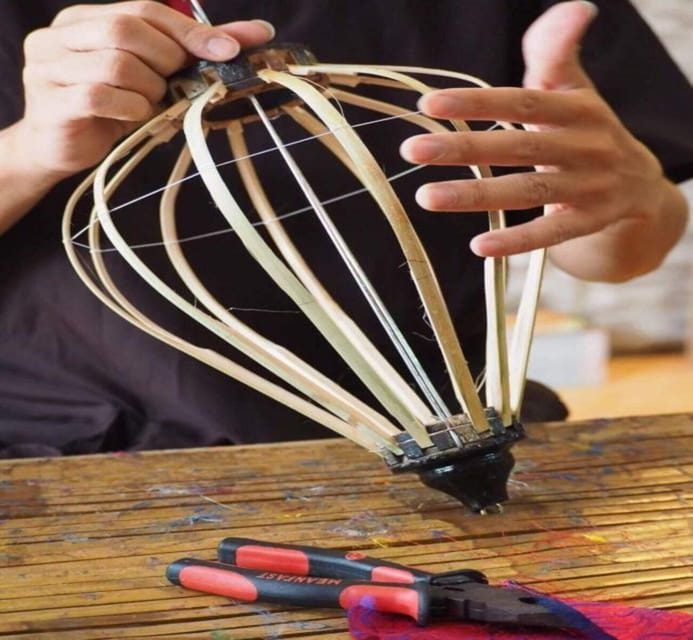
Lanterns are closely tied to Hoi An’s identity, and the workshop gives you more than a photo opportunity. You first hear about their history, shapes, and colors, then learn the stages involved in making one.
After that, you work on your own lantern with the supplied materials and tools. The finished lantern is yours to take home, which makes this a better souvenir than another mass-produced trinket.
Do not expect a large, elaborate lantern in a short class. The available information describes a small lantern-making activity, and the time limit suggests a straightforward project rather than a master class in traditional construction.
That is not a criticism. The point is to give you a direct connection with one of Hoi An’s best-known crafts. You leave with something you made, plus a better sense of how shape and color contribute to the town’s visual character.
The class suits couples, families, and small friend groups particularly well. One guest specifically found it a good activity for a group of friends. It also breaks up the silk demonstrations, since you move from watching a craft to making one.
A local meal with Cao Lau
The final food stop completes the visit with a simple local meal. The included dishes are Cao Lau, deep-fried spring rolls, and a plate of fruit.
Cao Lau is one of Hoi An’s signature foods, so it is a fitting dish after a tour centered on local traditions. The meal is not described as a cooking class. You are there to eat, not prepare the food.
Food requirements can be accommodated. Tell the provider if you are vegan, vegetarian, gluten-free, or have allergies. The ingredients can be adjusted, though you should communicate your needs in advance rather than relying on an explanation at the table.
The meal adds value to the $22 cost, particularly because it saves you from arranging lunch separately. It also makes the experience feel more complete. You have seen a local craft, made a souvenir, and tasted a local dish before returning to Hoi An’s streets.
Is $22 a good value?
At $22 per person, this is a strong package for a 150-minute activity. The price includes an English-speaking guide, entrance, welcome drink, lantern materials, one finished lantern, and the meal.
You are paying for several short experiences rather than one long demonstration. The value is best if you want variety: silk production, cultural background, a hands-on craft, shopping information, and lunch in one booking.
The price is less compelling if your only goal is to make a lantern. A stand-alone craft class may give you more time with the lantern, though no such alternative is specified here. Likewise, serious textile students may want a longer, more technical workshop than this format provides.
There is one cost warning. Bookings made on Vietnamese public holidays carry an extra 50 percent per person, payable in cash. That changes the calculation, so check your date before deciding that the standard price applies.
Timing, meeting point, and practical limits
The meeting point is Hoi An Silk Village, at 28 Nguyen Tat Thanh Street. Hotel pickup and drop-off are not included, so you need to make your own way there and back.
The total duration is 150 minutes. Starting times depend on availability, so check the schedule when booking. Because the visit combines several stops, arriving late could mean missing part of the silk process or lantern introduction.
The tour is offered in English with a live guide. The experience is not suitable for wheelchair users or people with mobility impairments. The information does not describe the exact walking distances or surface conditions, so contact the provider if movement is a concern.
Cancellation is flexible up to 24 hours before the activity for a full refund. You can also reserve now and pay later, which helps if your Hoi An schedule is still changing.
Who will get the most from this activity?
Book this if you want to understand Hoi An through making and doing, not only through sightseeing. It works well for first-time visitors who want an introduction to silk, local food, and lanterns without giving each subject an entire day.
Families may like the change of pace between demonstrations and the hands-on lantern task. Friend groups can share the activity without needing everyone to have the same level of interest in textiles.
It is also useful for shoppers. The pure-silk comparison can help you ask better questions before buying a scarf or arranging tailoring. One participant even found a scarf at the village that felt more distinctive than the usual choices around town.
I would hesitate if you want a quiet, unhurried craft lesson. The schedule covers a lot, and the shopping section may not appeal to everyone. I would also think twice if you need step-free access or require highly precise English explanations of technical subjects.
Should you book the silk and lantern workshop?
Book it if you want a well-priced half-day-style activity that combines Hoi An’s silk tradition with a souvenir you make yourself. The strongest reasons are the complete silk sequence, the included lantern, the local meal, and the chance to learn how to avoid confusing pure silk with imitation fabric.
Go in with sensible expectations. This is a compact cultural introduction, not an advanced weaving course or a private tailoring consultation. Guide quality may vary, though Thu has been especially well received for her warmth and clear explanations.
For $22 on a regular day, I think the balance is good. Choose it when you want your Hoi An afternoon to include a craft, a meal, and useful shopping knowledge, all without arranging several separate visits.
FAQ
Where does the activity meet?
The meeting point is Hoi An Silk Village at 28 Nguyen Tat Thanh Street in Hoi An.
How long does the experience last?
The activity lasts 150 minutes.
Is transportation from my hotel included?
No. Hotel pickup and drop-off are not included, so you must arrange your own transportation to and from the silk village.
What food is included?
The meal includes Cao Lau, deep-fried spring rolls, and a fruit plate.
Can the meal accommodate dietary requirements?
Yes. Ingredients can be adapted for vegan, vegetarian, gluten-free, or allergy-related needs.
Do I get to keep the lantern?
Yes. Each person makes one lantern and keeps it as a souvenir. Materials and tools are included.
Is the tour conducted in English?
Yes. The activity includes a live English-speaking guide.
Can I cancel for a refund?
You can cancel up to 24 hours in advance for a full refund. Reserve-now, pay-later booking is also available.
Just added around Hoi An
- HOI AN Sunset Food Tour – Night Market – Lantern Streets★ 5.0 · 15 reviews
- Night Life Street Food Tours Hoi An★ 5.0 · 11 reviews
- Morning Street Food Walking Tour Group Tour★ 5.0 · 4 reviews
- Hoi An Street Food Tour – Eat like a local – PRIVATE TOUR★ 5.0 · 92 reviews
- My Son Sunset Trip with Banh Mi and Cruise from Hoi An/ Da Nang★ 4.5 · 13 reviews
- The 10 Tastings of Hoi An: Private Street Food Tour★ 5.0 · 9 reviews
- Hoi An Boat Ride and Release Lantern, Night Market Private Tour★ 5.0 · 10 reviews
- Hidden Gem of Hoi An Old Town-Local Food-Lantern Making-Tailoring★ 5.0 · 4 reviews
Hoi An Street Food Tours, compared.
Hoi An at Sunset: Authentic Local Street Food Tour
Read our review →

Hoi An Night Market – Ancient Town street food tours by Night
Read our review →
Hoi An Ancient Town – Night Market Street Food Tours By Night
Read our review →
Ba Na Hills avoid crowd , Da Nang, Dragon Bridge, Marble Mountain
Read our review →
Hoi An Street Food Tour – Eat like a local – PRIVATE TOUR
Read our review →Browse the lists this tour appears in