
REVIEW · THAILAND STREET FOOD TOURS
Ao Nang: Hands-on Learn to Cook 3 Popular Thai’s street food
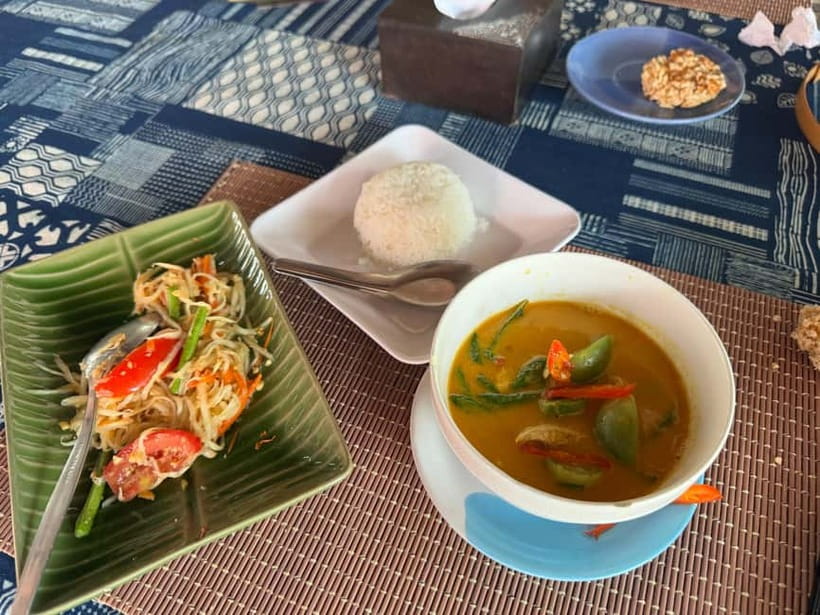
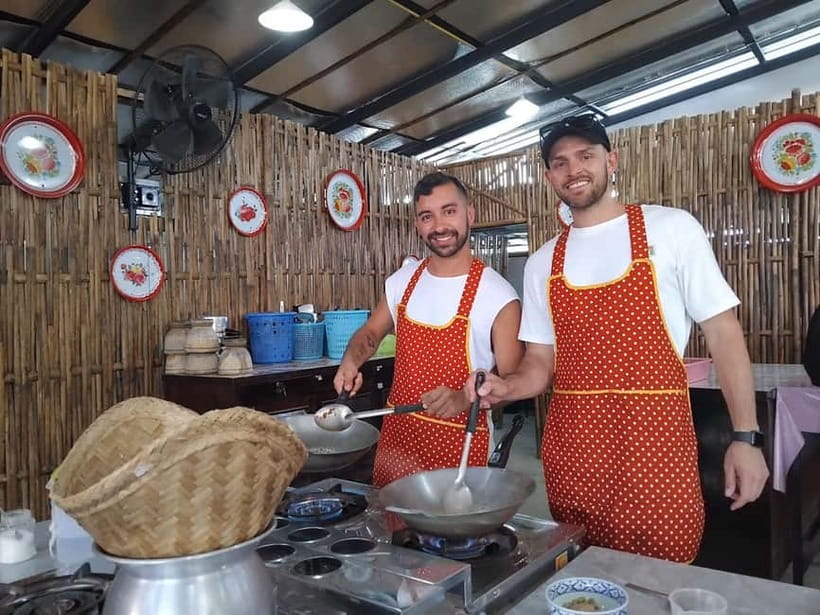
Thai food makes more sense once you are holding the lime, basil, coconut milk, and chili yourself. In this 150-minute Ao Nang cooking class, you choose one soup, one main dish, and one salad, then cook each at your own station with an English-speaking instructor nearby.
I like the flexible menu and the fact that you cook your own food, rather than watching a chef perform. I also like the useful PDF recipe book, which includes more recipes than the three dishes made in class. The main drawback is practical: there is no pickup or transportation, and finding a Grab after the session may take patience.
Key points for your Ao Nang cooking class
- Choose three dishes: Pick one soup, one main course, and one salad instead of making a fixed menu.
- Friendly named instructors: Teachers include New, Tu, Gataii, Poppy, Thiwa, and others from the cooking team.
- Good for dietary needs: Vegan, vegetarian, and gluten-free versions can be prepared when you give advance notice.
- Eat what you prepare: The class ends with three dishes for you to enjoy, not just a demonstration.
- Recipe PDF included: Take home instructions for the class dishes and additional Thai recipes.
- Plan your own ride: Transportation is not included, so arrange your route to and from the kitchen.
Three Thai dishes, one relaxed afternoon
This is a practical cooking class built around the familiar Thai meal pattern of soup, a main dish, and a fresh salad. The choices give you a useful range of techniques without turning the session into a long culinary course.
For the soup, you can choose local chicken soup or chicken in coconut milk soup. The wider menu described for the class also includes options such as Tom Yum, Tom Khao Khai, or Tom Zab, depending on the session and available choices. Ask the instructor at the start which soup options are running that day.
Your main course choices include Pad Thai, fried holy basil with chicken, or cashew nuts with chicken. This is the part most people will want to repeat at home. Pad Thai teaches you how several sharp, sweet, salty, and savory elements work together, while holy basil or cashew chicken gives you a different lesson in stir-frying and sauce balance.
The third dish is a papaya salad or cucumber salad. This adds a cool, fresh course to the meal and keeps the cooking from becoming three heavy dishes in a row. It also gives you a chance to adjust heat and seasoning to your own taste.
The menu is flexible rather than rigid. You can generally choose what suits you, and several dishes can be adapted with tofu, without meat, or without eggs. If you need gluten-free food, tell the operator before the class rather than waiting until you arrive.
A few more street food tours around Thailand worth a look
- Phuket foodie tour+ Thai cooking class + Local food tasting
★ 5.0 · 4 reviews - Dinner from cooking class & enjoy local night market
★ 5.0 · 2 reviews - Small Group Cooking Class & Market Food Tour in Florence
★ 5.0 · 1,574 reviews
Entering the clean open-air kitchen
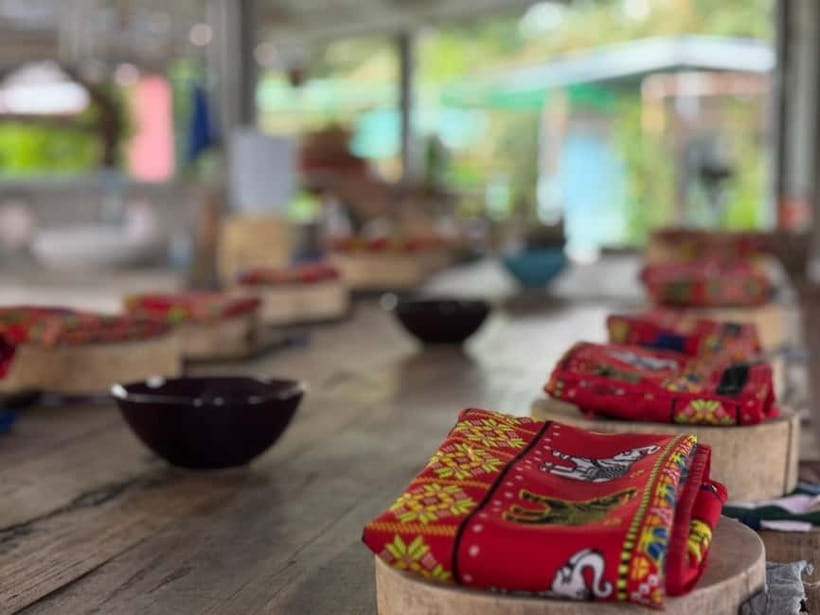
The class takes place in a clean, open-air kitchen with a family-style feel. It is not presented as a formal culinary school, and that is part of its appeal. You get a friendly setting where the instructor can explain ingredients, answer questions, and keep an eye on each person’s cooking.
The teaching style is hands-on. You do not simply sit at a table while someone else prepares the meal. The instructor guides you through the ingredients and steps, then you take part in the cooking and seasoning.
Several instructors are associated with the class. New is described as warm, funny, and especially good at making Thai cooking feel manageable. Tu is praised for clear instruction and a relaxed manner. Gataii brings plenty of energy and humor, while Poppy and Thiwa have also led sessions. The exact teacher depends on the day, but the pattern is consistent: clear explanations, plenty of encouragement, and a casual atmosphere.
That human touch matters. Thai cooking can look easy until you are trying to balance fish sauce, lime, chili, sugar, and herbs in your own pan. A patient teacher can correct a sauce without making you feel that you have ruined dinner. One instructor even turned a sauce mistake into a running joke, which is the right spirit for a holiday cooking class.
How the 150 minutes usually unfolds
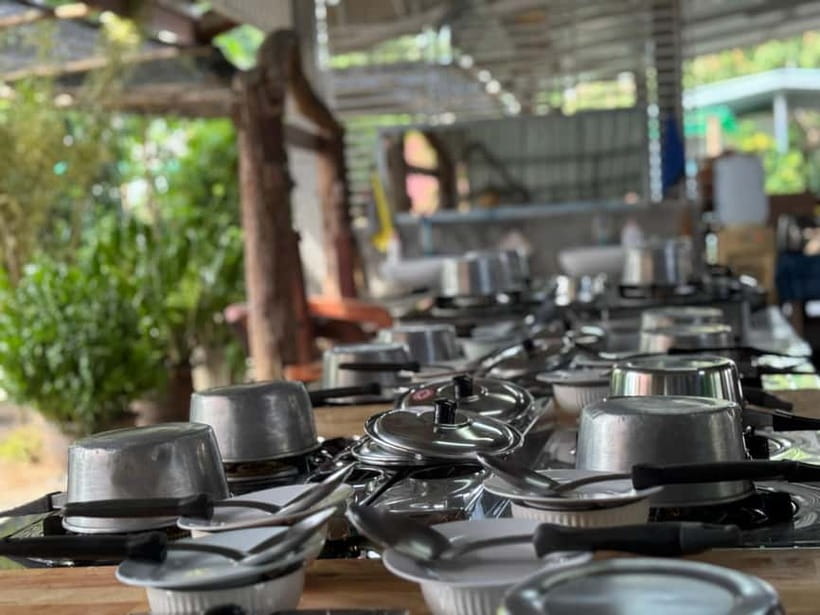
The experience lasts about two and a half hours, though several people describe it as feeling closer to two hours of active cooking. You meet the instructor, settle into the kitchen, and choose your dishes from the available menu.
Next comes an introduction to the ingredients. The teacher explains what you are using and how each item contributes to the final dish. This may include herbs, spices, oils, vegetables, noodles, sauces, coconut milk, lime, and chili. The explanation is useful because it connects the ingredient to the flavor, rather than treating it as a list of items to copy.
Some ingredients may already be prepared, such as onion, carrot, and lime. That is worth knowing. You may not chop every ingredient from start to finish, but the advance preparation helps the class fit three dishes into 150 minutes. It also leaves more time for the parts that matter most at home: seasoning, heat control, combining ingredients, and timing.
You then cook each dish with the instructor’s guidance. The class is designed for beginners, so you do not need advanced kitchen skills. Instructions can be repeated, and the teacher can adjust the process for different levels of experience.
After cooking, you eat the meal you prepared. You have time to taste the dishes and enjoy the result, rather than rushing straight out of the kitchen. Staff handle the washing up, so your final task is to eat, take photos, and perhaps decide which recipe you will try first at home.
Why the menu choices matter
A fixed menu can be easy for a cooking school, but it is less useful for you if you dislike one of the dishes or have dietary limits. Here, the choice of three categories lets you build a meal that fits your appetite.
I would choose the coconut milk soup, Pad Thai, and papaya salad if I wanted three very different lessons. The soup shows how coconut milk and seasoning create a smooth, fragrant base. Pad Thai gives you a famous street food dish with a technique you can repeat in an ordinary home kitchen. Papaya salad adds raw ingredients, crunch, acidity, and heat.
If you prefer milder food, say so clearly. The menu allows changes in spice, and the instructor can help you avoid making a dish hotter than you want. You can also ask about substitutions such as tofu, no egg, or different sauces.
Vegetarians and vegans are not treated as an afterthought. The class can replace meat and make suitable sauce changes, but advance notice is important. The same applies to gluten-free cooking. Do not assume every standard Thai sauce is gluten-free. Tell the operator in advance so the kitchen can prepare properly.
Same city, a different plate:
- Bangkok: Grand Palace, Wat Pho, and Wat Arun Guided Tour
★ 4.8 · 3,632 reviews - Phuket: Full Day City Tour with Night Market
★ 4.5 · 2,888 reviews - Bangkok: Grand Palace, Wat Pho, Wat Arun Sacred & Local Tour
★ 4.3 · 2,256 reviews - Bangkok: Wat Pho and Wat Arun Guided Walking Tour
★ 4.6 · 1,720 reviews
The instructors are part of the experience
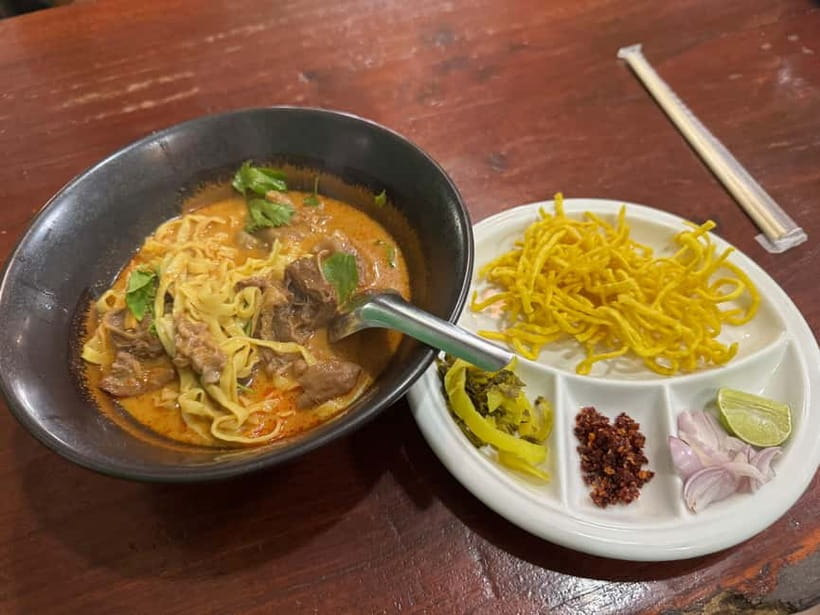
The food is the main reason to book, but the instructor shapes the whole session. A quiet or overly formal class would make this menu feel like work. The teachers here are described as funny, patient, welcoming, and willing to answer questions.
New is one of the names that comes up often. She has helped people understand the balance of Thai ingredients and has adapted dishes for vegetarian participants. Tu is another popular teacher, known for clear demonstrations and a friendly approach. Gataii is energetic and accommodating, including with late arrivals when possible. Poppy and Thiwa have also led enjoyable sessions.
The teaching is not only about following a recipe. You learn why a dish tastes the way it does and how to change it. You can ask for more or less spice, leave out mushrooms, or adjust ingredients where the dish allows it. That flexibility is especially helpful when you are cooking with children or with family members who have different tastes.
Children can take part, too. A six-year-old and a ten-year-old have been included in successful classes, though adults should expect to supervise younger children around heat and sharp tools. The format works well for families because everyone gets a task and then shares the meal.
Food quality and what you take home
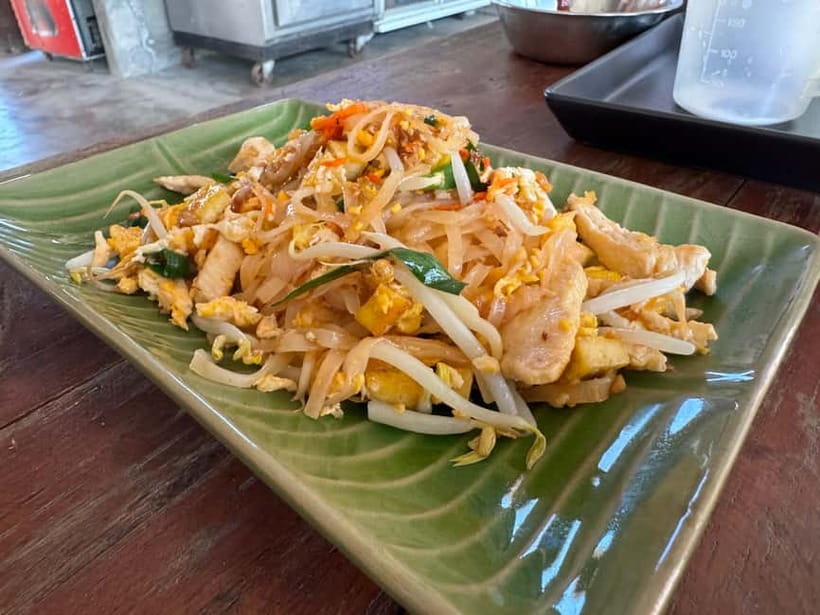
The strongest part of the experience is that you eat food you have just cooked. Even a simple dish feels more satisfying when you understand the steps behind it. The class is also set up so novice cooks can produce something tasty without needing restaurant equipment.
The recipes are kept fairly simple. That is a strength for most visitors, since you can find the ingredients and repeat the dishes later. The PDF recipe book includes the class recipes plus a broader selection of Thai dishes, giving you more value than a single printed menu.
Keep the PDF somewhere easy to find after your trip. The real test of a cooking class is what happens two months later, when you are back home and want to recreate the meal. Clear instructions and familiar techniques give you a better chance than an elaborate recipe that depends on specialist equipment.
You also receive photos of the activity. These are a pleasant extra, especially for families or groups who want a record of the class without asking someone to stop cooking and take pictures.
Price, group feel, and what $28 buys
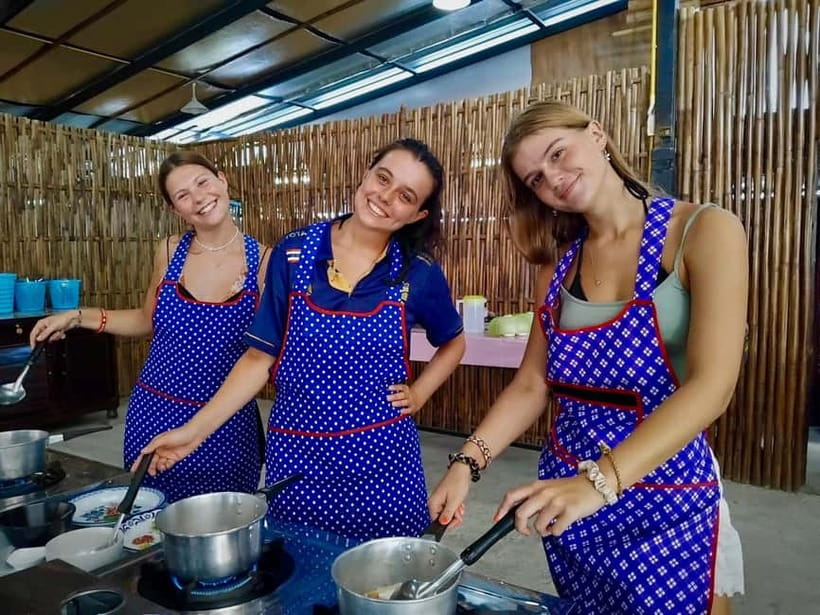
At about $28 per person, this is good value if you want an activity that combines instruction, a meal, ingredients, drinks, recipes, and photos. You are not paying only for dinner. You are paying for a shared activity and three dishes you can try again at home.
The value is strongest for people who enjoy participation. If you only want to eat Pad Thai, a restaurant will be simpler and may cost less. If you want to learn the basic method and understand the ingredients, the class gives you more for the money.
Group size can vary. One session had around 10 to 12 people, while other sessions were smaller and felt more personal. A smaller group gives you more direct time with the instructor, but a larger group can create a livelier social atmosphere. Neither format guarantees a better class, since the teacher’s attention and organization matter more.
Beer and soft drinks may be available in the kitchen for an extra charge. Alcohol is not included, and alcohol and drugs are not allowed as part of the activity. Drinking water is included.
Getting there and planning the return
There is no pickup or transportation service, so you need to reach the cooking school on your own. Check the meeting point and your route before the class, especially if you are staying outside central Ao Nang.
Allow some extra time before the start. Arriving late can add stress and may mean missing the ingredient introduction, even though one instructor has been accommodating to late arrivals. The kitchen is a practical place to begin a holiday activity, not a transfer point, so make your transport plan separately.
The return journey deserves a little thought. One person had difficulty getting a Grab after the class. You may find a car easily, but do not rely on an immediate pickup if your accommodation is farther away. Arrange a ride in advance if you have a flight, ferry, dinner reservation, or evening tour to catch.
Who should book this class?
I would recommend it to first-time visitors who want more than another restaurant meal, couples looking for a relaxed shared activity, and families who enjoy cooking together. It also suits solo participants because the group format is social without requiring you to bring a companion.
It is a strong choice for beginner cooks. The recipes are approachable, the instructor demonstrates each stage, and staff take care of the dishes afterward. You do not need to know Thai cooking before you arrive.
It works particularly well for vegetarians, vegans, and people avoiding gluten, provided you communicate your needs ahead of time. The class can make substitutions, but last-minute requests are never as reliable as advance notice.
You may want to skip it if you dislike group activities, cannot manage two and a half hours in a kitchen, or want a fully private lesson. You should also avoid booking it close to an important transport connection because the class has a set duration and your return ride is your responsibility.
Final call: book it for the cooking, not just the meal
I would book this class if I wanted a friendly, practical introduction to Thai food in Ao Nang. The three-dish format, flexible menu, capable instructors, and take-home recipes make the $28 price fair.
Choose your dishes early, state every dietary restriction in advance, and plan your ride home before you start cooking. If you do that, you get a useful holiday memory, a satisfying meal, and recipes you can actually try again after Thailand.
FAQ
How long does the Ao Nang Thai cooking class last?
The activity lasts 150 minutes, or about two and a half hours. Starting times vary, so check availability when booking.
How many dishes do I cook?
You choose three dishes: one soup, one main course, and one salad. Options include coconut milk soup, Pad Thai, holy basil or cashew chicken, and papaya or cucumber salad.
Are vegetarian, vegan, and gluten-free options available?
Yes. Vegetarian, vegan, and gluten-free options are available upon request. Tell the operator about your dietary restrictions in advance.
Is transportation included?
No. Pickup and transportation are not included, so you must arrange your own way to and from the cooking school.
What is included in the price?
The class includes all cooking ingredients, drinking water, a PDF recipe book, and photos of the activity. Beer and other alcohol are available for purchase but are not included.
Can I cancel the booking?
You can cancel up to 24 hours in advance for a full refund. The reserve now and pay later option may also be available when you book.
Just added around Thailand
- Thai Street Food & Morning Market Walking Tour in Hua Hin★ 5.0 · 46 reviews
- Eat Like a Local Food Tour in Hua Hin★ 5.0 · 74 reviews
- Chiang Rai Food & Night Market Walking Tour with Local Host★ 5.0 · 5 reviews
- Michelin Guided Street Food Tour in Chiangmai: Thai Food Tour★ 5.0 · 11 reviews
- Private Half-Day Tour The Old Chiang Mai City With Street Foods★ 5.0 · 3 reviews
- Chiang Mai – Doi Suthep Temple and Street Food Tour★ 5.0 · 17 reviews
- Taste of Chiang Mai: Michelin Guide Street Food Small Group 2Hr★ 5.0 · 19 reviews
- Chiang Mai Michelin Food Walking Tour with Professional Tour Guide★ 4.5 · 13 reviews
Thailand Street Food Tours, compared.

Bangkok: Michelin Guide Street Food Tour by Tuk Tuk
Read our review →
Bangkok: Grand Palace, Wat Pho, and Wat Arun Private Tour
Read our review →
Bangkok Authentic Tasting Thai-Chinatown Walking Food Tour
Read our review →
Small-Group Chiang Mai Evening Street Food Tour
Read our review →
Bangkok: Evening Tour with Wat Arun, Wat Pho & Tuk Tuk Ride
Read our review →
Bangkok Tuk-Tuk Tour by Night with Chinatown Street Food Meal
Read our review →
Chiang Mai: Evening Local Street Food Market Tour
Read our review →
Browse the lists this tour appears in