
REVIEW · ITALY STREET FOOD TOURS
Ascoli Olive Oil Tour with Tasting and Local Food Pairing
The best part of this Ascoli Piceno experience is that olive oil is not treated as a souvenir or a passing taste. You visit a working family mill, see how ancient stone milling meets modern extraction, and learn why one oil smells grassy while another tastes bitter, peppery, or sweet.
I like the hands-on tasting with Valentino Fratoni, an experienced professional taster and competition judge. I also like the generous local-food pairing, which turns a technical lesson into a proper taste of Le Marche. The main consideration is timing: the visit is listed at about two and a half hours, and the family-led format may run longer, so do not wedge it between two tight sightseeing plans.
Key points to know before you book
- See a real olive mill: Walk through production rooms at Olio Fratoni rather than simply tasting bottled oils in a shop.
- Learn from Valentino Fratoni: The tasting is led by a professional taster with experience judging major olive oil competitions.
- Compare oils properly: You are taught to assess aroma, flavor, balance, and quality instead of swallowing oil without context.
- Taste Le Marche on a plate: Local foods are paired with selected oils, giving you more than a spoonful of oil and a piece of bread.
- Keep the group small: The experience accepts no more than 15 people, a useful size for questions and personal guidance.
- Plan a flexible morning or afternoon: The advertised duration is about 2 hours and 30 minutes, but the family may take extra time to explain the craft.
Why this olive oil visit is worth time in Ascoli Piceno
Ascoli Piceno is known for handsome stone streets, towers, and its famous stuffed olives. This experience gives you a different way to understand the area: through the farms, mills, and food traditions outside the historic center.
I like that the tour does not stop at a pretty grove or a polished tasting room. You go to Olio Fratoni on Strada Salaria Inferiore, where olive oil is made. That changes the experience. You can connect the final taste in your glass with the machinery and methods that produced it.
The setting also makes a good break from churches and old buildings. After a morning in Ascoli’s center, a short food-focused outing can feel more personal and less museum-like. You are still learning, but the lesson comes with bread, regional products, and a family business that takes clear pride in its work.
The price is about $40.85 per person. That is not the cheapest food stop in Italy, but it covers a substantial visit: production, instruction, several tastings, and local pairings over roughly two and a half hours. I see the strongest value for people who want a proper introduction to Italian olive oil rather than a quick sample before buying a bottle.
A few more street food tours around Italy worth a look
- Naples: Street Food Walking Tour with Local Guide
★ 4.9 · 4,976 reviews - Rome: Street Food Tour with Local Guide
★ 4.8 · 4,077 reviews - Florence: Cinque Terre Park Day Trip with Optional Street Food
★ 4.5 · 3,593 reviews
Inside Olio Fratoni, from old stone to modern extraction
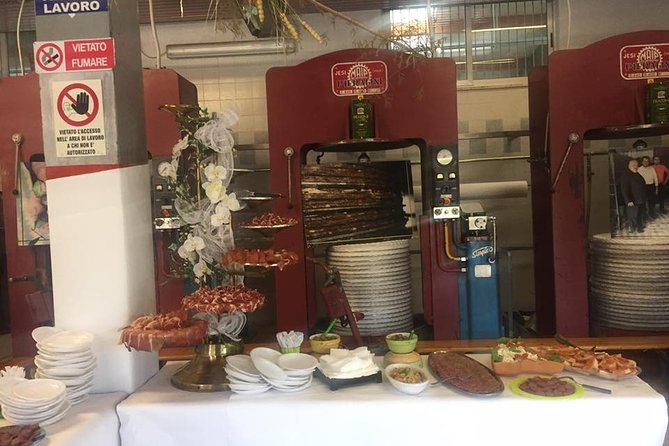
The visit begins in the mill’s production area. You can expect an explanation of how olives are processed, including the contrast between centuries-old stone mills and newer extraction systems.
That contrast matters. Olive oil production is not just an old rural craft frozen in time. The mill uses modern equipment while keeping a connection to traditional methods. You get a clearer picture of how producers try to protect flavor and quality during extraction.
The machinery is part of the point. A bottle on a shop shelf hides nearly all of the work behind it. At the mill, the production process becomes easier to understand because you can follow the path from olives to oil and ask questions as you go.
The precise route through the production rooms is not laid out in minute-by-minute form, so I would not expect a factory tour with a fixed script at every station. The strength here is the family explanation and the chance to see an operating business rather than a staged display.
For anyone who cooks with olive oil, this section has practical value. You begin to see why extra-virgin oil is judged by more than color or price, and why care during production affects the finished product.
Learning to taste oil with Valentino Fratoni
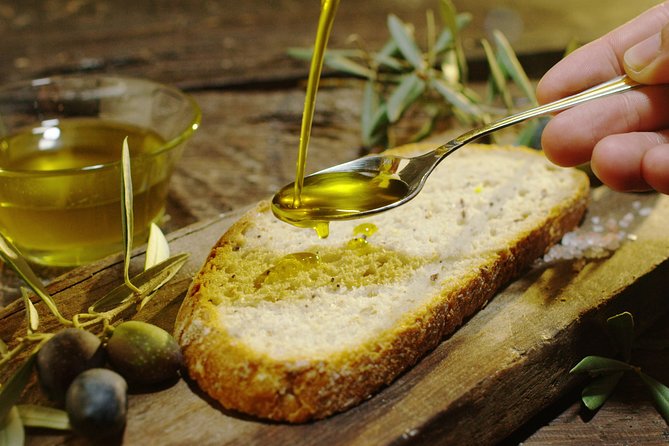
The tasting course is the heart of the visit. Valentino Fratoni leads you through the process of assessing different oils, with attention to aroma, flavor, and quality.
Many people taste olive oil by pouring it over bread and deciding only if they like it. Valentino’s approach gives you a more useful set of tools. You learn to notice the first smell, the taste as the oil moves across your mouth, and the finish that remains afterward.
You may pick up on grassy or fruity notes, along with bitterness and a peppery sensation. Those sharper qualities can surprise newcomers. They are not automatically flaws. A professional tasting helps you separate a strong, characterful oil from one with unpleasant defects.
I especially like the practical nature of a mini tasting course. You are not expected to become a certified taster in one afternoon. You are given a way to compare oils with more confidence, which is useful the next time you shop in Italy or order olive oil at a restaurant.
Valentino’s role also adds weight to the lesson. He is described as an internationally recognized olive oil expert, professional taster, and judge at prestigious competitions. That does not mean the tasting is stiff or formal. The family style is warm, and Valentino is also described as funny and polite, which should help keep technical material approachable.
If you are already serious about olive oil, the session may feel introductory rather than advanced. For most people, that is a benefit. You get enough structure to improve your palate without sitting through a long lecture on chemistry.
The local-food pairing makes the lesson useful
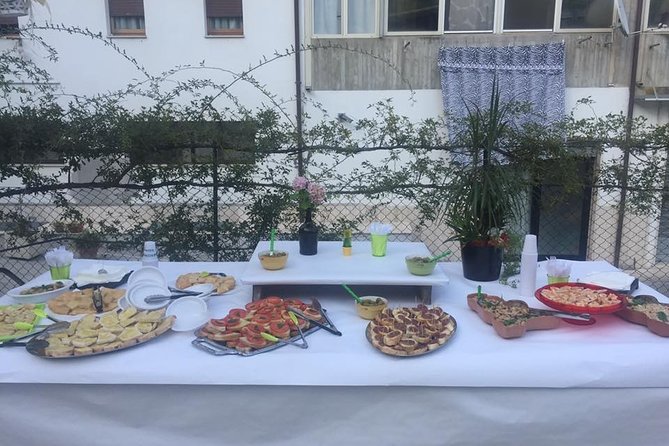
After the oil instruction comes a tasting of regional foods paired with selected oils. The listed starter is an olive oil and local-product tasting, but the meal is presented as more substantial than a token nibble.
This is where the experience becomes distinctly local. You are not tasting oil in isolation. You can see how it behaves with food, which is how most people will use it at home. One oil may suit a simple bread tasting, while another may work better with a stronger savory product.
The exact menu can vary, and no full list of dishes is provided. You should think of this as a generous regional tasting rather than a guaranteed multi-course lunch. The food comes from local producers, and the purpose is to show the oils alongside the flavors of the Ascoli area.
Several first-hand accounts describe the food as delicious and call the morning spread closer to lunch than breakfast. That is useful planning information. If you book the experience near midday, you may not need a separate large meal immediately afterward. Still, I would not count on it as a formal restaurant lunch with a fixed menu.
I like this part because it keeps the tour from becoming too technical. You learn a tasting method, then immediately apply it at the table. Food also makes the differences between oils easier to remember.
Same city, a different plate:
- Rome: Guided Food Walking Tour with Wine in Trastevere
★ 4.9 · 3,105 reviews - Florence: Day Trip to Cinque Terre with Optional Street Food
★ 4.5 · 2,854 reviews - Rome: Trastevere & Campo de Fiori Street Food Walking Tour
★ 4.9 · 2,768 reviews - Venice: Street Food Tour with a Local Guide and Tastings
★ 4.8 · 2,613 reviews
A family business with a personal feel
The Fratoni family is closely connected with the visit. You may meet more than one family member, and the presentation reflects pride in the mill’s work.
That personal element is one of the strongest reasons to choose this over a generic tasting. You are not simply handed a glass and sent through a list of flavors. The family’s enthusiasm helps explain why production choices matter and why olive oil remains such an important part of local food culture.
The tone also seems to be relaxed. Valentino is described as both expert and personable, with humor adding lightness to the tasting. That balance is valuable because oil terminology can become dry very quickly.
A family-run setting can have one trade-off: the pace may be less rigid than at a large commercial attraction. If you prefer a perfectly timed tour that begins and ends to the minute, this may test your patience. If you enjoy conversation and questions, the looser rhythm is likely an advantage.
The small maximum of 15 people supports that style. It is not a private tour, but it is far more manageable than a large coach group. You should have a better chance to hear the explanations and take part in the tasting without being lost at the back of a room.
How to fit the mill into an Ascoli visit
The meeting point is Olio Fratoni, Strada Salaria Inferiore, Frazione 17/A, 63100 Ascoli Piceno AP. The activity ends at the same place.
The tour is near public transportation, according to the provided details. Still, the information does not specify the exact bus route, travel time, or pickup service. I would check your route carefully before setting out, especially if you are staying in Ascoli’s historic center.
A mobile ticket makes arrival simpler. Confirmation is provided when you book, so keep the booking details available on your phone. The tour is offered in English, which makes it suitable for English-speaking visitors who want more than a translated label on an oil bottle.
The nominal duration is approximately 2 hours and 30 minutes. Give yourself extra breathing room. Family-run tastings can stretch when questions are flowing, and one account describes the visit as lasting longer than expected. I would avoid booking a train, museum entry, or restaurant reservation immediately afterward.
The experience is available to most people, and the stated group limit is 15. Dietary restrictions should be communicated in advance. That point matters because the food pairing is a major part of the visit, and the exact products may not suit every diet.
Who will get the most from this experience
I would recommend this tour to food-focused visitors, home cooks, and anyone curious about how Italian products are made. It also works well for couples or small groups looking for something beyond Ascoli’s main monuments.
You do not need prior tasting experience. In fact, beginners may gain the most because the lesson gives you a basic vocabulary and a method for comparing oils.
It is also a good choice if you enjoy meeting producers. The family connection is not just decoration. It shapes the way the mill is explained and gives the visit a human side.
I would be more cautious if you have only a short stop in Ascoli, dislike tasting strong or bitter flavors, or need a precise end time. The experience is food-centered and educational, not a quick photo stop. It also does not appear to include transportation from a hotel, so you must manage your own way to the meeting point.
Price, group size, and what you receive
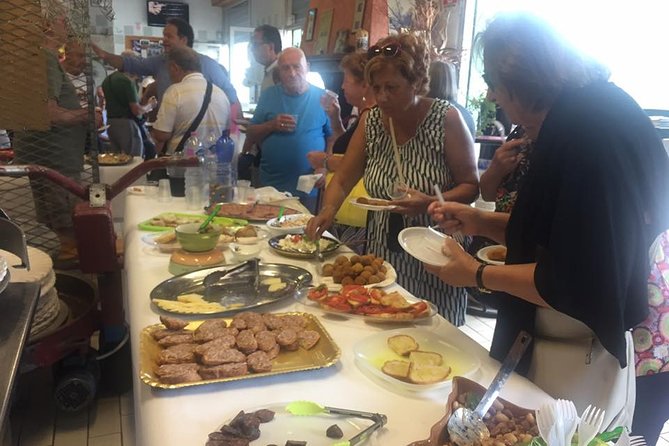
At about $40.85 per person, the cost is reasonable if you use the full visit. You are paying for access to a working mill, a guided production explanation, a professional tasting lesson, several oils, and local food pairings.
The value is strongest when you treat it as both a meal and a class. If all you want is a taste of extra-virgin olive oil, you can spend less in a shop or market. If you want to understand what you are tasting and enjoy food from the region at the same time, the price makes more sense.
The maximum group size of 15 keeps the experience personal without putting it in private-tour territory. I would ask questions as they occur, especially during the tasting. The more you take part, the more useful the price becomes.
The tour is recommended by all listed participants and carries a 4.9 rating from 18 reviews. Those figures suggest strong satisfaction, but the small sample means I would still choose it for the right reasons: an interest in olive oil, local food, and a family-run production visit.
Free cancellation is available up to 24 hours before the start time for a full refund. Cancellations or changes made less than 24 hours before the start are not refundable, and the cut-off follows local time.
Should you book the Ascoli olive oil tour?
Book it if you want to understand Italian olive oil rather than simply buy a bottle. Valentino Fratoni’s guided tasting, the look inside Olio Fratoni, and the local-food pairing give you three useful layers: how oil is made, how it is judged, and how it is eaten.
I would make this a priority for food lovers and for anyone with a flexible half-day in Ascoli Piceno. Allow more time than the stated two and a half hours, share any dietary restrictions before you arrive, and do not plan a tight appointment afterward.
Skip it if you want a fast tasting, a fully fixed menu, or a tour centered on Ascoli’s historic monuments. For the right visitor, though, this is a warm, practical introduction to one of Italy’s most important everyday foods.
FAQ
Where does the olive oil tour begin?
The tour begins at Olio Fratoni, Strada Salaria Inferiore, Frazione 17/A, 63100 Ascoli Piceno AP, Italy.
Where does the activity end?
The activity ends back at the meeting point at Olio Fratoni.
How long does the experience last?
The advertised duration is approximately 2 hours and 30 minutes. You should allow extra time because the visit may run longer.
What language is the tour offered in?
The experience is offered in English.
How much does the tour cost?
The listed price is $40.85 per person.
What food is included?
The experience includes a tasting of olive oil and local products, with regional foods paired with selected oils.
How many people can join the tour?
The activity has a maximum of 15 travelers.
Can I cancel for a full refund?
Yes. You can cancel at least 24 hours before the local start time for a full refund. Cancellations or changes made less than 24 hours before the start are not accepted for a refund.
Just added around Italy
- Small-group Street food tour in Ischia★ 3.5 · 2 reviews
- Genoa Street Food Tour with a Local Guide★ 5.0 · 3 reviews
- Genoa Walking Tour: Discover Hidden Treasures and Street Food★ 5.0 · 80 reviews
- Street Food Tour in Genoa★ 4.0 · 7 reviews
- Florence Central Market Food Tour – Private Tour★ 4.0 · 7 reviews
- Florence: San Lorenzo Farmers Market Food Tour with Wine Tasting in 4 hours★ 5.0 · 2 reviews
- Florence: Street Food Tour and Sightseeing with Local Expert Guide in 2.5 hours★ 5.0 · 20 reviews
- Mamma Mia Florence Street Food Tasting and City Guided Tour★ 5.0 · 2 reviews
Italy Street Food Tours, compared.
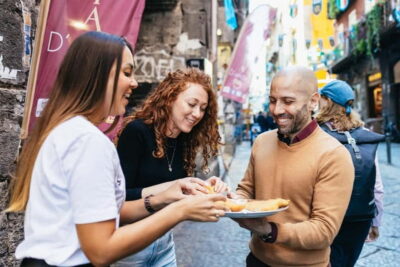
Naples: Street Food Walking Tour with Local Guide
Read our review →
Rome: Guided Food Walking Tour with Wine in Trastevere
Read our review →
Rome: Trastevere & Campo de Fiori Street Food Walking Tour
Read our review →
Venice: Street Food Tour with a Local Guide and Tastings
Read our review →
Authentic Naples Street Food Tour With Local Expert Guide
Read our review →
Palermo Original Street Food Walking Tour by Streaty
Read our review →Browse the lists this tour appears in