
REVIEW · BANGKOK STREET FOOD TOURS
Bangkok: Talad Noi Hidden Gems & Street Food Adventure
Talad Noi gives you Bangkok at its most rewarding: narrow lanes, Chinese-Thai food, old religious buildings, painted walls, and cafés by the Chao Phraya. The best part is the way the walk links everyday neighborhood life with places such as the 1787 Holy Rosary Church and the 200-year-old Chow Sue Kong Shrine.
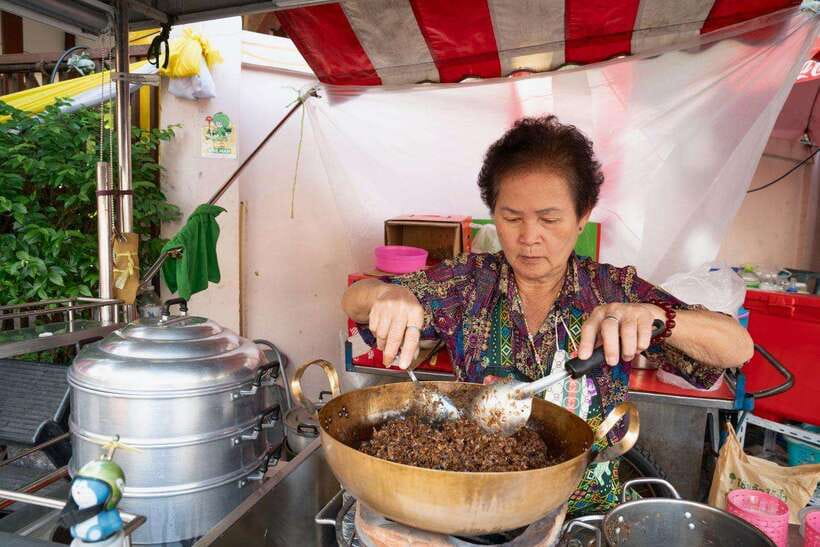
I like the tour’s small group limit of 12, which gives your guide room to answer questions and adjust the food stops. I also like the mix of tastes: turnip cake, chwee kueh, duck noodle soup, pad Thai, and drinks such as coffee, tea, or boba tea.
The main caution is simple: this is more food tour than full Chinatown sightseeing tour. One person found the Chinatown section too brief and not quite deep enough, so come for the food and Talad Noi first, with the temples and old lanes as part of the package.
Key points at a glance
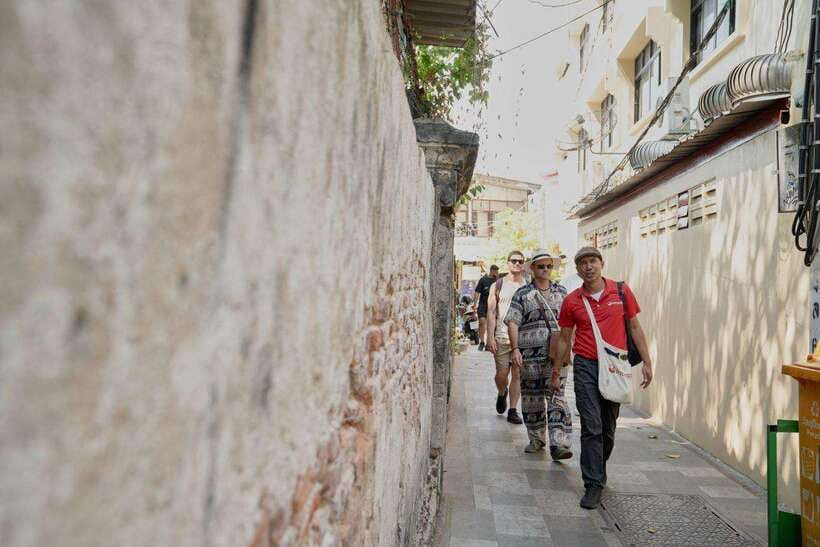
- A 2 km walk through Talad Noi: The route is manageable, but you will spend much of the 150 to 270 minutes on foot.
- Thai and Chinese flavors: Try turnip cake, chwee kueh, chao tha duck noodles, and pad Thai from Uncle Pom.
- Two meaningful historic stops: Holy Rosary Church dates to 1787, while Chow Sue Kong Shrine is about 200 years old.
- Small-group attention: The group can include up to 12 people, and a private option is available.
- A useful first-day introduction: The route connects Talad Noi, the riverside, and the edge of Chinatown without requiring complicated transport.
- Vegetarian help is limited: Vegetarian food can be arranged with advance notice, but other dietary needs are not listed as available.
Why Talad Noi makes a good Bangkok food walk
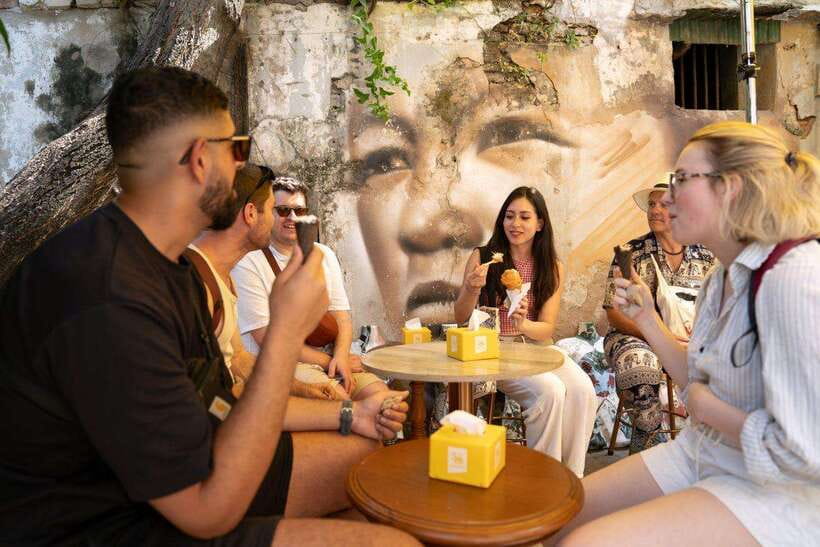
Talad Noi sits beside the river and carries strong Chinese and Thai influences. That combination shows up in the food, religious buildings, family-run streets, and changing creative scene.
This is not a polished sightseeing district where every stop is arranged for visitors. You walk through a working neighborhood, then pause for small food samples and local explanation. That gives the outing a more useful rhythm than simply moving from one famous landmark to another.
The route covers about 2 kilometers, or 1.2 miles. That is not a hard distance for most people, but Bangkok heat, narrow lanes, standing at food stops, and uneven urban walking can make the experience feel longer than the number suggests. The tour lasts roughly two and a half to four and a half hours, depending on the schedule and pace.
I would book this early in your Bangkok stay if you want help understanding the city’s Chinese influence. You will leave with a better sense of how food, faith, trade, and river access shaped this part of Bangkok.
More Hidden Gem Food Tours in Bangkok
- Bangkok: Michelin Guide Street Food Tour by Tuk Tuk
★ 4.4 · 1,274 reviews - Bangkok: Chinatown Food Tour with Michelin Food Stalls
★ 4.8 · 226 reviews - Bangkok Hidden Paths Night Biking Tour with Street-food Meal
★ 5.0 · 81 reviews
Starting at River City Bangkok
You meet at River City Bangkok, at Gate 1 in front of Starbucks on the first floor. This is a clear meeting point, but give yourself enough time to find the correct entrance if you are unfamiliar with the building.
From there, the walk moves toward Talad Noi. The opening section matters because your guide sets the tone for the neighborhood. Instead of rushing to a major temple, you begin with streets where the appeal comes from small details: old buildings, food stalls, painted walls, and signs of the district’s Chinese roots.
The English-speaking local guide is central to the experience. Guide names that appear with past departures include PK, Nana, and Bebe. PK received especially warm praise for combining food and cultural stops, while Nana was noted for excellent English and for adapting to questions and food preferences. Bebe was described as a thoughtful companion during a private outing.
Guides can vary, of course, but the small format gives each one more room to talk with you. If your group has only two people, as happened on one departure, you may get a very personal walk.
Holy Rosary Church and the older layers of Bangkok
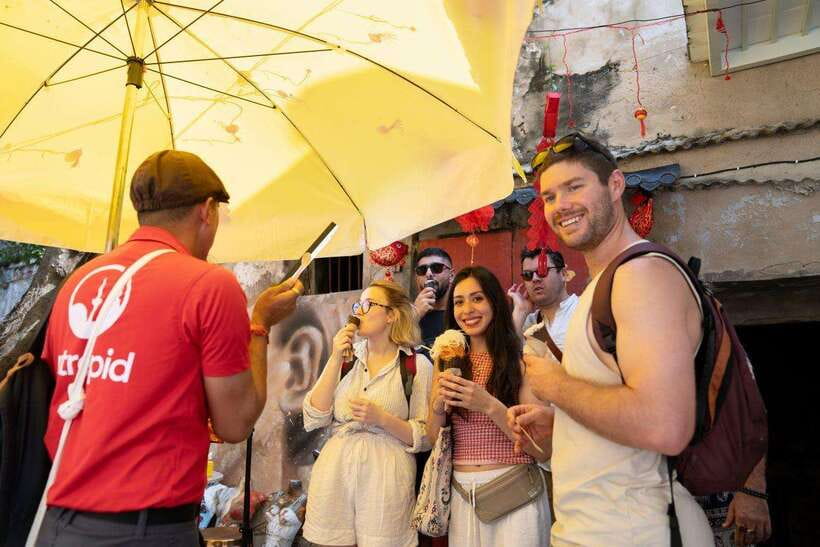
Holy Rosary Church was built in 1787, making it one of the clearest reminders that Bangkok’s riverside story includes more than Buddhist temples and royal monuments.
The church visit adds useful contrast to the food and street scenes. Its presence points to the different communities that settled along the river and helped shape the city. Your guide leads you through the stop and supplies the context, so you are not simply looking at an old façade before moving on.
This part of the route should appeal to anyone who likes seeing how several traditions share one neighborhood. It also breaks up the eating with a quiet cultural stop.
Do not expect a long church tour with a large collection of formal displays. The value is in the building’s age, its setting, and the place it holds in Talad Noi’s story. If you prefer major landmarks with extensive interiors, this will feel modest. If you enjoy small historic places that sit inside ordinary city life, it fits the tour well.
Street art, narrow lanes, and the riverside café pause
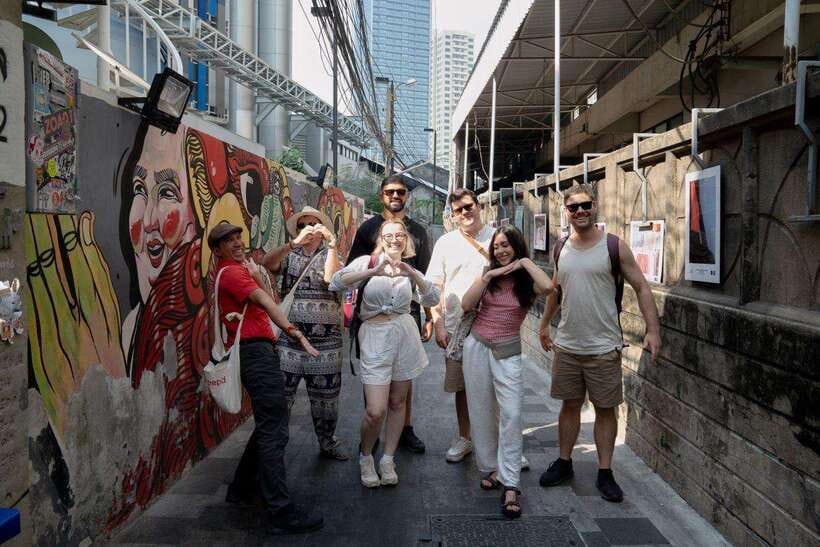
Talad Noi is known here through its lane-side character rather than one single landmark. Street art adds color to the walk, and the narrow streets make the neighborhood feel close and human in scale.
The art is part of the route, not the entire reason to book it. You will see painted surfaces and creative touches while moving between food and historic stops. That variety keeps the walk from becoming a long lecture about buildings.
A riverside café stop gives you time to sit down with a drink. Included choices can include coffee, tea, or boba tea. This is a small but important detail in Bangkok, where a break from the heat can improve the whole afternoon.
The café pause also gives you a chance to ask questions that may not come to mind while walking. I would use it to ask your guide about the food you have tried, the local Chinese influence, or what to see next in Chinatown.
The exact café experience may depend on the day and the group’s pace. Treat it as a relaxed drink stop, not as a grand river cruise or a long meal with a view.
Same city, a different plate:
- Bangkok: Grand Palace, Wat Pho, and Wat Arun Guided Tour
★ 4.8 · 3,632 reviews - Bangkok: Grand Palace, Wat Pho, Wat Arun Sacred & Local Tour
★ 4.3 · 2,256 reviews - Bangkok: Wat Pho and Wat Arun Guided Walking Tour
★ 4.6 · 1,720 reviews - Bangkok: Grand Palace, Wat Pho, and Wat Arun Private Tour
★ 4.8 · 855 reviews
The food: small portions, several useful introductions
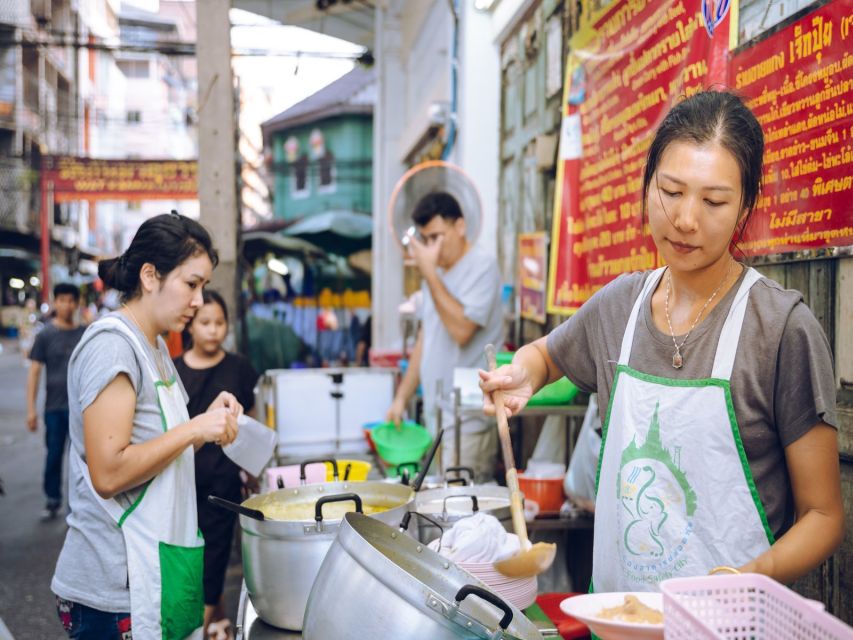
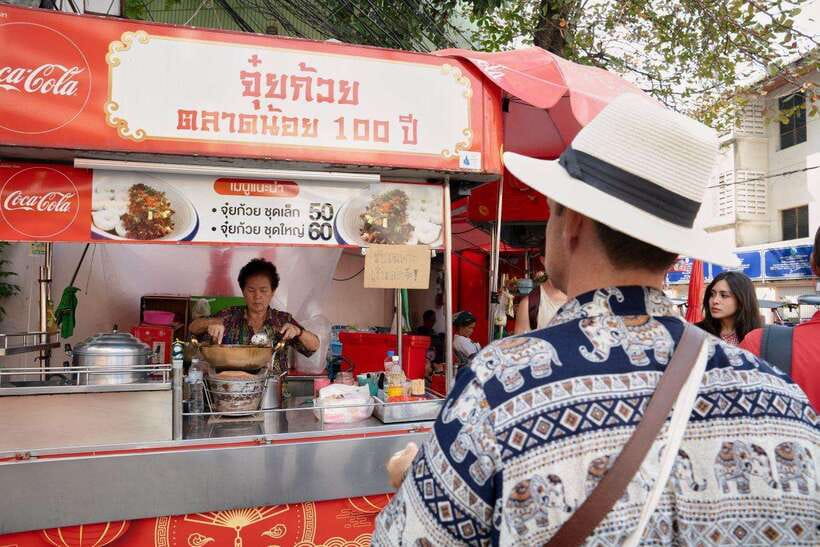
Food is the heart of this outing, and you should arrive hungry. One of the most useful details in the description is the warning hidden in the structure: this is primarily a food tour with cultural stops, not a Chinatown temple tour with a few snacks.
The tastings include both Chinese and Thai dishes:
- Turnip cake: A Chinese dim sum dish with a soft interior and savory character.
- Chwee kueh: Steamed rice cakes served with preserved radish.
- Chao tha: Duck noodle soup.
- Pad Thai from Uncle Pom: A familiar Thai dish presented as one of the neighborhood tastings.
- Drinks: Coffee, tea, or boba tea may be included.
The portions are presented as samples, so you get variety rather than one large restaurant meal. That is the right format for Talad Noi. You can compare several flavors without spending the whole walk at one table.
Turnip cake and chwee kueh may be new to many visitors, especially if their Bangkok food plans center on pad Thai, mango sticky rice, or curry. The tour gives you a gentle way to try less familiar Chinese-influenced snacks while your guide explains what you are eating.
The food is also where the small group matters most. With only up to 12 people, the guide has a better chance of explaining ingredients, checking preferences, and keeping everyone together at busy stops.
Come with an open mind, but do not expect the tour to cover every major Thai dish. The focus is the local Chinese-Thai connection in Talad Noi and Chinatown.
Chow Sue Kong Shrine and the Chinese side of the neighborhood
Chow Sue Kong Shrine, also known as 順興宮清水祖師爺, is about 200 years old. Its intricate architecture gives the walk another strong visual point, while the guide explains its place in the neighborhood.
This shrine is a better fit for people who want cultural context rather than only photographs. Look closely at the details, and listen to the explanation of the site instead of treating it as a quick stop between snacks.
The shrine helps balance the church visit. Together, the two places show how different faith communities became part of Bangkok’s riverside districts. That contrast is one of the tour’s strongest ideas.
The stop is not presented as an extended religious ceremony or a long formal visit. It is one piece of a moving walking tour. If you want a full temple-focused experience, you may want to add a separate temple tour on another day.
Hong Sieng Kong and the river-facing pause
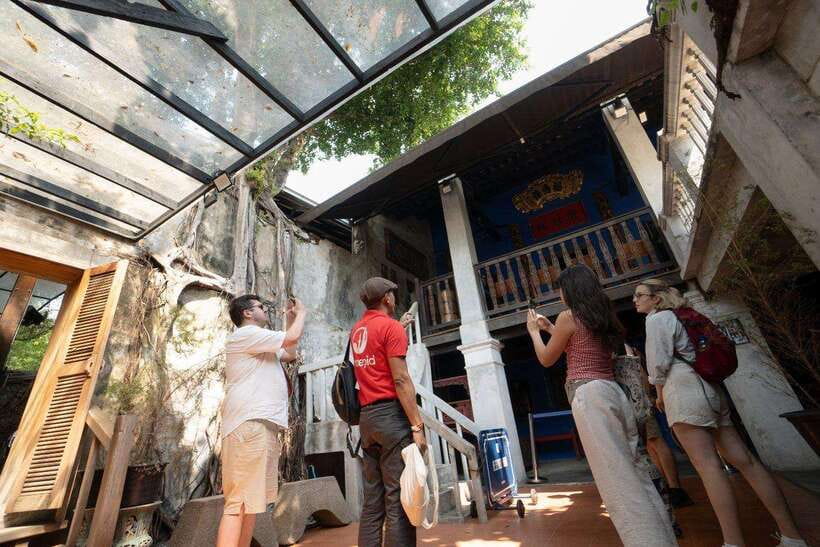
Hong Sieng Kong is included as another guided stop before the route continues toward Chinatown. The setting connects the district’s old buildings and river access with its newer café and creative side.
The stop works best as part of the overall flow. You are not simply collecting attractions. You are moving through a neighborhood where old family streets, food traditions, art, and riverfront spaces now sit alongside newer places to eat and rest.
That mix is also why the tour will appeal to first-time visitors who want something beyond Bangkok’s biggest sights. You see a part of the city that feels more local in scale, while still having a guide to explain what you are seeing.
Entering Chinatown, with realistic expectations
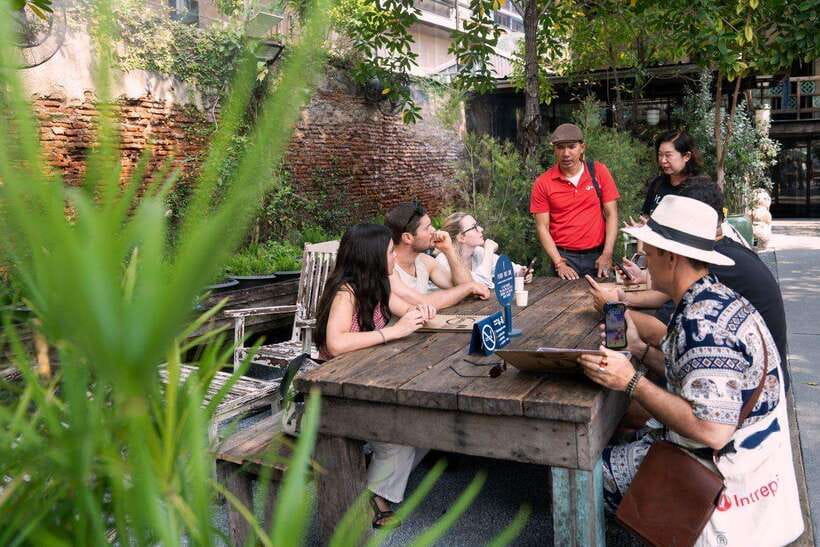
The final section crosses into Bangkok’s Chinatown. This is where old Chinese Bangkok meets newer food and city trends.
The Chinatown portion is useful, but it is not the main event. The complete walk is only about 2 kilometers, and much of the time is shared among Talad Noi streets, food tastings, the church, the shrine, Hong Sieng Kong, and café time.
One past participant felt the route did not go far enough into old Chinatown and found that section somewhat surface-level. I think that is fair to keep in mind. You should not book this expecting a full Chinatown survey, multiple major temples, or an evening market crawl.
Instead, think of Chinatown as the final connection in the story. Talad Noi introduces the neighborhood; Chinatown shows how that Chinese influence continues into one of Bangkok’s best-known districts.
If you want a longer Chinatown visit afterward, the finish at Si Phraya leaves you free to continue your own plans. The tour does not claim to replace a dedicated Chinatown food night.
Group size, timing, and value at $41
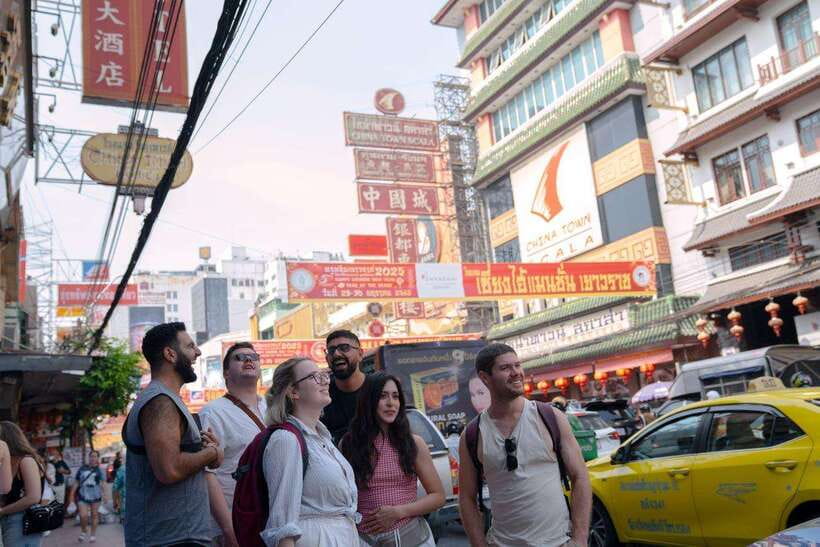
At $41 per person, the tour is priced above a self-guided walk but includes a local English-speaking guide, several food samples, drinks, and visits to two historic religious sites.
The value depends on how much you want from a guide. If you are comfortable reading about Talad Noi beforehand and choosing food on your own, you can spend less independently. But you would need to organize the route, identify the stops, manage the food choices, and explain the connections between the church, shrine, river, and Chinese-Thai cuisine.
For me, the price makes the most sense for a first visit, especially if you want a structured introduction without committing to a full-day tour. The group limit of 12 is another reason the cost is reasonable. A private group is available if you want more control or are traveling with family and friends.
The flexible length, 150 to 270 minutes, means you should check the exact starting time before booking. The listed price does not include extra food or drinks beyond the included samples, so bring a little money if you want more.
The company also presents the tour as carbon neutral and is B Corp certified. That may matter to you if responsible tourism affects your booking decisions, though the practical experience remains centered on walking, eating, and local interpretation.
Who should book this Talad Noi walk
I would choose this experience if you want:
- A manageable introduction to Talad Noi
- Thai and Chinese food in one outing
- A small group with access to a local guide
- A mix of food, street art, riverside atmosphere, and historic buildings
- A route that avoids spending the whole day on transport
- A first look at Chinatown without making it the entire day
It suits couples, solo visitors, and small groups of friends. It can also work well for older children, but children under 8 are not accepted. Since you walk 2 kilometers and spend time standing at food stops, wear comfortable shoes and plan around Bangkok’s heat.
Vegetarians can be accommodated if you provide the information at least 24 hours before the tour. Other dietary requirements are not listed as available, so you should not assume that allergies or special diets can be handled.
Should you book it?
Book this tour if you want a food-led neighborhood walk with enough history to give the dishes and streets some meaning. The strongest parts are the personal guide attention, the unusual Chinese snacks, Holy Rosary Church, Chow Sue Kong Shrine, and the easy-to-manage route.
Skip it if your main goal is a long, detailed Chinatown tour with several temple interiors. You may find the final Chinatown section too short. Also skip it if you want a single large restaurant meal rather than several tastings.
For most first-time visitors, the best approach is to treat this as a half-day Talad Noi introduction. Arrive hungry, tell the guide your food needs in advance, and leave room afterward if you want to explore more of Chinatown on your own.
FAQ
Where does the Talad Noi tour begin?
It begins at River City Bangkok, at Gate 1 in front of Starbucks on the first floor.
Where does the tour finish?
The tour finishes at Si Phraya.
How long is the experience?
The listed duration is between 150 and 270 minutes, depending on the available starting time and the pace of the outing.
How far do you walk?
The walking route covers about 2 kilometers, or 1.2 miles, through Talad Noi and toward Chinatown.
What food is included?
Included samples can include turnip cake, chwee kueh, chao tha duck noodle soup, and pad Thai from Uncle Pom. Drinks such as coffee, tea, or boba tea are also included.
Can vegetarians join the tour?
Yes. Vegetarian requirements can be accommodated if you provide the information at least 24 hours before the tour. Other dietary requirements are not listed as available.
Are private tours available?
Yes. The experience is available as a small-group tour of up to 12 people, and a private group option is also available.
Just added around Bangkok
- 4-Hour Hidden Bangkok TukTuk Street Food Guided Tour★ 5.0 · 23 reviews
- 3-Hour Bangkok Walking Tour: Wat Pho and Wat Arun★ 5.0 · 102 reviews
- Bangkok 3-in-1 Tour: Longtail Boat,TukTuk & Street Food Adventure★ 5.0 · 73 reviews
- Famous Thai Street Food Tasting Experience!★ 5.0 · 4 reviews
- Thai Costume Photography at Wat Arun/Pho Temple: Bangkok★ 5.0 · 3 reviews
- Visit Wat Pho and Wat Arun with Local Expert★ 4.0 · 14 reviews
- Tuk Tuk Bangkok Private Tour: WW2 Pad Thai, 360-Viewpoint, Chinatown (Pickup)★ 5.0 · 9 reviews
- LR-01 TaLad NangLerng, ride along the old town and try local street foods★ 4.5 · 13 reviews
Bangkok Street Food Tours, compared.
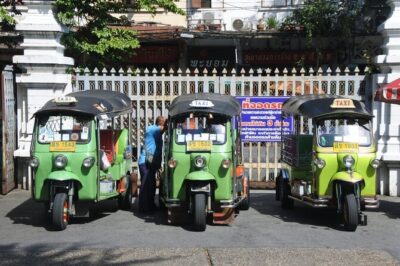
Bangkok: Michelin Guide Street Food Tour by Tuk Tuk
Read our review →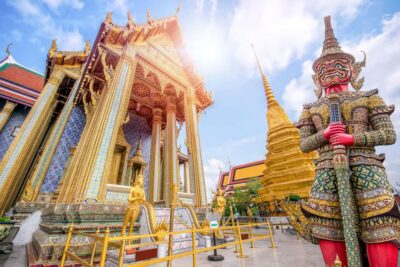
Bangkok: Grand Palace, Wat Pho, and Wat Arun Private Tour
Read our review →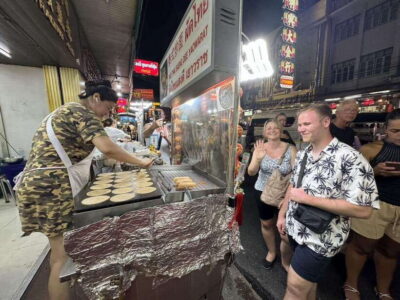
Bangkok Authentic Tasting Thai-Chinatown Walking Food Tour
Read our review →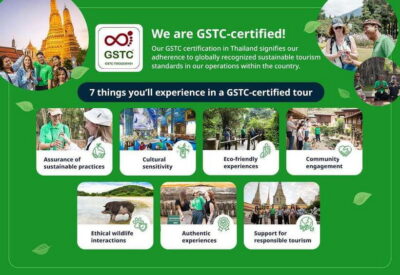
Bangkok: Evening Tour with Wat Arun, Wat Pho & Tuk Tuk Ride
Read our review →
Bangkok Tuk-Tuk Tour by Night with Chinatown Street Food Meal
Read our review →
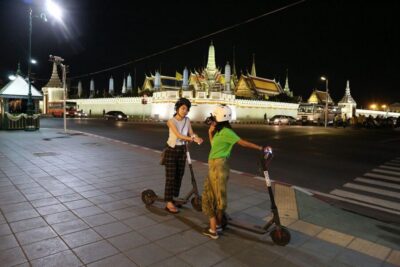
Bangkok: E-Scooter Night Tour with Local Street Food
Read our review →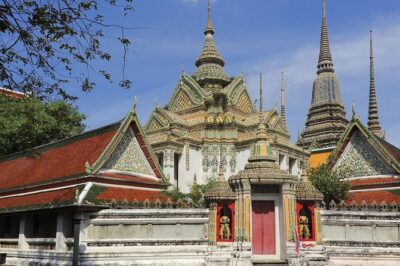
Private Tour of Bangkok’s Temples Including Reclining Buddha (Wat Pho)
Read our review →Browse the lists this tour appears in