
REVIEW · GERMANY STREET FOOD TOURS
Berlin Center Food Tour with 8+ Authentic Local Tastings
Berlin’s food story is really a story about movement, division, and change. On this three-hour walk, you move from Berliner doughnuts and Currywurst to Turkish sweets and kebab, with street art, Cold War sites, Soviet-era avenues, and the Berlin Wall filling the gaps between bites. The food is the hook, but the city’s past gives each stop more weight.
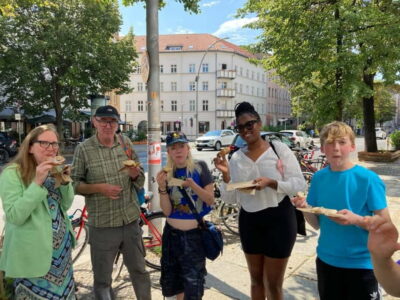
I like two things here. The food and history are tied together, rather than delivered as separate lectures and snacks. I also like the small-group size, capped at 12, and the guides, including Daniel, Francesco, Fotini, Dania, and Vincent, who are repeatedly praised for making the route friendly, clear, and fun.
The main caution is value. At $118.51 per person, the tour costs more than a standard walking tour, and a few people found the food selection average or wanted smaller portions with more variety. Drinks can also vary by stop, so contact the operator ahead of time with dietary needs and keep your expectations realistic.
The best reasons to book this Berlin food walk
- Berlin classics in one sitting: Try kebab, Currywurst, Berliner doughnuts, Käsespätzle, pastries, a signature dish, and beer or Riesling.
- Food linked to city history: Learn how Berlin’s division, immigration, and reunification shaped what people eat.
- Street art between meals: Walk through art-covered courtyards, former industrial spaces, galleries, and colorful walls.
- A useful first-day tour: Guides often share restaurant tips that can help you plan the rest of your stay.
- A small group of up to 12: This is intimate enough for questions without being a private tour.
- A proper walking route: Wear comfortable shoes and come hungry. The portions add up.
Why Berlin makes such a good food tour
Berlin is not a city with one tidy food identity. Its cooking reflects Prussian traditions, postwar shortages, Turkish immigration, East German life, modern art culture, and a steady flow of new arrivals.
That is why kebab can sit beside Currywurst, German pastries, Turkish sweets, and a regional wine without feeling out of place. The tour uses this mix well. You are not just sampling isolated dishes. You are seeing how Berlin’s people and politics changed the menu.
I particularly like the way the route brings food into neighborhoods that can otherwise feel like a string of major sights. You pass through courtyards and alleys, pause near old churches and train stations, and look at murals before arriving at the next table or food counter. It gives you a better sense of how central Berlin fits together.
The format also suits a first day in town. Several guides, including Francesco and Fotini, have been praised for giving restaurant suggestions beyond the tour. That is practical help, not filler. A good food walk should leave you with ideas for tomorrow’s lunch, not just a full stomach.
Other street food tours people book around Germany:
- Dresden: Taste of Dresden Food Walk
★ 4.6 · 397 reviews - Berlin: Guided Street Food Tour with Tastings
★ 4.8 · 310 reviews - Munich: Guided Food Walking Tour with Beer Tasting
★ 4.7 · 183 reviews
Starting among Berlin’s courtyards and street art
The route includes a look at Berlin’s less obvious historic center, with narrow passageways, art-covered courtyards, cinemas, cafés, and remnants of older urban life. This is a welcome change from simply marching between famous landmarks.
One early stop features Berliner doughnuts at a small pastry shop. The Berliner is a classic filled German doughnut, and it makes a smart opening bite: sweet, familiar, and distinctly local. If you have just arrived from the airport or train station, this is also a pleasant way to begin before the heavier food arrives.
The courtyards matter as much as the pastry. Berlin’s central districts often reveal themselves in layers. A plain street can open into a painted passage or a tucked-away courtyard with a completely different mood. Your guide helps you notice those shifts instead of rushing past them.
There is also an 18th-century Evangelical church connected to a clandestine Mass led by Martin Luther King during the Cold War. That stop gives the tour a serious pause. It is one of the places where the route moves beyond general sightseeing and points to smaller episodes that can be missed on a standard city walk.
The history is presented through places you can actually see. That makes it easier to remember than a list of dates, and it gives the food stops a stronger setting.
Kebab, migration, and Berlin’s changing menu
A visit to a respected Berlin kebab shop brings one of the city’s most recognizable foods into the story. Kebab is not an old Prussian dish, but it is thoroughly part of modern Berlin’s food culture.
This is one of the tour’s most useful themes: local food does not have to mean food invented in the same place centuries ago. Berlin’s identity has been shaped by migration, and Turkish influence is a major part of what you eat here today.
The kebab stop is also likely to be substantial. Several accounts describe the tour as generous with food, and the repeated advice is simple: come hungry. That is good news if you want the tastings to replace a meal, but less ideal if you prefer tiny samples and a wide number of stops.
If you have dietary restrictions, contact Secret Food Tours before booking. The menu and stops can change, and the operator asks for advance notice so the team can make suitable arrangements. Do not assume that a replacement will be available on the spot.
Art galleries, Soviet boulevards, and the East Berlin chapter
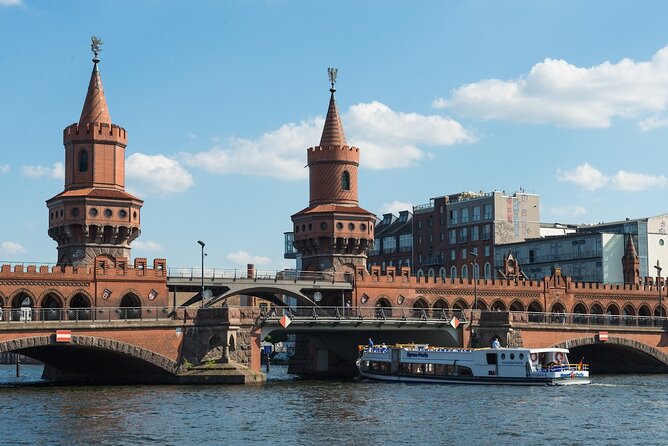
After the food begins, the route continues through parts of East Berlin associated with galleries, street murals, and broad Soviet-era boulevards. This is where the walking portion earns its keep.
You get a sense of how the city changed between the 19th century, the Cold War period, and reunification. The route helps connect physical space with political history: wide avenues, surviving structures, painted walls, and converted sites all point to different stages of Berlin’s past.
The art is not merely decoration. It is part of how Berlin presents itself today, especially in former East Berlin districts. Guides such as Vincent have been praised for connecting architecture and city development with the food on the route. That approach will suit you if you like to understand why a neighborhood looks and eats the way it does.
The walking pace appears manageable for most people. One detailed account described the route as comfortable, with stops close enough to keep the pace relaxed. Still, the tour involves a fair amount of walking, and rainy weather can make the pavement and waiting between stops less pleasant. Comfortable shoes are essential.
Same city, a different plate:
- Beyond Currywurst: Berlin’s Hidden Street Food & Culture Tour
★ 5.0 · 100 reviews - Private Berlin Street Food Tour by Bike
★ 5.0 · 87 reviews - Private Berlin Street Food Bike Tour
★ 4.9 · 42 reviews - Frankfurt: Food Tour to 3-4 Local Food Spots
★ 3.8 · 22 reviews
Flammenkuchen and the more traditional German plate
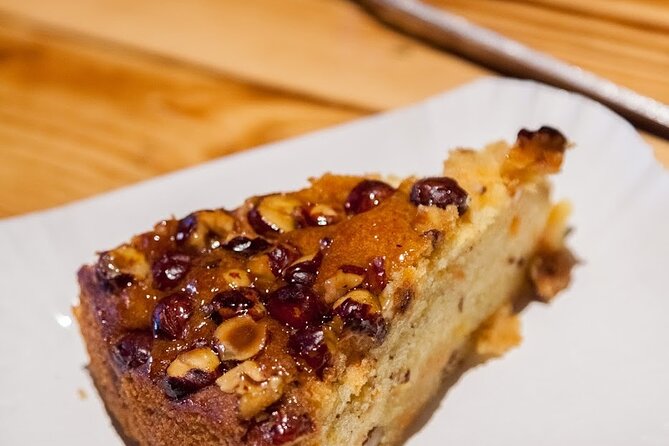
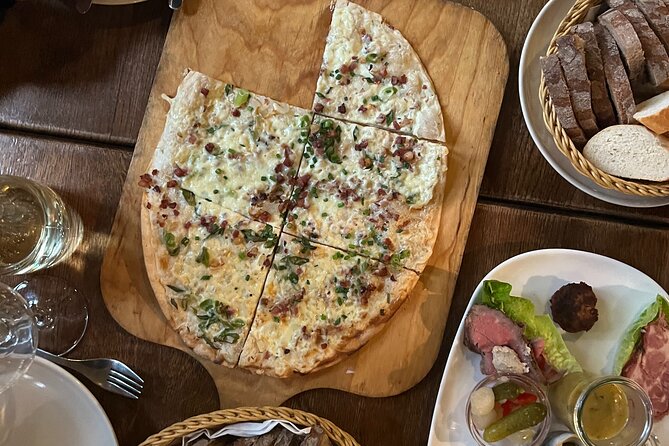
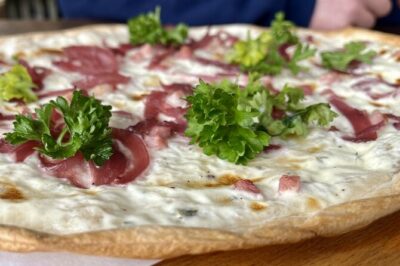
At a local restaurant, you stop for Flammenkuchen, a thin flatbread-style German tart. It is often compared to pizza, but its character is different, with a crisp base and a more restrained feel.
This stop helps balance the stronger street-food flavors. After kebab, you get something tied more clearly to traditional German and regional cooking. Käsespätzle is also included, adding a soft, hearty cheese-and-noodle dish to the lineup.
The portion strategy is worth considering. Some people appreciate having enough food to feel properly fed, while others would rather receive smaller tastes and more variety. If you enjoy a full meal spread across several stops, the quantity should work in your favor. If you are looking for a formal tasting menu with carefully measured bites, this may feel less polished.
The restaurant stop also gives you a chance to sit down, which matters on a three-hour route. Food tours can become tiring when every bite is eaten standing up. Here, the mix of walking and seated eating creates a more comfortable rhythm.
Boutique pastries and Berlin’s sweet side
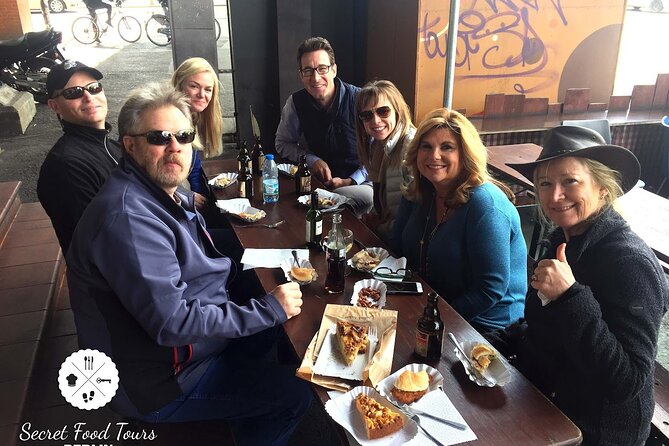
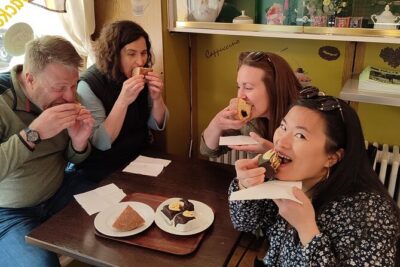
A bakery stop brings cakes and pastries into the picture. This is more than a sugar break. German bakeries are a daily part of urban life, and pastry culture tells you something about how people eat between meals.
Together with the Berliner doughnut and Turkish sweet, the bakery stop creates a useful comparison. You see several kinds of sweetness: a familiar local doughnut, bakery classics, and a dessert shaped by Berlin’s immigrant communities.
The tour does not present German food as a narrow list of sausages and potatoes. That is one of its strongest points. Berlin food is traditional, imported, adapted, and sometimes reinvented. The route reflects that without requiring you to sit through a long food lecture.
If you have a sweet tooth, this section may be your favorite. If you do not, the number of pastries can make the experience feel heavier, especially when combined with beer and savory dishes. Again, arriving hungry is sensible.
Currywurst, beer, and the big Berlin finish
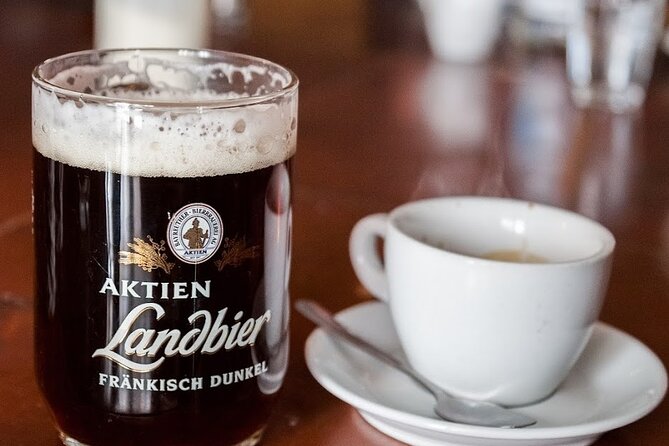
Currywurst is the tour’s most obvious Berlin classic. The dish is simple, filling, and strongly associated with the city’s street-food culture. You get a taste of the sauce-covered sausage, then consider how a modest snack became one of Berlin’s signature foods.
The included drinks add to the value, at least if you drink alcohol. The package lists a glass of German Riesling and a fresh pint of local draft beer. Some accounts also refer to three alcoholic drinks across the route, but the exact number and selection may vary, so check the current details when booking.
Nonalcoholic options are available according to the information provided, though one account noted that alternatives might be a soft drink or coffee rather than a special pairing. Another account complained that drinks were not offered at several stops, including water. I would bring a bottle of water and treat the alcoholic drinks as part of the experience, not the main reason to book.
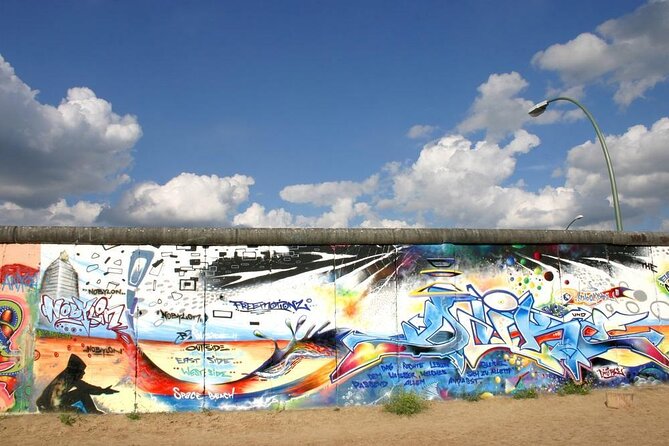
The route finishes at the East Side Gallery, the famous surviving section of the Berlin Wall covered with large murals. You also get one final special food treat there. Ending beside the Wall gives the tour a clear sense of place, linking modern Berlin’s art scene with the political divide that shaped the city.
How good is the $118.51 value?
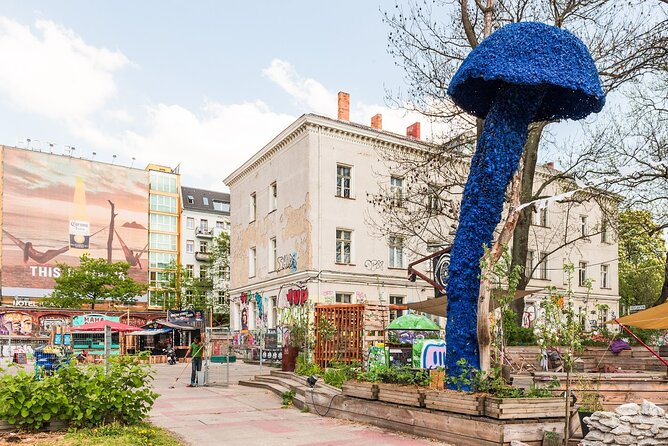
At $118.51, this is not a cheap way to grab lunch. You are paying for food, drinks, guiding, route planning, and the ease of moving through several parts of Berlin without figuring out every stop yourself.
The value is strongest if you want a meal-sized amount of food plus city background. The package includes kebab, a local pastry, Currywurst, beer-garden food, Käsespätzle, a Berliner doughnut, a signature dish, and either or both listed drinks depending on the current arrangement. That is a considerable amount over three hours.
The value is weaker if you mainly want a historical walking tour. One person compared it unfavorably with a cheaper city walk, particularly because the food cost did not seem to match the price. You should also know that the menu can change because of weather, availability, and the condition of individual food stops.
I would book it for the combined experience, not for bargain dining. If you ordered every item and drink separately, you would still be buying more than a normal meal. The question is whether the guide’s local context and the route through art-filled districts are worth the extra cost to you.
Group size, timing, and practical details
The group is limited to 12 people. That is a useful middle ground. You get a social experience and a chance to ask questions, but the guide should still be able to keep everyone together.
The tour lasts about three hours and is offered in English. It is near public transportation, and most people can take part, but the walking requirement means you should plan around your energy level. It is not the best choice immediately after a long travel day if you dislike walking on full stomach.
The published meeting information needs attention. The description refers to meeting at Warschauer U-Bahn Station in the morning, while the listed meeting point is Burgstraße 19, 10178 Berlin, with the tour ending at Hackescher Markt. Confirm the exact starting place and time before setting out.
The tour ends in a useful central location. Hackescher Markt has cafés, shops, and transport connections, so you can continue sightseeing or stop for a break without crossing the city.
Free cancellation is available if you cancel at least 24 hours before the start time. Changes or cancellations inside that window are not accepted for a refund.
Who should book this food tour?
I would recommend it to you if you want a practical introduction to Berlin’s food culture and do not mind walking between substantial tastings. It works especially well early in your visit, when restaurant suggestions and neighborhood orientation still have real value.
It also suits people who enjoy history in small pieces. You will see street art, a Cold War church connection, former East Berlin spaces, galleries, courtyards, and the Berlin Wall without spending the whole day inside a museum.
Families can manage the food, based on the available feedback, though younger children may not want every dish. Teens with smaller appetites can sample rather than finish everything, but the overall amount is still generous.
I would hesitate if you want a tightly controlled tasting menu, very small portions, or a low-cost walking tour. I would also think twice if you dislike beer, pastries, sausage, or rich food. Alternatives exist for alcohol, but the core menu remains firmly centered on hearty German and Berlin specialties.
Should you book the Berlin Center Food Tour?
Book it if you want Berlin explained through what people eat, with enough food to count as a meal and a route that reaches beyond the main postcard sights. The best part is the connection between dishes, migration, street art, and the city’s divided past.
Before paying, confirm the meeting point, tell the operator about dietary needs, and decide if $118.51 fits your food budget. If it does, this is a strong first or second day choice. You will leave with a full stomach, a clearer map of central and eastern Berlin, and several ideas for where to eat next.
FAQ
How long does the Berlin Center Food Tour last?
The tour lasts approximately three hours.
What food is included?
The listed tastings include a famous Berlin kebab, a traditional baked pastry, Currywurst, traditional beer-garden food, Käsespätzle, a Berliner doughnut, and a signature secret dish.
Are drinks included?
The package lists German Riesling wine and a pint of local draft beer. Nonalcoholic options are available, though the exact drinks can vary by stop.
Where does the tour end?
The tour ends at Hackescher Markt in central Berlin.
How many people are in the group?
The maximum group size is 12 people.
Can I cancel for a full refund?
Yes. You can cancel at least 24 hours before the experience start time for a full refund. Cancellations or changes made less than 24 hours beforehand are not accepted for a refund.
Just added around Germany
- Private Berlin Bites & Historical Highlights – 2,5hrs★ 5.0 · 12 reviews
- Frankfurt: Food Tour to 3-4 Local Food Spots★ 3.8 · 22 reviews
- Heidelberg: Craft Beer and Street Food Tour★ 4.6 · 5 reviews
- Berlin: Street Food Tour with 10 Tastings★ 5.0 · 11 reviews
- Private Berlin Street Food Bike Tour★ 4.9 · 42 reviews
- Berlin: Guided Street Food & Cultural Walking Tour★ 4.8 · 8 reviews
- Berlin: Local Food Tour in Secrets Hidden Gems★ 4.0 · 3 reviews
- Beyond Currywurst: Berlin’s Hidden Street Food & Culture Tour★ 5.0 · 100 reviews
Germany Street Food Tours, compared.
Beyond Currywurst: Berlin’s Hidden Street Food & Culture Tour
Read our review →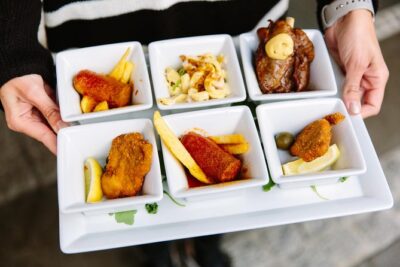
Private Berlin Bites & Historical Highlights – 2,5hrs
Read our review →Browse the lists this tour appears in