
REVIEW · CHIANG MAI STREET FOOD TOURS
Go where the locals go, Eat what the locals eat! Food Tour with Local Foodies
Chiang Mai’s best food often appears in market stalls and modest family restaurants, not on tourist menus. This tour puts you in front of Kao Man Gai, Khao Soi, Northern Thai sausage, mango sticky rice, and less familiar bites such as tapioca dumplings and steamed rice-flour parcels.
I like the two things this tour does well: it gets you beyond the usual restaurant list, and it gives you a local guide to explain what you are eating. Guides such as PT, Sky, and Pondtip have been praised for friendly, clear explanations and flexible help with families and food choices.
The main consideration is value. At $50.52, the price is fair if you want a guided introduction with transport and many tastings, but it may feel high if you expect a long walking tour with food at every stop. The afternoon route may include only about four main destinations, even though the tastings add up.
Key details at a glance
- Two useful start times: Choose the 9am Old City route or the 4pm Warorot Market and evening route.
- Northern Thai focus: Try Khao Soi, Sai Oua sausage, Gaeng Hunglay, Larb Moo, Khua Jin Som, and regional sweets.
- A local market first: Warorot Market, also called Kad Luang, brings you into one of Chiang Mai’s oldest and largest food markets.
- Transport saves time: A private driver takes you between food stops, temples, markets, and restaurants.
- Small enough to stay personal: The maximum group size is 20, and some departures may be much smaller.
- Come hungry: Tastings can include more than 15 separate items, depending on the route and group.
Why this Chiang Mai food tour is different
Many food tours in Thailand focus on familiar pad Thai, spring rolls, and curry. This one points you toward the food of Lanna, the old Northern Thai kingdom and cultural region centered on Chiang Mai. That means stronger regional character, different textures, and dishes you may not find at home.
The tour also mixes eating with short cultural stops. You are not simply driven from restaurant to restaurant. The route includes Wat Chiang Man, the first temple built in Chiang Mai’s old city, the Wat Gate Community, a flower market, and Wat Sadue Muang.
That balance matters. Food makes the tour fun, but the short temple and neighborhood visits help explain how Chiang Mai’s food fits into daily life. You get a sense of the city while you eat, rather than spending four hours indoors.
The experience comes in two versions. The morning route begins at 9am at the Three Kings Monument in the Old City. The afternoon route starts at 4pm at Warorot Market. Check your meeting point carefully, since the two routes do not begin in the same place.
Other street food tours people book around Chiang Mai:
- Small-Group Chiang Mai Evening Street Food Tour
★ 4.5 · 826 reviews - Chiang Mai: Evening Local Street Food Market Tour
★ 4.8 · 604 reviews - The 10 Tastings of Chiang Mai With Locals: Private Street Food Tour
★ 5.0 · 216 reviews
The 9am route: Old City dishes and temple stops
The morning route begins at the Three Kings Monument, a central Old City landmark. From there, the group heads to a family-owned restaurant serving Kao Man Gai. The restaurant has been operating since 1957 and is popular with both local diners and Thai visitors.
Kao Man Gai is simple food: poached chicken, seasoned rice, sauce, and accompaniments. It is a good first dish because it shows how much flavor can come from careful cooking rather than a long ingredient list. Do not expect a dramatic plate. Expect a reliable local staple that many residents eat as an everyday meal.
Next comes Wat Chiang Man, reached on foot. Since this is the first temple built in the old city, it gives the food route a useful sense of place. You will need clothing suitable for temple visits, and children must be accompanied by an adult.
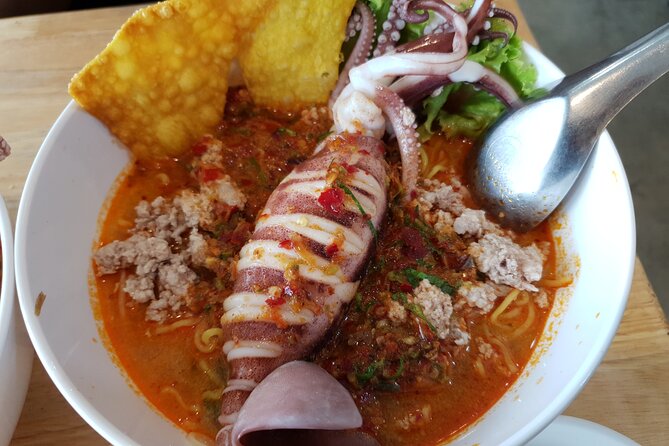
The next major food stop is Khao Soi, Chiang Mai’s famous egg noodle dish with curry broth. It usually combines soft noodles, crisp noodles, and a rich, spiced sauce, although the exact serving style can vary by restaurant. The guide explains the dish’s background and origins, which helps you notice the difference between Northern Thai food and the central Thai dishes served in many restaurants abroad.
This stop is a highlight for many people, but it is also where appetite becomes important. Khao Soi is filling, and it comes early enough in the route that you still have more tastings ahead. Take smaller bites at each stop rather than treating the first bowl as a full lunch.
The morning route then visits the Wat Gate Community. This adds a neighborhood feel and breaks up the meal stops. The itinerary does not promise a formal museum visit or a long guided tour here, so think of it as a short cultural stop rather than a major attraction.
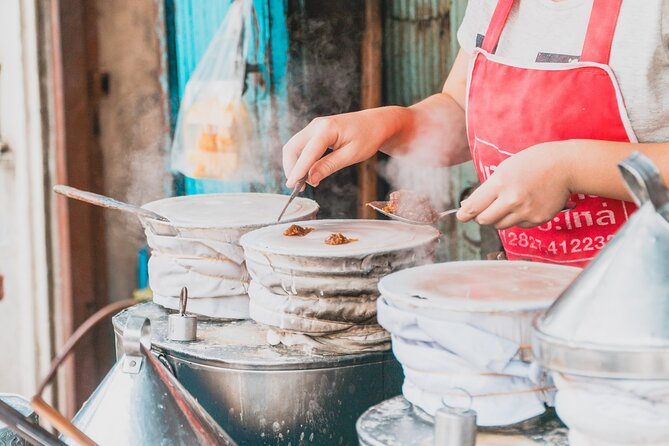
The sweet and savory tasting section includes Sakoo Sai Hmoo and Kao Griap Paak Hmaw. These are the sort of snacks that can be hard to identify from a menu alone. Sakoo Sai Hmoo is a tapioca dumpling with a savory pork filling. Kao Griap Paak Hmaw is a steamed rice-flour parcel, often served with a savory filling and toppings.
This is the kind of food knowledge that gives the tour its purpose. You can point at a tray in a market and guess, or you can have someone explain what it is, how it is eaten, and why it belongs to the region.
The 4pm route: Warorot Market after dark
The afternoon route begins at 4pm at Warorot Market, known locally as Kad Luang. This is one of Chiang Mai’s oldest and largest open markets, with clothing, souvenirs, produce, prepared food, and snacks spread through a three-story indoor market.
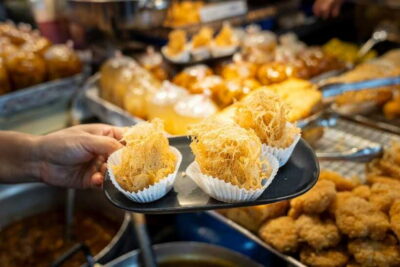
Here the guide leads you to selected stands rather than asking you to wander without direction. Tastings may include Sai Oua, the herb-filled Northern Thai sausage; freshly made Golden Curl; mango sticky rice; fruit; and Thai iced tea.
Sai Oua is one of the essential Northern Thai foods. It is more heavily seasoned than many familiar sausages, with herbs and spices that give it a distinct regional taste. Mango sticky rice offers a gentler change of pace, with sweet fruit, sticky rice, and coconut flavor.
The exact market menu can change, and that is part of the point. A market tour is not a fixed restaurant menu. The guide can adjust the stops to what is available, and the food may vary by season or vendor.
After Warorot Market, the route passes through the nearby flower market. This is a short but useful addition. It gives your eyes a break from eating and lets you see another part of the city’s trading life.
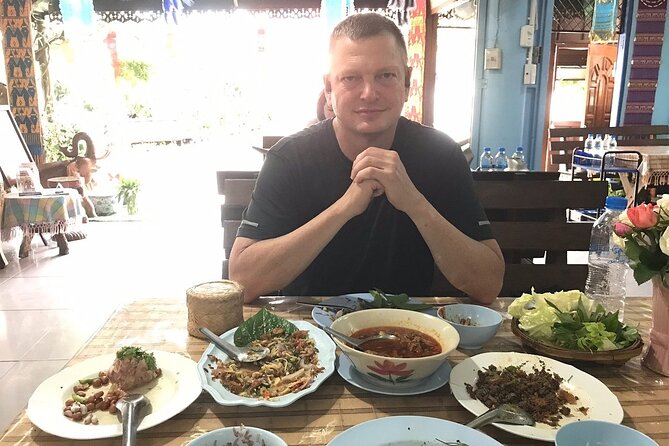
The group then rides to a Northern Thai restaurant for larger shared dishes. The meal includes regional standards such as Gaeng Hunglay, Larb Moo, Khua Jin Som, and an award-winning Yum Samunprai herbal salad.
Gaeng Hunglay is a Northern Thai pork curry with warm spices and a savory-sweet character. Larb Moo is a seasoned minced pork dish. Khua Jin Som uses fermented pork, so its flavor may be sharper than you expect. The herbal salad adds another contrast, with fresh and aromatic ingredients rather than the heavier curry and meat dishes.
This restaurant meal is one reason the private driver is useful. You can eat several dishes without worrying about finding your next stop or arranging transport across town. The tradeoff is that you spend less time walking through the city than you would on a street-food route built entirely around foot traffic.
The final part of the afternoon route includes Wat Sadue Muang, more evening food, and city sightseeing by tuk-tuk. The detailed stop list can vary, but the shape of the experience is clear: market food first, a proper Northern Thai meal next, then dessert and evening sights.
What you may eat, and how much
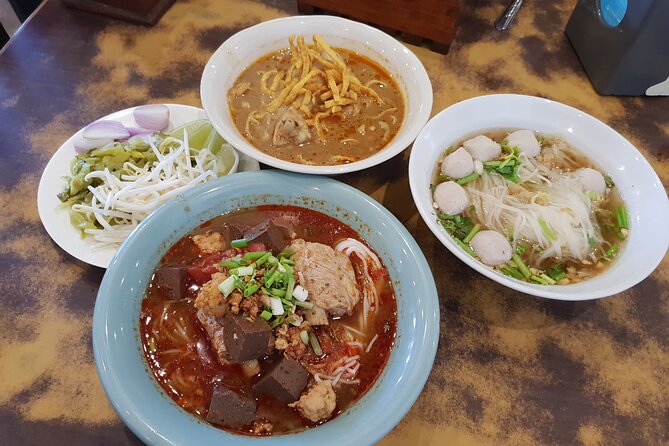
The strongest part of this tour is its range. You are not given one signature dish and sent home. Depending on the route and the choices made during the day, you may taste more than 15 items.
Expect a mix of:
- Everyday dishes such as Kao Man Gai
- Khao Soi and other Northern Thai noodles
- Sai Oua sausage
- Gaeng Hunglay and Larb Moo
- Khua Jin Som and herbal salad
- Mango sticky rice
- Thai iced tea
- Tapioca dumplings and steamed rice-flour snacks
- Fresh fruit and market sweets
This variety is helpful if you are new to Thai food. A guide can point out the flavors you like and help you decide what to order later. It is also useful if you have already eaten in Bangkok, since the regional dishes here can feel entirely new.
You should still tell the guide about allergies or strong dislikes before eating. The information provided does not promise a special dietary menu, so do not assume that every restriction can be handled. Alcohol is not included, though it can be purchased separately.
Same city, a different plate:
- Chiang Mai: Local Food and Markets Guided Walking Tour
★ 4.3 · 175 reviews - Taste of Chiang Mai: Michelin Guide & Street Food Tour
★ 4.9 · 159 reviews - Chiang Mai: Temples and Street Food Night Tour by Tuk Tuk
★ 4.3 · 81 reviews - Chiang Mai: Evening Sightseeing and Local Food Guided Tour
★ 4.9 · 46 reviews
The guides make a real difference
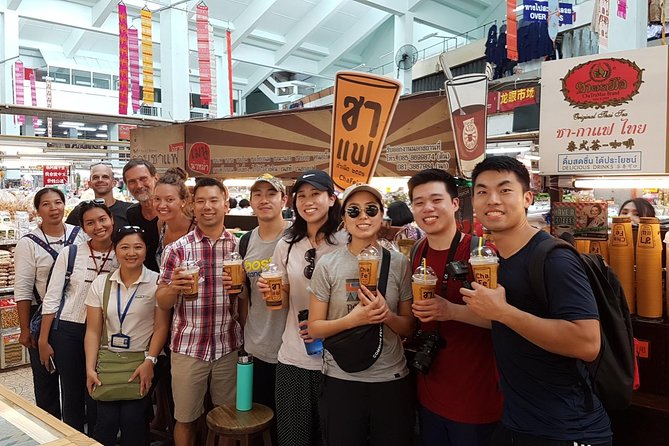
A food tour succeeds or fails on the person leading it. PT is repeatedly singled out for a friendly manner, clear explanations, and an easy ability to make the route feel personal. Sky is described as good at explaining spices and ingredients, while Pondtip is noted for clear directions, warmth, and an infectious smile.
The guides are not only there to carry you from one dish to the next. They explain the food, the people who make it, and the cultural differences between Northern Thailand and other parts of the country. That context is especially useful at Warorot Market, where a row of unfamiliar snacks can otherwise feel like a guessing game.
Flexibility is another strength. One guide managed a family arriving 30 minutes late and handled a group with very young children. That does not mean late arrival is harmless, since meeting times and transport still matter, but it suggests the staff can respond sensibly when a family day goes slightly off schedule.
Headsets are available on request. Ask for one if you have trouble hearing in a market or busy street. The group can include up to 20 people, so a headset may make the explanations easier to follow.
Is $50.52 a fair price?
The $50.52 price includes a professional guide, driver and guide services, bottled water, snacks, and food tastings. That is more than the cost of simply buying street food on your own, but you are paying for direction, transport, explanations, and a planned sequence of meals.
I think the price works best for three types of visitors:
- You are new to Chiang Mai and want a fast introduction to local food.
- You are nervous about ordering unfamiliar dishes alone.
- You want a guide and private transport rather than spending time arranging rides.
The value is less clear if you already know Chiang Mai’s markets and restaurants. One critical account found the cost high because the group visited only about four main places. That is a fair concern. A food tour is measured by tastings, but you should also consider how many full stops and how much guiding you want.
The group discount may help if you are booking for several people. The maximum size is 20, though some departures can be very small. One pair had what felt like a private tour because they were the only people booked.
Who should book this experience?
I would recommend it to first-time visitors, curious eaters, couples, and families who want local food without spending half a day studying restaurant menus. The morning route suits people who want to combine food with Old City temples. The afternoon route is better if you like markets, evening activity, and a sit-down Northern Thai meal.
It also works well for people who have already eaten their way through Bangkok. The food is not simply a repeat of central Thai staples. You get a clearer taste of Chiang Mai’s own cooking traditions.
Families can take part, and most people can participate. Children must stay with an adult. Service animals are allowed, and the meeting areas are near public transportation, though the tour itself also uses a private driver.
Dress with temple visits in mind. You do not need formal clothing, but shoulders and knees should be covered appropriately when entering religious sites.
Practical details before you book
The tour lasts about four hours per route, while the overall experience information gives a possible duration of four to eight hours. That longer figure may relate to combining routes or the way the booking is structured, so confirm the exact option you select.
The morning meeting point is the Three Kings Monument at 9am. The afternoon meeting point is Warorot Market at 4pm. These are not interchangeable, and one late arrival was caused by someone checking the wrong start point.
A mobile ticket is available, and confirmation is provided at booking. Free cancellation applies when you cancel at least 24 hours before the local start time. Changes or cancellations inside that window are not accepted for a refund.
Bring an appetite, but do not skip breakfast entirely if you choose the morning route. You will eat plenty, and a modest start makes it easier to enjoy the later dishes. Comfortable shoes are sensible because the route includes walking, especially around the Old City and market areas.
My take: a strong introduction to Northern Thai food
Book this tour if you want a guided first taste of Chiang Mai, especially if Khao Soi, Sai Oua, unfamiliar market snacks, and local sweets sound more appealing than a standard restaurant crawl. The best parts are the regional focus, the mix of food and culture, and guides such as PT who make the route friendly and easy to follow.
Skip it if your main goal is the lowest possible food cost or a long, continuous walking tour. You can spend less by eating independently, and the afternoon route may feel short if you expect a stop at every corner.
For most first visits, I would choose the 4pm option for Warorot Market, the flower market, a full Northern Thai restaurant meal, and evening sightseeing. Choose 9am instead if you want Khao Soi, Wat Chiang Man, and the Old City before the heat builds.
FAQ
How long does the food tour last?
Each listed route lasts about four hours. The overall experience information gives a possible duration of four to eight hours, depending on the option selected.
What are the meeting points and start times?
The morning route meets at 9am at the Three Kings Monument in Chiang Mai’s Old City. The afternoon route meets at 4pm at Warorot Market.
What food is included?
Food tastings, snacks, and bottled water are included. Possible dishes include Kao Man Gai, Khao Soi, Sai Oua, mango sticky rice, Thai iced tea, Gaeng Hunglay, Larb Moo, Khua Jin Som, herbal salad, tapioca dumplings, and steamed rice-flour snacks.
Are drinks included?
Bottled water is included. Alcoholic drinks are not included, but they can be purchased separately.
How many people can join the tour?
The maximum group size is 20 people. Some departures may have fewer participants.
Is the tour suitable for children?
Children can join, but they must be accompanied by an adult. Most people can participate in the activity.
What should I wear?
Wear clothing appropriate for visiting temples. The route includes temple stops, so shoulders and knees should be covered suitably.
Can I cancel for a refund?
Yes. You can receive a full refund if you cancel at least 24 hours before the local start time. Cancellations or changes made less than 24 hours before the start are not accepted for a refund.
Just added around Chiang Mai
- Michelin Guided Street Food Tour in Chiangmai: Thai Food Tour★ 5.0 · 11 reviews
- Private Half-Day Tour The Old Chiang Mai City With Street Foods★ 5.0 · 3 reviews
- Chiang Mai – Doi Suthep Temple and Street Food Tour★ 5.0 · 17 reviews
- Taste of Chiang Mai: Michelin Guide Street Food Small Group 2Hr★ 5.0 · 19 reviews
- Chiang Mai Michelin Food Walking Tour with Professional Tour Guide★ 4.5 · 13 reviews
- Chiang Mai Street Food Tour by Tuk Tuk with Pick Up★ 5.0 · 7 reviews
- Chiang Mai: Tuk-Tuk Evening Tour with Temples & Street Foods★ 4.7 · 26 reviews
- Chiang Mai: Temples and Street Food Night Tour by Tuk Tuk★ 4.3 · 81 reviews
Chiang Mai Street Food Tours, compared.
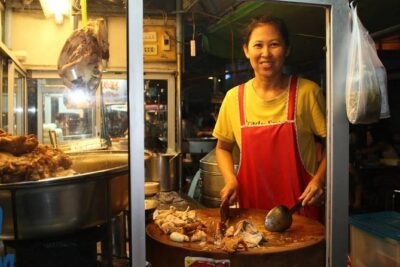
Small-Group Chiang Mai Evening Street Food Tour
Read our review →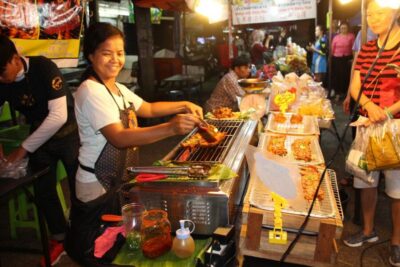
Chiang Mai: Evening Local Street Food Market Tour
Read our review →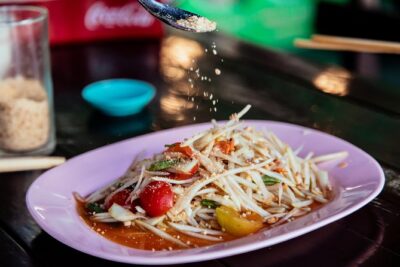
The 10 Tastings of Chiang Mai With Locals: Private Street Food Tour
Read our review →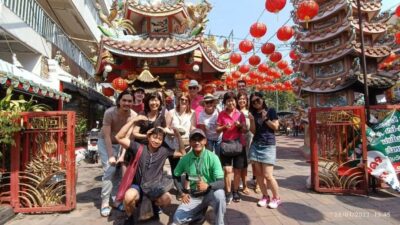
Chiang Mai: Local Food and Markets Guided Walking Tour
Read our review →
Taste of Chiang Mai: Michelin Guide & Street Food Tour
Read our review →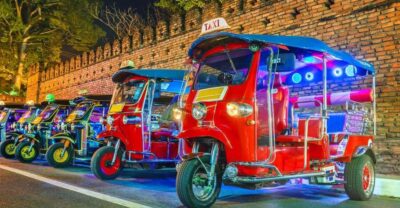
Chiang Mai: Evening Sightseeing and Local Food Guided Tour
Read our review →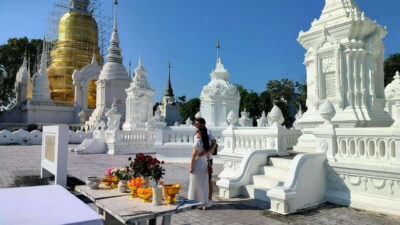
Chiang Mai: Tuk-Tuk Evening Tour with Temples & Street Foods
Read our review →Browse the lists this tour appears in