
REVIEW · STREET FOOD MARKET TOURS
Hidden Stories & Flavors: Traditional Market Food Tour
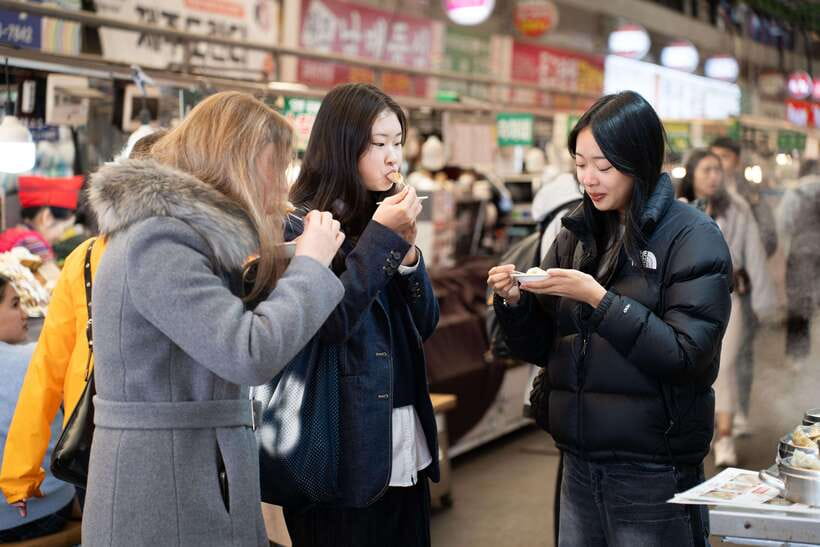
Gwangjang Market is the point here, but the food is only half the story. You’ll move from stall to stall with an English-speaking guide, tasting familiar Korean market foods while hearing about Seoul, modern Korean life, and the division of the peninsula. The conversation can also touch on military service and reserve duty, based on the guide’s own experience.
I like the generous food lineup and the small group, limited to 10 people. I also like that the guide explains what you are eating rather than simply handing you a snack. The main caution is simple: this is a lot of food in two hours, and it is not designed as a formal historical tour.
Key points at a glance
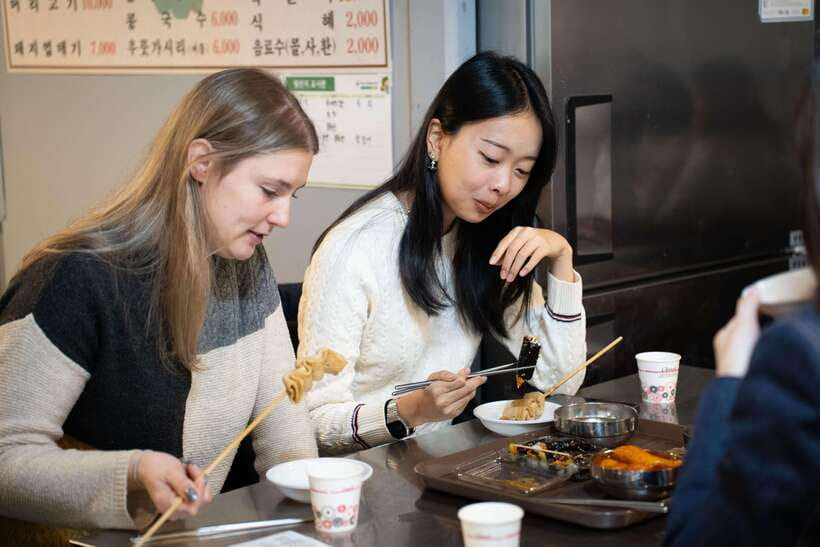
- Eight different Korean market foods: Expect dumplings, meatballs, Korean hotdog, rice roll, spicy rice cake, fish cake, sweet Korean pancake, and fish-shaped bun, plus water.
- Gwangjang Market setting: The tour takes place in one of Seoul’s best-known traditional food markets, where the stalls are part of the experience.
- Conversation beyond the plate: Your guide connects food with Seoul’s sights, Korean society, military life, and the peninsula’s division.
- English-speaking local guide: Taeseong is one guide named in the tour information, and English communication is a central part of the experience.
- Small group format: With no more than 10 participants, you have a better chance to ask questions and keep up in the market.
- Come hungry: The portions can be substantial, so a large breakfast may be a mistake.
Why Gwangjang Market makes a good classroom
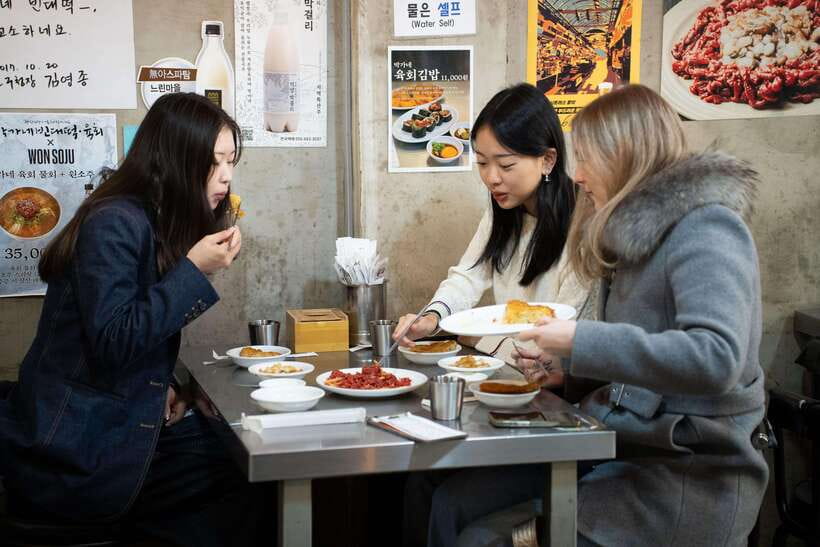
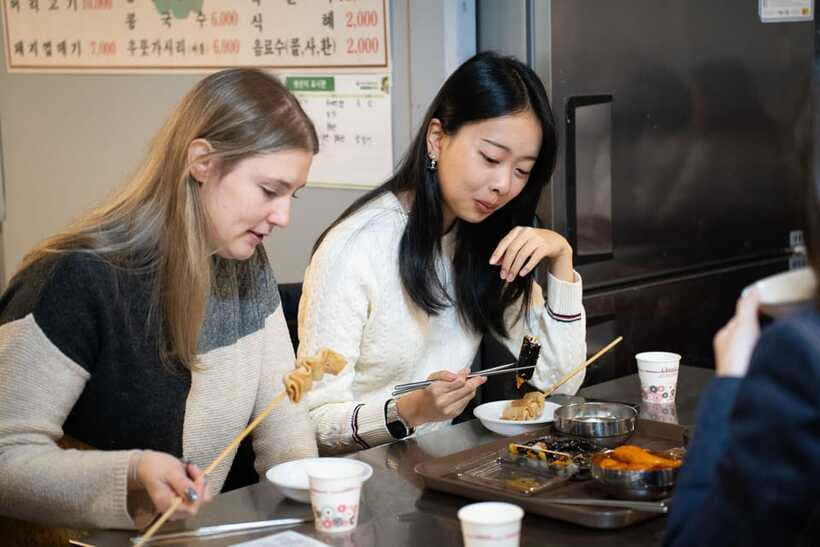
Gwangjang Market gives this experience its sense of place. You are not sitting in a classroom hearing a lecture about Korean food. You are surrounded by food stalls, watching dishes being prepared and trying several items in the same setting where locals buy and eat them.
The market also gives the guide something concrete to explain. A dumpling is not just a dumpling when you learn how it fits into Korean eating habits. A rice roll, spicy rice cake, or sweet pancake becomes easier to remember when you taste it while discussing daily life in South Korea.
The tour lasts two hours, which is long enough for a useful introduction without taking over your day. You should expect a steady sequence of tastings and conversation rather than a leisurely meal at one table. That pace works well if you want to sample many foods in a short time.
The market can also be busy and stimulating. That is part of the appeal, but it means you should stay close to the guide and be ready to move between stalls. This is a walking food tour, not a quiet restaurant experience.
More Street Food Market Tours in South Korea
- Seoul Street Food Market Tour
★ 5.0 · 1,226 reviews - Seoul: Night Market Food Tour with Local Guide
★ 4.9 · 943 reviews - Busan: Food Market Tour, Smash Seafoods and Street Foods
★ 4.8 · 80 reviews
Meeting at Jongno 5 ga station Exit 8
The stated meeting point is Jongno 5 ga station Exit 8. This matters because a clear meeting point takes some uncertainty out of a market tour. Traditional markets can have many entrances, crowded lanes, and confusing signs, so arriving at the named station exit is more practical than trying to find a particular stall on your own.
The starting location is also listed as 407, while the tour itself takes place at Gwangjang Market. Since the meeting instructions specifically identify Jongno 5 ga station Exit 8, use that station exit as your main reference when planning your arrival.
Give yourself enough time to reach the exit. The tour is limited to 10 people, so a late arrival can be awkward in a moving group. Once you meet the guide, the route becomes much easier to follow.
The first tastings: dumplings, meatballs, and a Korean hotdog
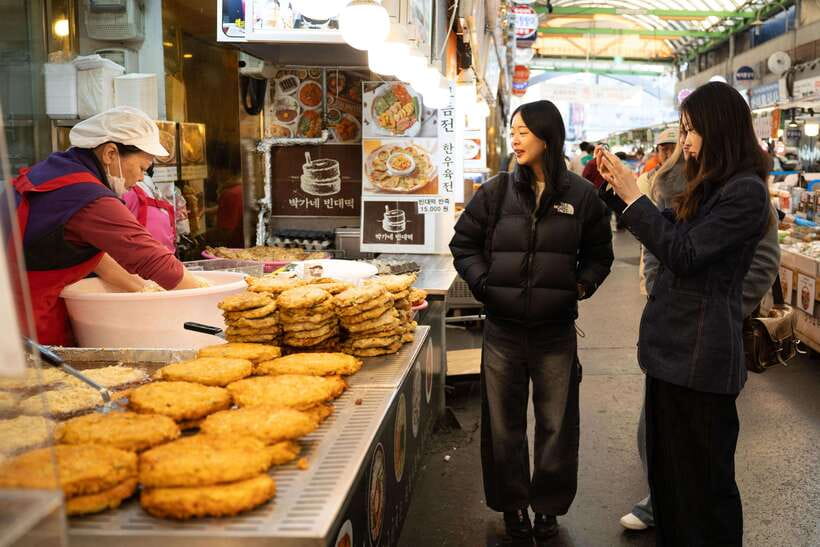
The food begins with classic market fare. Dumplings and meatballs offer a gentle start, especially if you are still learning which Korean flavors suit you. They also give the guide a chance to explain the dishes before the stronger flavors arrive.
The Korean hotdog is another approachable stop. The name can be misleading to some people, since Korean market hotdogs are not simply the same as an American-style hot dog. The exact preparation may vary, and the menu can change with market conditions, so treat the listed foods as a guide rather than a fixed promise.
These early items help you settle into the format. You are likely to eat a small portion, listen to an explanation, and then move on. If you prefer to understand what you are tasting, ask questions as you go. One of the strongest features of this experience is the guide’s role in explaining both the dishes and the stories connected to them.
Rice roll, tteokbokki, and fish cake
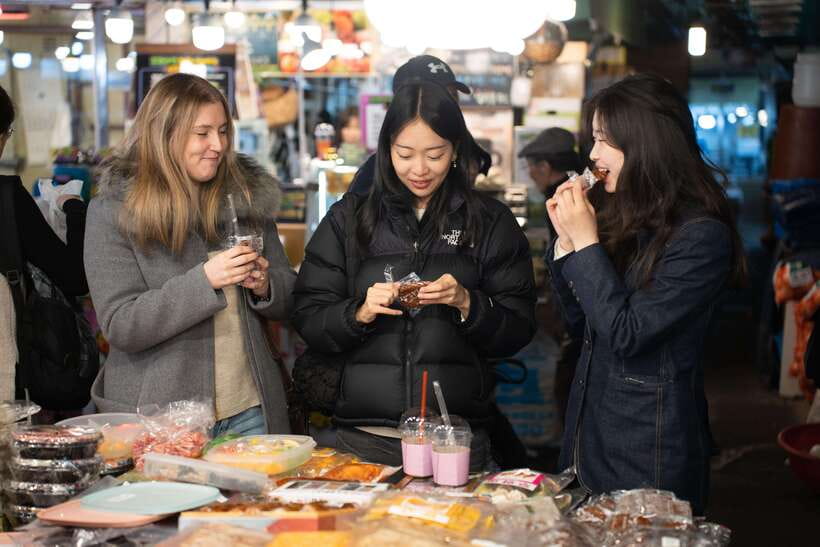
The rice roll and spicy rice cake bring more of the familiar Korean street-food character. Rice-based foods are filling, which is one reason you should avoid arriving after a large meal. The spicy rice cake can also have a stronger flavor than the first few tastings, though the exact level of heat is not specified.
Fish cake adds another common market food to the mix. Together, these stops give you a wider view than a tour focused only on famous dishes. You get different textures and flavors, plus a sense of how Korean market food works as quick, everyday eating.
The menu is not fixed in stone. Items may change depending on circumstances at the market. That flexibility is normal for a food tour built around active stalls, but it means you should not book this expecting every listed item to appear exactly as written.
More Hidden Gem Food Tours in South Korea:
- Taste hidden street food in Seoul with a 2.5h food tour
★ 4.4 · 12 reviews - Hanoi: Street Food Tour with Train Street & Hidden Alleyways
★ 5.0 · 2,831 reviews - Small Group: Michelin and Local Hawker Food Tour with 9 tastings
★ 5.0 · 1,890 reviews - Bangkok: Michelin Guide Street Food Tour by Tuk Tuk
★ 4.4 · 1,274 reviews
Sweet pancakes and fish-shaped buns to finish
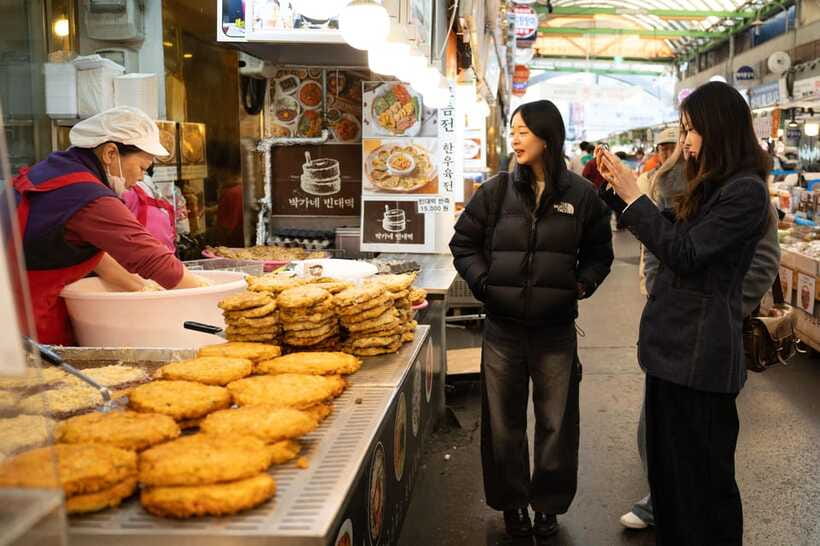
The final foods shift toward dessert. A sweet Korean pancake provides a warm, sugary finish, while the fish-shaped bun adds a playful final bite. Ending with sweets gives the meal a clear rhythm after the savory foods and spice.
The fish-shaped bun is also a useful reminder that market food is not only about substantial meals. Some items are valued for their shape, texture, or simple comfort. Your guide can give the food more context, but the experience remains centered on tasting and eating rather than a formal cooking lesson.
Because the tour includes eight listed food categories, you should plan it as a full snack-based meal. The Dutch participant’s practical warning is worth taking seriously: portions can be large enough that eating breakfast beforehand may leave you unable to try everything. If you have a small appetite, share where possible or pace yourself.
The guide brings modern Korea into the conversation
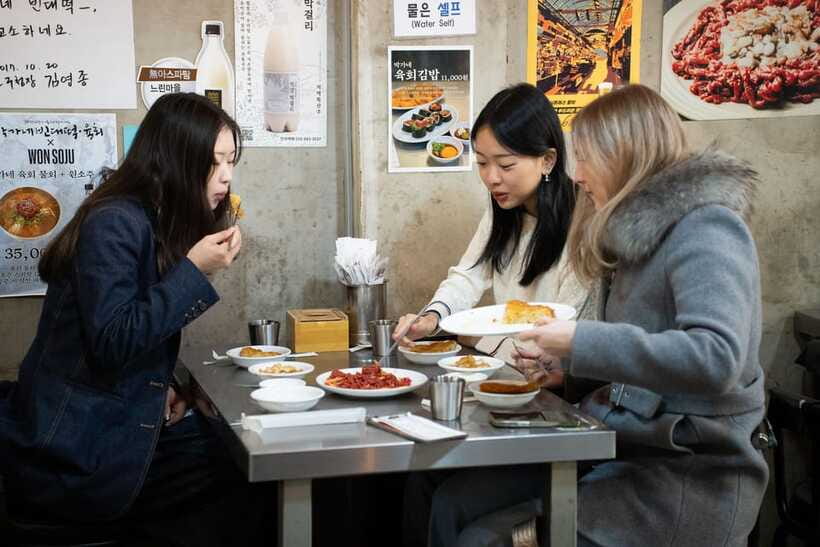
The most distinctive part of this tour is the discussion that surrounds the food. The guide is expected to explain Seoul’s sights, Korean culture, and the realities of the peninsula’s division. This is not presented as a dedicated historical tour, so you should not expect a chronological account of Korean history or a long list of monuments.
Instead, the value comes from conversation. As you walk through the market, you can ask about modern South Korea and how people relate to one another. The guide may also discuss the military and reserve forces from personal experience as a member of the reserves.
That angle gives the tour a subject many standard food walks leave out. The division of the Korean peninsula is not an abstract issue in the way it might seem from far away. Hearing a local perspective can help you understand why military service and national security remain part of modern Korean life.
The tour description is careful to say this is not a historical tour. Take that seriously. Book it for a food-focused walk with social and political context, not for a replacement for a museum visit or a dedicated history program.
Taeseong and the importance of clear English
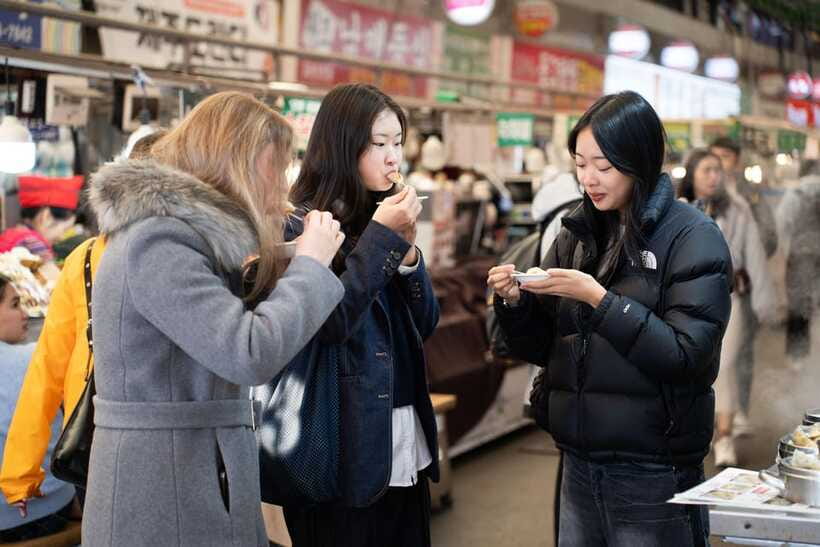
Taeseong is named as one of the guides, and the strongest comments about the experience focus on his friendly manner, clear English, and ability to explain both the food and Korean life. Other feedback also highlights the guide’s willingness to talk and keep the group engaged.
That matters in a market. You need to understand what you are eating, where to stand, and what is happening next. Clear English also makes it easier to ask about ingredients, customs, and the topics raised during the walk.
The small group limit of 10 supports this style. You are not one face in a large crowd listening to a guide through a microphone. You have a better chance to ask a follow-up question or say that you want more detail about a dish.
Guide quality can always vary from one departure to another, so I would not treat one named guide as a guarantee for every date. Still, the format is built around personal explanation, and that is a major reason to choose it over simply wandering through Gwangjang Market alone.
What $100 means in practical terms
At $100 per person, this is not the cheapest way to buy market snacks. If you only want to eat dumplings, tteokbokki, and a pancake, you can spend less by ordering on your own.
The price makes more sense if you place value on the guide and the structure. You receive a two-hour English-language experience, a planned sequence of tastings, help navigating the market, and discussion about modern Korea and the peninsula’s division. For a first visit, that combination can save time and reduce the guesswork of ordering unfamiliar food.
The small group also supports the price. A group of up to 10 people allows more conversation than a large commercial walk. If you are traveling alone or do not feel confident ordering in a busy market, that support has real value.
Still, you should be honest about what you want. This is a poor match if your main goal is a bargain meal, a private tour, or a detailed lecture on Korean history. It is a better match if you want to taste many items and use the meal as a starting point for conversation.
Who will get the most from this market tour
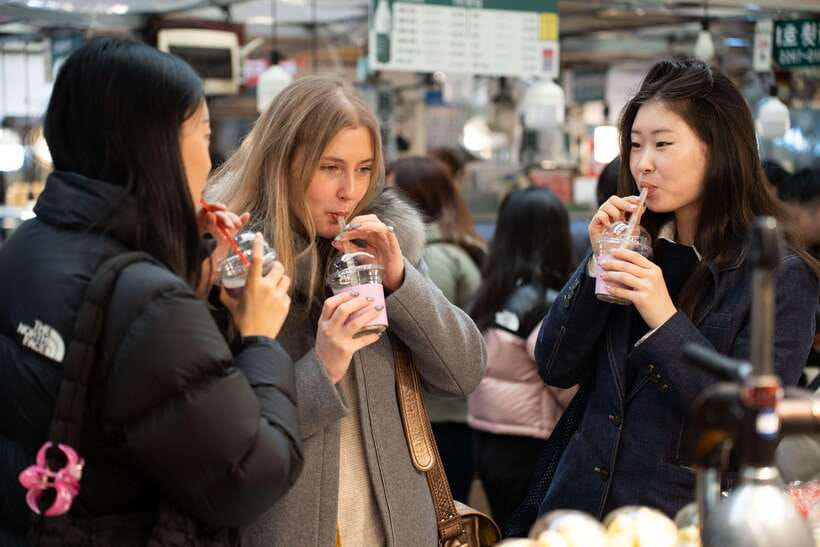
I would recommend this experience to first-time visitors who want a manageable introduction to Korean market food. You do not need to know the dishes in advance, and the guide helps turn a row of unfamiliar stalls into a more understandable meal.
It also suits people who enjoy asking questions. The discussion about Korean society, military life, and the peninsula’s division gives the tour more substance than a simple food crawl. If you like learning how a place works while you eat, this format should suit you.
It may be less suitable for a person with strict dietary needs, since the supplied information does not give an ingredient list or dietary substitutions. The menu can change, and the food is selected around market conditions rather than a custom plan.
It may also be a poor fit if you want a slow, sit-down lunch. Two hours covers many tastings, and the group will likely keep moving. Wear comfortable shoes, keep your schedule reasonably open, and arrive ready to eat.
Booking details worth knowing
The tour is offered in English and lasts two hours. It has a small-group limit of 10 people, which is useful for conversation and for keeping the group together in the market.
You can cancel up to 24 hours in advance for a full refund, and the reserve-now, pay-later option lets you hold a place without paying immediately. Starting times vary, so check availability for the date you want.
The food list includes dumpling, meatball, Korean hotdog, rice roll, spicy rice cake, fish cake, sweet Korean pancake, fish-shaped bun, and water. The menu may change, so do not treat the list as an absolute guarantee.
Should you book Hidden Stories & Flavors?
Book it if you want a market meal with a local conversation attached. The combination of eight food tastings, Gwangjang Market, a small group, and discussion of modern Korea gives you more than a list of snacks.
Think twice if you want a formal historical tour, a private guide, or the lowest possible food cost. The best reason to pay $100 is not the food alone. It is the chance to let an English-speaking guide, including Taeseong on some departures, explain the dishes and connect them to life in South Korea.
Come hungry, meet at Jongno 5 ga station Exit 8, and keep your expectations focused on food and modern cultural context. That is where this two-hour experience earns its place in a Seoul itinerary.
FAQ
Where does the tour meet?
The meeting point is Jongno 5 ga station Exit 8.
How long does the experience last?
The guided market tour lasts two hours.
Where does the food tour take place?
The tour takes place at Gwangjang Market in Seoul.
What language is the tour offered in?
The live tour guide speaks English.
How many people can join the group?
The group is limited to 10 participants.
What food is included?
The listed foods are dumpling, meatball, Korean hotdog, rice roll, spicy rice cake, fish cake, sweet Korean pancake, fish-shaped bun, and water. Menu items may change depending on circumstances.
Is this a historical tour?
No. The experience is a food tour with discussion of modern Korean culture, Seoul, the division of the Korean peninsula, and military perspectives. It is not presented as a historical tour.
More Market Food Tours in South Korea
- Busan history and market food tour with local chef
★ 5.0 · 58 reviews - Busan Local Food Cooking Class with Market Tour
★ 5.0 · 53 reviews - Mangwon Market Food tour By Locals; Cheap Eats to Fancy Feast
★ 5.0 · 38 reviews - Seoul: Namdaemun Market Food Tour
★ 4.9 · 34 reviews
Just added around South Korea
- Busan Local Food Cooking Class with Market Tour★ 5.0 · 53 reviews
- Jagalchi Sunset Cruise and Night Market Tour in Busan★ 3.5 · 2 reviews
- Visit Busan night market and enjoy the night view of Busan harbor★ 5.0 · 6 reviews
- Busan history and market food tour with local chef★ 5.0 · 58 reviews
- Busan: Food Crawl with Fish Market, Soju Tents & Local Snacks★ 5.0 · 8 reviews
- Busan Food Market Tour Seafoods and Street Foods★ 5.0 · 8 reviews
- Taste hidden street food in Seoul with a 2.5h food tour★ 4.4 · 12 reviews
- Suwon: Baseball Game with Fortress and Local Food Tour★ 5.0 · 3 reviews
Street Food Market Tours, compared.
Tokyo Tsukiji Fish Market Food and Culture Walking Tour
Read our review →
London Bridge & Borough Market Food Tour with 7 Authentic Dishes
Read our review →
Tokyo: Tsukiji Fish Market Food and Walking tour
Read our review →
Small Group Cooking Class & Market Food Tour in Florence
Read our review →
Tokyo: Tsukiji Fish Market Guided Walking Tour
Read our review →
Nishiki Market Brunch Walking Tour (7 Tastings + Brunch)
Read our review →
Food Market Visit and Cooking Class with Wine
Read our review →Browse the lists this tour appears in