
REVIEW · NEW YORK CITY STREET FOOD TOURS
Homemade Dumplings 101 in NYC
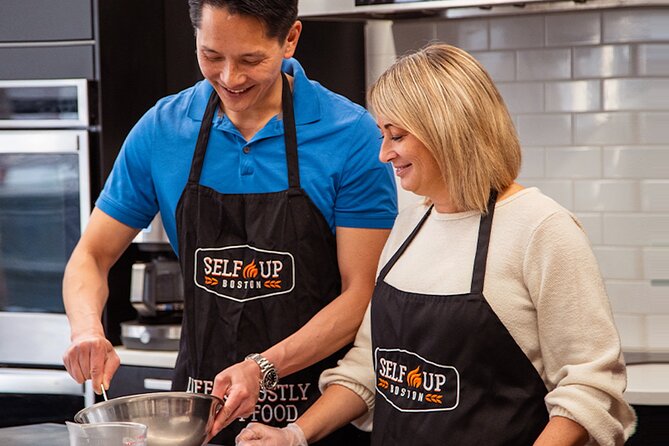
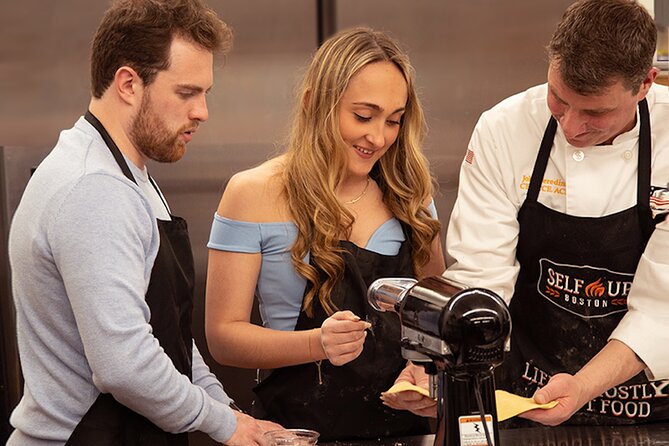
The best part of this three-hour dumpling class is that you do more than watch a chef work. You handle the ingredients, shape several kinds of dumplings, and learn how steaming and frying change the finished dish. Chef Danny and his staff keep the session social, useful, and hands-on.
I like the mix of practical cooking skills and a proper meal at the end. Light snacks and a couple of drinks keep things pleasant while you work, then you sit down to eat what you made. The main drawback is the firm cancellation policy, and the class can be canceled if the weather is poor or too few people book.
Key points to know before booking
- Three dumpling styles: Prepare dim sum dumplings, potstickers, and jiaozi with several meat, seafood, mushroom, and vegetable fillings.
- Hands-on instruction: Use traditional Chinese ingredients, cooking utensils, and methods rather than simply watching a demonstration.
- Chef Danny leads the class: He and his staff help throughout the cooking process and keep the mood light.
- Lunch follows the cooking: Snacks and drinks come during the session, followed by a sit-down meal at the end.
- Midtown starting point: Meet at 325 W 37th St, suite 12F, at 1 p.m. The class returns to the same location.
- Small enough to participate: The maximum group size is 20 people, so you should have a real chance to take part.
What this NYC dumpling class is really about
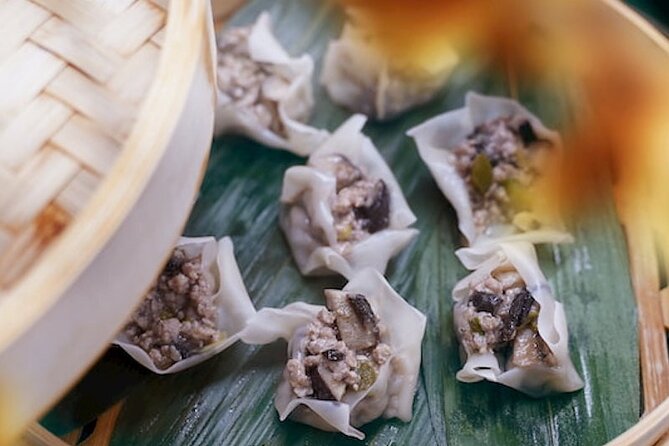
This experience treats dumplings as both food and craft. You learn how fillings, wrappers, folds, and cooking methods work together. That matters because dumplings can look simple, but a soft steamed dumpling and a crisp-bottomed potsticker require different handling.
The class focuses on Chinese dumplings and dim sum, using traditional ingredients and utensils. You will work with several fillings, including pork, chicken, shrimp, mushrooms, and vegetables. That variety gives the class more substance than a single-recipe cooking lesson.
You are not expected to sit quietly while someone else prepares lunch. The point is participation. You should expect to help with the full process, from preparing or handling ingredients to shaping and cooking the dumplings. The exact order of activities is not specified, so the pace may depend on the size of the group and the dishes being prepared.
Chef Danny and his staff are available throughout the session. One particularly useful detail is that the instruction covers both steaming and frying. Beginners often learn one method and stop there, but this class shows how the same general idea can produce very different results.
More Dumpling and Dim Sum Tours in the USA
- Bagels Dumplings Pizza & Tacos: A Downtown Food Crawl
★ 5.0 · 63 reviews - Chinese Dumplings Cooking Class in NYC – Fun & Delicious!
★ 5.0 · 4 reviews - SF’s Chinatown: Tea & Dim Sum Food Tour – Includes full meal, 3hr
★ 5.0 · 153 reviews
Arriving at 325 W 37th Street
The meeting point is 325 W 37th St, suite 12F, in New York City. The location is near public transportation, which is helpful for a 1 p.m. start, especially if you are fitting the class between other Midtown plans.
Give yourself enough time to find the building and the correct suite. The information provided identifies the location as number 12F, but no special arrival instructions are listed. A mobile ticket is accepted, so you can keep your booking on your phone rather than printing anything.
The start time is fixed at 1 p.m. This is not a quick morning activity or a drop-in demonstration. Plan for roughly three hours, with the class ending back at the same meeting point. That makes it easy to continue exploring New York afterward, though a full lunch means you may not want to schedule another major meal right away.
The maximum group size is 20 people. That is not an intimate private lesson, but it is still a manageable size for a cooking class. Your experience may depend on where you are positioned and how actively you take part, so speak up if you need help with folding or cooking.
Learning the ingredients and tools
The class introduces traditional Chinese ingredients and cooking utensils as part of the cooking process. This is useful if you want to repeat the recipes at home, since the lesson is not limited to assembling a finished plate.
The provided menu centers on two main preparations: dim sum dumplings and potstickers. Jiaozi is also included in the description of the dishes you may learn to make. These are related foods, but they are not identical, and learning the differences gives you a better feel for Chinese dumpling cooking.
The fillings cover a good range:
- Pork and vegetables for dim sum dumplings
- Pork, chicken, shrimp, and mushrooms for potstickers
- Chicken and vegetables for jiaozi
This range also helps if your group has different tastes. The available information does not specify vegetarian, vegan, gluten-free, or allergy-friendly options, so you should not assume that a special menu is available. If dietary restrictions matter to you, ask the provider before booking.
A good cooking class should leave you with skills you can use again. Here, the most transferable lessons are likely to be how to work with wrappers, how to contain a moist filling, and how to choose between steaming and frying. The description does not promise a recipe packet or take-home ingredients, so book this for the hands-on lesson rather than for printed materials.
Making dim sum dumplings
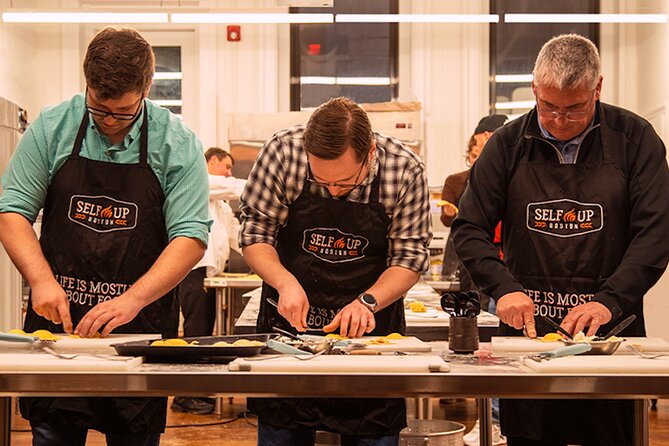
Dim sum dumplings are one of the central parts of the class. They are described as delicate dumplings filled with savory pork and vegetables. You can steam them for a soft texture or fry them for a golden finish.
That two-way approach is one of the strongest features of the experience. Steaming keeps the dumpling tender and gentle, while frying adds color and crunch. You get to see how cooking technique changes the food, not just how the dumpling is shaped.
The class is especially useful here because delicate dumplings can be frustrating for beginners. A wrapper that is overfilled may split, while one with too little filling can feel flat and dry. With a chef present during the process, you can get help at the moment the problem appears.
The description does not state the exact folding pattern or the number of dumplings each person makes. Keep your expectations practical. You are learning a set of methods in one afternoon, not training as a professional dim sum chef.
More Dumpling and Dim Sum Tours in New York City:
- Hong Kong: Street Food Tour with Locals – Dim Sum and Wonton
★ 4.8 · 673 reviews - Warsaw’s No 1 cooking class-Polish dumplings with liqueur tasting
★ 5.0 · 576 reviews - Hong Kong Day Tour: Priority Peak Tram, City Walk & Dim Sum
★ 4.5 · 266 reviews - Gyoza Cooking Class in Kyoto: Traditional Japanese Dumplings
★ 5.0 · 210 reviews
Frying potstickers the right way
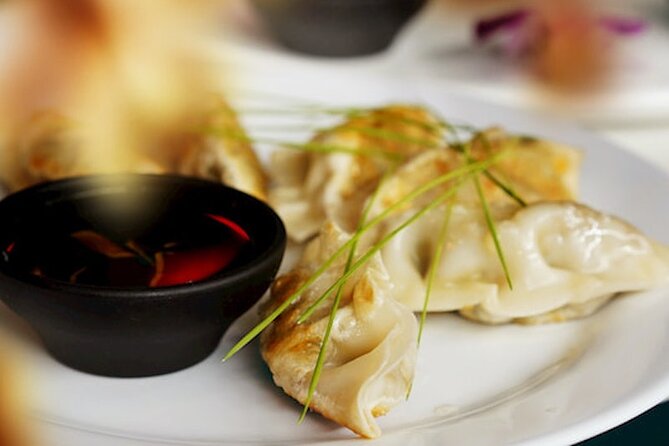
Potstickers bring a different cooking challenge. The goal is a tender dumpling with a browned, crisp base, and the class teaches you how to fry them for an authentic Chinese-style result.
The fillings listed for potstickers include pork, chicken, shrimp, and mushrooms. That gives you a chance to compare how different ingredients work inside the same basic format. It also makes the dish a useful introduction to balancing meat, seafood, vegetables, and seasoning.
The most valuable part may be the cooking stage. Frying dumplings requires more attention than simply placing them in a steamer. You need to manage browning and texture, and the chef can help you understand what to watch for. The information does not specify the exact pan method, cooking time, or equipment, so avoid expecting a technical master class with precise measurements for every variation.
Still, the class gives you a solid reason to practice at home. Potstickers are familiar enough to attempt again, but the crisp base rewards careful cooking. If you have struggled with soggy or broken dumplings, this portion should be especially useful.
Trying jiaozi, the New Year dumpling
Jiaozi is presented as a traditional part of Chinese New Year celebrations, commonly associated with good luck. In this class, the filling is chicken and vegetables.
That cultural detail adds meaning to the recipe. You are not simply making another small parcel of food. You are learning about a dish tied to celebration and good fortune, which can make the cooking feel more connected to Chinese food traditions.
The information does not say that the class takes place during Chinese New Year or that it includes a separate cultural presentation. It is best to think of the background as context for the dish, not as a festival program.
Jiaozi also gives you another chance to practice shaping and filling. Since the class includes several dumpling types, you can compare how the pieces look and cook rather than treating every dumpling as the same.
Snacks, drinks, and the sit-down meal
Light snacks are served during the class, and you can expect a couple of drinks as you work. That is a small but welcome touch during a three-hour activity. Cooking with a group takes time, and snacks keep the session from feeling like a long wait for lunch.
After you finish cooking, you sit down for a meal. The listed main dishes are dim sum dumplings and potstickers. This gives the class a satisfying finish: you learn the technique, then eat the results rather than packing everything away or leaving before the food is ready.
The meal is part of the value, but it should not be the main reason you book. At $120 per person, you are paying for instruction, ingredients, kitchen access, snacks, drinks, and the shared meal. If you compare the price with a restaurant lunch alone, it is expensive. If you want a guided cooking activity that includes lunch and social time, the price is more reasonable.
The final meal also lets you judge the results immediately. You can see how the dumplings look, compare textures, and remember which method produced the best result for you.
Who will enjoy this experience most
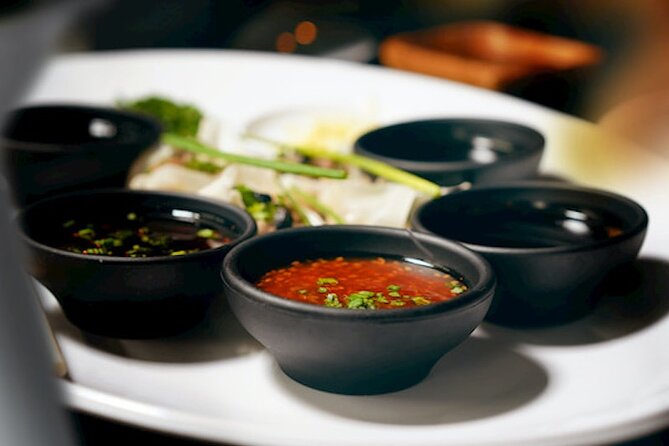
This class is a good fit for first-time cooks, food-focused visitors, and anyone who wants an activity with more participation than a standard restaurant meal. You do not need to already know how to fold dumplings, since a professional chef is available to help throughout.
It should also suit a small group of friends or family members looking for a shared afternoon activity. The maximum of 20 people means it is social rather than private. If you prefer a quiet, one-to-one lesson, this may feel too large.
The class is offered in English. That makes the instruction accessible to English-speaking visitors, though the available information does not describe any translation support or multilingual instruction.
You should also like food preparation. This is not a sightseeing tour with a short cooking stop. Most of the experience centers on making dumplings and dim sum, so people who dislike hands-on kitchen work may find the three-hour format long.
Price, timing, and the cancellation risk
The price is $120 per person. I see the value in that cost if you want an organized activity with a chef, ingredients, snacks, drinks, and a sit-down lunch. It is less compelling if you only want to eat dumplings, since a restaurant meal will usually require less time and money.
The experience is often reserved about 32 days ahead, so avoid leaving it until the last part of your New York visit. That advance booking pattern suggests that popular dates may fill early, though no guarantee is made about availability.
The cancellation policy is strict. The experience is non-refundable and cannot be changed for any reason. If you cancel or request an amendment, you do not receive your money back.
There are two provider-related exceptions. Poor weather can cause a cancellation, in which case you are offered another date or a full refund. The class also requires a minimum number of participants. If that minimum is not met, you are offered another date or experience, or a full refund.
Because of the firm terms, I would not book this until your schedule is fairly settled. Service animals are allowed, and the location is near public transportation. Those are useful practical points, but you should still confirm any food allergies or other needs before paying.
The bottom line for dumpling fans
Book this class if you want to learn by doing. The strongest reasons are the range of dumplings, the chance to practice both steaming and frying, and the help available from Chef Danny and his staff. The included snacks, drinks, and sit-down meal make the afternoon feel complete.
Skip it if you want a quick food tasting, need flexible cancellation, or are looking for a private lesson. At $120, the class earns its price through participation and instruction, not simply through the amount of food served.
For a food-minded visit to New York, this is a practical way to spend an afternoon indoors. You leave with a better sense of how dim sum dumplings, potstickers, and jiaozi differ, plus a skill you can try again in your own kitchen.
FAQ
Where does the dumpling class start?
It starts at 325 W 37th St, number 12F, New York, NY 10018.
What time does the class begin?
The class starts at 1 p.m.
How long does the experience last?
It lasts approximately three hours.
Where does the class end?
The activity ends back at the meeting point on West 37th Street.
What kinds of dumplings will I learn to make?
You may learn to make dim sum dumplings, potstickers, and jiaozi.
What fillings are included?
The fillings include pork, vegetables, chicken, shrimp, and mushrooms, depending on the dumpling.
Is lunch included?
Yes. You have light snacks during the class and a sit-down lunch after cooking, with dim sum dumplings and potstickers listed as the main dishes.
Is a chef available during the class?
Yes. A professional chef is available to help throughout the experience. Chef Danny and his staff lead the session.
How many people can join the class?
The maximum group size is 20 people.
Can I cancel for a refund?
The experience is non-refundable and cannot be changed for any reason. If the provider cancels because of poor weather or because the minimum number of participants is not met, you are offered another date or experience, or a full refund.
Just added around New York City
- Food Tour Greenwich Village NYC★ 5.0 · 2 reviews
- NYC: Upper West Side Food Walking Tour with Tastings★ 5.0 · 2 reviews
- NYC: SoHo, Little Italy, and Chinatown Walking Tour★ 5.0 · 2 reviews
- New York City: The Ultimate NYC Street Food Tour★ 5.0 · 2 reviews
- New York: Midtown Manhattan Street Food Walking Tour★ 4.8 · 14 reviews
- Greenwich Village Food Crawl★ 4.3 · 10 reviews
- Flavors of Flushing: Exploring New York’s Biggest Chinatown★ 5.0 · 14 reviews
- Chinese Dumplings Cooking Class in NYC – Fun & Delicious!★ 5.0 · 4 reviews
New York City Street Food Tours, compared.

SoHo, Little Italy, and Chinatown Walking Tour in New York
Read our review →
New York City Mafia and Local Food Tour led by NYPD Guides
Read our review →
True Crime NYC: Mafia Walk w/Ret. NYPD Detective and Local Food
Read our review →
New York City: Food Walking Tour of Chinatown & Little Italy
Read our review →
#1 Rated NYC Chinatown Food and History Walking Tour with FNYT
Read our review →
NYC: Mafia Experience and Local Food with NYPD Guide
Read our review →
Foods of NY Tours Chelsea Market Food Tour & High Line Park
Read our review →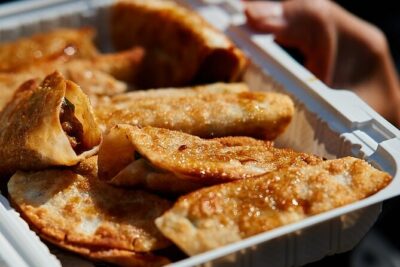
Ultimate Chinatown Walking Food Tour in New York City
Read our review →Browse the lists this tour appears in