
REVIEW · STREET FOOD WALKING TOURS
Old Cairo Guided Walk Tour: History, Culture & Street Bites
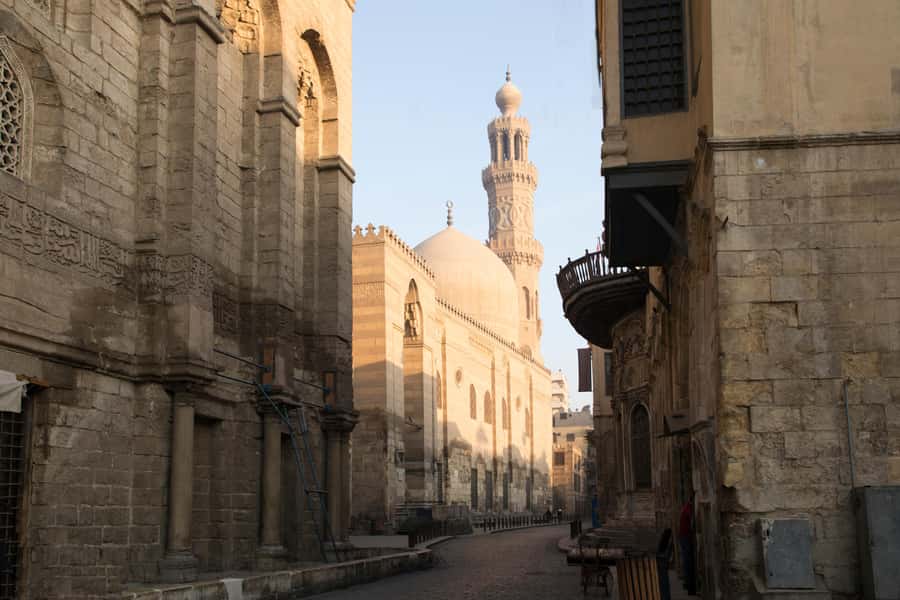
Old Cairo is best understood on foot, one gate, mosque, courtyard, and narrow market lane at a time. This tour takes you from Bab al-Futuh through some of Islamic Cairo’s finest buildings, ending among the spices, jewelry, and bargaining of Khan el Khalili.
I like the way the route mixes major monuments with everyday street life. I also like that the price includes entrance fees, bottled water, local snacks, and a filling dish such as koshary or Egyptian pie. The main drawback is the walking itself: rough streets, stairs, heat, traffic delays, and little time for a proper rest stop can make the three to four hours tiring.
Key points at a glance
- Bab al-Futuh begins the story: Enter through one of Cairo’s great medieval gates and get a useful introduction to the old city.
- Several major monuments fit into one walk: Al-Hakim Mosque, Bayt al Suhaymi, Sultan Barquq, the Qalawun Complex, and Al-Hussein Mosque all appear on the route.
- The guide makes the difference: Guides such as Randa, Nahed, Ruby, Ehab, Dina, and Samaa explain history with humor and practical advice.
- Street food is part of the experience: Expect local snacks such as zalabya or halabessa, plus koshary or Egyptian pie.
- Khan el Khalili is easier with help: Your guide can keep the group together and offer advice while you browse and bargain.
- This is not a smooth-access tour: Baby strollers, large bags, and wheelchairs are not suitable for this route.
Walking through Cairo’s medieval front door
The tour starts at Bab al-Futuh, one of the surviving gates in Cairo’s old city walls. It is a strong meeting point because you begin with a clear sense of place rather than being dropped into the middle of the market.
Your guide sets the scene before the walking starts. Cairo’s old Islamic quarter is not a museum district laid out for easy sightseeing. It is a working part of the city, with worshippers, shopkeepers, residents, cafés, vendors, and tour groups sharing the same lanes.
That is why a guide matters here. Randa, Nahed, Ruby, Ehab, Dina, Samaa, and other guides are assigned to different departures, and the strongest praise for this tour centers on their storytelling, patience, humor, and ability to explain complicated history in plain language.
The first walking sections are short on paper, but the full outing involves repeated standing, steps, uneven ground, and pauses at several religious sites. Wear shoes with good grip. Loose clothing covering your shoulders, arms, legs, and knees is the sensible choice, and women should carry a scarf for mosque visits.
More Street Food Walking Tours in the world:
- Reykjavik Food Walk – Local Foodie Adventure in Iceland
★ 5.0 · 18,952 reviews - Naples: Street Food Walking Tour with Local Guide
★ 4.9 · 4,976 reviews - Private Street Food Evening Walking Tour in Ho Chi Minh City
★ 5.0 · 3,175 reviews
Al-Hakim Mosque and the calm of its courtyard
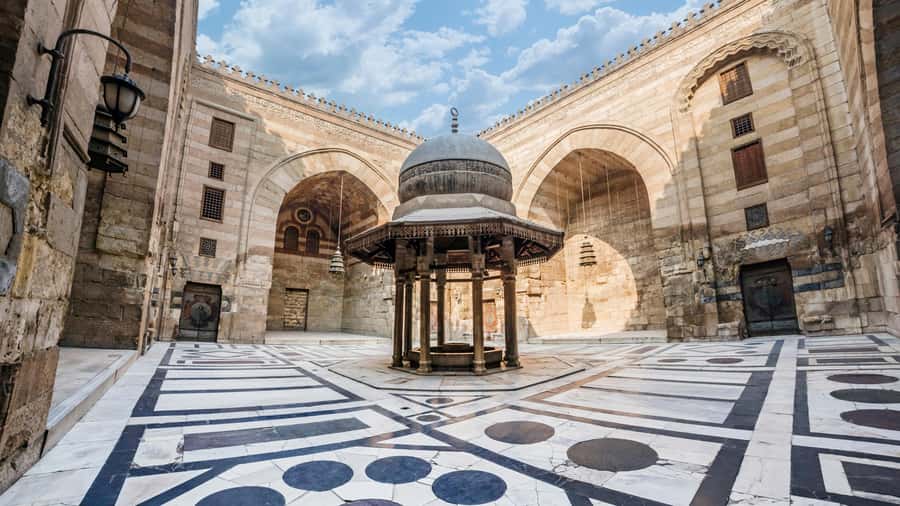
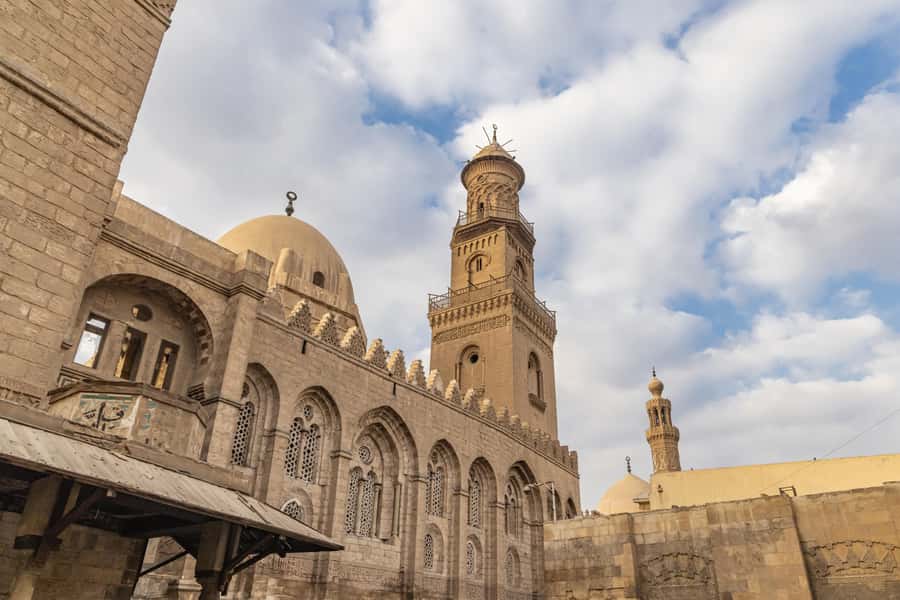
Al-Hakim Mosque is one of Cairo’s oldest and largest Fatimid mosques. Its broad stone walls and large minarets give it a different feel from the more ornate Mamluk buildings later in the route.
The guide explains the mosque’s place in Cairo’s long religious and architectural story. You will have time to look at the stonework, the scale of the courtyard, and the way the building creates a quieter space just beyond the city streets.
This is one of the tour’s useful early stops because it gives you a visual reference for Fatimid Cairo. Later, the Mamluk monuments will feel more elaborate and decorative, while Al-Hakim offers a more restrained impression.
Allow about 25 minutes here. That is enough for an introduction and a good look, but not enough for a slow architectural study. If you want detailed time for every inscription or structural feature, a private specialist tour would be a better fit.
Bayt al Suhaymi brings old Cairo indoors
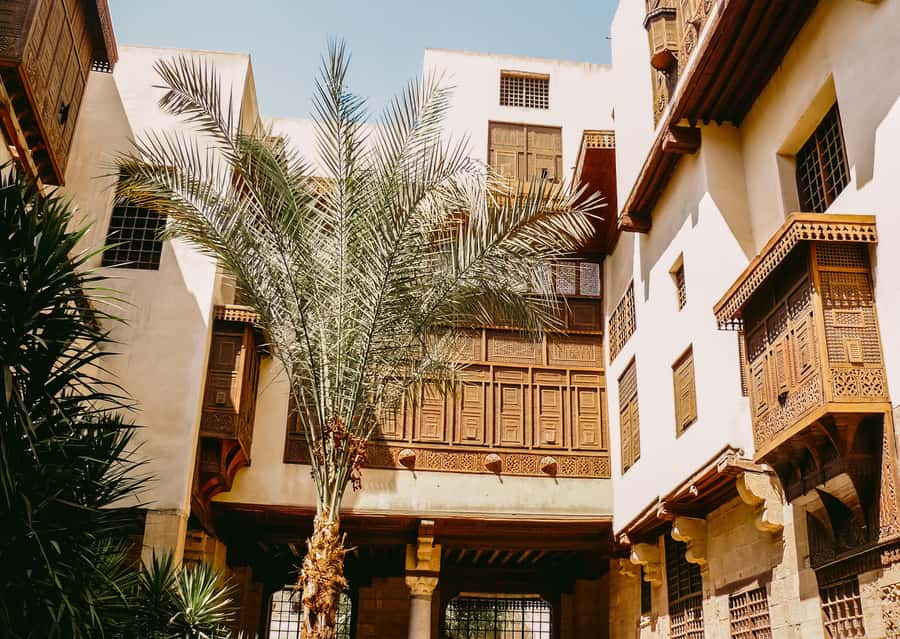
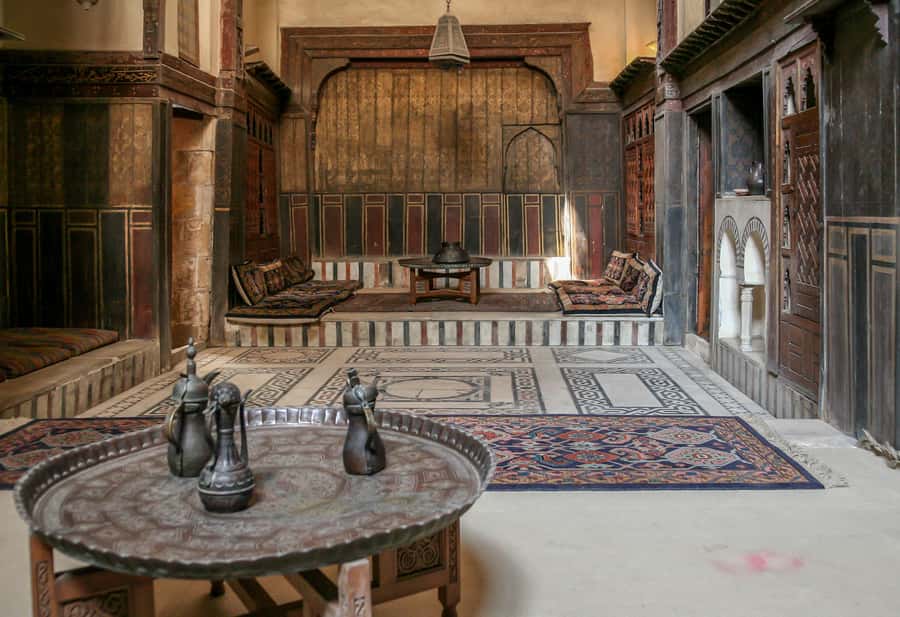
Bayt al Suhaymi is a 17th-century Ottoman residence, and it changes the rhythm of the tour. Instead of looking only at mosques and public monuments, you enter a traditional house and learn how Cairo’s wealthier residents once lived.
The rooms and courtyard show the importance of privacy, shade, airflow, and separation between public and family spaces. Your guide can explain how the house functioned, which makes the visit more useful than simply admiring carved wood and old stone.
I especially like this stop for first-time visitors because it adds daily life to the monument list. Mosques tell you about public worship and rulers. A house tells you more about domestic space, family habits, and the practical side of life in historic Cairo.
The visit is scheduled for roughly 25 minutes. The route is not designed for lingering in every room, so listen closely and ask questions while you are inside.
El Moez Street links the monuments together
El Moez Street is the spine of the walking experience. It connects historic buildings with shops, cafés, vendors, and the ordinary movement of the neighborhood.
This is where the tour feels least like a series of isolated stops. You walk between monuments and see how old architecture remains part of a lived-in district. The street can also be crowded and noisy, so keep close to your guide and watch your footing.
The route includes only about 15 minutes specifically listed for this section, though the wider walk continues through adjoining streets and sites. That means you should think of El Moez Street as a connecting experience rather than a long shopping break.
Your guide’s local advice is useful here. Guides such as Randa and Nahed have been praised for explaining how to handle market sellers and for helping visitors feel comfortable when attention from vendors becomes tiring. That practical help is one reason this tour suits first-time visitors to Cairo.
More Heritage Tours in the world:
- Palermo: Street Food and History Walking Tour
★ 4.9 · 1,486 reviews - Walking Tour and street food Tour Palermo / History and Food
★ 5.0 · 386 reviews - Discover Palermo in 3 hours. Art, history, markets and street food
★ 5.0 · 352 reviews - Lecce History and Street Food Tasting Small Group Tour
★ 5.0 · 288 reviews
Sultan Barquq and the Mamluk showpiece
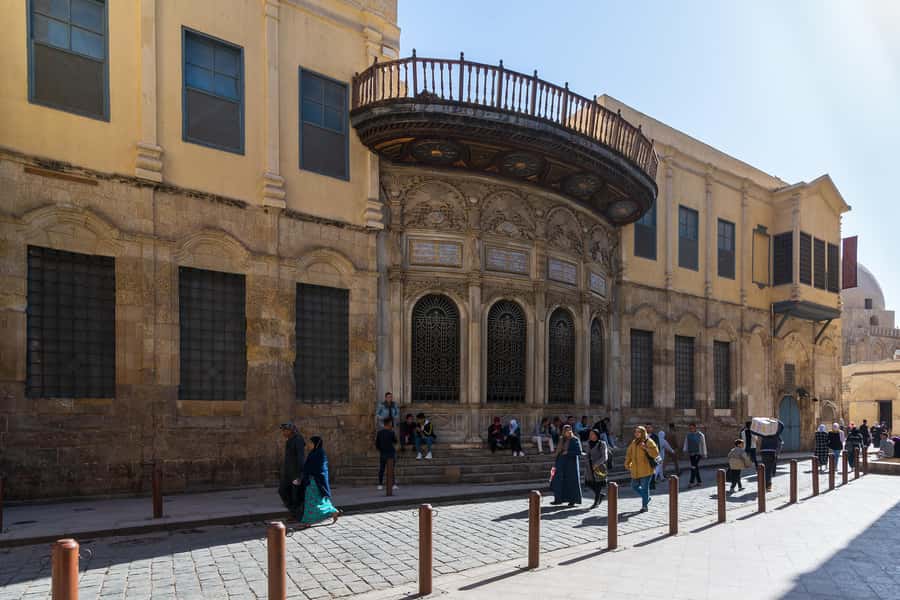
The Mosque and Khanqah of Sultan Barquq introduces you to Mamluk Cairo. The building served as a mosque, madrasa, and Sufi lodge, so it was both a place of worship and a center for study and spiritual life.
The architecture is more intricate than what you saw at Al-Hakim Mosque. Look for the layered decoration, the scale of the interior, and the way the complex combines religious, educational, and memorial functions.
The visit lasts about 20 minutes. That is a reasonable amount of time for a guided overview, but the building deserves your attention. Do not rush straight to photographs. First listen to the explanation of how a medieval religious complex worked.
Because this is an active religious setting, behave quietly and follow your guide’s instructions. Dress is important here, not just for comfort but also as a sign of respect.
The Qalawun Complex packs several purposes into one site

Next comes the Qalawun Complex, which includes a mosque, madrasa, and mausoleum. Like Sultan Barquq, it shows how major buildings in medieval Cairo were designed to serve several purposes at once.
The complex also helps you compare different periods and rulers without needing a separate museum visit. Your guide can point out how the architecture expresses status, faith, learning, and remembrance.
The scheduled visit is about 25 minutes. This is one of the stops where a good guide saves time. Instead of trying to work out what you are seeing from a sign or guidebook, you get a focused explanation and can direct questions to the parts that interest you most.
The downside is that the schedule is full. You will see a lot, but you will not have unlimited time for quiet contemplation or detailed photography.
Al-Hussein Mosque adds a living spiritual center
Al-Hussein Mosque brings the tour into one of the most important religious areas in Islamic Cairo. The building has a strong spiritual atmosphere, and the visit offers a quieter pause after the monuments and street traffic.
This is a place to lower your voice, dress appropriately, and follow local customs. Your guide can explain the site’s significance, but the experience is also about observing the way people use the mosque and surrounding area today.
The stop lasts around 20 minutes. It is not a long religious study, and access or the order of the visit may change if a site is closed. Still, it provides a useful final spiritual stop before the market.
Khan el Khalili ends the walk with shopping and food
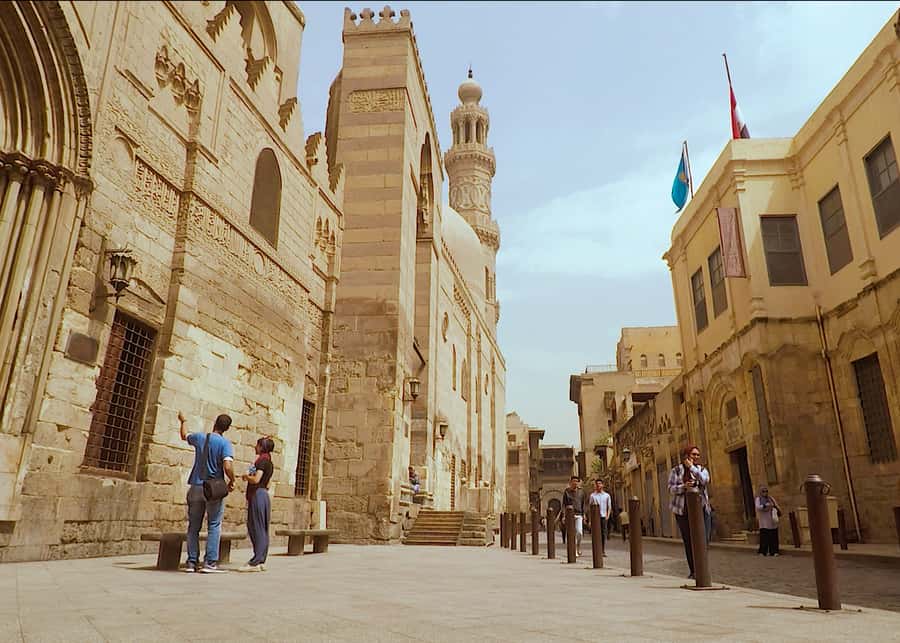
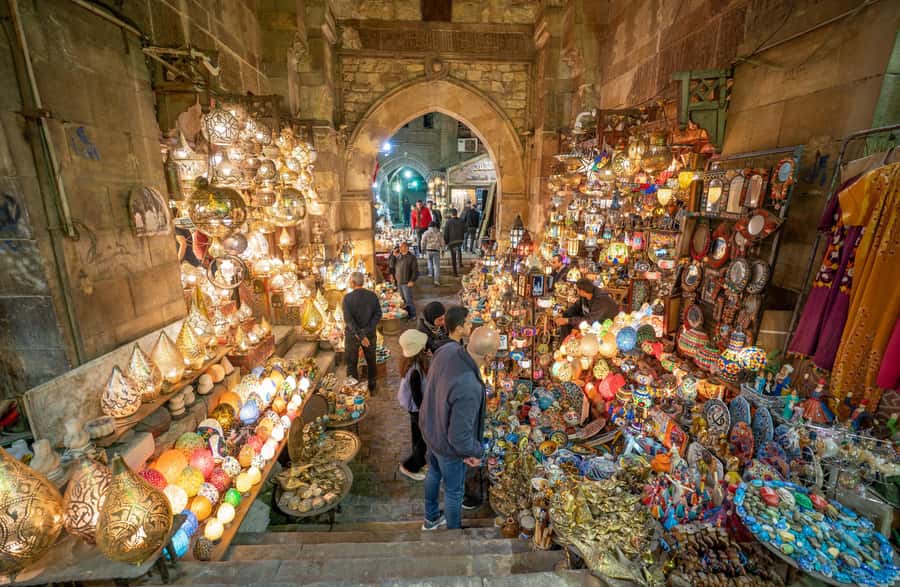
Khan el Khalili is the tour’s most social and commercial finish. Stalls offer spices, jewelry, textiles, souvenirs, and other goods, and bargaining is part of the experience.
You should carry some Egyptian cash if you want to buy anything. The tour price covers the listed sights and food, but personal purchases are separate. Set your own budget before entering the market, and do not feel obliged to buy from the first shop you visit.
This is where a guide can be especially helpful. The narrow lanes can be confusing, and sellers may be persistent. A guide can help you stay with the group, point out shops with fair prices, and explain how bargaining works without turning the experience into a stressful contest.
The market visit is listed at about 15 minutes, so it is more of an introduction than a dedicated shopping session. If you want to spend an hour comparing lanterns, spices, or jewelry, plan to return on your own another time.
What the food adds to the experience
Food is not an afterthought here. Depending on the day and available options, you may try zalabya, halabessa, a traditional drink, koshary, or Egyptian pie.
Koshary is a filling Egyptian dish, while Egyptian pie gives you a taste of local bakery-style street food. Several guides also include a sweet snack or drink along the way. The food is simple, local, and useful after hours on foot.
The meal is generally described as enough rather than lavish. That is the right expectation. You are not booking a restaurant tasting menu. You are getting a chance to try familiar Egyptian street foods in the setting where locals eat them.
Vegetarian food can be available, but you should clarify your preference with the guide. The food choice may vary, and the activity notes list similar alternatives rather than one fixed menu.
Price, timing, and what the $31 covers
At $31 per person, this tour offers solid value if you want several historic interiors, a professional Egyptologist guide, food, and local orientation in one half-day outing.
Entrance fees are included, which matters in Cairo. Some sightseeing days become more expensive than expected when each monument carries its own charge. Bottled water, local snacks, the main street-food dish, service tax, and optional hotel transport are also included in the relevant package.
Hotel pickup and drop-off are available from Cairo or Giza if you select that option. Pickup can save time, but traffic is a real factor. One tour took more than 30 minutes longer because of a driver who did not know the roads well, while another guide kept a close eye on the schedule for someone catching a flight.
If you have an airport departure or another fixed appointment, do not cut the timing too close. The walk itself lasts three to four hours, and vehicle transfers can be unpredictable.
The meeting point is in front of Bab al-Futuh if you do not choose pickup. Arrive on time, since the route is organized around a moving group.
Who will enjoy this Old Cairo walk
I would choose this tour if you are visiting Cairo for the first time and want context before exploring alone. It is also a good fit for solo visitors, couples, and small groups who prefer a guide to handle the route, history, and market pressure.
You will get the most from it if you enjoy architecture, religious history, food, and street scenes in equal measure. Guides such as Randa, Nahed, Ruby, and Haisam have been praised for adjusting explanations to the group and, in Haisam’s case, offering strong Spanish language support.
This is less suitable if you dislike uneven streets, stairs, crowds, or a firm schedule. Wheelchair users cannot use the tour, baby strollers are not allowed, and large bags should be left behind.
Bring sunscreen, a hat, water, and cash. Comfortable clothing and shoes will help more than stylish ones. A scarf is useful for women visiting religious sites.
Should you book the Old Cairo Guided Walk?
Book it if you want a well-filled half day that combines major Islamic monuments, a traditional home, market time, and Egyptian street food. The strongest part is the guiding. A good guide turns a confusing sequence of old buildings into a story about rulers, worship, education, homes, markets, and daily life.
Skip it if you want a slow photographic walk or a flexible shopping day. The route covers a lot, and the break in the middle may feel short. For most first-time visitors, though, the included admissions and food make $31 a sensible price, especially if you choose a guide such as Randa, Nahed, Ruby, Ehab, or another well-regarded member of the team.
FAQ
Where does the Old Cairo walking tour begin?
The standard meeting point is in front of Bab al-Futuh. Pickup and drop-off are also available from hotels or selected locations within Cairo or Giza if you choose that option.
How long does the tour last?
The tour lasts approximately three to four hours.
What sites are included?
The route includes Bab al-Futuh, Al-Hakim Mosque, Bayt al Suhaymi, El Moez Street, Khan el Khalili, the Mosque and Khanqah of Al-Nasir Faraj Ibn Barquq, the Qalawun Complex, and Al-Hussein Mosque.
Are entrance fees included?
Yes. Entrance fees to all listed attractions are included in the tour price.
Is food included?
Yes. The tour includes local snacks such as zalabya or halabessa, or similar items, plus street food such as koshary or Egyptian pie.
Which languages are available?
Live guiding is available in English, French, Spanish, Arabic, and German.
Is hotel pickup available?
Yes. Pickup and drop-off are available from hotels or selected locations within Cairo and Giza city limits when that option is booked.
What should I wear?
Wear loose clothing that covers your shoulders, arms, legs, and knees. Women should carry a scarf for religious sites.
Can I bring a stroller or large bag?
No. Baby strollers and luggage or large bags are not allowed on the tour.
Can wheelchair users join?
No. The tour is not suitable for wheelchair users because of the walking conditions, uneven streets, and stairs.
Just added around the world
- 1 Istanbul Tour: Highlights, Street Food & Hidden Pearls★ 5.0 · 9 reviews
- Evening Hyderabad Street Food Walk with Hyderabad Biryani★ 4.5 · 24 reviews
- Hyderabad Street Food Crawl (2 Hours Guided Food Tasting Tour)★ 4.0 · 5 reviews
- Japanese Street Food Class in Beech Grove★ 5.0 · 9 reviews
- Small-group Street food tour in Ischia★ 3.5 · 2 reviews
- Hyderabad : Evening Street Food Tasting with Guided Old City Tour★ 5.0 · 10 reviews
- Hyderabad Street Food Experience with Local Expert★ 4.5 · 2 reviews
- Hue Street Food On Foot (Daily Tour – Group Tour | 12 pax max)★ 5.0 · 15 reviews
Street Food Walking Tours, compared.

New Orleans Food Walking Tour of the French Quarter with Small-Group Option
Read our review →
Naples: Street Food Walking Tour with Local Guide
Read our review →
Tokyo Tsukiji Fish Market Food and Culture Walking Tour
Read our review →
Private Street Food Evening Walking Tour in Ho Chi Minh City
Read our review →
SoHo, Little Italy, and Chinatown Walking Tour in New York
Read our review →
Rome: Guided Food Walking Tour with Wine in Trastevere
Read our review →
Browse the lists this tour appears in