
REVIEW · ROME STREET FOOD TOURS
Roman Food Walk
Rome makes more sense when you eat your way through it. This private food walk links Campo de’ Fiori, an old bakery, the Jewish Ghetto, and Largo di Torre Argentina with tastes ranging from fresh bread to Roman Jewish dishes and supplì. I like the route because it gives you food and neighborhood context in one compact outing.
I especially like the chance to visit shops you may want to return to later, and the personal attention that comes with a private group. Guide Urs has also brought history and daily Roman life into the food stops, while another guide made a point of including a child in the conversation. The main drawback is time: 2.5 hours is short for such a full menu, and the tour description also refers to three hours, so ask about the exact schedule when booking.
Key points at a glance
- Campo de’ Fiori begins the food story: Browse a traditional Roman market filled with produce, herbs, and regional products.
- The bakery stop adds real local flavor: Taste fresh bread and pastries while seeing a long-running Roman baking tradition.
- The Jewish Ghetto brings a distinct food tradition: Try Roman Jewish specialties in one of central Rome’s most memorable neighborhoods.
- Supplì gives you Rome in a handheld bite: This fried rice ball reflects the Sicilian influence on Roman eating habits.
- The finish is classic Italy: Homemade chocolate, gelato, and coffee provide a sweet and caffeinated finale.
- A private format keeps the pace flexible: Guides speak five languages, and the activity is wheelchair accessible.
A food walk that connects Rome’s center
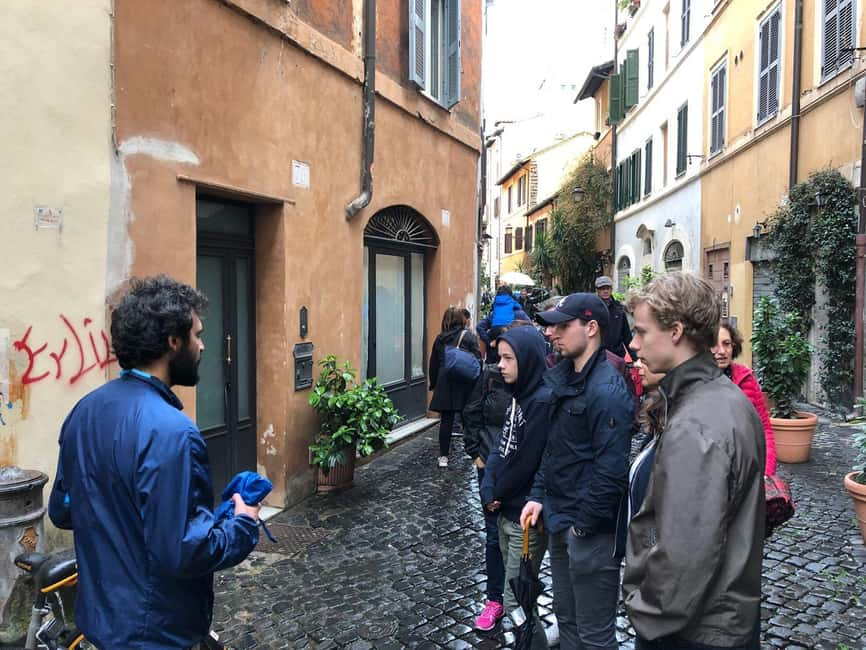
Many Rome food outings focus on one meal or one neighborhood. This route does something more useful for a first visit: it connects several small food traditions while taking you through central streets and landmarks.
You start at Campo de’ Fiori and finish at Largo di Torre Argentina. That means the walk is also a practical way to move between two well-known parts of central Rome without treating the city like a series of disconnected stops.
The focus is not on a sit-down restaurant meal. Instead, you sample several foods and drinks as you walk. That format gives you a broad taste of Rome, though you should not expect a full lunch unless the portions prove generous.
The group is private, so the guide can adjust explanations and conversation to your interests. That matters if you want to ask about Roman customs, food shopping, or where to return for gifts. It also helps families, since a guide can give younger participants more attention rather than speaking only to adults.
The guide team works in English, French, German, Italian, and Spanish. Guide Urs is named in the experience information, and one of the highly rated tours included a female guide who involved a child in the discussion. Those details suggest a friendly, adaptable style rather than a rigid script, though your guide will depend on the date and language you select.
More Street Food Walking Tours in Italy
- Rome: Guided Food Walking Tour with Wine in Trastevere
★ 4.9 · 3,105 reviews - Rome: Trastevere & Campo de Fiori Street Food Walking Tour
★ 4.9 · 2,768 reviews - Rome: Trastevere Street Food Walking Tour with Local Expert
★ 4.8 · 1,784 reviews
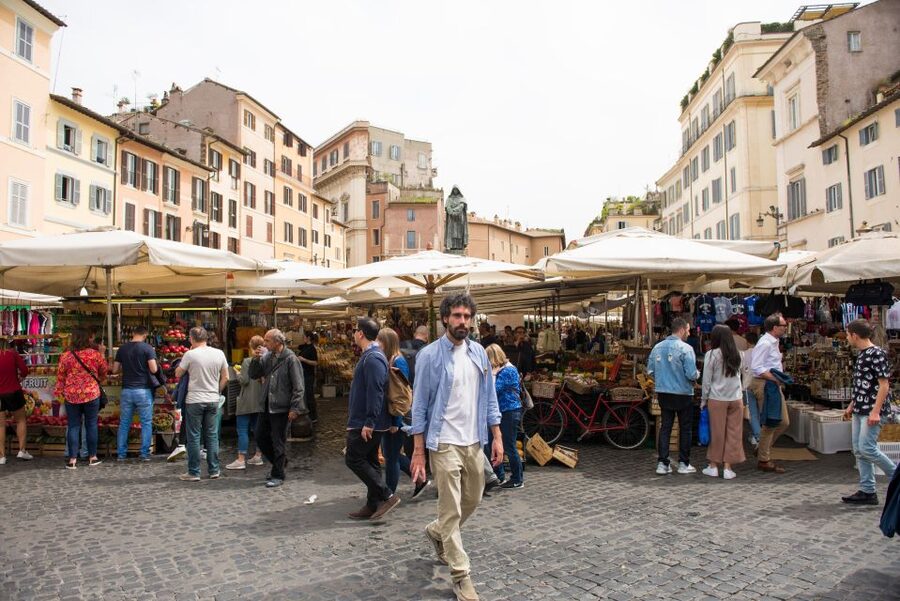
Campo de’ Fiori: start with Rome’s market culture
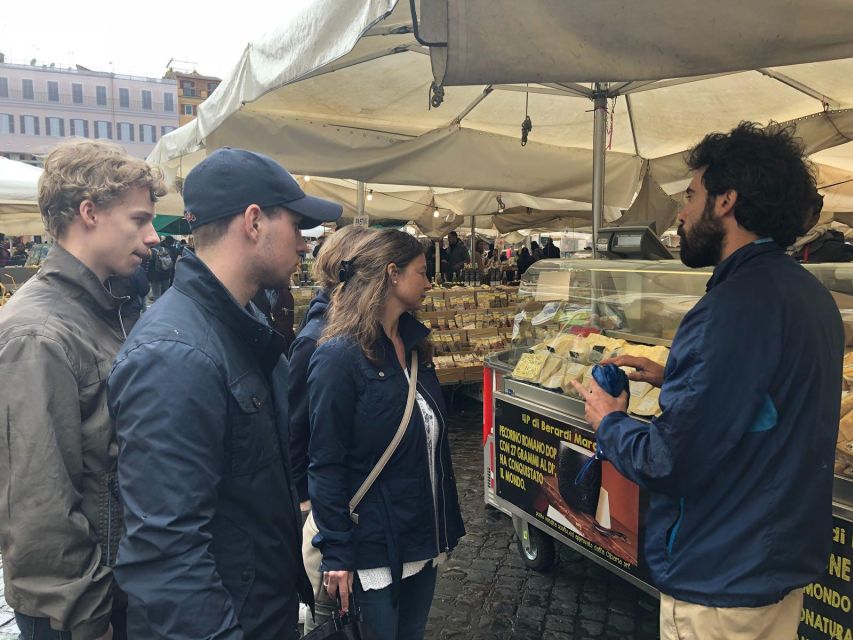
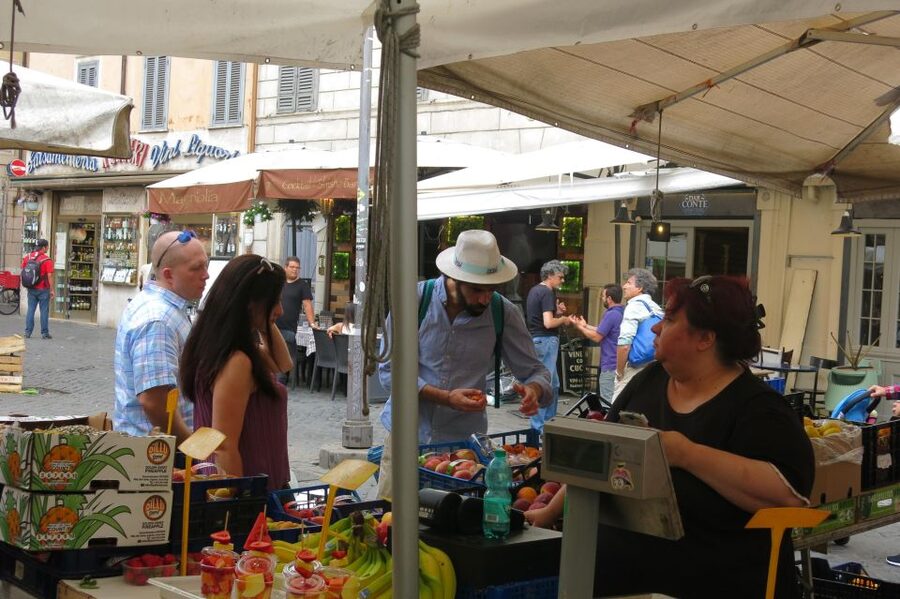
Campo de’ Fiori is the natural opening stop. The traditional market puts everyday ingredients in front of you: fresh produce, herbs, and regional specialties arranged in stalls around one of Rome’s best-known public squares.
I like beginning here because a market gives you a quick lesson in how a city eats. You can see the raw materials before tasting finished dishes. The guide can explain which products are truly local, which are regional, and how Romans use them at home.
The square is also a busy sightseeing area, so this will not feel like a quiet food classroom. Stalls, pedestrians, and other visitors create a lively setting, and that can make conversation harder at certain moments. Stay close to your guide and expect to pause rather than stroll continuously.
For shoppers, this may be one of the most useful parts of the walk. You can ask what travels well, what is worth buying as a souvenir, and which products are better enjoyed on the spot. Do not assume every stall is included as a tasting stop. The experience promises a visit and local flavors, but the exact samples can vary.
Campo de’ Fiori also gives the guide a chance to place Roman food in a wider setting. You are not simply eating a snack, you are learning how ingredients move from market stall to bakery, deli, pastry shop, and kitchen.
The old bakery and the pleasure of simple bread
Next comes a time-honored bakery described as the city’s oldest. The important point for you is not the age alone. It is the chance to see how much pleasure Rome gets from basic ingredients handled well.
Freshly baked bread and pastries are among the easiest foods to appreciate on a walking tour. You do not need a long explanation to understand the appeal of warm dough, crisp edges, and sweet baked goods. Still, a good guide can explain which items belong to Roman tradition and how locals commonly eat them.
This stop should appeal to anyone who prefers small, direct tastes over elaborate dishes. It is also a welcome change of pace after the open-air market. You move from raw ingredients to food made that day, with the bakery’s craft becoming part of the experience.
The practical limitation is that bakery visits can be busy, and the tour does not specify exactly which breads or pastries are served. If you have allergies or dietary limits, tell the guide before the walk begins. The available information does not promise a special menu.
For me, the bakery is valuable because it keeps the outing grounded. Rome’s food culture is not only pasta, wine, and restaurant plates. It also includes the quick pastry, the loaf bought for home, and the snack eaten while crossing town.
The Jewish Ghetto and Roman Jewish cooking
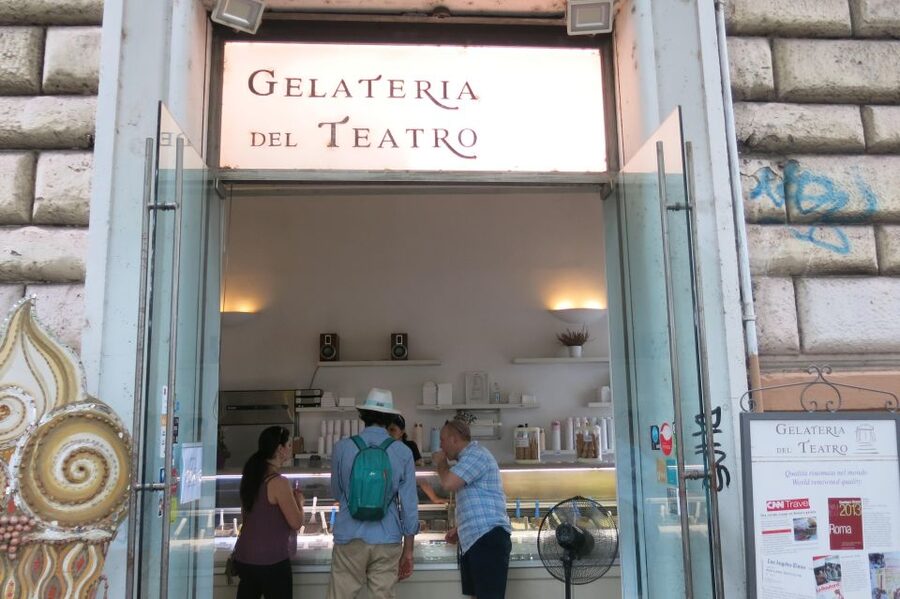
The route then moves into the Jewish Ghetto, where the food takes on a different character. The neighborhood is an important part of central Rome, and the tour uses it to introduce Roman Jewish cuisine.
This is one of the most worthwhile stops because it shows that Roman cooking is not one single tradition. Local food has been shaped by different communities, old trade links, and the practical needs of city life. The dishes you taste here have been passed down through generations, giving the food a strong sense of place.
The experience information does not list each Roman Jewish dish, so you should not book expecting a specific recipe. Instead, think of this as a chance to sample the style of cooking and hear how it fits into Rome’s food story.
I would pay close attention to the guide’s explanation here. A food walk is at its best when you understand why a dish belongs in a neighborhood, not just whether you like the flavor. Urs was praised for combining food with stories about Rome’s past and ordinary daily life, which is exactly the kind of context that can make this stop more rewarding.
The Ghetto portion is also a good reason to choose a walking tour rather than a food hall experience. You are eating in the setting where the tradition developed, then continuing on foot through the surrounding streets.
More Street Food Walking Tours in Rome
- Rome: Trastevere and Jewish Ghetto Street Food Walking Tour
★ 4.8 · 142 reviews - Rome: Trastevere Food Walking Tour with Beer and Wine
★ 4.9 · 71 reviews - Eat & Walk : Street Food in the Center & Trastevere
★ 4.9 · 6 reviews - Napoli street food walking tour
★ 4.5 · 3 reviews
Supplì and the Sicilian thread in Roman eating
One of the more unusual details of this tour is its attention to supplì. The description presents it as rice in a ball, a simple phrase that tells you what to expect better than a fancy menu name would.
Supplì is a handheld rice snack, and the tour connects it with Sicilian influence on Roman tastes. It is a useful reminder that food traditions do not stop at city borders. Rome has absorbed ideas from elsewhere and made them part of its own street-food culture.
The contrast with the bakery is helpful. Bread and pastries show one side of Roman eating, while supplì gives you something savory, compact, and easy to eat while walking. The rice brings the feel of risotto, but the shape turns it into a snack.
If you are building a food vocabulary, this is a stop worth remembering. Supplì is the kind of item you may spot again during your stay, and knowing what it is lets you order with more confidence.
As with the other tastings, the exact preparation is not specified. Do not assume the filling, size, or recipe will match every supplì you find elsewhere in Rome. The value here is the introduction and the chance to place the snack within the city’s wider food culture.
Antipasti, meat, and cheese for a broader taste
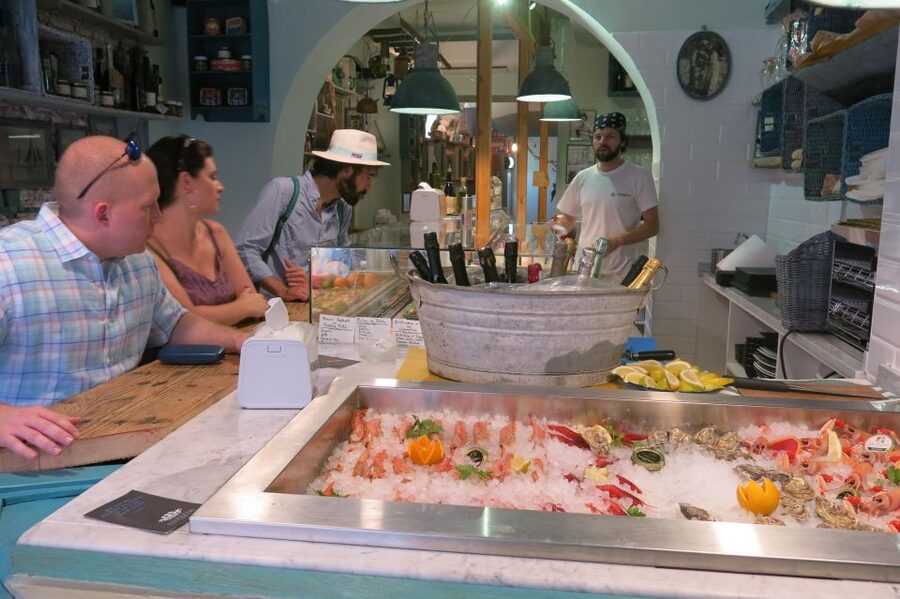
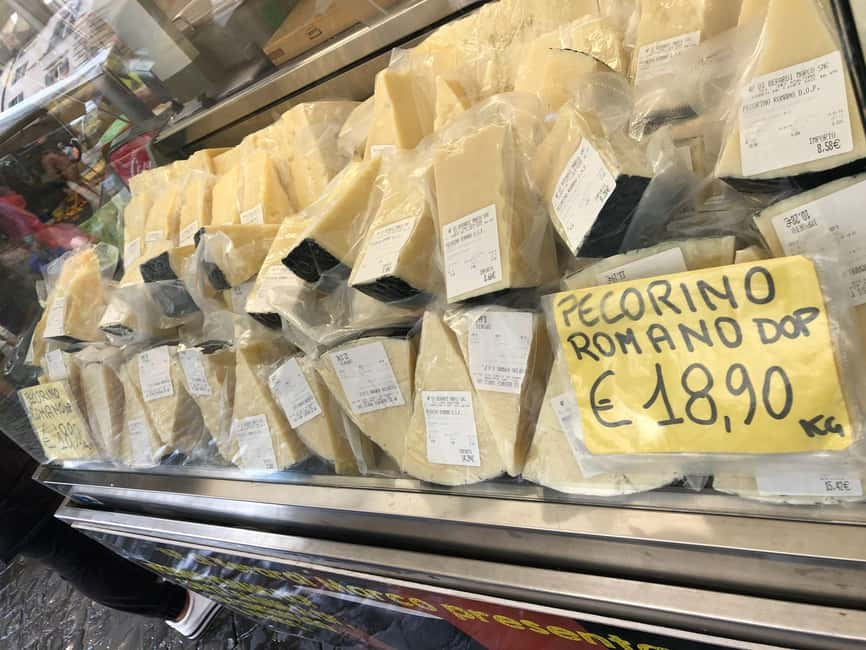
The walk also includes the familiar Italian trio of antipasti, cured meats, and cheeses. This part rounds out the experience after the more distinctive Jewish and Sicilian references.
A platter of small tastes works well on a private tour because you can compare textures and flavors without committing to a full meal. You may encounter salty cured meat, firm or soft cheese, and small antipasti that show how Italians begin a meal.
The attraction is variety. A bakery stop can be sweet or starchy, while a platter brings savory flavors and a more leisurely pause. It also gives the guide room to talk about regional ingredients and the difference between an everyday snack and a formal meal.
The description does not say which meats or cheeses appear, so treat the platter as a rotating selection rather than a fixed menu. If you have dietary restrictions, check ahead. A private group makes discussion easier, but it does not guarantee that every item can be changed.
This is also where the tour’s value depends on portion sizes. You will taste many categories of food, but the experience is designed as a sampling walk, not a guaranteed feast. If you are very hungry, have breakfast first or plan another meal afterward.
Chocolate, gelato, and coffee finish the route
The sweet portion begins at a highly awarded patisserie known for homemade chocolates. This adds a little polish to the route after the market, bakery, neighborhood food, and savory snacks.
Chocolate can be a good final tasting because it slows the pace. You can focus on texture and flavor rather than simply grabbing another bite. The experience promises velvety textures and strong flavors, but it does not name the individual chocolates or explain how many you will receive.
Then comes authentic gelato. You choose from a range of flavors, making this the most personal stop of the day. If you are unsure what to pick, ask the guide for a recommendation based on your tastes.
Gelato is not just ice cream with an Italian label, and the guide can help you understand what makes the stop local and worthwhile. Still, the information supplied does not give a specific gelateria or promise a particular flavor list, so keep expectations flexible.
Coffee closes the food walk. A traditional Italian coffee is a fitting end because it reflects a daily ritual rather than a special-occasion dessert. You get the chance to finish with aroma and bitterness after several sweet tastes.
This final sequence may be the most satisfying part for people who enjoy gradual meals. You move from market ingredients to baked food, savory bites, chocolate, gelato, and coffee. It is a neat outline of how a short Roman food experience can cover many tastes without one large plate.
The optional morning fish-market angle
Early morning tours may include the freshest fish market in the city center. This is not presented as a guaranteed stop at every departure, so ask about timing if seafood interests you.
A morning market gives the walk a different mood from the later food stops. You can see the day’s catch and speak with fishmongers who take pride in their products. For someone interested in how Rome shops for food, this may be more useful than another prepared tasting.
The tradeoff is clear: you need an early start, and the rest of the route may feel different depending on what is open. The activity information specifically ties this market option to morning tours, so do not assume an afternoon booking includes it.
Timing, walking, and access
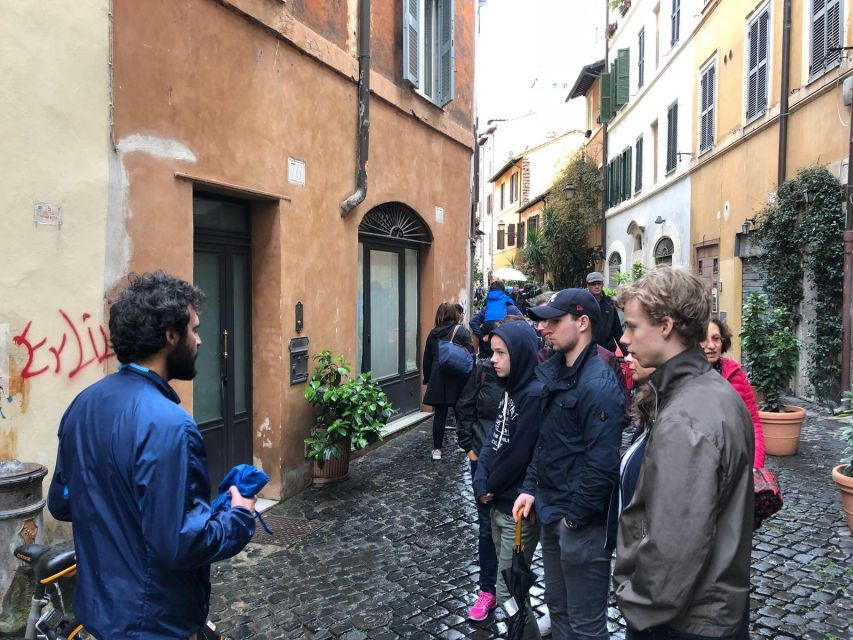
The stated duration is 2.5 hours, with starting times based on availability. The broader description also refers to a three-hour private tour, creating a small timing discrepancy. I would plan around 2.5 hours and confirm the exact duration before booking, especially if you have a museum reservation or train to catch.
The route begins at Campo de’ Fiori and ends at Largo di Torre Argentina. No transport is listed, so you should expect the experience to take place on foot between stops. Wear comfortable shoes and leave room in your schedule for pauses at markets and shops.
The activity is wheelchair accessible. That is useful information, but central Rome streets can still vary in surface and crowd levels. If access needs are important for your group, discuss the route with the provider before the day of the tour so you know how each stop will work.
Free cancellation up to 24 hours before the activity and reserve-now, pay-later booking add flexibility. No price is provided here, so I cannot judge the exact cost. To assess value, compare the private guide, food samples, language choice, and time saved against the price of arranging several tastings yourself.
A private tour is usually most worthwhile for a couple, family, or small group that wants conversation and control over the pace. If you are traveling alone or watching every euro, a shared food tour may offer better value, but this private format gives you more room to ask questions and adapt the experience.
Who should book this Roman food walk?
I would recommend this walk to first-time Rome visitors who want an introduction to food and central neighborhoods at the same time. It also suits returning visitors who have seen the major monuments and now want a more everyday view of the city.
Families may appreciate the short duration and the guide’s ability to include children. The German-language experience with a child received special praise for making the younger participant part of the tour, rather than treating her as extra luggage.
Food-curious visitors will get the most from the range of stops. You taste market products, bread, pastries, Roman Jewish specialties, supplì, cured meat, cheese, chocolate, gelato, and coffee. That is a wide menu for one short walk.
I would be more cautious if you need a full meal, a fixed menu, or detailed information about every dish before booking. The activity promises variety, but it does not provide a complete tasting list or portion sizes.
The experience has two five-star ratings, including one from August 2024 and another from March 2024. Both praised the guide’s personal approach, food, and added information about Rome. That is encouraging, though the small number of ratings means you should treat it as a useful signal rather than final proof for every departure.
Should you book it?
Book this Roman Food Walk if you want a private, compact introduction to central Rome through several different food traditions. The strongest reasons are the route through Campo de’ Fiori and the Jewish Ghetto, the mix of savory and sweet stops, the multilingual guides, and the chance to ask questions without a large group around you.
I would choose it early in your stay. You can return to the bakery, market, patisserie, or other food shops that catch your attention, and guide Urs’s practical advice about Rome may help shape the rest of your visit.
Skip it if your priority is a long sit-down meal, a cooking lesson, or a strictly fixed menu. Also confirm the actual duration, morning fish-market option, dietary possibilities, and price before paying. For the right visitor, this is a tasty way to get oriented, with enough local detail to turn a short walk into several useful Rome discoveries.
FAQ
Where does the Roman Food Walk start?
The walk starts at Campo de’ Fiori in Rome.
Where does the tour finish?
It finishes at Largo di Torre Argentina.
How long does the experience last?
The activity duration is stated as 2.5 hours. The tour description also refers to three hours, so confirm the exact timing when booking.
Which languages are available?
Guides are available in English, French, German, Italian, and Spanish.
Is this a private tour?
Yes. The activity is offered for a private group.
Is the route wheelchair accessible?
Yes, the activity is listed as wheelchair accessible.
Can I cancel the booking for a refund?
You can cancel up to 24 hours in advance for a full refund. You can also reserve now and pay later.
Just added around Rome
- Testaccio Experience: Street Food, Market and Traditions★ 5.0 · 4 reviews
- Taste of Rome: Food Walking Tour & Sightseeing with expert★ 5.0 · 2 reviews
- Rome: Vegan Street Food Tour with Local Guide★ 5.0 · 37 reviews
- Eat & Walk : Street Food in the Center & Trastevere★ 4.9 · 6 reviews
- Rome: Trastevere & Tiber Island Street Food Tour at Sunset★ 4.9 · 71 reviews
- Rome: Vatican Street Food and Wine Tour with Farmers Market★ 5.0 · 37 reviews
- Rome: Trastevere Quarter Street Food Tour with Sightseeing★ 4.9 · 21 reviews
- Rome: Trastevere Food Walking Tour with Beer and Wine★ 4.9 · 71 reviews
Rome Street Food Tours, compared.
Rome: Guided Food Walking Tour with Wine in Trastevere
Read our review →
Rome: Trastevere & Campo de Fiori Street Food Walking Tour
Read our review →
Rome: Trastevere Street Food Walking Tour with Local Expert
Read our review →
Roman Food Tour with Visit to the Trionfale Food Market
Read our review →
Trevi Fountain, Pantheon, and Campo Dei Fiori Market Food and Wine Tour
Read our review →
Trastevere Like a Local Food Tour with 7+ Food Tastings & Wines
Read our review →Browse the lists this tour appears in