
REVIEW · SAN FRANCISCO STREET FOOD TOURS
San Francisco Chinatown Walking Tour
San Francisco’s Chinatown is easy to admire from the outside, but this walk takes you into the places that give the neighborhood its character: a dried-goods shop filled with ginseng and sea cucumber, food markets on Stockton Street, a secluded temple, and the small factory where fortune cookies are made. Linda Lee, who was born in Chinatown, often leads the tour with humor and personal stories.
I like the focus on ordinary neighborhood life, not just ornate gates and photo stops. I also like the small group size, capped at 15, which gives you room to ask questions and hear the guide. The main drawback is price: at $59 per person for about two hours, this is not a cheap stroll, especially since the stops themselves do not charge admission.
Key points to know before you book
- See the working side of Chinatown: Stockton Street’s food markets reveal the neighborhood’s daily shopping life, with seafood, unusual produce, and specialty ingredients.
- Expect more than standard sightseeing: The route includes an herbal pharmacy, dried foods, Waverly Place, spirit-related stationery, and pagoda-style architecture.
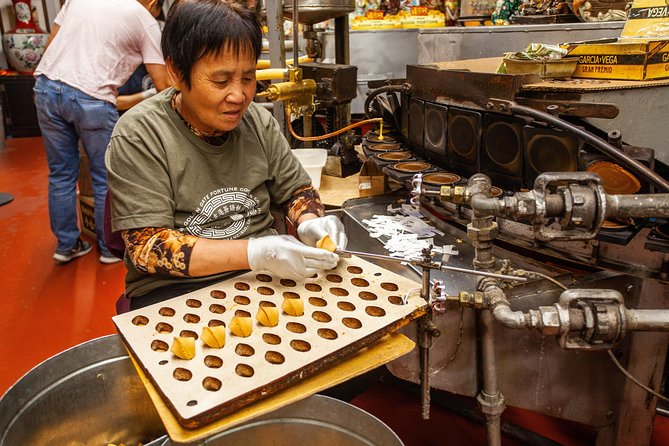
- Taste a fresh fortune cookie: At Golden Gate Fortune Cookies Co., you can watch the cookies being made and sample one.
- Hear personal Chinatown stories: Linda Lee was born and raised in the neighborhood and adapts her talk to the group.
- Plan for a gentle pace: The walk covers several short stops in two hours, rather than racing through a long list of sights.
- End near Grant Avenue: You finish close to the starting point, making it easy to continue with lunch or shopping.
Why this Chinatown walk feels different
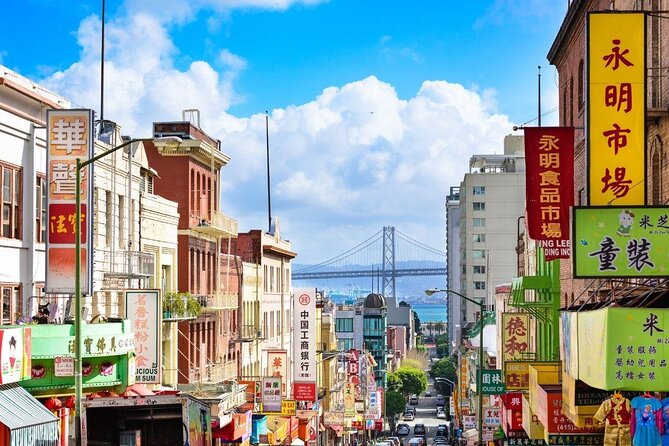
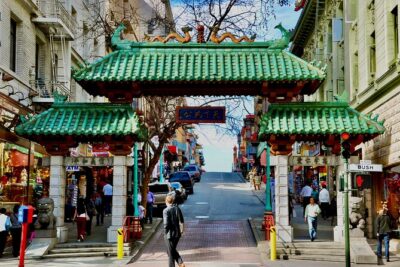
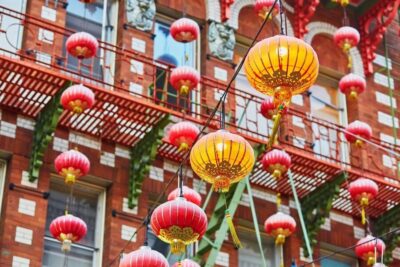
Many first visits to Chinatown stay on Grant Avenue, where red lanterns, souvenir shops, and decorated facades make an obvious first impression. That area is worth seeing, but it can also feel like a stage set if you do not understand what lies behind it.
This tour adds the context. You hear how Chinese immigrants shaped San Francisco, how customs were preserved, and how the neighborhood works today. The guide points out details you could easily pass without noticing, from architectural features to shops selling goods tied to Chinese medicine, religion, family life, and festivals.
Linda Lee is the guide most closely associated with this experience. Her style is warm, funny, and conversational. She learns names, adjusts her examples to the group, and can keep children and young adults involved. Her background matters here because she grew up in Chinatown and has led tours for decades. That gives the walk a personal quality rather than the feel of a memorized script.
The tone is educational without being stiff. You may hear about immigration laws, local customs, food, language, private clubs, and the pressures faced by Chinese Americans in San Francisco. The balance between history and present-day life is one of the tour’s strongest features.
More Chinatown Food Tours in the USA
- SoHo, Little Italy, and Chinatown Walking Tour in New York
★ 5.0 · 3,153 reviews - Chicago’s Chinatown Food and Walking Tour
★ 5.0 · 600 reviews - New York City: Food Walking Tour of Chinatown & Little Italy
★ 4.8 · 195 reviews
Starting at Old Saint Mary’s Cathedral
Meet at Old Saint Mary’s Cathedral at 10 a.m., at 660 California Street. This places you at the southern edge of Chinatown, near the transition between the Financial District and the neighborhood.
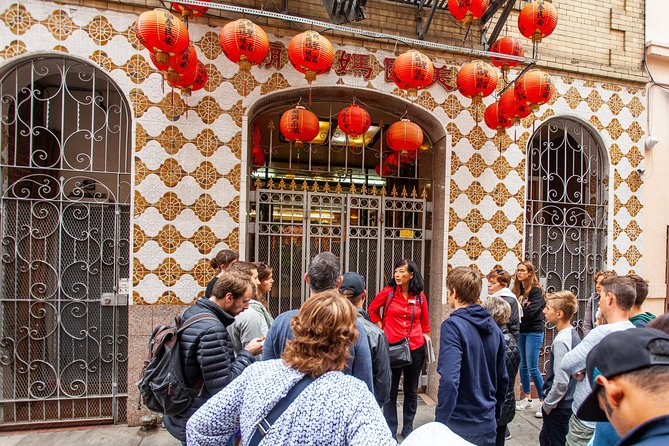
The opening segment sets the stage. Your guide explains how Chinatown developed and how Chinese traditions survived despite discrimination, exclusion, and repeated pressure to assimilate. You also begin noticing the visual language of the district: paper lanterns, painted balconies, Chinese signs, and buildings designed with pagoda-like details.
The first stop is brief, about 10 minutes, so do not expect a long cathedral visit. The church serves mainly as a clear meeting point and a useful marker for Chinatown’s changing edges.
Come ready to walk on city sidewalks and stand for parts of the tour. The route operates in rain or shine, so comfortable shoes and weather-appropriate clothing matter more than dressing up.
Portsmouth Square, Chinatown’s outdoor living room
Portsmouth Square is one of the most useful stops for understanding Chinatown as a community. It is often called Chinatown’s outdoor living room, and the description fits. The square has long served as a place for conversation, recreation, and daily public life.
Your guide connects the square to major moments in San Francisco’s past. This is where the city’s first American flag was raised, where its first public school operated, and where the first cable car line began. Those details help place Chinatown inside the wider story of San Francisco rather than treating it as an isolated ethnic district.
The stop lasts about 15 minutes. It is a good point to listen for the big themes of the walk: migration, adaptation, public space, and the way a neighborhood carries memory through its streets.
The square itself is not a museum attraction with an admission desk. Its value comes from the setting and the explanation. If you have already read a lot about San Francisco’s early history, this part may feel familiar. For most people, though, it gives the rest of the walk a solid frame.
Stockton Street markets show everyday Chinatown
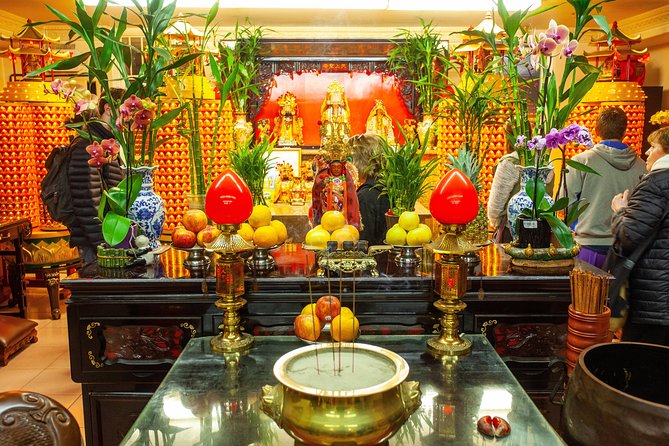
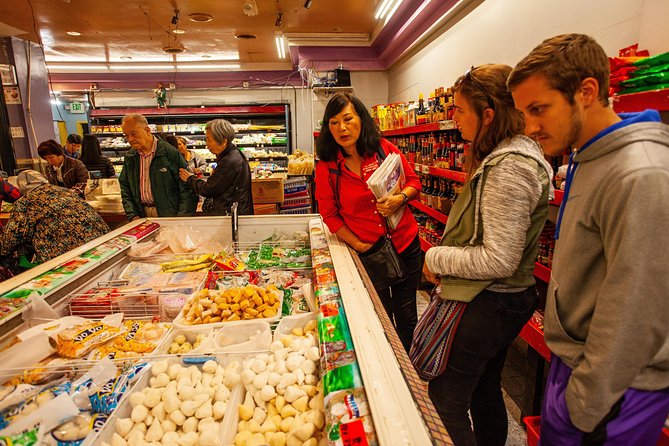
Stockton Street is where the tour becomes especially practical and sensory. The street is lined with markets selling seafood, produce, dried goods, and ingredients that may be unfamiliar if your grocery shopping happens in a standard American supermarket.
You may see unusual vegetables, live or fresh seafood, dried foods, and specialty products used in Chinese cooking. The point is not simply to photograph strange ingredients. Your guide explains how these markets serve local residents and why they remain important to Chinatown’s daily life.
This is one of my favorite parts of the route because it shows the neighborhood as a place where people shop, cook, work, and meet. Grant Avenue may offer the most recognizable Chinatown images, but Stockton Street gives you a better look at the community’s routine.
The market stop is about 15 minutes, so it is more of an introduction than a full food tour. You do not receive a meal, and food purchases are not included. Still, the guide’s suggestions can help you return later for lunch or further shopping.
More Street Food Walking Tours in the USA
- New Orleans Food Walking Tour of the French Quarter with Small-Group Option
★ 5.0 · 6,118 reviews - Historic Ybor City Food Walking Tour
★ 5.0 · 2,210 reviews - Miami: Little Havana Food Walking Tour with Tastings
★ 4.9 · 1,181 reviews - True Crime NYC: Mafia Walk w/Ret. NYPD Detective and Local Food
★ 5.0 · 848 reviews
Fortune cookies at Golden Gate Fortune Cookies Co.
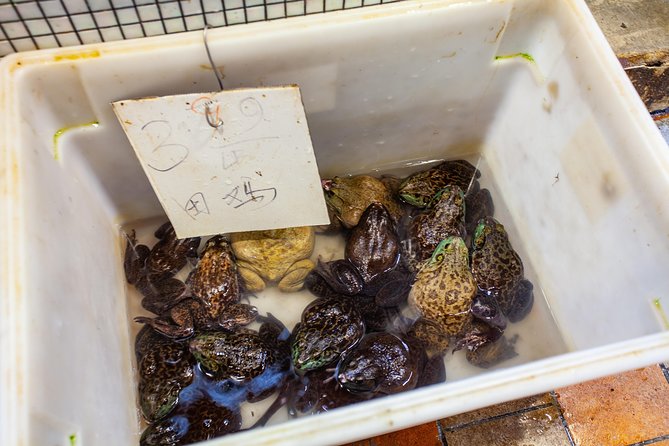
The Golden Gate Fortune Cookies Co. is a small, memorable stop. You watch the cookies being made and sample one while learning a little about the treat’s place in American Chinese dining.
The factory visit adds a welcome change of pace. After walking through streets and markets, you get to see a finished product being shaped in front of you. The cookies are often called wise crackers, and the stop has a light, playful feel that works well for families.
Do not expect a large industrial plant or a long demonstration. The stop lasts about 10 minutes. It is compact, and the factory may feel crowded because the space is small. Its appeal lies in the direct look at production and the chance to taste a cookie at its source.
A useful tip is to look at the weathered newspaper clipping inside the entrance. It may include a quote connected with Linda Lee, adding an unexpected personal detail to the visit.
The herbal pharmacy and dried-goods shop
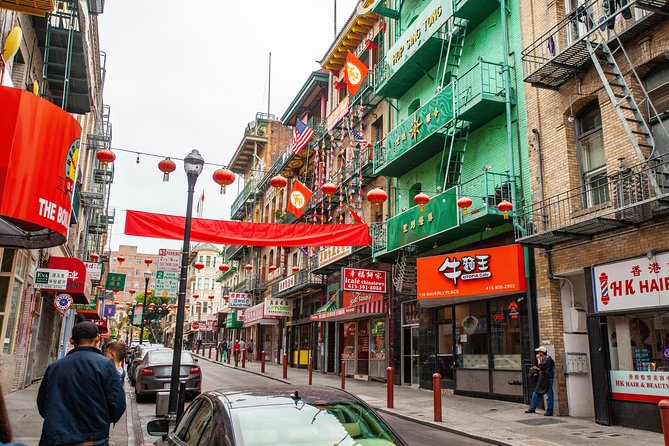
One of the more unusual stops takes you into a shop selling traditional herbal and dried products. Here you may see ginseng root, bird’s nests, pearl pills, gecko lizards, fish bladders, sea cucumbers, abalone, and other items unfamiliar to many Western shoppers.
Your guide explains the traditional uses associated with these products. The value of this stop is not that you need to buy anything. It is a chance to see how food, medicine, family care, and belief can overlap in Chinese traditions.
This section can be eye-opening, though it may not appeal to everyone. Some products look startling, and explanations about traditional remedies are not a substitute for modern medical advice. Listen with curiosity, and treat the visit as a cultural introduction rather than a prescription.
The stop lasts roughly 10 minutes. That is enough time to see the shelves and ask questions, but not enough for a detailed lesson in Chinese medicine.
Waverly Place and the painted balconies
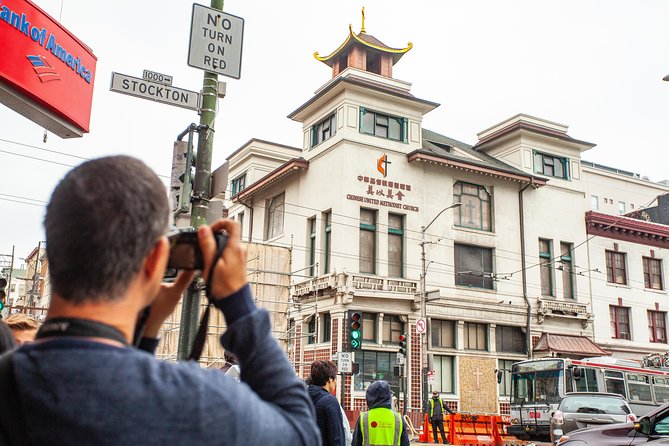
Waverly Place is a two-block alley famous for its painted balconies and decorative buildings. The architecture is attractive, but the stories connected with the street make it more than a photo stop.
Your guide discusses private clubs and secret institutions that once operated in the area. You may also visit a secluded Buddhist temple if timing allows. Since the temple visit is dependent on time, treat it as a possibility rather than a guaranteed part of every walk.
This is a good example of how the tour moves beyond the main commercial streets. You see a quieter, more intimate side of Chinatown and hear about organizations that are not obvious from the sidewalk.
The stop is listed at about 10 minutes, so the visit remains brief. If you want a detailed architectural tour or a long temple visit, this will not replace one. It does, however, show you where to look when you return on your own.
Grant Avenue, shops, language, and architecture
Several shorter stops on Grant Avenue round out the experience. One takes you into a shop whose purpose is not immediately obvious. It may look like a stationery store or a party-goods shop, but the guide explains what it sells and why the products matter.
Another stop focuses on the East West Bank building and its pagoda-style design. The discussion then turns to the Chinese language, both spoken and written, and to what occupied the site before the bank.
These stops reward close attention. A building facade or an ordinary shop can reveal a great deal when someone explains its background. They also keep the route from becoming a simple parade of famous addresses.
Because each stop lasts around 10 minutes, the information comes in short pieces. Some people will appreciate the variety. If you prefer long, detailed talks at each location, the pace may feel too spread out.
What the two-hour pace is really like
The tour lasts approximately two hours and covers a number of stops, but it is not a strenuous hike. The walk is broken into short sections, with frequent pauses for stories and explanations.
Most people can participate, and service animals are allowed. The tour is near public transportation, but hotel pickup and drop-off are not included. You need to make your own way to Old Saint Mary’s Cathedral and arrange your own plans after the walk.
The end point is 800 Clay Street, near Grant Avenue and about two blocks from Old Saint Mary’s Cathedral. This is convenient because you finish close to where you began, with Chinatown still in front of you.
The pace can vary with the group. Linda Lee has adjusted the walk for families, children, nursing needs, and a service animal. That flexibility is considerate, but it also means the experience may move more slowly than a tightly timed city tour. One person could find the walk leisurely, while another might wish for more detail or a longer route.
Is $59 a fair price?
At $59, this is a premium price for a two-hour walking tour. There are no major entrance fees included, and the fortune cookie sample is a small taste rather than a meal. You are paying mainly for the guide’s interpretation, local access, and the structure of the route.
That can be worthwhile if you want to understand what you are seeing. A self-guided walk can take you past the same streets, but it will not explain the private clubs on Waverly Place, the meaning of the dried goods, the history connected with Portsmouth Square, or the background of the shops.
The maximum group size of 15 improves the value. A small group makes it easier to hear, ask questions, and receive recommendations for food and shopping. The strongest reason to book is the guide, especially if Linda Lee leads your departure.
The price is harder to justify if you want a fast orientation, a food-heavy outing, or a long list of paid attractions. It is also less appealing if you already know Chinatown well and are mainly looking for independent browsing.
Who will enjoy this walk most?
I would recommend it to first-time visitors who want more than the standard Grant Avenue photos. It is also a good choice for families because the fortune cookie factory, unusual foods, and humorous stories give younger people something concrete to watch and discuss.
The tour suits curious repeat visitors, too. Several short stops focus on details you could miss during an independent walk, and the guide can tailor the talk to the group’s interests.
It may be less suitable for anyone seeking a fast-paced tour or a dedicated culinary experience. You see food markets and sample a fortune cookie, but you do not receive a full meal or a series of tastings.
Book at least a little ahead if your schedule is fixed. The experience is often reserved about 26 days in advance, and a minimum of two people is needed for confirmation. If you are alone, an alternate date may be offered so you can join another group.
Free cancellation is available until 24 hours before the start time. Cancellations or changes made inside that window are not refunded or accepted. Confirmation arrives within 48 hours, subject to availability.
Should you book the San Francisco Chinatown Walking Tour?
Book it if you want local stories, working markets, and cultural context packed into a manageable morning. The combination of Stockton Street, the herbal shop, Waverly Place, the fortune cookie factory, and Linda Lee’s personal connection gives the walk more substance than a quick photo tour.
Skip it if $59 feels too high for a two-hour stroll, or if you want a full meal, extensive shopping time, or a fast survey of San Francisco landmarks. For most first-time visitors who value an engaging guide and a closer look at everyday Chinatown, this is a worthwhile introduction.
FAQ
How long does the San Francisco Chinatown Walking Tour last?
The tour lasts approximately two hours.
Where does the tour start?
The meeting point is Old Saint Mary’s Cathedral at 660 California Street, San Francisco.
What time does the tour begin?
The scheduled start time is 10 a.m.
Where does the tour end?
The walk ends at 800 Clay Street, near Grant Avenue and about two blocks from Old Saint Mary’s Cathedral.
Is the fortune cookie factory included?
Yes. The route includes the Golden Gate Fortune Cookies Co., where you can watch the cookies being made and sample one.
Is transportation or hotel pickup included?
No. Hotel pickup and drop-off are not included. The meeting point is near public transportation.
Can I cancel for a full refund?
Yes, if you cancel at least 24 hours before the experience’s start time. Cancellations made less than 24 hours in advance are not refunded.
Just added around the USA
- Japanese Street Food Class in Beech Grove★ 5.0 · 9 reviews
- 6 Hour Local Food Plate Jeep Tour★ 5.0 · 4 reviews
- Denver Downtown 16th Street Food Tour★ 5.0 · 29 reviews
- Detroit Food Walking Tour★ 4.0 · 3 reviews
- 5-course Walking Food Tour in Dallas History + Cocktail opt.★ 5.0 · 75 reviews
- Dallas’ Best Tacos and Margaritas Coach Tour★ 4.5 · 97 reviews
- West Side Market Food Tour★ 4.0 · 31 reviews
- River North Food Walking Tour★ 4.5 · 88 reviews
San Francisco Street Food Tours, compared.
SF’s Chinatown: Tea & Dim Sum Food Tour – Includes full meal, 3hr
Read our review →
San Francisco: Food Walking Tour of Chinatown & North Beach
Read our review →
San Francisco North Beach & Chinatown Food Tour with 5 Tastings
Read our review →
San Francisco: Chinatown Food and History Walking Tour
Read our review →
San Francisco: Alcatraz Island & Chinatown Walking Tour
Read our review →
San Francisco: North Beach & Chinatown Food History Tour
Read our review →Browse the lists this tour appears in