REVIEW · BANGKOK STREET FOOD TOURS
Small-Group: Unseen Bangkok’s Chinatown Walking Tour
Bangkok’s Chinatown is much more than Yaowarat Road’s neon signs and food stalls. This walk takes you into Sampeng Market’s cramped lanes, old Chinese shrines, a 150-year-old fresh market, and parts of the neighborhood most visitors would pass without noticing. You also stop for Chinese-style snacks, local coffee, and a Thai-Chinese lunch.
I like the personal scale, especially when guides such as Bobby, Aom, Mai, Eng, or Pat adjust the pace and add stories about daily life. I also like the food stops, which turn the neighborhood into something you can taste, not just photograph. The main drawback is that the tour is more historical and local-life focused than a dedicated shopping trip, so bargain hunters may want more time in the market.
Key points to know before booking
- Sampeng Market is the heart of the walk: Expect narrow lanes, wholesale shops, crowds, and plenty of visual clutter.
- The route goes beyond the usual Chinatown sights: You visit old temples, a Chinese shrine, a former red-light district, and an old Chinese house.
- Food is part of the experience: Small snacks, a coffee stop, and lunch at a long-running restaurant are included.
- The guide makes a big difference: Strong guides have added photos, adjusted the pace, and explained Chinese-Thai community life in clear English.
- Plan for three to four hours on foot: Comfortable shoes, water, and clothing suited to heat or rain will help.
- This is not mainly a shopping tour: The market matters, but the aim is to understand the neighborhood rather than fill a bag with bargains.
A quieter way into Bangkok’s Chinatown
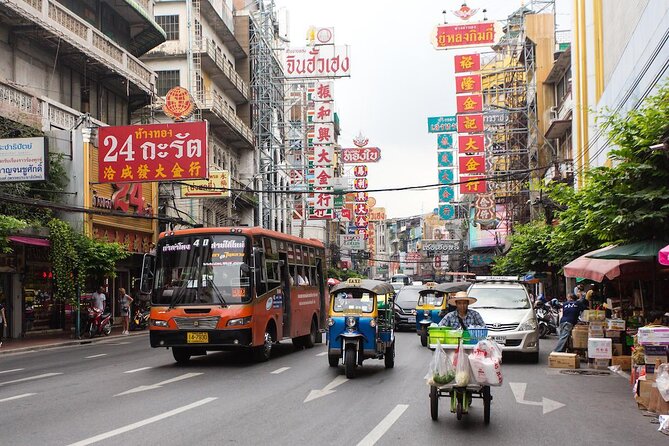
I like this tour because it treats Chinatown as a lived-in neighborhood rather than a backdrop for street food photographs. You walk through working market lanes, see old buildings, pause at religious sites, and learn how Chinese culture became part of Bangkok’s daily life.
The route covers roughly three hours, though the experience may run longer if the guide spends extra time with your group. One visitor had Bobby continue beyond the scheduled end, while another had a private-feeling outing with two guides. That sort of flexibility depends on the day and guide, but the small format gives it a real chance to happen.
The experience is sold for $52.14 per person. That is not the cheapest way to walk around Chinatown, since you could explore Yaowarat and Sampeng Market alone. Still, the price includes a local guide, food and drink samples, local transportation used during the tour, and lunch. You are paying for context and navigation as much as for admission.
More Chinatown Food Tours in Bangkok
- Bangkok Authentic Tasting Thai-Chinatown Walking Food Tour
★ 4.9 · 852 reviews - Bangkok Tuk-Tuk Tour by Night with Chinatown Street Food Meal
★ 5.0 · 635 reviews - Bangkok Tuk-Tuk by Night with Chinatown Street Food Meal
★ 4.6 · 263 reviews
Starting at Hua Lamphong at 10am
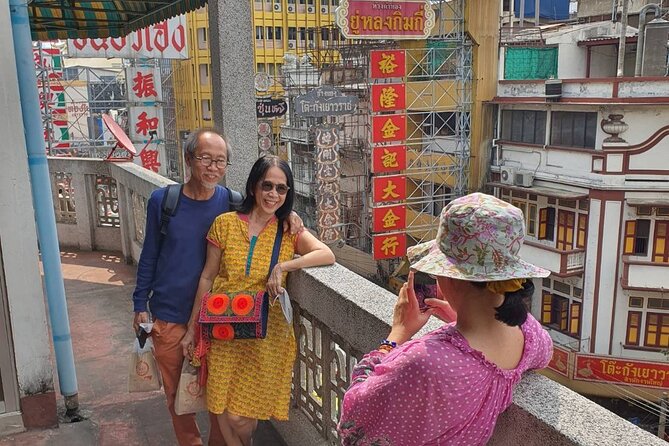
Your meeting point is the Better Coffee Building, 320 Tang Hua Pak on Rama IV Road, near MRT Hua Lamphong. The guide meets you at street level by Exit 1 at 10am.
Arrive early. Chinatown’s lanes can be confusing, and a calm start is better than rushing from the train station. The tour does not include hotel pickup or drop-off, so you need to make your own way to Hua Lamphong.
The starting point makes sense for the route. Hua Lamphong sits near the older parts of Bangkok, and you begin close to neighborhoods where Chinese religious buildings, markets, workshops, and older homes still sit beside newer businesses. Local transportation during the walk is included if the guide needs it, but the main activity is on foot.
The group is intended to be small, with the main description stating no more than eight people. The additional tour information gives a maximum of ten, so the exact number can vary. Either way, this is designed to feel more personal than a large walking group.
Old temples, a school, and the stories behind the buildings
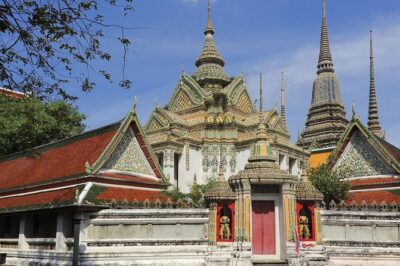
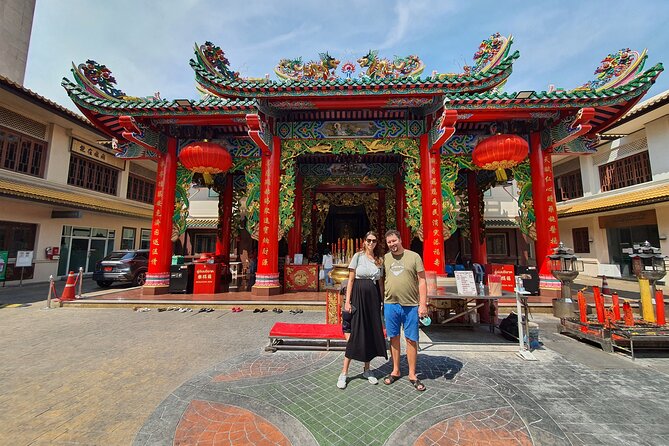
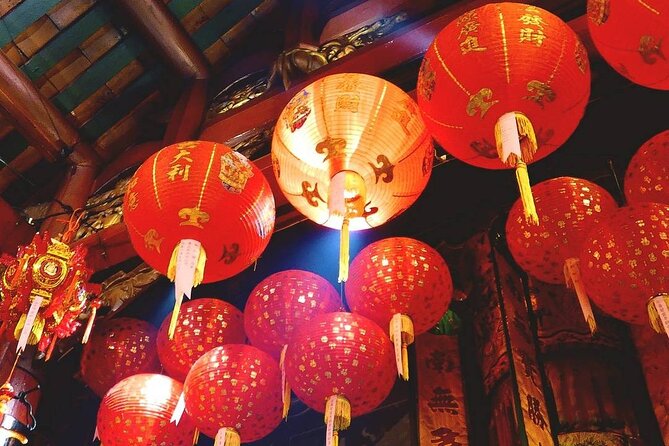
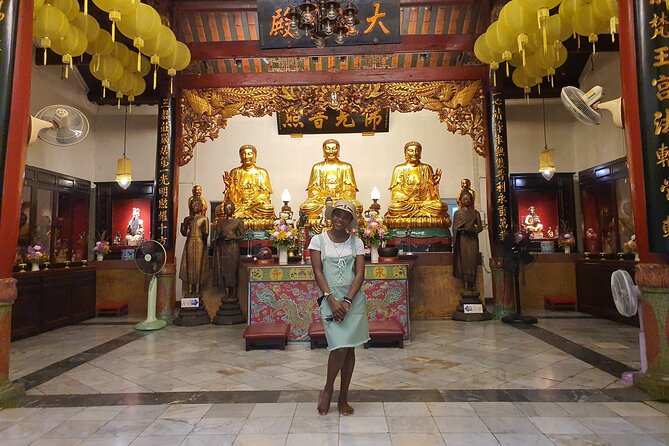
Early in the walk, you visit ancient Chinese temples and shrines. These stops give the tour a useful pause from the traffic, market noise, and tight lanes. They also help explain why the Chinese community remains such a strong part of Chinatown’s identity.
The itinerary includes a Chinese shrine and the oldest Chinese house in Bangkok. You also walk toward a street-art area and take part in small encounters with the local Chinese community. The point is not to rush through a list of monuments. It is to connect religious practice, old homes, community life, and the changing face of the district.
A former hidden school is also part of the route, along with old buildings and stories about the area. Details about the school are not specified in advance, so expect the guide to provide the explanation on site rather than a formal museum-style visit.
A local coffee stop breaks up the walking. Guides have served Thai coffee or iced coffee, and this is one of the practical pleasures of the morning. It gives you a chance to sit, cool down, ask questions, and watch local life instead of marching from one stop to the next.
The temple commentary may vary. One person felt the guide could have offered more detail at the major temples, while other guides were praised for explaining Thailand, Chinatown, and Chinese-Thai culture. If religious architecture is your main interest, ask questions as you go. You may get more from the visit by being specific.
Street art and Chinatown’s older corners
The walk toward the street-art area shows a side of Chinatown that is easy to miss from the main road. You move through smaller streets where old structures and newer creative work share the same space.
This part of the tour is useful for understanding change. Chinatown is not frozen in the past. Some buildings carry long family stories, while other corners show younger artists and newer businesses. Your guide can help connect those layers, especially if you want more than a quick photo stop.
The old Chinese house adds another human scale to the route. Instead of thinking only about markets and temples, you see how families and communities occupied the district. The walk is strongest when your guide explains what you are looking at and why it mattered.
More Chinatown Food Tours in Thailand
- Bangkok: Chinatown Food Tour with Michelin Food Stalls
★ 4.8 · 226 reviews - Night Street Food Tour of Bangkok’s Chinatown
★ 5.0 · 173 reviews - Local Life, Culture & Food Walking Tour at Chinatown
★ 4.7 · 119 reviews - Taste of Bangkok: A 3-Hour Chinatown Food Feast
★ 4.8 · 59 reviews
The former red-light district
One stop lasts about 15 minutes in the former red-light district of Chinatown. This is a short visit, but it adds an important piece of the neighborhood’s past.
Do not expect a dramatic attraction or a preserved entertainment complex. The value is in hearing how the area once functioned and how its role changed. It is a reminder that Chinatown has always been a place of work, trade, religion, family life, and nightlife, not simply a tourist food quarter.
This stop also shows why a guide is helpful. On your own, you might walk through without knowing the significance of the street. The explanation turns an ordinary-looking section of town into part of Bangkok’s social story.
The 150-year-old fresh market
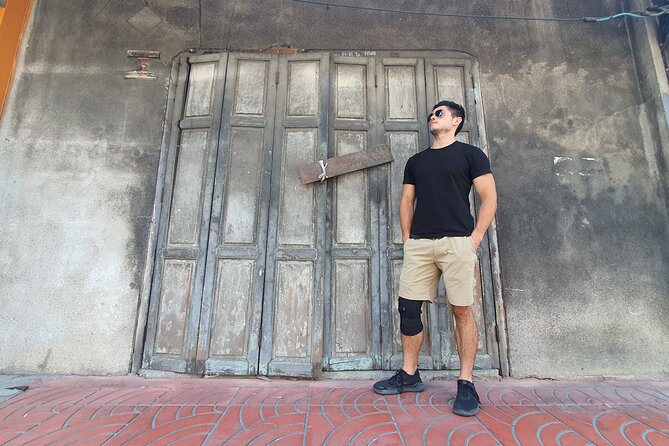
The route then reaches a fresh market described as 150 years old. You spend about ten minutes here, though the pace may vary according to the group and market conditions.
Markets are often the best places to understand a neighborhood. You see the buying and selling that supports local kitchens and restaurants, not just the prepared dishes served to visitors. The smells, tight aisles, and busy movement are part of the experience, but the market can also be hot and crowded.
This is not the place for a slow, quiet inspection of every stall. Stay close to the guide, watch your footing, and keep bags secure in narrow spaces. If you enjoy markets, you will probably wish for more time. If crowds wear you down, the short stop is a blessing.
Sampeng Market and the small-shop maze
Sampeng Market is one of the tour’s main attractions. You enter narrow alleys lined with wholesale shops and small stores, moving through the dense trading world behind the better-known Chinatown streets.
This is where the tour earns its unseen Bangkok label. The lanes are practical rather than polished, and the experience is about seeing how commerce works in the neighborhood. You may have a chance to shop for bargains and practice bargaining, but you should not treat this as a dedicated shopping excursion.
The market can be confusing without a guide. A local escort helps you keep moving, points out details you could miss, and prevents the route from becoming a frustrating search for the way out. The trade-off is that a group walk will never give you unlimited browsing time.
If you want souvenirs, decide before you arrive how much shopping matters to you. You can make purchases during the walk, then return later on your own if the tour leaves you wanting more. The tour’s main purpose is to show you the market’s character and place in Chinatown.
Snacks, Thai coffee, and lunch
Food is woven through the walk rather than saved for one large meal at the end. You receive samples from Chinese street vendors, with the exact items depending on the day and what is available.
That uncertainty is part of the charm, but it also means you should not expect a fixed tasting menu. The samples offer a quick introduction to flavors and habits in the neighborhood. Guides have also arranged local coffee, Thai iced tea, dim sum, noodle soup, and fried oysters on different outings, though not every item should be treated as guaranteed.
The final meal is a sit-down lunch of typical Thai-Chinese dishes at a restaurant that has operated for 30 years. Drinks are available for purchase, and alcohol is not included. The meal gives you time to talk with the guide and ask about what you saw.
Lunch is one of the strongest value points. You are not simply paying for directions through the alleys. You get a local meal and a chance to understand how Chinese and Thai food traditions meet in Bangkok.
Come with an open mind rather than a fixed expectation. If you have allergies, dietary restrictions, or strong dislikes, tell the guide at the start. The supplied information does not promise special menus, so you should not assume every food need can be accommodated.
Guides who shape the experience
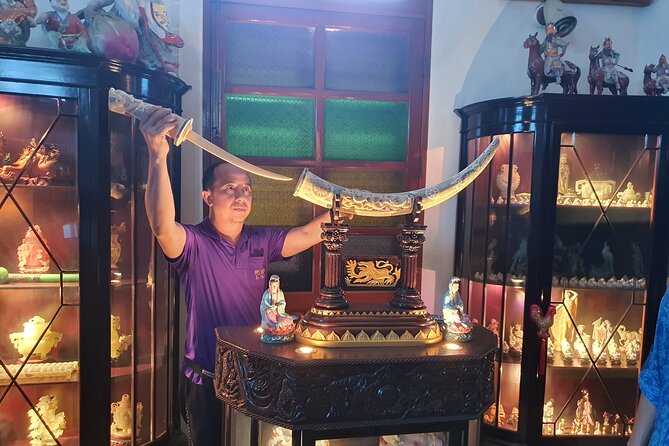
The guide is the key variable here. Bobby has been particularly good at explaining the area, taking photographs and videos, and staying longer with the group. Aom has been praised for a comfortable pace and broad explanations of Thailand, while Mai has been described as professional, warm, and passionate about the city’s heritage.
Eng has combined three hours of walking with regular breaks, coffee, temples, markets, and lunch. George has led a relaxed outing with local coffee, iced tea, noodle soup, and plenty of Chinatown background. Pat has taken the route into temples, markets, side streets, and food stops while explaining the Chinese community’s culture and past.
Those details tell you what to look for. A good guide does not merely point at a shrine. They explain how the place fits into the neighborhood, answer questions, and notice when the group needs a break.
The pace appears adjustable. One person had a private tour, another had two guides, and a small group can make it easier to linger or ask questions. Do not count on a private experience, but the format is better suited to conversation than a large coach tour.
Who should book this Chinatown walk
I would choose this tour if you want local context, small lanes, religious sites, market life, and food in one morning. It suits first-time visitors who want help finding less obvious corners, as well as repeat visitors who already know Yaowarat Road.
It is also a good fit if you like walking with frequent stops. The itinerary includes coffee, temples, markets, snacks, and lunch, so it is not three straight hours at full speed. Still, you need moderate physical fitness, comfortable walking shoes, and clothing suitable for Bangkok weather.
Rain does not automatically cancel the activity. It operates in all weather, so bring protection and dress accordingly. Heat, damp pavement, traffic, and crowded lanes are all possible parts of the morning.
I would hesitate to book it if your main goal is shopping. You may browse Sampeng Market and look for bargains, but the tour spends plenty of time on history, community life, old buildings, and temples.
The 96 percent recommendation rate and 4.8 rating from 54 ratings suggest a strong overall experience, but the single poor experience points to a real issue: the tour title and description can be read as a historical walk with a market visit, not as a market-shopping tour. Make sure that matches your expectations.
Practical details and final verdict
The experience lasts about three to four hours and returns to the meeting point. You receive booking confirmation at the time of booking, and free cancellation is available up to 24 hours before the start time. After that cutoff, the amount paid is not refunded.
The $52.14 price feels fair if you value a guide, food samples, local transportation, a substantial lunch, and access to places that are hard to interpret on your own. It feels less attractive if you plan to spend most of the morning shopping or already know Chinatown well.
I would book this walk for a first or second day in Bangkok, when a guide can help you understand the city’s Chinese-Thai roots and show you where to return later. I would skip it only if you want a fast highlights tour, a formal temple lecture, or several uninterrupted hours in the shops.
For the right person, this is a thoughtful way to see Chinatown: not just the bright main road, but the lanes, markets, shrines, coffee shops, old buildings, and meals that make the district feel like a neighborhood.
FAQ
Where does the Chinatown walking tour begin?
It begins at the Better Coffee Building, 320 Tang Hua Pak on Rama IV Road, near MRT Hua Lamphong. Meet the guide at street level by Exit 1 at 10am.
How long does the tour last?
The tour is described as a three-hour walk, with an overall duration of approximately three to four hours.
Does the tour include hotel pickup?
No. Hotel pickup and drop-off are not included. You need to reach the Hua Lamphong meeting point yourself.
What food is included?
The experience includes Chinese street-vendor snack samples, food and drink samples during the walk, and lunch featuring typical Thai-Chinese dishes. Drinks at lunch are available for purchase, and alcoholic beverages are not included.
Is Sampeng Market part of the tour?
Yes. The route takes you through Sampeng Market’s narrow lanes and wholesale shops, with opportunities to browse and look for bargains. The tour is primarily a historical and local-life walk rather than a dedicated shopping tour.
How large is the group?
The main description limits the small group to eight people. The additional information lists a maximum of ten travelers, so the exact group size may vary.
What should I wear and bring?
Wear comfortable walking shoes and dress appropriately for the weather. The tour operates in all weather conditions, and you should have a moderate level of physical fitness.
More Street Food Walking Tours in Thailand
- Bangkok: Street Art and Street Food Walking Tour
★ 4.1 · 58 reviews - Bangkok: The Grand Palace, Wat Pho, and Wat Arun Walking Tour
★ 5.0 · 32 reviews - Bangkok Wat Pho and Flower Market Historical Walking Tour
★ 5.0 · 28 reviews - Bangkok: Grand Palace, Wat Pho and Chinatown Walking Tour
★ 4.8 · 20 reviews
More Street Food Walking Tours in Bangkok
- Bangkok: Wat Pho and Wat Arun Guided Walking Tour
★ 4.6 · 1,720 reviews - Bangkok: Grand Palace, Wat Pho, & Wat Arun Walking Tour
★ 4.6 · 116 reviews - 3-Hour Bangkok Walking Tour: Wat Pho and Wat Arun
★ 5.0 · 102 reviews - Grand Palace, Wat Phra Kaew, Wat Pho and Wat Arun Walking Tour From Bangkok
★ 4.5 · 88 reviews
Just added around Bangkok
- 4-Hour Hidden Bangkok TukTuk Street Food Guided Tour★ 5.0 · 23 reviews
- 3-Hour Bangkok Walking Tour: Wat Pho and Wat Arun★ 5.0 · 102 reviews
- Bangkok 3-in-1 Tour: Longtail Boat,TukTuk & Street Food Adventure★ 5.0 · 73 reviews
- Visit Wat Pho and Wat Arun with Local Expert★ 4.0 · 14 reviews
- Famous Thai Street Food Tasting Experience!★ 5.0 · 4 reviews
- Thai Costume Photography at Wat Arun/Pho Temple: Bangkok★ 5.0 · 3 reviews
- Tuk Tuk Bangkok Private Tour: WW2 Pad Thai, 360-Viewpoint, Chinatown (Pickup)★ 5.0 · 9 reviews
- LR-01 TaLad NangLerng, ride along the old town and try local street foods★ 4.5 · 13 reviews
Bangkok Street Food Tours, compared.
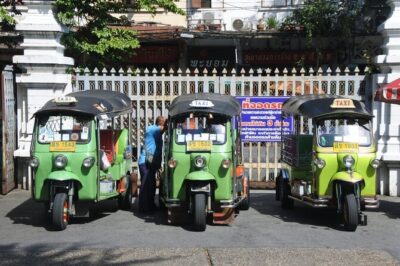
Bangkok: Michelin Guide Street Food Tour by Tuk Tuk
Read our review →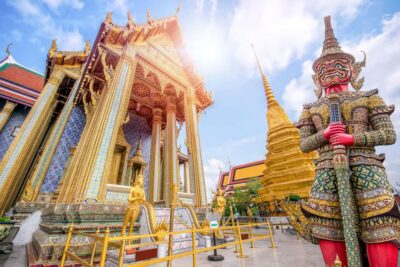
Bangkok: Grand Palace, Wat Pho, and Wat Arun Private Tour
Read our review →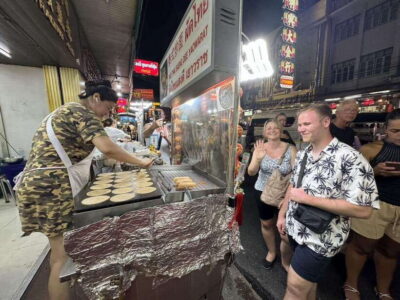
Bangkok Authentic Tasting Thai-Chinatown Walking Food Tour
Read our review →
Bangkok: Evening Tour with Wat Arun, Wat Pho & Tuk Tuk Ride
Read our review →
Bangkok Tuk-Tuk Tour by Night with Chinatown Street Food Meal
Read our review →
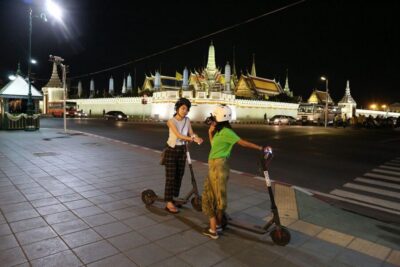
Bangkok: E-Scooter Night Tour with Local Street Food
Read our review →