
REVIEW · BANGKOK STREET FOOD TOURS
Street Food at China Town
Bangkok’s Chinatown is at its best after sunset, when Yaowarat Road fills with food stalls, glowing signs, seafood grills, and the smell of peppery soup. This tour gives you a guided way into that after-dark food scene, with tastings ranging from yentafo and Chinese noodles to oyster omelets and Thai desserts.
I like the small-group limit of six and the broad food list. You get a local guide, several savory dishes, drinks, sweets, and basic medical insurance rather than paying for one sit-down meal. The route also ends on Yaowarat Road, so you can keep eating or shopping afterward.
The main drawback is that the menu and route can change, and not every listed dish is guaranteed. You also need to arrive on time: more than 10 minutes late is treated as a voluntary cancellation, with no refund inside the 24-hour cancellation window.
Key points to know before booking
- Start at 6 PM: Meet at Hua Lamphong, then continue toward Chinatown and Yaowarat Road.
- A full tasting menu: Expect yentafo, Chinese noodles with peppery soup, an omelet with oysters or fried rice, a Chinese herbal drink, and dessert options.
- Small-group format: The stated maximum is six people, which should make ordering and walking easier.
- The food can change: Lod chong is not available on Thursdays, and the guide may adjust the route, dishes, and stops.
- Seafood is part of the appeal: Grilled squid, cockles, oyster omelets, and other seafood may suit adventurous eaters.
- Finish in Yaowarat: The tour ends on Yaowarat Road, a useful place to continue your own Chinatown evening.
Why Chinatown works so well for an evening food tour
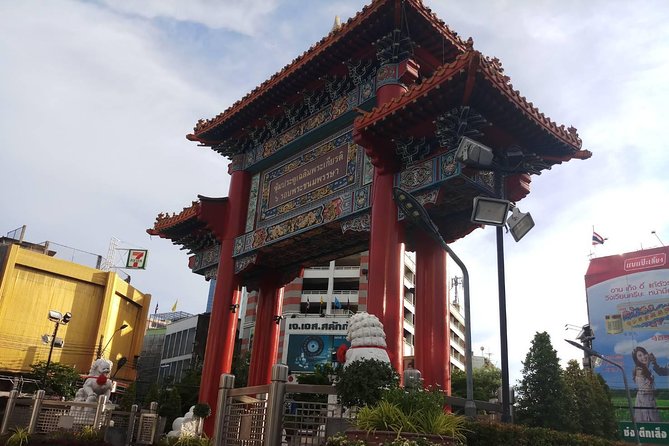
Bangkok’s Chinatown is not a quiet food district built for visitors. It is a working neighborhood with Chinese-Thai shops, narrow streets, old storefronts, seafood counters, noodle stalls, and crowds moving in every direction. That makes it exciting, but it can also be confusing when you are trying to choose food on your own.
A guide helps with the basic problem: what to order and where to begin. You do not have to point at an unfamiliar pot and hope for the best. Instead, you can taste several dishes in one evening and learn which flavors suit you.
The setting is just as important as the food. Yaowarat is known for its bright signs and busy evening atmosphere, and the food stalls create a steady stream of sights and smells. You will see dishes prepared in front of you, often in very small spaces, with diners standing or eating nearby.
This is a street-food outing, not a formal restaurant crawl. You should expect walking, shared tastings, changing conditions, and food served in casual surroundings. If you want a polished meal with a fixed table and a set menu, this is not the right format. If you want to try several local specialties without making every decision yourself, it makes more sense.
More Chinatown Food Tours in Bangkok
- Bangkok Authentic Tasting Thai-Chinatown Walking Food Tour
★ 4.9 · 852 reviews - Bangkok Tuk-Tuk Tour by Night with Chinatown Street Food Meal
★ 5.0 · 635 reviews - Bangkok Tuk-Tuk by Night with Chinatown Street Food Meal
★ 4.6 · 263 reviews
Starting at Hua Lamphong at 6 PM
The meeting point is Hua Lamphong in Rong Muang, Pathum Wan, at 6 PM. The location is near public transportation, which matters in Bangkok because evening traffic can be slow and unpredictable. Give yourself extra time to find the exact meeting spot.
The timing is sensible. Six o’clock gets you into Chinatown as the evening food trade is getting under way, rather than sending you out during the hotter afternoon hours. The tour lasts about two to three hours, so you should finish around 8 or 9 PM, depending on the pace and the number of food stops.
The late-arrival rule is strict. If you are more than 10 minutes late, the operator treats the booking as a voluntary cancellation. I would not try to cut it close, especially if you are coming by taxi or tuk-tuk. Traffic and navigation can work against you.
The meeting point and final destination are different. You begin near Hua Lamphong and finish at Yaowarat Road in Chinatown. That is useful because you do not need to return to the starting point before continuing your night. It also means you should bring only what you want to carry while walking and eating.
Yentafo, noodles, and the peppery soup
One of the central tastings is yentafo, a Thai noodle dish usually recognized by its pink-red broth. The color comes from fermented tofu sauce, and the flavor can be sweet, savory, tangy, and slightly unusual if you have never tried it.
The dish is a good fit for this kind of tour because it introduces you to something more specific than a standard pad Thai. You are not simply ticking off familiar Thai food. You are trying a Chinatown-area noodle specialty with a flavor profile that may take a bite or two to understand.
Chinese noodles with peppery soup are also included. This gives the meal a second noodle stop with a different character. Expect the soup to bring more heat and spice than the yentafo, though the exact preparation can change with the route.
Noodle dishes are often filling, so pace yourself. The tour includes several savory tastings plus dessert. I would take smaller bites at the early stops rather than treating the first bowl as a full dinner. That leaves room for the seafood and sweets that come later.
Oyster omelet or fried rice, plus seafood choices
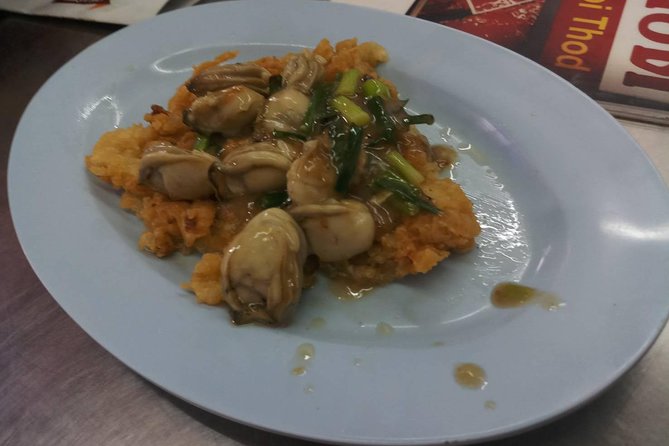
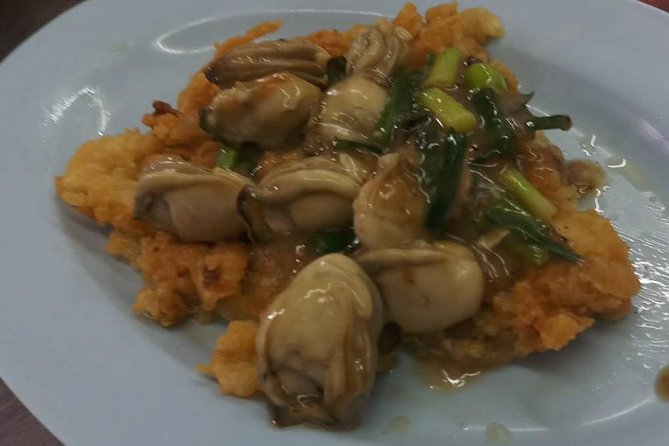
The food list includes an omelet with oysters cooked in a pan, or fried rice as an alternative. The oyster omelet is the more distinctive choice. It combines egg, seafood, and a fried texture, and it fits Chinatown’s mix of Chinese cooking and Thai street food.
If you do not want oysters, fried rice gives you a more familiar option. The information provided does not specify how dietary substitutions are handled, so you should raise food concerns with the operator before booking rather than assume every dish can be changed.
Seafood is a strong part of the experience. The food stop is identified as Pa’jin cockle texas yaowarat, and the tour description includes seafood tastings. Grilled squid is one of the foods singled out in the available feedback, along with other seafood choices.
You might also encounter more daring items in Chinatown. One account describes sampling food such as fried insects and shark fin soup during a tuk-tuk-based Chinatown outing, but those items are not promised in this tour’s food list. Treat them as possibilities in the wider area, not as included dishes.
That distinction matters. The tour promises a range of tastings, but the route and meals can be adjusted. The best approach is to arrive ready for variety without expecting every unusual item you may have seen in photographs or other accounts.
More Chinatown Food Tours in Thailand
- Bangkok: Chinatown Food Tour with Michelin Food Stalls
★ 4.8 · 226 reviews - Night Street Food Tour of Bangkok’s Chinatown
★ 5.0 · 173 reviews - Local Life, Culture & Food Walking Tour at Chinatown
★ 4.7 · 119 reviews - Taste of Bangkok: A 3-Hour Chinatown Food Feast
★ 4.8 · 59 reviews
Chinese herbal drink and Chinatown sweets
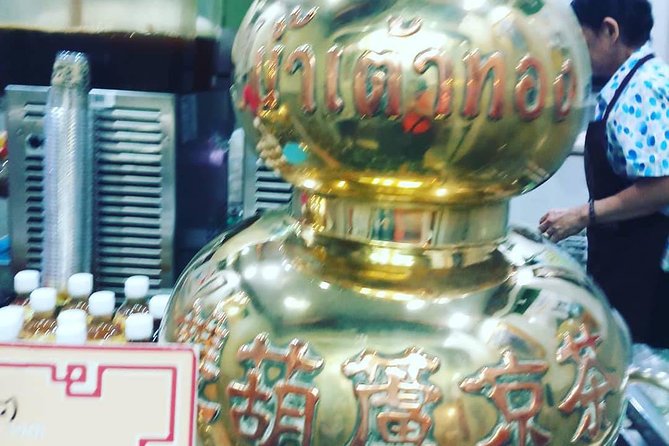
The Chinese herbal drink adds another useful taste to the evening. Herbal drinks can be sweet, earthy, or medicinal, and they are part of the Chinese-Thai food character of the neighborhood. It is a small item, but it helps the tour move beyond a simple list of fried foods and noodles.
Dessert options can include pa thong go, mango with sticky rice, kanom bueng, or fruit. Pa thong go is a fried dough snack often eaten with a sweet dip or drink. Mango with sticky rice is a familiar Thai favorite, while kanom bueng is a crisp Thai crepe that can be filled with sweet or savory toppings.
Lod chong, a chewy dessert served with sweet liquid, is also listed, but it is not available on Thursdays. On that day, Chinese cake is the stated alternative. If dessert is a major reason you are booking, Thursday is worth noting because you will not receive the same sweet course.
The changing dessert list is not necessarily a flaw. Street vendors work with daily supplies, and food tours sometimes need to follow what is being served that evening. Still, you should book for the overall food experience, not for one exact sweet.
A route that can change with the street
The planned experience centers on Chinatown, with the food stop at Pa’jin cockle texas yaowarat and a final destination on Yaowarat Road. The description gives about two hours at the food area, while the full activity is listed at roughly two to three hours.
The operator can adjust the route, place, and meals as needed. This gives the guide room to respond to conditions on the ground, but it reduces certainty. A particular stall might be closed, a dish might not be available, or a different nearby stop might offer a better option that night.
That flexibility is normal for street food. It also means you should not think of this as a museum-style itinerary with fixed stops. The value comes from having someone guide you through the area and organize several tastings, not from visiting a precise list of restaurants.
The ending on Yaowarat Road is practical. Afterward, you can continue exploring Chinatown independently, find another snack, browse the shops, or arrange your own ride. You should not assume the guide will bring you back to Hua Lamphong, since the stated end point is different from the start.
What the $59 price really covers
At $59, this is more expensive than buying one bowl of noodles from a street stall. That comparison is too narrow, though. The price includes an experienced, fully licensed local guide, several food and drink tastings, and basic medical insurance.
You are also paying for selection and structure. A first-time visitor can easily spend an evening choosing only familiar food, missing the best stalls, or ordering too much at the first stop. A guide helps spread the meal across noodles, seafood, drinks, and sweets.
The maximum group size of six improves the value. In a small group, it should be easier to hear the guide, ask questions, share dishes, and keep moving through crowded streets. A larger group would make street-food ordering slower and less personal.
There is one point to keep in mind: the provided information includes a separate account of a 20-person outing using tuk-tuks, but the current tour details state a maximum of six. I would rely on the stated six-person limit when deciding if the experience suits you. Tuk-tuk transport is also not listed as an included feature, so do not book expecting a ride between stops.
For someone who wants a guided introduction to Chinatown’s food, $59 can be fair. For a confident eater who already knows Yaowarat and wants only the cheapest possible meal, it may feel high.
Who should book this Chinatown food walk
I would recommend it to a first-time visitor to Bangkok who wants to sample many dishes without planning every stop. It is also a good fit for couples, solo visitors, and small groups who prefer an organized evening but do not want a formal restaurant meal.
Adventurous eaters will get the most from it. The menu includes unusual flavors, seafood, herbal drinks, fermented tofu sauce, and dishes that may be less familiar than the usual Thai staples.
Families and cautious eaters should look closely at the format. The tour does include fried rice as an alternative to the oyster omelet, but the food list still leans toward seafood and strong flavors. If you have allergies or strict dietary limits, ask before booking because the route and meals are adjustable but specific substitutions are not promised.
The tour may also suit anyone who wants an introduction before exploring alone. Since it ends on Yaowarat Road, you can use the guided portion to get your bearings and then decide if you want to continue on your own.
The experience requires good weather. If rain or poor conditions cancel it, you can choose another date or receive a full refund. Bangkok’s street food is best enjoyed when you are comfortable walking outdoors, so this policy is useful rather than surprising.
Booking and cancellation details that matter
Confirmation is provided when you book, and the activity is near public transportation. Most people can participate, but the experience involves walking and eating in busy street settings, so anyone needing special arrangements should check with the operator first.
The activity is mobile-ticket friendly, which means you can keep the booking on your phone. I would still save the meeting details before leaving your hotel, since mobile service and battery life are not always reliable in a crowded city.
You can cancel for a full refund up to 24 hours before the local start time. Cancellations or changes made less than 24 hours before the start are not refunded. The same 24-hour limit applies to changes, so confirm your date and group details before that deadline.
Hebrew-language guiding requires booking at least one day in advance. No other guide language is specified, so ask the operator if language support matters to you.
Should you book it?
Book this tour if you want a guided, small-group introduction to Chinatown’s evening food and like the idea of tasting several dishes rather than ordering one dinner. The strongest reasons are the six-person limit, the range of included food, the licensed guide, and the useful Yaowarat ending.
Skip it if you need a fixed menu, guaranteed dishes, a quiet meal, or a low-cost way to eat one or two items. The route and food can change, seafood is prominent, and arriving late can cost you the booking.
For most first-time visitors who want help making sense of Bangkok’s Chinatown, the $59 price is reasonable when you count the guide and several tastings. Just arrive early, keep an open mind, and treat the menu as a food trail rather than a promise of every listed dish.
FAQ
Where does the tour start?
It starts at Hua Lamphong, Rong Muang, Pathum Wan, Bangkok 10330, Thailand.
Where does the tour end?
It ends on Yaowarat Road in Bangkok’s Chinatown.
What time does the tour begin?
The stated start time is 6:00 PM.
How long does the experience last?
The tour lasts approximately two to three hours. The food portion is listed as about two hours.
What food is included?
The listed tastings include yentafo, Chinese noodles with peppery soup, an omelet with oysters or fried rice, a Chinese herbal drink, and dessert.
Which desserts may be served?
Dessert options include pa thong go, mango with sticky rice, kanom bueng, or fruit. Lod chong may also be served, but it is not available on Thursdays. Chinese cake is the Thursday alternative.
How many people can join?
The stated maximum is six people.
Is a guide included?
Yes. The experience includes an experienced, friendly, fully licensed local tour guide.
What happens if the weather is poor?
The experience requires good weather. If it is canceled because of poor weather, you will be offered another date or a full refund.
Just added around Bangkok
- 4-Hour Hidden Bangkok TukTuk Street Food Guided Tour★ 5.0 · 23 reviews
- 3-Hour Bangkok Walking Tour: Wat Pho and Wat Arun★ 5.0 · 102 reviews
- Bangkok 3-in-1 Tour: Longtail Boat,TukTuk & Street Food Adventure★ 5.0 · 73 reviews
- Famous Thai Street Food Tasting Experience!★ 5.0 · 4 reviews
- Thai Costume Photography at Wat Arun/Pho Temple: Bangkok★ 5.0 · 3 reviews
- Visit Wat Pho and Wat Arun with Local Expert★ 4.0 · 14 reviews
- Tuk Tuk Bangkok Private Tour: WW2 Pad Thai, 360-Viewpoint, Chinatown (Pickup)★ 5.0 · 9 reviews
- LR-01 TaLad NangLerng, ride along the old town and try local street foods★ 4.5 · 13 reviews
Bangkok Street Food Tours, compared.
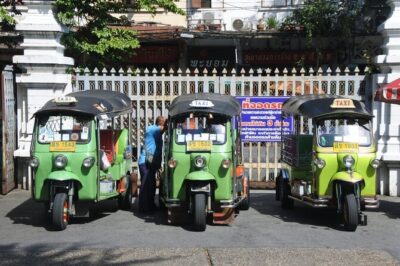
Bangkok: Michelin Guide Street Food Tour by Tuk Tuk
Read our review →
Bangkok: Grand Palace, Wat Pho, and Wat Arun Private Tour
Read our review →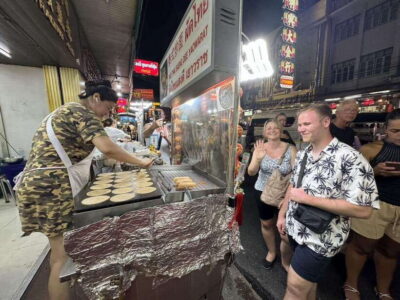
Bangkok Authentic Tasting Thai-Chinatown Walking Food Tour
Read our review →
Bangkok: Evening Tour with Wat Arun, Wat Pho & Tuk Tuk Ride
Read our review →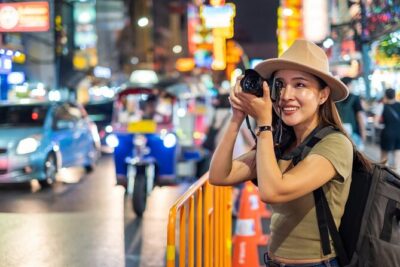
Bangkok Tuk-Tuk Tour by Night with Chinatown Street Food Meal
Read our review →
Bangkok: E-Scooter Night Tour with Local Street Food
Read our review →
Private Tour of Bangkok’s Temples Including Reclining Buddha (Wat Pho)
Read our review →Browse the lists this tour appears in