
REVIEW · MOROCCO STREET FOOD TOURS
Marrakech: Street Food Tour with a Local Guide
Marrakech’s best food discoveries are often served from small counters you could easily pass without noticing. This three-hour walk leads you through the Medina, Mellah, Kasba, and souks for 10 to 12 tastings, from Moroccan pancakes and harira to grilled meat, sardine balls, sweets, and fresh juice.
I like the generous food portions and the way guides such as Abdul, Abdoo, Ahmed, and Miriam explain both the dishes and the customs around them. I also like that you visit places away from the main tourist circuit, giving you useful confidence for eating on your own later. The main drawback is simple: this is a lot of food, and crowded lanes or a busy stop may feel tiring for some people.
Key points at a glance
- Come very hungry: Several stops serve full portions, not just tiny samples.
- Taste unusual local dishes: Depending on the time, you may try snail soup, sardine balls, harira, Moroccan pancakes, and khobzaa.
- Use it as an orientation walk: The route covers Jemaa el Fnaa, Riad Zitoun Jdid, Mellah, Kasba, and Souk Semmarine.
- All food and drinks are included: You do not need to pay at each stall, although alcohol is not included.
- Choose your style: Book a shared group or private tour, with guides available in English, German, Dutch, and Arabic.
- Wear good shoes: You will walk through busy market lanes and changing neighborhoods for about three hours.
Why this Marrakech food walk is worth your time
At $34 per person, this is a strong value if you want both dinner and a first look at the Medina. The price covers the guide, the walk, every tasting, and drinks, so you are not constantly reaching for your wallet at each stop.
The real value is not only the amount of food. A local guide takes you to stalls and small eating places you might not choose on your own, then explains what you are eating and how it fits into Moroccan daily life. That matters in Marrakech, where a food stall can look ordinary until someone points out what to order and how locals use it.
I would especially consider booking this near the start of your stay. The route helps you get your bearings, introduces you to the souks without leaving you to navigate alone, and gives you a practical list of places to revisit. Several guests saved locations and returned later for dates, nuts, olives, drinks, or another meal.
The tour is also useful for cautious eaters. Your guide can explain what is spicy, answer questions about ingredients, and discuss allergies in advance. You should still tell the operator about allergies before you arrive, since the exact dishes change with the time of day and food availability.
A few more street food tours around Morocco worth a look
- Marrakesh: Guided Street Food Tasting by Locals
★ 4.6 · 47 reviews - Essaouira Guided Tour: 3 on 1 – Nightlife tour, Live like a local & Street food
★ 4.5 · 32 reviews - Marrakech: Local Food Tasting Tour with a Guide
★ 5.0 · 18 reviews
Starting at Café Argana and Jemaa el Fnaa
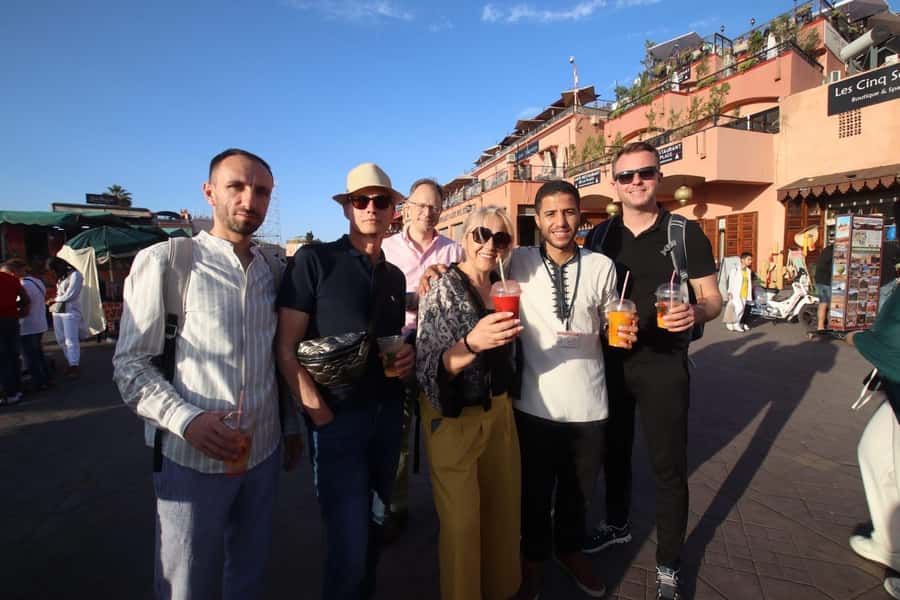
The meeting point is Café Argana, near the center of Jemaa el Fnaa. Look for the green café sign, juice sellers, and a large ice cream sculpture in front. The guide waits outside with an official guiding card and checks your name against the booking list.
This is a practical meeting place, but Jemaa el Fnaa can be confusing, especially after dark. Give yourself extra time and keep the café name visible on your phone. If you get lost, look for the food stands and the café’s green lettering.
The first part of the route includes a short walk and a tea ceremony in Jemaa el Fnaa. This gives the guide a chance to outline the route and introduce the role of food and hospitality in Moroccan life. The square is also a useful first lesson in how Marrakech works: sellers, juice stands, food counters, pedestrians, and motorbikes all share the same space.
Do not expect a quiet sit-down dinner here. This is an active public square, and the food stops are woven into a walking tour. Keep your group in sight, particularly when crossing crowded areas.
Riad Zitoun Jdid: sweets and Moroccan pancakes
From the square, the walk continues toward Riad Zitoun Jdid. Here you may sample sweet treats and street food, with Moroccan pancakes among the likely options.
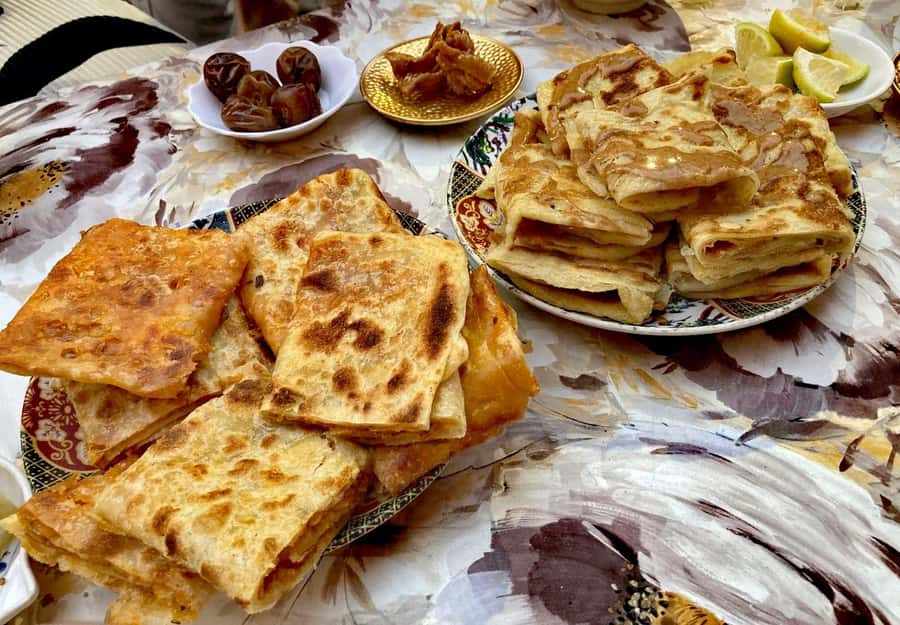
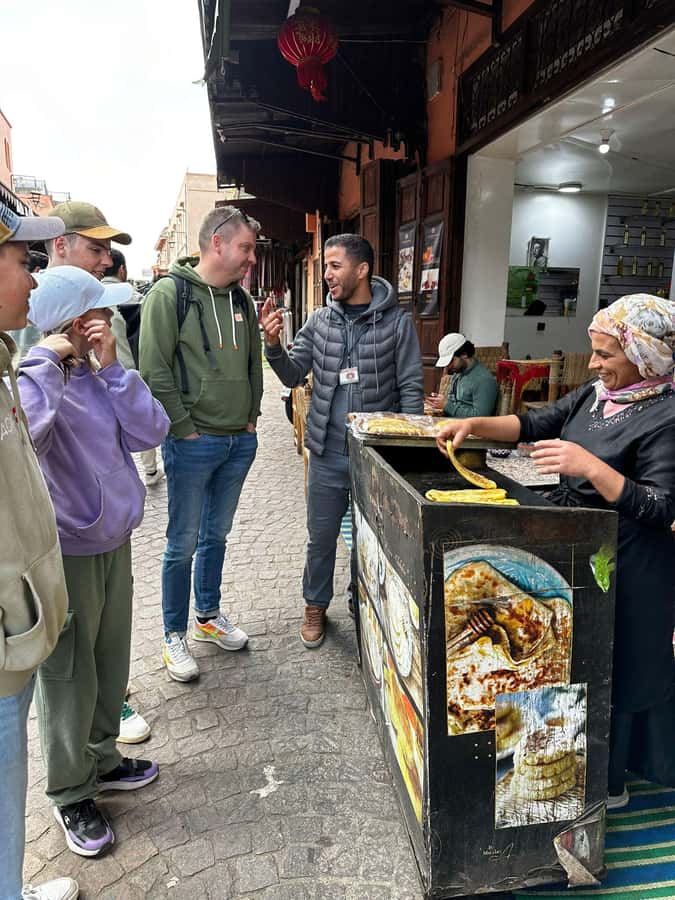
Msemen is a layered, pan-cooked pancake that can be eaten at different times of day. Harcha is another Moroccan pancake, made with semolina and known for its crumbly texture. These are simple foods, but they give you a good sense of the everyday side of Moroccan cooking.
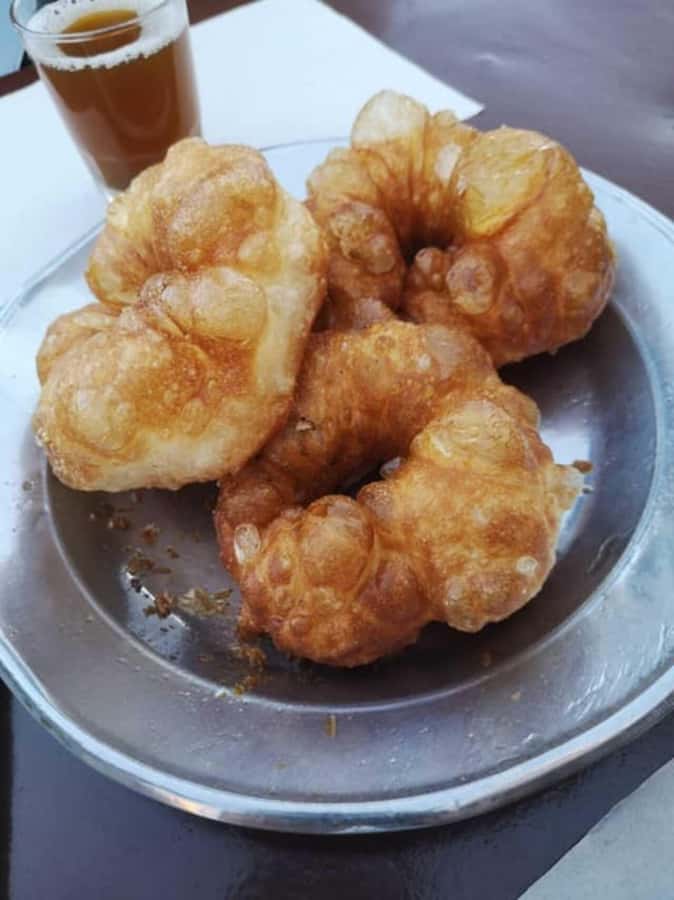
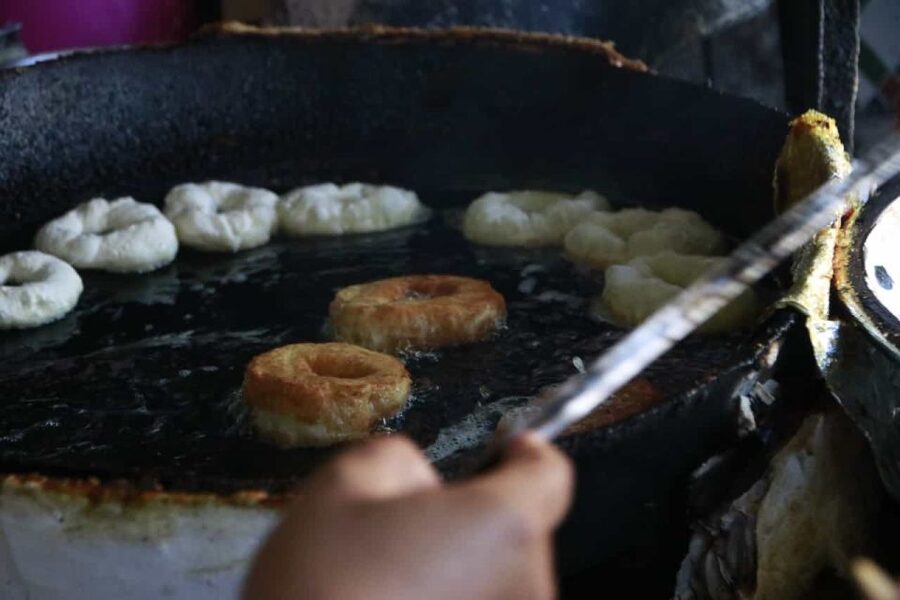
You may also try chebakia, a sweet pastry often linked with brunch and festive occasions. It is typically served with a hot drink, so this stop can feel more like a Moroccan snack break than a formal meal.
One thing to understand is that the food list is a guide, not a fixed menu. Morning and evening offerings differ, and the tour adapts to the schedule. If you have your heart set on one particular dish, ask the guide early rather than assuming it will appear.
The Mellah stop and a taste of local history
The route then reaches Mellah, the old Jewish quarter, where you pause for photographs and more food. This section adds cultural context to the meal, since the food walk is also a walk through Marrakech’s communities and neighborhoods.
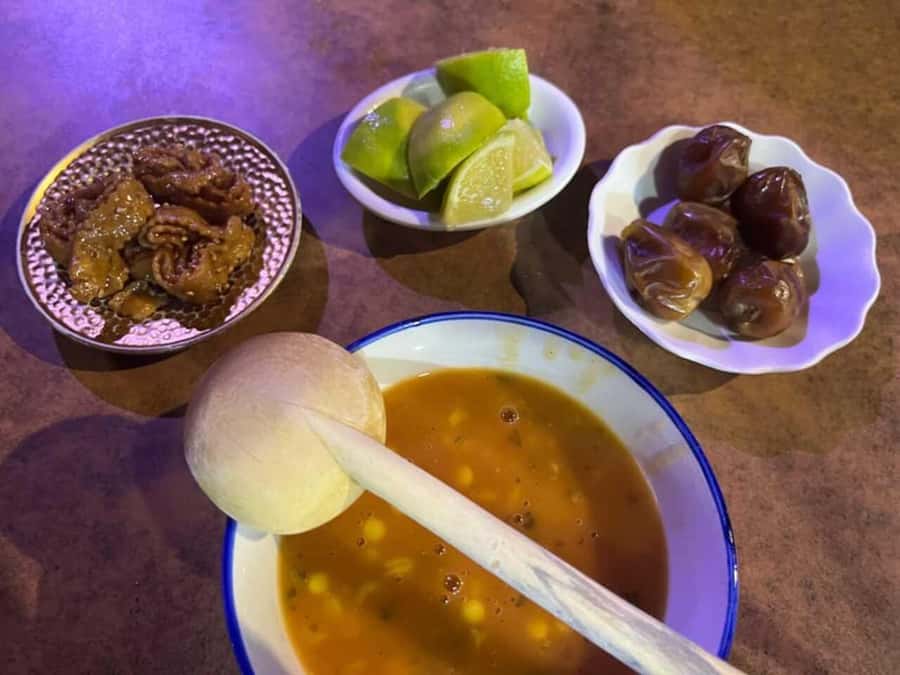
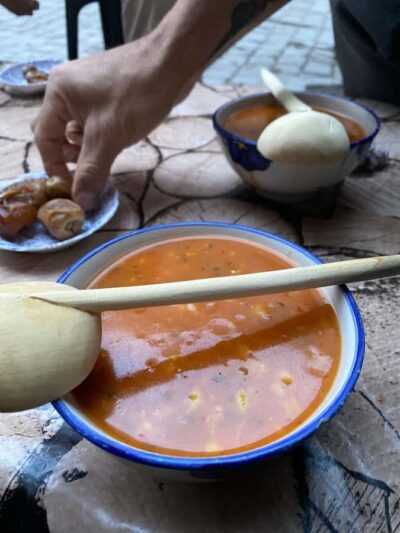
Possible tastings here include soup, sweet pastries, and pancakes. Harira, a well-known Moroccan soup, may appear on the menu. It is often made with tomatoes, herbs, pulses, and other ingredients, though this tour describes a vegetarian version.
The combination of soup and something sweet is particularly pleasant if you are visiting in cooler weather. Evening temperatures can drop, and one useful tip is to carry a light jacket, especially during winter visits.
Mellah is also one of the places where the route feels less like a checklist of famous sights. You are moving through an area where people live and eat, rather than stopping only at postcard locations. That makes the guide’s explanations important. Without local direction, you might walk through quickly and miss the food stalls entirely.
Same city, a different plate:
- Marrakech: Street Food Tour by Night
★ 4.8 · 2,838 reviews - Marrakech: Authentic Moroccan Food Walking Tour & Dinner
★ 4.8 · 261 reviews - The Original Marrakech Street Food Tour
★ 5.0 · 248 reviews - Marrakech Street Food Tour
★ 5.0 · 220 reviews
Kasba: grilled food and local snacks
In Kasba, the emphasis shifts toward savory food. This part of the walk includes street food, local snacks, and regional dishes, with chwa, grilled beef or chicken, among the possible tastings.
Grilled meat can be one of the more familiar foods on the route, but the setting changes the experience. You are not choosing from a menu in a restaurant. You are seeing how local vendors prepare and serve food in a working neighborhood.
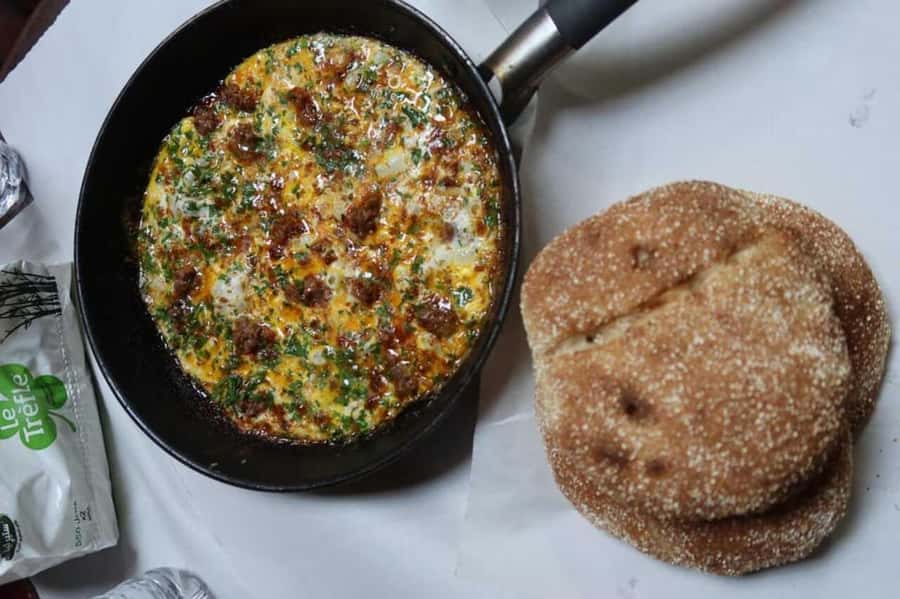
Another possible specialty is khobzaa, bread served with eggs and vegetables. It is the kind of hearty food that helps explain why the tour leaves people so full. The samples are not always delicate bites. At several stops, you may receive a full portion.
That is why I would plan this as your main meal. Eat lightly earlier in the day, or you may reach the later stops already full. The guide can help with pacing, but you should not expect a tiny tasting menu.
Souk Semmarine and the final food stops
The walk continues through Souk Semmarine, one of Marrakech’s best-known shopping areas. Here you combine market browsing with more food and drink, including regional specialties and a pause to catch your breath.
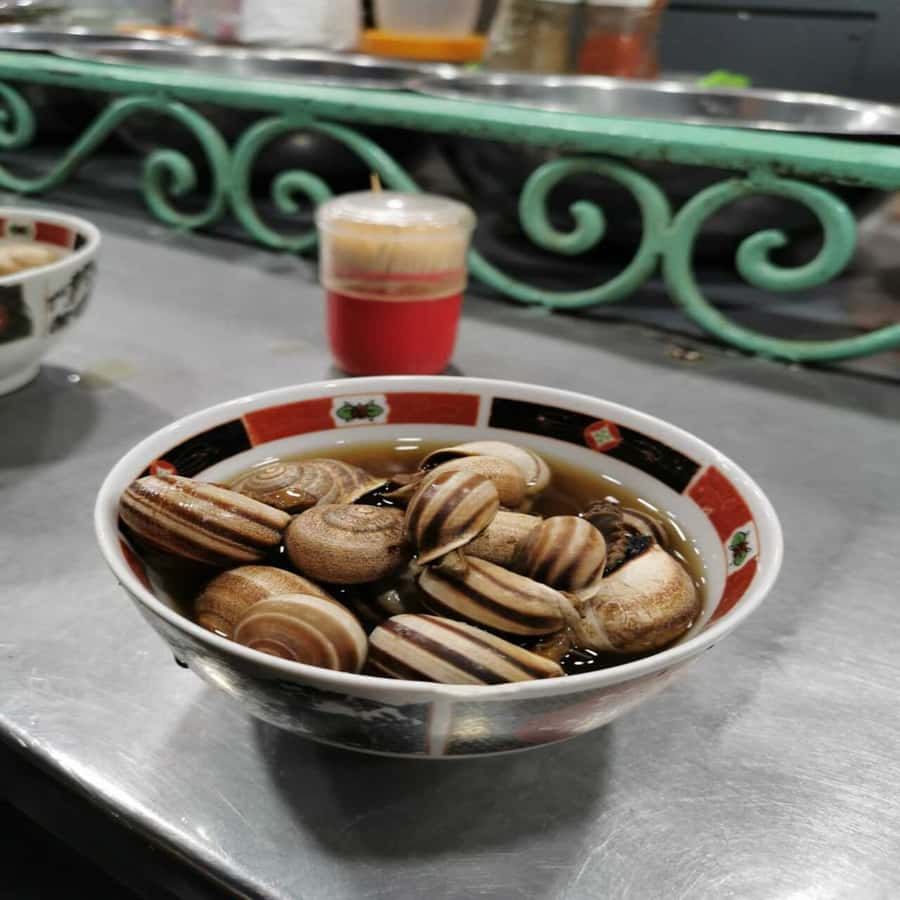
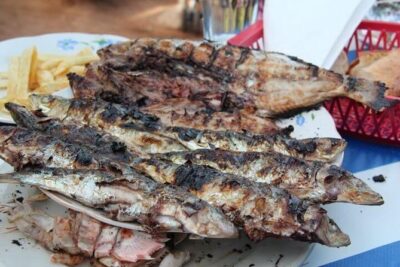
Possible items include raïb, a Moroccan frozen yogurt, fresh fruit juice, nuts, and other local snacks. Depending on the day, you may also encounter berbouche, a snail soup, or sardil mechoui, sardine balls cooked over coals.
These are the foods many visitors would hesitate to order alone. That is one of the tour’s strongest features. Your guide can explain what each item is before you try it, and you can ask about taste, texture, spice, and preparation.
You may also sample maklla, described as a Moroccan version of chakchouka, a cooked vegetable and egg dish. A drink called khoudenjal, a hot herbal infusion, may appear as well. Fresh juice and nuts round out the route.
The souk can be the most crowded part of the tour. Motorbikes, scooters, sellers, and shoppers share narrow lanes, and one stop may feel cramped. Stay close to the guide, watch your footing, and expect a little noise. The tradeoff is access to food places you might not notice if you were simply shopping.
The route returns to Café Argana after about three hours. You finish close to where you started, which makes it easier to continue exploring or return to your accommodation.
How much food should you expect?
Plan for a full meal, and possibly more than one meal’s worth. The tour description lists 10 to 12 specialties, but the serving size can vary by stop. Some people find the portions surprisingly large, especially at grilled-food locations.
A possible food lineup includes:
- Msemen and harcha, Moroccan pancakes
- Harira, vegetarian Moroccan soup
- Chebakia, a sweet pastry
- Khoudenjal, a hot herbal drink
- Khobzaa, bread with eggs and vegetables
- Raïb, frozen yogurt
- Chwa, grilled beef or chicken
- Berbouche, snail soup
- Sardil mechoui, coal-cooked sardine balls
- Maklla, a Moroccan egg and vegetable dish
- Fresh fruit juice
- Nuts and other local snacks
You may not receive every item on this list. The time of day matters. Some foods are more common in the morning, while others are served later. Still, the selection is broad enough to cover sweet, savory, hot, cold, familiar, and unusual dishes.
If you have allergies, tell the operator before the tour. Alternative dishes may be possible, but you should not wait until the first stall to raise the issue.
The guides and the feel of the walk
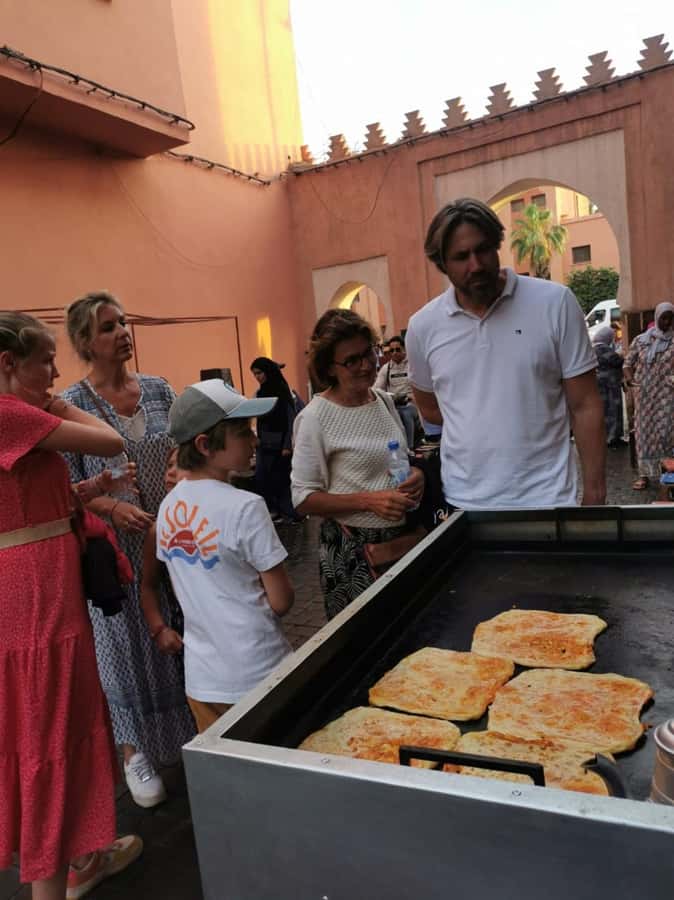
The guides are a major part of the experience. Abdul and Abdoo are frequently named as friendly, clear, and well informed about the food and city. Ahmed, Mariam, and Miriam are also among the guides leading groups. The exact guide depends on the date and group arrangement.
Language options include English, German, Dutch, and Arabic. Some guides speak several languages during the same outing, which is useful for mixed groups. Ask questions as you go. The strongest part of the tour is not simply being handed a plate, but learning why a dish matters and where locals usually eat it.
The tone is generally relaxed rather than formal. You meet other people, walk between stops, and share dishes in public places. A private tour may suit you better if you want more control over pace or conversation. A shared tour is a good choice if you like meeting other visitors and do not mind waiting while the group gathers.
There can be a short delay if a guide is reassigned or a group is combined. Guides generally keep the group together and wait at busy crossings, but you still need to pay attention. This is not a sightseeing bus tour where you can wander off and catch up later.
Timing, comfort, and practical details
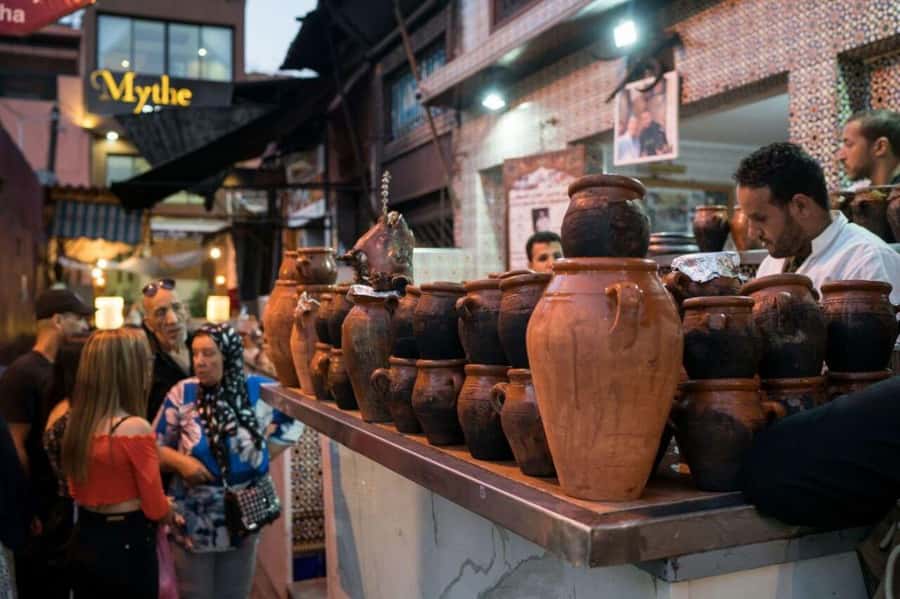
The activity lasts about three hours and may run in the morning or evening. A late afternoon start, such as 5 p.m., works well for people who want a substantial evening meal and cooler walking conditions.
Morning departures may offer better access to breakfast-style foods such as pancakes and pastries. Evening departures may include more grilled food and other savory dishes. Check the available starting times and choose according to the foods you most want to try.
Wear comfortable shoes. The route crosses several neighborhoods and market areas, and you will be standing at food counters as well as walking. Carry a light jacket for a cool evening, but avoid bringing more than you need.
Hotel pickup and drop-off are not included. Transport to and from the meeting point can be arranged for an extra charge if you call ahead. Alcohol is not included, and alcohol and drugs are not allowed.
The information provided for this activity gives mixed accessibility guidance: it describes the tour as wheelchair accessible but also lists it as unsuitable for wheelchair users. Since the route includes crowded souks and walking between stops, contact the operator before booking if you use a wheelchair or have limited mobility. It is also listed as unsuitable for people over 70, so older participants should confirm the walking demands and group pace first.
Who should book this food tour?
I would recommend it for first-time visitors who want a quick introduction to Marrakech’s food, neighborhoods, and market customs. It is also a good fit for adventurous eaters who want someone else to choose the stalls and explain the less familiar dishes.
You will get the most from it if you enjoy walking, sharing food, and trying things outside your usual routine. The tour also suits solo visitors who want company for an evening and families or couples who prefer an organized introduction before exploring alone.
It may not suit you if you want a calm restaurant meal, fixed portions, or a tightly controlled itinerary. People with serious dietary restrictions should ask about alternatives before booking. Anyone uncomfortable in crowded lanes, around scooters, or at informal food counters should think carefully about the setting.
Is the $34 price good value?
Yes, provided you arrive hungry and use the tour for more than dinner. Ten to 12 tastings, drinks, a local guide, and a three-hour walking route would cost more if you paid separately at every stop, and you would not have the same help choosing unfamiliar food.
The value is strongest when you revisit the places later. The tour can teach you what to look for, what prices seem reasonable, and which stalls deserve another visit. It also saves you from spending your first evening guessing among dozens of counters.
The main caution is that value does not mean unlimited choice. You pay for a group experience, and the dishes depend on time, availability, and dietary needs. If you want complete control over every stop, choose the private option or eat independently.
Should you book it?
Book this tour if you want a generous, practical introduction to Moroccan food and the Medina. I would choose it early in a Marrakech stay, eat very lightly beforehand, and keep the rest of the evening flexible.
Skip it if you prefer a quiet sit-down meal or cannot manage a long food-heavy walk. For most visitors who enjoy local snacks and do not mind crowded market lanes, the combination of unusual dishes, helpful guides, and all-inclusive tastings makes $34 a sensible buy.
FAQ
How long does the Marrakech street food tour last?
The tour lasts about three hours, including walking between food stops and the return to Café Argana.
Where does the tour start?
It starts outside Café Argana near Jemaa el Fnaa square. Look for the green café symbol, juice sellers, and the large ice cream sculpture.
How many foods will I taste?
You can expect to sample between 10 and 12 Moroccan specialties, although the exact dishes depend on the time of day and food availability.
Are food and drinks included in the price?
Yes. Food, drinks, and all tastings are included. Alcoholic drinks are not included.
Can I choose a private tour?
Yes. You can choose between a shared group tour and a private tour.
Which languages are available?
Live guides are available in English, German, Dutch, and Arabic.
What should I bring?
Wear comfortable shoes. If you are taking an evening tour, a light jacket may be useful because it can become chilly later.
Just added around Morocco
- Fez Street Food Tour★ 4.5 · 33 reviews
- The Sunday Market in Had Draa & Local Food Tasting.★ 5.0 · 33 reviews
- Essaouira Guided Tour: 3 on 1 – Nightlife tour, Live like a local & Street food★ 4.5 · 32 reviews
- Marrakech Guided Day Trip from Casablanca: Djemaa el-Fna Square and Bahia Palace★ 4.0 · 3 reviews
- Casablanca Food Tour – Moroccan Street Food Tour★ 5.0 · 86 reviews
- Casablanca Market and Street Food Walking Tour★ 5.0 · 3 reviews
- Agadir with a Local–Balade Authentic & Tasting Street Food★ 5.0 · 21 reviews
- Tangier: Food Walking Tour★ 4.9 · 43 reviews
Morocco Street Food Tours, compared.
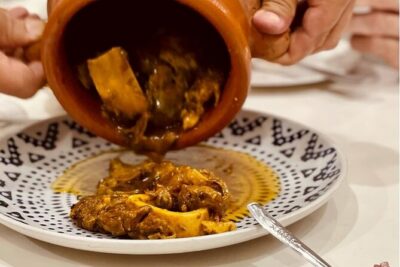
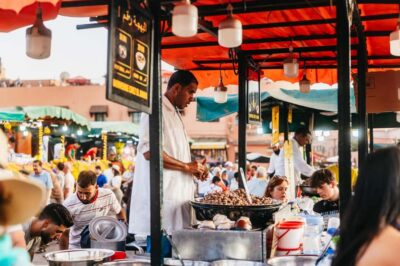
Marrakech: Authentic Moroccan Food Walking Tour & Dinner
Read our review →
Marrakech Night Street Food Tour / Taste The Real Marrakech
Read our review →
Casablanca Food Tour – Moroccan Street Food Tour
Read our review →
Browse the lists this tour appears in