
REVIEW · MARRAKECH STREET FOOD TOURS
Marrakech: Authentic Moroccan Food Walking Tour & Dinner
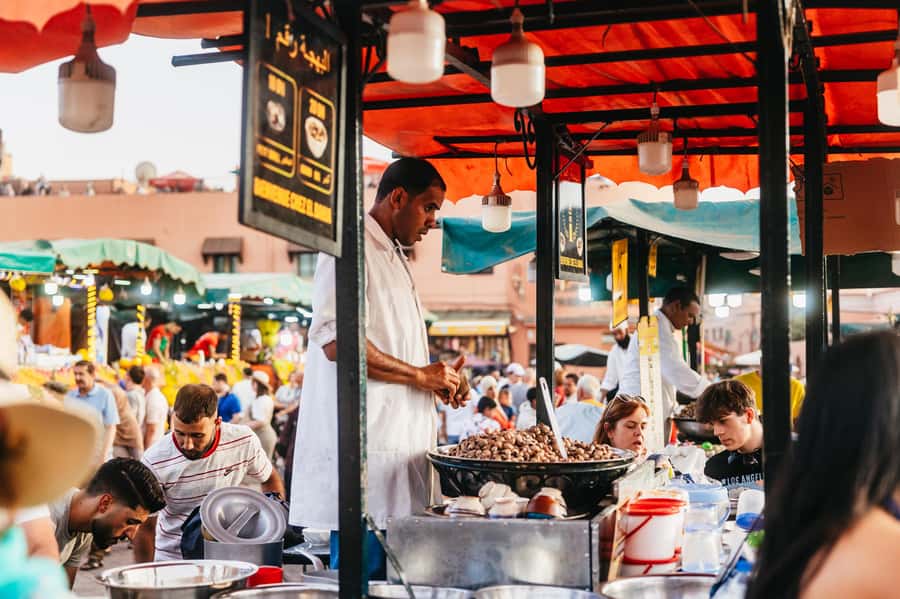
Marrakech’s best food is not always found on a polished restaurant menu. This three-hour walk leads you through the Medina for small local bites, from harira with dates and chebakia to msemen, olives, pastries, and possibly Moroccan snails or sheep’s head. The evening ends with tajine or a generous open-air barbecue.
I like two things right away: the route takes you to food stalls and small eateries you might skip on your own, and the guides add useful context about Ramadan, family celebrations, spices, and daily eating habits. The main drawback is that the exact menu changes, and you need to arrive hungry. This is a serious amount of food, not a light sampling.
Key points at a glance
- Start at Poste du Maroc: Meet in front of the main post office on Rue Beni Marine, then walk into the Old Medina.
- Expect two possible food routes: One leans toward tajine, pastries, olives, and snails; the other may include sfenj, cactus fruit, kefta, and grilled meat.
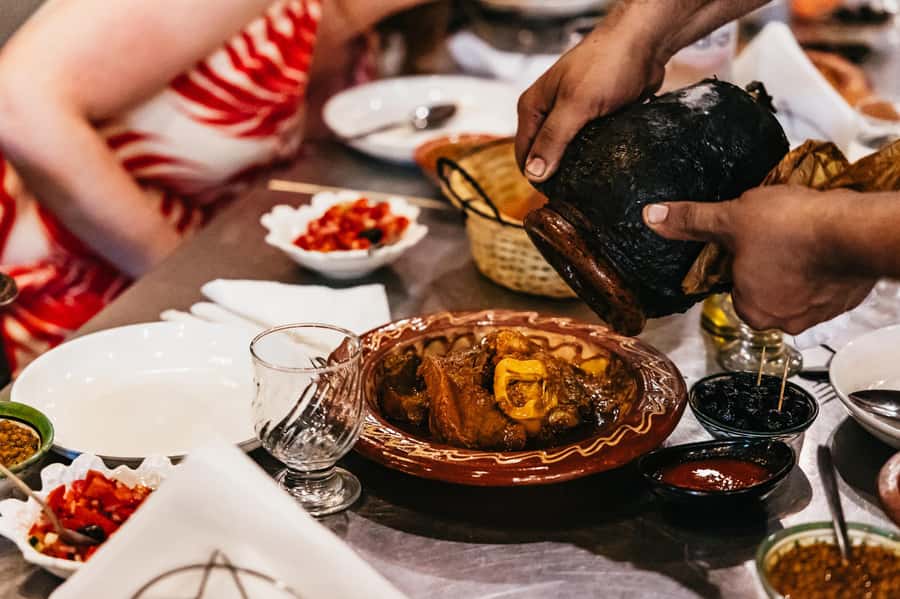
- Dinner is included: You finish at a local restaurant or an open-air grillade, with tajine or meats such as beef, turkey, and liver.
- The guides make the difference: Yahya, often called Yaya, along with Ali, Mehdi, and Rachid, are praised for humor, local knowledge, and helpful Marrakech advice.
- Bring an empty stomach: The food keeps coming, and several people found the portions surprisingly generous.
- The tour suits first-time visitors: It offers an easy introduction to Medina food stalls, customs, and evening street life without asking you to choose every stop alone.
Why this Medina food walk works so well
At $52 per person, this is not merely a dinner with a short stroll attached. You are paying for a guide, many tasting stops, mint tea, cultural explanation, and a full meal. If you tried to sample the same range independently, you could spend less, but you would also need to know which stalls to trust, what each dish is, and how to order without missing the point.
I especially like the way the tour uses food as a key to Marrakech. Harira is not just soup. Msemen is not simply a pancake. Fakya, the mix of dried fruit and nuts, connects to family gatherings and celebrations, while the soup, dates, and chebakia combination recalls the meal used to break the fast during Ramadan.
The experience has earned a 4.8 rating from 261 bookings, and the strongest pattern is clear: people praise the guides, the range of food, and the chance to visit places they would not have tried alone. That matters in Marrakech, where the Medina can feel confusing and fast-moving on a first visit.
More Street Food Walking Tours in Morocco:
- Tangier: Food Walking Tour
★ 4.9 · 43 reviews - Fes: Street Food Walking Tour
★ 3.8 · 7 reviews - Casablanca Market and Street Food Walking Tour
★ 5.0 · 3 reviews
Meet at Poste du Maroc and enter the Old Medina
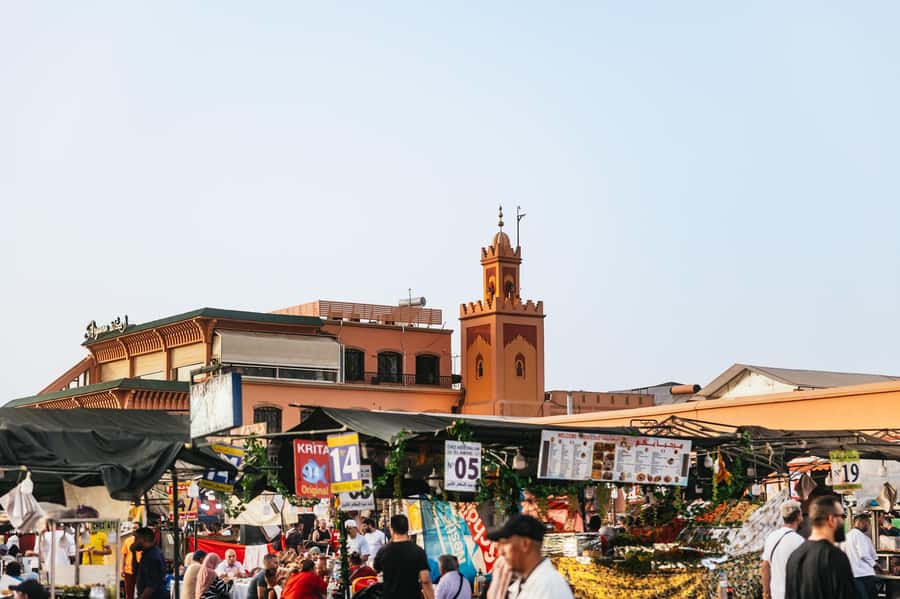
The meeting point is in front of Poste du Maroc on Rue Beni Marine. The tour returns to the same place after roughly three hours, so you do not need to arrange transport between stops. Hotel pickup and drop-off are not included.
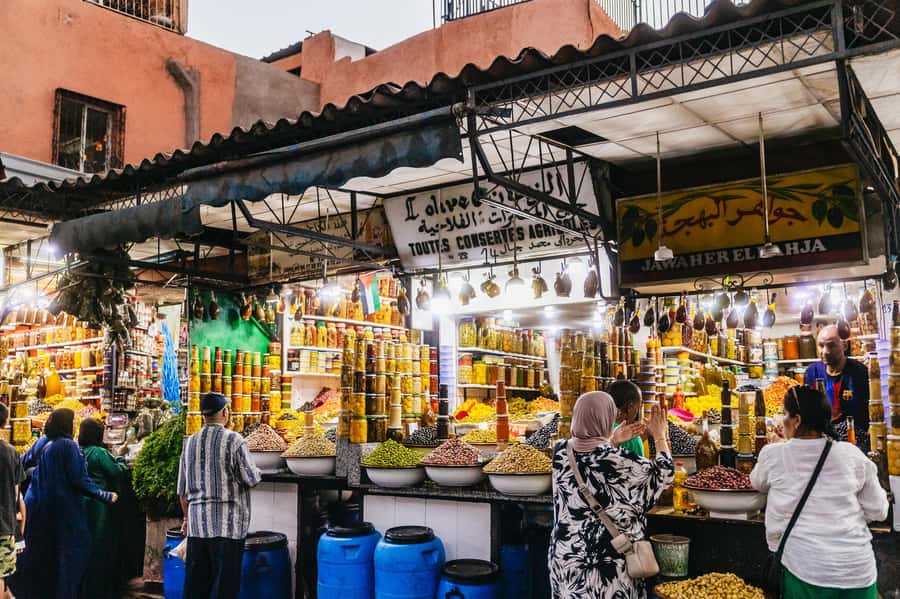
Wear comfortable walking shoes. The route takes place around the Medina, the square, souks, food stalls, and small local restaurants. The tour description does not give a precise distance or group size, so you should expect a walking evening rather than a seated food class.
This is a useful first activity in Marrakech. Several guides offer practical advice about moving through the city, and the food stops help you recognize dishes later in your stay. You may also feel less hesitant about approaching a food stall after watching your guide explain what is being served and how locals eat it.
The atmosphere can shift as evening comes on. One account describes the market growing much busier after the sunset prayer, with more activity around the food stalls. If your tour overlaps with sunset or Ramadan, the timing can add an extra cultural layer, though dinner arrangements change during Ramadan.
Route one: soup, snails, pastries, and tajine
The first possible route begins with Moroccan coconut macaroons, a simple sweet that is especially popular with children. You then may try kaab ghzal, often translated as gazelle ankles, a pastry filled with almond paste and scented with orange blossom water.
These sweets give you a quick introduction to two recurring Moroccan flavors: almonds and orange blossom. Kaab ghzal is more delicate than a heavily iced pastry, so it is worth eating slowly rather than treating it as a generic snack.
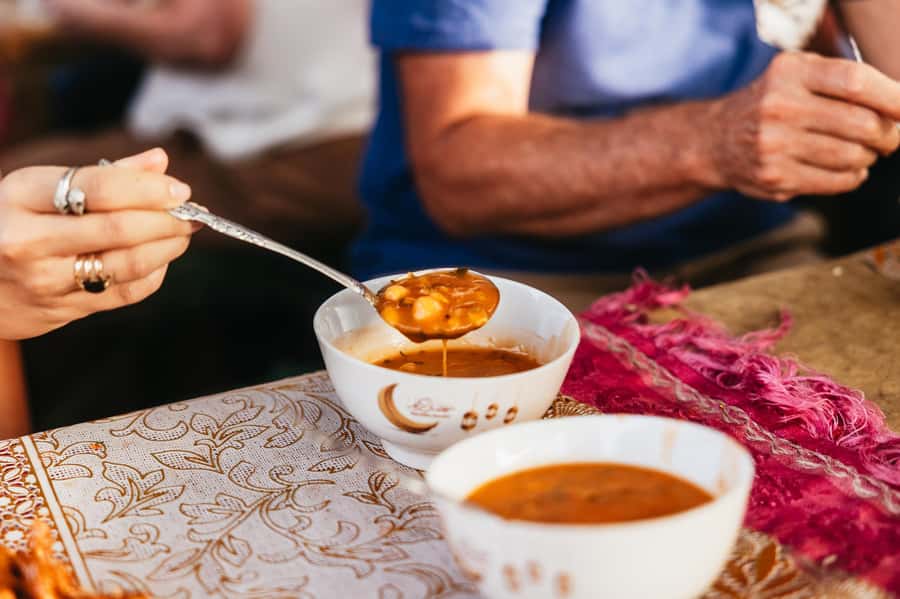
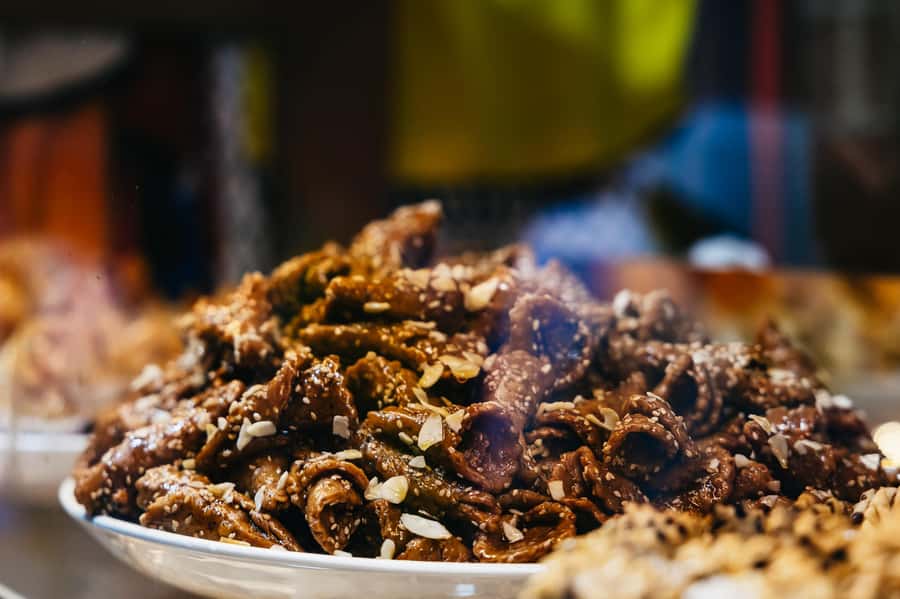
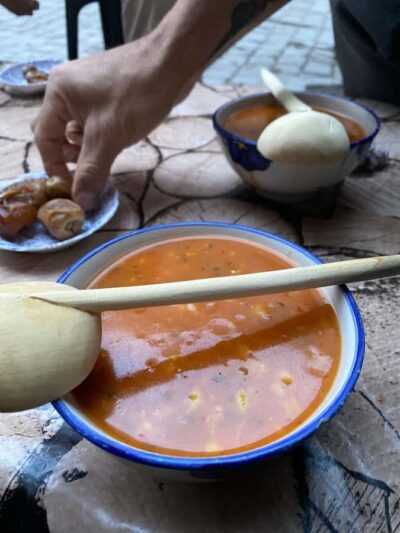
Harira comes next, served with dates and chebakia. Harira is a hearty soup, and chebakia is a sweet, sesame-coated pastry. Together, they make a striking sweet and savory pairing and are closely linked with Ramadan meals. Even outside Ramadan, this combination helps explain how Moroccan food connects to ritual, hospitality, and the calendar.
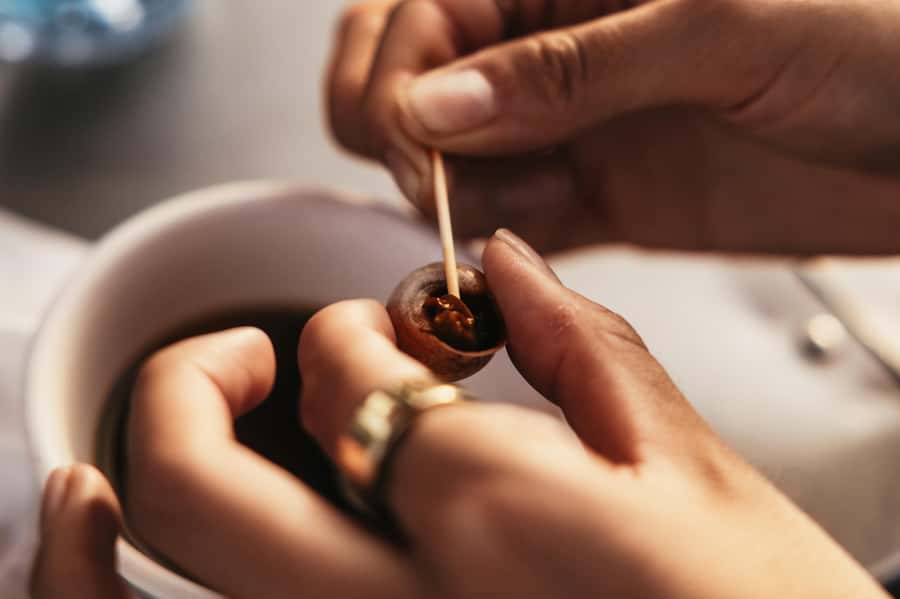
Babbouche, or Moroccan snails, is one of the more adventurous stops. The snails are slowly cooked in an aromatic herbal broth. You can try them for the taste of the broth alone, or take the chance to sample a food that many first-time visitors would never order without a local guide.
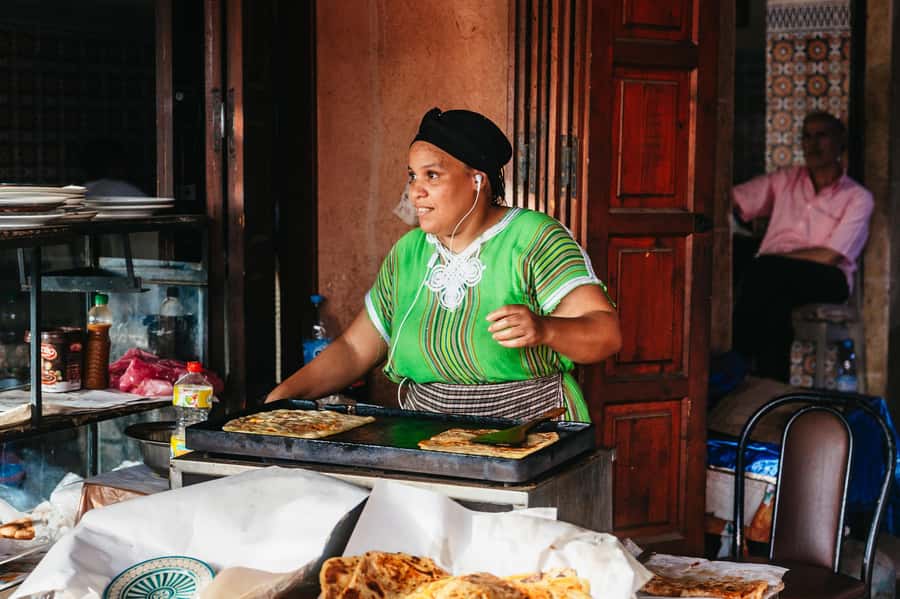
The route then moves to mint tea and msemen. Msemen is a pan-fried Moroccan pancake, often eaten with honey, and on this tour it may also come with cheese. The contrast is enjoyable: crisp edges, soft layers, sweet honey, and a savory option in the same stop.
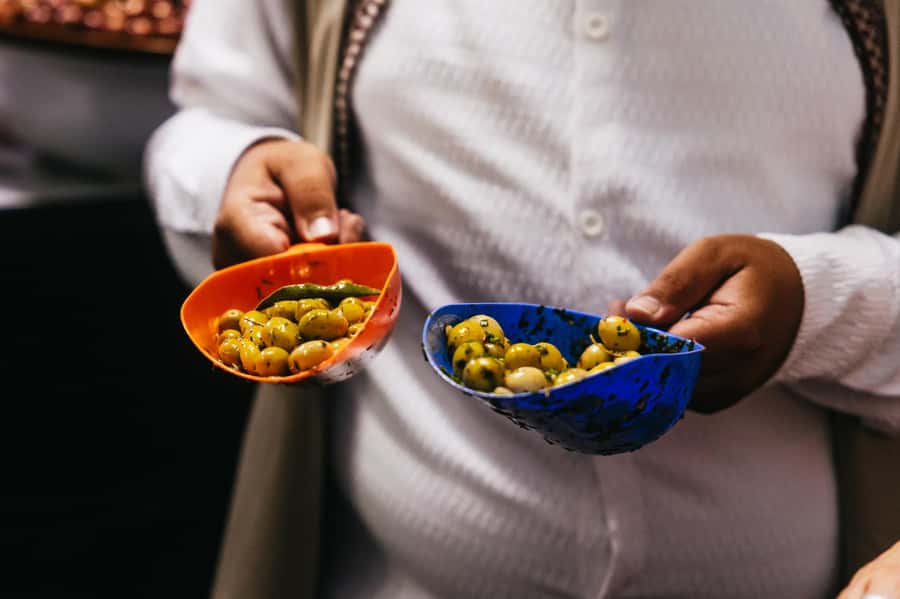
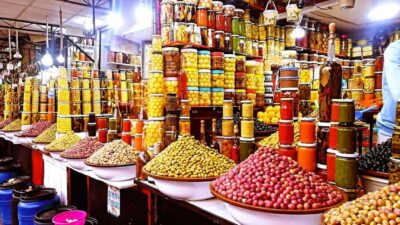
Fakya is a festive mix of dried fruits and nuts. It is commonly shared among family and friends during celebrations, so it offers more than a quick sugar hit. Moroccan olives bring another useful comparison, with green olives described as creamy and red olives mixed with parsley and cilantro.
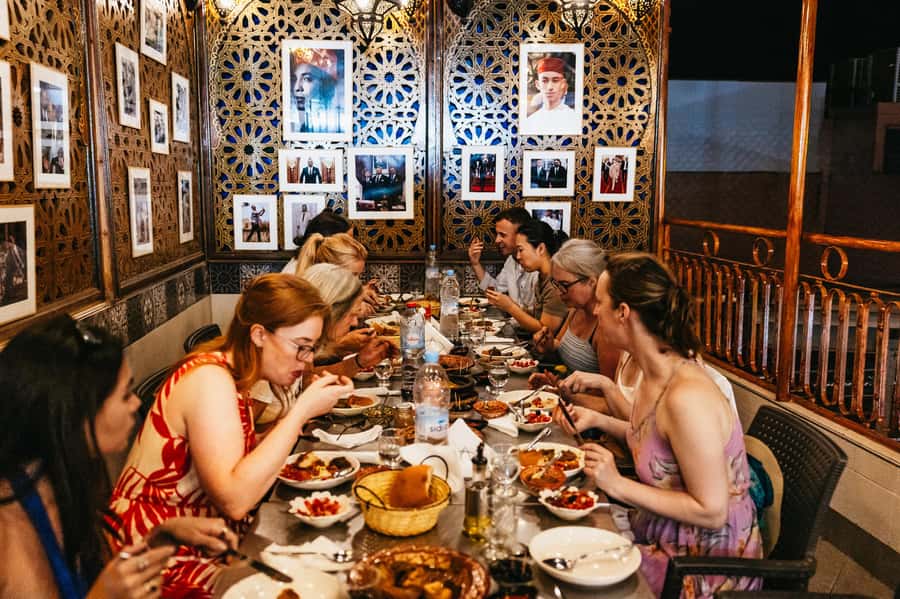
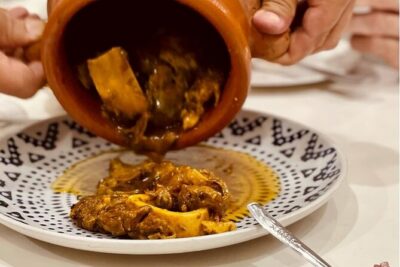
Dinner on this route is served at a cozy local restaurant. You can expect a fresh Moroccan salad followed by a hearty tajine. Dessert is Raïb, a homemade yogurt with a smooth, creamy texture. It is a calmer finish after the many earlier tastings.
Route two: sfenj, cactus fruit, kefta, and grilled meats
The second possible route takes a more street-food-heavy turn. Msemen Amer is a Moroccan pancake stuffed with savory fillings, often spiced vegetables. It is a good example of how a familiar form can become a full snack rather than a side dish.
Harira and chebakia appear here as well. The repetition is not a problem. These are important Moroccan foods, and the tour uses them as a reference point while introducing more unusual tastes later.
Makkla bel Kefta is a Moroccan version of shakshouka. The dish combines eggs with spiced meat and sauce, giving you a filling savory bite before the sweets and fruit. It is the sort of food that shows why Moroccan street eating can function as a proper meal, not just grazing between attractions.
Sfenj is one of the route’s most appealing stops. These Moroccan doughnuts are crisp outside and airy and chewy within. They are a popular street snack, and you may find them easier to enjoy than the more unfamiliar dishes on the menu.
Lhindiya, or cactus fruit, provides a cool, fresh change. The fruit is linked with hot-weather refreshment and is said to be high in antioxidants. It keeps the tasting sequence from becoming too heavy.
Then comes the boldest possibility: rass mbekher, delicately steamed sheep’s head seasoned with cumin. This is not a compulsory comfort-food choice for most people, but it is a real part of the route’s local character. If that sounds too far outside your preferences, the dish may sometimes be replaced by local chawarma, with succulent chicken or crispy falafel.
The drinks and lighter tastes continue with panaché, a colorful smoothie made from seasonal fruit, and khoudenjal, a hot herbal infusion made from galangal root. Khoudenjal is used as a comforting drink in cold weather and is associated with digestion, which is welcome after a long string of tastings.
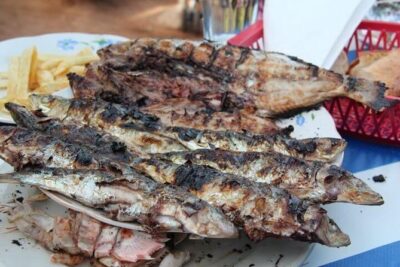
Dinner on this route is an open-air chwa, or Moroccan barbecue. The grilled meats may include beef, turkey, and liver. This is a more smoky, informal finish than the restaurant tajine route, and it gives you a different view of Moroccan evening eating.
More Dinner Experiences in Morocco:
- Half-Day Polish Food Walking Tour with Guide and Dinner
★ 4.5 · 381 reviews - Xi’an Tang Dynasty Show Ticket Optional Dumplings or Royal Dinner
★ 4.5 · 75 reviews - Da Nang By Night: Seafood dinner, night market and cruise trip
★ 5.0 · 38 reviews - Skip the Line: Xi’an Tang Dynasty Show Ticket & Dumpling Dinner or Royal Banquet
★ 4.5 · 28 reviews
The herbalist stop adds useful context
Depending on the pace of the group, you may stop at a traditional herbalist’s shop. This is a short break where you can learn about Moroccan spices, drink mint tea, and use the restroom.
The stop is not guaranteed, so do not treat it as a fixed part of the itinerary. When it happens, it helps break up the eating and walking. It also gives your guide a natural place to explain herbs and everyday Moroccan remedies without turning the whole tour into a shopping trip.
One particularly memorable guide mentioned an herbalist named Mo, whose humor and personality made the stop a highlight. Keep in mind that guide assignments and the exact flow can change, so the person leading your tour may offer a different presentation.
The guides are the main strength
The activity is conducted in English by a certified local guide. Names connected with especially well-liked tours include Yahya, also called Yaya, Ali, Mehdi, and Rachid.
Yahya is repeatedly praised for making people feel at ease, explaining the food clearly, and adding stories about the places where he grew up. Ali is described as warm, funny, and well informed about Moroccan food culture. Mehdi is noted for keeping the pace comfortable and including everyone in the group, while Rachid is praised for explaining each food and offering practical advice about seeing Marrakech.
You should not book this expecting a formal lecture. The appeal is conversational. You can ask about food, history, customs, restaurants, or daily life, and the guide can connect those questions to the streets around you.
The route can also be social. One family with three children aged seven to twelve enjoyed the evening, while another participant liked meeting people from different parts of the world. Still, the group format means the pace is shared. If you want a private, highly tailored meal, this may feel less flexible than a private guide.
How much food should you expect?
Plan to eat very little beforehand. The menu can include well over a dozen tastings plus dinner, depending on the route and the number of stops. Several people found themselves extremely full by the end.
This abundance is a strength if you want a broad introduction to Moroccan food. It is less ideal if you prefer one carefully paced meal or have a small appetite. You can tell the guide about preferences, and one vegetarian participant received substitute foods throughout the tour, but the provided information does not promise a fully vegetarian or vegan menu.
The food is also not limited to the most familiar choices. You may taste snails, sheep’s head, liver, cactus fruit, herbal drinks, and local pastries. If you are adventurous, this range is a major reason to book. If you dislike unfamiliar textures or strongly prefer predictable dishes, ask about substitutions when you meet your guide.
Ramadan and seasonal changes matter
The route changes according to the guide, season, and pace of the evening. Ramadan can alter the timing, especially if the tour reaches sunset as the fast ends. That can be a meaningful time to see the food culture in action, but dinner is listed as unavailable during Ramadan, so check the specific date and arrangements before booking.
The seasonal element also affects fruit and some street snacks. Panaché uses fresh seasonal fruit, while cactus fruit is especially appealing in hot weather. You should think of this as a flexible local walk rather than a fixed restaurant menu.
That flexibility is part of the charm, but it also means you should not book because of one single promised dish. If you are set on tajine, the restaurant route may suit you best. If grilled meat and a livelier open-air meal appeal more, the chwa route may be the better outcome.
Who should book this three-hour experience?
I would suggest this tour early in your Marrakech stay. It helps you learn the names of dishes, understand the layout of the Medina, and get practical food tips before you make your own choices.
It works well for first-time visitors, couples, families with older children, and anyone who wants a social evening. The guides are a strong fit for people who enjoy questions, jokes, and local stories rather than a silent tasting.
You should think twice if you have limited mobility, since the experience is a walking tour through the Medina and no accessibility details are provided. You should also be cautious if you have major dietary restrictions, because the menu includes meat, dairy, seafood-like items such as snails, nuts, and many unfamiliar foods. Ask before booking if your diet is strict.
The $52 price is fair for the quantity of food and the amount of guiding involved. You are not just paying for calories. You are paying for access to local stalls, explanation of dishes, a dinner, and the confidence to explore the food scene on your own afterward.
Should you book it?
Book this tour if you want a filling, social introduction to Marrakech through food, especially during your first days in the city. The best reasons are the local stops, the wide range of tastings, and guides such as Yahya, Ali, Mehdi, and Rachid who make the Medina easier to understand.
Skip it if you want a quiet gourmet dinner, a fixed menu, or a short walk with only familiar foods. For everyone else, arrive at Poste du Maroc with comfortable shoes, eat only a small lunch, and stay open to the odd-looking dish. The snails and sheep’s head may not become favorites, but they are exactly the kind of foods you might never find on your own.
FAQ
Where does the Marrakech food tour begin?
Meet your English-speaking guide in front of Poste du Maroc on Rue Beni Marine.
How long does the experience last?
The walking food tour lasts about three hours.
Where does the tour finish?
The tour returns to Poste du Maroc after the Medina walk and food stops.
Is hotel pickup included?
No. Hotel pickup and drop-off are not included.
What food might I try?
Depending on the route, you might try harira, chebakia, msemen, Moroccan coconut macaroons, kaab ghzal, olives, snails, fakya, sfenj, cactus fruit, kefta, panaché, and Moroccan herbal tea.
Is dinner included?
Yes. Dinner is included, with either a local restaurant meal featuring salad and tajine or an open-air Moroccan barbecue with grilled meats. Dinner is not available during Ramadan.
Is the tour suitable for vegetarians?
The menu is not fully vegetarian, but a vegetarian participant received substitute foods during the tour. Ask the guide about your dietary needs before eating.
What should I bring?
Bring comfortable walking shoes. The tour takes place on foot around the Old Medina.
More Dining Experiences in Morocco
- Naples: Street Food Experience With 6 Stops
★ 4.7 · 392 reviews - Siem Reap: Street Food Experience by Tuk-Tuk
★ 4.9 · 310 reviews - Local food experience & walking tour of Tirana
★ 5.0 · 192 reviews - Tirana: Local food experience & walking tour
★ 5.0 · 154 reviews
Just added around Morocco
- Fez Street Food Tour★ 4.5 · 33 reviews
- The Sunday Market in Had Draa & Local Food Tasting.★ 5.0 · 33 reviews
- Essaouira Guided Tour: 3 on 1 – Nightlife tour, Live like a local & Street food★ 4.5 · 32 reviews
- Marrakech Guided Day Trip from Casablanca: Djemaa el-Fna Square and Bahia Palace★ 4.0 · 3 reviews
- Casablanca Food Tour – Moroccan Street Food Tour★ 5.0 · 86 reviews
- Casablanca Market and Street Food Walking Tour★ 5.0 · 3 reviews
- Agadir with a Local–Balade Authentic & Tasting Street Food★ 5.0 · 21 reviews
- Tangier: Food Walking Tour★ 4.9 · 43 reviews
Marrakech Street Food Tours, compared.
Marrakech Night Street Food Tour / Taste The Real Marrakech
Read our review →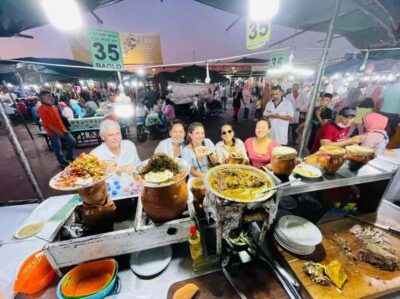
Medina Tasting Tour: Experience Local Street Food & Culture!
Read our review →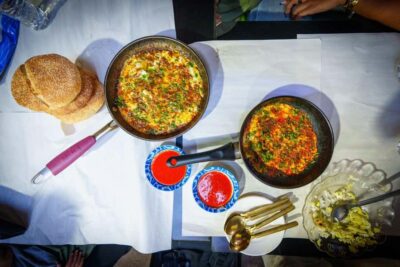

Discover Marrakech Street Food with a Local Guide
Read our review →Browse the lists this tour appears in