
REVIEW · MALAYSIA STREET FOOD TOURS
Penang Island: Street Food Walking Tour
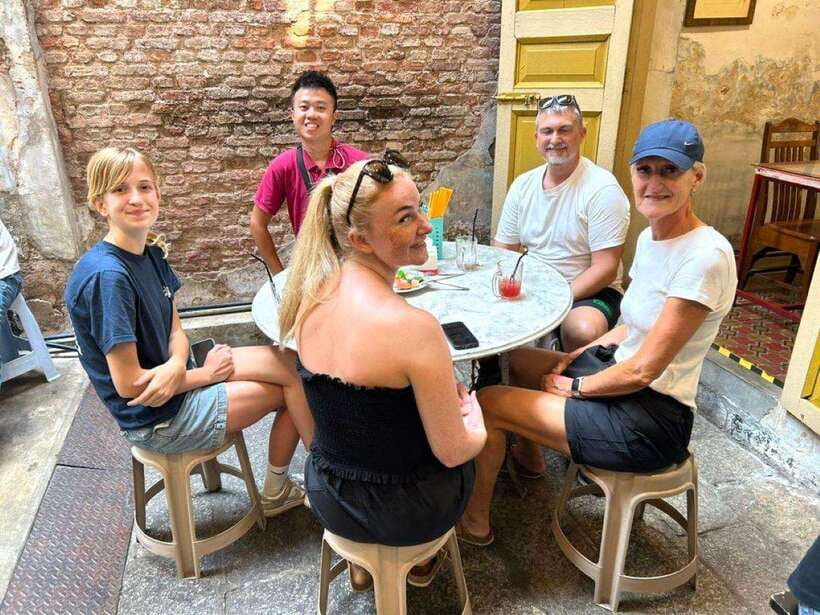
Penang’s best food stories are often attached to small family stalls, old market counters, and recipes that have outlasted several generations. This 210-minute walk begins at Chowrasta Market, then threads through George Town for coffee, nutmeg pickles, durian dodol, popiah, asam laksa, and Nyonya sweets.
I like the small group of no more than nine people, which makes a market walk easier and keeps the guide close by. I also like the focus on food makers and family traditions, including a popiah craft passed down for 50 years. The main caution is simple: this is a food-heavy walking tour in Penang’s heat, so comfortable shoes, breathable clothes, water, and an umbrella will help.
Quick reasons to consider this food walk
- Chowrasta Market since the 1890s: Start where Malay, Chinese, and Indian communities have traded and shopped for generations.
- Nutmeg pickles and durian dodol: Try two distinctly Penang treats that many first-time visitors might otherwise skip.
- A 50-year popiah tradition: Watch handmade popiah skins being produced by a family with a long local connection.
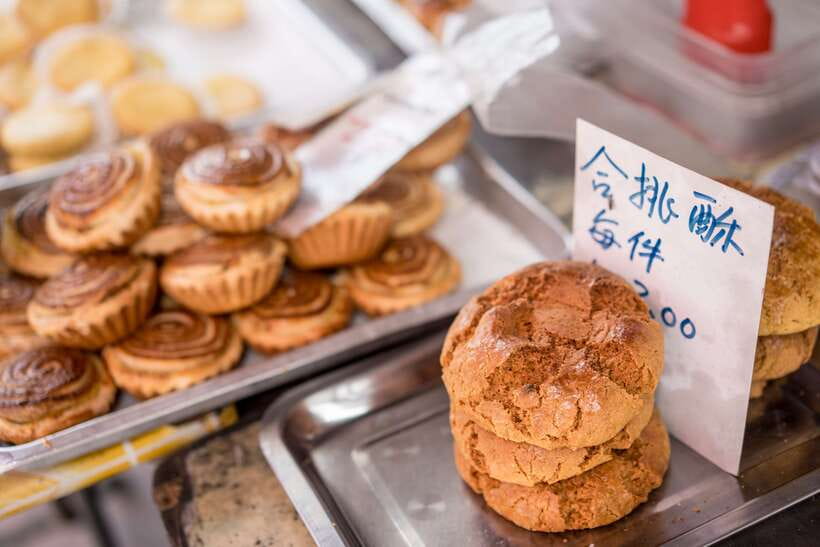
- Moh Teng Pheow Nyonya Koay: Learn how Baba and Nyonya food blends Chinese and Malay customs through cakes, dumplings, puddings, and pastries.
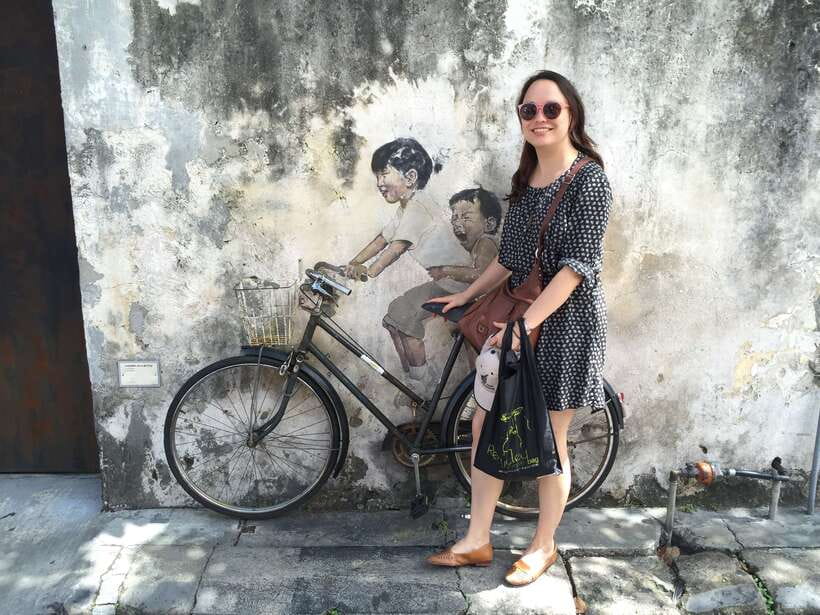
- George Town between bites: Walk past street art, iron-rod sculptures, religious buildings on Harmony Street, and the town’s oldest fire station.
- Food portions guided by your appetite: The tour aims for variety without leaving you buried under plates of food.
Starting at Chowrasta Market in the 1890s
Chowrasta Market is a strong starting point because it gives you Penang in one busy, practical place. Trade here helped bring Malay, Chinese, and Indian communities together, and the market has been feeding George Town since the 1890s.
You will hear vendors speaking a mix of Hokkien, Malay, and Tamil. That sound matters. Penang food did not develop in separate cultural boxes. Ingredients, cooking methods, and family customs crossed those lines over many decades.
The market is also a useful reminder that street food is not just a parade of famous dishes. It is part of daily life. Families shop, vendors work, and recipes stay in circulation because people keep eating them.
This is a morning-oriented experience in spirit, though the exact start time depends on availability. Arrive 15 minutes early at the meeting point and look for a guide wearing either a white Simply Enak polo shirt or a white batik shirt. Transport to the meeting point is not included, so plan that part yourself.
More Street Food Walking Tours in Malaysia:
- Kuala Lumpur Local Street Food Private Walking Tour by Night
★ 4.5 · 224 reviews - George Town: Heritage Walking Tour with Street Food Tasting
★ 4.7 · 6 reviews - Kuala Lumpur: Half Day Local Food Walking Tour
★ 5.0 · 4 reviews
Kopitiam coffee and Penang’s unusual first tastes
The walk introduces you to kopitiam culture, the traditional coffee shop world of Malaysia. Kopitiams are more than places to get caffeine. They are social spaces where food, conversation, and local routine meet.
One early tasting is Ngor Ka Sai, local coffee mixed with Milo. It sounds like an odd pairing until you try it. The drink gives you a direct lesson in Penang’s fondness for strong, sweet, comforting flavors.
You will also taste nutmeg jeruk, or preserved nutmeg pickles. These are sharp, sweet, sour, and aromatic enough to wake up your mouth before the heavier food arrives. Penang is closely associated with nutmeg products, and this is a useful example of how a local ingredient can become both snack and souvenir.
Durian dodol offers a different challenge. Dodol is a sticky, sweet confection, while durian brings the famous fruit’s strong aroma and creamy character. If you already know and enjoy durian, this is a compact way to meet it in a traditional sweet. If you do not, the texture may be easier than a whole durian, but the flavor still announces itself.
The guide shares selected food and drinks at family-run stalls. Extra drinks beyond those included are your responsibility, so carry water. The aim is tasting, not ordering a full meal at every stop.
Watching a 50-year popiah craft
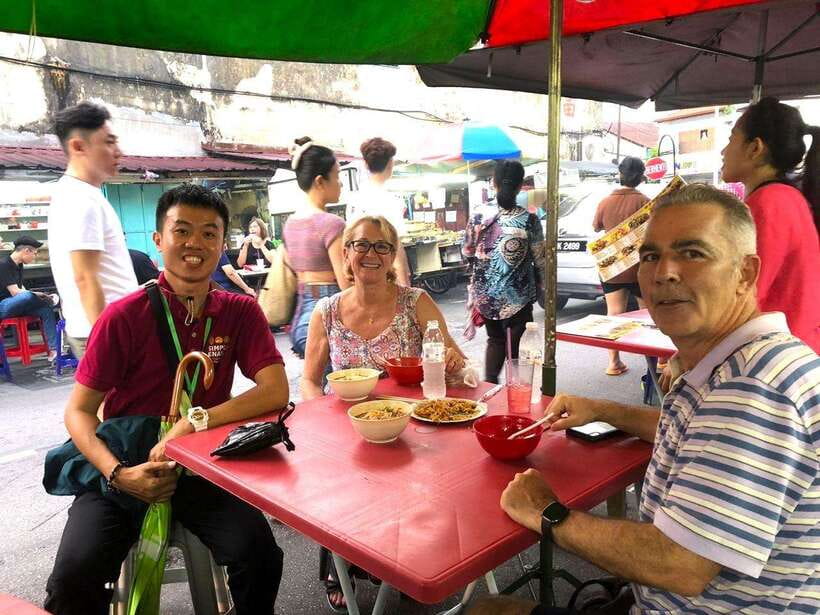
The handmade popiah demonstration is one of the tour’s most useful stops because you see technique rather than only the finished dish. A master from a family with 50 years of popiah-making experience shows how the wrappers are produced by hand.
That family connection gives the food some weight. A thin popiah skin may look simple on the plate, but making it consistently takes practice and control. This is the sort of small skill that can disappear when convenience replaces handwork.
You should pay attention to the process, not only the snack. The demonstration helps explain why a handmade wrapper has a different place in Penang’s food culture from a mass-produced one.
The tour’s small size matters here. With a maximum of nine participants, you have a better chance of seeing and hearing the demonstration without being pushed to the back of a large crowd. The guide can also keep the group moving without turning every stop into a long wait.
Asam laksa with Penang’s sweet and sour balance
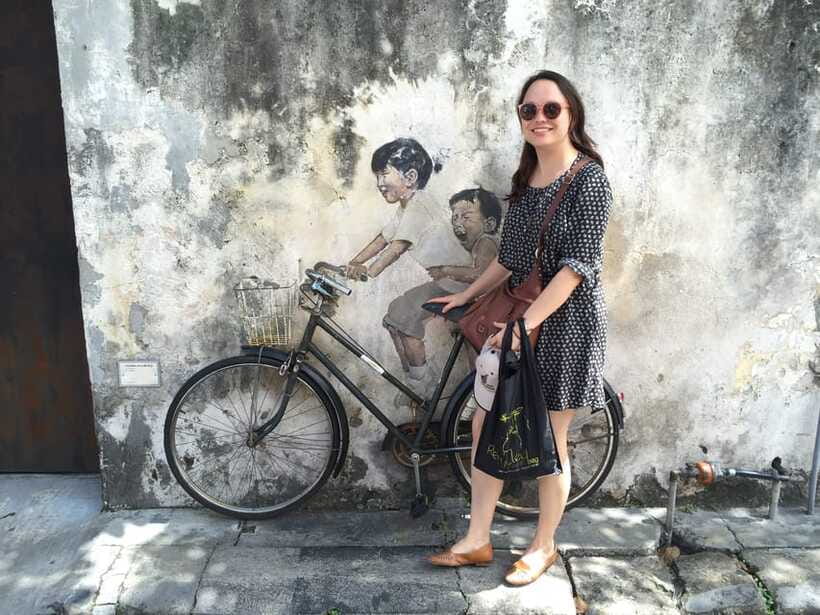
Asam laksa is one of the main savory stops. Penang’s version balances sweet, sour, and savory flavors, and it is notably different from the laksa commonly associated with Kuala Lumpur.
If you are expecting a thick coconut curry, this dish may surprise you. The Penang style is known for a brighter, sharper profile, and the sour element gives it a strong local identity. It is a good point in the walk to compare regional Malaysian food instead of treating all laksa as one dish.
The timing of this tasting also helps. After the sweet drinks and confections, a sour and savory bowl resets your palate. Since the guide gauges the group’s appetite, you are not necessarily asked to eat a full portion at every stop. That is a practical feature for a tour with several tastings.
Still, come hungry. The experience includes multiple foods, and you will get more from it if you treat the stops as a progressive meal rather than a series of tiny samples.
A few more street food tours around Malaysia worth a look
- Kuala Lumpur: Sambal Street Food Tour with 15+ Tastings
★ 4.9 · 1,657 reviews - The 10 Tastings of Kuala Lumpur With Locals: Private Street Food Tour
★ 5.0 · 249 reviews - Eat Like a Local: Kuala Lumpur Hawker Center and Street Food Tour by Night
★ 5.0 · 198 reviews - Kuala Lumpur: Local Street Food Night Tour
★ 4.5 · 162 reviews
Moh Teng Pheow and the Nyonya kitchen
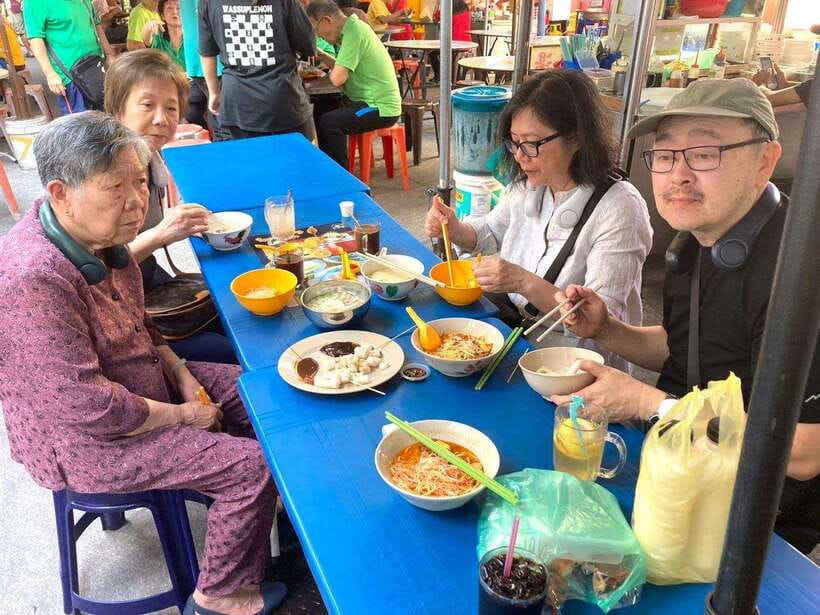
At Moh Teng Pheow Nyonya Koay, the focus shifts from market snacks to Peranakan Nyonya culture. The cafe is Michelin-listed and known for a wide range of kuey, including cakes, dumplings, puddings, and pastries.
The spelling may vary between kuey and kuih, but the larger point is the same: Nyonya sweets and snacks cover a wide field. They are not one single dessert. Shapes, textures, colors, and fillings can differ, and each item carries a connection to home cooking and celebration.
The guide explains how Baba and Nyonya communities grew from Chinese and Malay cultural fusion. That background makes the food easier to understand. You are not simply eating a colorful cake. You are seeing how communities formed new customs from different roots.
Recipes at Moh Teng Pheow are described as unchanged since 1933. That does not mean every item will suit every palate. Some kuey are delicate and sweet, while others may feel unfamiliar in texture. But that is precisely why the stop earns its place. It gives you a wider idea of what Nyonya food includes.
Harmony Street, murals, and George Town’s old streets
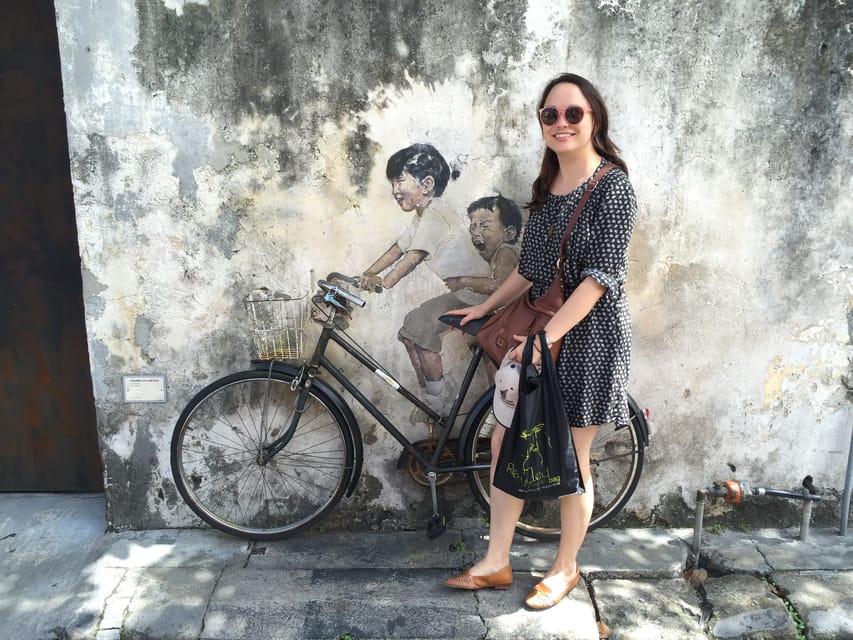
The walking route is not only about eating. Between food stops, you pass temples, mosques, and churches along Harmony Street. These buildings offer a clear picture of the religious coexistence that helped shape George Town’s food culture.
You will also see Ernest Zacharevic’s street art murals and iron-rod sculptures by local artists. These works have become part of the city’s modern visual identity, and they give you something to look for while your food settles.
The route passes the oldest fire station in town as well. That detail may sound modest, but it adds another layer to the walk. George Town’s streets are filled with reminders of civic life, trade, faith, and ordinary work. Food makes the route memorable, but the surrounding details help place that food in a real city.
Because this is a walking tour, the pace is shaped by the streets and the stops. The experience is wheelchair accessible according to the activity details, but it is also marked as not suitable for people with mobility impairments. That sounds contradictory, so you should contact the operator before booking if you have specific mobility needs.
What the $75 price includes
At $75 per person, this is not the cheapest way to eat in Penang. You can spend far less at individual hawker stalls if you already know where to go and what to order.
The price makes more sense if you want the explanation that connects the food. You are paying for a licensed local guide, selected food and drinks, access to family-run stalls, a market visit, cultural background, and a planned route through George Town. You also avoid the guesswork of choosing unfamiliar dishes on your own.
The strongest value comes from the range. In three and a half hours, you cover coffee, preserved fruit, confectionery, handmade popiah, asam laksa, and Nyonya kuey. You also see parts of George Town that would be easy to pass without understanding.
Food portions are adjusted to the group’s appetite, which is another point in the price calculation. A tour that orders too much can leave you uncomfortable and wasteful. Here, the stated goal is quality over quantity.
The value is weaker if you mainly want a large meal or if you already know Penang’s food scene well. It is stronger for a first visit, for solo visitors who want company, or for anyone who likes to understand who makes the food and why it matters.
Small-group comfort and practical limits
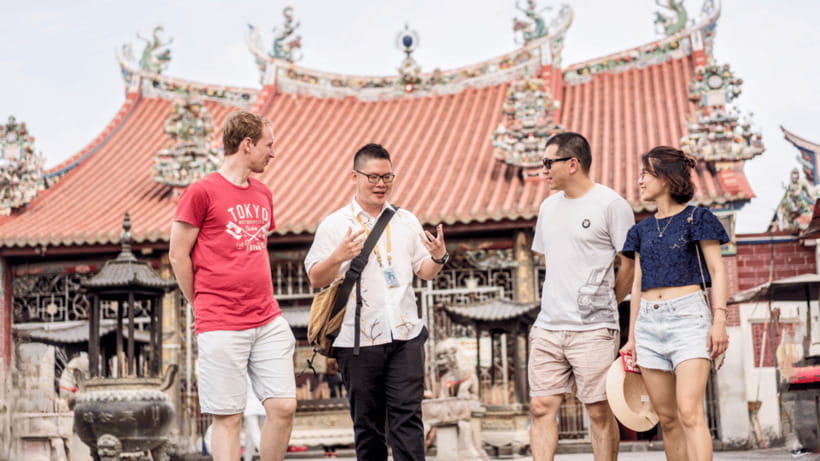
The group is limited to nine participants. That is small enough for questions and easier movement through market areas. It also fits the personal nature of the tour, since the operator has long-standing relationships with the vendors.
The guide speaks English and is licensed. That licensing means the guide is officially qualified to share Malaysia’s story, not only to point out dishes. A friendly guide matters on this kind of experience because the best information often comes between stops.
Wear shoes you can walk in for 210 minutes. Bring water, an umbrella, and breathable clothing. Do not bring luggage or large bags, since they make market and street walking awkward.
People with a cold should not join. That is sensible for a food-focused activity involving shared public spaces and food handling. The walk is also not a good match for anyone who finds several hours on foot difficult.
Cancellation is free up to 24 hours before the start time, and you can reserve now and pay later. Those terms help if your George Town plans are still shifting, but they do not replace checking the meeting point and start time before you go.
Who will get the most from this experience
I would choose this tour if you want a first taste of Penang with context. It suits curious eaters who want to try unfamiliar flavors but prefer a guide to explain what is on the plate.
It is also a good fit for people who care about small producers and family food businesses. The popiah demonstration and the Nyonya stop give the tour more substance than a simple checklist of famous dishes.
A small group makes it useful for solo visitors and couples who want a social experience without joining a large crowd. It can also work for families with older children who enjoy tasting, though the heat, walking, and strong flavors may not suit everyone.
I would skip it if you want a late-night hawker crawl, a large sit-down lunch, or a tour built around only the most familiar foods. Durian dodol, nutmeg pickles, and Nyonya kuey ask you to be open to new tastes.
Should you book the Penang street food walk?
Book it if you want food, local stories, and a guided introduction to George Town in one outing. The best parts are the family connections, the small group, and the balance between famous dishes and less obvious tastes.
The one caution is physical. You will walk for three and a half hours in a warm city, and the food comes in several stages rather than as one large meal. Bring the right clothes, leave your luggage behind, and arrive ready to taste rather than simply fill up.
For $75, I see this as a good orientation to Penang food culture, especially on a first visit. It gives you a starting point for returning to Chowrasta Market, seeking out more asam laksa, and recognizing the Nyonya treats you may otherwise walk past.
FAQ
How long does the Penang street food walking tour last?
The tour lasts 210 minutes, or three and a half hours.
What is the price per person?
The price is $75 per person.
What food and drinks are included?
Food and drinks at selected family-run stalls are included. Extra drinks beyond those shared during the tour are not included.
What language does the guide speak?
The live guide speaks English.
How many people are in the group?
The group is limited to nine participants.
Where does the tour begin?
The walk begins at Chowrasta Market in George Town, Penang. You must arrange your own transport to the meeting point.
What should I bring?
Bring comfortable shoes, an umbrella, water, and breathable clothing. Large bags and luggage are not allowed.
Is the tour wheelchair accessible?
The activity is listed as wheelchair accessible, but it is also marked as not suitable for people with mobility impairments. If you have specific access needs, confirm them with the operator before booking.
Can I cancel or pay later?
You can cancel up to 24 hours in advance for a full refund. You can also reserve your place and pay later.
Just added around Malaysia
- Back of the Bike Street Food Experience – Real Penang!★ 5.0 · 27 reviews
- Private Half Day Penang Tasty Local Street Food Tour★ 4.1 · 48 reviews
- Penang: Trishaw Ride and Hawker Center Food Tour★ 4.3 · 20 reviews
- Penang Local Food Hunting★ 5.0 · 10 reviews
- Petaling Jaya: Hauntu The Curve Admission Ticket★ 5.0 · 2 reviews
- Kuala Lumpur: Nightlife Street Food Tour with 6 Tastings★ 4.6 · 73 reviews
- Kuala Lumpur: Half Day Local Food Walking Tour★ 5.0 · 4 reviews
- George Town: Heritage Walking Tour with Street Food Tasting★ 4.7 · 6 reviews
Malaysia Street Food Tours, compared.
Kuala Lumpur: Sambal Street Food Tour with 15+ Tastings
Read our review →
The 10 Tastings of Kuala Lumpur With Locals: Private Street Food Tour
Read our review →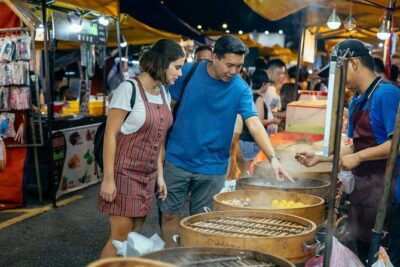
Kuala Lumpur Local Street Food Private Walking Tour by Night
Read our review →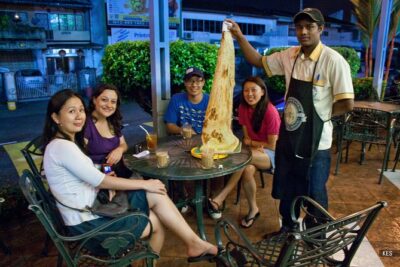
Eat Like a Local: Kuala Lumpur Hawker Center and Street Food Tour by Night
Read our review →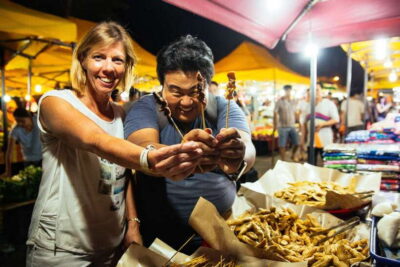
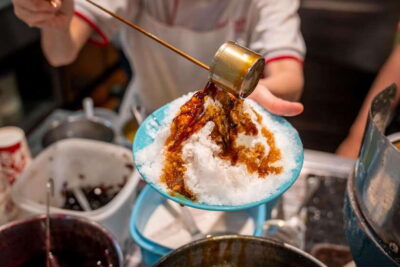
Kuala Lumpur: Nightlife Street Food Tour with 6 Tastings
Read our review →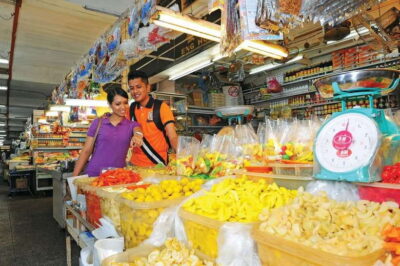
Private Half Day Penang Tasty Local Street Food Tour
Read our review →
Back of the Bike Street Food Experience – Real Penang!
Read our review →Browse the lists this tour appears in