
REVIEW · ROME STREET FOOD TOURS
Rome: Vegan Street Food Tour with Local Guide
Rome’s best vegan lesson may come wrapped in fried rice, served as a plant-based supplì. This 2.5-hour walk with Roman guide Arianna Bonardi pairs familiar city foods with practical advice on eating without dairy, meat, or guesswork.
I like the tour’s focus on real Roman food rather than a parade of tofu dishes. I also like that Arianna teaches you how to read menus and order vegan food after the tour ends. The main drawback is the amount of walking, and people with food allergies should not book this experience.
Key points to know before booking
- Arianna Bonardi leads the walk: She is a Roman actress, content creator, and animal-rights advocate with a personal connection to the food and neighborhoods.
- The food is Roman first, vegan second: Expect supplì, thin Roman pizza, Jewish-style fried artichoke, gelato, and other local tastes.
- Campo de’ Fiori adds more than scenery: Its market, lanes, and nearby landmarks help place the food in Rome’s daily life.
- You learn useful ordering skills: Arianna explains how traditional Italian menus work and how to avoid hidden animal products.
- The portions are generous: Eat lightly beforehand. This is a food tour that aims to leave you full.
- The route is not suited to everyone: Bring good walking shoes, water, sunscreen, and a hat. Wheelchair users and people with food allergies should choose another experience.
Why this vegan Rome food tour is different

Many vegan food tours focus on specialist restaurants or modern meat substitutes. This one takes a more useful route for a first visit to Rome: it asks how the city’s familiar foods can work for a plant-based eater.
That means you get to try foods connected to Roman life, not just dishes designed for tourists with dietary restrictions. A fried rice ball, a square of crisp pizza, an artichoke cooked in the Jewish Roman style, and a scoop of dairy-free gelato give you a solid introduction to the city’s street-food habits.
I especially like the practical aim. Arianna does not only point to places that serve vegan food. She explains how to handle a conventional Roman trattoria, which menu terms deserve caution, and which dishes may naturally be free of animal products. That advice can save you from spending the rest of your trip asking every restaurant the same basic questions.
The tour is also guided by someone who is both Roman and vegan. That matters. Arianna can connect food with family stories, local customs, and neighborhood history, while keeping the conversation focused on what you can actually eat.
More Vegan and Vegetarian Tours in Rome:
- Vegan Street Food & Stories of Hanoi
★ 5.0 · 282 reviews - Hanoi: Vegan Street Food & Stories
★ 4.9 · 201 reviews - Mexico City Vegan & Vegetarian Street Food Adventure
★ 5.0 · 176 reviews
Starting at Sant’Andrea della Valle
The meeting point is by the stairs of the Church of Sant’Andrea della Valle. This is a smart place to begin, since the church itself gives you something worthwhile to see before the food starts.
One traveler arrived early and spent about an hour admiring the church. You should allow a little extra time if you want to look around rather than rush to the meeting point. The exact starting time depends on availability, so check when booking.
From here, the tour moves on foot through central Rome. Wear shoes that can handle uneven pavement and several stops. Rome’s historic center is easy to explore on foot, but its stones are not kind to flimsy sandals.
Supplì: Rome’s crisp, savory introduction
The first tasting is a vegan version of supplì, the deep-fried Roman rice ball traditionally made with meat and cheese. The plant-based version keeps the basic appeal: a crisp outside and a savory, filling center.
This is a useful first stop because supplì is not an obscure specialty. It is the sort of quick Roman food you may see in pizza shops and casual takeaway places. Learning that it can be made without animal products gives you an immediate way to eat more freely in the city.
The point is not simply to prove that vegan food can imitate a classic. It shows you how Roman cooking often depends on texture, seasoning, and cooking method. A successful supplì needs to be crisp and satisfying, and this tasting sets the tone for the rest of the walk.
Come hungry. The tastings are not tiny decorative bites. Several people found the overall amount of food enough for a full meal, so a large breakfast or lunch beforehand is a poor plan.
Pompey’s Theatre and Roman street food

The route continues toward the Theatre of Pompey, a major ancient site now woven into the modern streets around it. You will not be taking a formal archaeological tour, but the stop gives Arianna a chance to connect the neighborhood with Rome’s long past.
The area also serves as another food-tasting point. Expect to keep moving between historic sights and places where locals buy or eat casual food. That rhythm is one of the tour’s strengths. You are not parked in one restaurant for two and a half hours, and the walking helps break up the eating.
Arianna’s approach is conversational rather than stiff. The tour includes stories about Roman food, culture, and the dishes themselves. If you enjoy learning through personal anecdotes, you will likely get more from this than from a guide who only recites dates and names.
A few more street food tours around Rome worth a look
- Rome: Street Food Tour with Local Guide
★ 4.8 · 4,077 reviews - Rome: Guided Food Walking Tour with Wine in Trastevere
★ 4.9 · 3,105 reviews - Rome Street Food Tour with Local Guide
★ 5.0 · 2,361 reviews - Rome: Discover Trastevere Street Food Guided Tour
★ 4.7 · 14 reviews
Campo de’ Fiori and the everyday side of Rome
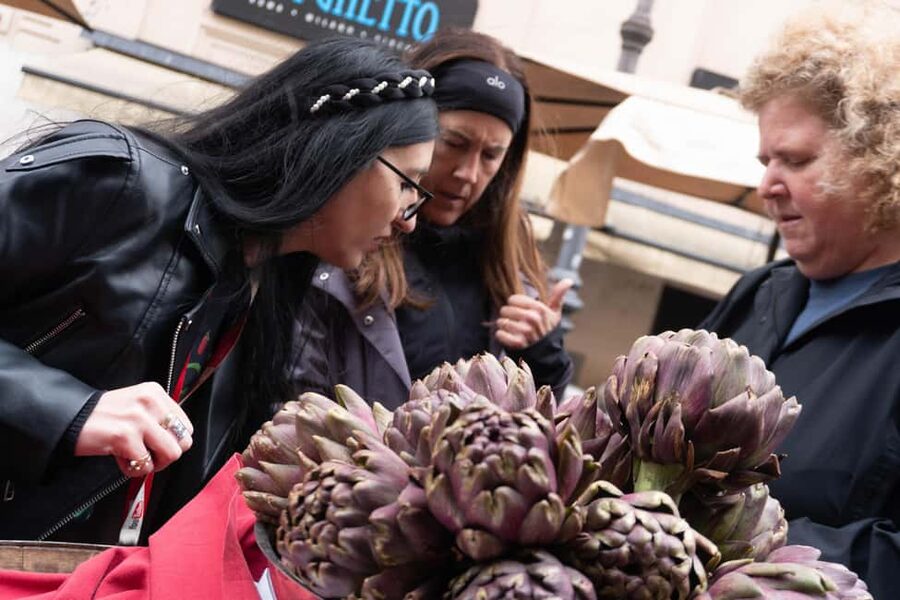
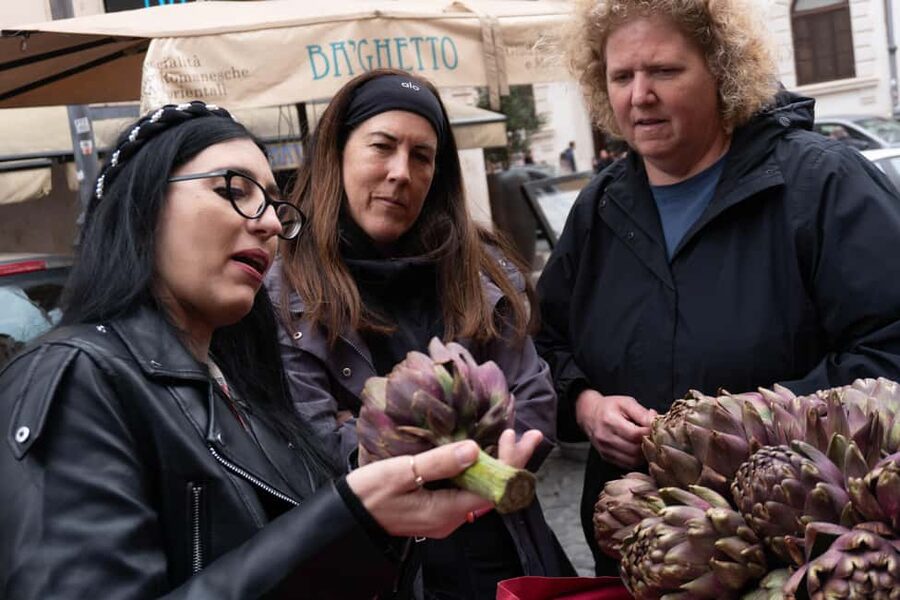
Campo de’ Fiori brings a different feel to the route. Its market is known for flowers and produce, and the stop gives you a quick look at the colors, ingredients, and shopping habits of central Rome.
For vegan visitors, this is more than a photo opportunity. Fresh vegetables, fruit, herbs, and legumes are part of the food vocabulary you need to understand when shopping or reading menus. Arianna can help you recognize which ingredients are naturally plant-based and which apparently simple dishes may still contain dairy or meat.
The short market visit is followed by time for photos and a walk through the narrow streets near Passetto del Biscione. These lanes offer a pleasant change from Rome’s grand monuments. You get a sense of how the historic center works at street level, with old walls, small passages, and daily life continuing around you.
Do not expect a long, detailed stop at every landmark. The tour’s focus is food, with history and architecture used to give the route character. If your priority is a full archaeological explanation, book a dedicated history tour instead.
Learning to order vegan food in Rome
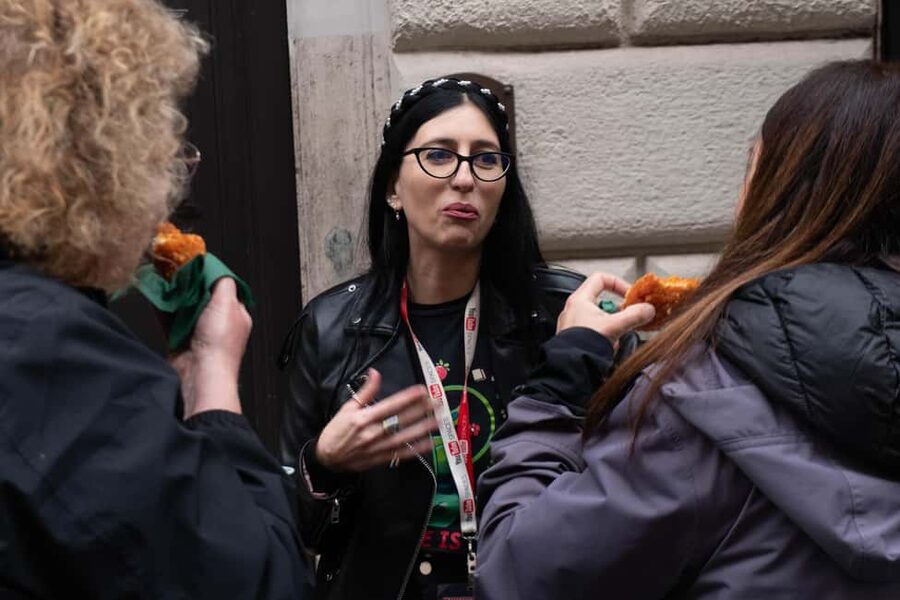
This may be the most useful part of the experience. Arianna explains how a standard Italian restaurant menu is arranged and how to request a plant-based meal in a traditional Roman restaurant.
That lesson matters because vegan dining in Rome is not always about finding a restaurant labeled vegan. You may want pasta, vegetables, pizza, or a simple local dish in a regular trattoria. Knowing how to ask about ingredients and how to spot common food traps makes the rest of your visit less stressful.
The tour also gives you suggestions for places to try later. Several people used the route as an introduction to Rome and returned to some of the food stops on following days. That is a good sign of practical value: you are not just tasting once, you are building a short list for the rest of your stay.
If you are traveling with a non-vegan partner or friend, this tour should still work. The dishes are based on Roman food rather than on a narrow health-food menu. Non-vegans can treat it as a local food walk, while the vegan member of the group gets specific advice that is often hard to find elsewhere.
Carciofo alla giudia in the Jewish Quarter
The walk then reaches Rome’s historic Jewish Quarter, where you taste carciofo alla giudia. This Jewish-Roman specialty is a whole artichoke fried until the outer leaves turn crisp and the center becomes tender.
It is naturally vegan, which makes it an ideal dish for this route. You are not eating a substitute version of a famous local food. You are eating a traditional Roman dish that already fits a plant-based diet.
The artichoke also shows why a food tour can teach more than a restaurant meal. You learn how a dish is tied to a particular part of Rome and how local cooking can cross religious, cultural, and culinary lines. The Jewish Quarter gives the tasting a strong sense of place.
A practical note: fried artichoke can be substantial, especially alongside the earlier tastings. Pace yourself and keep drinking water. The tour includes one glass of wine or a soda, but additional drinks are not included.
Roman pizza and the best kind of local tip
Pizza is another key stop, served in the Roman style. Unlike the softer, round Neapolitan version many people know, Roman pizza is typically thin, crisp, and sold by the slice or portion.
You will visit a pizzeria with vegan choices, and Arianna uses the stop to show how easy plant-based eating can become once you know where to look. This is especially helpful if you want a quick lunch during the rest of your time in Rome.
One of the strongest food reactions centered on the pizza, with one person calling it the best pizza of a week in Rome. That does not mean you should expect the same favorite flavor or topping, but it does point to the quality of the stop and its usefulness for future meals.
The pizza tasting also fits Arianna’s cheerful food philosophy. Her motto, as shared during the tour, is that pizza means happiness. That may sound simple, but it captures the experience well: you are learning how to eat according to your values without treating the meal as a sacrifice.
Dairy-free gelato for the final stop
The tour ends with dairy-free gelato at an artisanal gelateria. Choices may include creamy flavors such as hazelnut and fruit sorbets made with natural ingredients.
This is a welcome finish after the savory tastings. Gelato is one of the foods that can cause confusion for vegans, since fruit flavors may be dairy-free while nut or chocolate flavors can vary. Having a guide explain what to look for is more useful than simply being handed a scoop.
The gelato stop also prevents the tour from feeling like a sequence of substitutions. A good sorbet or dairy-free nut gelato can be enjoyable on its own terms. One suggestion for improvement would be a vegan tiramisu, cake, or small dessert platter, but the existing sweet stop still gives you a satisfying ending.
The walk finishes near Area Sacra di Largo Argentina. This ancient site is a memorable place to end, and it leaves you in a useful central location for continuing your evening.
What the $93 price includes
At $93 per person, this is not the cheapest way to find vegan food in Rome. You could spend less by buying individual slices of pizza, a supplì, an artichoke, and gelato on your own.
The value comes from the combination of food, access, and instruction. Your fee includes the guided walk, the tastings, and one glass of wine or soda. You also get Arianna’s personal suggestions, menu guidance, and help connecting food with the streets you are walking through.
I would consider the price fair if you are vegan, new to Rome, and likely to use the advice for several more meals. It is less compelling if you only want a quick snack or already know Rome’s vegan scene well.
Booking this early in your visit makes the price work better. You can use the restaurant suggestions and ordering tips for the rest of your stay, rather than learning them on your final evening.
Timing, walking, and practical limits
The tour lasts 2.5 hours, which is long enough for several tastings without taking over your day. It works well on your first or second day because it helps you get oriented around Campo de’ Fiori, the Jewish Quarter, and the central streets.
The route includes a lot of walking. Bring comfortable shoes, water, sunscreen, and a hat on sunny days. Smoking is not allowed during the tour.
The experience is not suitable for wheelchair users or people with food allergies. That second restriction is important. Even though the food is designed to be vegan, the activity is not presented as suitable for people who need an allergy-safe environment. If cross-contact or a specific ingredient could cause a serious reaction, choose a different option.
The tour is offered in English with a live guide. Group size is not specified, so you should not assume a private walk or a small party.
Who should book this experience?
I would recommend it most strongly to first-time visitors who are vegan or curious about plant-based Roman food. It is also a good fit for couples or friends with mixed diets, since the dishes focus on familiar local food rather than specialized vegan products.
Book it if you want:
- A proper Roman food experience without animal products
- A local guide with a personal connection to the city
- Advice you can use in ordinary restaurants
- A generous amount of food in a short time
- A walking route through central neighborhoods
- Help finding vegan choices beyond specialist restaurants
Think twice if you dislike walking, want a formal history tour, have food allergies, or prefer to choose every dish yourself. The tour has a clear structure, and the food is selected for you.
Should you book the vegan street food tour?
Yes, if vegan dining is important to you and you want more than a list of restaurant names. Arianna’s tour gives you Roman classics, useful ordering skills, neighborhood context, and enough food to make the $93 feel reasonable for the right person.
Book it near the start of your Rome visit, arrive hungry, and wear sensible shoes. If you do, the tour can turn an unfamiliar food scene into one you can handle with confidence for the rest of your trip.
FAQ
How long is the Rome vegan street food tour?
The tour lasts 2.5 hours.
Where does the tour begin?
It begins by the stairs of the Church of Sant’Andrea della Valle.
Where does the tour finish?
The tour finishes at Area Sacra di Largo Argentina.
What food will I taste?
The tour includes a vegan version of supplì, Roman-style pizza, carciofo alla giudia in the Jewish Quarter, and dairy-free gelato. The exact food selection may depend on the stops available.
Is a drink included?
Yes. The experience includes one glass of wine or one soda. Additional food and drinks are not included.
Is the tour offered in English?
Yes. It includes a live English-speaking guide.
Is the tour suitable for people with food allergies or wheelchair users?
No. The experience is listed as unsuitable for people with food allergies and wheelchair users.
Just added around Rome
- Eat & Walk : Street Food in the Center & Trastevere★ 4.9 · 6 reviews
- Rome: Trastevere & Tiber Island Street Food Tour at Sunset★ 4.9 · 71 reviews
- Rome: Vatican Street Food and Wine Tour with Farmers Market★ 5.0 · 37 reviews
- Rome: Trastevere Quarter Street Food Tour with Sightseeing★ 4.9 · 21 reviews
- Rome: Trastevere Food Walking Tour with Beer and Wine★ 4.9 · 71 reviews
- Rome Street Food: Delights at Campo dei Fiori & Ghetto Area★ 5.0 · 34 reviews
- Rome Street Food: Small Group Tour in the Historic Centre★ 4.8 · 9 reviews
- Rome Secrets: Dark History & Tasty Bites Tour★ 5.0 · 37 reviews
Rome Street Food Tours, compared.

Rome: Guided Food Walking Tour with Wine in Trastevere
Read our review →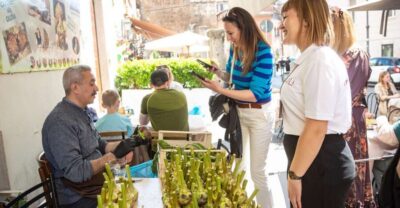
Rome: Trastevere & Campo de Fiori Street Food Walking Tour
Read our review →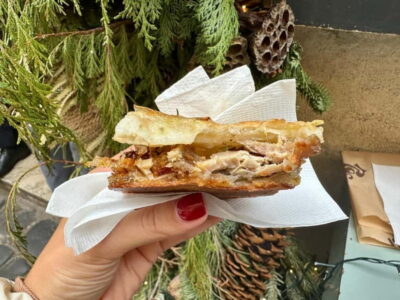
Rome: Trastevere Street Food Walking Tour with Local Expert
Read our review →
Roman Food Tour with Visit to the Trionfale Food Market
Read our review →
Trevi Fountain, Pantheon, and Campo Dei Fiori Market Food and Wine Tour
Read our review →
Trastevere Like a Local Food Tour with 7+ Food Tastings & Wines
Read our review →Browse the lists this tour appears in