
REVIEW · ROME STREET FOOD TOURS
Rome Secrets: Dark History & Tasty Bites Tour
Rome’s darker side comes alive on this two-hour evening walk through the Jewish Ghetto and old city center, where ghost stories sit beside real crimes, religious persecution, and Roman food. You’ll hear about the Golem, Kabbalah, Giordano Bruno, poisoners, secret passages, and an executioner, then pause for pizza, wine, beer, and local sweets.
I like the way the tour connects less obvious corners of Rome instead of repeating the usual Colosseum and Trevi Fountain script. I also like the balance between unsettling stories and simple food stops, especially the Roman pizza and ciambelline biscuits with wine. The main drawback is the tight two-hour schedule: several stops receive only about 10 minutes, so the experience favors lively storytelling over long visits inside buildings.
Key points to know
- The Jewish Ghetto sets the mood: Begin at the Portico d’Ottavia with tales of mysticism, Kabbalah, the number 7, and the Golem.
- Food is part of the story: You receive Roman pizza, one glass of beer, one glass of wine, and local sweets, including ciambelline al vino.
- The route visits unusual places: Look for the Passetto del Biscione, Arco dei Banchi, and the skull-covered church of Santa Maria dell’Orazione e Morte.
- The history is often grim but not invented for effect: Giordano Bruno, Giulia Tofana, and Mastro Titta are tied to documented episodes in Rome’s past.
- The guide matters a great deal: Guides such as Simona, Daniele, Daniel, and Sylvia have been praised for warmth, humor, and strong storytelling.
- It suits curious first-night visitors: The mix of orientation, food, folklore, and history gives you an unusual introduction to central Rome.
Rome after dark begins at the Portico d’Ottavia
Meet your guide in front of the ruins of the Portico d’Ottavia, an atmospheric starting point in the Jewish Ghetto. This is a useful place to begin because the old stonework, narrow streets, and layered religious history immediately put you in the right frame of mind.
The tour does not treat Rome’s dark history as a string of cheap scares. Instead, it uses legends and real events to show how Romans once understood death, faith, crime, punishment, and secret knowledge. You might hear one story rooted in folklore, then move straight into a historical account of a trial, execution, or political conflict.
That mix is the main reason to choose this walk. If you want a serious academic lecture, this will feel light. If you want a guided stroll with more substance than a standard ghost tour, it hits a useful middle ground.
The route is on foot through central Rome. Wear comfortable shoes, since the streets are cobbled and the tour continues after sunset. The listed stops are short, so you should expect the guide to keep the group moving rather than settle in for long pauses.
More Heritage Tours in Rome:
- Rome Street Food: Small Group Tour in the Historic Centre
★ 4.8 · 9 reviews - Rome: Historic City Center Local Food Tour
★ 5.0 · 4 reviews - Historic Ybor City Food Walking Tour
★ 5.0 · 2,210 reviews
The Jewish Ghetto, Kabbalah, and the mystery of the Golem
The first section explores the Jewish Ghetto and its legends of mysticism and Kabbalah. The guide also explains the unusual importance attached to the number 7 in Rome and introduces the story of the Golem, a creature linked in Jewish folklore to the power of sacred words and mystical knowledge.
This is where the tour’s title makes sense. You are not simply walking past old buildings while someone recites dates. You are hearing how stories, fears, and beliefs helped shape the way people saw the city around them.
The Jewish Ghetto is also the first food stop. You can expect Roman pizza, a welcome break before the route moves toward darker material. The included food is not a full meal, so plan dinner separately if you arrive hungry, but a hot slice gives the walk a pleasant local flavor.
The package also includes one glass of beer. That may be served as part of the food portion, depending on the arrangement on the evening you go. Some of the food described by participants has included gelato as well, but the stated inclusions specifically cover Roman pizza, local sweets, beer, and wine.
Passetto del Biscione and Rome’s small sacred images
From the Ghetto, the walk heads toward the Passetto del Biscione, one of the most visually appealing parts of the route. This old frescoed corridor is linked to secret meetings, forbidden romances, and quick escapes.
The passage is a good example of how Rome rewards anyone who looks up and slows down. It is easy to pass through central streets focused on major monuments, yet small corridors like this can carry a surprising amount of local story.
Your guide also explains the Madonnelle, small sacred images placed on walls and at street corners. These images reflect the habit of bringing religious protection into everyday public space. They help connect the supernatural tales to ordinary Roman life, rather than keeping the subject inside churches or museums.
Bring a camera, but do not expect a long photography stop. The itinerary allows roughly 10 minutes for this portion, and the guide needs to keep the group on schedule.
Campo de’ Fiori and the shadow of Giordano Bruno
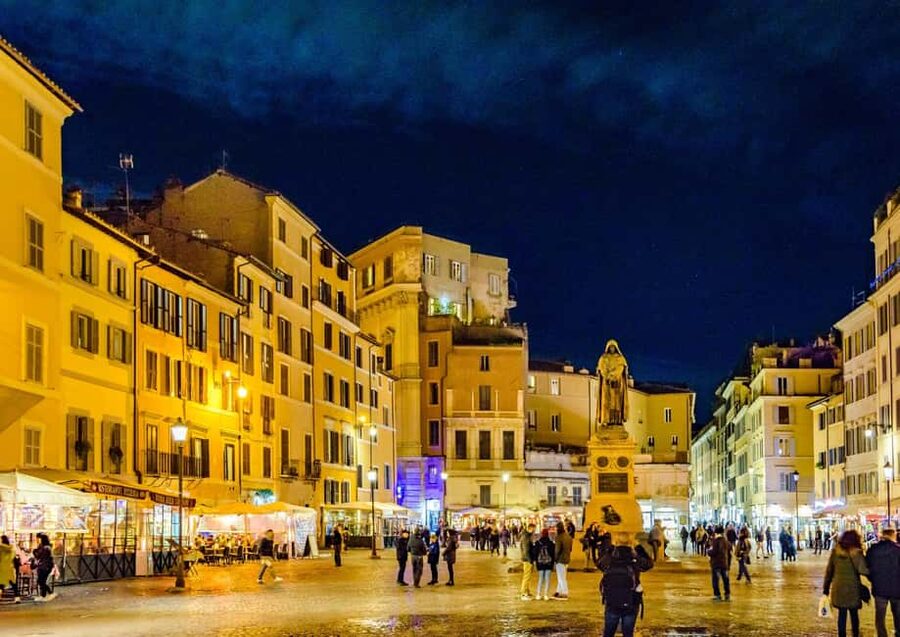
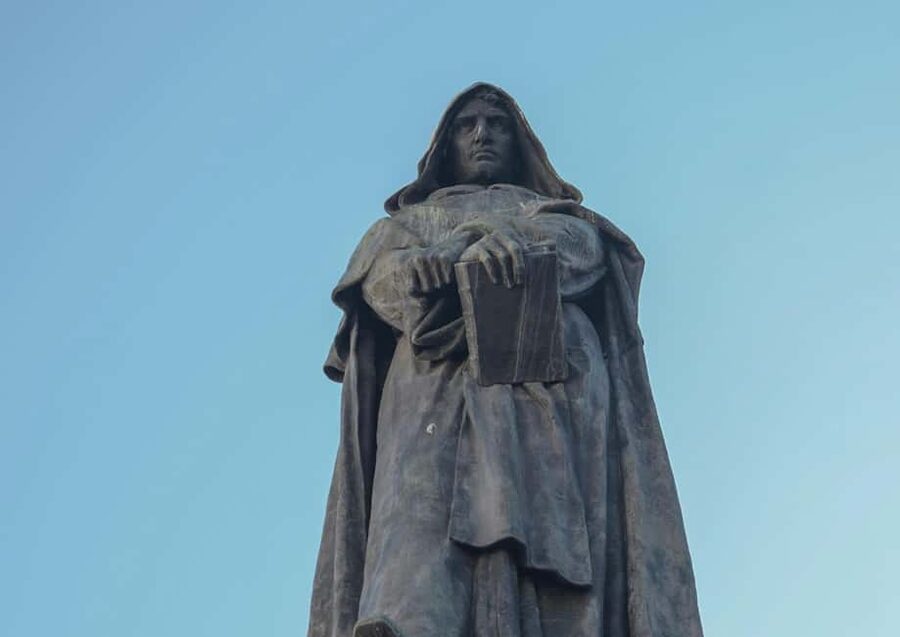
Campo de’ Fiori brings the tour into a more open square and introduces one of its strongest historical figures, Giordano Bruno. His bronze statue looks across the piazza, hooded and stern, recalling his execution for heresy in 1600.
Bruno’s story gives the walk more weight than a standard collection of ghost tales. He became associated with free thought and forbidden knowledge, and his death remains one of the most unsettling episodes connected with this part of Rome.
The guide’s task here is to explain the person behind the statue without reducing him to a simple hero or villain. This is one of the places where a lively narrator can make a real difference. Daniele, Daniel, Simona, and Sylvia have each been singled out for bringing history to life with humor, passion, or clear explanations. Guides can vary, but the best version of this tour depends heavily on that human element.
Campo de’ Fiori is also an active part of Rome, so the atmosphere may be less hushed than at the smaller lanes and churches. That contrast works well. You move from a busy public square to a story about censorship, belief, and execution.
Same city, a different plate:
- Rome: Street Food Tour with Local Guide
★ 4.8 · 4,077 reviews - Rome: Guided Food Walking Tour with Wine in Trastevere
★ 4.9 · 3,105 reviews - Rome: Trastevere & Campo de Fiori Street Food Walking Tour
★ 4.9 · 2,768 reviews - Rome Street Food Tour with Local Guide
★ 5.0 · 2,361 reviews
Santa Maria dell’Orazione e Morte and the skull-covered façade
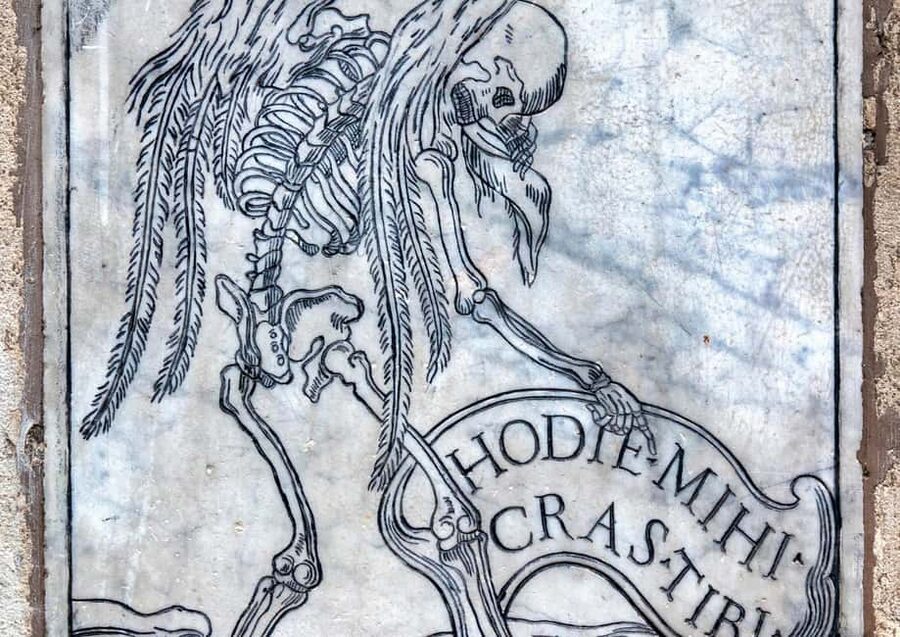
The church of Santa Maria dell’Orazione e Morte offers the tour’s clearest visual link to death. Its baroque façade is decorated with skulls and other reminders of mortality, while the church itself was connected with the care and commemoration of nameless dead recovered from the Tiber.
The stop is listed as a photo break of about 10 minutes. That means you may see the exterior and hear the story without receiving a long interior visit. Check the guide’s instructions on the evening, since the experience is not presented as a full church tour.
Still, the façade alone makes the stop worthwhile for anyone interested in Rome’s macabre side. The skulls are not decorative in a modern horror-movie sense. They reflect a religious tradition that treated death as a constant part of public life and charity.
This is also a good point to remember that the tour is not designed for very young children who may be disturbed by death, executions, or stories of poisoning. The material is historical, but the subject matter is plainly grim.
Via Giulia and the tale of Aqua Tofana
The walk then follows elegant Via Giulia, where the guide tells the story of Giulia Tofana, a seventeenth-century poisoner associated with Aqua Tofana. The tale concerns women seeking a way out of unhappy marriages, and it brings betrayal, domestic danger, and criminal enterprise into the tour.
This stop works because it shifts the focus from public execution and religious punishment to private desperation. The story is uncomfortable, but it also raises questions about the limited choices available to women in earlier periods. You are not just hearing about a famous poison. You are hearing how crime can grow from a society’s power imbalance.
Via Giulia itself provides a calmer setting for the story. Its polished appearance can hide the unsettling events connected with old Roman streets. That contrast is a recurring strength of this tour: ordinary-looking lanes become the setting for tales of danger and deception.
The route does not claim that every legend is proven fact. A good guide should help you tell the difference between documented history, local tradition, and folklore. That distinction matters here, especially when stories have been repeated for centuries.
Arco dei Banchi and the city’s secret routes
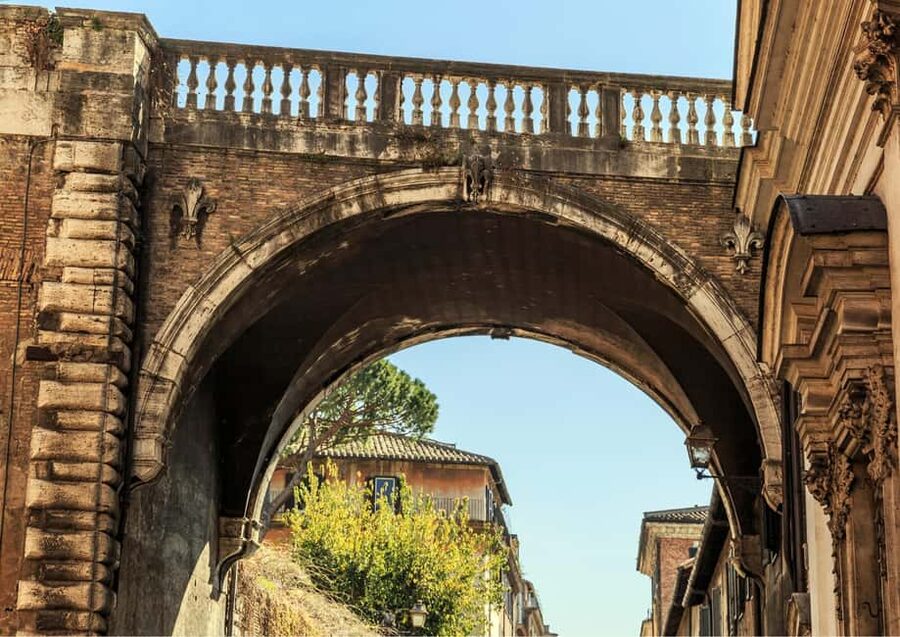
The Arco dei Banchi is another small but memorable stop. This passage once allowed bankers, spies, and priests to move between the Vatican area and the center of Rome without attracting attention.
It is the kind of place you might miss if you were walking alone. The arch does not compete with the city’s famous monuments, yet its purpose tells you something about old Rome: power moved through back streets, and privacy could be as valuable as grandeur.
You will probably spend only a short time here. The value comes from the explanation, not from a long architectural visit. If you like secret corridors, political intrigue, and the practical side of city history, this is one of the route’s better details.
The walk continues toward the area near Ponte Sant’Angelo, so the route also gives you a pleasant change of scenery as central Rome opens toward the river and the castle.
Ciambelline, wine, and the lighter side of the evening
The second food pause softens the mood with ciambelline al vino, traditional ring-shaped biscuits made with wine, served with a glass of wine. They are simple, crisp, and closely tied to Roman food culture.
I like this part of the design because the refreshments are not treated as a separate tasting event. They give you a chance to rest while the guide continues the conversation, and they keep the tour from becoming a nonstop march through grim material.
The included drinks are a real part of the value. At $40 per person, you are paying for a live guide, a two-hour route, pizza, beer, wine, and sweets. You should not compare the price with a full dinner, because it is not one. But compared with a basic walking tour that includes no food, the package offers a fair return if the guide is strong and the group remains small.
Private and small-group options are available. A smaller group should make it easier to hear stories in narrow lanes and ask questions, while a private format may suit families or friends who want to set the pace. The exact cost of those formats is not provided, so check before booking.
Ponte Sant’Angelo and Mastro Titta’s grim finale
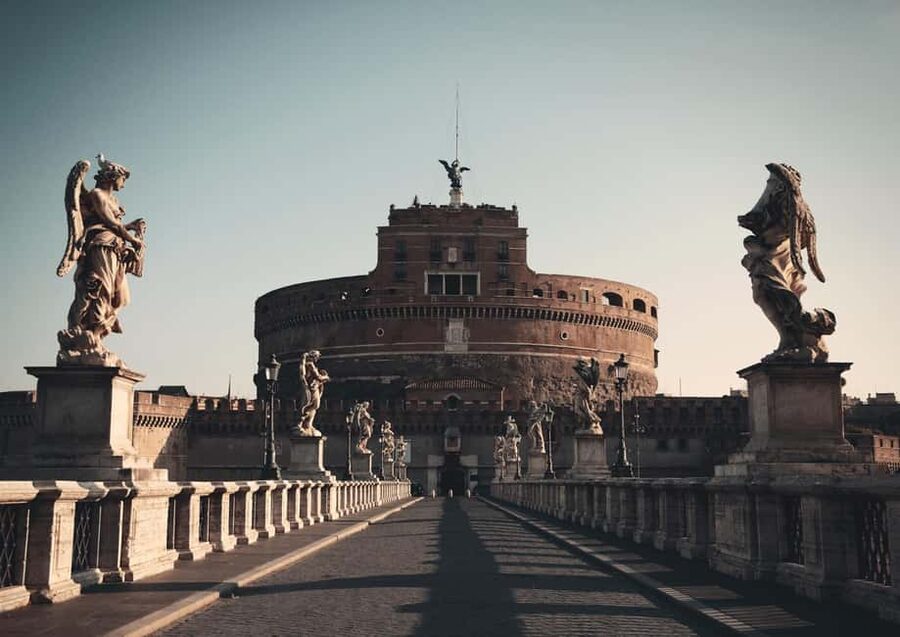
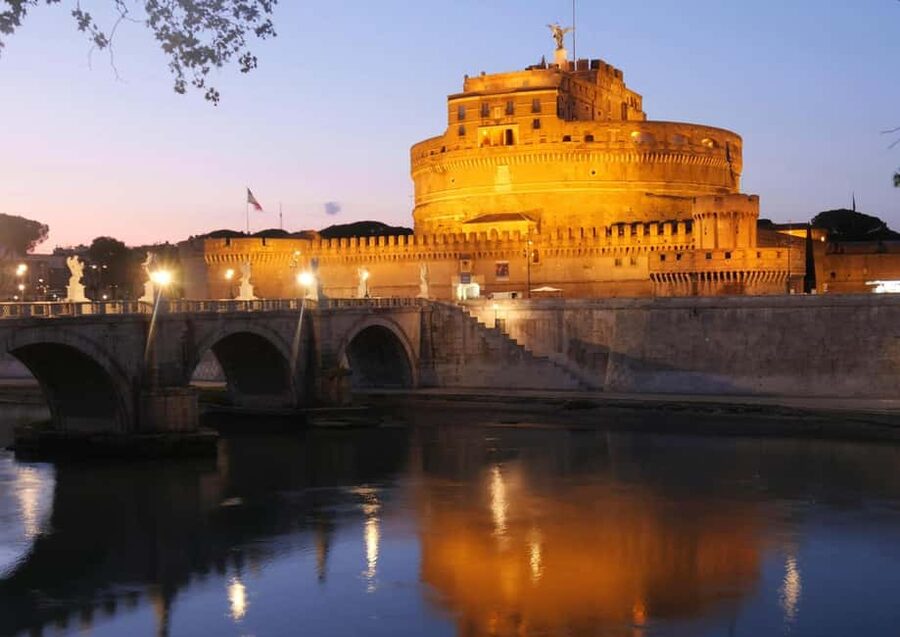
The tour finishes near Ponte Sant’Angelo, with a photo stop of about five minutes and the story of Mastro Titta, Rome’s most notorious executioner.
This is a fitting ending. The route begins with mystical stories and moves through heresy, poison, secret passageways, and nameless dead before arriving at a figure whose work was part of Rome’s public justice system. Mastro Titta’s reputation was gruesome, but the account also presents him as a complicated person rather than a flat monster.
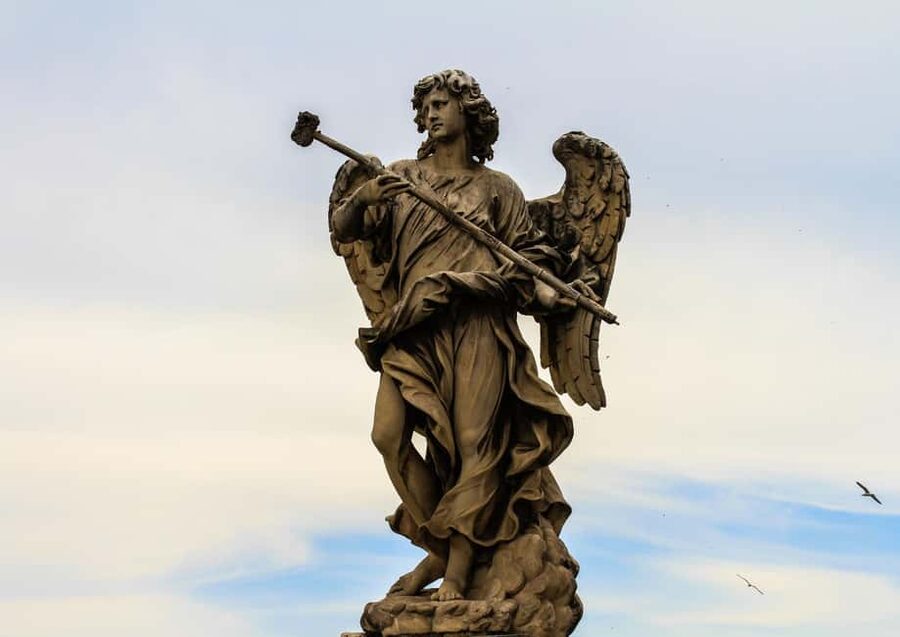
The location gives the finale a strong visual setting. You are near the river and the monumental approach to Castel Sant’Angelo, and the evening light can make the final stretch particularly atmospheric. The walk finishes on Via del Banco di Santo Spirito, near Ponte Sant’Angelo.
Do not expect a long bridge visit or a final drink at this point. It is a short closing stop, designed to end the story rather than extend the evening.
What the guides add to the experience
This tour is especially dependent on the guide. The strongest comments center on guides who can shift from folklore to history, explain a difficult subject clearly, and keep the group interested while walking.
Simona has been praised for her passion and for making the history feel personal. Daniele has received repeated praise for enthusiasm, humor, and his background as an archaeologist. Daniel has also been described as engaging and full of energy, while Sylvia has been noted for joining history lessons with folklore.
Those names do not guarantee who will lead your departure. Guides may vary by date and language. Still, they show what to look for: a narrator who can explain why a place matters, not just recite a scary anecdote.
The tour is offered in English, French, Spanish, and Portuguese. If you have a choice, book the language in which you can follow fast storytelling and historical detail most comfortably.
Who should book this Rome night walk?
I would choose this tour if you have already seen Rome’s famous monuments, or if you want your first evening to offer a different kind of orientation. It introduces the Jewish Ghetto, Campo de’ Fiori, Via Giulia, and the Ponte Sant’Angelo area without asking you to spend half a day in a museum.
It suits adults and older teenagers who enjoy history with a darker edge. You should be comfortable hearing about executions, heresy, poisoning, ghosts, and death. The food makes the walk more relaxed, but it does not remove the serious subject matter.
The tour is also a good match for anyone who likes photography and small urban details. Passetto del Biscione, the Madonnelle, Arco dei Banchi, and the skull-covered church offer more unusual images than the standard Rome route.
I would skip it if you want a full meal, long church visits, or a carefully researched academic tour with extensive time at each site. The route is brisk, and the storytelling sometimes has to do the work that an interior visit would normally provide.
Is $40 a fair price?
At $40 per person, the price is reasonable for a two-hour guided walk with several included tastings. You receive Roman pizza, one beer, one wine, and local sweets, while visiting a series of central locations that you could easily overlook on your own.
The best value comes from the guide. If you receive a narrator with the energy and skill associated with Simona, Daniele, Daniel, or Sylvia, the tour can feel like an entertaining history lesson with food built in. If you prefer to explore at your own speed, the same money may be better spent on a meal or museum ticket.
Free cancellation up to 24 hours before the start and reserve-now, pay-later booking make it easier to fit into a changing Rome schedule. Starting times vary, so check availability and choose an evening that leaves enough time to reach the Portico d’Ottavia.
Should you book Rome Secrets?
Book it if you want Rome’s overlooked stories rather than another greatest-hits walk. The strongest reasons are the unusual route, the balance of folklore and real history, and the food breaks that keep two hours from feeling heavy.
Go in expecting a fast-moving outdoor experience, not a full dinner or a long guided tour of each church. If that sounds right, $40 buys a personable introduction to Rome’s alleys, legends, punishments, and everyday treats.
FAQ
Where does the tour begin?
It begins at the Portico d’Ottavia, with the meeting point in front of the ruins of the porch.
Where does the tour finish?
The walk finishes on Via del Banco di Santo Spirito, near Ponte Sant’Angelo.
How long does the tour last?
The tour lasts two hours.
What food and drinks are included?
The experience includes Roman pizza, one glass of beer, one glass of wine, and local sweets. The route specifically features ciambelline al vino biscuits.
Which languages are available?
The tour is available in English, French, Spanish, and Portuguese.
Is this a private tour or a group tour?
Private and small-group options are available.
Can I cancel the booking?
You can cancel up to 24 hours in advance for a full refund.
Can I reserve now and pay later?
Yes. The booking option allows you to reserve your place and pay later.
Just added around Rome
- Rome: Vegan Street Food Tour with Local Guide★ 5.0 · 37 reviews
- Eat & Walk : Street Food in the Center & Trastevere★ 4.9 · 6 reviews
- Rome: Trastevere & Tiber Island Street Food Tour at Sunset★ 4.9 · 71 reviews
- Rome: Vatican Street Food and Wine Tour with Farmers Market★ 5.0 · 37 reviews
- Rome: Trastevere Quarter Street Food Tour with Sightseeing★ 4.9 · 21 reviews
- Rome: Trastevere Food Walking Tour with Beer and Wine★ 4.9 · 71 reviews
- Rome Street Food: Small Group Tour in the Historic Centre★ 4.8 · 9 reviews
- Rome Street Food: Delights at Campo dei Fiori & Ghetto Area★ 5.0 · 34 reviews
Rome Street Food Tours, compared.
Rome: Guided Food Walking Tour with Wine in Trastevere
Read our review →
Rome: Trastevere & Campo de Fiori Street Food Walking Tour
Read our review →
Rome: Trastevere Street Food Walking Tour with Local Expert
Read our review →
Roman Food Tour with Visit to the Trionfale Food Market
Read our review →
Trevi Fountain, Pantheon, and Campo Dei Fiori Market Food and Wine Tour
Read our review →
Trastevere Like a Local Food Tour with 7+ Food Tastings & Wines
Read our review →Browse the lists this tour appears in