
REVIEW · MOROCCO STREET FOOD TOURS
Tangier: Food Walking Tour
Tangier’s best food stories are told one bite at a time. This three-hour walk leads you from the cannon at Sour Meêgazine through M’Sallah, Grand Socco, and the Kasbah, with stops for caliente, bissara, stuffed dates, pastries, and tagine. Guides such as Rabab, Ismail, and Mohammed add the local context that turns a snack into a lesson about family, faith, and daily life.
I like the mix of places: market stalls, small eateries, cafés, and sit-down stops rather than one long restaurant meal. I also like the sensible pace, with food spaced between old streets and city views. The main consideration is mobility. Narrow lanes, uneven ground, and several hours on foot make this a poor fit for wheelchair users or anyone with a major walking limitation.
Key points to know before you book
- Six tasting stops and a full meal: This is substantial food, not a token sample at two or three stalls.
- A real walk through Tangier: You pass through M’Sallah, Grand Socco, the Medina, and Place de la Kasbah.
- Guides bring the city to life: Rabab, Ismail, Mohammed, Ismail, Ahmed, Abdul, and Anas have led this experience, depending on the date.
- Arrive very hungry: Tastings can include soup, bread, olives, meat pastry, smoothies, and tagine, along with other local dishes.
- Dietary needs can be discussed: Vegetarian, gluten-free, and lactose-free requests can be accommodated when arranged in advance.
- The practical trade-off: Transportation is not included, and the walk is not suitable for wheelchair users or people with significant mobility impairments.
What the $73 price buys you in Tangier
At $73 per person, this is not simply a short sampling walk. The price includes six tasting stops, a full meal, bottled water, and an English-speaking guide for three hours. That combination gives the experience better value than a tour that offers only a few bites and a quick explanation.
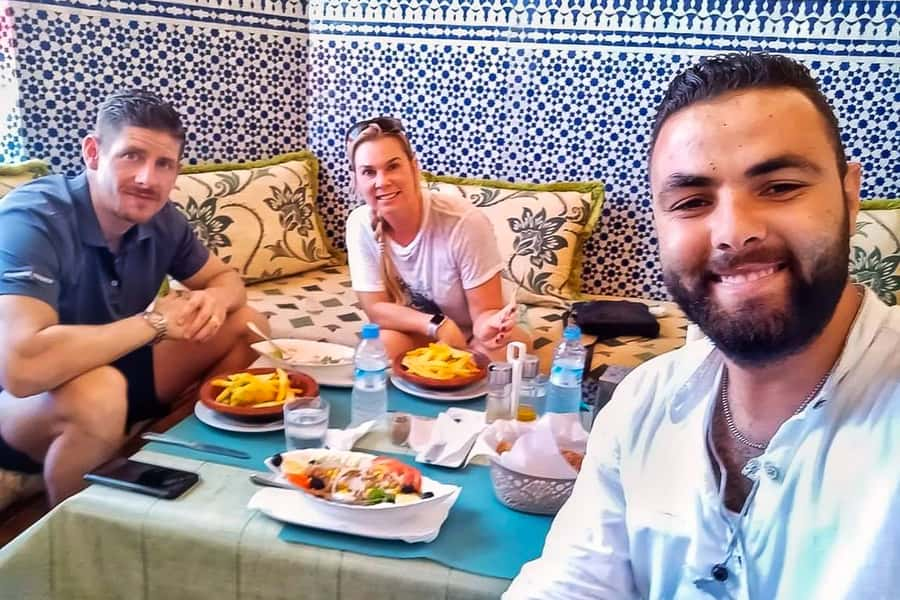
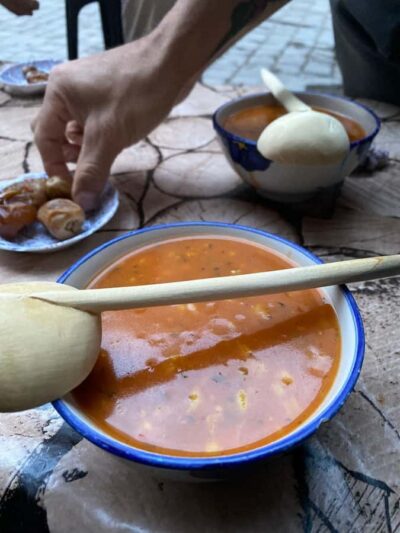
The meal matters. Tangier food tours can sound generous on paper but leave you searching for lunch afterward. Here, the food is spaced through the walk and ends with enough substance to fill you. Past tastings have included local bread, soup, olives, meat pastry, a smoothie, and tagine. You may also encounter caliente, bissara, stuffed dates, and other handmade foods.
The other part of the value is access to everyday places. Your guide knows the people behind the stalls and cafés, and can explain where locals buy food, how dishes are prepared at home, and why certain foods are connected to religious or family customs. That local connection is difficult to get from a restaurant menu alone.
Still, $73 is a noticeable price for a three-hour activity. You are paying for food, but also for interpretation and route planning. If you already know Tangier well and mainly want a cheap lunch, this is not the most economical choice. If you want a first look at the city with a meal built in, the cost is easier to justify.
More Street Food Walking Tours in Morocco:
- Marrakech: Authentic Moroccan Food Walking Tour & Dinner
★ 4.8 · 261 reviews - Fes: Street Food Walking Tour
★ 3.8 · 7 reviews - Casablanca Market and Street Food Walking Tour
★ 5.0 · 3 reviews
Starting beside the third cannon at Sour Meêgazine
The meeting point is next to the third cannon, the one in the middle, at Sour Meêgazine. This detail matters because old-city meeting points can be confusing, especially when several landmarks have similar names. Give yourself time to find the correct cannon rather than arriving at the last minute.
From there, the walk moves toward M’Sallah and the historic center. There is no included transportation, so you need to reach Sour Meêgazine on your own. Once the tour starts, the route is designed as a walking circuit through old streets and market areas, ending at Café Hafa.
Wear comfortable shoes. You will be on your feet for much of the three hours, and the old districts include narrow lanes and surfaces that may not be smooth. The tour is not suitable for wheelchair users or people with mobility impairments, a limitation worth taking seriously before booking.
M’Sallah: food, street life, and a first taste
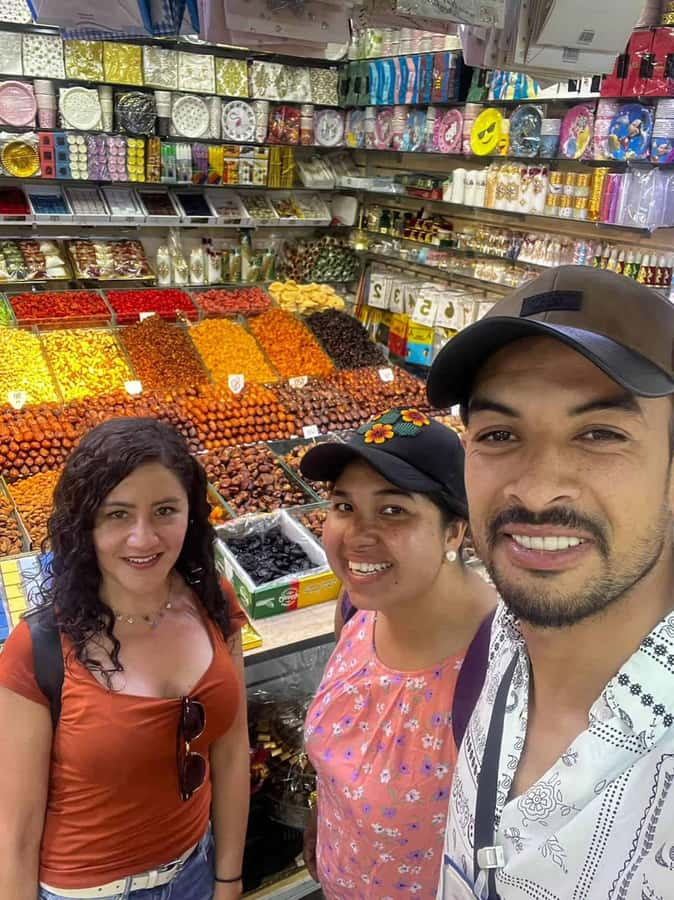
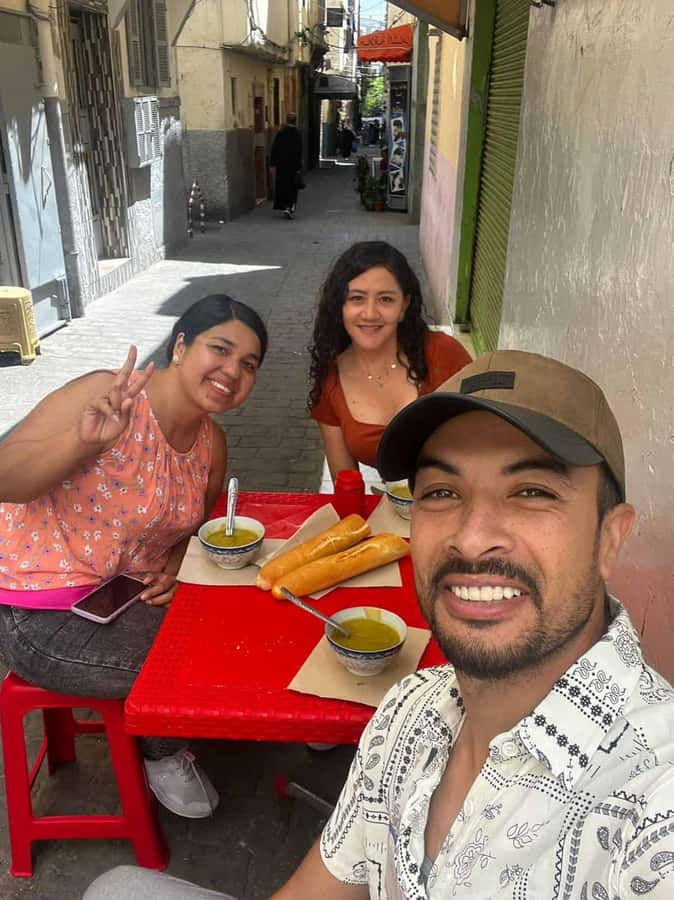
The M’Sallah portion lasts about 45 minutes and combines a guided walk with food tasting. This is a useful opening because you begin with both the city and the plate, rather than sitting down immediately and missing the setting where people shop and work.
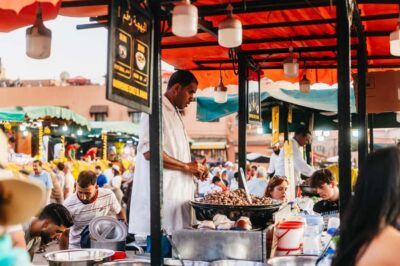
You will pass fresh produce sellers, artisans, and other parts of ordinary community life. The value here is visual and practical. You can see ingredients in their market setting, notice how compact the streets are, and begin to understand how food fits into the rhythm of Tangier.
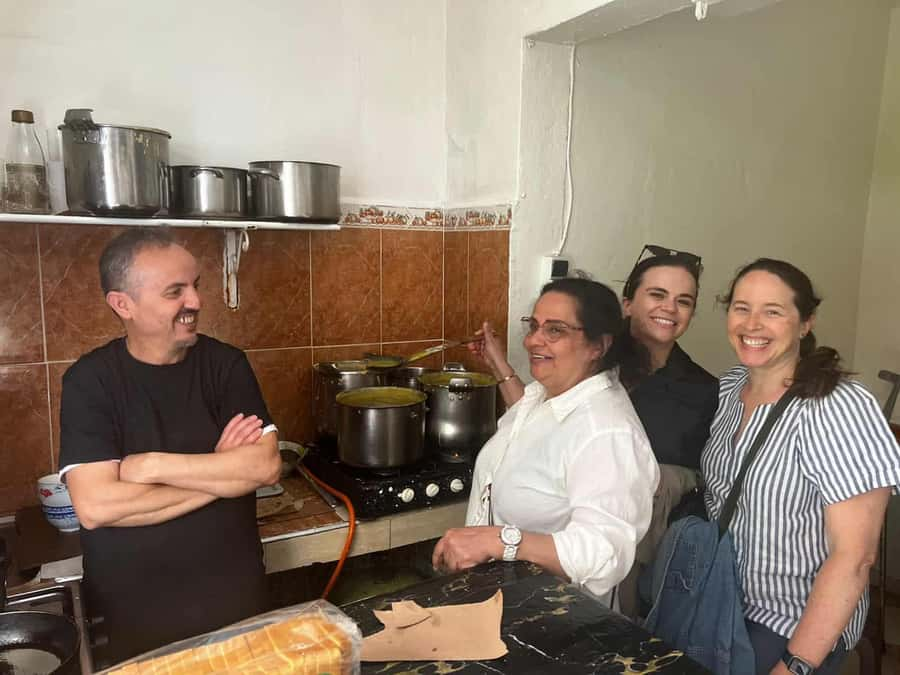
This is also where the guide can set up the flavors ahead. Foods such as bissara, a bean-based dish, or caliente, a chickpea-based local specialty, are easier to appreciate when you understand that they are everyday foods rather than formal restaurant creations. The exact tastings can vary, so do not treat the sample list as a fixed menu.
A good guide makes this opening flexible. Mohammed has adjusted tastings for dietary needs, and guides have also adapted the pace for families with children. If you have restrictions, tell the provider before the walk and remind your guide at the start.
Grand Socco: Tangier’s city crossroads
The next stop is Grand Socco, with another 45 minutes of walking, explanations, and food. This section gives the tour a broader sense of Tangier. You are not just moving between food counters. You are seeing how the old town connects with the wider city.
Grand Socco is a good place to pause and watch daily movement. Your guide can explain local customs, food traditions, and the role of the market in daily life. Ask questions here. The more specific your questions are, the more useful the walk becomes. You might ask how a dish changes from home cooking to street food, where locals buy certain ingredients, or which foods are common during religious occasions.
The tastings help keep the route lively, but they also create a small practical problem: portions add up quickly. That is why the instruction to arrive on an empty stomach is not casual advice. You may taste bread, soup, olives, pastries, and other snacks before reaching the main meal.
I like this middle section because it prevents the tour from becoming a parade of disconnected bites. The food gives you a reason to stop, while the streets and market activity provide the setting. The drawback is that Grand Socco can feel busy at certain times, and you will need to stay close to the guide in crowded areas.
Same city, a different plate:
- Marrakech: Street Food Tour with a Local Guide
★ 4.9 · 3,119 reviews - Marrakech: Street Food Tour by Night
★ 4.8 · 2,838 reviews - The Original Marrakech Street Food Tour
★ 5.0 · 248 reviews - Marrakech Street Food Tour
★ 5.0 · 220 reviews
Place de la Kasbah: the main food stretch
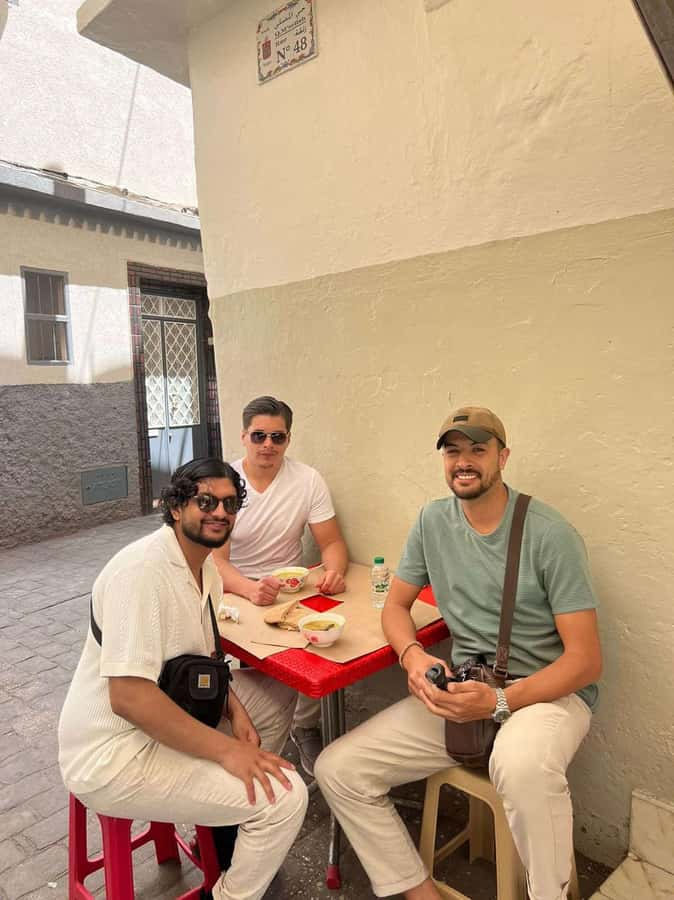
The longest section is at Place de la Kasbah, where you spend about an hour on a guided visit and more tastings. This is likely to be the heart of the experience for anyone interested in Tangier’s old streets and traditional architecture.
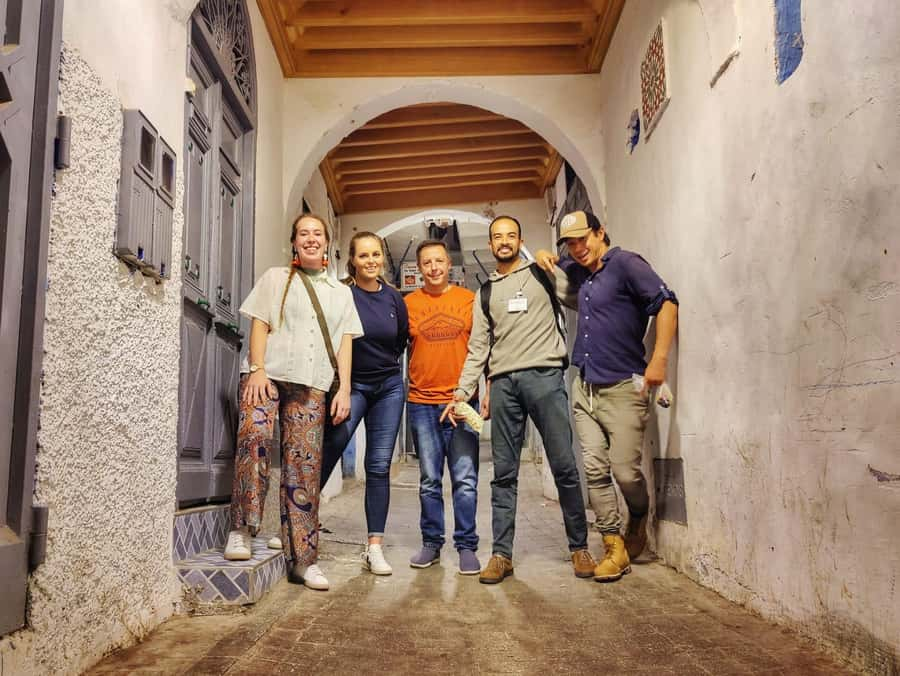
The Kasbah has the narrow lanes and old buildings many people picture when they imagine historic Tangier. You will have time to look around, take photos, and hear about the area while moving between food stops. The route is not just an eating challenge. It gives you a chance to see how the old quarter functions as a living neighborhood.
This is also where the range of food becomes most useful. You may encounter stuffed dates, meat pastry, smoothies, tagine, or other dishes selected by the guide. A past tasting sequence included local bread, soup, olives, meat pastry, a smoothie, and tagine. That variety lets you compare textures and flavors instead of eating several versions of the same snack.
Do not expect a formal cooking class. The guide explains food, culture, and preparation, but the main activity is tasting and walking. If your main goal is to learn recipes step by step, you will need a different type of experience.
The Kasbah section can also be the most demanding physically. You should expect continued walking, standing, and some tight passages. The tour is described as a manageable pace, and guides can make small adjustments for children and group preferences, but it is still not designed for limited mobility.
A local café and the walk to Café Hafa
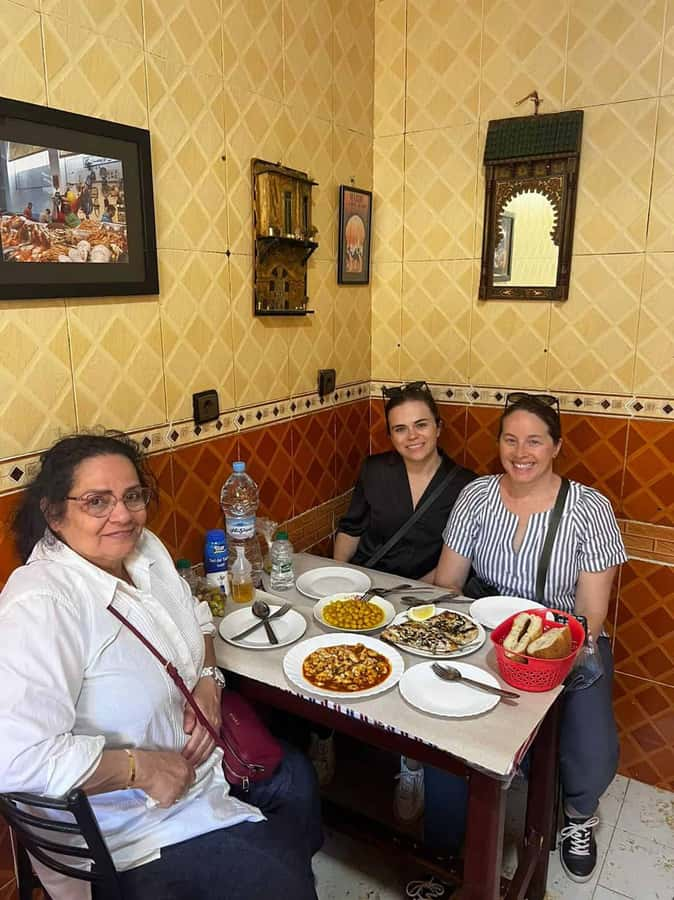
The final 30 minutes include a break at a local café, followed by the finish at Café Hafa. This pause gives you a chance to sit down after the food stops and hear more about local drinks and café life.
A café stop is a smart part of the route. It changes the rhythm from market tasting to conversation, and it gives your guide room to answer questions. You can ask about other places to eat, foods to buy later, or customs you noticed during the walk.
The finish at Café Hafa adds a strong sense of place. The café is also a useful endpoint because the walk does not simply end in an anonymous street. Your guide can tell you where to continue from there, though transportation after the tour is your responsibility.
Keep in mind that a café break is part of the scheduled experience, but the included items are listed as tastings, a full meal, and bottled water. Do not assume that every additional café order is covered unless your guide confirms it.
The guides make the difference
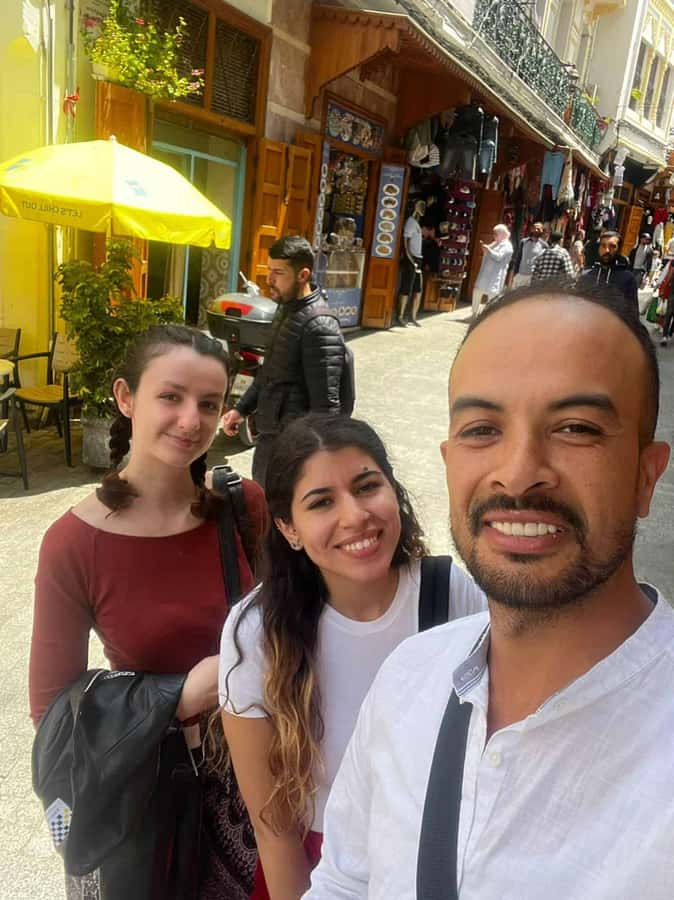
Food is the draw, but the guide determines how much you take away. The experience has been led by several English-speaking guides, including Rabab or Rababe, Ismail, Mohammed, Ahmed, Abdul, and Anas. Your guide will depend on the date and assignment.
Rabab has been especially adaptable with groups that include children and has adjusted the route or food choices to suit the people present. Ismail brings together food, history, and local customs in a way that makes each stop feel connected to the place. Mohammed is associated with detailed explanations of the Medina, regional history, and traditional Moroccan dishes.
Ahmed’s style has been described as calm, with food and history explained at an easy pace. Anas has focused on personal connection to Tangier and on showing local favorites. The names matter less than the pattern: this is designed to be a conversational tour, not a memorized lecture.
Use that format to your advantage. Ask about ingredients, home cooking, Ramadan, market habits, and where to find similar food afterward. A guide can give you much more than the standard route if you take part in the conversation.
Food restrictions, Ramadan, and what you may eat
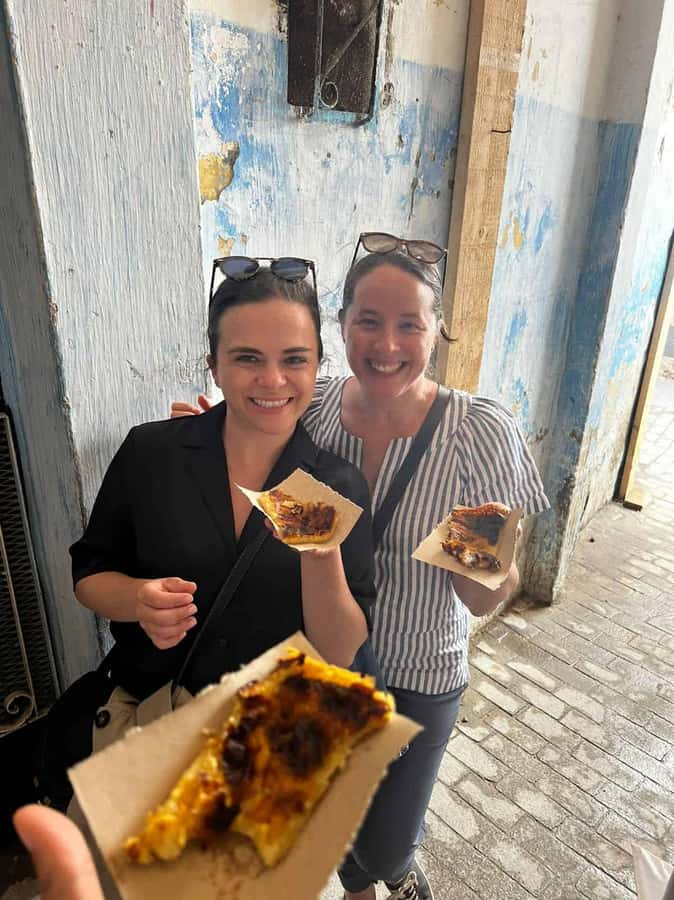
The tour can accommodate vegetarian, gluten-free, and lactose-free diets when you share your needs. You should provide this information before booking or as early as possible. It is still wise to remind the guide at the meeting point, especially if your group has several different requirements.
The food is handmade and local, but the exact menu is not fixed in the information provided. You should expect a selection rather than a guaranteed checklist. That is normal for a market-based walk, where available foods and the timing of the tour can affect what you taste.
During Ramadan, the format may change. One experience became an iftar meal with the guide and the guide’s family, rather than following the usual route exactly. If you are booking during Ramadan, ask in advance what your date will include.
The empty-stomach advice deserves repeating. Six stops plus a full meal is a lot of food. Eat lightly beforehand, drink water, and tell the guide early if you need smaller portions or a slower pace.
Who will enjoy this walk most
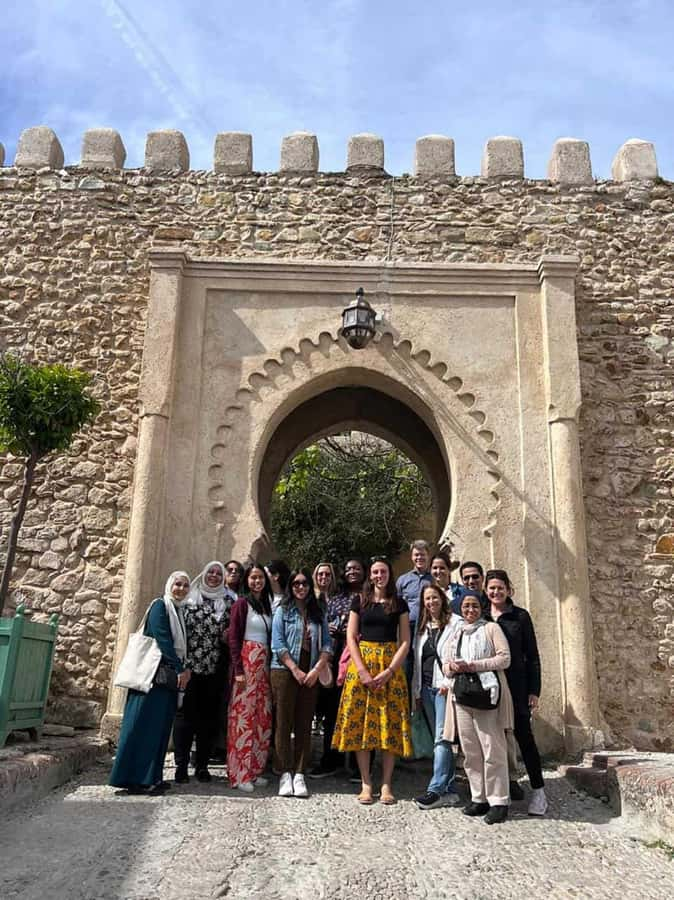
I would choose this tour for a first visit to Tangier, especially if you want food and city orientation in one activity. It suits curious eaters who like trying unfamiliar dishes, asking questions, and walking through working neighborhoods rather than staying inside a polished restaurant.
Families can also do well here if the children are comfortable walking and trying new foods. The route and tastings can be adjusted somewhat, and guides have worked with groups that included children. Still, the food schedule is substantial, so younger children may need breaks.
This is less suitable for anyone who wants a quiet, seated meal, a fixed menu, or a step-free route. It is also not a good choice if you dislike markets, narrow streets, or shared tasting settings. The activity is in English, so you should be comfortable following explanations and asking questions in English.
Cancellation is flexible up to 24 hours before the start for a full refund, and you can reserve now and pay later. Those policies help if your Tangier schedule is still changing, but they do not replace checking the start time and meeting point before you leave.
Should you book the Tangier Food Walking Tour?
Book it if you want a full introduction to Tangier through food, markets, and old streets. The combination of six tastings, a full meal, a café break, and an English-speaking local guide gives you a lot to do in three hours.
I would be especially inclined to book early in your stay. You can use the guide’s advice about where to eat and what to buy for the rest of your time in the city. Arrive hungry, wear good shoes, share dietary needs ahead of time, and expect a walking tour rather than a restaurant crawl.
Skip it if you have serious mobility limits or prefer a fixed, quiet dining experience. For most food-focused visitors who want to see Tangier through everyday life, $73 is a fair price for the amount of food, guiding, and local context included.
FAQ
How long is the Tangier Food Walking Tour?
The tour lasts three hours.
Where does the tour begin?
It begins next to the third cannon, the middle cannon, at Sour Meêgazine in Tangier.
Where does the tour finish?
The tour finishes at Café Hafa.
How many food tastings are included?
Six tasting stops and a full meal are included.
Is bottled water included?
Yes, bottled water is included.
Is transportation included?
No. Transportation is not included, so you must reach Sour Meêgazine on your own and arrange your onward travel after the tour.
What language does the guide speak?
The live guide speaks English.
Can the tour accommodate dietary restrictions?
The experience is designed to accommodate vegetarian, gluten-free, and lactose-free diets when you share your preferences in advance.
Is the tour suitable for wheelchair users?
No. The tour is not suitable for wheelchair users or people with mobility impairments. Comfortable shoes are recommended.
Just added around Morocco
- Fez Street Food Tour★ 4.5 · 33 reviews
- The Sunday Market in Had Draa & Local Food Tasting.★ 5.0 · 33 reviews
- Essaouira Guided Tour: 3 on 1 – Nightlife tour, Live like a local & Street food★ 4.5 · 32 reviews
- Marrakech Guided Day Trip from Casablanca: Djemaa el-Fna Square and Bahia Palace★ 4.0 · 3 reviews
- Casablanca Food Tour – Moroccan Street Food Tour★ 5.0 · 86 reviews
- Casablanca Market and Street Food Walking Tour★ 5.0 · 3 reviews
- Agadir with a Local–Balade Authentic & Tasting Street Food★ 5.0 · 21 reviews
- Tangier tour the street food★ 5.0 · 4 reviews
Morocco Street Food Tours, compared.
Marrakech: Street Food Tour with a Local Guide
Read our review →
Marrakech: Authentic Moroccan Food Walking Tour & Dinner
Read our review →
Marrakech Night Street Food Tour / Taste The Real Marrakech
Read our review →
Casablanca Food Tour – Moroccan Street Food Tour
Read our review →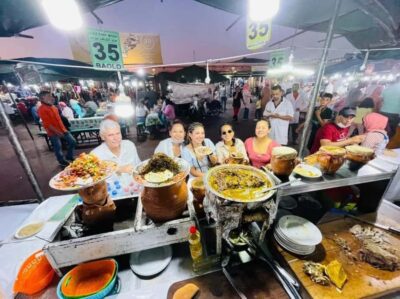
Browse the lists this tour appears in