
REVIEW · MOROCCO STREET FOOD TOURS
Agadir with a Local–Balade Authentic & Tasting Street Food
Agadir’s best introduction may come before the city is fully awake. This three-hour private walk through Talborjt takes you away from the beach hotels and into the streets where residents shop, eat, and start their day. You’ll visit a small neighborhood market, hear about the Agadir destroyed by the 1960 earthquake, and stop for a string of local foods.
I like the small, private format, since it gives you room to ask questions and shape the conversation. I also like the food stops: msemmen, harira, grilled skewers, spicy olives, and mint tea offer a more useful taste of daily Morocco than a formal restaurant meal. The main consideration is the early 6:30 am start, which may feel demanding on holiday.
At a glance
- Talborjt at local speed: Walk through alleys and shopping streets in one of Agadir’s most local-feeling districts.
- Food with a purpose: Try msemmen, harira, skewers, spicy olives, and other everyday Moroccan specialties.
- Agadir before the earthquake: Hear how the 1960 earthquake changed the city and erased the old town.
- A private three-hour outing: Only your group takes part, making this a better fit for questions and dietary requests.
- A quiet café stop: Sit with your guide over mint tea and talk about life in Agadir today.
- Flexible pickup: You can meet at a set point or request pickup at your hotel.
Why Talborjt is the right place to start
Agadir is often presented through its seafront promenade, modern hotels, and broad avenues. Those areas are pleasant, but they do not explain much about how people in the city live. Talborjt gives you a different starting point.
This district has a strong local feel, with small shops, discreet side streets, and a market used by residents. You are not simply being led from one monument to another. You are watching the ordinary business of buying food, greeting neighbors, and setting up for the day.
That is especially useful in Agadir because the city’s modern appearance can hide its past. The old Agadir disappeared in the 1960 earthquake, and the city was rebuilt in a different form. Your guide uses the walk to explain that break in the city’s story, helping you understand why Agadir feels unlike Morocco’s older imperial cities.
The walk is not built around grand buildings or a long list of photo stops. Its appeal is the contrast between what you see now and what stood here before. I would choose it early in a stay, when you still want help reading the city around you.
A few more street food tours around Morocco worth a look
- Marrakech: Street Food Tour with a Local Guide
★ 4.9 · 3,119 reviews - Marrakech: Street Food Tour by Night
★ 4.8 · 2,838 reviews - The Original Marrakech Street Food Tour
★ 5.0 · 248 reviews
What the morning walk feels like
The experience begins at 6:30 am, either at the meeting point or with pickup from your hotel. The exact meeting arrangement should be clear when you book, but you will want to allow a little time to get ready and eat lightly before setting out.
You then continue on foot with your guide. That matters. A car can take you across Agadir quickly, but walking lets you notice the small details: the pace of the streets, the tucked-away passages, the market displays, and the places people pause for breakfast or tea.
The group is private, so only your party participates. That makes this more personal than a standard city walk. You can ask about ingredients, local customs, family life, the earthquake, or anything else that catches your attention without waiting for a large group to move on.
The early timing is both a strength and a weakness. It gives the walk a more everyday feel and avoids the heat that can build later, but it is not the right choice if you prefer a slow hotel breakfast. If you are visiting Agadir for only a short time, the early start also leaves the rest of your day free.
Talborjt alleys and the neighborhood market
The first substantial part of the outing centers on Talborjt. Expect a walk through smaller streets and alleys rather than a formal route lined with major attractions.
Your guide points out local details and explains customs as you go. Because the route includes a small market where residents shop, you get a look at food buying as part of daily life rather than as a performance for visitors. The market is one of the most useful parts of the morning for anyone who wants to understand what ends up on local tables.
You might see ingredients and shopping habits that make more sense once your guide explains them. A market also gives you a practical setting for questions: what people eat for breakfast, how Moroccan meals are built, and which foods are common rather than reserved for special occasions.
There is a modest trade-off. This is a neighborhood outing, not a major market tour with a long list of stalls and formal tastings. If your main goal is shopping for spices, crafts, or souvenirs, this may feel too limited. If your goal is to see where locals buy food and learn how the district works, it is a better match.
The story of Agadir before and after 1960
Agadir’s earthquake story is not a side note. It explains much of the city you see today.
During the walk, your guide discusses the ancient city that disappeared in the 1960 earthquake. You will not be touring a preserved old quarter in the way you might in Fez or Marrakech. Instead, the guide provides the missing context while you walk through the rebuilt city.
That makes the historical explanation especially useful. Without it, Agadir can seem relatively new and spread out. With it, you begin to understand why the city’s older identity is less visible and why local memory matters so much.
The quality of this part depends on the guide’s ability to tell the story clearly. GoTrip Agadir’s public service feedback repeatedly highlights punctuality, friendly communication, and local information from guides and drivers connected with the company. Names associated with that feedback include Zac, Zak, and Zakariah, though the tour information does not confirm which person leads this particular walk. If having a specific guide matters to you, ask when booking.
Same city, a different plate:
- Marrakech: Authentic Moroccan Food Walking Tour & Dinner
★ 4.8 · 261 reviews - Marrakech Street Food Tour
★ 5.0 · 220 reviews - Marrakech Night Street Food Tour / Taste The Real Marrakech
★ 4.9 · 200 reviews - Casablanca Food Tour – Moroccan Street Food Tour
★ 5.0 · 86 reviews
The food stops: five useful tastes of Morocco
Food is the heart of this experience. You do not sit down for one large meal. Instead, you sample several popular foods during the walk, which gives you a broader sense of Moroccan street eating.
Msemmen
Msemmen is a Moroccan pancake with a layered, folded texture. It is a natural breakfast food and a good early stop on a morning walk. Try it slowly, since the appeal is in the texture as much as the flavor.
This is the sort of food that helps you connect the market and the café to daily life. You are tasting something people eat as part of an ordinary morning, not just a dish arranged for a visitor.
Harira
Harira is a hearty Moroccan soup, commonly associated with comfort and shared meals. On an early walk, it can be especially welcome, though you should tell the guide in advance if you have dietary limits or ingredients you avoid.
The tour can accommodate vegetarian, vegan, and gluten-free requirements when these are stated in the special requirements field at booking. That does not mean every stop will offer every possible substitute, so be specific and give the operator notice.
Grilled skewers
Grilled skewers add a savory stop to the route. They are a simple street-food choice, but that is the point. You get a taste of food prepared for regular local eating rather than a polished restaurant menu.
If you do not eat meat, say so before the tour. The operator states that dietary restrictions can be accommodated, but clear information in advance is the safest way to avoid confusion.
Spicy olives and other small bites
Spicy olives provide a sharp, salty contrast to the softer pancake and warm soup. You may also taste other popular delicacies along the way, depending on what is available and suitable for the group.
The precise food lineup can vary. That is normal for a street-food walk, since small vendors and cafés do not operate like a fixed tasting counter. You should book this for the chance to sample several everyday foods, not for a guaranteed restaurant-style menu.
Mint tea
The café stop is the most relaxed part of the morning. You sit down with your guide for mint tea in a small café that is rarely visited by tourists, then talk about life in Agadir today.
I like this pause because it gives the experience room to breathe. Food is not just consumed and checked off. You have time to ask follow-up questions and connect what you have seen in the market with the city’s present-day routines.
The café is described as a small local place, so do not expect a formal setting or tourist entertainment. That is part of its value. It offers a simple chance to sit, drink tea, and talk.
What the private format adds
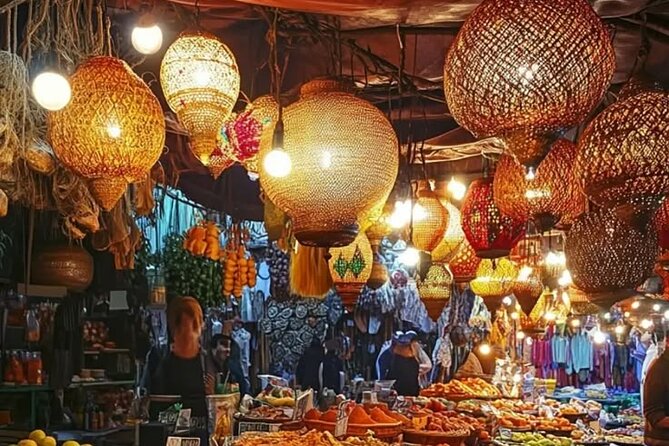
The private setup is one of the strongest reasons to choose this experience. Only your group takes part, so you do not have to adjust to strangers’ walking speed or interests.
That matters during a food walk. If you want to know how harira differs from another soup, why a certain olive is spicy, or what people usually eat at home, you can ask right away. A guide can also spend more time on the parts you care about, such as history, food, or present-day life.
Private does not automatically mean luxurious. This is still a simple walking experience through ordinary streets, with modest food stops and a local café. The advantage is attention and flexibility, not polished production.
The tour is suitable for most people, according to the provided information, and it is near public transportation. Since the route is on foot, comfortable walking shoes are sensible, though the precise distance and surface conditions are not specified.
Is $46.46 a fair price?
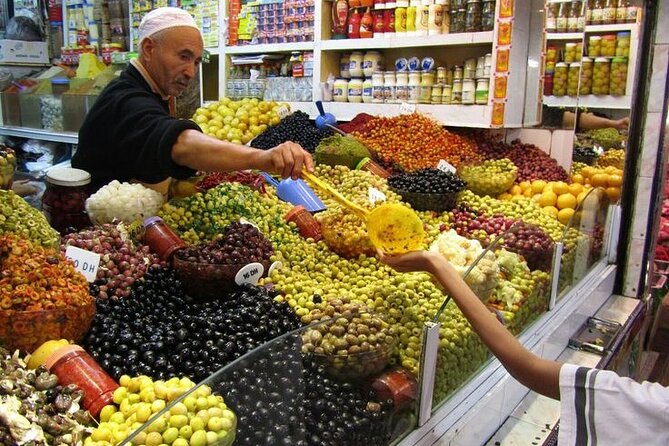
At $46.46 per person, the value depends on what you want from a city tour. You are paying for about three hours of a private guide, neighborhood interpretation, several food tastings, a café stop, and possible hotel pickup. For a private experience, that is a reasonable price if you want conversation and local orientation rather than a major attraction ticket.
The price is less compelling if you mainly want a large meal. This is a series of small tastes, not an all-you-can-eat food tour. Nor is it a sightseeing tour packed with monuments.
I see the strongest value in the combination. You get a history lesson, a neighborhood walk, and enough food to make the route memorable. The tour can also help you decide what to eat for the rest of your stay. If you are new to Morocco, that practical guidance may be worth more than another hour inside a standard sightseeing vehicle.
This experience is booked about 35 days ahead on average. That suggests planning ahead is wise, especially if you need a particular date or have dietary requests. Confirmation is provided at booking, and free cancellation is available up to 24 hours before the start time. Inside that window, the payment is not refunded and changes are not accepted.
Who should choose this Agadir experience?

I would recommend it to you if you want:
- A first look at Agadir beyond the hotel zone
- A private outing with time for questions
- Local food in small portions rather than one formal meal
- A guide who can connect today’s city with the 1960 earthquake
- A morning activity that leaves your afternoon open
- Help navigating dietary requirements before you arrive
It may not suit you if you want a late start, a long market-shopping session, or a major list of monuments. The 6:30 am start is the clearest drawback. You should also be comfortable walking through ordinary urban streets rather than expecting a fully arranged attraction visit.
Families, couples, solo visitors, and small private groups can all make good use of the format. The exact pace and conversation will depend on your guide and your group, but the private structure gives you more control than a shared tour.
Should you book it?
Book this walk if you want Agadir explained through its people, food, and neighborhoods rather than only through its seafront. Talborjt, the local market, earthquake history, and small food stops create a useful picture of the city’s daily side.
I would book it early in my stay and confirm two points first: who will lead the walk and how the hotel pickup works. If you need vegetarian, vegan, or gluten-free food, state it at booking rather than mentioning it on the morning itself.
Skip it if you dislike early starts or want a full restaurant meal. For everyone else, this is a friendly, focused way to spend three hours and begin seeing Agadir as a lived-in city, not just a beach resort.
FAQ
How long is the Agadir local food walk?
The experience lasts approximately three hours.
What time does the tour start?
The stated start time is 6:30 am.
Where does the tour begin?
You can meet the guide at the meeting point or request pickup from your hotel.
Is this a private tour?
Yes. Only your group participates.
What foods are included?
The walk includes Moroccan pancakes called msemmen, harira soup, grilled skewers, spicy olives, other popular specialties, and mint tea at a small local café.
Can dietary restrictions be accommodated?
Yes. Vegetarian, vegan, gluten-free, and other dietary requirements can be accommodated when you provide the information in the special requirements section at booking.
What is the cancellation policy?
You can cancel at least 24 hours before the start time for a full refund. Cancellations or changes made less than 24 hours before the experience are not accepted and are not refunded.
Just added around Morocco
- Fez Street Food Tour★ 4.5 · 33 reviews
- The Sunday Market in Had Draa & Local Food Tasting.★ 5.0 · 33 reviews
- Essaouira Guided Tour: 3 on 1 – Nightlife tour, Live like a local & Street food★ 4.5 · 32 reviews
- Marrakech Guided Day Trip from Casablanca: Djemaa el-Fna Square and Bahia Palace★ 4.0 · 3 reviews
- Casablanca Food Tour – Moroccan Street Food Tour★ 5.0 · 86 reviews
- Casablanca Market and Street Food Walking Tour★ 5.0 · 3 reviews
- Tangier: Food Walking Tour★ 4.9 · 43 reviews
- Tangier tour the street food★ 5.0 · 4 reviews
Morocco Street Food Tours, compared.
Marrakech: Street Food Tour with a Local Guide
Read our review →
Marrakech: Authentic Moroccan Food Walking Tour & Dinner
Read our review →

Marrakech Night Street Food Tour / Taste The Real Marrakech
Read our review →
Casablanca Food Tour – Moroccan Street Food Tour
Read our review →
Browse the lists this tour appears in