
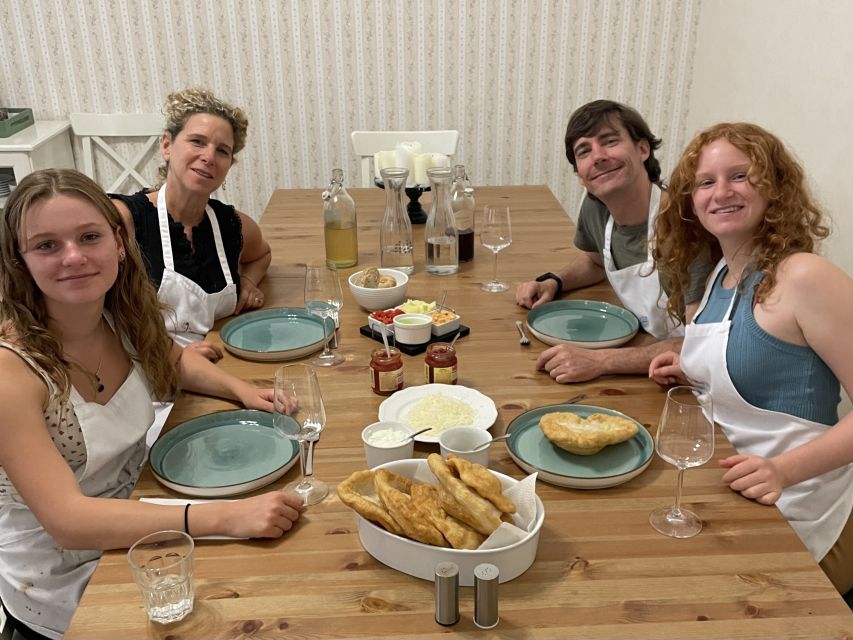
REVIEW · STREET FOOD TOURS
Budapest: Langos Making Class – Nr. 1 Hungarian Street Food
Langos is Hungary’s answer to the question, What if fried bread became a full meal? In this two-hour class near Oktogon, you make both classic and potato langos from scratch, fry them yourself, and eat them warm with Hungarian toppings and a glass of wine.
I like the hands-on format because you are not simply watching a cook work. I also like the chance to taste two kinds of dough and compare them while learning how Hungarians serve langos at festivals, restaurants, and summer gatherings. The main consideration is the price: at $81 per person, this costs far more than buying one langos from a street-food stand.
Key points to know before booking
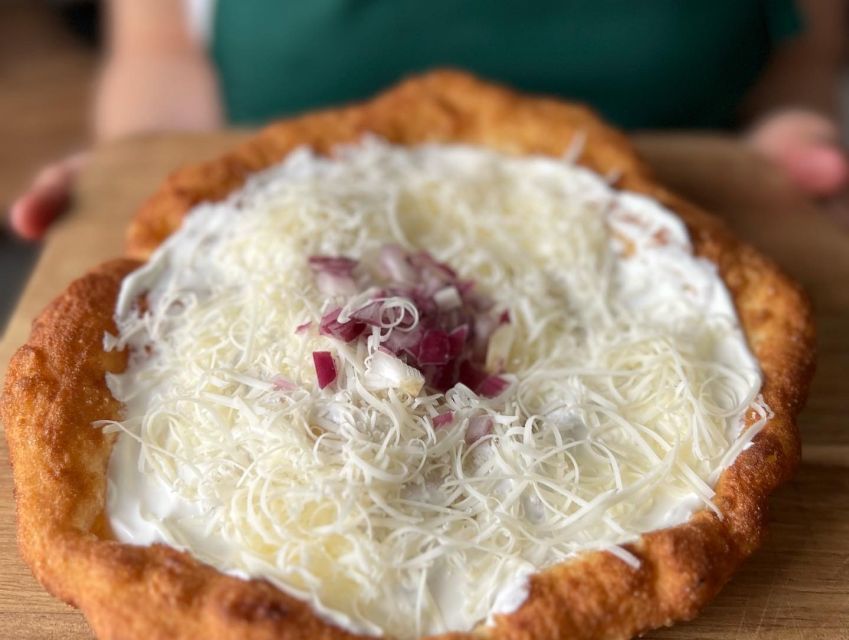
- Two doughs from scratch: You prepare both classic and potato langos, not just one basic version.
- A central kitchen studio: The class takes place near Oktogon, at the corner of Kiraly and Csengery Street, rather than in a basement room.
- Real cooking, not a demonstration: You mix, shape, top, and fry the langos with guidance from the instructor.
- Several Hungarian toppings: Expect garlic cream, sour cream, grated cheese, bacon, paprika, and red onion among the serving ideas.
- Wine is included: Your langos comes with 1.5 deciliters of Hungarian red or white wine, plus soft drinks and mineral water.
- A compact two-hour activity: It fits neatly into a Budapest sightseeing day, though children under 10 cannot join.
Why langos tells you something about Hungary
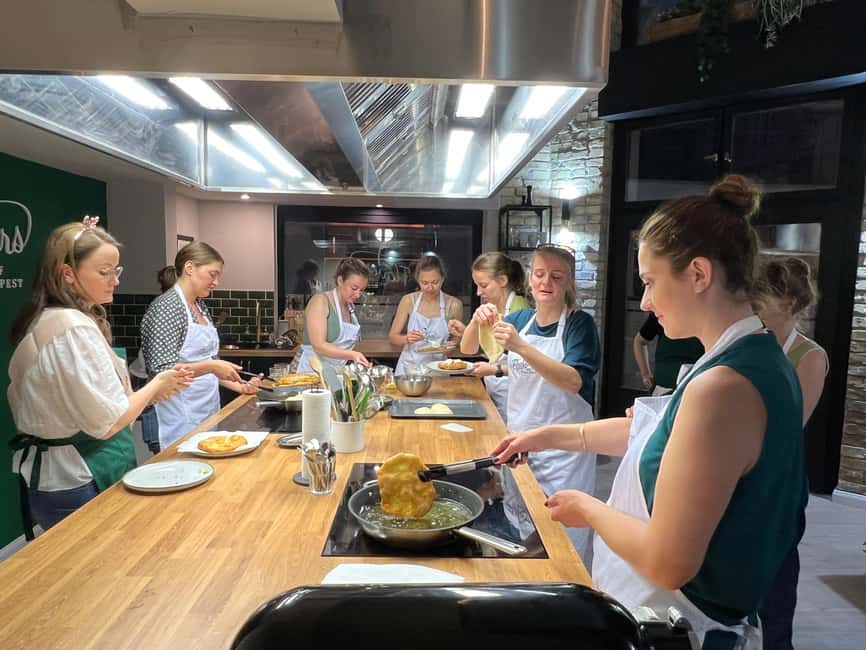
Langos is a deep-fried flatbread eaten hot and fresh. The outside should be crisp, while the inside stays soft and pleasantly chewy. It is often brushed with garlic cream, then finished with sour cream and cheese, though bacon, paprika, and red onion are also common choices.
The food is tied to ordinary Hungarian life rather than formal dining. You find it at summer events, festivals, and casual food stands. That makes a cooking class useful: you learn a dish you can recognize later in Budapest, and you get a little context for why it matters.
I like this kind of food experience because the subject is focused. You are not trying to prepare a long Hungarian menu in a short sitting. Instead, the class spends its time on one staple, showing you the dough, the toppings, the frying, and the customs connected with it.
There is also a practical payoff. Once you understand the basic dough and frying method, you can think about making langos at home. The class provides the recipes in English, along with tips for different dough styles and serving methods.
A few more street food tours around Budapest worth a look
- Hungarian Langos Making Class: The No. 1 Street Food in Hungary
★ 5.0 · 55 reviews - Small Group Cooking Class & Market Food Tour in Florence
★ 5.0 · 1,574 reviews - Tokyo Sushi Making Class in Tsukiji with Professional Chef
★ 5.0 · 1,177 reviews
Arriving near Oktogon
The kitchen studio is in central Budapest, close to Oktogon square. The building sits on the corner of Kiraly and Csengery Street. You should use the doorbell when you arrive.
That location is convenient for a city break because the activity does not require a long ride out of the center. The class does not include hotel pickup or drop-off, so you make your own way there. Plan a little extra time to identify the correct entrance, especially if you are unfamiliar with the surrounding streets.
The setting matters. The cooking takes place in a properly equipped kitchen studio, described as a central space rather than a basement room. That gives the experience a more comfortable feel than a makeshift cooking lesson. You receive an apron, cooking equipment, pots, and ingredients, so you do not need to bring anything except an appetite and perhaps a notebook for extra tips.
The class is conducted in English. Since all recipes are also supplied in English, you can follow the process and keep the instructions after your Budapest trip.
The welcome drink and food introduction
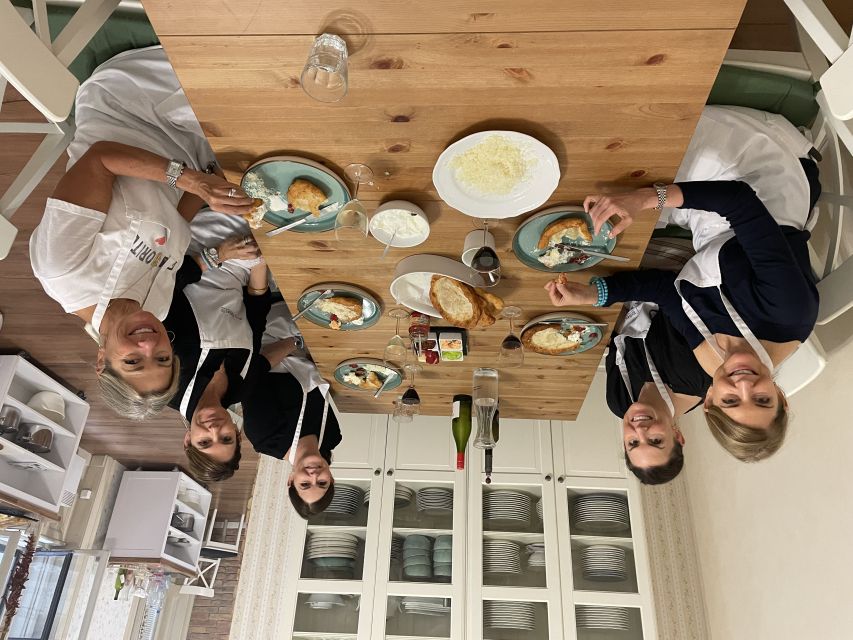
The schedule begins with arrival, introductions, and a welcome drink. This is a small part of the class, but it helps set the pace before flour and oil take over the work surface.
You then hear about the ingredients, different langos versions, local customs, and stories connected with the food. That background helps you understand the difference between making a fried flatbread and making Hungarian langos. The latter is about how it is served, when people eat it, and which toppings are considered familiar.
The instructor also explains restaurant-style serving ideas. This is useful if you plan to order langos later in Budapest. You will already know that a simple garlic coating can be the classic choice, while sour cream and cheese create the more filling version.
Do not expect a long cultural lecture. The whole activity lasts two hours, so the food remains the center of attention. That is a good fit if you want a useful introduction rather than a full-day culinary program.
Making classic and potato dough
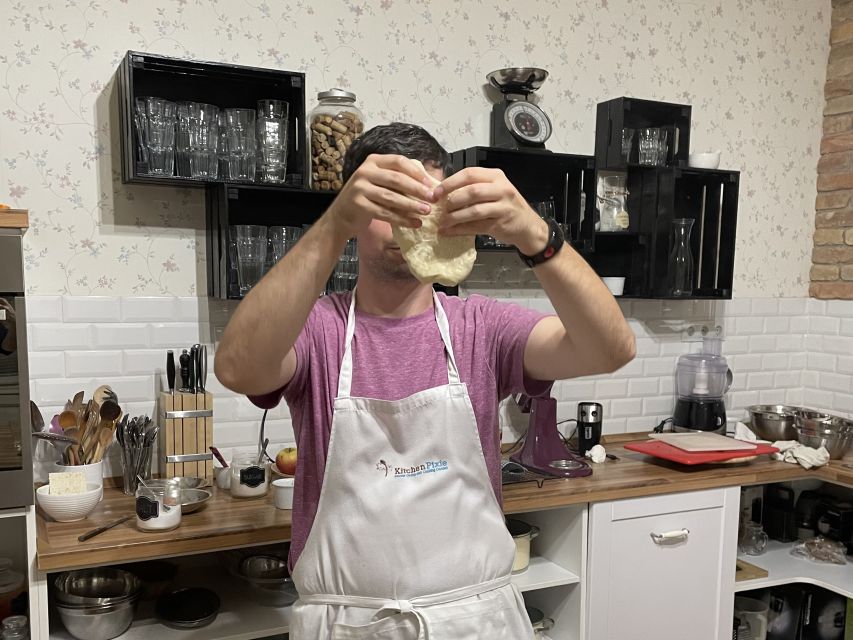
The main work begins with the dough. You prepare two kinds: classic langos and potato langos. This is the strongest part of the activity for anyone who wants to understand how the food is made.
The classic dough gives you the familiar starting point. The potato version lets you compare a different texture and flavor. Preparing both from scratch also makes the class more than a tasting session. You see the ingredients before cooking, work with the dough, and learn how small changes create different versions of the same street food.
The class is described as fully hands-on, but you still have help from the instructor throughout. That balance is important. Fried dough can be awkward to shape, and working with hot oil requires clear direction. You can ask for help with the preparation and receive kitchen tips that may not appear in the printed recipe.
The provided information does not specify the exact group size, so you should not assume a private lesson or a tiny class. Still, the hands-on promise means you are meant to take part directly rather than watch from the side.
Same city, a different plate:
- Budapest Food Walking Tour: Eat, Sip & Explore Like a Local
★ 4.8 · 1,027 reviews - Budapest Centre Food Tour with 10+ Tastings, Wine & Street Food
★ 5.0 · 810 reviews - Budapest Guided Food Walking Tour with Drinks Included
★ 4.8 · 472 reviews - Budapest: Guided Street Food Tour with Sweet Wine
★ 4.9 · 149 reviews
Choosing toppings with a Hungarian point of view
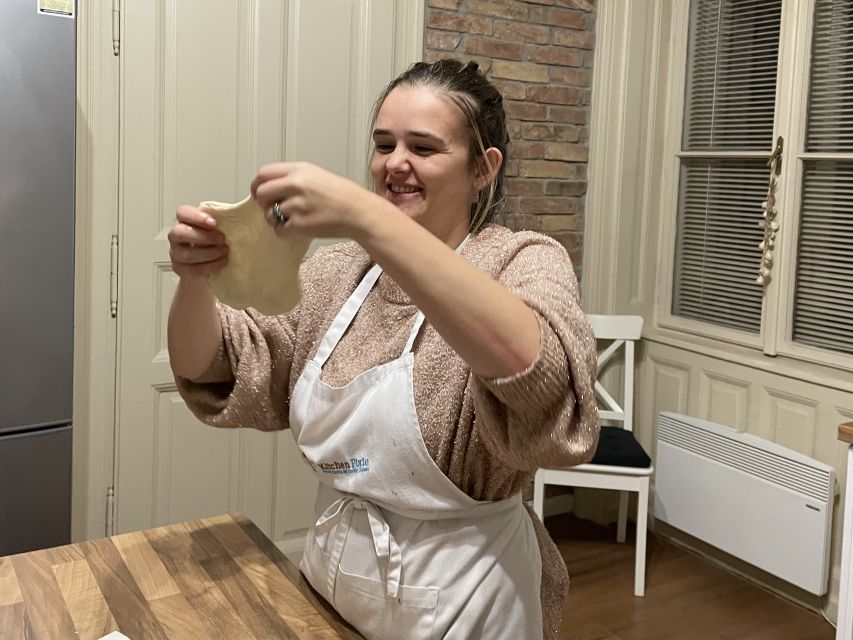
Once the dough is ready, you get to think about the part many people remember most: the toppings. Langos can be served simply with garlic cream, or built up with sour cream and grated cheese. Bacon, different kinds of paprika, and red onion provide other options.
Garlic cream is especially important because it is one of the most common ways to eat langos without adding a long list of toppings. It is also a good reminder that Hungarian street food does not always need to be complicated. A hot, crisp flatbread with garlic can be the whole point.
Sour cream and cheese make the dish heavier and richer. Bacon adds salt and a smoky note, while paprika and red onion bring color and sharper flavor. Because you try different toppings, you can work out your own favorite combination instead of accepting one preset plate.
This part suits curious eaters who like to compare flavors. It may be less appealing if you are looking for a light cooking activity. Langos is fried food, and the class is built around eating substantial portions.
Frying your own langos
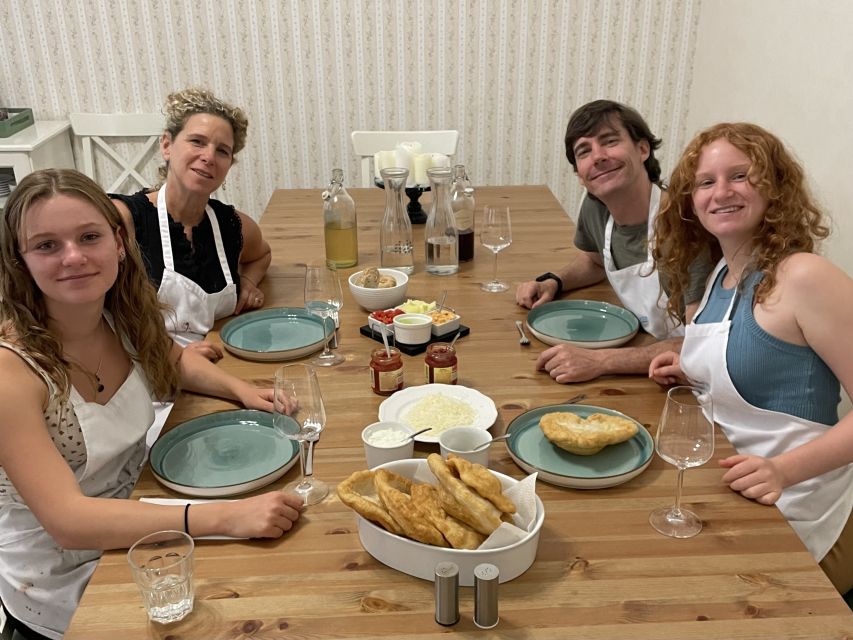
After the dough and toppings come together, you fry the langos. This is the moment when the class changes from preparation to a proper meal.
You fry both the classic and potato versions, then serve them warm. Fresh langos is meant to be eaten soon after cooking, while the surface is still crisp. That timing is part of the appeal. The finished food is not treated as a sample or a garnish. It is the main event.
The instructor provides guidance with the cooking process, equipment, and kitchen setup. You are not expected to arrive with specialist skills. Still, you should pay attention during the frying stage and follow instructions closely, since hot oil is involved.
The cooking sequence also gives you a better sense of why langos is a street-food favorite. The dough is simple, but frying changes it into something crisp, warm, and filling. You experience the contrast between the two doughs immediately, rather than trying to remember the difference from a description.
Eating with Hungarian wine
The class ends with everyone eating together. The included drinks are 1.5 deciliters of Hungarian red or white wine, soft drinks, and mineral water.
The wine is a useful local touch, though the amount is modest. It adds to the meal without turning this into a wine tasting. You can choose red or white, then settle in with the two langos and their toppings.
The amount of food is also part of the value. You receive two large langos, one classic and one potato, with different toppings. That makes the activity function as both a cooking class and a meal. You may not need to plan a full lunch or dinner immediately afterward.
The class has been praised for its polished setup, beautiful kitchen, and strong organization. Those details matter because food classes can feel rushed or improvised when the kitchen is not ready. Here, the equipment, ingredients, aprons, and recipes are supplied, allowing the two-hour session to focus on cooking and eating.
Is $81 a fair price?
At $81 per person, this is not the cheapest way to try langos. A street-food stall will cost much less, and you can taste the dish without booking an activity.
The price becomes easier to understand when you count what is included. You receive a two-hour English-language class, two types of dough made from scratch, two large langos, assorted toppings, a welcome drink, 1.5 deciliters of Hungarian wine or other drinks, kitchen equipment, an apron, recipes, and personal guidance.
You are paying for instruction and access to a furnished kitchen studio, not just fried bread. The activity also gives you a meal, local food context, and methods you can use later. For someone who enjoys cooking, that is reasonable value.
For a budget-focused visitor who only wants to taste Hungary, it is harder to justify. You can get a cheaper and quicker introduction elsewhere. I would book this class when the process matters as much as the food.
The strongest praise has focused on the organization, presentation, kitchen, hosts, and the amount of food and wine provided. One recent assessment called it a highlight of a Budapest stay and considered it good value for the two versions of langos and drinks. Another described the presentation as professional and thorough. Those points suggest the activity works best for people who care about a well-run class, not just a snack.
Who should book this class?
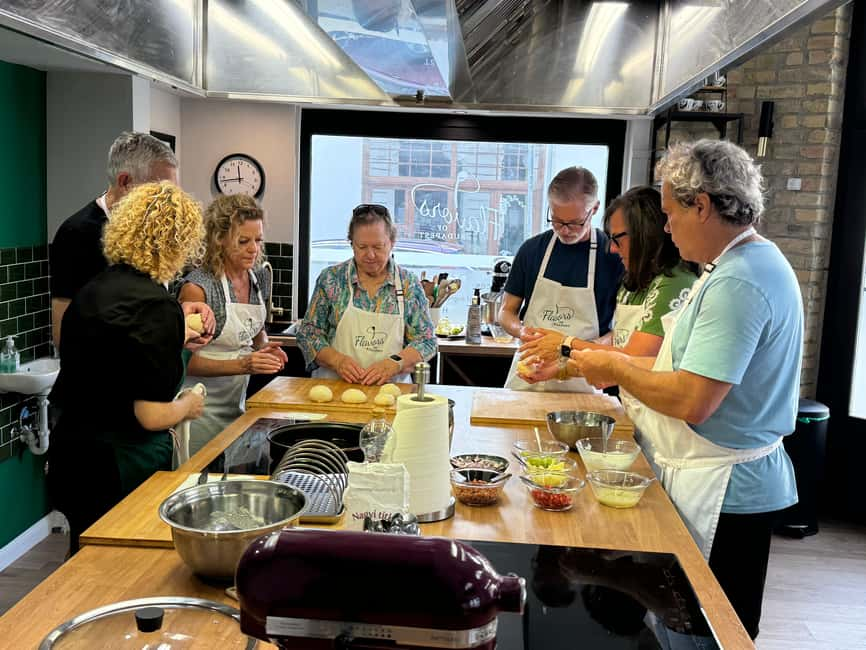
I would recommend it to adults and families with children aged 10 or older who enjoy cooking and want a local food activity in central Budapest. It also fits couples, friends, and solo visitors who like meeting around a shared meal.
The English instruction makes it accessible if English is your working language. The recipes in English are useful if you want to repeat the dish at home.
This is a good rainy-day option because the activity takes place indoors in a kitchen studio. It also works on a busy sightseeing schedule since the listed duration is two hours. Check the available starting times when you book so you can place it sensibly between other plans.
I would not choose it for children under 10, since the class is not suitable for them. I would also think twice if you dislike fried food, sour cream, cheese, or eating a large portion. The class does not present langos as a light or delicate dish.
Practical booking advice
You can cancel up to 24 hours before the activity for a full refund. You can also reserve now and pay later, which helps if your Budapest schedule is still changing.
The experience provider is Cooking Hungary, Culinary Experiences. The instructor speaks English, and the kitchen is near Oktogon at the corner of Kiraly and Csengery Street. Use the doorbell when you arrive.
Because hotel transfers are not included, allow time to reach the studio yourself. The meeting point is central, but the building entrance can still take a moment to locate. Bring your booking details and arrive ready to cook rather than expecting a seated tasting.
Should you book the Budapest langos class?
Book it if you want more than a quick bite. You will make classic and potato langos yourself, learn how Hungarians serve it, try several toppings, and sit down to eat with a drink. The central location and two-hour length make it easy to fit into a Budapest visit.
Skip it if your priority is the lowest possible food cost or if you only want to sample one langos. At $81, the value comes from the hands-on lesson, kitchen setup, recipes, local context, and full meal.
For the right kind of visitor, this is a focused and enjoyable way to meet Hungary through one memorable dish. You leave knowing not only what langos tastes like, but also how the dough, toppings, and cooking method fit together.
FAQ
Where does the langos class take place?
The class takes place in a kitchen studio in central Budapest, near Oktogon square. The building is on the corner of Kiraly and Csengery Street.
How long does the class last?
The activity lasts two hours. Starting times vary, so check availability when booking.
What languages are available?
The instructor teaches in English, and the recipes are provided in English.
What kinds of langos will I make?
You will prepare two kinds of dough from scratch: classic langos and potato langos.
What toppings are available?
The class includes different toppings and serving ideas, including sour cream, grated cheese, bacon, paprika, red onion, and garlic cream.
Are drinks included?
Yes. The included drinks are 1.5 deciliters of Hungarian red or white wine, soft drinks, and mineral water.
Are children allowed to join?
Children under 10 are not suitable for this activity.
Is hotel pickup included?
No. Hotel pickup and drop-off are not included, so you must make your own way to the central Budapest kitchen studio.
Just added around Budapest
- Budapest Ruin Bars Evening Walking Tour with Drinks & Snacks★ 5.0 · 25 reviews
- Private Budapest Ruin Bar Tour with Local Drinks & Street Food★ 4.5 · 8 reviews
- Budapest Ruin Bars Evening Walking Tour with Drinks & Street Food★ 5.0 · 104 reviews
- Central Budapest Food Walking Tour with Drinks Included★ 5.0 · 109 reviews
- Budapest Bites: 3-hr Street Food Tour with Hungarian Delicacies★ 5.0 · 4 reviews
- Private Budapest Street Food Tour with Snacks Dessert and Beer★ 4.5 · 14 reviews
- Budapest Street Food Tour with Local Snacks, Dessert and Beer★ 5.0 · 121 reviews
- Hungarian Langos Making Class: The No. 1 Street Food in Hungary★ 5.0 · 55 reviews
Street Food Tours, compared.

Ho Chi Minh City Street Food Tour & Sightseeing By Motorbike
Read our review →
Dubai: Old Town, Souks, Street Food, Guided Tour & Abra Ride
Read our review →
Naples: Street Food Walking Tour with Local Guide
Read our review →
Small Group Hanoi Street Food Tour with a Real Foodie
Read our review →
Saigon By Night and Street Food By Motorbike | Opt: Ao Dai Riders
Read our review →
Private Street Food Tour by Motorbike/Car with Local Students
Read our review →
Saigon: Street Food Tasting & Sightseeing Tour by Motorbike
Read our review →Browse the lists this tour appears in