
REVIEW · HONG KONG STREET FOOD TOURS
Small Group Kowloon Michelin Rated Street Food and Culture Tour
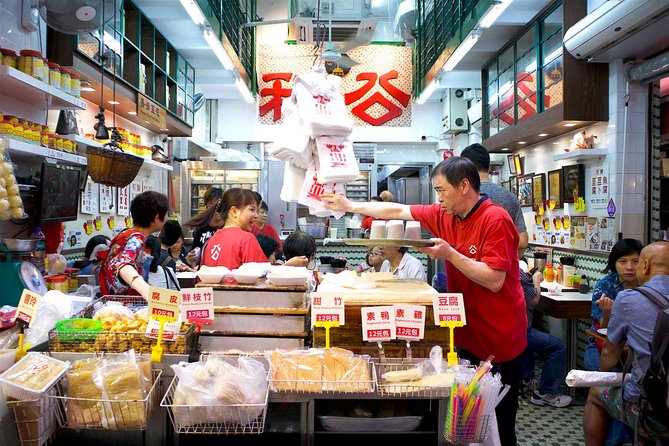
Hong Kong’s best food experiences often happen in plain-looking shops, crowded markets, and narrow streets. This four-hour Kowloon walk takes you from Sham Shui Po to Mong Kok and Yau Ma Tei, pairing seven to nine tastings with a close look at how local people eat, shop, and live.
I like the late start, which takes the edge off the daytime heat, and the maximum of eight people, which gives the guide room to answer questions. I also like that the tour includes more than food: the Goldfish Market, the 1913 Wholesale Fruit Market, Tin Hau Temple, and a ride on the MTR all help put the dishes into context.
The main catch is the pace. You’ll walk about five miles in hot, humid weather, and some of the food may feel ordinary if you expect polished restaurant dining. The Michelin references mean Michelin-recommended street-food venues and Bib Gourmand recognition, not a sit-down Michelin-star meal.
Key points at a glance
- Start with local Sham Shui Po food: Try pork and cheong fun, a beef and egg sandwich, wife cake, tong shui, and other everyday Cantonese foods.
- Two Michelin-recommended stops: Expect affordable street food, including wonton noodles, rather than formal dining.
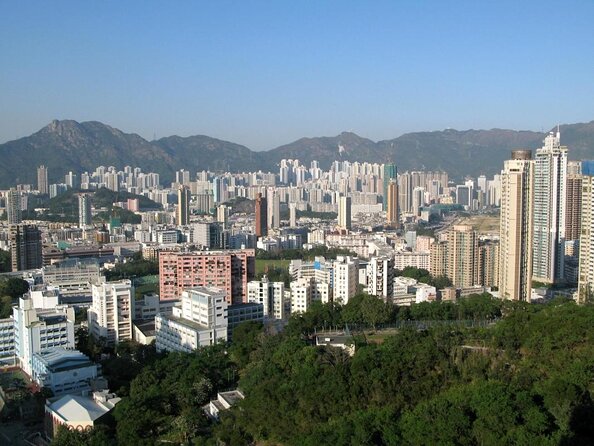
- Three very different Kowloon districts: The route links Sham Shui Po, Mong Kok, and Yau Ma Tei in one evening.
- Markets are part of the meal: Fa Yuen Street Market, the Goldfish Market, and the Wholesale Fruit Market add plenty of visual interest.
- Small English-speaking group: The tour accepts up to eight people and has been led by guides including Mel, Sinclair, Andy, and Kiyo.
- Come hungry and wear good shoes: The food portions can add up, and the walk covers roughly five miles.
Why this Kowloon food walk works
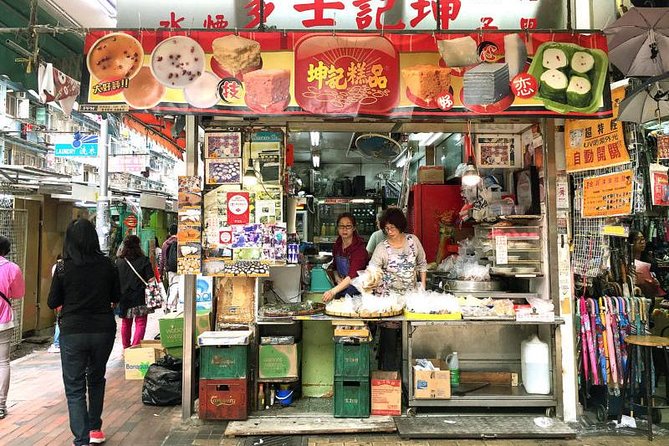
The smart idea here is to use food as a doorway into Kowloon. You are not simply moved from one snack counter to the next. You walk through working districts, hear about local housing and daily routines, stop at markets, and see how food fits into Hong Kong life.
That makes the experience useful on a first visit. A guide can explain what you are eating, why a dish matters, and how the neighborhood around you developed. Guides such as Mel, Sinclair, Andy, and Kiyo have been especially well regarded for making the history and social details easy to follow. Your guide will depend on the date, but the format calls for an English-speaking local guide.
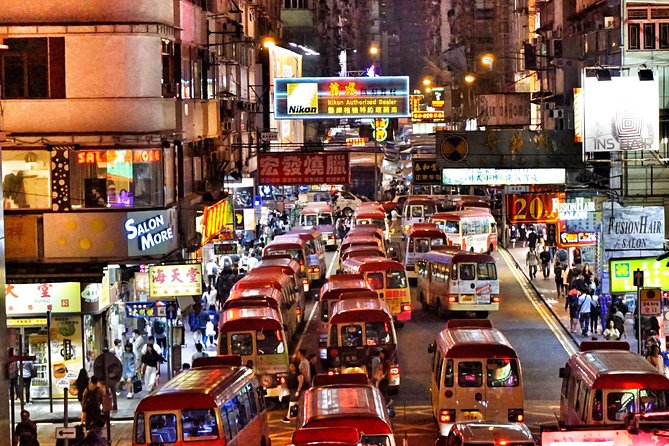
The timing is also well judged. You meet at 3:30 pm, when the day is beginning to cool but Kowloon is still active. By the time the tour reaches Mong Kok and Yau Ma Tei, the streets have taken on their evening energy, and the neon signs and shopfronts become part of the experience.
Still, this is not a slow, leisurely meal. You cover three districts and make several food stops in about four hours. I would treat it as a walking tour with repeated snacks, not as a long dinner at three or four carefully chosen restaurants.
More Hidden Gem Food Tours in Hong Kong:
- Private Kowloon Michelin Rated Street Food & Culture Tour
★ 5.0 · 42 reviews - Hong Kong Private Food Tour with Michelin Street Food
★ 5.0 · 6 reviews - Hanoi: Street Food Tour with Train Street & Hidden Alleyways
★ 5.0 · 2,831 reviews
Starting in Sham Shui Po with everyday Cantonese food
Meet your guide at Exit A inside Sham Shui Po MTR station. Starting inside the station is useful because Hong Kong’s MTR network can feel confusing on a first visit, and you avoid standing on a busy street trying to find a meeting point.
Sham Shui Po is one of Kowloon’s more working-class districts. The tour uses the area to introduce food that local people eat in ordinary settings, rather than presenting Hong Kong through luxury restaurants or hotel dining rooms.
The first hour includes several small dishes and sweets. You might try pork and cheong fun, soft rice noodle rolls served with savory toppings or sauce. There is also a beef and egg sandwich, wife cake, and tong shui, a category of Chinese dessert soups that can be sweet, warm, and quite different from Western puddings.
These dishes give you a broad first taste. You get soft textures, baked pastry, egg, meat, rice noodles, and sweet soup in quick succession. The food is not designed to impress through elaborate presentation. Its value is in showing the kinds of inexpensive, filling items that make up daily eating in Hong Kong.
One important point: the first section can shape your view of the whole tour. If you want the excitement of unfamiliar local food, Sham Shui Po delivers that. If you are looking for fashionable restaurants, large portions of one signature dish, or a formal meal, you may find the setting too basic.
The tour is not suitable for vegetarians, pescatarians, or vegans. If you have a mild preference rather than a strict restriction, tell the guide at the start, but do not book this expecting a plant-based route.
Mong Kok markets, noodles, and neon streets
From Sham Shui Po, the group continues toward Mong Kok. This is one of the most densely populated parts of the world, and it feels packed with shops, signs, markets, traffic, and people moving in every direction.
Fa Yuen Street Market is one of the major stops. It gives you a look at the practical side of Kowloon shopping, rather than a carefully staged market for visitors. The Goldfish Market is more unusual. Aquariums and bags of fish fill the shops, and the guide explains the long-standing belief that fish can bring good fortune.
The Goldfish Market is also a good example of why this is a culture tour as much as a food tour. The guide may connect the market to ideas about luck, media, politics, and the way Hong Kong neighborhoods change. These conversations can be as interesting as the snacks, especially if you want to understand more than the city’s famous skyline.
Food continues through Mong Kok. Wonton noodles and Hong Kong egg tarts are among the expected tastes, with a stop at a Michelin-recommended venue. The noodles are a strong local marker: a simple bowl can show you the importance of broth, texture, and portion size in Cantonese eating.
Do not confuse Michelin recognition with a Michelin star. The food stops are street-food or casual venues, and some have Bib Gourmand status. That award points to good food at a reasonable price. It does not mean white-tablecloth service or a theatrical tasting menu.
This distinction matters because the tour costs $115.46 per person, while the food itself is inexpensive. You are paying for the guide, the route, the explanations, the organization, the included drink and tastings, and the chance to move confidently through several districts. If you only want to buy noodles and egg tarts on your own, you can do that for much less.
Yau Ma Tei and the old fruit market
The final section takes you to Yau Ma Tei, where the focus shifts from food stalls to older buildings, religious practice, and neighborhood life.
The Wholesale Fruit Market dates to 1913. Its rustic structures and old signs make it a particularly good place for photos, though it remains a working market rather than a display built for sightseeing. You may see the rougher, more functional side of Kowloon here, which fits the tour’s focus on everyday life.
The route then visits Tin Hau Temple, a Taoist place of worship. The guide helps explain the setting and its role in local life. The tour also points out where older residents gather, adding a human detail that many sightseeing routes miss.
This final stretch gives the walk a useful change of rhythm. After the dense shopping streets of Mong Kok, Yau Ma Tei feels more reflective. You have spent the afternoon eating, but you have also seen where people buy fruit, keep fish for luck, worship, and spend time in their neighborhood.
The tour ends at Yau Ma Tei MTR station. That is practical if you want to continue exploring Kowloon or return to your hotel by train. It also means the experience is not a loop, so plan your evening from the finish point rather than from Sham Shui Po.
A few more street food tours around Hong Kong worth a look
- Hong Kong: Street Food Tour with Locals – Dim Sum and Wonton
★ 4.8 · 673 reviews - The 10 Tastings of Hong Kong With Locals: Private Street Food Tour
★ 4.5 · 124 reviews - Kowloon Night Street Food Tour with a Local: Private & Customized
★ 4.5 · 72 reviews - Hong Kong: Private Street Food Tour with a Local Insider
★ 4.9 · 24 reviews
What the food quantity and quality are really like
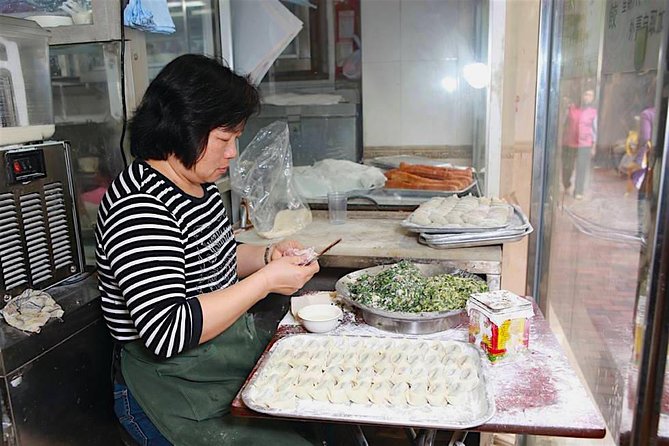
The package includes seven to nine food tastings and one drink. Depending on the day and availability, the food can include noodle dishes, egg tarts, sandwiches, rice noodles, sweets, soup, fresh fruit, and other local specialties.
The portions can be substantial. Some people find they are full by the end, so I would eat only a light meal beforehand. At the same time, a tasting tour is not always perfectly consistent. Daily availability may change, and not every dish will suit every palate.
Some of the more unusual food mentioned by past participants includes snake soup, goose with crisp skin, fried French toast, fresh fish, fruit combinations, and different sauces with thick noodles. Those items should not be treated as guaranteed inclusions, but they show the possible range of the route.
The strongest food moments are likely to come from variety rather than one spectacular plate. You may enjoy the contrast between a humble sandwich, a sweet pastry, a noodle bowl, and a market snack. If you are particular about texture or prefer familiar food, the rice noodle dishes and dessert soups may be less successful for you.
The guide can help explain what you are tasting and may offer some flexibility within the group. Still, this is not a private custom menu. The tour has to serve a small group efficiently, and food availability can change from day to day.
How much value you get for $115.46
The price is high compared with the cost of the food alone. That is not a criticism so much as an important comparison. The street dishes are inexpensive because they are meant to be affordable local food, and the Michelin recognition does not make them luxury meals.
I think the price makes sense if you value orientation and interpretation. In four hours, you get a guide, multiple tastings, one drink, three Kowloon districts, market visits, temple context, and practical help using the MTR. You also avoid spending your first evening guessing which stalls are worth trying.
The small group helps here. With no more than eight people, the guide can explain a dish without shouting across a crowd and can respond to questions about food, housing, history, and customs. Larger food walks often become a follow-the-person-in-front exercise. This one has a better chance of feeling personal.
The value drops if your only goal is to eat as cheaply as possible. It also drops if you expect two Michelin-starred restaurants, generous sit-down courses, or a quiet pace. You are buying access to a guided Kowloon experience, not simply prepaying for dinner.
Walking, heat, and practical planning
You need a moderate level of fitness. The route covers about five miles at a reasonable pace, with extended time on foot through busy streets. Hong Kong’s heat and humidity can make that feel longer than the distance suggests.
Wear comfortable walking shoes. Bring water, though the tour includes one drink, and avoid arriving after a heavy meal. You will have more fun if you can keep trying food rather than stopping early because you are already full.
The MTR is part of the practical side of the experience. Bring an Octopus card or a credit card that works for transit, as you may need one during the route. Hotel pickup and drop-off are not included, so you must reach Sham Shui Po on your own and make your own way back from Yau Ma Tei.
The tour runs in English and requires at least three participants to operate. If too few people book, the company may cancel after confirmation and offer another option or a full refund. Free cancellation is available up to 24 hours before the start time. Later cancellations are not refunded.
Children must be at least eight years old. The route is not suitable for anyone with walking difficulties, and the food selection makes it a poor fit for vegetarians, pescatarians, and vegans.
Who should book this Kowloon experience?
I would choose this tour for a first or second visit to Hong Kong, especially if you want a guided introduction to Kowloon rather than another trip around the harbor. It suits solo visitors and couples who want company, as well as curious eaters who like asking questions while they walk.
It is also a good choice if you want a mix of food and social context. The best guides on this route do more than name dishes. They explain local living conditions, neighborhood changes, food customs, and the meaning behind places such as the Goldfish Market and Tin Hau Temple.
I would hesitate if you dislike unfamiliar textures, need a vegetarian menu, or want a relaxed evening with plenty of time at each stop. I would also look elsewhere if the phrase Michelin-rated makes you expect fine dining.
Should you book it?
Book it if you want a guided taste of working Kowloon, not a restaurant crawl. The food, markets, temple, MTR ride, and neighborhood stories form one useful picture of the city.
Skip it if you want to keep costs low, avoid long walks, or judge value only by the price of the dishes. For the right person, the $115.46 pays for access, context, and a well-planned route through parts of Kowloon that are easy to miss on your own.
FAQ
Where does the tour start?
It starts at Exit A inside the Sham Shui Po MTR station in Hong Kong.
What time does the tour begin?
The scheduled start time is 3:30 pm.
Where does the tour finish?
It ends in Yau Ma Tei, at or near the MTR station.
How long does the tour last?
The tour lasts approximately four hours.
How much walking is involved?
You need to be able to walk about five miles at a reasonable pace in hot, humid weather.
How many people are in the group?
The maximum group size is eight people. At least three participants are needed for the tour to operate.
What food is included?
The tour includes seven to nine food tastings and one drink. Possible dishes include pork and cheong fun, a beef and egg sandwich, wife cake, tong shui, wonton noodles, egg tarts, and other local foods.
Is the tour suitable for vegetarians?
No. It is not suitable for vegetarians, pescatarians, or vegans.
Can I cancel for a refund?
You can cancel at least 24 hours before the start time for a full refund. Cancellations made less than 24 hours before the tour are not refunded.
Just added around Hong Kong
- Private Kowloon Michelin Rated Street Food & Culture Tour★ 5.0 · 42 reviews
- Kowloon Street Food Tour Private & Personalized with a Local★ 4.5 · 20 reviews
- Organic Combo Dumplings & Xiao Long Bao Class with Market Walk)★ 5.0 · 12 reviews
- Hong Kong ‘Aqua Luna’ Dim Sum Cruise★ 5.0 · 34 reviews
- Top-Rated Hong Kong Tour: Peak Tram, Dim Sum & Cultural Sights★ 4.5 · 99 reviews
- Hong Kong Private Food Tour with Michelin Street Food★ 5.0 · 6 reviews
- Hong Kong Private & Personalized Street Food Tour with a Local★ 4.5 · 6 reviews
- Kowloon: Private Night Markets & Street Food Experience★ 5.0 · 11 reviews
Hong Kong Street Food Tours, compared.
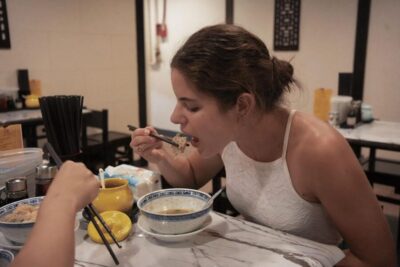
Hong Kong: Street Food Tour with Locals – Dim Sum and Wonton
Read our review →
Hong Kong Day Tour: Priority Peak Tram, City Walk & Dim Sum
Read our review →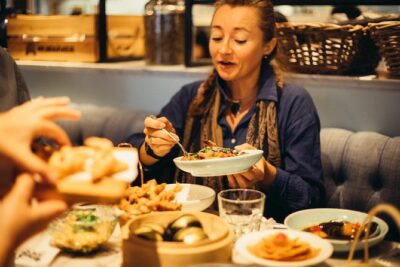
The 10 Tastings of Hong Kong With Locals: Private Street Food Tour
Read our review →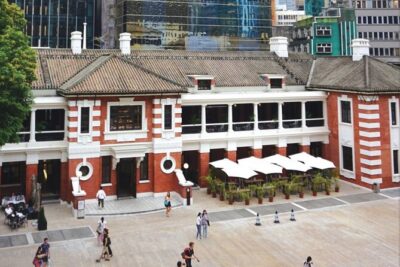
Top-Rated Hong Kong Tour: Peak Tram, Dim Sum & Cultural Sights
Read our review →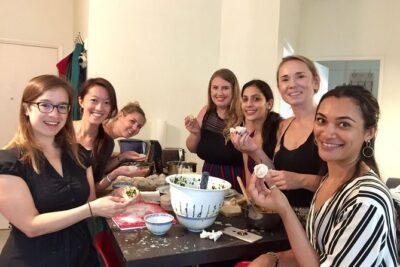
Organic Chinese Dumpling Class with Market Walk
Read our review →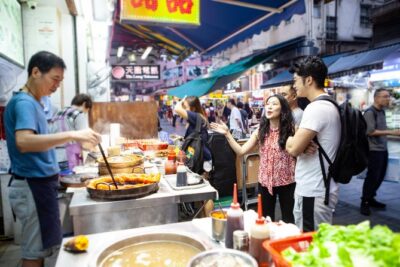
Kowloon Night Street Food Tour with a Local: Private & Customized
Read our review →
Organic Xiao Long Bao Soup Dumpling Class & Market Walk
Read our review →
Private Kowloon Michelin Rated Street Food & Culture Tour
Read our review →Browse the lists this tour appears in