
REVIEW · USA STREET FOOD TOURS
Japanese Street Food Class in Beech Grove
Japanese Street Food Class in Beech Grove brings four comfort-food favorites to one small, hands-on kitchen session: yakisoba, okonomiyaki, takoyaki, and rice cooker cake. Mori sensei teaches as you cook, adding background on the dishes and practical advice for finding or replacing ingredients at home.
I like the private format, which keeps the class personal rather than turning it into a large demonstration. I also like the recipe guide, since the real test of a cooking class is whether you can make the food again after you leave.
The main consideration is timing. The class begins at 3:00 pm, lasts about two and a half hours, and centers on several dishes, so you should expect an active session rather than a quick snack stop. You also need to report food restrictions and allergies before class begins.
Key points at a glance
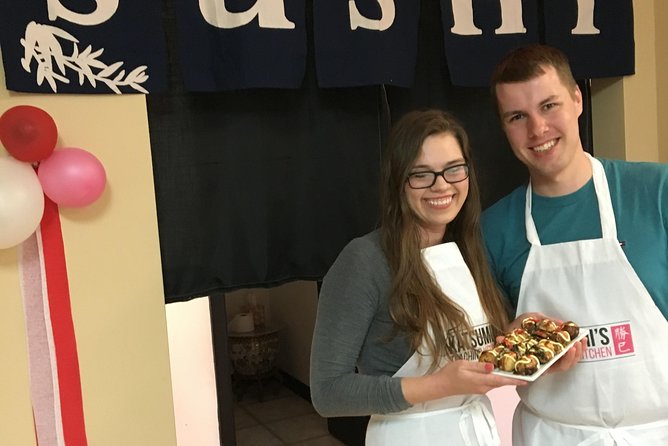
- Four Japanese comfort foods in one class: Prepare yakisoba, okonomiyaki, takoyaki, and a rice cooker cake with matcha glaze.
- Mori sensei teaches the food’s background: You learn where each dish fits in Japanese cooking while working through the recipes.
- Private instruction: Only your group participates, allowing the class to feel more personal and adaptable.
- Useful take-home guidance: A recipe guide explains how to recreate the dishes and where to find or substitute ingredients.
- A relaxed start: You need to bring nothing. Put on an apron, wash your hands, and begin.
- A practical Beech Grove location: Meet at 222 Main St in Beech Grove, Indiana, with the activity ending at the same address.
What happens during the 2.5-hour class
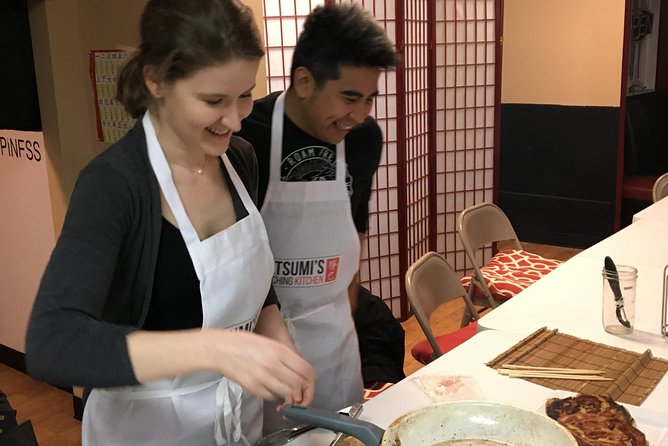
The class starts at 3:00 pm at 222 Main St in Beech Grove. Once you arrive, you do not need to unpack special equipment or bring supplies. You put on an apron, wash your hands, and get started.
That simple opening tells you what kind of experience this is. It is not a formal restaurant meal with a cooking show attached. You are there to work with the food. The class is private, so the pace can suit your own group more easily than a large public workshop would.
The exact order of the dishes is not specified, so I would not plan around a particular cooking sequence. You can expect the session to move through three savory dishes before finishing with dessert. Along the way, Mori sensei explains the ingredients and the background behind each recipe.
A two-and-a-half-hour class gives you enough time to do more than watch. It also means you should be ready to stay engaged. If you prefer a short tasting with no participation, this may feel like more work than you want. If you like learning by doing, the length makes sense.
A few more street food tours around the USA worth a look
- 2 Hour Historic Market Food Tour and Hands-On Biscuit Class
★ 5.0 · 251 reviews - Atlanta: Historic Market Food Tour and Biscuit Cooking Class
★ 4.9 · 25 reviews - San Francisco: Dumpling Cooking Class & 3-Course Dinner
★ 5.0 · 10 reviews
Yakisoba: a friendly first dish
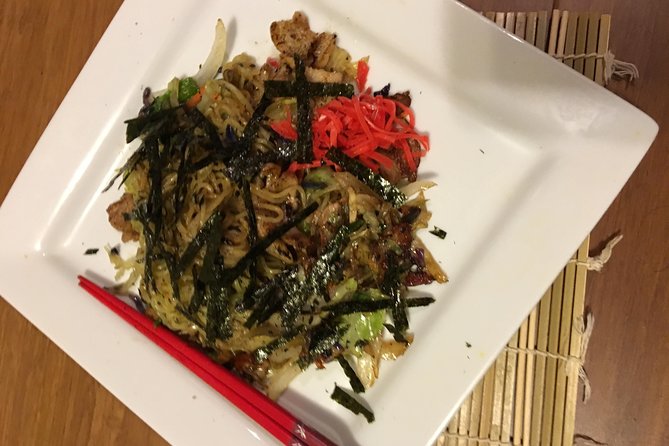
Yakisoba is likely to be one of the more approachable recipes in the class. The name refers to fried noodles, and the dish is widely associated with Japanese street-food culture. Here, the point is not just to eat a noodle dish, but to understand how the ingredients work together and how you can make it at home.
I like starting with a dish such as yakisoba because it gives you a useful home-cooking skill. You learn how a familiar set of ingredients can become a complete meal with the right seasoning and cooking method. The recipe guide adds value by helping you repeat the process later, rather than leaving you with only a pleasant memory.
Ingredient access matters here. The class specifically covers where to find ingredients and what to use when an item is hard to locate. That is useful in Indiana, where you may not have a Japanese market nearby. You can ask about substitutions while the recipe is in front of you, when the answer is easier to remember.
The class information does not specify the exact vegetables, sauce, or protein used in the yakisoba. I would treat that as a reason to ask questions during the session, not as a gap in the experience. The most useful part may be learning the method and the flavor balance rather than copying one fixed shopping list.
Okonomiyaki turns simple ingredients into a meal
Okonomiyaki is another classic Japanese street food, often described as a savory pancake. Its name is linked to the idea of cooking what you like, which fits the dish’s flexible nature. It can be a good lesson in adapting a recipe without losing its character.
This is one of the class’s more interesting choices because okonomiyaki can look simple but depends on texture. You want a dish that holds together, cooks through, and still feels light enough to enjoy. Working through that process with Mori sensei gives you a better chance of understanding what to watch for than reading a recipe alone.
The class also places the food in context. You learn about the dish’s origins while preparing it, so the recipe is not presented as a random menu item. That small bit of cultural background makes the cooking more memorable and helps explain why this food belongs in a street-food class.
The private setting should help if you have questions about consistency, cooking time, or substitutions. A larger class can leave you trying to keep up with the instructor. Here, only your group participates, which should make it easier to ask for a repeat explanation when something is unclear.
Takoyaki adds the hands-on challenge
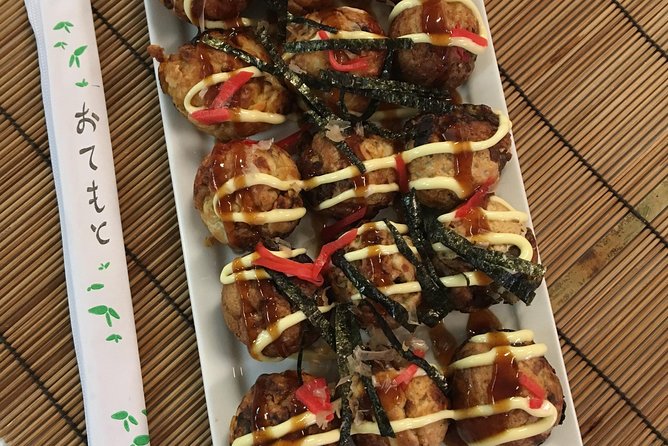
Takoyaki is the most distinctive dish in the class for many people. These are round, savory bites associated with Japanese street food, and preparing them requires more attention than simply stirring noodles or mixing batter.
The supplied details do not say exactly what equipment you will use or how the takoyaki portion is structured. Still, it is reasonable to expect this dish to be one of the more hands-on parts of the class. You will want to pay close attention to Mori sensei’s instructions and ask about the technique you will need to repeat at home.
That home-cooking question matters. Some Japanese street foods depend on special pans or tools, and the class is most useful when you learn not only how the dish is made in the teaching kitchen, but also what is realistic in your own kitchen. The recipe guide and ingredient-substitution advice can help you judge which parts are essential and which can be adapted.
I would not book this class expecting a polished, restaurant-style presentation of takoyaki with no effort on your part. The appeal is the process. You are learning a dish that may be unfamiliar, and the private format gives you room to work through it at a sensible pace.
Same city, a different plate:
- New Orleans Food Walking Tour of the French Quarter with Small-Group Option
★ 5.0 · 6,118 reviews - SoHo, Little Italy, and Chinatown Walking Tour in New York
★ 5.0 · 3,153 reviews - Historic Ybor City Food Walking Tour
★ 5.0 · 2,210 reviews - New York City Mafia and Local Food Tour led by NYPD Guides
★ 5.0 · 1,197 reviews
Rice cooker cake with matcha glaze
Dessert is a rice cooker cake with matcha green tea glaze. The cake is described as similar to a sponge cake, but with a softer, more special character, while the glaze is simple and not too sweet.
This is a clever finish because it shows a use for a common kitchen appliance beyond rice. A rice cooker cake also feels practical for home cooks who may not have much baking equipment. You do not need to own a full set of specialty tools to appreciate the idea, though the class does not state whether the exact method requires a particular rice cooker.
The matcha glaze gives the dessert its Japanese flavor without making it sound overly rich. If you are unsure about green tea desserts, the note that the glaze is not too sweet is useful. It suggests a restrained finish rather than a heavy icing.
The dessert also gives the class a pleasant change of pace. After three savory recipes, you get to see how the same session handles a sweet dish. I would ask for the recipe details and ingredient substitutions here, especially if matcha is not something you usually keep at home.
The cultural context makes the recipes more useful
A strong cooking class should explain more than the steps. Mori sensei also shares information about the origins of the dishes and the role of ingredients. That context is one of the best reasons to choose this experience instead of following a video at home.
The cultural material is not presented as a separate lecture. It comes while you cook, which makes it easier to connect the facts to the dish in front of you. You can learn why a recipe is associated with Japanese street food, then see how its ingredients and preparation fit that setting.
One especially appealing detail is Mori sensei’s friendly teaching style. The class is described as funny and lighthearted, with an effort to help everyone feel comfortable. That matters in a cooking class, where mistakes are part of the process and a tense instructor can make simple tasks feel harder than they are.
You should still keep your expectations realistic. The available information does not promise a full survey of Japanese cuisine or a long cultural lecture. The focus is narrower and more useful: a handful of popular street foods, the stories behind them, and ways to prepare them again.
Why the private format matters
Private instruction is the clearest advantage for couples, families, and small groups booking together. Only your group participates, so the experience is not shared with strangers. That can make the class more comfortable if your group has different cooking abilities or wants to ask many questions.
The private setting can also improve the practical value. You can spend more time on a dish that feels unfamiliar, ask about food substitutions, or clarify a step before moving on. In a public group class, the instructor may need to keep everyone on one fixed schedule.
A private class is not automatically better for every person. It may feel less social if you hoped to meet other people over food. The available information also does not give a maximum group size or explain how the session is adjusted for different numbers of participants, so you may want to confirm those details before booking.
Still, for a cooking lesson, personal attention has real value. You are paying for access to instruction as well as ingredients and food. The more questions you ask, the more the private format can work in your favor.
What you take home besides the food
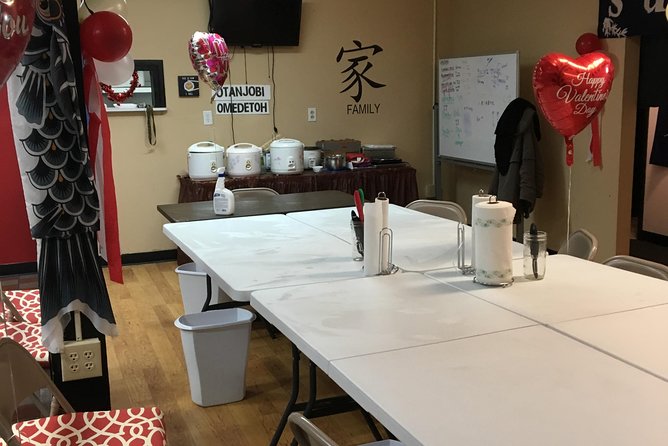
The recipe guide is important. Many cooking classes are enjoyable in the moment but hard to repeat because you forget quantities, timing, or the order of steps. A written guide gives you a better chance of making the dishes after returning home.
You also learn where to shop for ingredients and what to substitute. That may be the most practical part of the class for anyone who does not live near a Japanese grocery store. A recipe that depends on one difficult-to-find item can become useless, while a recipe with clear alternatives is much easier to fit into ordinary home cooking.
I would use the class as a chance to make notes. Write down the substitutions Mori sensei recommends, especially for sauces, seasonings, matcha, and any ingredients you have never used. The provided information confirms that this guidance is part of the experience, but it does not list the exact alternatives in advance.
You should also remember that the class focuses on learning these particular dishes. It does not promise a complete Japanese cooking course. That is not a weakness if you want street food, but it matters if you are hoping to cover sushi, ramen, or a broad range of regional cooking.
Location, timing, and practical planning
The meeting point is 222 Main St, Beech Grove, Indiana 46107. The activity begins and ends at the same location, so you do not need to arrange a separate return transfer. It is near public transportation, which may help if you are not driving.
The class lasts approximately two hours and 30 minutes and starts at 3:00 pm. Set aside the full afternoon window rather than planning a tight appointment immediately afterward. Cooking several dishes takes time, and the end time is approximate.
The ticket is mobile, and the class is offered in English. No extra items are required. You receive an apron at the start, wash your hands, and work from there.
Service animals are allowed. You must tell the instructor about food restrictions or particular allergies before the class begins. Do not wait until you arrive, since the menu includes several dishes and the instructor needs advance notice to understand what you can safely prepare or eat.
Is the class good value?
No price is provided here, so I cannot judge the exact cost against similar classes. I can still explain what you are paying for: roughly two and a half hours of private instruction, preparation of four dishes, cultural background, ingredient advice, and a recipe guide.
That is stronger value than a simple tasting if you plan to cook the food again. The take-home recipes and substitution tips give the experience lasting use. The private setting also matters more if your group wants personal instruction rather than a standard demonstration.
The value is weaker if you mainly want a cheap meal. You are spending time cooking, asking questions, and following instructions. The food is part of the reward, but the central product is the lesson.
A 4.8 rating from nine reviews points to a very positive response, though the sample is small. The strongest praise focuses on the mix of three savory dishes and one dessert, Mori sensei’s humor, the comfortable atmosphere, and the cultural details woven into the recipes. Those are the qualities I would weigh most heavily when deciding.
Who should book this experience?
I would recommend it to couples, families, and small private groups who enjoy cooking and want a focused introduction to Japanese street food. It also suits anyone who has tried these dishes at restaurants and wants to understand how they are made.
The class should work well for beginners because you start with basic preparation and receive guidance throughout. You do not need to bring equipment, and the recipe guide gives you something to follow later.
It may be less suitable if you want a passive food tour, a large social group, or a broad survey of Japan’s regional dishes. It is also not the best choice for anyone with serious food allergies who has not contacted the instructor in advance.
The weather policy deserves a quick note. The activity requires good weather, and poor conditions may lead to another date or a full refund. If the minimum number of participants is not met, you are offered another date or experience, or a full refund. For a firm schedule, keep that possibility in mind.
Should you book the Beech Grove cooking class?
Book it if you want to make Japanese street food with personal instruction, not simply eat it. The combination of yakisoba, okonomiyaki, takoyaki, and rice cooker cake gives you a varied session, while Mori sensei’s background explanations and recipe guide help the class continue after you leave.
I especially like this for a couple or small group that wants a relaxed, private activity with something useful to take home. Skip it if you want a quick tasting or a class with a large social crowd. For the right audience, the practical recipes, ingredient advice, and friendly instruction make this a worthwhile way to spend an afternoon in Beech Grove.
FAQ
Where does the Japanese Street Food Class take place?
The class takes place at 222 Main St, Beech Grove, Indiana 46107, USA.
What time does the class begin?
The class starts at 3:00 pm.
How long does the class last?
The experience lasts approximately two hours and 30 minutes.
Where does the activity finish?
The activity ends back at the meeting point on Main Street in Beech Grove.
What dishes will I learn to make?
You will learn to make yakisoba, okonomiyaki, takoyaki, and rice cooker cake with matcha green tea glaze.
Is the class private?
Yes. Only your group participates in the activity.
Is the class offered in English?
Yes. The class is offered in English.
Do I need to bring anything?
No. Nothing extra is required. You will put on an apron and wash your hands before beginning.
Can I attend with a food allergy or restriction?
You must tell the instructor about any food restrictions or particular allergies before the class begins.
What is the cancellation policy?
You can cancel at least 24 hours before the start time for a full refund. Cancellations or changes made less than 24 hours in advance are not refunded or accepted. If poor weather or an insufficient minimum number of participants cancels the class, you are offered another date or experience, or a full refund.
Just added around the USA
- 6 Hour Local Food Plate Jeep Tour★ 5.0 · 4 reviews
- Denver Downtown 16th Street Food Tour★ 5.0 · 29 reviews
- Detroit Food Walking Tour★ 4.0 · 3 reviews
- 5-course Walking Food Tour in Dallas History + Cocktail opt.★ 5.0 · 75 reviews
- Dallas’ Best Tacos and Margaritas Coach Tour★ 4.5 · 97 reviews
- West Side Market Food Tour★ 4.0 · 31 reviews
- Taste of Chicago’s Chinatown Food Tours★ 5.0 · 2 reviews
- River North Food Walking Tour★ 4.5 · 88 reviews
USA Street Food Tours, compared.
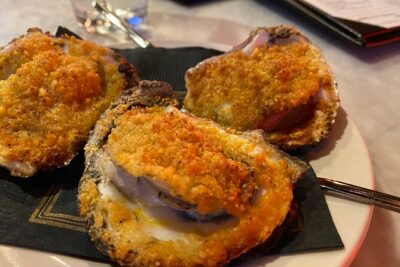
New Orleans Food Walking Tour of the French Quarter with Small-Group Option
Read our review →
SoHo, Little Italy, and Chinatown Walking Tour in New York
Read our review →
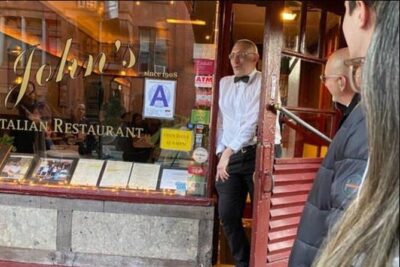
New York City Mafia and Local Food Tour led by NYPD Guides
Read our review →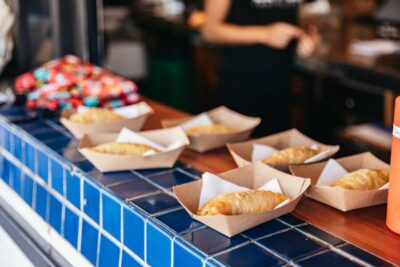
Miami: Little Havana Food Walking Tour with Tastings
Read our review →
True Crime NYC: Mafia Walk w/Ret. NYPD Detective and Local Food
Read our review →

Browse the lists this tour appears in