
REVIEW · INDIA STREET FOOD TOURS
Jodhpur Blue City Heritage Walking Guided Tour
Jodhpur’s Blue City is best understood on foot, where a turn into a narrow lane can reveal indigo houses, shrines, old waterworks, and daily life far removed from the fort’s grand viewpoints. This roughly two-hour walk connects Navchowkiya’s blue lanes with stepwells, reservoirs, temples, and the lively Clock Tower Market.
I like the compact route and the chance to see how Jodhpur’s old water systems shaped the city. I also like that guides such as Imtiaz may add hillside temples, good views, local stories, and photo stops rather than simply marching from one landmark to the next. The trade-off is that this is a walking tour with hilly sections, and the short schedule can make each stop feel like an introduction rather than a thorough visit.
Key points to know before you book
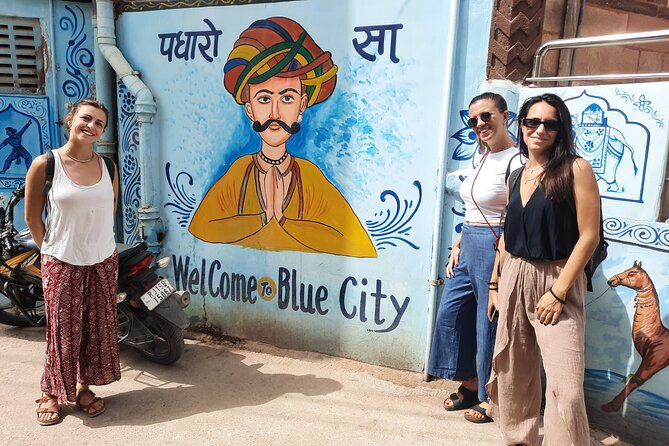
- The blue lanes get the most time: About 30 minutes are set aside for Navchowkiya, the tour’s best chance to see indigo-painted homes and winding residential streets.
- Water is a major theme: Ranisar, Padamsar, Toorji Ka Jhalra, and Gulab Sagar show how people managed water in dry Rajasthan.
- The tour starts and ends by the Clock Tower: That makes it easy to continue shopping or eating in Sardar Market afterward.
- The group is capped at 15 people: This is small enough for questions, though it is not a guaranteed private walk.
- A local guide adds the value: English and Hindi speaking guides explain the streets, customs, and buildings, with Imtiaz praised for adding temples and less obvious corners.
- The price is modest: At $13.39 per person, the tour offers good value if you want orientation, local context, and several sights without paying for a private guide.
Why this Jodhpur walk works
The tour covers a useful slice of the old city without asking you to commit to a full morning or afternoon. In about 1 hour 40 minutes to two hours, you move from the Clock Tower area toward historic neighborhoods, water reservoirs, a stepwell, and the blue-painted quarter.
That mix matters. A fort visit gives you royal rooms and grand views, but this walk shows the city at street level. You see how homes fit together, how lanes bend around old buildings, and how water shaped life in a dry region.
I like the balance between famous stops and ordinary streets. Toorji Ka Jhalra is a well-known photographic stop, but the time in Navchowkiya gives you a better feel for Jodhpur as a lived-in place. You are not only collecting monuments. You are walking through a neighborhood.
The tour is priced at $13.39 per person, with group discounts listed as an option. That is a reasonable rate for a licensed guide and several major sights, especially if you want help making sense of the city rather than wandering without context. All listed admission tickets are free, so there are no surprise entry charges for the route itself.
More Street Food Walking Tours in India
- Delhi Food Walk: Rickshaw Ride, Street Eats & Market Tour
★ 5.0 · 401 reviews - Jaipur Bazaar & Food Walking Tour
★ 5.0 · 281 reviews - Heritage Walk & Street Food Tasting in Jaipur
★ 5.0 · 158 reviews
Starting at the Clock Tower and Fateh Pol Road
The meeting point is the Clock Tower, near Makrana Mohalla and behind Pal Haveli in the old city. Look for the prominent tower beside Sardar Market. It is a practical meeting place because it is easy to identify and sits near shops selling handicrafts, textiles, spices, and local food.
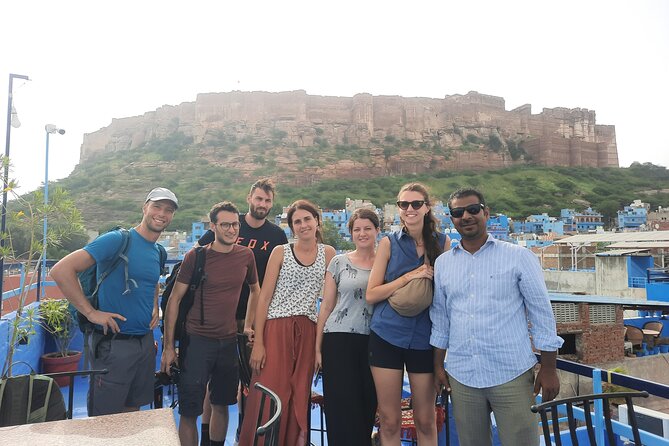
From there, the route includes Fateh Pol Road and Fateh Pol, one of Mehrangarh Fort’s gates. The gate recalls a victory over the Mughals in 1707 and carries carved architectural details that reward a slow look.
The listed time here is only about five minutes. That tells you how to treat this part of the walk: it is an orientation point, not a full fort tour. If you want detailed information about Mehrangarh’s palace rooms, defenses, or museum collections, you will need a separate visit.
Starting near the fort also gives the guide a useful way to explain Jodhpur’s old political center before turning toward its neighborhoods. Ask questions early if you want more background, since the walk moves through several subjects in a short time.
Ranisar and Padamsar: Jodhpur’s old water solution
The next stop is a pair of connected reservoirs, Ranisar and Padamsar Lakes. They were built in the 15th century to conserve water in an arid setting.
The stop lasts about 10 minutes, so you will not spend long here. Still, it adds an important layer to the tour. Jodhpur is often presented through color and royal architecture, but these lakes explain the practical side of city life. Water storage was not decoration. It was necessary planning.
The reservoirs also provide a change of pace after the fort gate. The guide can connect the lakes to the surrounding old quarters and explain why water structures appear so often in Rajasthan’s historic cities.
Do not expect a long lakeside outing or a formal nature stop. The value is the story and the setting, not a long stay. Keep your attention on the construction, the relationship between the lakes and the city, and the details your guide points out.
Thirty minutes in Navchowkiya’s blue lanes
Navchowkiya is the heart of the walk. About 30 minutes are allotted here, more than at any other stop.
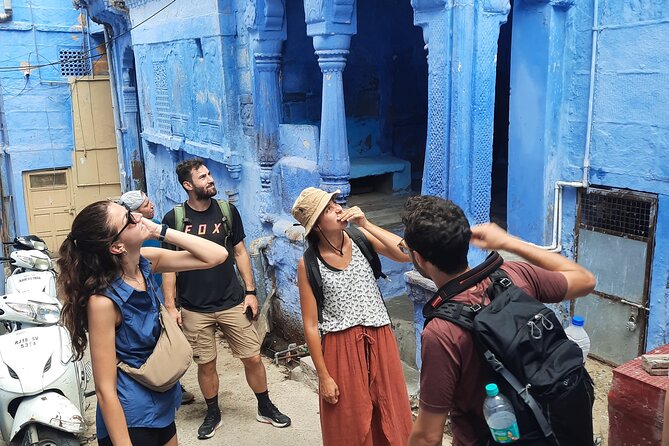
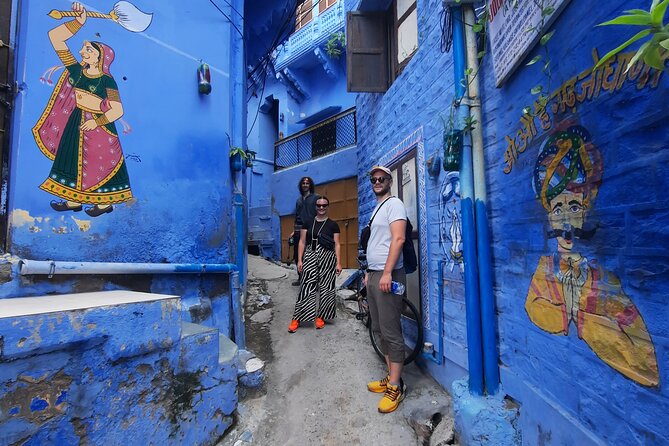
This neighborhood is known for its narrow lanes and indigo-colored homes. The blue walls give Jodhpur its familiar nickname, but the color is only part of what makes the area worth seeing. The lanes show how older homes, temples, doorways, and everyday activity fit into a tight urban pattern.
This is where a local guide earns the fee. Without context, you may see attractive walls and confusing turns. With a guide, you can ask about the color, the age of the buildings, neighborhood customs, and the small details you might otherwise pass.
The route is not a museum walk. People live here, so you should keep your voice down, avoid blocking doorways, and ask before taking close photographs of residents. That is part of the appeal, but it also requires more care than a monument with a ticket desk.
One practical point: the blue quarter is reached through old lanes, and the route may include uphill walking. A morning departure can be more comfortable. One version of the walk led by Imtiaz included a climb toward Jwalamukhi Temple and a Hanuman temple before descending into the blue quarter. Temple visits and added viewpoints may depend on the guide and route that day, so do not treat them as guaranteed stops.
Same city, a different plate:
- Mumbai: Street Food and Night Markets Tour
★ 4.9 · 719 reviews - Old Delhi Street Food Tour
★ 5.0 · 497 reviews - Delhi: Old Delhi Street Food Tour with Rickshaw Ride
★ 4.9 · 403 reviews - Old Delhi: Private Tour of Chandni Chowk, Tuk Tuk & Food
★ 4.9 · 345 reviews
Toorji Ka Jhalra shows off old engineering
Toorji Ka Jhalra, also called Toorji’s Step Well, receives about 15 minutes. This 18th-century structure was commissioned by a queen consort and combines practical water storage with carved stonework.
The stepwell is one of the tour’s strongest visual stops. Its descending steps create a striking geometric pattern, and the design makes the engineering easy to understand. You can see how people once moved down toward the water as its level changed.
Fifteen minutes is enough to take in the shape, hear the main story, and make photographs. It is not enough for a detailed architectural study, so ask your guide to point out the carvings and explain how the well functioned.
This stop also gives you a break from the residential lanes. The setting feels more open, and the clear structure of the stepwell contrasts with Navchowkiya’s maze of streets.
Gulab Sagar and the final walk to the market
Gulab Sagar is another historic water body, built in the 18th century. Only about five minutes are planned here, so think of it as a brief stop along the route rather than a long pause.
Its importance comes from the way it links water management with the old city’s growth. The guide can help you compare it with Ranisar and Padamsar and explain how reservoirs supported life in a dry region.
The short visit may feel rushed if you want photographs or a quiet look. Still, it works as part of the larger theme. By this point, you have seen several kinds of historic infrastructure, from lakes to a stepwell, rather than viewing Jodhpur only through palaces and painted walls.
Sardar Market brings the city back to street level
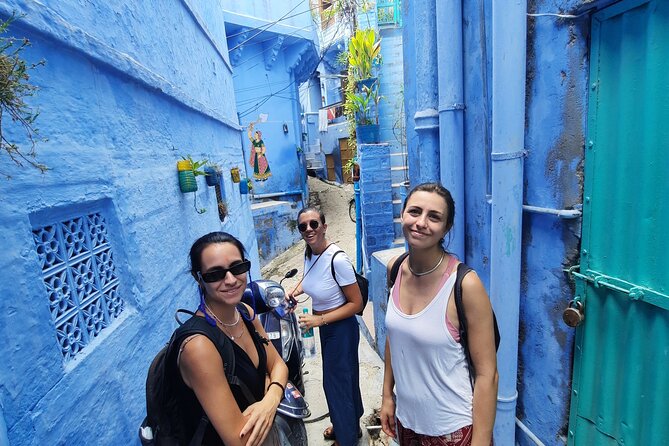
The tour finishes at the Clock Tower Market, also known as Sardar Market, with about 30 minutes in the area. The market takes its name from the late 19th-century Clock Tower built by Maharaja Sardar Singh.
This is the most active part of the route. Shops offer handicrafts, fabrics, spices, and local delicacies, and the market makes a natural ending because you can continue exploring after the guide departs.
I like ending here rather than at an isolated monument. You have time to ask where to browse, what local foods to look for, and how to find your way around the old city. The guide may also help you separate useful shopping from the more aggressive parts of market life.
Keep your expectations realistic. This is not a dedicated food tour, and the price does not include purchases, tastings, or gratuities. The tour description allows for sampling traditional delicacies, but food is not listed as an included item. Bring cash if you plan to buy something, and agree on prices before purchasing goods.
Group size, guide quality, and pace
The maximum group size is 15 people. That is a reasonable limit for narrow streets, though the experience will feel different with three people than with a full group.
The guide is the main variable. English and Hindi speaking licensed guides are included, and the strongest part of the experience is the personal explanation of places that can otherwise seem disconnected. Imtiaz is specifically associated with clear local history, a temple visit, hillside walking, and a good route through the blue quarter.
At the same time, one poor experience involved a guide who contacted the customer repeatedly before arrival and appeared distracted during the meeting. The operator apologized, explained that the guide had an injured hand, and offered a refund. This appears to be an exception within a highly rated experience, but it is still useful to know that guide quality can shape the day.
I recommend confirming the meeting time clearly and arriving at the Clock Tower rather than assuming the route begins at the fort. The published start and end point is the Clock Tower area.
Who will get the most from this tour?
This walk suits you if you want a quick introduction to Jodhpur before exploring on your own. It is especially useful on a first day, when you need a sense of direction and want local context for the blue quarter, market, and old water structures.
It also works well for couples, families with older children, and small groups who prefer a guide but do not need a private itinerary. Most people can participate, and the group limit keeps the walk from becoming unwieldy.
You may want another option if you dislike uneven or uphill walking, need a slow pace, or want extended time at each monument. The itinerary is packed, and several stops last only five or ten minutes. It is also not a replacement for a full visit to Mehrangarh Fort.
The tour is typically booked 23 days ahead, so reserve early if your schedule is fixed. Confirmation arrives when you book, and mobile tickets are accepted. Free cancellation is available up to 24 hours before the local start time. Inside that window, the payment is not refunded, and changes are not accepted.
Should you book the Jodhpur Blue City walk?
I would book this tour if you want a low-cost, guide-led introduction to the old city with a strong focus on neighborhoods, water structures, and market life. The $13.39 price is fair, the route includes several worthwhile sights, and the Clock Tower start makes the walk easy to fit into a wider Jodhpur plan.
Book it with the right expectations. You are buying local orientation and storytelling, not long museum visits or a private deep examination of every building. Wear comfortable shoes, choose a cooler time of day if possible, and be ready for narrow lanes and some uphill walking.
If you want a short route that connects Jodhpur’s blue homes with its lakes, stepwell, temples, and market, this is a practical choice. If the blue quarter is your main goal, make sure you have enough free time afterward to wander slowly on your own.
FAQ
How much does the Jodhpur Blue City Heritage Walking Tour cost?
The listed price is $13.39 per person. Group discounts are available.
How long does the walking tour last?
The tour lasts approximately 1 hour 40 minutes to 2 hours.
Where does the tour start and end?
It starts and ends at the Clock Tower area near Makrana Mohalla, behind Pal Haveli, in the old city near Gulab Sagar and Sardar Market.
What language does the guide speak?
The tour includes an English or Hindi speaking licensed guide.
How large can the group be?
The maximum group size is 15 travelers.
Which sights are included?
The route includes Clock Tower Market, Ranisar and Padamsar reservoirs, Toorji Ka Jhalra stepwell, the Blue City area, and Gulab Sagar. Fateh Pol Road is also included in the listed route.
Are entrance tickets included?
The listed stops have free admission, and no separate entrance fee is included or required for them.
How far in advance is the tour usually booked?
The tour is booked an average of 23 days in advance.
Can I cancel for a full refund?
Yes. You can cancel at least 24 hours before the local start time for a full refund. Cancellations or changes made less than 24 hours before the start are not refunded or accepted.
More Heritage Tours in India
- Old Delhi Cultural, Temples, Heritage Walking Street Food Tour
★ 5.0 · 57 reviews - Jaipur: History Street Food Tour with Local Guide
★ 4.4 · 50 reviews - Spice & Stories: 3-Hour Old Delhi Heritage Food Walk Guided Tour
★ 4.5 · 36 reviews - Old Delhi Temples, Cultural, Heritage Walking Street Food Tour
★ 5.0 · 19 reviews
Just added around India
- Evening Hyderabad Street Food Walk with Hyderabad Biryani★ 4.5 · 24 reviews
- Hyderabad Street Food Crawl (2 Hours Guided Food Tasting Tour)★ 4.0 · 5 reviews
- Hyderabad : Evening Street Food Tasting with Guided Old City Tour★ 5.0 · 10 reviews
- Hyderabad Street Food Experience with Local Expert★ 4.5 · 2 reviews
- Food Walk Tour Chennai★ 4.0 · 19 reviews
- Sowcarpet Street Food Walking Tour in Chennai with guide★ 5.0 · 83 reviews
- Food Walk Tour Bangalore★ 5.0 · 2 reviews
- Old Bangalore: Cultural & Food Walk★ 5.0 · 2 reviews
India Street Food Tours, compared.


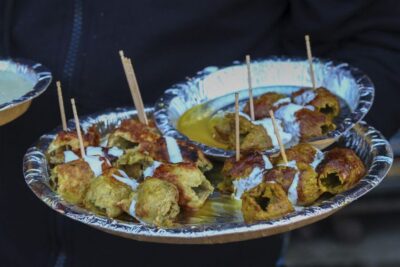
Delhi: Old Delhi Street Food Tour with Rickshaw Ride
Read our review →
Delhi Food Walk: Rickshaw Ride, Street Eats & Market Tour
Read our review →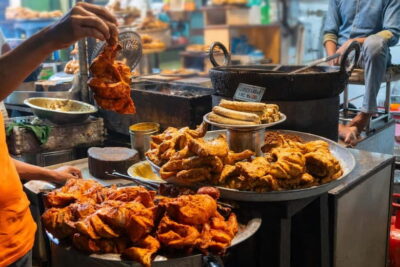
Old Delhi: Private Tour of Chandni Chowk, Tuk Tuk & Food
Read our review →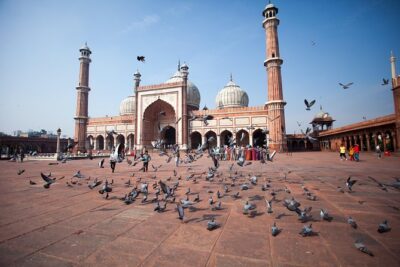
Old Delhi Street Food Tour – Explore Spices in Chandni Chowk
Read our review →
Chandni Chowk Delhi Food Tour with 15+ Tastings
Read our review →
Browse the lists this tour appears in