
REVIEW · CHIANG MAI STREET FOOD TOURS
Chiang Mai: Evening Local Street Food Market Tour
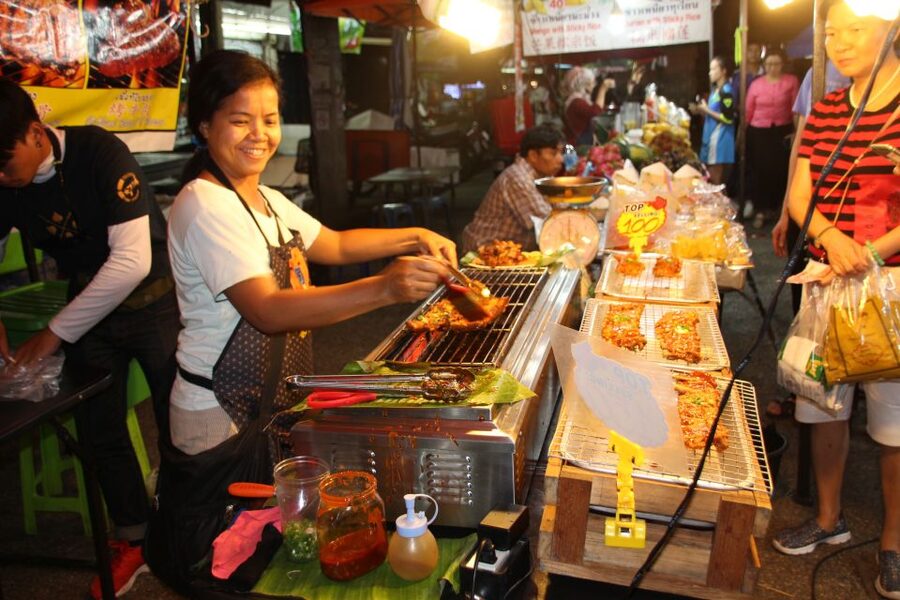
Chiang Mai’s best street food can look like a puzzle of steaming pots, mystery sauces, and dishes with names you cannot pronounce. This 150-minute tour gives you a friendly guide to the puzzle, with stops at at least two evening markets and enough food to make dinner afterward a distant thought.
I like the generous range of dishes, from kanom jeen noodles and northern Thai specialties to stewed pork leg and coconut dumplings. I also like the practical touch: your guide teaches basic Thai food phrases, helps you order, and sends you home with a small food guide you can use for the rest of your stay.
The main drawback is simple: this is not a light tasting tour. Portions can add up fast, and some nights include several markets and well over ten dishes. The tour also cannot accommodate vegetarians or pescatarians, so plant-based eaters should choose another food walk.
Key points to know before you book
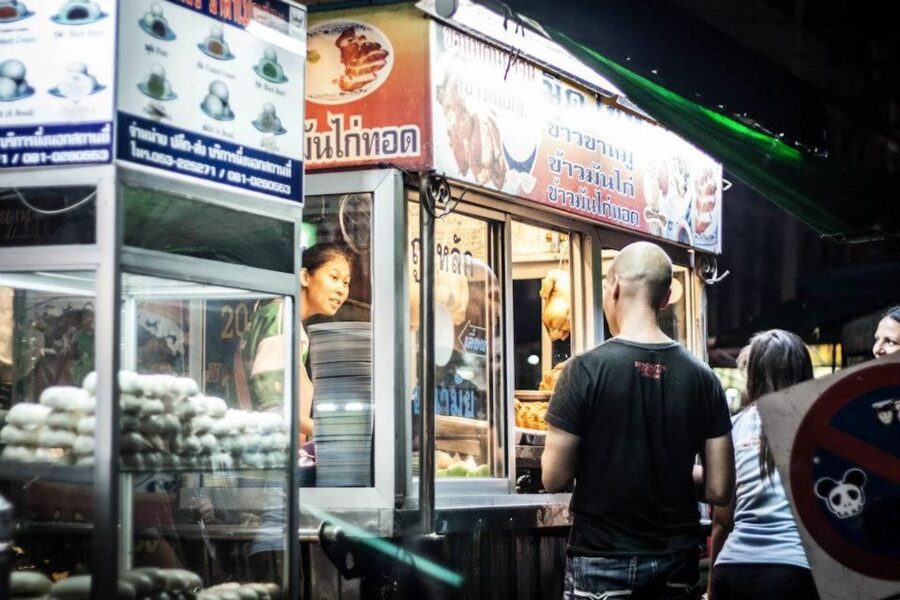
- Come very hungry: You may taste soups, curries, salads, noodles, main dishes, and several desserts.
- Guides make the difference: Jay, Mr. Goal, Chai, T, Tee, Nop, Go, and Tienchai are among the guides praised for their humor, English, care, and food knowledge.
- You visit more than one market: The advertised plan covers at least two evening markets, while some outings reach three or four food stops.
- Northern Thai food gets proper attention: This is not only a mango sticky rice stop. You try local dishes and learn how Chiang Mai’s food differs from familiar Thai restaurant fare.
- The group stays small: With no more than 10 people, you have time to ask about ingredients, spice, customs, and unfamiliar dishes.
- Hotel transfers are included in central Chiang Mai: Pickup and return save you the trouble of finding the markets yourself, though traffic can add time.
Why this Chiang Mai food tour works so well
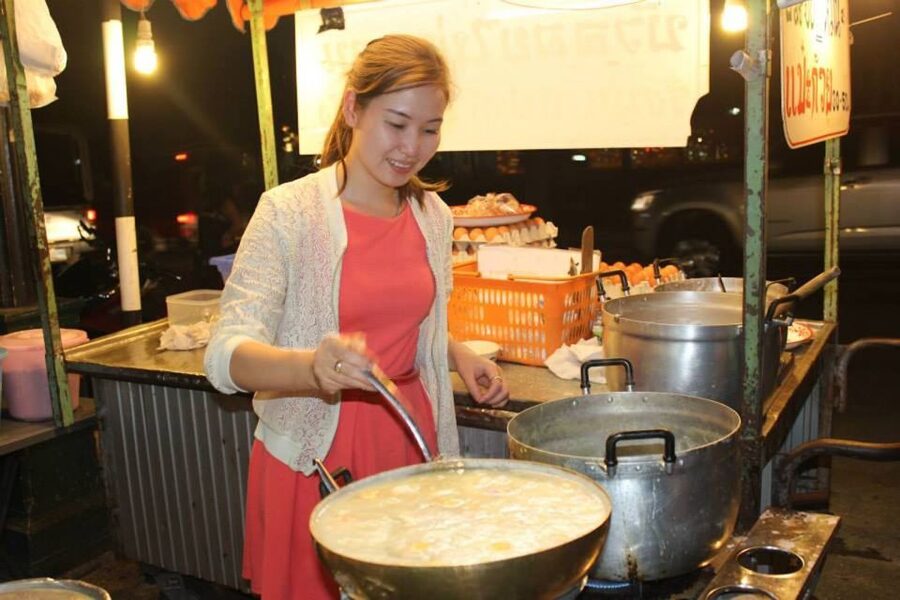
A night market is exciting, but it can also be hard to read. A tray of fried snacks may sit beside a curry you have never seen, while the vendor speaks little English and the queue moves quickly. You can point, guess, and hope for the best, or you can walk in with a local guide who knows what is worth trying and how to order it.
That is the real value here. The guide does not simply point out food. You learn what a dish is, where it comes from, how it is normally eaten, and which Thai words help you order it again. The supplied food leaflet adds a useful reference for later meals.
The small group size matters, too. Ten people is still enough for a social evening, but it is not a large bus group where you wait for everyone to catch up. You have room to ask why one curry is hot, how to handle a noodle dish, or what makes northern Thai food different from central Thai food.
More Street Food Market Tours in Thailand
- Chiang Mai: Local Food and Markets Guided Walking Tour
★ 4.3 · 175 reviews - Phuket: Full Day City Tour with Night Market
★ 4.5 · 2,888 reviews - From Bangkok: Maeklong Railway and Floating Market Food Tour
★ 4.9 · 224 reviews
Hotel pickup sets the evening in motion
The tour begins at your Chiang Mai accommodation, assuming you are staying within the city area. Be ready in the lobby 10 minutes before pickup. Transport then takes you to the evening food markets, with a return trip to your accommodation at the end.
This is especially useful on your first night. You do not need to search for a market, work out which stall has a good reputation, or arrange a ride home after eating your way through the city. It also makes the tour a practical orientation to Chiang Mai.
There is one catch: traffic can be slow. One particularly useful detail from the tour pattern is that stops may be spread across different parts of the city, including west, north, and south. That gives you a wider look at local food, but it also means some of your 150 minutes may pass in the vehicle.
The transport has been described as a clean, comfortable van, and cold drinking water is included. Bathrooms are available along the route, which is welcome when the evening includes several food stops.
First markets: learning how to order
Your first market stop is where the tour shifts from sightseeing to participation. Instead of simply watching your guide choose food, you learn how to place an order and how to use a few basic Thai phrases yourself.
Do not worry about mastering Thai in one evening. The goal is practical confidence. You might learn the words needed to ask for a dish, identify food, or manage spice. Your guide can handle the ordering when needed, but you also get the chance to practice.
This makes a real difference later in your trip. A market becomes less intimidating when you recognize kanom jeen, know what a dish contains, and have a phrase ready for the vendor. The leaflet is small but useful, since it gives you a reminder of the dishes you tasted and phrases that may help at future meals.
The food at this stage can vary by night. That is worth understanding before you book. You are not guaranteed a fixed tasting menu, and market availability changes. The upside is that the tour follows what is fresh and available rather than forcing the same set of dishes every evening.
Kanom jeen and northern Thai specialties
Kanom jeen, sometimes written as khanom chin or kanom jin, is one of the foods highlighted on the tour. These are soft fermented rice noodles served with curry or sauce. They are not the same as Chinese wheat noodles, despite the common description of them as Chinese noodles.
For someone new to Thai food, kanom jeen is a useful introduction to the way noodles, curry, herbs, and vegetables can come together in one dish. Your guide explains how to eat it and what flavors to expect, which helps you avoid treating it like a standard bowl of noodles.
Northern Thai food is the heart of the evening. Chiang Mai cooking has its own character, and the tour gives you a chance to try dishes beyond the familiar pad Thai and green curry. Expect a mixture of soups, curries, salads, noodles, and regional specialties, with spice levels that vary from gentle to serious.
Your guide can point out the difference between dishes that are spicy, sour, salty, herbal, or sweet. That explanation matters because northern Thai food often gets reduced to one famous dish, khao soi. This tour is broader, giving you a look at the wider food culture of Chiang Mai.
More Market Food Tours in Chiang Mai:
- Tokyo Tsukiji Fish Market Food and Culture Walking Tour
★ 5.0 · 3,184 reviews - London Bridge & Borough Market Food Tour with 7 Authentic Dishes
★ 5.0 · 1,972 reviews - Tokyo: Tsukiji Fish Market Food and Walking tour
★ 5.0 · 1,724 reviews - Small Group Cooking Class & Market Food Tour in Florence
★ 5.0 · 1,574 reviews
Stewed pork leg and the appeal of market food
Stewed pork leg is another named stop. It is slow-cooked comfort food, usually served with rice and a savory sauce, and it gives the evening a hearty center after the lighter noodle and snack dishes.
The appeal of street food here is not fancy presentation. It is the speed, smell, repetition, and skill of vendors preparing the same food night after night. You see dishes being assembled in front of you and eat them close to the place where they are made.
That does not mean every bite will suit you. Some foods may be oily, spicy, sweet, or unfamiliar. The guide helps you understand what you are trying, but you should still tell the guide about strong dislikes and your comfort with chili.
The supplied details do not promise a set spice level. Some evenings include plenty of hot food, while guides have also adjusted choices for people who do not eat much spice. You should communicate clearly, especially if you have dietary limits beyond the vegetarian restriction.
Coconut dumplings and the dessert finish
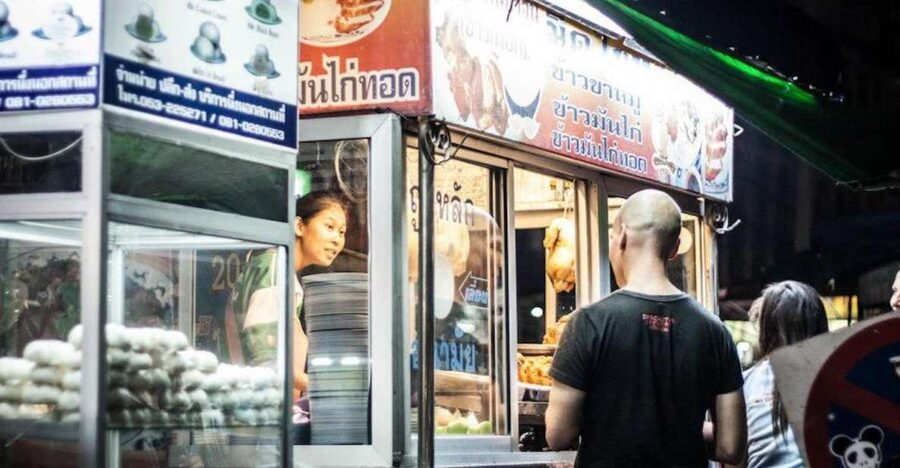
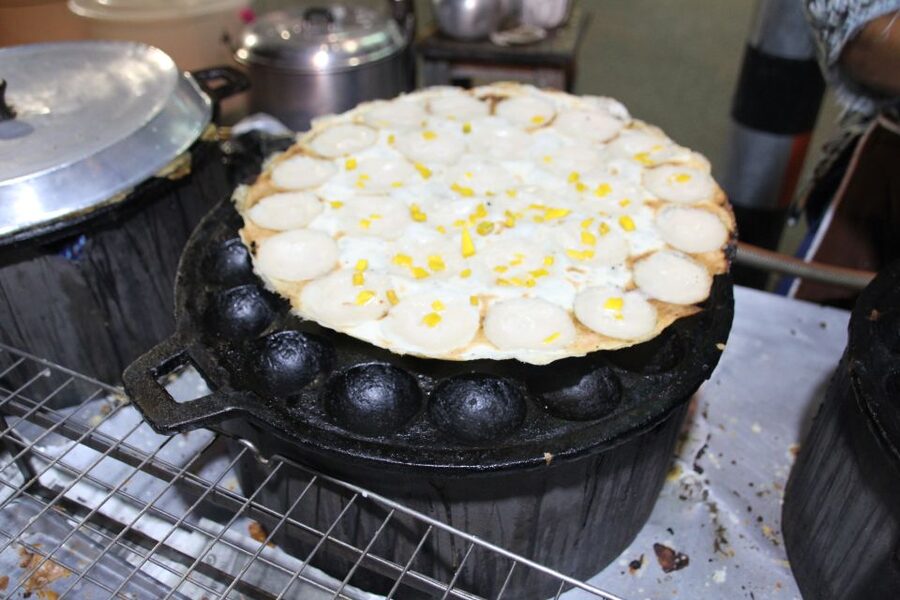
After savory food, the tour moves toward sweets. Coconut dumplings are one of the featured treats, and other Thai desserts may follow if you still have room.
Thai sweets often use coconut, rice flour, palm sugar, bananas, or sticky rice. Their textures can be as important as their sweetness. Some are soft and chewy, some creamy, and some pleasantly dense. Your guide gives you context instead of leaving you to guess what is inside.
This final stage is not an afterthought. Desserts provide a different view of Thai cooking and help round out the meal. Several tour outings have included four different desserts, though the exact choices vary from night to night.
The honest advice is to pace yourself. It is tempting to eat every savory dish as if it were your last meal in Thailand, but you may regret that decision when the sweets arrive. Take small portions when offered, and leave room for the final stop.
The guide is the main reason to book
Food is the hook, but the guide shapes the quality of the evening. Jay appears often in the tour team and is described as prompt, relaxed, funny, and well connected with market traders. Mr. Goal is another frequent guide, praised for his humor, strong English, food knowledge, and ability to explain the origins of dishes.
Chai has also led outings with clear explanations of food etiquette and Thai phrases. T and Tee are described as engaging and easygoing, while Go is known for combining food with useful historical information. Names can vary depending on the date, so you should not book expecting one particular guide unless the operator confirms it.
The best guide behavior is not just naming dishes. It is explaining why a dish matters, how it fits into Thai culture, and how people normally eat it. You get more from a plate of noodles when you know whether to mix the sauce, add condiments, or take it with fresh vegetables.
The guides also help the group feel comfortable. That matters when you are trying foods you would never order alone. Solo visitors can share dishes with new companions, while families and couples get a guided introduction without having to plan every stop themselves.
How much food do you really get?
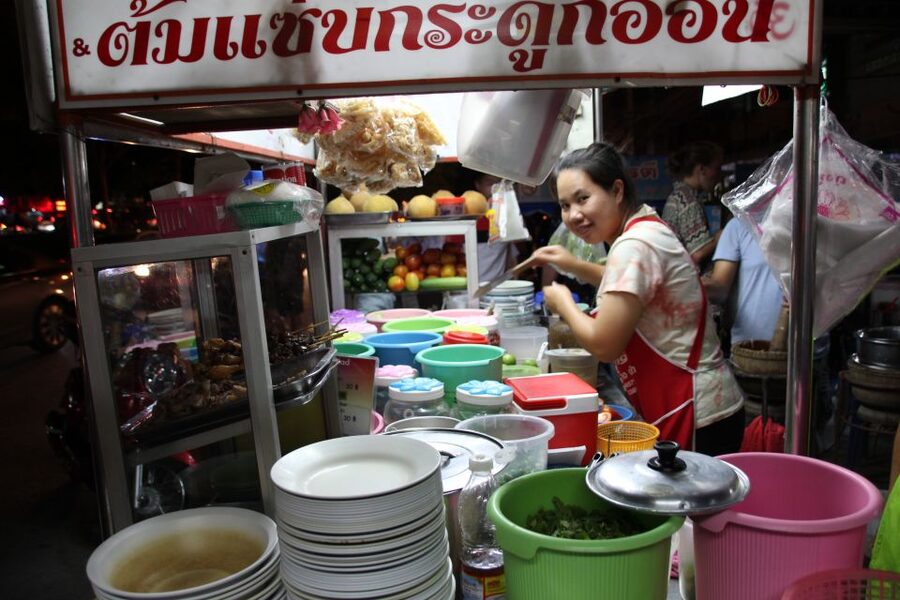
The short answer is a lot. The tour description promises a wide variety, and the actual pattern can include more than ten dishes, 14 different salads and main courses, and several desserts. Some evenings include three markets or four quality food stops rather than only two.
You should think of the $40 price as paying for a progressive meal, local guidance, transport, water, and the confidence to try foods you might otherwise skip. Buying every item separately could be cheaper if you already know where to go and what to order. For a first visit, the instruction and range make the price reasonable.
The value is strongest for solo visitors. Ordering many different dishes alone is expensive and wasteful, while a small group lets you sample more food. It also works well for people staying only a few nights, since the tour gives you a broad first look at Chiang Mai’s evening food scene.
It is less suitable if you want a quiet, carefully paced dinner. This is a moving meal with several stops, shared dishes, and a full stomach at the finish.
Who should book, and who should skip it?
I would recommend this tour to adventurous eaters, first-time visitors to Chiang Mai, solo diners, and anyone who wants help understanding local food. It is also a good fit for people who enjoy cultural explanation along with their meals.
Families with children over eight can enjoy it, especially if the children are open to trying new food. The guides have been able to help fussy eaters and people who avoid heavy spice, but the tour is still built around Thai food rather than familiar Western alternatives.
You should skip it if you are vegetarian or pescatarian, since the stated policy says those diets cannot be accommodated. You should also think twice if you dislike eating large quantities or need a fixed menu for allergy reasons, since dishes change from night to night and the supplied information does not promise allergy-specific arrangements.
Comfortable shoes are a must. You will walk through markets, stand at food stalls, and move between stops. Bring an appetite, but also bring some restraint at the first few dishes.
Booking details worth knowing
The tour costs $40 per person and lasts 150 minutes. Thai and English are the guide languages, and groups are limited to 10 participants.
Hotel pickup and drop-off are included for accommodations in central Chiang Mai. If you stay outside the city area, transport may be arranged for a small extra charge, but you need to contact the operator first.
Other drinks, including alcohol, are not included. Water is provided, so bring money if you want something else with your meal.
You can cancel up to 24 hours before the start for a full refund, and the reserve-now, pay-later option keeps your plans flexible. Availability and starting times depend on the date.
Should you book this Chiang Mai street food tour?
Book it if you want a generous, guided introduction to northern Thai food and would rather learn by tasting than by reading a menu. The combination of multiple markets, central hotel transport, small groups, Thai ordering practice, and a very large amount of food gives the $40 price solid value.
I especially like it as an early Chiang Mai activity. Afterward, you will recognize more dishes, feel less hesitant at market stalls, and have a short list of foods to seek out again.
Skip it if you need vegetarian food, a predictable menu, or a restrained meal. For everyone else, arrive early in the lobby, wear comfortable shoes, and save space for dessert.
FAQ
How long does the Chiang Mai street food tour last?
The tour lasts 150 minutes, including the market visits, food tastings, explanations, and transport back to your accommodation.
How many markets will I visit?
The tour includes at least two evening street food markets. Depending on the night, the route may include three markets or several separate food stops.
What food will I try?
Possible dishes include kanom jeen noodles, northern Thai specialties, stewed pork leg, coconut dumplings, Thai soups, curries, salads, and desserts. The exact dishes change from night to night.
Is hotel pickup included?
Roundtrip pickup and drop-off are included for hotels and accommodations in Chiang Mai city center. Transport from outside the city area may be arranged for a small surcharge.
Can vegetarians join the tour?
No. The stated tour information says vegetarians and pescatarians cannot be accommodated.
Are drinks included?
Water is included. Other drinks, including alcoholic beverages, are not included.
What languages does the guide speak?
The tour is offered with a live guide in Thai and English. Guides also teach useful Thai phrases for ordering food.
More Evening Tours in Chiang Mai
- Small-Group Chiang Mai Evening Street Food Tour
★ 4.5 · 826 reviews - Chiang Mai: Temples and Street Food Night Tour by Tuk Tuk
★ 4.3 · 81 reviews - Chiang Mai: Evening Sightseeing and Local Food Guided Tour
★ 4.9 · 46 reviews - Chiang Mai: Tuk-Tuk Evening Tour with Temples & Street Foods
★ 4.7 · 26 reviews
Just added around Chiang Mai
- Michelin Guided Street Food Tour in Chiangmai: Thai Food Tour★ 5.0 · 11 reviews
- Private Half-Day Tour The Old Chiang Mai City With Street Foods★ 5.0 · 3 reviews
- Chiang Mai – Doi Suthep Temple and Street Food Tour★ 5.0 · 17 reviews
- Taste of Chiang Mai: Michelin Guide Street Food Small Group 2Hr★ 5.0 · 19 reviews
- Chiang Mai Michelin Food Walking Tour with Professional Tour Guide★ 4.5 · 13 reviews
- Chiang Mai Street Food Tour by Tuk Tuk with Pick Up★ 5.0 · 7 reviews
- Chiang Mai: Temples and Street Food Night Tour by Tuk Tuk★ 4.3 · 81 reviews
- Chiang Mai: Tuk-Tuk Evening Tour with Temples & Street Foods★ 4.7 · 26 reviews
Chiang Mai Street Food Tours, compared.
Small-Group Chiang Mai Evening Street Food Tour
Read our review →
The 10 Tastings of Chiang Mai With Locals: Private Street Food Tour
Read our review →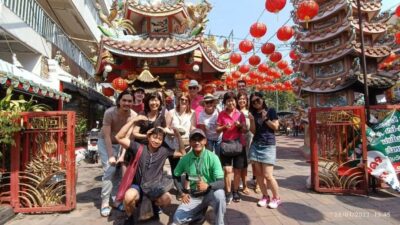
Chiang Mai: Local Food and Markets Guided Walking Tour
Read our review →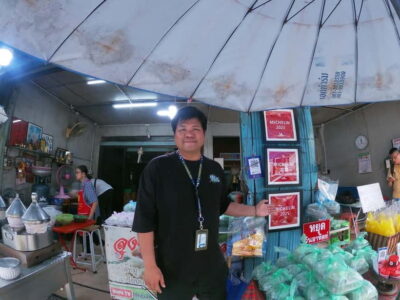
Taste of Chiang Mai: Michelin Guide & Street Food Tour
Read our review →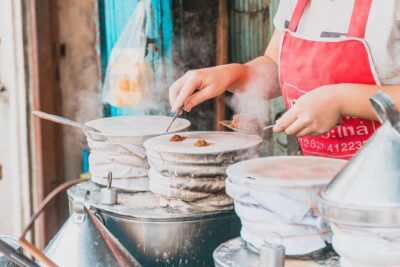
Go where the locals go, Eat what the locals eat! Food Tour with Local Foodies
Read our review →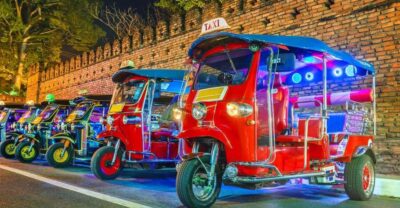
Chiang Mai: Evening Sightseeing and Local Food Guided Tour
Read our review →
Chiang Mai: Tuk-Tuk Evening Tour with Temples & Street Foods
Read our review →Browse the lists this tour appears in