
REVIEW · CHIANG MAI STREET FOOD TOURS
Chiang Mai: Local Food and Markets Guided Walking Tour
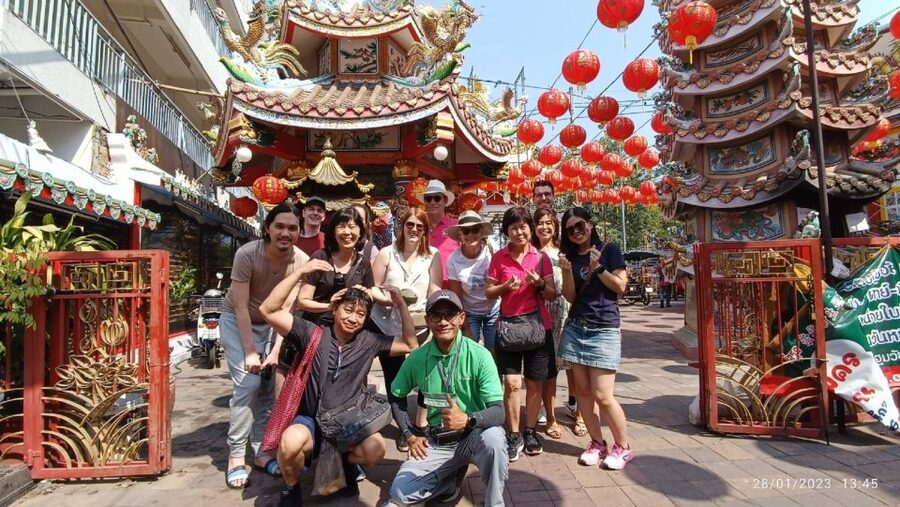
Chiang Mai’s best food discoveries often sit behind an ordinary stall, not on a glossy restaurant menu. This 150-minute walking tour leads you from Chansom Memorial Bridge through flower stalls, Warorot Market, and small food stops for steamed dumplings, Chinese-style fried dough, mango sticky rice, and Hakka noodles.
I like two things here: the local focus, since the stops are places you might not find alone, and the guides, who explain what people eat, how dishes are prepared, and why Chinese food traditions matter in Chiang Mai. Guides including Koi, Nom, Patty, Banana, and Nancy have been singled out for friendly help and clear English.
The main drawback is that the food is not included in the $48 price, and the tour can feel short for anyone hoping for a long market crawl. The 2:30 pm departure is also less reliable because some restaurants close early.
Key points at a glance
- Taste four distinct specialties: Try khao kriab pak moh dumplings, pa thong ko, mango sticky rice, and Hakka-style noodles, with food paid for separately.
- Walk Chiang Mai’s food neighborhoods: The route links Chansom Memorial Bridge, Ton Lamyai Flower Market, Warorot Market, and nearby eateries.
- Expect a guide-led introduction to local eating: Your guide helps order, explains ingredients and customs, and may suggest other places for the rest of your stay.
- Choose your timing carefully: Morning departures offer the best chance of following the listed food route, while afternoon tours may use replacement stalls.
- Bring cash and good shoes: The walk covers market lanes and several food stops, with one guide reporting a route of about 2.5 miles.
- A better fit for curious eaters than strict vegans: No vegan option is available, and the food is built around meat, fish, tofu, noodles, sweets, and fried snacks.
Why this short Chiang Mai food walk works
I see this tour as a practical first taste of Chiang Mai rather than a grand eating expedition. In two and a half hours, you get a guided route through a part of the city where food, trade, flowers, Chinese influence, and everyday shopping all overlap.
That matters because Chiang Mai food can be hard to decode on your own. A stall may have no English menu, a dish may look unfamiliar, and the best ordering method may simply be watching what local customers are eating. Your guide removes much of that guesswork.
The tour has earned a strong overall rating of 4.3 out of 5 from 175 bookings. The most consistent praise goes to the guides. Koi is repeatedly described as warm, flexible, and good at explaining dishes. Nom has helped with shopping bags and pre-ordered at a busy stop. Patty, Banana, Nancy, and others have also been praised for making the walk feel easy and personal.
Still, I would keep your expectations in proportion to the price and length. The current listed cost is $48 per person, but you also pay for each tasting. That can be good value if the guide helps you find foods you would not try alone, but less so if you want a large number of full meals or a long cultural tour.
More Street Food Market Tours in Thailand
- Chiang Mai: Evening Local Street Food Market Tour
★ 4.8 · 604 reviews - Phuket: Full Day City Tour with Night Market
★ 4.5 · 2,888 reviews - From Bangkok: Maeklong Railway and Floating Market Food Tour
★ 4.9 · 224 reviews
Meeting near Chansom Memorial Bridge
You begin at Chansom Memorial Bridge, locally called Khua Khaek, opposite Ton Lamyai Flower Market on Praisanee Road. This is a useful meeting point because the flower market is one of the visual highlights, but you need to pay attention to the exact location in the confirmation email.
The operator sends the pickup time and meeting point the evening before. Arrive at least 10 minutes early and look for the guide holding a TripGuru sign. The guide can wait only 10 minutes, and morning traffic can be much slower than navigation apps suggest.
There is no hotel pickup or drop-off. You make your own way to the bridge, so allow extra time if you are coming from the old city or another part of Chiang Mai.
Wear comfortable shoes. This is not a quick hop between restaurants. You walk through market areas and between food stops, and one past participant estimated roughly 2.5 miles. Sunglasses, a hat, sunscreen, insect repellent, and a camera are sensible additions. Bring cash for the food.
Sweet steamed dumplings at Lung Khajohn Wat Ket
The first tasting is at Lung Khajohn Wat Ket, known for khao kriab pak moh. These are delicate steamed rice-skin dumplings, commonly filled with peanuts. They are soft, slightly chewy, and different from the fried snacks that follow.
This is a smart opening stop. You begin with something small and sweet, while the guide can explain the ingredients and local eating habits before you start filling up. The dumplings also show how much variety there is in Thai snacks. They are not the familiar pad Thai or mango sticky rice that many first-time visitors already know.
The stop can be busy, so your guide may need to order for the group or help you find a place to sit. That small service matters. One guide, Nom, reportedly pre-ordered at a crowded stop so the group did not lose time waiting.
If you have a peanut allergy, ask clearly before eating. The filling is usually peanut-based, and the activity information does not promise allergy-free substitutions.
Ton Lamyai Flower Market adds color and local life
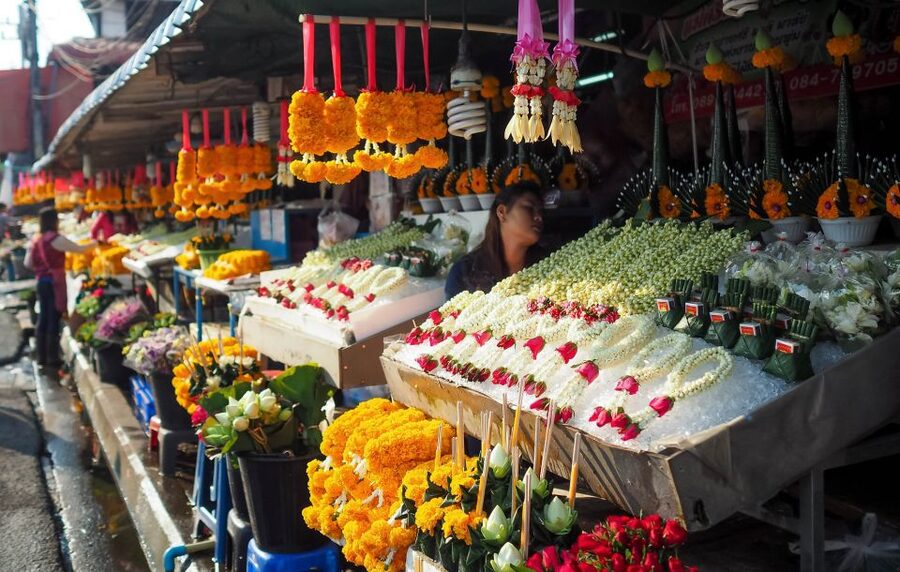
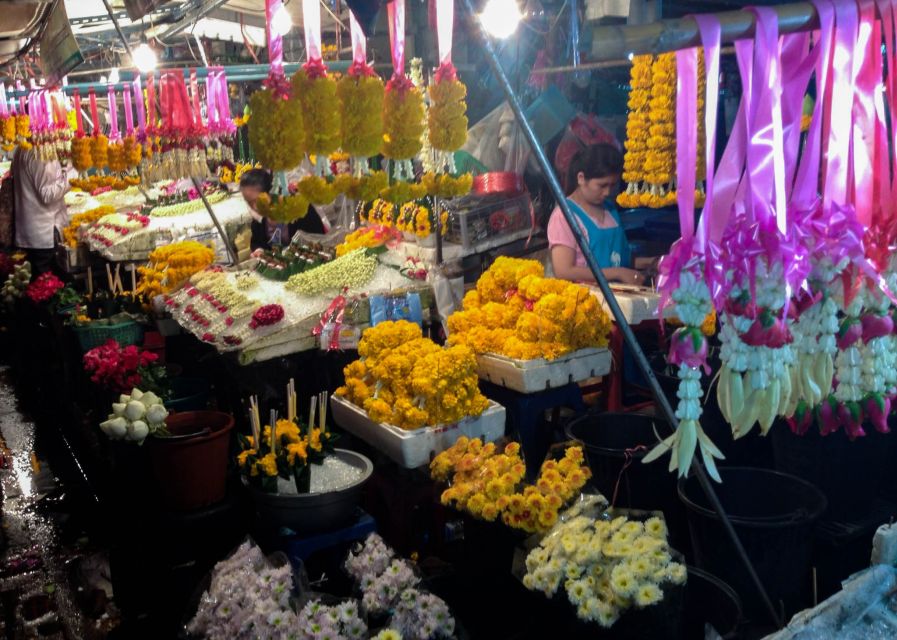
From the dumpling stop, you pass through Ton Lamyai Flower Market. The market gives the walk a welcome change of pace. Instead of only looking at food, you see rows of fresh flowers and herbs, with color and scent cutting through the busy market streets.
The tour description says you can brighten your day with fresh flowers, but do not expect a formal flower-arranging class or a long stop devoted to botany. The value is in seeing a working market that locals use, not a staged attraction.
This is also a good place for photographs. Keep your camera ready, but remember that this is an active market. Stay with the guide and avoid blocking sellers or customers.
The market helps place Chiang Mai food in context. Herbs, produce, flowers, and prepared foods all share the same trading district. You are not simply being driven to isolated restaurants. You are walking through the supply lines and shopping areas that support daily meals.
More Street Food Walking Tours in Thailand
- Chiang Mai Michelin Food Walking Tour with Professional Tour Guide
★ 4.5 · 13 reviews - Bangkok: Wat Pho and Wat Arun Guided Walking Tour
★ 4.6 · 1,720 reviews - Bangkok Authentic Tasting Thai-Chinatown Walking Food Tour
★ 4.9 · 852 reviews - Local Life, Culture & Food Walking Tour at Chinatown
★ 4.7 · 119 reviews
Pa thong ko at Go Neng
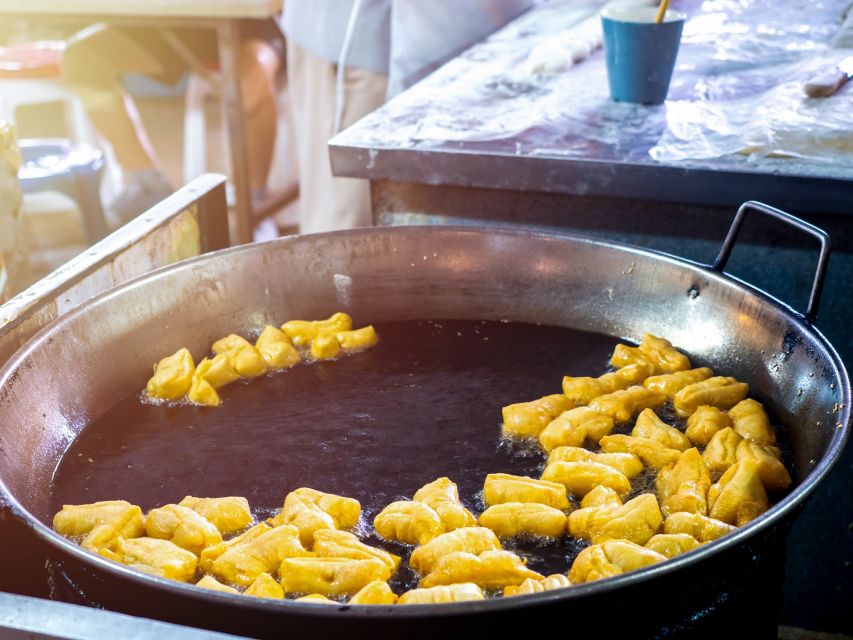
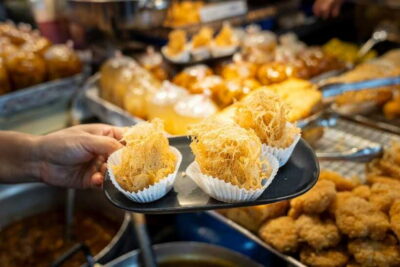
Next comes Go Neng, where the specialty is pa thong ko, a Chinese-style deep-fried dough. The pieces are famous for their unusual shapes, and some look like small dinosaurs. That odd appearance gives the stop a bit of fun, but the real appeal is the texture: crisp outside, soft inside, and best eaten fresh.
This is one of the most approachable tastings on the route. Even if you are unsure about unfamiliar dishes, fried dough is an easy entry point. You may pair it with a drink or eat it on its own, depending on what is available when you visit.
The stop also shows Chiang Mai’s Chinese food influence. The tour is not limited to northern Thai dishes in a narrow sense. It presents the city as a place where Thai, Chinese, and other food traditions have met through trade and migration.
One practical point: the food portions are not described as fixed, and all purchases are paid separately. Bring smaller bills if possible so you are not stopping to make change at every stall.
Warorot Market is the heart of the walk
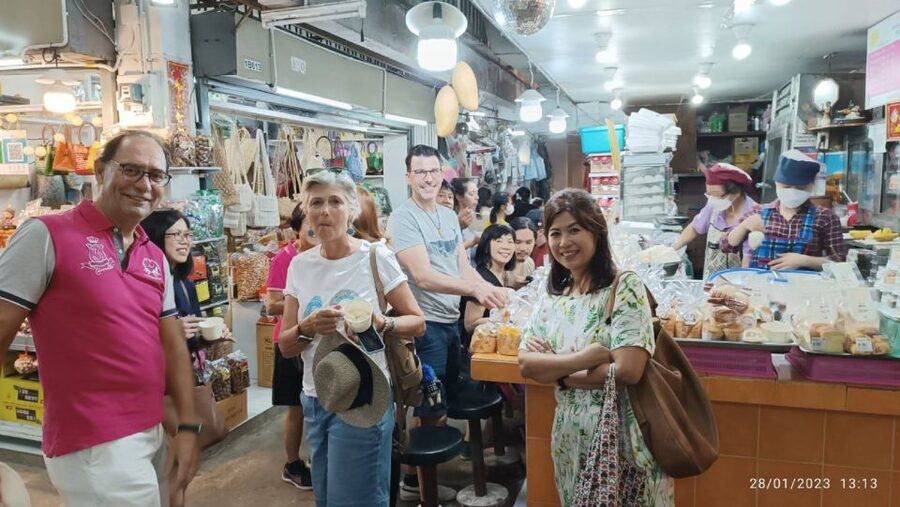
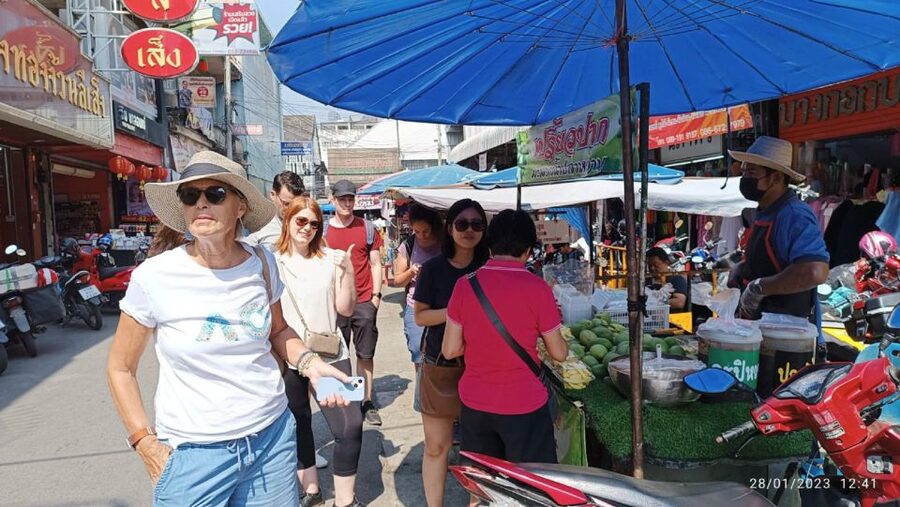
Warorot Market, also called Kad Luang, is the main market section of the tour. You can browse snacks, produce, clothing, and other everyday goods while your guide points out foods and ingredients that may be easy to miss.
I like this part because it turns the tour into more than a sequence of tastings. You can ask about the products around you, learn what people buy for home cooking, and see how a working market differs from a night bazaar built mainly for sightseeing.
Several people who have taken the walk valued the chance to enter places they would not have found alone. That is where the guide earns the fee. A good guide can tell you which stall is worth your time, translate a question, explain a condiment, and keep the group moving without making the visit feel rushed.
The tradeoff is pace. You are likely to stop for food, hear explanations, and walk onward rather than spend an hour browsing every aisle. If you want to shop seriously, return to Warorot Market later.
Mango sticky rice brings the sweet course
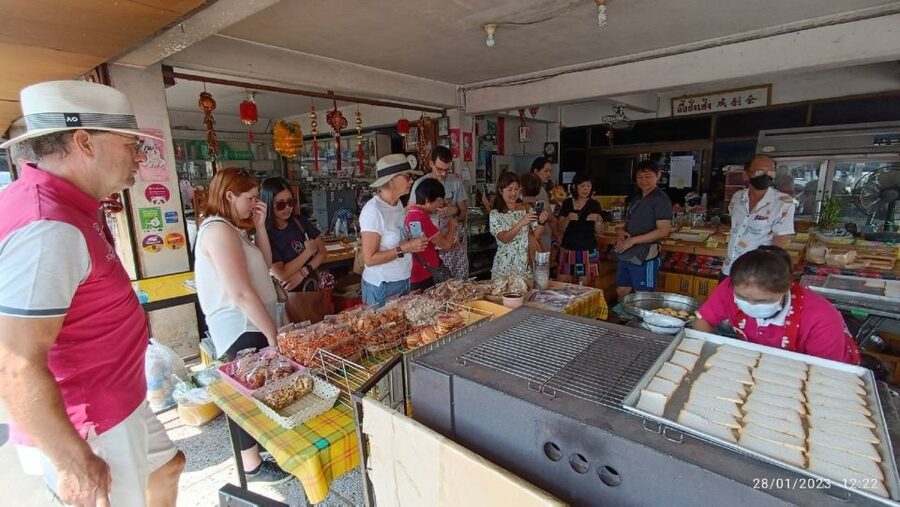
Inside or around Warorot Market, the guide takes you to a stall selling mango sticky rice. This is the most familiar dish on the route, but it still makes sense as part of the tasting because it provides a cool, sweet contrast to the fried dough and savory noodles.
Good mango sticky rice depends on the balance between ripe fruit, coconut sauce, and sticky rice. Your guide can also help you understand when and how locals eat it, rather than treating it as a generic dessert.
Do not assume this is a large individual serving. The tour is designed around sampling several foods, so the portions and availability may vary. If mango sticky rice is a priority, say so early, especially if you choose a late departure when stalls may be closing.
Hakka noodles at Thana Ocha finish the meal
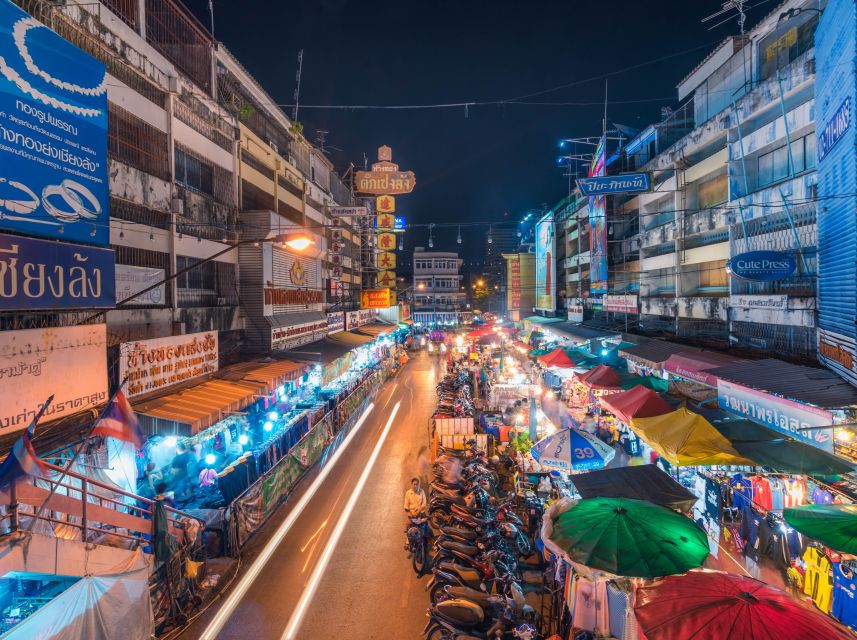
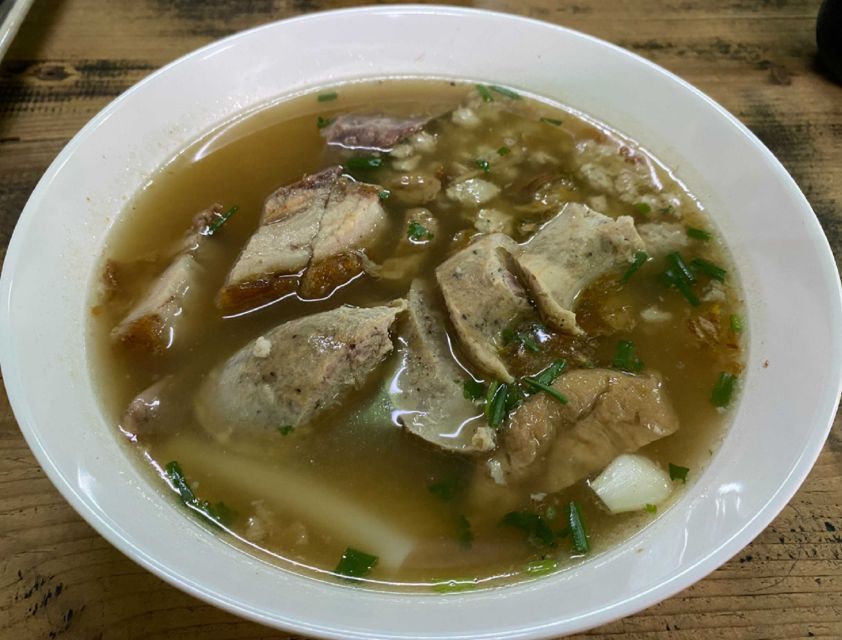
The final listed stop is Thana Ocha, known for Hakka-style noodles served with Hakka stuffed tofu, fish sausage, and wontons. This is the most substantial and savory dish of the tour, and it gives you a proper finish after several snacks and a dessert.
The bowl is useful for understanding Chiang Mai’s mixed food identity. The dish connects local eating with Hakka Chinese traditions, and the fillings give you several textures in one serving. If you have spent the walk wondering how you could possibly be full from snacks, this is the point where the answer becomes clear.
Food portions and restaurant availability can change. One scheduled stop has been closed on a previous visit, with the guide replacing it and adding other places instead. That flexibility is helpful, but it means you should treat the listed restaurants as a likely plan, not a guarantee.
Morning departures are the safer choice
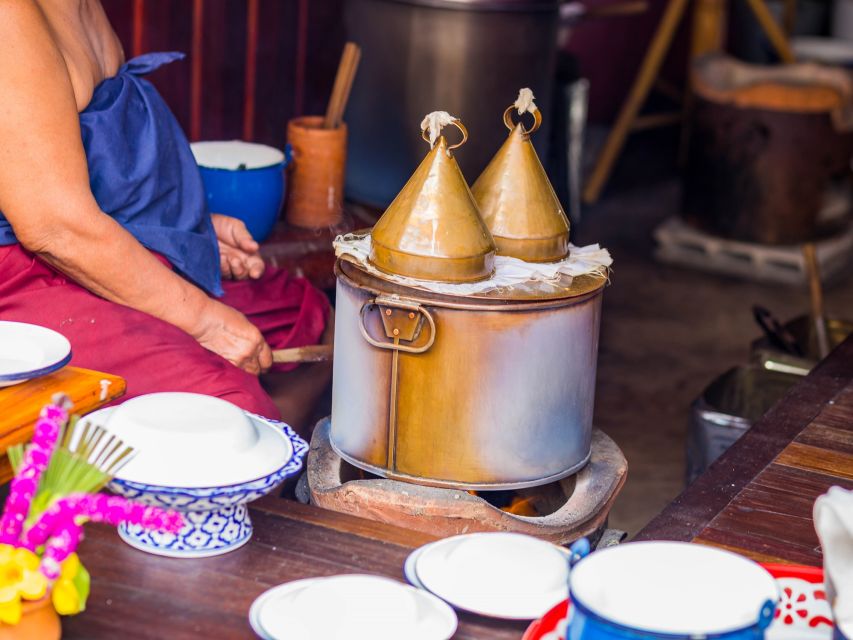
Several start times are available, which makes this tour easier to fit into a Chiang Mai itinerary. I would choose a morning slot if you want the best chance of following the named stops.
The operator notes that many restaurants close by early afternoon. At 2:30 pm, your guide may need to substitute other street food stalls. That can still produce a good meal, but the route may feel more hurried, especially if you want Thana Ocha or another specific stop.
Morning tours also have practical advantages. Markets may be easier to walk through before the day becomes hot, and one past participant enjoyed visiting as the stalls were opening and crowds were still light. On the other hand, the morning option means you should not eat a large breakfast.
The tour is not designed for a slow, leisurely lunch. It is a moving tasting walk. If you prefer to linger over each dish, you may find the pace too quick.
What the $48 price really buys you
At $48 per person, the price is not simply paying for four snacks. It pays for a guide who knows the market area, helps you order, explains local food traditions, and adjusts the route when a stall is busy or closed.
You still pay for the food yourself. This is a minor nuisance because you need to open your wallet at each stop, but the advantage is control. You can decide how much to order and skip a dish if you are already full.
The value is strongest for a first visit to Chiang Mai, especially if you want food guidance without committing to a full-day cooking class or a much longer tour. It is weaker for experienced Chiang Mai eaters who already know Warorot Market and the surrounding stalls.
The tour also includes carbon emissions offset credits and is presented as a GSTC-certified, lower-impact way to explore. That does not change the food or walking route, but it may matter to you if responsible travel is part of your booking decision.
Who should book this food tour
I would recommend it to you if you:
- Want an introduction to Chiang Mai food on your first day
- Prefer local markets and small food stops to a polished restaurant meal
- Need help ordering unfamiliar dishes
- Enjoy walking several miles at a steady pace
- Want recommendations for places to eat later
- Like learning about food, customs, and Chinese influence as you go
I would be more cautious if you need a vegan menu. No vegan option is available. The tour is also not suitable for people with mobility impairments, pregnant women, or people with heart or respiratory problems, according to the activity information.
Families can work well if children are open to new textures, but the route involves walking, market crowds, and a fairly quick rhythm. One guide received praise for adapting to a picky five-year-old, yet that kind of flexibility should not be treated as a guaranteed children’s program.
You can cancel up to 24 hours before the activity for a full refund, and reserve now while paying later. Those terms are useful if your Chiang Mai plans are still shifting.
Final verdict: book it for guidance, not quantity
I would book this tour if I wanted a friendly food orientation early in my Chiang Mai stay. The strongest feature is the human help: guides such as Koi, Nom, Patty, Banana, and Nancy have made the market route easier to understand, and they often add practical restaurant or night market suggestions.
The food selection is varied, the flower market adds welcome color, and the Hakka noodle finish gives the walk enough substance. Just remember that $48 does not include tastings, the tour is short, and the late afternoon slot may change the route.
Choose a morning departure, arrive hungry, bring cash, and wear good shoes. If that sounds like your kind of Chiang Mai introduction, this is a useful and fairly focused choice.
FAQ
How long does the Chiang Mai food tour last?
The tour lasts 150 minutes, or two and a half hours.
Where does the tour meet?
The meeting point is Chansom Memorial Bridge, also called Khua Khaek, opposite Ton Lamyai Flower Market on Praisanee Road.
Where does the tour finish?
The stated finish is Ton Lam Yai Market. The route also includes Warorot Market and nearby food stops.
What foods can I try?
Possible tastings include Hakka-style noodles, mango sticky rice, pa thong ko deep-fried dough sticks, and khao kriab pak moh steamed rice-skin dumplings.
Is food included in the $48 price?
No. Food and tasting expenses are not included, so bring cash to pay for the dishes separately.
What languages does the guide speak?
The tour is offered with a live guide in English or Thai.
Is there a vegan option?
No vegan option is available.
Is the afternoon departure a good choice?
It can work, but the 2:30 pm departure may use alternative food stalls because many named restaurants close by early afternoon. Morning slots are recommended if you want the listed route.
What should I bring?
Bring comfortable shoes, sunglasses, a hat, sunscreen, insect repellent, a camera, and cash. Arrive at the meeting point 10 minutes before the scheduled time.
More Street Food Walking Tours in Chiang Mai
- Reykjavik Food Walk – Local Foodie Adventure in Iceland
★ 5.0 · 18,952 reviews - New Orleans Food Walking Tour of the French Quarter with Small-Group Option
★ 5.0 · 6,118 reviews - Naples: Street Food Walking Tour with Local Guide
★ 4.9 · 4,976 reviews - Greek Food Walking Tour in Athens
★ 5.0 · 4,740 reviews
More Market Food Tours in Chiang Mai
- Tokyo Tsukiji Fish Market Food and Culture Walking Tour
★ 5.0 · 3,184 reviews - London Bridge & Borough Market Food Tour with 7 Authentic Dishes
★ 5.0 · 1,972 reviews - Tokyo: Tsukiji Fish Market Food and Walking tour
★ 5.0 · 1,724 reviews - Small Group Cooking Class & Market Food Tour in Florence
★ 5.0 · 1,574 reviews
Just added around Chiang Mai
- Michelin Guided Street Food Tour in Chiangmai: Thai Food Tour★ 5.0 · 11 reviews
- Private Half-Day Tour The Old Chiang Mai City With Street Foods★ 5.0 · 3 reviews
- Chiang Mai – Doi Suthep Temple and Street Food Tour★ 5.0 · 17 reviews
- Taste of Chiang Mai: Michelin Guide Street Food Small Group 2Hr★ 5.0 · 19 reviews
- Chiang Mai Michelin Food Walking Tour with Professional Tour Guide★ 4.5 · 13 reviews
- Chiang Mai Street Food Tour by Tuk Tuk with Pick Up★ 5.0 · 7 reviews
- Chiang Mai: Temples and Street Food Night Tour by Tuk Tuk★ 4.3 · 81 reviews
- Chiang Mai: Tuk-Tuk Evening Tour with Temples & Street Foods★ 4.7 · 26 reviews
Chiang Mai Street Food Tours, compared.
Small-Group Chiang Mai Evening Street Food Tour
Read our review →
Chiang Mai: Evening Local Street Food Market Tour
Read our review →
The 10 Tastings of Chiang Mai With Locals: Private Street Food Tour
Read our review →
Taste of Chiang Mai: Michelin Guide & Street Food Tour
Read our review →
Go where the locals go, Eat what the locals eat! Food Tour with Local Foodies
Read our review →
Chiang Mai: Evening Sightseeing and Local Food Guided Tour
Read our review →
Chiang Mai: Tuk-Tuk Evening Tour with Temples & Street Foods
Read our review →Browse the lists this tour appears in