REVIEW · NEW YORK CITY STREET FOOD TOURS
Chinatown Walking Food Tour of New York
Chinatown serves up much more than a quick plate of dumplings. This two-hour walk links affordable local food with old buildings, temples, markets, and the stories of a neighborhood that changed from a poor district into one of New York’s best-known Chinese communities. The food keeps you moving, while the guide gives the streets some context.
I like the mix of small food stops and short cultural visits. I also like that guides such as Vincent and Cédric bring a personal touch, with Vincent earning especially strong praise for making New York history clear and entertaining. The route includes places you might skip on your own, including a Taoist temple, antique shops, and the historic Church of the Transfiguration.
The main drawback is the tight two-hour schedule. Several stops last only five minutes, so this is a brisk introduction rather than a slow, sit-down food crawl. At $90 per person, the value depends on how much food is included on your date, and the experience is not suitable for people with food allergies or dietary restrictions.
Key points to know before you book
- Dumplings, dim sum, noodles, bakery food, and ice cream give you a broad taste of Chinatown in one short outing.
- Columbus Park provides a useful starting point for understanding the neighborhood’s social and historical role.
- Vincent and Cédric are among the named guides associated with the experience, with Vincent praised for lively New York history.
- The route is tightly timed, with food tastings generally lasting 15 minutes and cultural stops as brief as five minutes.
- The group may be private or small, but the activity can be canceled if fewer than five people sign up.
- Rain or shine operation and comfortable shoes make this easy to fit into a New York sightseeing day.
Starting at Bayard and Mulberry Streets
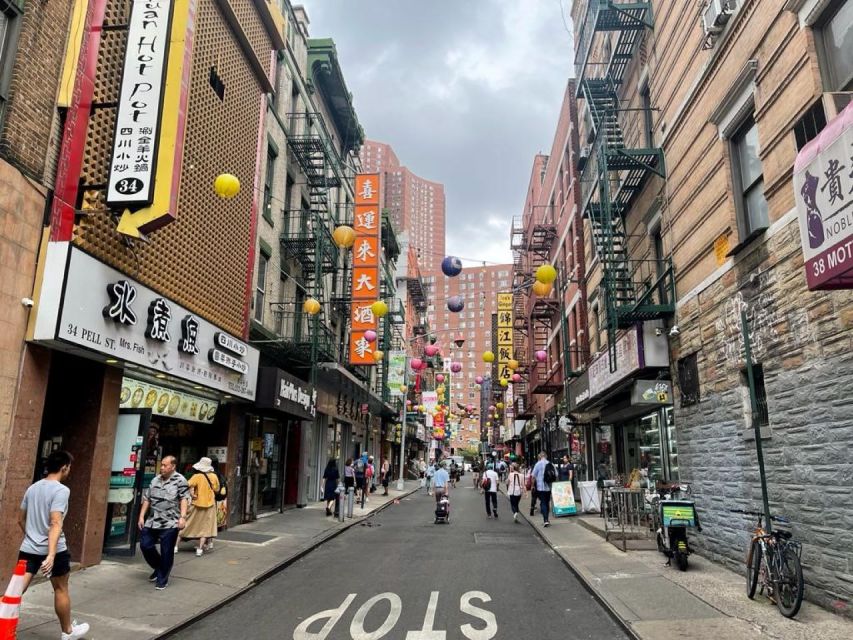
You meet at 91 Bayard Street, on the corner of Mulberry and Bayard Streets. This is a practical location because you begin right in the middle of Chinatown, rather than spending the first part of the tour walking in from another neighborhood.
Arrive ready to move. The route covers several food counters, shops, historic structures, and streets, and the schedule allows little room for a late start. You should provide an active phone number when booking so your guide can reach you if needed.
The guide speaks English, Chinese, French, or Spanish. Private and small-group options are available, which can make a difference in a crowded food shop. The guide may need to adjust the order of stops or shorten time at one place to keep the group on schedule.
More Chinatown Food Tours in New York City
- SoHo, Little Italy, and Chinatown Walking Tour in New York
★ 5.0 · 3,153 reviews - New York City: Food Walking Tour of Chinatown & Little Italy
★ 4.8 · 195 reviews - #1 Rated NYC Chinatown Food and History Walking Tour with FNYT
★ 5.0 · 171 reviews
Columbus Park and Chinatown’s changing story
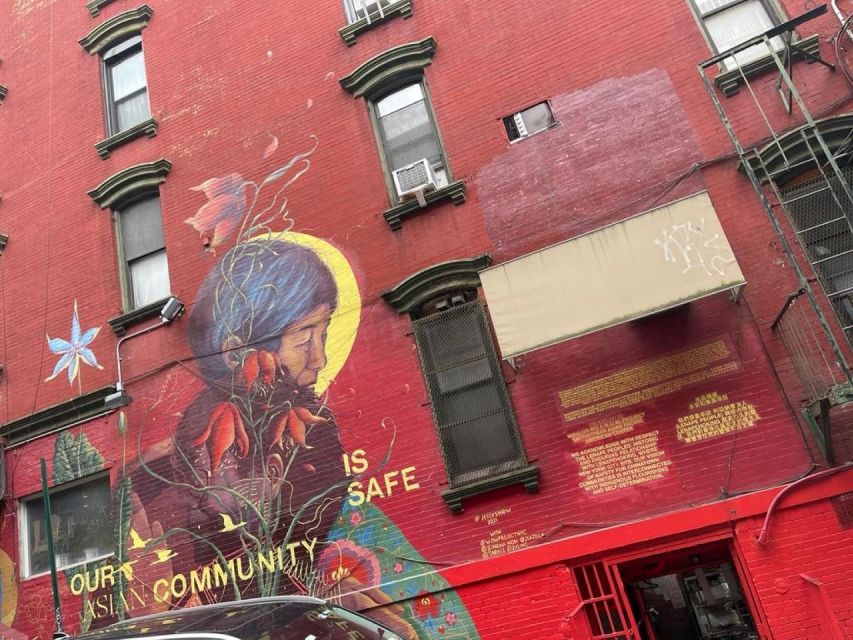
Columbus Park is one of the most useful stops because it gives you a sense of how Chinatown functions as a neighborhood, not just a collection of restaurants. The park has long been a gathering place for the Chinese community, and the guide explains how this part of Manhattan changed from a slum into a major center of Chinese life and commerce.
That background matters. Without it, the narrow streets and packed storefronts can seem like a colorful sightseeing backdrop. With it, you begin to understand why the park, markets, temples, food shops, and family businesses belong together.
The tour also includes the Church of the Transfiguration as one of its notable sights. Other historic buildings on the route include Edward Mooney House, one of New York City’s older surviving structures. The stop is brief, but it adds a useful reminder that Chinatown’s story is part of the larger history of Manhattan.
Fried Dumpling: a fast, inexpensive first bite
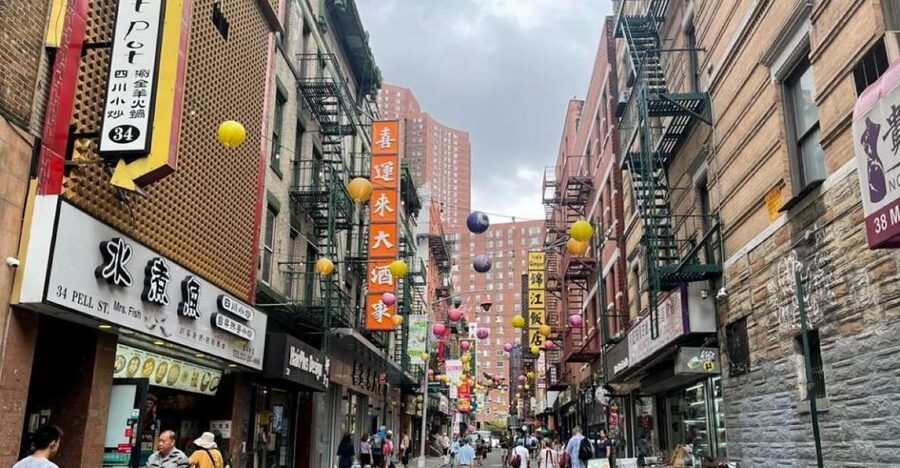
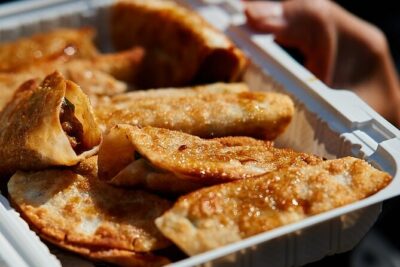
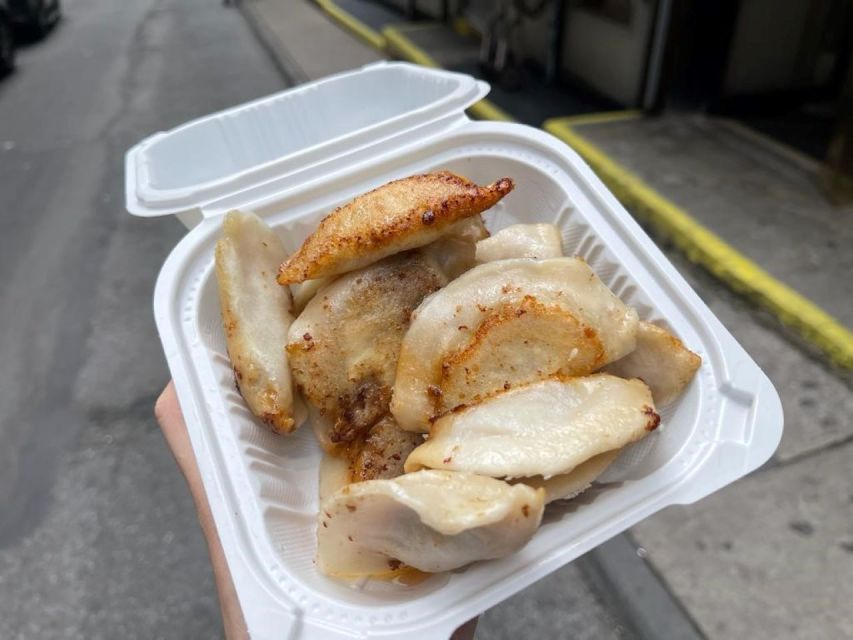
The first food stop is Fried Dumpling, where you taste the shop’s well-known dumplings. The stop lasts about 15 minutes, so expect a focused tasting rather than a full meal or a long restaurant visit.
This is a good way to start because dumplings are familiar enough for first-time visitors, yet closely tied to the everyday food culture of Chinatown. The inexpensive reputation of the shop also helps set expectations: this is a working neighborhood food stop, not a polished dining room built for a special occasion.
You should not expect to linger. The point is to taste, listen, and keep moving. If you have a strong appetite, remember that the tour includes several small tastings rather than one large lunch.
Silk Road Gaming and the quick neighborhood stops
Silk Road Gaming is listed as a five-minute visit. With such a short stop, its value is likely in seeing another side of Chinatown’s commercial life rather than spending time playing or browsing at length.
These short visits help break up the food stops. They also make the walk feel less like a restaurant checklist. The tradeoff is that you will not have much time to explore independently, take photos, or ask extended questions at every location.
The route also includes Lin Sister for another five-minute visit. Treat these stops as brief windows into local businesses and neighborhood culture. If you prefer a relaxed walk with long conversations at each shop, this schedule may feel rushed.
More Chinatown Food Tours in the USA
- Ultimate Chinatown Walking Food Tour in New York City
★ 5.0 · 84 reviews - Flavors of Flushing: Exploring New York’s Biggest Chinatown
★ 5.0 · 14 reviews - NYC: SoHo, Little Italy, and Chinatown Walking Tour
★ 5.0 · 2 reviews - San Francisco Chinatown Walking Tour
★ 5.0 · 778 reviews
Nom Wah Tea Parlor and Chinatown’s old-school food culture
Nom Wah Tea Parlor is the most historically recognizable food stop on the route. You taste dim sum here, giving you a different style of Chinese food from the dumplings at the earlier stop.
The appeal is not only the food. Nom Wah is associated with Chinatown’s older restaurant tradition, so it helps connect what is on your plate with the neighborhood’s long-running dining culture. The tasting lasts about 15 minutes, which is enough for a sample but not for a broad meal.
I like this pairing of Fried Dumpling and Nom Wah because the two stops offer contrast. One is a quick, budget-friendly dumpling shop. The other brings in the atmosphere and legacy of a classic tea parlor. You get a better sense of Chinatown’s range than you would from visiting only one restaurant.
Golden Manna Bakery and sweet flavors
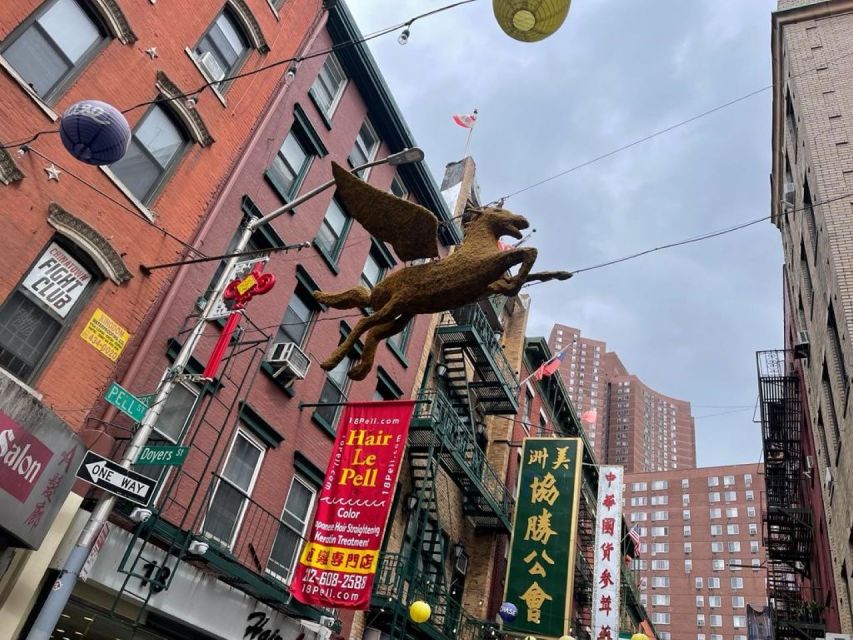
Golden Manna Bakery is the next food tasting, also planned for about 15 minutes. A bakery stop gives the tour another texture, moving away from dumplings and dim sum toward Chinese baked goods.
The exact item served can vary, so you should think of this as a chance to sample what the guide presents rather than a guaranteed order from a fixed menu. That flexibility is normal on a neighborhood food walk, but it is worth keeping in mind if you are booking for one particular dish.
By this point, the tastings begin to add up. Eat modestly at the first stop if you want room for the later food, especially the rice noodles and ice cream.
Edward Mooney House and the older streets of Manhattan
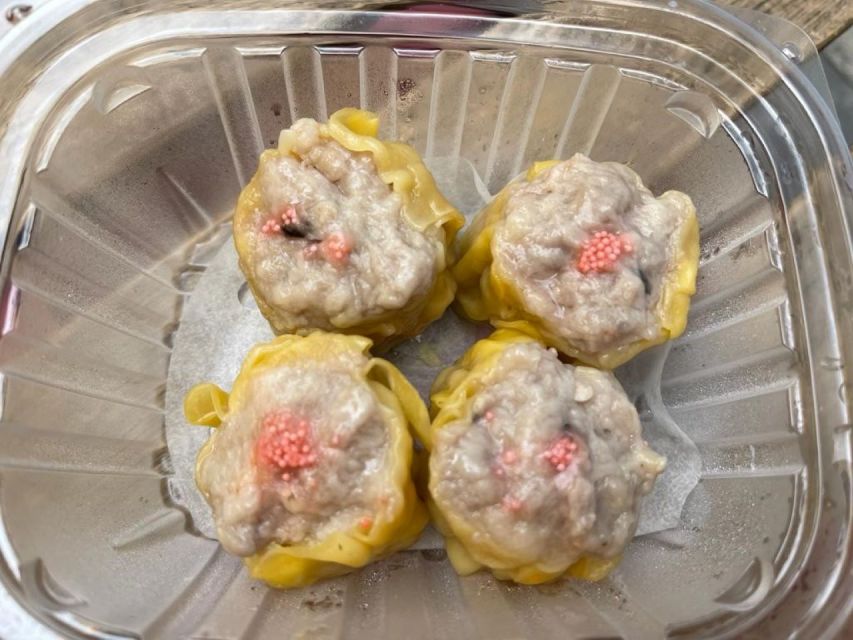
Edward Mooney House receives a short five-minute visit. This stop brings architectural history into a route otherwise centered on food and Chinese community life.
The building helps show that Chinatown is layered over much older New York. Its presence alongside restaurants, markets, temples, and small shops gives the neighborhood its distinctive character. The guide can connect the building to the wider story of Manhattan rather than treating it as an isolated photo stop.
This is another quick visit, so do not expect an interior tour or a long architectural lecture. Its strength is the contrast it provides. After several food counters and busy commercial streets, an old house gives you a pause to look up and notice the age of the surroundings.
Toni’s Fresh Rice Noodle and a taste of tradition
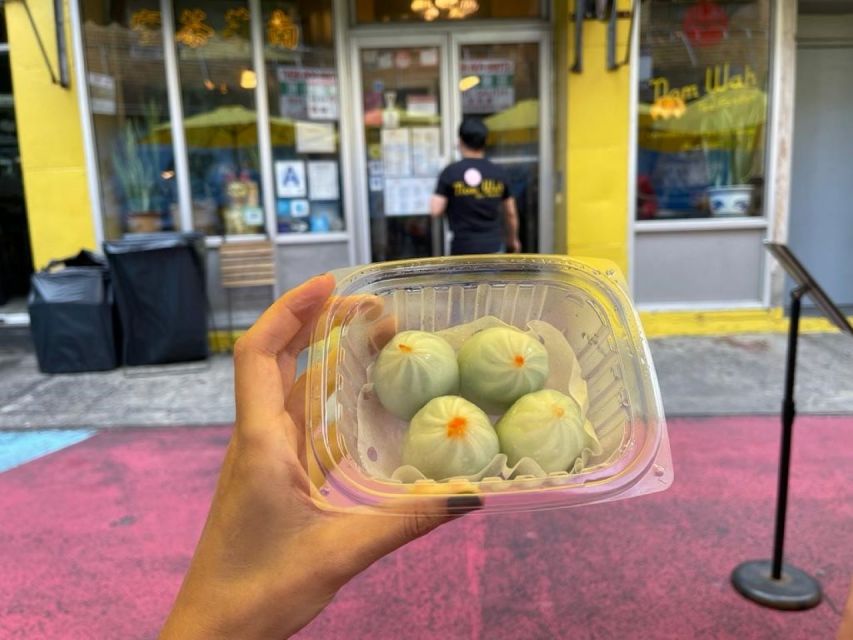
Toni’s Fresh Rice Noodle is scheduled for about 15 minutes. The stop adds a fresh rice-based dish to the route and gives you another example of how Chinatown food businesses preserve familiar cooking traditions in a modern New York setting.
The name is sometimes written as Tonii’s Fresh Rice Noodle, but the location is the same stop described for this experience. You should expect a visit and food-related introduction, though the supplied details do not specify the exact serving or portion.
This is one of the more useful stops for anyone who wants to go beyond the best-known Chinatown dishes. Dumplings and dim sum are easy starting points. Fresh rice noodles show you another part of the neighborhood’s food culture and may give you an idea for a meal to seek out later.
Temples, antique shops, and the Church of the Transfiguration
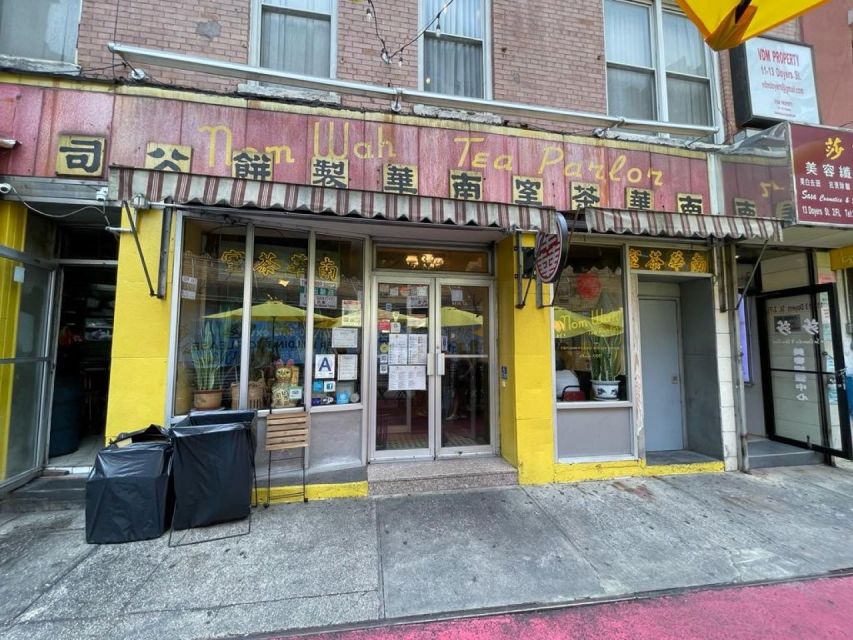
The route includes more than the timed stops listed above. The guide points out Chinatown shops, antique stores, and the Huang Da Xian Taoist Temple, where Chinese spirituality and neighborhood life meet.
The temple is especially valuable because it gives the walk a cultural dimension that food alone cannot provide. Keep your visit respectful and follow the guide’s instructions. The available information does not promise a long temple tour or a formal religious presentation, so think of it as a brief introduction to a place that many independent visitors might pass without noticing.
The Church of the Transfiguration adds another religious and historical layer. Seeing a Christian church, a Taoist temple, food businesses, and family markets in the same compact neighborhood helps you understand how varied Chinatown’s identity is.
Chinatown Ice Cream Factory and unusual flavors
The Original Chinatown Ice Cream Factory is one of the more memorable food stops. It is known for unusual flavors such as lychee and durian, so this is where the tour asks you to try something outside the usual vanilla and chocolate routine.
Lychee is a relatively approachable choice if you like light fruit flavors. Durian is more divisive, with a strong aroma and a taste that some people love and others do not. You do not need to force yourself to choose the boldest flavor, but the stop is a good chance to test your palate.
Because the tour includes several savory foods, the ice cream also provides a useful change of pace. It may be one of the most appealing stops for families, although younger children may prefer a familiar flavor.
Mulberry Street’s fruit market
A stroll along Mulberry Street brings you past fruit sellers and market activity. The guide points out less familiar produce such as dragon fruit and rambutan, giving you a chance to see ingredients that may not be part of your normal grocery routine.
This is a simple stop, but it helps you read the neighborhood through its food supply. A market tells you about daily life in a way a restaurant alone cannot. You can look at the fruit, notice how the shops serve local residents, and connect the dishes you tasted with the ingredients sold nearby.
The pace remains brisk. You may have time to look, but the tour is not designed as a shopping trip, and the schedule ends at New Kam Man Supermarket.
Finishing at New Kam Man Supermarket
The tour ends at New Kam Man Supermarket, a useful place to continue exploring after the guide says goodbye. You can browse Chinese pantry goods, snacks, tea, sauces, and other products, although no shopping time or purchase is included as part of the tour.
Ending here makes practical sense. You finish with a better idea of the ingredients and flavors you have encountered, and you can buy something to take home if you wish. It also leaves you in a good position to continue walking around Chinatown independently.
Do not assume the tour returns to the starting point. Plan your next activity from the supermarket rather than from 91 Bayard Street.
How much food do you receive for $90?
The price is $90 per person. That is not a bargain if you judge the experience only by the amount of food on the plate. The tour lasts two hours, includes several tastings, and provides a licensed guide, skip-the-line access, neighborhood interpretation, and a planned route through places that can be difficult to organize efficiently on your own.
The value improves if you want context. You are paying for a guide who can explain Chinatown’s development, point out cultural sites, manage the timing, and introduce you to several types of food in one outing. Feedback about Vincent is particularly strong, with his style described as engaging and packed with New York information. Another named guide, Cédric, is noted for his kindness.
The value is weaker for someone who already knows Chinatown well, wants full portions, or prefers to choose every restaurant independently. A self-guided walk will cost less, but it will not provide the same structure or guaranteed tastings.
Who will enjoy this two-hour food walk?
I would recommend this experience to first-time visitors who want a quick orientation to Chinatown. It also suits families and mixed-age groups because the route combines food, history, shops, and unusual flavors rather than relying on a long lecture.
The experience works well for people who enjoy trying several small portions. It is less suitable if you want a long lunch, a slow photography walk, or a detailed restaurant meal at each stop.
The tour has received particularly warm feedback for its guides. A teenager enjoyed it, and families with children found the guide informative and engaging. That makes the experience a reasonable choice when you need an activity that can hold the attention of more than one age group.
It is not suitable for people with food allergies or dietary restrictions. The supplied information does not promise substitutions, so you should not book this expecting the guide to redesign the tastings around your needs.
Timing, clothing, and practical advice
Wear comfortable shoes and comfortable clothes. The tour involves walking through city streets, entering food businesses, and keeping pace with a guide and group.
The activity operates rain or shine. Check the forecast and dress accordingly, since bad weather will not automatically cancel the walk.
Punctuality matters. Food shops and cultural stops are planned around a fixed two-hour ending, and the guide may shorten a stop if the group is moving slowly. Arriving early is the simplest way to protect your tasting time.
You can cancel up to 24 hours before the activity for a full refund, and reserve now while paying later. The tour may be canceled if fewer than five people are signed up, in which case you receive a refund or can choose another date.
Should you book the Chinatown Walking Food Tour?
Book it if you want a compact, guided introduction to Chinatown with several tastes and a solid dose of New York history. The combination of Fried Dumpling, Nom Wah Tea Parlor, Golden Manna Bakery, rice noodles, Chinatown ice cream, markets, temples, and historic buildings gives you a lot of variety in two hours.
Skip it if you need allergy-friendly food, dislike a brisk schedule, or measure value only by portion size. For everyone else, the tour is most useful near the beginning of a New York visit. It gives you enough background to return to Chinatown later, order with more confidence, and notice more than just the nearest dumpling counter.
FAQ
Where does the Chinatown food tour begin?
It begins at 91 Bayard Street, New York, New York 10013, on the corner of Mulberry and Bayard Streets.
Where does the tour finish?
The tour finishes at New Kam Man Supermarket.
How long does the experience last?
The walking food tour lasts two hours.
What food tastings are included?
The route includes tastings at Fried Dumpling, Nom Wah Tea Parlor, Golden Manna Bakery, and Toni’s Fresh Rice Noodle. The experience also includes the Original Chinatown Ice Cream Factory and several Chinese food stops described as part of the route.
Which languages can the guide speak?
Guides are available in English, Chinese, French, and Spanish.
Is this a private tour or a group activity?
Private or small-group options are available.
What should I bring?
Wear comfortable shoes and comfortable clothes. The tour operates rain or shine.
Can I join if I have food allergies or dietary restrictions?
No. This experience is not suitable for people with food allergies or dietary restrictions.
More Street Food Walking Tours in the USA
- New Orleans Food Walking Tour of the French Quarter with Small-Group Option
★ 5.0 · 6,118 reviews - Historic Ybor City Food Walking Tour
★ 5.0 · 2,210 reviews - Miami: Little Havana Food Walking Tour with Tastings
★ 4.9 · 1,181 reviews - Chicago’s Chinatown Food and Walking Tour
★ 5.0 · 600 reviews
More Street Food Walking Tours in New York City
- True Crime NYC: Mafia Walk w/Ret. NYPD Detective and Local Food
★ 5.0 · 848 reviews - New York: Midtown Manhattan Street Food Walking Tour
★ 4.8 · 14 reviews - NYC: Upper West Side Food Walking Tour with Tastings
★ 5.0 · 2 reviews
Just added around New York City
- Food Tour Greenwich Village NYC★ 5.0 · 2 reviews
- NYC: Upper West Side Food Walking Tour with Tastings★ 5.0 · 2 reviews
- NYC: SoHo, Little Italy, and Chinatown Walking Tour★ 5.0 · 2 reviews
- New York City: The Ultimate NYC Street Food Tour★ 5.0 · 2 reviews
- New York: Midtown Manhattan Street Food Walking Tour★ 4.8 · 14 reviews
- Greenwich Village Food Crawl★ 4.3 · 10 reviews
- Flavors of Flushing: Exploring New York’s Biggest Chinatown★ 5.0 · 14 reviews
- Chinese Dumplings Cooking Class in NYC – Fun & Delicious!★ 5.0 · 4 reviews
New York City Street Food Tours, compared.
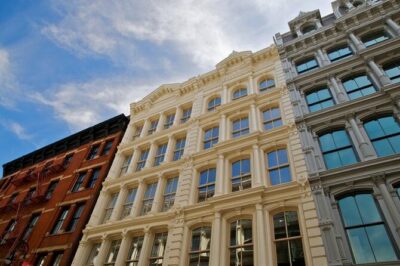
SoHo, Little Italy, and Chinatown Walking Tour in New York
Read our review →
New York City Mafia and Local Food Tour led by NYPD Guides
Read our review →
True Crime NYC: Mafia Walk w/Ret. NYPD Detective and Local Food
Read our review →
New York City: Food Walking Tour of Chinatown & Little Italy
Read our review →
#1 Rated NYC Chinatown Food and History Walking Tour with FNYT
Read our review →
NYC: Mafia Experience and Local Food with NYPD Guide
Read our review →
Foods of NY Tours Chelsea Market Food Tour & High Line Park
Read our review →