
REVIEW · JAPAN STREET FOOD TOURS
Same-Day Osaka Food Crawl with local food and Hidden gems
Osaka’s best food experience may be a small doorway you would walk past without a guide. This three-hour crawl takes you through Namba, Hozen-ji, and Dotonbori, mixing famous bites with local izakayas and less obvious places where ordering can feel tricky on your own.
I like the freedom to choose what you eat, rather than paying for a fixed menu, and I like the small-group cap of eight people. Guides such as Kota, Sue, Risa, and Ryu have tailored stops to dietary needs, drink preferences, and appetite. The catch is important: food and drinks are not included, so the $42.28 tour price covers the guide, not dinner.
Key points to know
- Choose your own food: The guide recommends places and dishes based on your tastes instead of forcing everyone through one set menu.
- Three Osaka food districts in one walk: Most of the time is spent around Namba, with stops at Hozen-ji Temple and Dotonbori.
- Expect local izakayas: Small Japanese pubs and neighborhood restaurants are central to the experience.
- The guide helps you order: This matters in compact restaurants where menus, customs, and language can slow you down.
- A small group keeps it personal: The maximum group size is eight, and some departures may be much smaller.
- Budget extra for dinner: Takoyaki, kushikatsu, sushi, sake, and other food and drinks cost extra.
What this Osaka food crawl really offers
This is not a prepaid tasting menu. It is a guided evening walk with food stops selected as you go.
That difference shapes the whole experience. You pay $42.28 per person for an English-speaking guide, local advice, and help finding places you might not comfortably enter alone. At each stop, you pay for your own food and drinks. The upside is control. You can order only what you want, spend more on something special, or keep things light if you have already eaten.
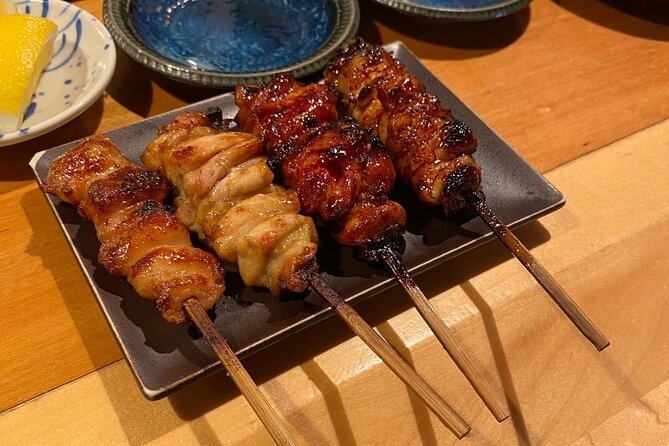
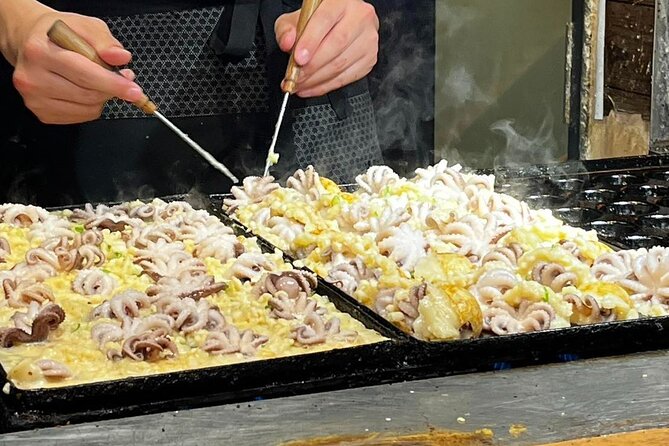
The guide may suggest takoyaki, Osaka’s soft octopus-filled snack; kushikatsu, deep-fried skewers; sushi or sashimi; yakitori; oden; okonomiyaki; or doteyaki, a less familiar Osaka specialty. You are not expected to sample every item. Your appetite, budget, allergies, and curiosity guide the night.
I think this format works best for a first evening in Osaka. You get a meal, a neighborhood walk, and practical help with Japanese food customs in one short outing. It is also useful if you like Japanese food but do not know how to choose among dozens of small restaurants.
The main drawback is value perception. If you expected a traditional food tour with several included tastings, this may feel expensive. One person arrived expecting at least a snack and did not complete the tour after realizing that food and drinks were separate. Read the cost details carefully before booking.
More Hidden Gem Food Tours in Japan
- Tsukiji Fish Market Food Tour: Seafood, Street Food & Hidden Gems
★ 5.0 · 85 reviews - Tokyo VIP Hidden Food & Bar Night – Private Local Experience
★ 5.0 · 57 reviews - Tokyo: Secret Food Walking Tour
★ 4.7 · 38 reviews
Starting underground in Namba
The meeting point is Osaka JOINERJapan at Namba Walk, near Sennichimae in Chuo Ward. The address is listed as 1-chome 9, Rainbow Town, Namba Walk 3rd Avenue South Street, B1.
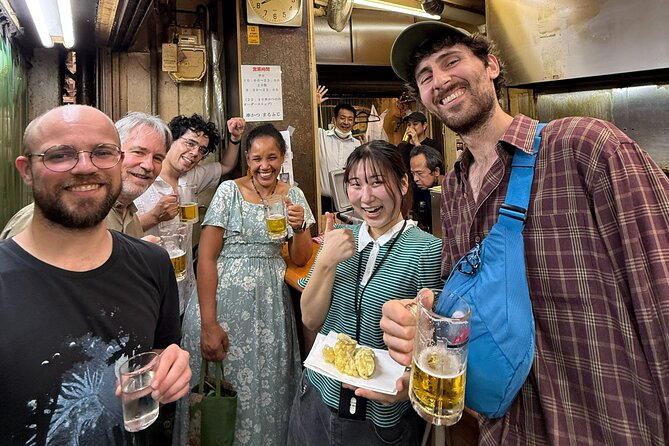
Namba is a sensible place to begin. It is one of Osaka’s main eating and entertainment districts, with department stores, shopping arcades, narrow lanes, bars, temples, and restaurants packed into a walkable area. You start underground, then move through the surrounding streets as the food crawl develops.
The Namba portion lasts about two hours and 20 minutes, making it the heart of the experience. That is enough time for several food stops, conversation, and a little orientation. Past outings have included three sit-down restaurants and a grab-and-go counter, while another group visited three izakayas and finished at a bar.
The exact route is not fixed, and that is part of the appeal. A guide may steer you toward a lively counter, a quiet restaurant, or a classic izakaya depending on what you want. The tradeoff is that you cannot assume a precise list of venues in advance.
Your guide may be Kota, Gil, Tony, Kazu, Sue, Kenji, Momomi, Risa, Haru, Miki, Kyoko, Shehab, Satsuki, Minori, or Ryu, depending on the departure. The important point is not a guaranteed personality or route, but the guide’s role: helping you decide, explaining dishes, and making the first step into a small restaurant easier.
Eating your way through Osaka specialties
The food choices give this tour its strongest feature: flexibility.
If you are new to Osaka, start with the local classics. Takoyaki arrives as hot, round batter balls filled with octopus, usually topped with sauce and other seasonings. It is easy to share and gives you a quick taste of the city’s street-food identity.
Kushikatsu offers a different texture. Meat, vegetables, and seafood are placed on skewers, coated, and fried. A guide can help you choose a mix rather than ordering a large plate of one item. This is especially helpful if you want to compare ingredients or are unsure how much food each stop will provide.
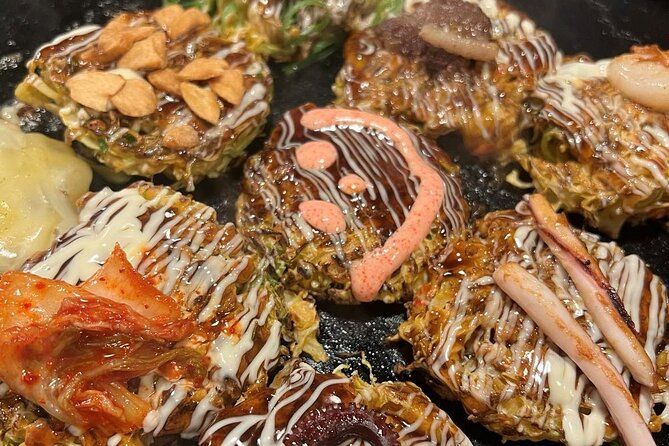
Okonomiyaki is often described as a Japanese cabbage pancake, though that simple label does not capture how filling it can be. It is a good choice if you want something substantial. Yakitori offers smaller chicken skewers, while sushi and sashimi suit people who want a cleaner, more seafood-focused stop.
Oden is a Japanese hot-pot dish, useful on a cool evening or for anyone who wants something gentle rather than fried. Doteyaki is less familiar to many first-time visitors, so it gives the tour a chance to move beyond the usual Osaka checklist.
The guide can also point you toward local drinks, including sake. One outing was shaped around trying different kinds of sake, while another ended at a bar. Drinks are optional and paid separately, so you can keep the evening focused on food if that suits you.
I appreciate that the arrangement does not force you into a set number of dishes. A food crawl can become uncomfortable when every tasting is predetermined. Here, you can tell the guide that you want more seafood, fewer fried foods, Japanese drinks, gluten-free choices, or a smaller meal. A guide has even adjusted plans for gluten-free diners and kept track of separate costs for the group.
Still, you should speak up early. A flexible tour only works when the guide knows what you want. Mention allergies, dietary restrictions, dislikes, alcohol preferences, and your rough food budget at the start.
Hozen-ji Temple adds a quiet pause
After the food-focused walk through Namba, the route includes about 20 minutes at Hozen-ji Temple.
This small downtown temple is a useful change of pace. Osaka can feel loud and crowded around its main shopping and dining streets, but Hozen-ji gives you a short look at a more traditional side of the city. The guide can explain the local custom associated with the temple and point out details you might miss while passing through alone.
Do not expect a large temple complex or a long sightseeing visit. This is a brief stop, not a full temple tour. Its value comes from contrast: after restaurant signs, traffic, and food counters, you get a quiet place with a distinctly local atmosphere.
Several guides have also used the walk to explain neighborhood history and everyday customs. That makes the temple more than a photo stop. You can ask questions about Osaka food, local etiquette, or places to eat later in your trip.
Same city, a different plate:
- Tokyo Tsukiji Fish Market Food and Culture Walking Tour
★ 5.0 · 3,184 reviews - Hungry Osaka Street Food Tour:15 Tastings & 3 Drinks with a Local
★ 5.0 · 1,727 reviews - Tokyo: Tsukiji Fish Market Food and Walking tour
★ 5.0 · 1,724 reviews - Tokyo: Tsukiji Fish Market Guided Walking Tour
★ 4.9 · 1,397 reviews
Dotonbori after dark
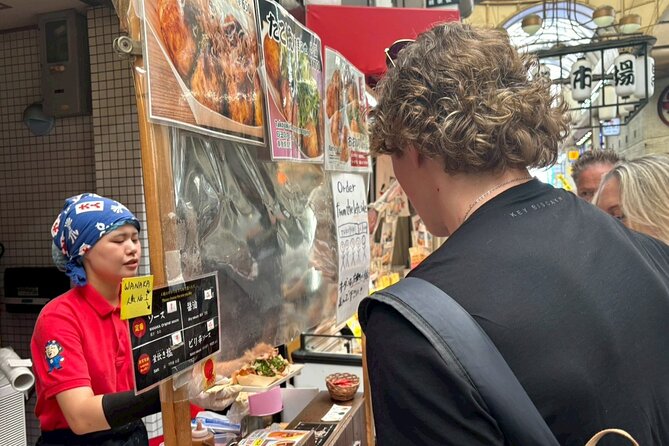
The final listed stop is Dotonbori, about 20 minutes.
This is Osaka’s famous canal-side entertainment area, known for huge advertising signs, unusual shop displays, souvenir stores, and local food. It is the place for the classic Osaka photograph, but it can also feel heavily geared toward first-time sightseers.
A guide helps you read the area in two ways. You can enjoy the giant signs and colorful storefronts, then step away from the obvious tourist routes to find smaller eating places. The experience does not promise that every stop will be unknown to the public, but it does aim to show you places you may not find or enter without assistance.
Dotonbori is also a practical place to learn what not to judge by appearance. A restaurant with a plain entrance may serve excellent food, while a giant sign may be aimed mainly at passing crowds. Your guide’s local suggestions give you a better chance of spending your food budget well.
The route returns to the original meeting point. Transportation fees are not included, so any separate train or other transport costs are yours to cover. The listed walk itself centers on Namba, Hozen-ji, and Dotonbori.
Why the small group matters
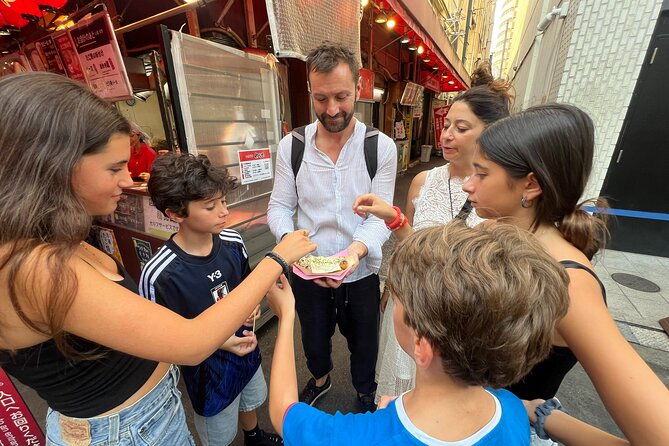
The maximum group size is eight. That is a good limit for this kind of outing.
Small Japanese restaurants may have tight seating, narrow entrances, and menus that are easier to handle with a compact group. A guide can also keep track of what each person wants without turning the evening into a loud, formal procession.
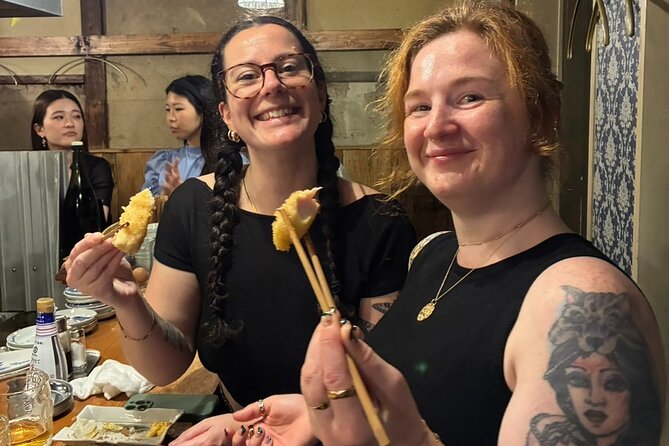
Some departures have been especially intimate, with only two people in the group. That can feel more like an evening with a local friend than a standard tour. It also gives you more room to ask questions and change plans.
The group size is not guaranteed to be tiny. You could still be with several other people, and the maximum is eight. Even so, eight is manageable for a food crawl and far better suited to small restaurants than a large coach-style group.
The English-speaking guide is another key part of the price. You are not only paying for directions. You are paying for help ordering, explanations of dishes, recommendations for later meals, and confidence when entering a place that has no obvious English menu.
Some guides also teach useful Japanese phrases along the route. That is a small but valuable touch, especially if you plan to eat independently after the tour.
What the $42.28 price includes and excludes
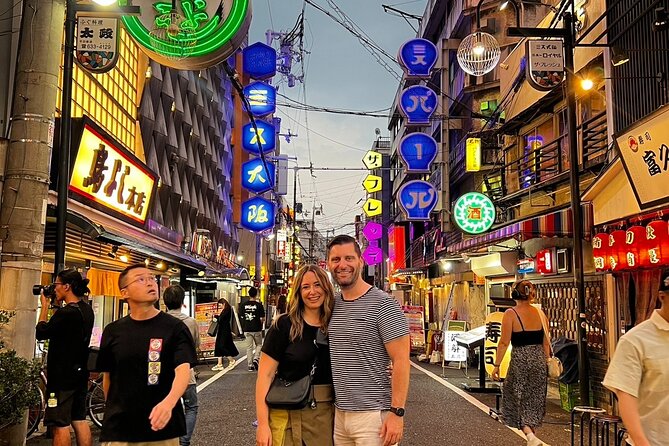
At $42.28 per person, the price is reasonable if you think of the tour as local guidance and restaurant access rather than a meal package.
Included are the guide and English-language guiding. Your own food, drinks, lunch, dinner, breakfast, and transportation are not included.
Your final bill depends on your choices. A light round of snacks will cost less than several full meals plus sake and bar drinks. Since the guide recommends places based on your preferences, you have more control than you would on a fixed tasting tour.
This also means the price comparison can be misleading. A $42.28 tour with included food may appear more expensive at first, but it could end up costing less overall than this experience. On the other hand, a prepaid tour may give you food you do not want. Here, you avoid paying for dishes that do not suit you.
I would set a separate food budget before you go. Tell the guide if you want affordable neighborhood dishes, a broad tasting, premium seafood, or a drink-centered evening. One useful detail is that most of the places used by one group accepted credit cards, though you should not assume every small business will do so.
Who will get the most from this experience
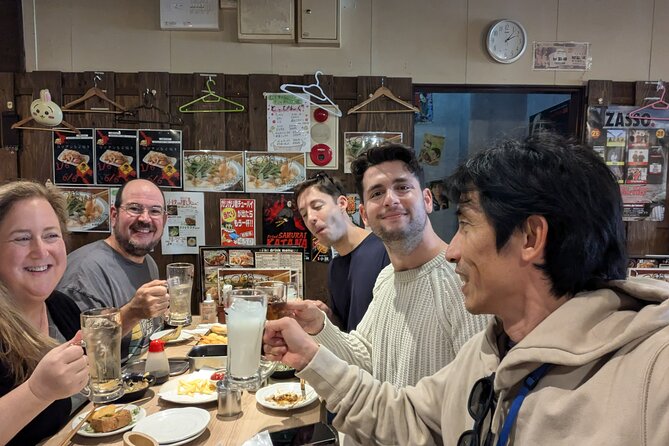
I would recommend this food crawl to a first-time Osaka visitor who wants a gentle introduction to local eating.
It also suits solo visitors. A guide gives you company, helps with ordering, and makes a small restaurant less awkward to enter alone. One solo outing included a neighborhood walk and explanations of Osaka cuisine, rather than simply moving from one dish to the next.
Food lovers who already know Japanese cuisine can use the tour differently. Ask for less familiar dishes such as doteyaki, focus on sake, or request small independent businesses instead of the most famous stops.
Families can benefit too, especially if different people want different foods. A flexible route makes it easier to balance adventurous eaters with cautious ones. Parents should remember that the tour lasts about three hours and may include several food stops, walking, and time in crowded areas.
This is not the best fit if you need a guaranteed menu, included tastings, a quiet sightseeing tour, or a precise restaurant list. It is also not ideal if you do not want to spend extra money on food and drinks after paying the tour fee.
Most people can participate, and service animals are allowed. The route is near public transportation, but no special transport service is included.
Booking details worth knowing before you go
Confirmation is provided when you book, and the activity ends back at the meeting point.
The tour offers free cancellation when you cancel at least 24 hours before the start time. Cancel within 24 hours, or request a change during that period, and you will not receive a refund. The cut-off follows Osaka local time.
I would avoid booking this as a last-minute gamble if your schedule is uncertain. The small-group format and food planning work best when you know you can attend.
Should you book this Osaka food crawl?
Book it if you want a guide to help you eat in Namba without being handed a fixed menu. The strongest reasons are the choice of dishes, the access to small izakayas, the help with ordering, and the chance to combine food with Hozen-ji Temple and Dotonbori.
Before paying, accept the basic arrangement: the $42.28 fee buys the guided experience, while every dish and drink is extra. If that suits your style, this is a practical way to get oriented in Osaka and learn where to eat for the rest of your trip.
If you want an all-inclusive food tour, choose another format. If you want to decide as you go and let a local guide such as Risa, Sue, Kota, or Ryu point you toward places you might otherwise miss, this crawl is a strong choice.
FAQ
How long does the Osaka food crawl last?
The experience lasts approximately three hours. The listed time includes about two hours and 20 minutes in Namba, 20 minutes at Hozen-ji Temple, and 20 minutes in Dotonbori.
Is food included in the tour price?
No. Lunch, dinner, breakfast, food, and drinks are not included. You pay separately for the items you choose at the recommended restaurants and food shops.
What food can I try on the tour?
Possible choices include takoyaki, kushikatsu, sushi, sashimi, yakitori, oden, okonomiyaki, doteyaki, and other local dishes. The guide recommends places based on your tastes and preferences.
Where does the tour start and finish?
It starts at Osaka JOINERJapan in Namba Walk, 1-chome 9, Rainbow Town, Namba Walk 3rd Avenue South Street, B1, in Osaka’s Chuo Ward. The activity ends back at the meeting point.
How many people can join the tour?
The maximum group size is eight people. Some departures may be smaller, including groups of only two people.
Can I cancel for a full refund?
Yes, if you cancel at least 24 hours before the experience start time. Cancellations or changes made within 24 hours are not accepted for a refund.
Just added around Japan
- Savor Setouchi inland sea Local Food & Bike Tour with Local Guide★ 5.0 · 3 reviews
- Okonomiyaki Counter: Hiroshima Edition★ 5.0 · 2 reviews
- Private Fukuoka Bar Hopping and Food Walking Tour★ 5.0 · 3 reviews
- Fukuoka Evening Tours: Yatai, Izakaya, Karaoke and more★ 5.0 · 21 reviews
- Samurai Food Walk in Kakunodate★ 5.0 · 10 reviews
- Tokyo: Tsukiji walk & sushi private tour with Uni Students★ 5.0 · 17 reviews
- Tokyo: Private Tsukiji Street Food & Sake with Local Guide★ 5.0 · 3 reviews
- Tokyo: Tsukiji Market Guided Tour & Sushi-Making Experience★ 4.4 · 11 reviews
Japan Street Food Tours, compared.
Tokyo Tsukiji Fish Market Food and Culture Walking Tour
Read our review →
Hungry Osaka Street Food Tour:15 Tastings & 3 Drinks with a Local
Read our review →
Tokyo: Tsukiji Fish Market Food and Walking tour
Read our review →
Tokyo: Tsukiji Fish Market Guided Walking Tour
Read our review →
Nishiki Market Brunch Walking Tour (7 Tastings + Brunch)
Read our review →
Tokyo Sushi Making Class in Tsukiji with Professional Chef
Read our review →
Osaka Local Foodie Walking Tour in Dotonbori and Shinsekai
Read our review →
Browse the lists this tour appears in