
REVIEW · OSAKA STREET FOOD TOURS
Osaka Local Foodie Walking Tour in Dotonbori and Shinsekai
Osaka’s best-known food streets make more sense when you eat your way through them. This small-group walk links Shinsekai and Dotonbori, serving kushikatsu, okonomiyaki, takoyaki, and drinks while your guide explains the neighborhoods, customs, and dishes. You finish beneath the famous Glico sign, full and better oriented.
I like the maximum group size of seven, which gives you a fair chance to ask questions and keep track of the group. I also like the route’s mix of food and local sights: Jan-Jan Yokocho, Tsutenkaku, Hozen-ji Temple, Ukiyo Alley, and Dōgu-ya-suji. The main caution is value. At $111.42, this is not a bargain food crawl, especially if you want many small tastings at several different stops.
Key points to know before booking
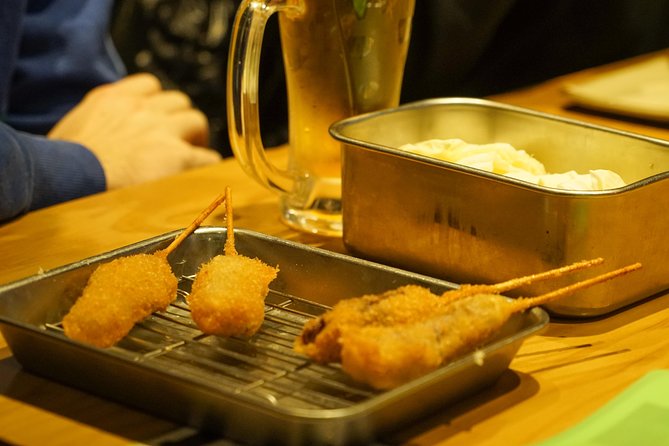
- Three Osaka staples included: Six kushikatsu skewers, one serving of okonomiyaki, one box of takoyaki, and three drinks.
- Two very different neighborhoods: Shinsekai offers old Osaka atmosphere, while Dotonbori brings bright signs, shopping, and the Glico photo stop.
- Small group format: The tour accepts no more than seven people, and a group of six may sometimes become a private tour.
- Guide quality matters: Aika, Yuma, Mich, Emi, Naru, Kent, and Justin have all been praised for warmth and local insight, though guiding can vary.
- Dietary limits are important: Gluten-free and vegan meals cannot be handled. Vegetarian requests must be made by the day before.
- The meeting point takes planning: You start at a FamilyMart in Shinsekai and finish in Dotonbori, with about ¥190 in transport costs not included.
What this Osaka food walk is really like
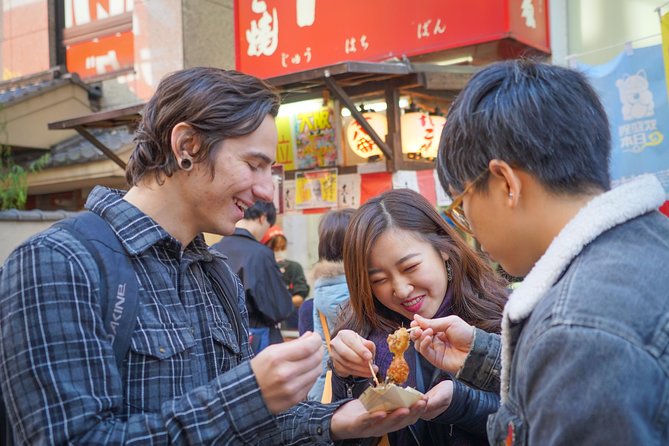
This is part food tour, part neighborhood introduction. You are not simply seated in three restaurants and handed a succession of dishes. The route moves through two of Osaka’s most famous entertainment and eating districts, with short walks, photo stops, shrines, shopping streets, and explanations along the way.
The total time is about three hours. That sounds generous, but the schedule is fairly full. You move through several named areas, eat three major foods, stop for drinks, and make time for photos. Some people find the pace comfortable and easy to follow. Others find the walking either too fast between stops or too slow before the first proper meal.
That difference usually comes down to what you want from a food tour. If you want a friendly introduction to Osaka, with enough food to make dinner unnecessary for some people, this works well. If you want ten tiny portions from market stalls and obscure family-run shops, this may feel limited.
The strongest part of the experience is the human element. Guides such as Aika have helped visitors connect the food to ordinary life in Osaka, while Yuma has been praised for explaining how the dishes are prepared and for stopping at shrines along the route. Mich has been especially well regarded for pairing local food with historical context. Justin has even helped people find their way through Osaka’s subway system after the walk.
That said, you should not assume every guide delivers the same amount of narration. Some guides keep up a lively conversation and offer extra restaurant suggestions. Others may answer questions well but provide less commentary while walking. If you want a history-heavy tour, ask questions rather than waiting for a constant stream of explanation.
More Street Food Walking Tours in Japan
- Kuromon Market Food Walking Tour in Osaka (6 stops, 6 tastes)
★ 5.0 · 550 reviews - Osaka: Kuromon Market Food Walking Tour (6 stops, 6 tastes)
★ 4.6 · 272 reviews - Osaka: 2-Hour Nightlife District Walking & Local Food Culture
★ 5.0 · 199 reviews
Starting under Tsutenkaku in Shinsekai
The meeting point is near a FamilyMart in Shinsekai, at 1-chōme-17 in Sannō, Nishinari Ward. Shinsekai is easy to recognize once you are in the area, but the exact meeting point has felt remote or unclear to some people, so allow extra time. The tour starts on time, and arriving late can mean missing the group without a refund or rescheduling option.
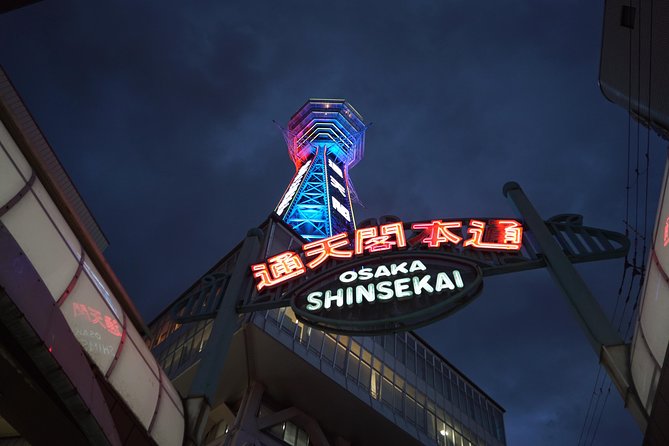
The first major stop is Tsutenkaku, the tower that has watched over Shinsekai for generations. You walk through Jan-Jan Yokocho, an alley with a distinctly old Osaka feel, then stop for kushikatsu.
Kushikatsu means meat, seafood, and vegetables threaded onto skewers, coated, and fried. The included portion is six skewers, enough to introduce the dish without turning the first stop into a heavy meal. You also receive drinks, with alcoholic and non-alcoholic options available.
This is one of the more local-feeling parts of the route. Shinsekai has a rougher, less polished character than Dotonbori, and the alleyways help you see how Osaka’s food culture grew around casual eating and drinking. Your guide can explain the dish and the neighborhood, though the amount of detail depends on the person leading your walk.
Kushikatsu is fried food, and much of this tour leans toward hearty, fast-cooked Osaka specialties. That is good news if you enjoy crisp coatings, sauces, and savory comfort food. It is less appealing if you hoped for a wide survey of fresh seafood, delicate seasonal dishes, or regional cooking from across Japan.
Jan-Jan Yokocho and the old Shinsekai mood
The route continues through the Shinsekai area, including Shinsekai Market, Tsutenkaku Tower, and a Billiken statue. Jan-Jan Yokocho is presented as a museum-like alley, with a look that recalls central Osaka more than 80 years ago.
This section earns its place because it gives the food a setting. You are not eating kushikatsu in an anonymous dining district. You are seeing the streets, signs, arcades, and small businesses that make Shinsekai different from the glossy shopping areas around Namba.
The walk also offers a useful contrast with Dotonbori later in the day. Shinsekai feels tied to older entertainment traditions and working-class dining. Dotonbori is louder, more commercial, and designed for spectacle. Seeing both in one outing helps you understand why Osaka is so strongly associated with eating out.
If your tour takes place at night, some temple and shrine areas may be dim. One person found the temple visit less rewarding after dark. That is not a deal breaker, but it is worth knowing that the sightseeing portions are neighborhood stops, not formal temple tours with long visits inside major buildings.
Moving toward Dōgu-ya-suji and Dotonbori
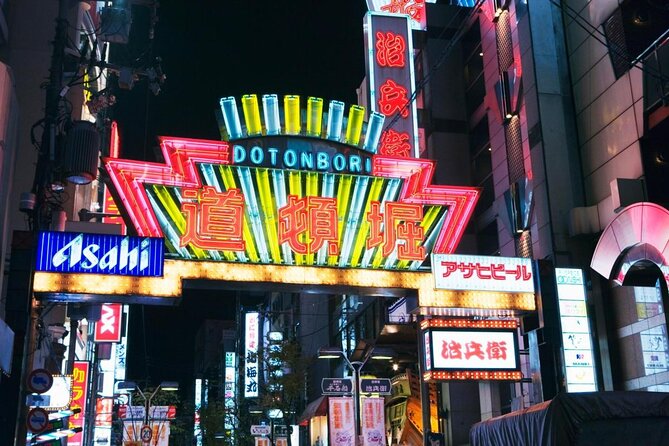
The route then heads toward the Dotonbori area and Dōgu-ya-suji, also called Sennichimae Doguyasuji Shopping Street. The schedule differs slightly by time of day. Daytime tours may include souvenir shopping on Dōgu-ya-suji, including the Hōchō-ya knife shop. Night tours may focus on an explanation of the area near Namba Grand Kagetsu and shopping nearby.
Dōgu-ya-suji is a practical stop for anyone interested in Japanese kitchen culture. You may see knives, cooking tools, restaurant equipment, and food-related souvenirs. It also gives your guide a chance to explain how Osaka’s restaurant culture connects to the tools used behind the scenes.
Do not expect a long shopping session. The stop is about 15 minutes, so it works best as a quick look rather than a dedicated shopping trip. If you want to buy a knife or another item, keep the group schedule in mind and ask your guide about the best time to return.
This part of the walk also highlights one limit of the tour. The route includes several well-known areas rather than taking you far from Osaka’s main visitor districts. You will see famous places, not a secret side of the city unavailable to independent visitors. The guide’s explanations and food arrangements are what add value.
More Street Food Walking Tours in Osaka:
- Reykjavik Food Walk – Local Foodie Adventure in Iceland
★ 5.0 · 18,952 reviews - New Orleans Food Walking Tour of the French Quarter with Small-Group Option
★ 5.0 · 6,118 reviews - Naples: Street Food Walking Tour with Local Guide
★ 4.9 · 4,976 reviews - Greek Food Walking Tour in Athens
★ 5.0 · 4,740 reviews
Hozen-ji Temple, Ukiyo Alley, and the Glico sign
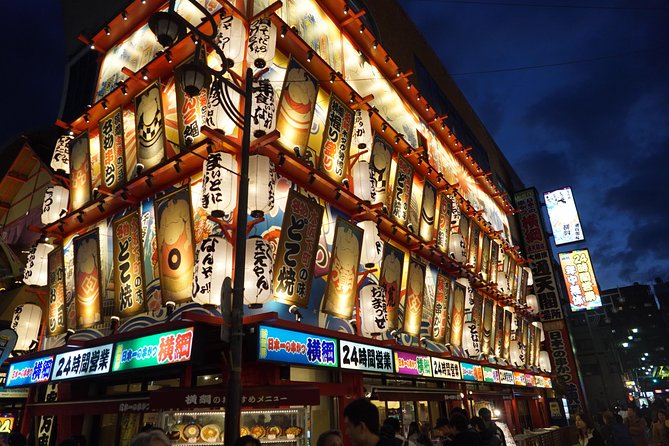
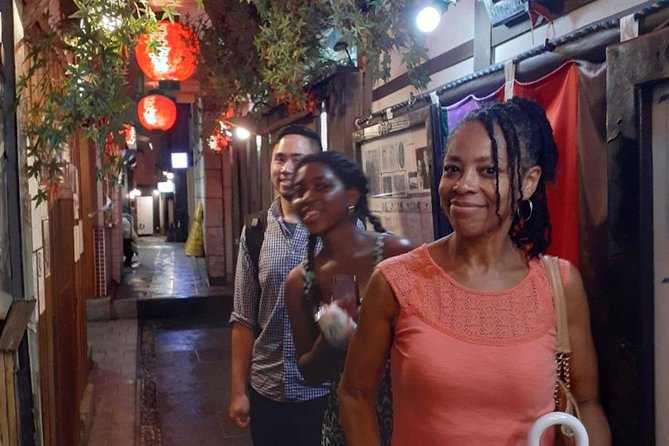
At Hozen-ji Temple, the tour slows for a short visit before continuing through Ukiyo-koji, a narrow alley. Hozen-ji is a compact urban temple, and its location among eating streets makes it a pleasant contrast to the noise and signage nearby.
The temple stop is brief, around 25 minutes including the walk and food portion. If you visit in daylight, the setting is easier to appreciate. At night, it may feel more like a quick atmospheric pause than a full sightseeing stop.
The route then reaches the famous Glico sign, where you have time for photographs. This is an obvious Osaka image, but it is still useful to have a guide manage the group and help with pictures. Aika, in particular, has been praised for taking photographs and sending them afterward.
The food at this stage can include takoyaki, sweets, and other small snacks, with an approximate extra cost of ¥500 noted for some items. The included meal lists one box of takoyaki, but the exact order and timing can vary. One person reported missing takoyaki, so it is sensible to confirm with your guide early if that dish is important to you.
Takoyaki is made from batter with tender octopus and other ingredients, cooked into round balls. The outside can be lightly crisp while the center stays soft and hot. It is a classic Osaka street food, but be careful with the first bite because the inside can hold heat.
Okonomiyaki and the final meal
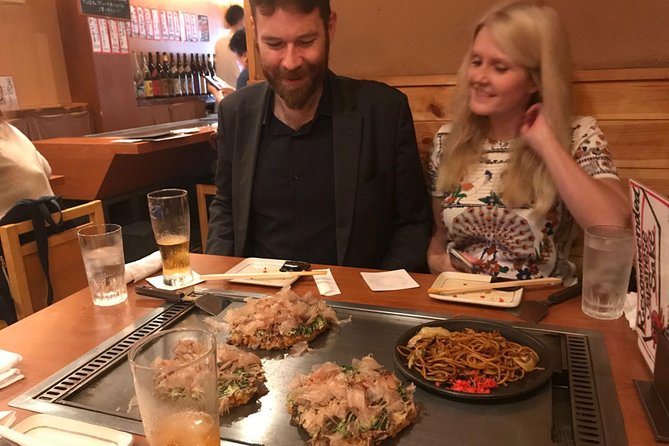
The final major food stop is okonomiyaki, Osaka’s savory pancake. The name combines the ideas of what you like and grilled, since toppings and ingredients can be adjusted. The included portion is one piece.
Some guides have made this a hands-on moment, with people grilling their own okonomiyaki. That can be one of the most enjoyable parts of the tour because you are not only tasting the food, you are taking part in how it is prepared. Still, the experience may depend on the restaurant and guide, so do not book solely on the assumption that you will cook every course yourself.
The okonomiyaki stop is substantial. This is not a tiny sample designed to leave room for ten more tastings. For some people, it feels like a proper meal and good value. For others, it takes up too much room in the stomach and makes the later takoyaki difficult to enjoy.
That is the central food question here: do you prefer generous portions of famous dishes, or small portions from many locations? This tour gives you recognizable Osaka standards in meaningful portions. It does not promise a long list of stalls, unusual ingredients, or a highly specialized food education.
The final stop is usually near Dotonbori’s Glico sign, where the tour ends. This makes the route practical if you want to keep exploring Namba, shop for souvenirs, or continue eating after the guide leaves. It is less convenient if your hotel is in another part of Osaka and you are unfamiliar with the subway.
Food, drinks, and dietary limits
The advertised food package includes:
- Six kushikatsu skewers
- One serving of okonomiyaki
- One box of takoyaki
- Three drinks, alcoholic or non-alcoholic
You do not need to pay for the guide’s food or drinks. Transport costs are separate, with ¥190 listed as an extra expense.
The three drinks can add useful value if you enjoy beer, plum wine, or other alcoholic choices, though non-alcoholic drinks are available. Some people may not want all three drinks, so the package can feel less useful if you rarely drink.
Vegetarian meals can be arranged only if requested when booking or no later than the day before. Even vegetarian kushikatsu may use dashi made with pork broth, so tell the operator in advance if you cannot consume dashi. Gluten-free and vegan diets cannot be accommodated.
Allergies also require advance notice, but the operator does not guarantee allergy-free meals or substitutions because the food is prepared in kitchens it does not control. This is a serious point, not fine print to ignore. If you have a major allergy, you may want a food experience with tighter control over ingredients.
Smoking may be allowed at some venues, and the stops cannot always be changed. That may matter if you are sensitive to smoke.
Is $111.42 a fair price?
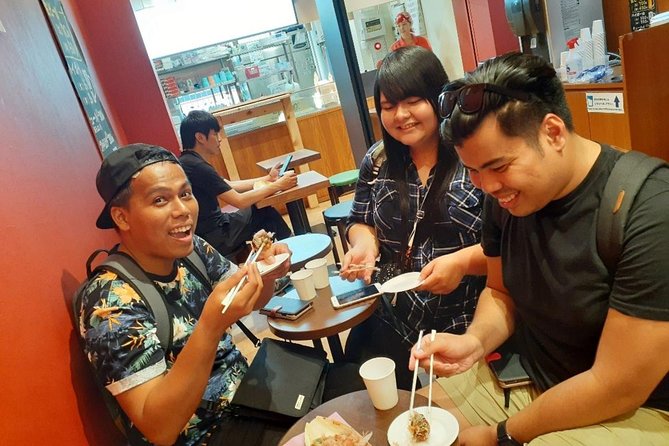
At $111.42 per person, you are paying for more than the food itself. The price covers a three-hour route, a small group of up to seven, three drinks, several major dishes, and a guide who handles the movement between busy neighborhoods.
The value is strongest when your guide adds real context. Aika, Yuma, Mich, Emi, Kent, Naru, and Justin have all been praised for friendliness, local explanations, food advice, and practical help. A family of six may even find itself with a private tour if no other places are booked, which changes the value calculation considerably.
The price is weaker if you judge the experience only by the number of food stops. Some people expected more restaurants and smaller samples. Others felt that a full okonomiyaki meal and fried food did not offer enough variety for the cost.
I would compare it with the price of arranging your own meals, then ask what kind of help you want. You can certainly visit Dotonbori, eat takoyaki, photograph the Glico sign, and walk through Shinsekai on your own. The tour earns its fee if you want someone to connect those places, explain the food, manage the route, and reduce the stress of choosing where to eat.
Who will enjoy this most?
I would recommend this walk to a first-time Osaka visitor who wants an easy introduction to the city’s famous food districts. It is also useful early in your stay because guides often suggest later restaurants, snacks to take home, and places to visit after the tour.
Families can do well here, especially if children are open to fried foods, pancakes, and takoyaki. All ages are welcome, but keep in mind that the tour involves walking through crowded streets and may move quickly between stops.
Repeat visitors may enjoy it if they want more context about familiar areas or prefer a local guide to handle the food choices. Serious food fans should read the menu carefully and set realistic expectations. You are getting Osaka classics, not a wide regional tasting menu.
Wear shoes suited to walking, check the weather, and prepare carefully in summer or winter. Osaka temperatures can reach 40°C in summer and drop to -5°C in winter. The tour operates outdoors for much of its length, and rain, heat, or cold can affect your comfort.
Should you book the Shinsekai and Dotonbori food tour?
Book it if you want a social introduction to Osaka, three famous local foods, a manageable small group, and a guide who can help you understand the neighborhoods. The route is especially useful during your first days in the city, when a local person can point out places you might otherwise pass.
Think twice if your definition of a food tour means many stops, tiny portions, rare dishes, and a strong focus on culinary technique. You may find the menu heavy, the restaurant count modest, and the price high for the amount of variety.
My call: this is a good sightseeing walk with a solid Osaka meal built in, but it is not the best choice for an obsessive food crawl. Book it for the combination of food, orientation, and local conversation. Skip it if food variety matters more to you than convenience and neighborhood context.
FAQ
How long does the Osaka food tour last?
The tour lasts approximately three hours.
What food is included?
You receive six kushikatsu skewers, one serving of okonomiyaki, one box of takoyaki, and three drinks.
Are alcoholic drinks included?
Yes. The three included drinks can be alcoholic or non-alcoholic.
What neighborhoods does the tour visit?
The route visits Shinsekai and Dotonbori, including areas around Tsutenkaku, Jan-Jan Yokocho, Hozen-ji Temple, Ukiyo Alley, and Dōgu-ya-suji.
Where does the tour start and finish?
It starts at a FamilyMart near Sannō in Shinsekai and finishes near the Glico sign in Dotonbori.
How many people can join?
The maximum group size is seven travelers.
Can vegetarians join?
Vegetarian meals can be arranged if requested when booking or by the day before. Vegetarian kushikatsu may still contain dashi made with pork broth, so mention this restriction in advance.
Can the tour accommodate vegan or gluten-free diets?
No. Vegan and gluten-free diets cannot be accommodated.
Are transportation costs included?
No. Transportation fees are separate. The stated additional transport cost is ¥190.
What happens if I arrive late?
The tour starts on time. If you arrive late and miss the group, you cannot join, reschedule, or receive a refund.
Can I cancel for a refund?
You can cancel at least 24 hours before the start time for a full refund. Cancellations or changes made less than 24 hours before the tour are not refunded or accepted.
Just added around Osaka
- Same Day OK! Osaka: Local Food, Izakaya & Local Bites Tour!★ 4.8 · 17 reviews
- Eat Like a Local in Osaka – Private Custom Street Food Tour★ 4.3 · 33 reviews
- Osaka Shinsekai Street Food Tour – Evening★ 5.0 · 2 reviews
- Okonomiyaki&Takoyaki for Families:Osaka Street Food Festival★ 5.0 · 4 reviews
- Osaka: Local Foodie Tour in Dotonbori and Shinsekai★ 4.7 · 95 reviews
- Osaka: Takoyaki Keychain and Magnet-Food Replica Workshop★ 5.0 · 2 reviews
- Osaka Okonomiyaki Cooking Experience for Families & Groups★ 4.9 · 8 reviews
- Osaka: Namba Guided Local Food Tour (Taste 15 dishes)★ 5.0 · 6 reviews
Osaka Street Food Tours, compared.
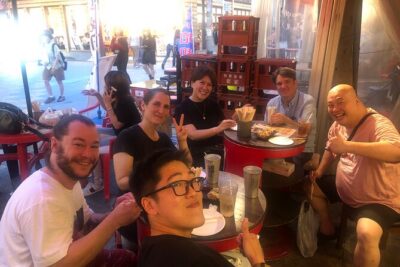
Hungry Osaka Street Food Tour:15 Tastings & 3 Drinks with a Local
Read our review →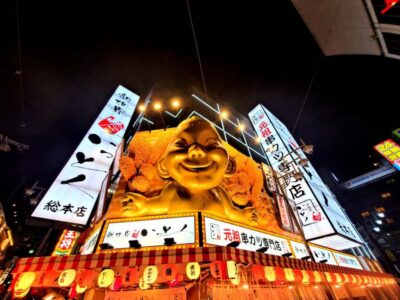
Hungry Osaka Street Food Tour: 15 Dishes & 3 Drinks
Read our review →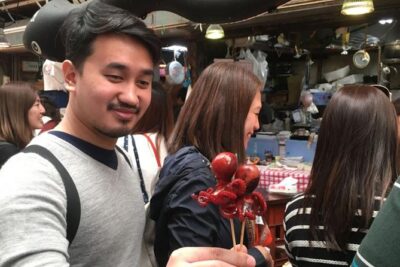
Kuromon Market Food Walking Tour in Osaka (6 stops, 6 tastes)
Read our review →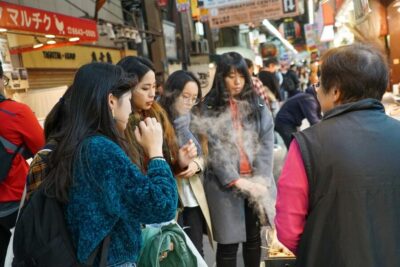
Osaka: Kuromon Market Food Walking Tour (6 stops, 6 tastes)
Read our review →
Osaka Cooking Class: Okonomiyaki &Japanese cuisines experience
Read our review →![[1 Group Only] Osaka Street Food Tour for Family](https://4.streetfoodtrips.com/wp-content/uploads/1-group-only-osaka-street-food-tour-for-family-400x267.jpg)
[1 Group Only] Osaka Street Food Tour for Family
Read our review →
Osaka: 2-Hour Nightlife District Walking & Local Food Culture
Read our review →Browse the lists this tour appears in