REVIEW · STREET FOOD WALKING TOURS
The Nordic Food Walk Stockholm
Stockholm’s Nordic Food Walk turns a four-hour city stroll into a full introduction to Swedish eating. You move from the grand Östermalms Saluhall to casual food halls, specialty counters, and Gamla Stan, tasting everything from meatballs and seafood to reindeer salami and salty licorice. The variety is the main event.
I like the way food comes with useful context, not just a quick sample. Guides such as Cotton, Teresa, and Sarah explain Swedish customs, ingredients, and everyday life while you walk. I also like the route itself: you see several central neighborhoods instead of sitting in one market for the whole afternoon.
The catch is simple: this is a walking tour with food, not a series of long restaurant meals. Some samples are modest, one guest found the cinnamon bun dry, and a few people found the pace brisk. Come hungry, wear good shoes, and tell the company about allergies or vegetarian needs when booking.
Key points to know before booking
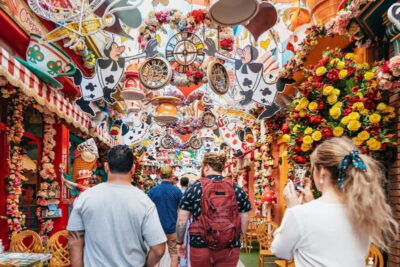
- A four-hour route from Östermalm to Gamla Stan: The tour links two major food halls with central streets, parks, shops, and Old Town lanes.
- A broad Swedish tasting menu: Expect meatballs, seafood, cheese, cured game meats, fruit, candy, licorice, beer, wine, hot chocolate, and fika.
- Guides who add local context: Cotton is praised for food and cultural explanations, while Teresa and Sarah are also named as warm, engaging guides.
- A serious amount of food: Several tastings are generous enough to replace breakfast or lunch for many people.
- Walking matters: The route requires moderate fitness, and some guides may set a fairly quick pace.
- Small-group potential, but not a guarantee: The maximum is 20 people. Winter departures may be much smaller.
Starting with Swedish food at Östermalms Saluhall
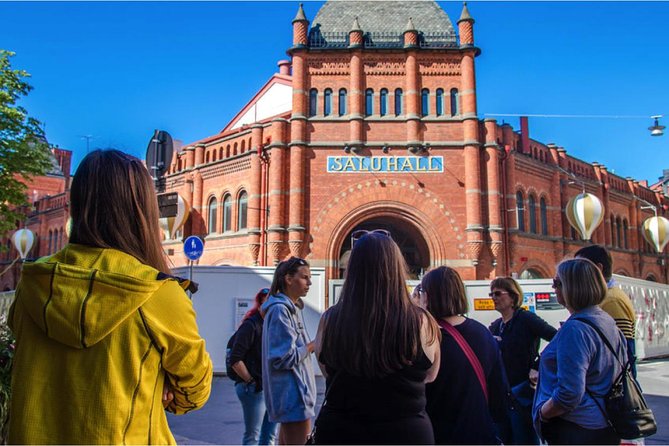
The tour begins near Beirut Café on Nybrogatan, close to Östermalms Saluhall. This market hall is one of Stockholm’s best places to understand the country’s food culture in one glance. Its wooden interior, detailed carvings, and old-fashioned market design give the first stop a sense of occasion, but the food counters are still working businesses rather than a museum display.
This is where the tour introduces you to Sweden’s love of carefully made dairy, seafood, game, beer, and preserved foods. The emphasis is not only on what you taste, but on why these foods fit Swedish life. Long winters, forests, lakes, and a strong tradition of preserving food all help explain the focus on cured meats, fish, berries, cheese, and hearty dishes.
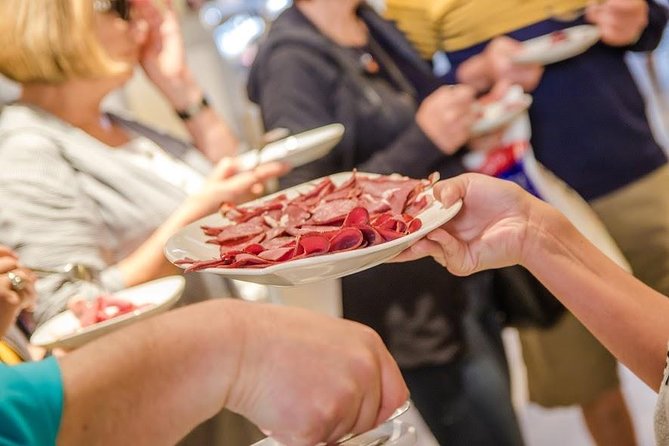
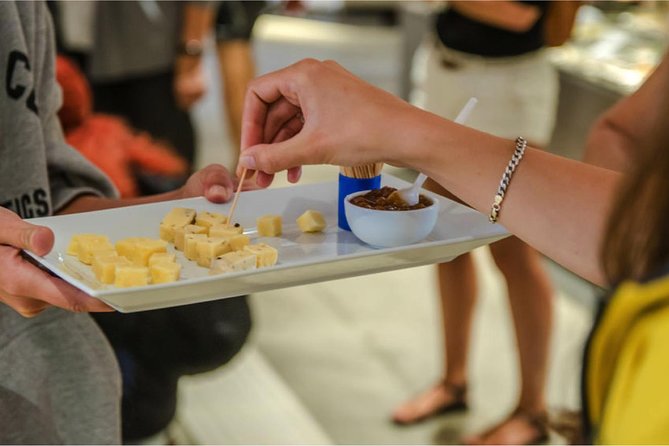
You may begin with cheeses or other deli products, then try game meat such as reindeer or elk in cured form. The unusual flavors are part of the point. If you have never tasted northern game, this is an easy way to try it in a controlled setting, with a guide explaining what is on your plate.
The market is also a useful early stop because you can return later on your own. One of the practical strengths of this tour is that it introduces shops and counters you might otherwise walk past. If something catches your eye, note the name and come back when you have time to browse without a group.
More Street Food Walking Tours in the world:
- Reykjavik Food Walk – Local Foodie Adventure in Iceland
★ 5.0 · 18,952 reviews - Naples: Street Food Walking Tour with Local Guide
★ 4.9 · 4,976 reviews - Private Street Food Evening Walking Tour in Ho Chi Minh City
★ 5.0 · 3,175 reviews
Meatballs with more meaning than a familiar recipe
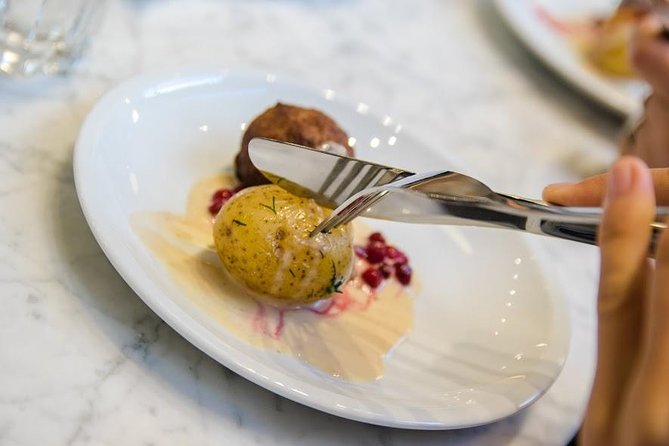
Swedish meatballs are the food most people expect, but the tour gives them more attention than a token sample. You learn how they fit into Swedish meals, including the usual role of potatoes and the fruit-based preserves served alongside them.
The version offered here is described as a modern take, somewhat lighter and healthier than the traditional style. That makes it a useful comparison if your only reference is the heavy, creamy meatball plate found in many tourist restaurants. The guide also explains why particular jams belong with the dish, turning a familiar food into a small lesson in Swedish taste.
I like this part because it connects the food to ordinary home cooking. A meatball is not exotic, but the accompaniments and serving customs tell you more about local habits than an expensive dish with no explanation. It is also one of the more approachable tastings for children and cautious eaters.
Do not expect a full sit-down lunch here. The tour contains many stops, so each portion is designed to leave room for what comes next. That is good for variety, but it means you should not judge the entire experience by the size of any single tasting.
Stureplan, Kungsgatan, and the city between meals
After Östermalm, the route heads toward the center through Stureplan and onward to Kungsgatan. These areas are not always where first-time visitors spend much time, which gives the walk a useful local angle. You see more than postcard Stockholm, and the guide uses the streets to explain how the city’s central districts fit together.
The route also passes through Kungsträdgården, known in English as the King’s Garden. The itinerary connects this part of the walk with a district once named by Vogue as one of the world’s coolest. The important thing for you is less the label and more the change in setting: grand streets and central public spaces give way to modern food halls and casual places where Stockholm residents eat.
This stretch is also where the walking becomes noticeable. The tour lasts about four hours and keeps moving between tastings. Most people describe the amount of walking as manageable, but several comments point out that one guide walked quickly. If you have older members in your group, mobility concerns, or simply prefer a slow stroll, mention that at the start and stay near the guide.
K25 brings a modern food-hall stop
K25 is an urban food court on Kungsgatan, with a younger, more casual feel than Östermalms Saluhall. Here the tour shifts from historic market culture to the city’s current eating habits. The setting is useful because it shows that Swedish food is not limited to old recipes and formal dining rooms.
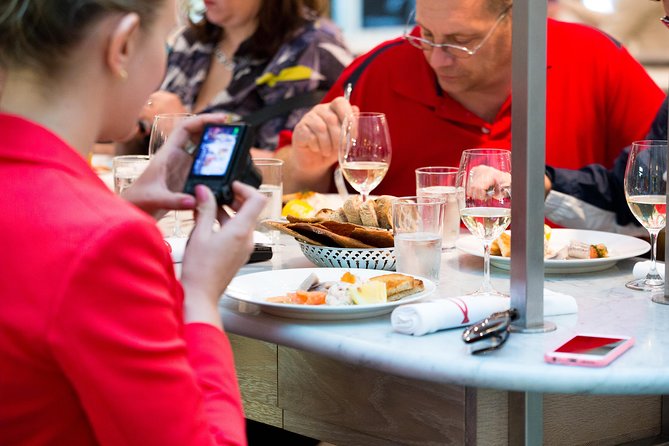
The tasting includes local seafood and a glass of white wine. For some people, this is one of the most enjoyable stops because you can sit down, eat at a relaxed pace, and watch Stockholm life around you. A sit-down seafood tasting was singled out as a welcome break during the route, and I can see why. After walking through central streets, a chair and a proper pause make a difference.
The wine is included, as is water, but additional drinks or food are not. If you want more than the planned portion, you pay for it yourself. The same applies to any market purchases you make along the way.
K25 also illustrates the tour’s balance. You are not getting only old-fashioned dishes. You are seeing a city where traditional ingredients appear in modern settings, alongside international influences and contemporary dining habits.
Same city, a different plate:
- Dubai: Old Town, Creek, Museums, Souks, & Street Food Tour
★ 4.8 · 10,816 reviews - Ho Chi Minh City Street Food Tour & Sightseeing By Motorbike
★ 5.0 · 9,413 reviews - Medellin: Comuna 13 Graffiti Tour, Cable Car & Street Food
★ 4.8 · 9,046 reviews - Dubai: Old Town, Souks, Street Food, Guided Tour & Abra Ride
★ 4.9 · 7,170 reviews
Hot chocolate and the candy side of Sweden
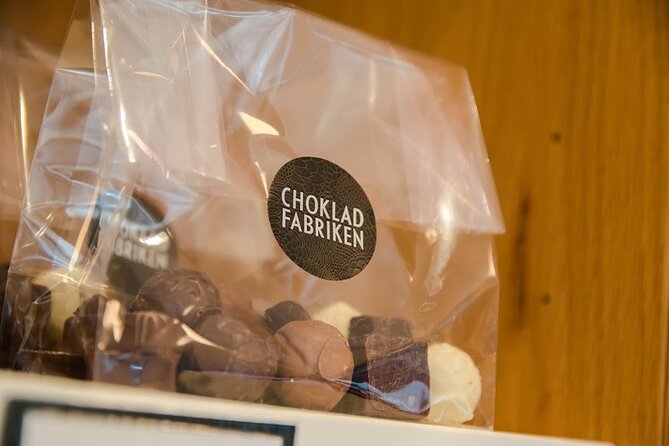
A stop at Chokoladfabriken adds a sweeter note. The hot chocolate is made with 65 percent cocoa and cardamom, a combination that gives it a fuller, more spiced flavor than a standard café drink.
This is a welcome warm-up in cold weather. A winter food walk can be pleasant, but standing outside between stops will test your clothing. Hot chocolate gives the route a practical pause as well as a dessert-like tasting.
The tour later includes candy in Gamla Stan, plus a serious encounter with Swedish licorice. Traditional Swedish licorice can be much saltier than what many people are used to, and the tasting is treated almost like a small culinary dare. You may find it fascinating, or you may decide that one sample is plenty. Either way, it is a memorable part of the tour because it introduces a flavor that many visitors would not choose on their own.
The candy stop works best if you approach it with curiosity rather than expecting familiar sweets. This is a chance to try something distinctly Scandinavian, not simply another chocolate sample.
Hötorget and the specialty counters
The next major food stop is Hötorget, home to another market hall and a range of stalls selling Swedish delicacies, produce, and prepared foods. The contrast with Östermalms Saluhall is useful. Instead of seeing one polished market, you get a second look at how Stockholm’s food shopping works in a different setting.
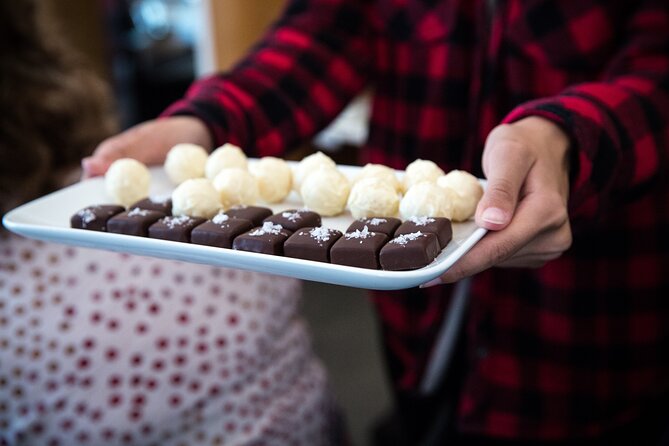
At P&B Delikatesser, the tastings can include handmade truffles, traditional licorice, and cloudberry jam. Cloudberries are especially interesting because they connect Swedish food with the northern countryside. The jam offers a bright, fruit-forward counterpoint to salty meats and rich cheeses.
Husmans Deli brings artisan cheese, while Fågel and Vilt focuses on cured meats. This is where you may encounter smoked reindeer and elk salami. The selection gives you a quick lesson in preservation, a key part of food culture in a northern climate.
The route also includes Norrlands Guld beer and fresh fruit from Lisbeth Janson Frukt and Grönt. These stops keep the tasting from becoming a parade of heavy foods. You move between savory, sweet, fresh, salty, creamy, and bitter flavors.
Some people find the portions at individual counters fairly small, especially if they expected a succession of full meals. The upside is that the total range is much wider. You are sampling many food traditions rather than filling up on one large dish.
Ending in Gamla Stan with fika
The tour ends in Gamla Stan, Stockholm’s Old Town. Its medieval lanes and architecture provide a fitting final setting, although the old streets can be uneven and crowded. The walk here is as much about the city as the food. You finish with a clearer sense of how the central neighborhoods connect, from fashionable Östermalm to the oldest part of Stockholm.
The final tasting is fika, the Swedish custom of taking a break with coffee and something sweet. You receive a kanelbullar, or cinnamon bun, with strong coffee. Fika is more than dessert. It is a social pause built into daily life, and it helps explain why cafés are such an important part of Swedish culture.
The cinnamon bun is also the one food item that may divide opinion. Most of the comments about the tour are strongly positive, but one person found the final bun dry and not especially tasty. That is worth knowing because the ending may feel less impressive if you are expecting a bakery masterpiece. The value of the fika lies as much in the custom and conversation as in the pastry itself.
The tour ends at Kindstugatan 1. That is convenient if you want to continue exploring the Old Town, but it is not hotel pickup. You will need to make your own way to the starting point and arrange onward transport after the final tasting.
How much food do you get for $122.32?
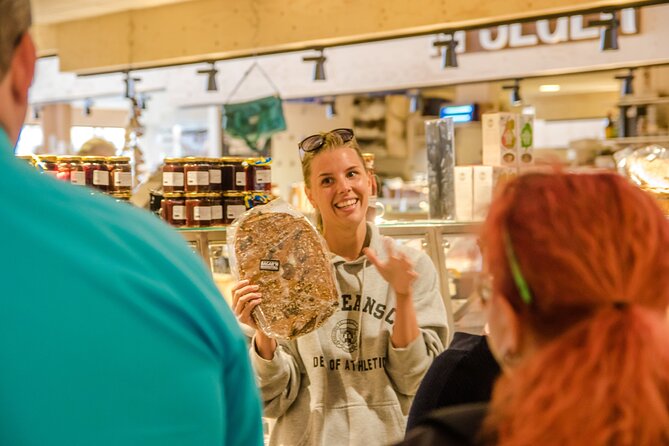
At $122.32 per person, this is not a cheap way to grab lunch. The price makes more sense if you value a guided city walk, a broad set of tastings, and the chance to visit several established food businesses without planning the route yourself.
You receive food samples, water, and a glass of wine, with beer and other tastings included as part of the planned stops. You also get four hours of guiding and local background. If you tried to recreate the same route alone, you might spend less or more depending on what you ordered, but you would lose the explanations and the organized progression from market to market.
I see the best value for a first visit to Stockholm, especially if you want help deciding which foods and shops deserve more of your time. It is also a good choice for solo visitors. One person was the only participant on a departure and still received the tour rather than having it canceled, while others enjoyed the chance to talk with the guide and fellow participants.
The value is weaker if you mainly want large portions or a leisurely restaurant meal. This is a tasting route, and some portions are modest. Think of the ticket as payment for food, orientation, and a moving introduction to Swedish life.
Guides, group size, and the walking pace
The maximum group size is 20. That is small enough for a personal experience when the departure is not full, but it is larger than some people expect from a food tour. One comment specifically noted that a group of 20 felt too large, especially because it took time for everyone to receive a sample.
Winter may be a good time to book if you prefer a smaller group. One departure had only six people, and another was private in effect because just one person showed up. Group size can change, so do not assume that a winter date guarantees a tiny party.
Guide quality is one of the strongest parts of the experience. Cotton is repeatedly praised for explaining food preparation, history, culture, and daily life. Teresa is described as warm and informative, while Sarah is noted for a friendly style and for making the seafood and fika pauses feel relaxed. Caoimhe is also praised for accommodating gluten-free and vegetarian needs on one departure.
The guides do not all lead in exactly the same way. Most of the feedback points to clear, engaging explanations, but one person found a guide’s voice too soft and pace too fast. If you have trouble hearing in a group, stay close and speak up early.
Who should book this food walk?
I would choose this tour if you want a first-day orientation to Stockholm through food. It gives you neighborhood context, practical ideas for later meals, and enough tastings to make Swedish cuisine feel less mysterious.
It suits curious eaters who want to try game meats, salty licorice, cloudberry jam, local seafood, and other foods they may not order alone. It also works well for solo visitors, couples, and families with older children who can handle four hours of walking and a wide range of flavors.
You should think twice if you want a slow restaurant-based tour, dislike walking, or need every sample to be substantial. The route requires moderate fitness, and the guide may move briskly between stops. Wear comfortable walking shoes and dress for the season, especially in winter.
Tell the company about vegetarian needs or food allergies when booking. The tasting plan cannot be changed once the tour has begun, so this is not the place to wait until the first market stop to explain a restriction.
Should you book the Nordic Food Walk Stockholm?
Book it if you want a generous first taste of Sweden that combines markets, modern food halls, historic streets, and local customs. The strongest reasons are the range of food, the knowledgeable guides, and the chance to learn what Swedish people eat beyond the familiar meatball stereotype.
Skip it if your priority is a long sit-down meal or a very small private group. At $122.32, the ticket is worthwhile when you use the tour as both lunch and city orientation, but less so if you plan to eat a full meal at every stop.
For the best experience, choose a time that fits your schedule, arrive ready to walk, and do not eat a large breakfast beforehand. Keep an open mind for the licorice, save room for fika, and write down the market stalls you want to revisit. Free cancellation is available up to 24 hours before the start time, which gives you some flexibility while planning.
FAQ
How long does the Nordic Food Walk Stockholm last?
The tour lasts approximately four hours.
Where does the tour start?
It starts at Beirut Café, Nybrogatan 29, 114 39 Stockholm, near Östermalms Saluhall.
Where does the tour end?
The tour ends at Kindstugatan 1 in Stockholm’s Old Town, also known as Gamla Stan.
What food and drinks are included?
Included tastings can feature Swedish meatballs, seafood, cheeses, cured meats, reindeer, elk salami, fruit, candy, licorice, cloudberry jam, hot chocolate, and fika with a cinnamon bun and coffee. Water and a glass of wine are included.
Is hotel pickup included?
No. Hotel pickup and drop-off are not included.
Can I join if I am vegetarian or have food allergies?
Yes, but you must provide that information when booking. The tasting plan cannot be changed after the tour has started.
How large is the group?
The maximum group size is 20 people. Some winter departures may be much smaller.
Can I cancel for a full refund?
Yes. You can cancel at least 24 hours before the experience start time for a full refund. Changes or cancellations made less than 24 hours before the start time are not accepted or refunded.
Just added around the world
- 1 Istanbul Tour: Highlights, Street Food & Hidden Pearls★ 5.0 · 9 reviews
- Evening Hyderabad Street Food Walk with Hyderabad Biryani★ 4.5 · 24 reviews
- Hyderabad Street Food Crawl (2 Hours Guided Food Tasting Tour)★ 4.0 · 5 reviews
- Japanese Street Food Class in Beech Grove★ 5.0 · 9 reviews
- Small-group Street food tour in Ischia★ 3.5 · 2 reviews
- Hyderabad : Evening Street Food Tasting with Guided Old City Tour★ 5.0 · 10 reviews
- Hyderabad Street Food Experience with Local Expert★ 4.5 · 2 reviews
- Walking street food tour★ 4.5 · 7 reviews
Street Food Walking Tours, compared.
New Orleans Food Walking Tour of the French Quarter with Small-Group Option
Read our review →
Naples: Street Food Walking Tour with Local Guide
Read our review →
Tokyo Tsukiji Fish Market Food and Culture Walking Tour
Read our review →
Private Street Food Evening Walking Tour in Ho Chi Minh City
Read our review →
SoHo, Little Italy, and Chinatown Walking Tour in New York
Read our review →
Rome: Guided Food Walking Tour with Wine in Trastevere
Read our review →