REVIEW · INDIA STREET FOOD TOURS
Agra: Street Food Walking Tour, Spice Market, & Tuk-tuk Ride
Old Agra comes alive in the lanes behind the Taj Mahal, where a tuk-tuk drops you near spice stalls, jewelry shops, temples, and food counters packed with local life. The best part is the contrast: one moment you are studying Mughal architecture at Jama Masjid, and the next you are eating hot snacks in a narrow alley.
I like the small-scale local feel and the way guides such as Farman and Amir help you find streets you would struggle to navigate alone. I also like the range of tastes, from samosa and dosa to aloo tikki, sweets, and chai in a clay cup. The main drawback is that this is a food tasting walk with snacks, not a full restaurant dinner, and some visitors are taken to handicraft shops where a sales pitch may follow.
Key points at a glance
- Old Agra beyond the Taj Mahal: Walk through market lanes, religious sites, workshops, and shopping streets that most half-day Taj visits miss.
- Food in small portions: Try samosa, dosa or chole bhature, aloo tikki, pani tikki, local sweets, masala tea, and seasonal treats such as gajar ka halwa.
- Two major places of worship: Visit Jama Masjid and Shri Mankameshwar Mandir, with guidance on their architecture and customs.
- Tuk-tuk transport included: Pickup and return are offered from hotels, railway stations, or another agreed location in Agra.
- Strong guide reputation: Farman and Amir are repeatedly praised for clear English, local insight, patience, and helping visitors feel safe in crowded streets.
- Good value at $14: The price covers the guide, transport, and food if you select the food option, but drinks and monument admission are extra.
Why this is a useful second look at Agra
Agra is often reduced to one spectacular building. The Taj Mahal deserves its fame, of course, but it tells only one part of the city’s story. This tour moves into Old Agra, where markets, shrines, workshops, traffic, and food stalls show how the city works day to day.
I particularly like this as a first-evening activity. You get your bearings quickly, learn which parts of the old city connect to one another, and see the streets at a lively time of day. Several people also used the guide to ask about later shopping, local sweets, and onward transport.
The experience lasts about two to three hours. Roughly 15 minutes of tuk-tuk travel each way connects your pickup point with the old city, while the walking and stops take the larger share of the time. One useful expectation to set is that the walking section can last around 90 minutes, with the rest split between driving, sightseeing, food, and craft visits.
More Street Food Market Tours in India
- Mumbai: Street Food and Night Markets Tour
★ 4.9 · 719 reviews - Delhi Food Walk: Rickshaw Ride, Street Eats & Market Tour
★ 5.0 · 401 reviews - Old Delhi: Private Tour of Chandni Chowk, Tuk Tuk & Food
★ 4.9 · 345 reviews
Getting there by tuk-tuk
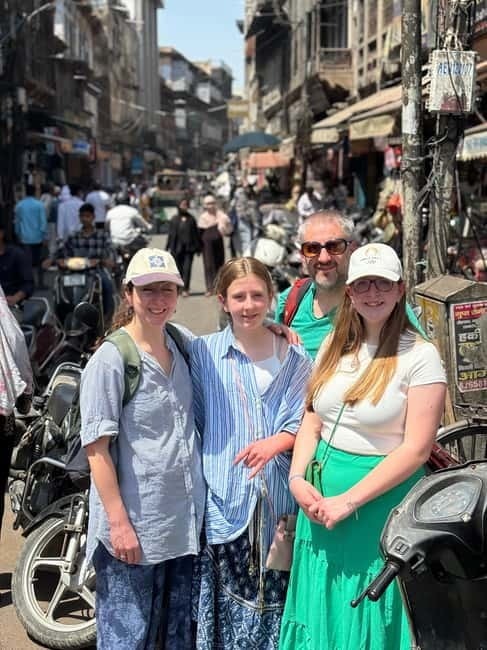
Pickup is available at your Agra hotel, railway station, or another agreed location. The tuk-tuk is not just a practical transfer. It gives you an immediate look at Agra’s traffic and street life, and the ride can be exciting in the close-packed city roads.
That excitement is not for everyone. Traffic can feel intense, especially if you are not used to Indian city driving. The drivers used for the tour are repeatedly described as careful, and the guide stays with you during the walking sections. Still, keep your belongings secure, follow local traffic advice, and expect noise, crowds, and sudden movement.
A private tuk-tuk also makes this easier than trying to arrange several short rides yourself. Pickup was reported as punctual, and return to the original departure point is included. If your hotel is outside central Agra, confirm the pickup details when booking.
Jama Masjid and the Mughal center
The first major stop is Jama Masjid, also called Jama Mosque. It is one of India’s largest mosques and an important example of Mughal design, with broad courtyards and carefully planned architectural details.
The guide explains the building rather than leaving you to take a few photographs and move on. That matters in Agra, where the same Mughal period appears in several monuments but each site has a different purpose and mood. At the mosque, you get a better sense of the religious and civic life around the old center.
Dress with care. Your clothes should cover your shoulders and knees, and you should follow instructions about footwear and behavior at the mosque. The visit is listed at about 30 minutes, enough for a guided look without turning this into a long monument tour.
Mankameshwar Temple and living faith
A short walk leads to Shri Mankameshwar Mandir, a Hindu temple dedicated to Lord Shiva. The temple brings a different religious tradition into the same compact old-city route.
This is one of the tour’s most interesting contrasts. Within a short distance, you move from a major mosque shaped by Mughal architecture to an active Hindu place of worship. The focus is not simply on the building. Your guide helps explain the customs and local faith that give the site meaning.
Some descriptions of the temple place its age at around 5,000 years, a detail that adds to its appeal but should be treated as a traditional historical claim rather than a precise modern dating statement. The practical point is clear: this is an old and important place of worship, not a staged attraction.
Again, modest clothing is required. The lanes around the temple can be tight and crowded, so comfortable shoes are a real help.
More Street Food Tours by Motorbike in India
- Delhi: Old Delhi Street Food Tour with Rickshaw Ride
★ 4.9 · 403 reviews - Delhi: Old Delhi City Tour with Tuk-Tuk Ride & Street Food
★ 4.8 · 88 reviews - Delhi: Private Chandni Chowk, Food Tasting, & Tuk-Tuk Tour
★ 4.8 · 68 reviews - Delhi: Old Delhi City Tour with Tuk Tuk Ride & Street Food
★ 4.9 · 46 reviews
Food stops in Seth Gali
Seth Gali is where the tour shifts from architecture to eating. This narrow market area provides the setting for small tastings rather than a formal sit-down meal.
The exact selection can vary, but the advertised choices include:
- Samosa
- Dosa or chole bhature
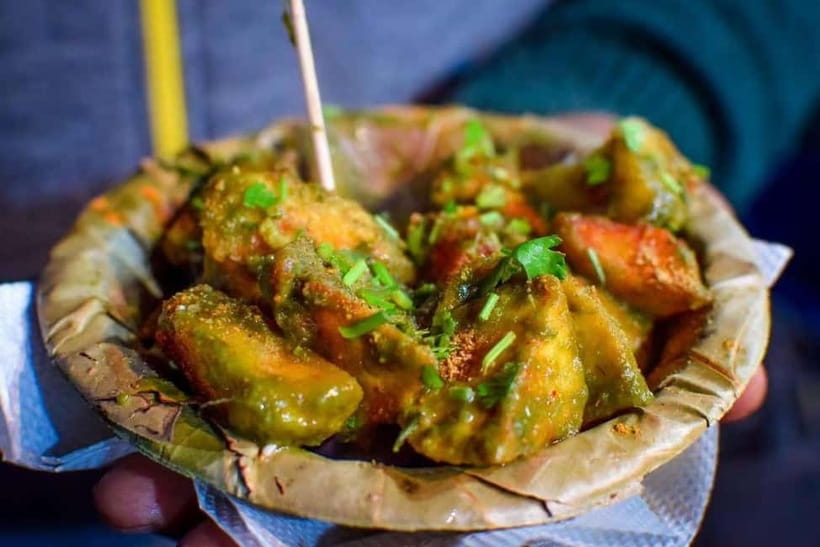
- Aloo tikki
- Pani tikki
- Local sweets
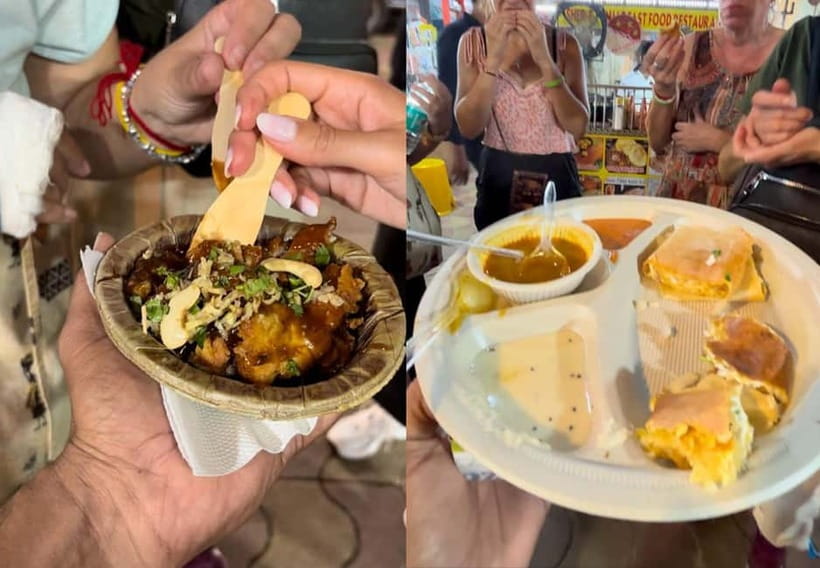
- Masala tea served in a clay cup
You might also try bhalla with curry, biryani, barfi, chom chom, chlokari, sweet naan called sheermal, or gajar ka halwa when it is available in winter. That range is one reason the tour works well for people who want an introduction to North Indian street food without ordering several full plates.
The food is generally served in small portions at more than one stop. Even so, the tastings can add up to a satisfying meal. One useful distinction: the tour is best understood as a snack-focused food walk, not a dinner reservation. If you are hungry, select the food option and tell the guide about your preferences early.
Vegetarian eating is possible, and one family chose vegetarian food throughout the route. If you have allergies, medical dietary needs, or strong concerns about street food hygiene, speak with the provider before booking. The activity is not recommended for people with pre-existing medical conditions, and the supplied information does not promise special dietary arrangements.
Rawatpara Road and Agra’s spice trade
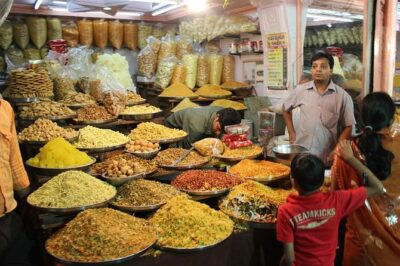
Rawatpara is Agra’s well-known spice market, and it brings some of the strongest sensory moments of the walk. You will see sacks, displays, and shops connected with Indian cooking, while the smell of spices hangs in the air.
This stop is valuable because it adds context to the food you have just eaten. Instead of treating Indian dishes as mysterious combinations of flavor, you can see the ingredients in the market and ask how they are used. You may also have time to look at teas, spices, and other small purchases.
Shopping is part of the experience, but it should not become an obligation. The market is a good place to browse, compare prices, and buy modest gifts if something catches your eye. Keep your purchases manageable, since you will continue walking and riding afterward.
Kinari Bazaar and the craft stops
Kinari Bazaar is one of Old Agra’s busiest shopping areas, known for traditional jewelry, textiles, embroidery, and handicrafts. The lanes can feel like a maze, which is exactly why a local guide is useful here.
You can ask about the difference between browsing and buying, and the guide can point out streets or products that would be hard to identify on your own. Some visitors bought teas, spices, sweets, jewelry, or textiles during the walk.
There is an important caution. The route may include a workshop or showroom where you are shown rug weaving, marble inlay, embroidery, jewelry, or other Indian crafts. The demonstrations can be interesting, and some people enjoyed learning how the work is made. But a craft visit can also turn into a firm sales pitch, particularly if you are left alone with the sales staff.
Go in with a simple plan. Say clearly that you are only looking, and do not feel required to purchase anything. The experience is better when you regard these stops as optional browsing rather than part of the food or history program. If you strongly dislike shopping pressure, ask before departure whether craft visits can be skipped.
How the guides shape the experience
The guide is the key to this tour. Farman and Amir are the names most often associated with the experience, and both are praised for clear English, good local explanations, friendly conversation, and calm handling of crowded streets.
A good guide makes a major difference in Old Agra. The small lanes are easy to lose track of, traffic can appear from every direction, and religious sites require respectful behavior. The guide helps with all three. Several solo women also valued the sense of care during the walk, especially when dealing with traffic, crowds, or unwanted attention.
The tour is offered in English and Spanish. The guide can also help with photographs, local recommendations, and shopping questions. One visitor even received advice on films after a conversation about Bollywood, while another was helped with sunglasses and onward transport. These details suggest a fairly personal style, though the exact guide and pace depend on the day.
Timing, clothing, and comfort
Suggested start times change with the season. In winter, the recommended window is between 2 p.m. and 4 p.m. In summer, it shifts to between 4 p.m. and 6 p.m. This timing gives you a cooler part of the day and suits the evening energy of the markets.
Wear comfortable walking shoes and loose, comfortable clothes. Cover your knees and shoulders for the mosque and temple. The route includes traffic, uneven lanes, food stops, and time on foot, so sandals or shoes with poor support may become tiring.
The tour is not suitable for pregnant women or people with pre-existing medical conditions. Alcohol and drugs are not allowed. Drinks are not included, so carry or purchase water separately, subject to the provider’s arrangements.
What $14 really buys you
At $14 per person, this is a low-cost way to add a substantial local experience to a Taj Mahal visit. The value comes from the combination of private local guiding, tuk-tuk transport, hotel pickup and drop-off, and street-food tastings if you select that option.
The food option is not automatically the best deal for every person. One useful approach is to compare the included tastings with the cheaper option without food, then decide whether you prefer a fixed selection or buying small items as you go. Local food is usually inexpensive, and you may have more control over portions if you pay directly at each stop.
The price does not include monument entrance tickets or drinks. The route is mainly a guided look at religious sites, markets, streets, and food counters, so do not book it expecting a pass to major Agra monuments. It is a supplement to the Taj Mahal and Agra Fort, not a replacement for them.
Free cancellation is available up to 24 hours before the start, and you can reserve now and pay later. That flexibility helps if your Taj Mahal time, train, or hotel arrival changes.
Who will enjoy this most
I would choose this tour if you want to see the old city but do not feel ready to navigate it alone. It suits first-time visitors, solo visitors, couples, families with older children, and anyone who wants a short cultural activity between major monuments.
It is especially useful for people who enjoy trying many small dishes rather than sitting down for one large meal. The route also works well for photographers, shoppers, and anyone curious about the connection between food, markets, religion, and craft.
I would think twice if you want a quiet, polished outing. Old Agra is noisy, crowded, and intense. Street food is served in local settings rather than Western-style restaurants, and the tuk-tuk ride can feel thrilling. People who are cautious about hygiene, crowds, or sales visits should ask questions before booking.
Should you book the Agra street food walk?
Yes, if you have already planned the Taj Mahal and want a better sense of Agra beyond its grand monuments. The strongest reasons to book are the local guide, the easy tuk-tuk transport, the walk through markets that are difficult to understand alone, and the chance to taste several regional snacks in one evening.
Book with realistic expectations. You will get food tastings, not a long restaurant meal. You may visit a craft showroom, and you should be ready to decline purchases. If that sounds acceptable, $14 buys a lively, useful introduction to Old Agra, with Farman or Amir helping you move through its streets with confidence.
FAQ
How long does the Agra street food tour last?
The activity lasts about two to three hours, including tuk-tuk transfers, sightseeing, walking, market visits, and food tastings.
Where does pickup take place?
Pickup is available from your hotel, railway station, or another agreed location in Agra.
Is tuk-tuk transport included?
Yes. Tuk-tuk transfer from your pickup point to the old city and return to the original departure point are included.
Which places of worship are visited?
The route includes Jama Masjid and Shri Mankameshwar Mandir, a temple dedicated to Lord Shiva.
What food can I taste?
The advertised tastings include samosa, dosa or chole bhature, aloo tikki, pani tikki, sweets, and masala tea in a clay cup. Other local items may include bhalla, biryani, barfi, and seasonal gajar ka halwa.
Are food tastings included in the $14 price?
Street food snacks and sweets are included if you select the food option. Check the available option when booking, since a cheaper version without food may also be offered.
Are drinks included?
No. Drinks are not included in the activity price.
What should I wear?
Wear comfortable clothes and shoes. Your shoulders and knees should be covered because the route visits a mosque and a temple.
What languages are available for the guided tour?
The tour is offered with a live guide in English or Spanish.
More Street Food Rides in India
- Old Delhi: Private Tour of Chandni Chowk, Tuk Tuk Ride
★ 5.0 · 44 reviews - Agra: Sadar Bazar Food Market Night Walking Tour by Tuk-Tuk
★ 4.9 · 25 reviews - Agra: Street Food Tour with Spice Market on Tuk-Tuk Ride
★ 4.7 · 23 reviews - Agra: Street Food and Walk Tour with Spice Market by Tuk-Tuk
★ 5.0 · 18 reviews
More Street Food Walking Tours in India
- Jaipur Bazaar & Food Walking Tour
★ 5.0 · 281 reviews - Jodhpur Blue City Heritage Walking Guided Tour
★ 5.0 · 240 reviews - Heritage Walk & Street Food Tasting in Jaipur
★ 5.0 · 158 reviews - Private Guided Non-Veg Street Food Walking Tour in Muslim Quarter
★ 5.0 · 140 reviews
Just added around India
- Evening Hyderabad Street Food Walk with Hyderabad Biryani★ 4.5 · 24 reviews
- Hyderabad Street Food Crawl (2 Hours Guided Food Tasting Tour)★ 4.0 · 5 reviews
- Hyderabad : Evening Street Food Tasting with Guided Old City Tour★ 5.0 · 10 reviews
- Hyderabad Street Food Experience with Local Expert★ 4.5 · 2 reviews
- Food Walk Tour Chennai★ 4.0 · 19 reviews
- Sowcarpet Street Food Walking Tour in Chennai with guide★ 5.0 · 83 reviews
- Food Walk Tour Bangalore★ 5.0 · 2 reviews
- Old Bangalore: Cultural & Food Walk★ 5.0 · 2 reviews
India Street Food Tours, compared.
Delhi: Old Delhi Street Food Tour with Rickshaw Ride
Read our review →
Delhi Food Walk: Rickshaw Ride, Street Eats & Market Tour
Read our review →
Old Delhi: Private Tour of Chandni Chowk, Tuk Tuk & Food
Read our review →
Old Delhi Street Food Tour – Explore Spices in Chandni Chowk
Read our review →
Chandni Chowk Delhi Food Tour with 15+ Tastings
Read our review →