
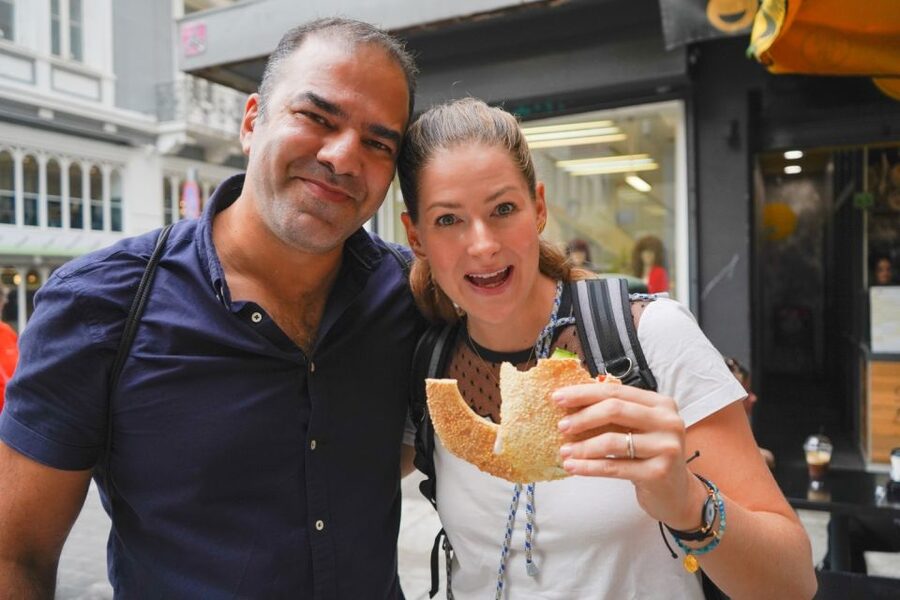
REVIEW · ATHENS STREET FOOD TOURS
Athens: Greek Street Food Tour
Athens reveals itself through its food, and this 2.5-hour street food walk gives you a generous serving of the city in a short time. You move from Monastiraki through Psyrri, Athinas, Evripidou, and Romvis, eating in local bakeries, food shops, and casual eateries rather than sitting down for one long meal.
I like the broad menu, from a sesame-covered koulouri and crisp phyllo pie to souvlaki, peinirli, and loukoumades. I also like the guides’ personal touch. Kat, Lucas, Greg, Orestes, and others have been praised for mixing food knowledge with stories about Athens, Greek culture, and daily life.
The main catch is that the Central Market is not open on Sundays or during weekday and Saturday evening tours, so the route and tastings can change. The walk is not suitable for wheelchair users or people with gluten intolerance, and vegan, lactose-free, and low-carb choices are limited.
Key points to know before you book
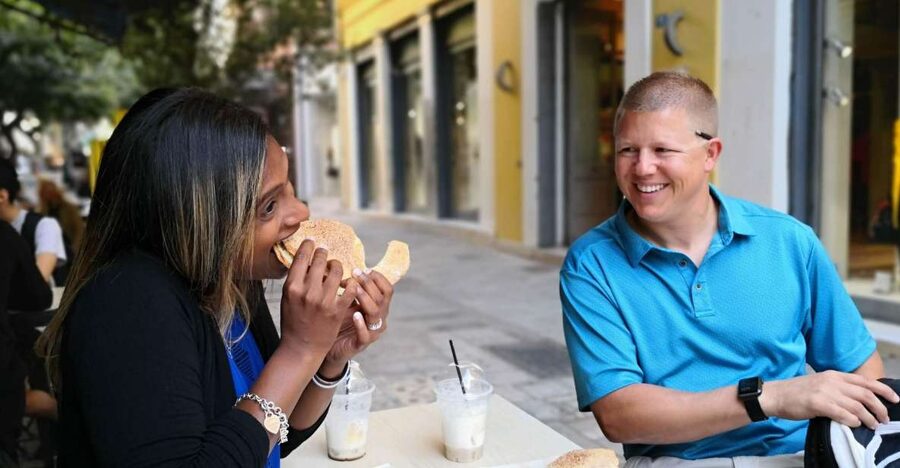
- A full meal in small bites: The food adds up quickly, so arrive hungry and keep dinner plans light.
- A real look at central Athens: The route passes through Monastiraki, Psyrri, Athinas, Evripidou, Romvis, and Agia Irini Square.
- The Central Market depends on timing: Daytime tours may include the market, while evening and Sunday routes use other food stops.
- Guide quality is a major strength: Guides including Kat, Lucas, Greg, Orestes, Christina, and Dimitri have been praised for warmth, humor, history, and food advice.
- Good value at $67: You receive several substantial tastings, a drink, a guided walk, and practical tips for eating in Athens.
- Dietary limits matter: Gluten-free options are limited, and the tour is specifically marked unsuitable for people with gluten intolerance.
Why this food walk works well as an Athens introduction
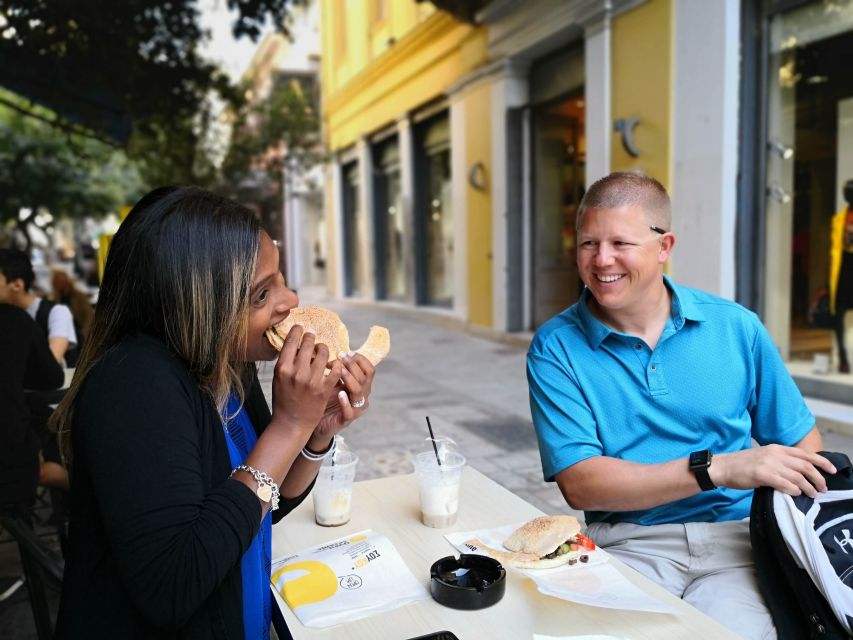
The best time to take this tour is near the start of your stay. It gives you a quick map of central Athens, introduces dishes you may not recognize, and points you toward places you can return to later.
This is not a cooking class, and it is not a formal restaurant crawl. You are walking between stops, tasting food in several settings, and listening to an English-speaking local guide explain what is on your plate. The city becomes part of the meal.
The route is also useful for getting oriented. Monastiraki, Psyrri, Athinas, and the streets around Agia Irini Square are close together but feel different from one another. You will see shopping streets, food businesses, market activity, bakeries, casual eateries, and older central neighborhoods. The tour gives you a reason to pay attention to the details instead of simply passing through on the way to the Acropolis.
I especially like the balance between famous Greek foods and less familiar choices. Most people know gyros. Fewer know what peinirli is, or how many forms Greek pies can take. A good guide helps you understand the difference, rather than handing you food without context.
A few more street food tours around Athens worth a look
- Athens: Street Food Tasting Tour
★ 4.9 · 3,343 reviews - Athens Street Food Walk
★ 5.0 · 385 reviews - Athens Street Food Tour: Explore City’s Iconic Eateries
★ 5.0 · 155 reviews
Starting at Athinas 7 near Monastiraki
The meeting point is at Athinas 7, in front of the Lonis pastry shop. If you arrive by metro, use the Monastiraki station exit for Athinas Street.
This is a busy central area, so arrive early. The meeting point is specific, but the surrounding streets can be crowded and confusing if you are rushing. You should also check the exact departure time when booking, since the activity runs at different times.
The tour returns to Athinas 7 after the final stop. There is no transfer included, which is not a serious issue for a central Athens walk, but you need to make your own way to and from the meeting point.
The guide leads in English. Private groups are available, while the standard format gives you a social walk with other people. Past groups have ranged from families to small groups of friends, and the walking pace has been described as easy. Still, you will be on your feet and moving between several stops, so comfortable shoes are sensible.
Monastiraki and the first taste of Athens
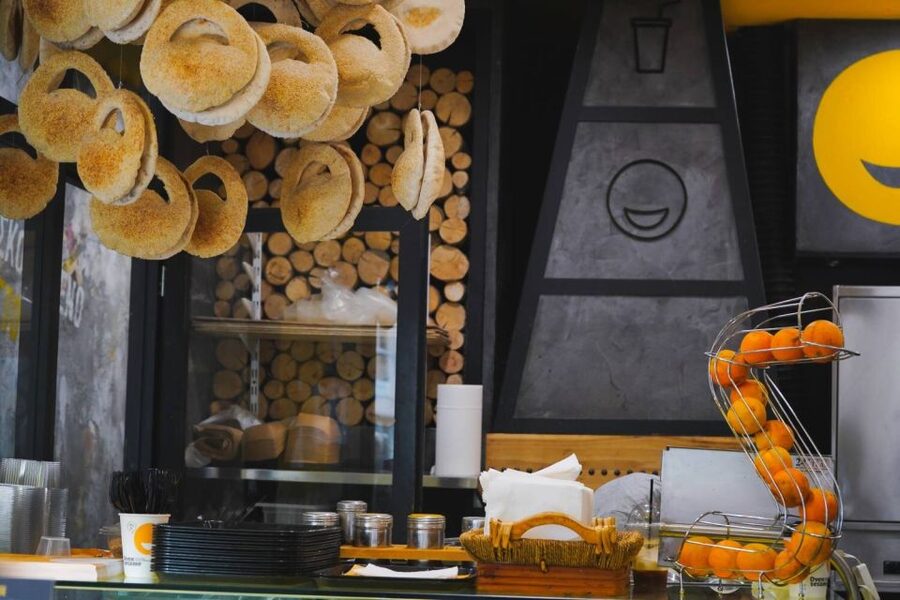
The first food stop is in Monastiraki, with about 30 minutes set aside for tasting. This is a strong place to begin because it quickly puts you in the middle of central Athens.
One of the first foods you may try is koulouri, the familiar Greek sesame ring. It looks simple, but it is an everyday staple rather than a grand restaurant dish. You can think of it as a practical Greek breakfast or snack, with a firm, sesame-covered crust and a chewy center.
This opening bite sets the tone. The tour is not trying to make every dish fancy. It is showing you what people actually grab from bakeries, street counters, and neighborhood food shops.
Monastiraki also gives the guide room to talk about how food fits into city life. Several guides, including Kat, Lucas, and Greg, have been praised for adding local stories and personal details instead of giving only a list of ingredients. That makes a difference, especially if you are new to Greek food.
Psyrri brings the street-food energy
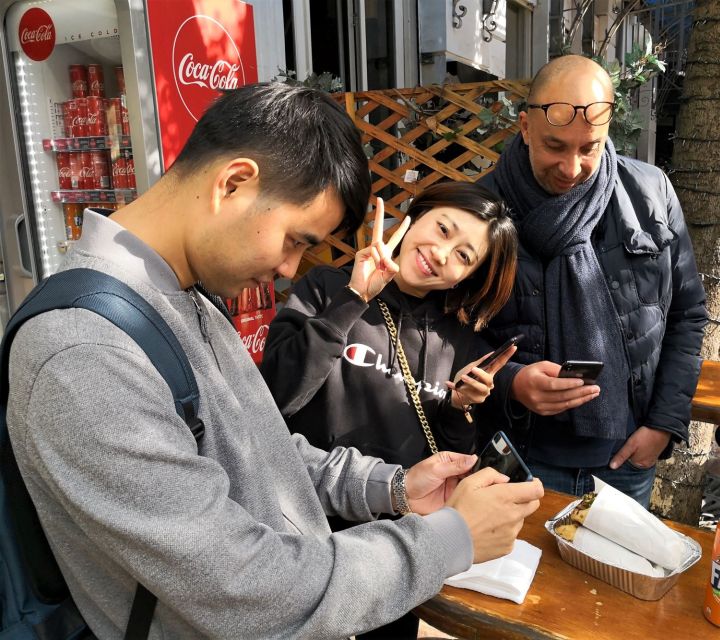
The route then moves into Psyrri for another street-food stop of around 30 minutes. This neighborhood is a useful contrast to the more obvious tourist paths around Plaka.
Here, the food is likely to feel more casual and immediate. You might stop at a small eatery or food counter and eat as part of the group before moving on. The point is not just to sample one dish. It is to understand how several small businesses fit into the daily rhythm of the area.
The guide may also share tips about places to revisit. That is one of the tour’s most useful features. Some food tours end when the last sweet is served. This one aims to leave you with ideas for the rest of your Athens stay, including bakeries, dessert shops, tavernas, and market businesses.
Families can also manage this section well. One guide was specifically praised for keeping children aged 7 and 10 interested by explaining the food in a way they could follow. The walk is not presented as a long history lecture, which helps keep the pace comfortable.
Same city, a different plate:
- Greek Food Walking Tour in Athens
★ 5.0 · 4,740 reviews - Athens: Guided Greek Food Walking Tour with Tastings
★ 4.9 · 2,859 reviews - Athens: Food Market Visit and Cooking Class with Wine
★ 4.9 · 1,087 reviews - Athens Authentic Greek Food Walking Tour (Small Group)
★ 5.0 · 809 reviews
Athinas Street and the city’s everyday flavors
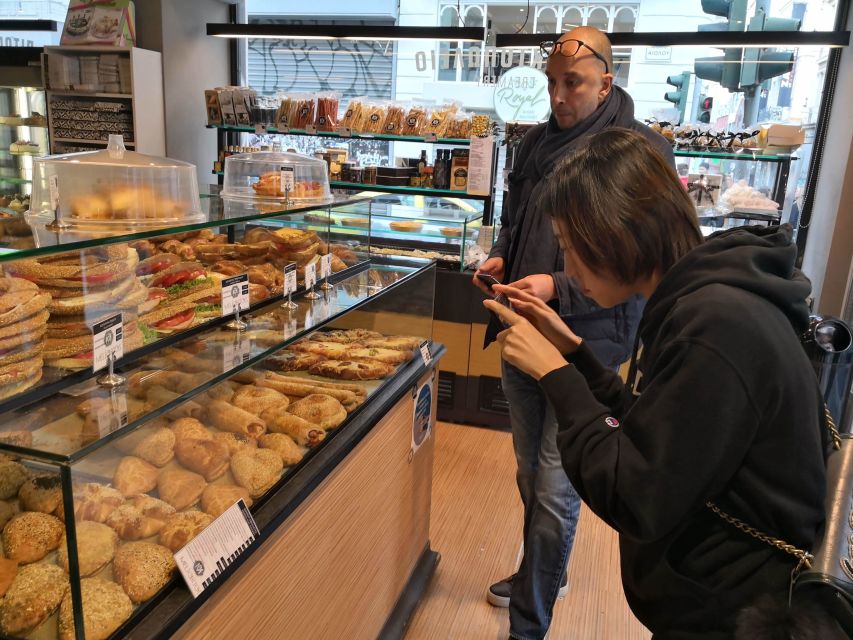
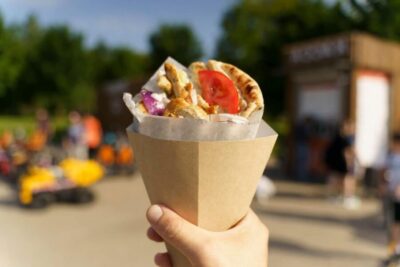
The next stop is in the Athinas area, with about 20 minutes for street food. This is where you may taste the quintessential Greek fast meal: souvlaki or gyros served in pita.
The distinction is useful. Souvlaki usually refers to grilled pieces of meat, while gyros is meat cooked on a vertical spit and shaved into the pita. In either case, you can expect a filling combination of meat, bread, and the usual accompaniments. The guide can explain what you are eating and how locals order it.
This is one of the most substantial tastings, so do not arrive after a large lunch. Several people have been surprised by how much food comes later. You are not simply nibbling on samples. By the middle of the walk, you may already feel as if you have had a proper meal.
The food is also a good test of the tour’s value. If you bought every dish separately, along with a drink and dessert, the cost would add up. At $67 per person, this is not the cheapest way to eat a koulouri or gyro, but the price includes the guide, several stops, the walking route, and enough food to replace a meal for many people.
Evripidou and the Central Market area
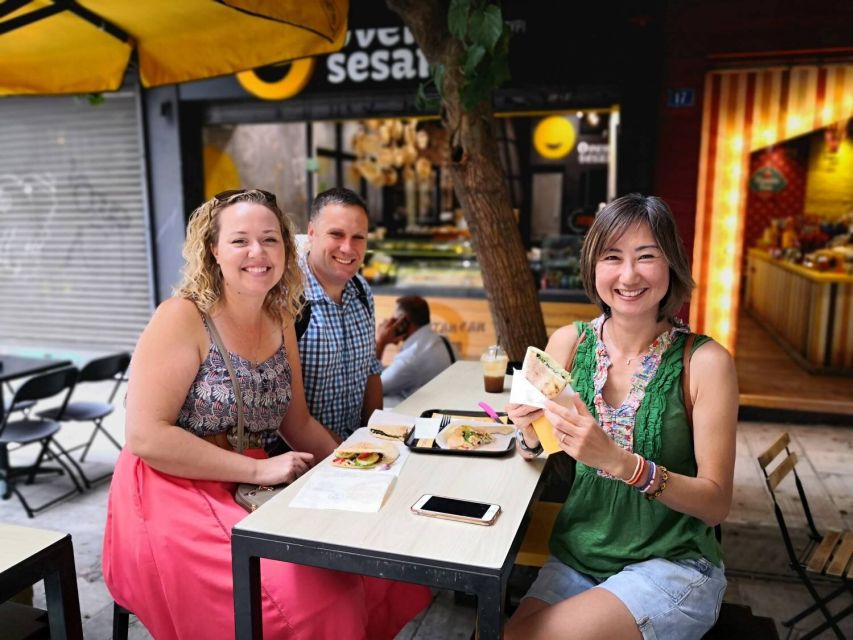
The Evripidou stop lasts about 30 minutes and brings you toward Athens’ central food market area. This is one of the more distinctive parts of the route, especially on a daytime tour when the market is operating.
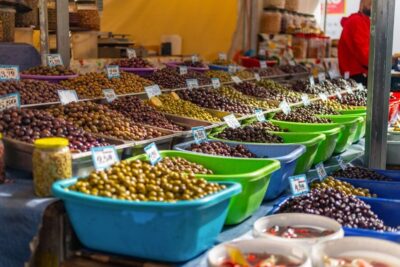
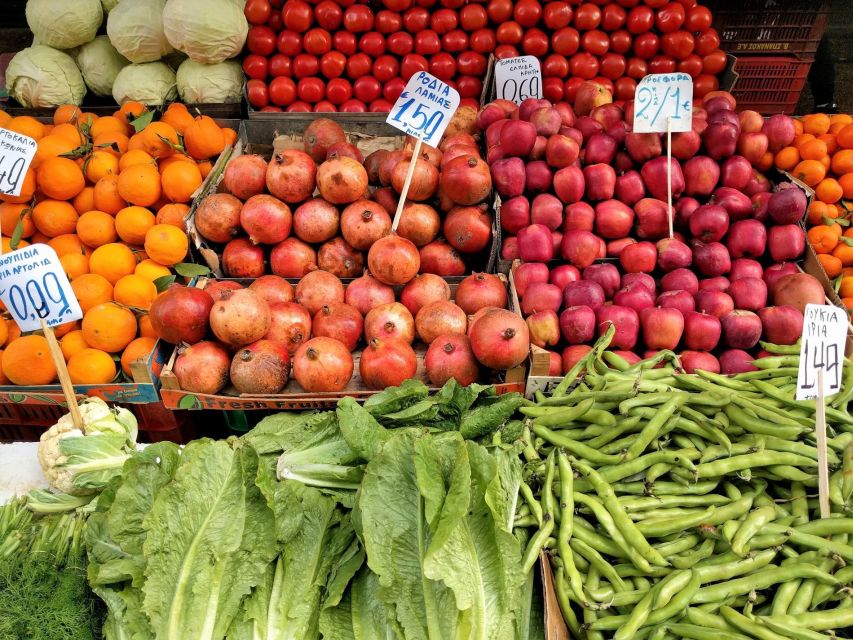
You may see the ingredients that support Athens’ restaurants and home kitchens: meat, fish, herbs, spices, and other everyday products. The market is not polished for sightseeing. That is part of its value. It shows food as work and commerce, not just as a finished dish.
A traditional Greek pie is also part of the tasting. Expect crisp phyllo pastry with a savory filling, with spinach pie being one possibility. The thin pastry gives the bite a very different texture from pita bread or the dough used for peinirli.
Market access depends on your departure time. The food market is closed on Sundays and does not operate during evening hours. It is also closed on weekday and Saturday evenings, so the operator may replace this section with other shops or eateries. If seeing the market matters to you, select a daytime departure and confirm the current route.
This timing issue is worth taking seriously. The tour still offers food when the market is closed, but the experience will not be identical. A daytime route gives you more of the working-market atmosphere, while an evening route may offer a livelier meal-focused walk through open restaurants and food counters.
Romvis and the peinirli stop
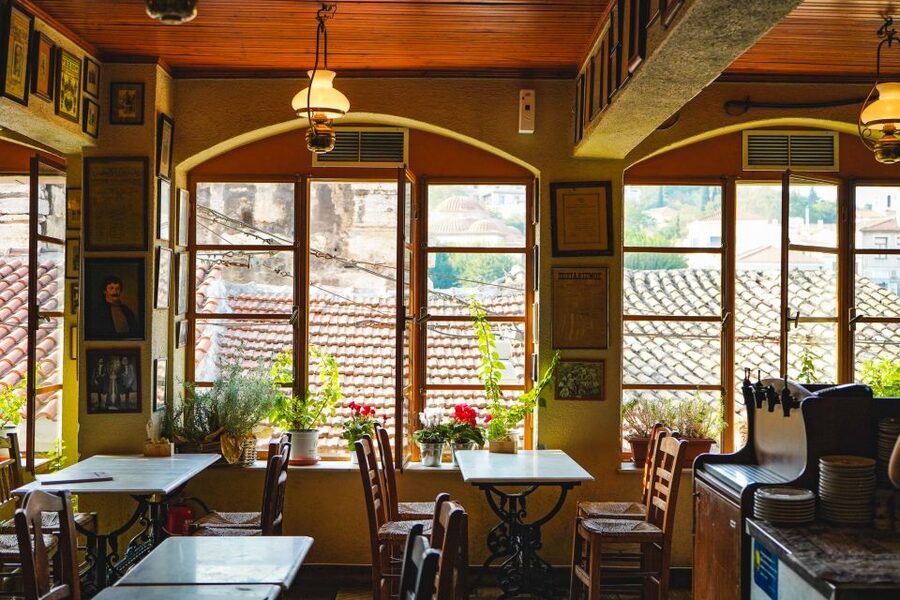
The walk continues to Romvis for another 30 minutes of street food. One of the most interesting foods on the menu is peinirli, a Greek-style pizza boat.
Peinirli is made with a boat-shaped piece of dough, a special cheese mixture, and a crisp edge. It is not quite pizza and not quite a filled pastry, which is why it is worth trying with a guide who can explain where it fits in Greek food culture.
This stop adds variety to the meal. By now you have had sesame bread, phyllo pastry, pita, and possibly meat. The peinirli introduces a softer, doughier base with melted cheese and a baked crust.
The schedule gives you time to sit together at some points, rather than eating every bite while standing. One evening group described a shared meze-style pause, along with drinks and several different venues. The precise arrangement may change, but you should expect a mix of walking, standing tastings, and time to eat as a group.
Agia Irini Square and the final sweet
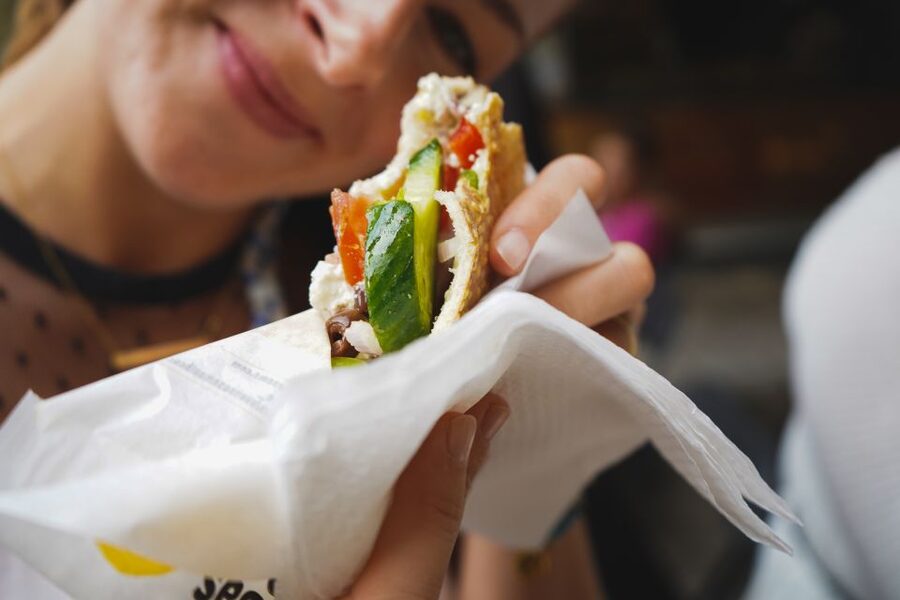
The final walk takes about 10 minutes and leads back toward Agia Irini Square before returning to Athinas 7. By this point, the route has covered a compact but varied part of central Athens.
Dessert is usually loukoumades, Greece’s answer to a doughnut. These small fried pieces are crisp outside and soft inside, often served with sweet toppings. They make a fitting end to a tour that has moved from plain everyday bread to savory pies, grilled meat, baked dough, and finally something sweet.
Some guides have also included honey or led groups to a dessert shop. Treat those as possible extras rather than guaranteed stops, since the route changes by day, time, and availability.
You may want to carry a small bag. Several people have found there was enough food for leftovers, especially on evening tours. That is a pleasant problem, but it is better to be prepared than to spend the last hour trying to finish everything on the spot.
What your guide adds to the food
The dishes are only half the experience. The guide is the person who connects them.
The strongest guides on this route have included Kat, Lucas, Greg, Orestes, Christina, Dimitri, Fotis, Konstantina, Katarina, and Eleni. Individual guides change, so you cannot book a particular person unless the operator confirms it, but the repeated praise for the guiding team points to an important strength.
You can expect explanations of ingredients, food origins, Greek customs, and the neighborhoods you pass through. Some guides have also discussed mythology, social issues, family food traditions, and the way small businesses serve the city.
I would value this most if you are not already familiar with Greek food. A plate of spinach pie is pleasant on its own. Learning how phyllo is handled, why the pastry is so crisp, or how a local might eat it gives the dish more meaning.
The guides also appear attentive to the group. Past tours included help with water during hot afternoons, answers to questions, and adjustments for different tastes where possible. That does not remove the tour’s dietary limits, but it can make the walk feel more personal.
Food quantity, dietary limits, and comfort
Come hungry. The included tastings are koulouri, souvlaki or gyros, peinirli, phyllo-crust pie, a traditional dessert, and beer or another refreshment. The portions are substantial enough that many people describe leaving full, with food left over.
The tour is not a good match for a strict gluten-free diet. Bread, pastry, pita, and peinirli are central to the menu, and the activity is specifically marked unsuitable for people with gluten intolerance.
You should report allergies and dietary restrictions when booking. Vegan, lactose-free, and low-carb options are limited. The guide may help where possible, but you should not book expecting a fully adapted menu.
Drinks include beer or refreshments. Depending on the route, you might also encounter wine or raki, but these should not be treated as guaranteed inclusions. If you do not drink alcohol, ask for a nonalcoholic choice at the stops.
The walk is not suitable for wheelchair users. The central streets, food businesses, and changing route make access difficult, and the operator does not list the activity as wheelchair accessible.
Is $67 a fair price?
At $67, I see this as a good-value food tour if you count it as both a meal and a guided city walk. You receive several dishes, a drink, an English-speaking guide, and an introduction to areas you might not explore with the same purpose on your own.
It is less appealing if you only want one or two cheap snacks. Athens makes it easy to eat inexpensively, and you could certainly buy a koulouri or gyro for far less than the tour price. The extra cost pays for the route, organization, explanations, and the chance to try several different foods without guessing where to go.
The 2.5-hour duration is also well judged. It is long enough to eat seriously, but short enough to leave you time for another activity. The walking is spread between food stops, and the route ends close to where it began.
Free cancellation is available up to 24 hours before the activity, and you can reserve while paying later. Those terms help if your Athens schedule is still changing, but the food and route considerations matter more when deciding if this is right for you.
Who should book this Athens food tour?
I would recommend it to first-time visitors who want an easy introduction to central Athens. It also suits families, couples, and small groups who prefer tasting several things instead of committing to one restaurant meal.
It is especially useful if you want practical food advice for the rest of your stay. The route can point you toward places you may return to for honey, pastries, desserts, meat, herbs, or a casual meal.
You should think twice if you have major dietary restrictions, cannot eat gluten, use a wheelchair, or dislike walking between stops. You should also avoid booking immediately before another large meal. This tour is filling, and the food keeps coming.
FAQ
Where does the Athens Greek street food tour start?
It starts at Athinas 7, 105 54 Athens, in front of the Lonis pastry shop. If you use the metro, take the Monastiraki station exit for Athinas Street.
How long does the tour last?
The tour lasts 2.5 hours and returns to Athinas 7 after visiting several central Athens neighborhoods.
What foods are included?
The included foods are koulouri, souvlaki or gyros, peinirli, a phyllo-crust pie, and a traditional dessert. Beer or refreshments are also included.
Is the Central Market included on every tour?
No. The Central Market does not operate during evening hours and is closed on Sundays, as well as weekday and Saturday evenings. The meeting point and food stops may change during those times.
Can people with gluten intolerance join?
The activity is not suitable for people with gluten intolerance. Gluten-free, vegan, lactose-free, and low-carb choices are limited, so you should report any food restrictions when booking.
Is the tour wheelchair accessible?
No. The activity is listed as unsuitable for wheelchair users.
Should you book it?
Book this tour if you want a generous, social introduction to Athens through everyday food. The strongest reasons are the range of dishes, the central neighborhoods, and the guides’ ability to add useful stories and food tips without turning the walk into a long lecture.
Choose a daytime departure if the Central Market is important to you. Come very hungry, wear comfortable shoes, and keep your evening meal flexible. If you can eat the menu and want more than a simple restaurant reservation, $67 buys a useful first taste of Athens and a good sense of where to eat next.
Just added around Athens
- Athens Sights Highlights on eBike Tour with Local Food & Drinks★ 5.0 · 13 reviews
- Classic Athens Food Tour with Local Drink & Market Visit★ 5.0 · 34 reviews
- Piraeus Street Food Walking Tour★ 5.0 · 20 reviews
- Fun Athens Street Food Tour with Local Guide Marina★ 5.0 · 2 reviews
- Street Food Tour – Sample the Food the Locals Love★ 4.0 · 13 reviews
- Piraeus Food Walking Tour★ 5.0 · 14 reviews
- Athens Street Food Markets and Hidden Gems Experience★ 5.0 · 18 reviews
- Private Tour: Acropolis Mythology & Food Walk Tour★ 5.0 · 5 reviews
Athens Street Food Tours, compared.
Food Market Visit and Cooking Class with Wine
Read our review →
Athens Authentic Greek Food Walking Tour (Small Group)
Read our review →
Browse the lists this tour appears in