REVIEW · BANGKOK STREET FOOD TOURS
Bangkok Hidden Gems: Talad Noi, Chinatown & Street Food Tour
Bangkok’s old Chinese quarter is best understood on foot, one narrow lane and one snack at a time. This small-group walk links Talad Noi’s old Chinese community with Chinatown, adding a church, a Hokkien shrine, street art, a riverside café, and several food stops. I like the mix of sights, especially Holy Rosary Church and Chow Sue Kong Shrine. I also like that the food is included rather than left to guesswork.
The guide is the key to the experience. Guides named Pam, Nana, Gof, Dong, Nop, and Joe have led similar departures, though your guide will vary. The main drawback is the pace: you cover about 2 kilometers in 2.5 hours, often through crowded lanes, and some stops may change when sites close or streets are blocked.
Key points before you book
- Talad Noi after 4 pm: Walk through a 300-year-old Chinese neighborhood as the afternoon cools.
- Food is part of the tour: Try turnip cake, chwee kueh, duck noodle soup, and Pad Thai Uncle Pom.
- Two very different sacred sites: See the Portuguese-founded Holy Rosary Church and the 200-year-old Chow Sue Kong Shrine.
- A small group of up to 12: The guide can explain food, answer questions, and help you keep up in Chinatown.
- Riverside pause: Hong Sieng Kong offers coffee or tea in a historic building beside the Chao Phraya River.
- Useful timing: The tour begins at 4 pm at River City and finishes near Wat Mangkon.
Why Talad Noi makes a better starting point than Chinatown alone
Chinatown gets most of the attention, but Talad Noi gives you a quieter introduction to Bangkok’s Chinese roots. The neighborhood has been home to Chinese communities for more than 300 years, and its narrow lanes feel more residential and local than the main Chinatown roads.
I like beginning here because the tour does not throw you straight into the busiest streets. You get time to notice old houses, small shrines, market activity, local street art, and the way older buildings sit beside newer cafés and workshops. Your guide supplies the connections that are easy to miss when you walk alone.
The route begins at River City Bangkok, near Si Phraya Pier. Meet your guide at Gate 1, in front of Starbucks on the first floor, at 4 pm. This is a clear meeting point, but give yourself time to reach it. It is near public transport, and the pier links the area with the Chao Phraya Express Boat.
The tour uses the pier area mainly as a starting point, not as a major boat excursion. A few accounts describe river transport on related departures, but the published route here is a walking tour. If you are expecting a long cruise, adjust your expectations.
More Chinatown Food Tours in Bangkok
- Bangkok Authentic Tasting Thai-Chinatown Walking Food Tour
★ 4.9 · 852 reviews - Bangkok Tuk-Tuk Tour by Night with Chinatown Street Food Meal
★ 5.0 · 635 reviews - Bangkok Tuk-Tuk by Night with Chinatown Street Food Meal
★ 4.6 · 263 reviews
Holy Rosary Church and the first change of scene
The first major stop is Holy Rosary Church, founded in 1787. Portuguese settlers built this European-style Roman Catholic church in the Gothic Revival style, creating a striking contrast with the Chinese lanes around it.
You do not need to be religious to appreciate this stop. It shows how many communities shaped Bangkok’s riverfront over the centuries. Chinese neighborhoods, Portuguese settlers, Thai institutions, and later commercial influences all sit close together here.
The visit lasts about 15 minutes. That is enough for a look and an explanation, but not enough for a long architectural study. Site access can change, so the guide may substitute another stop if the church is closed for reasons beyond the operator’s control.
After the church, the route turns back toward local art and food. Talad Noi is known for painted walls and creative details tucked into ordinary lanes. Your guide helps point out the artwork rather than sending you off to find it on your own.
Street food with a local guide
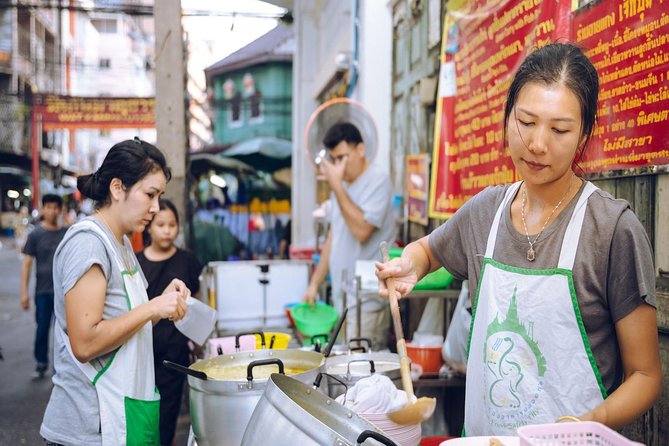
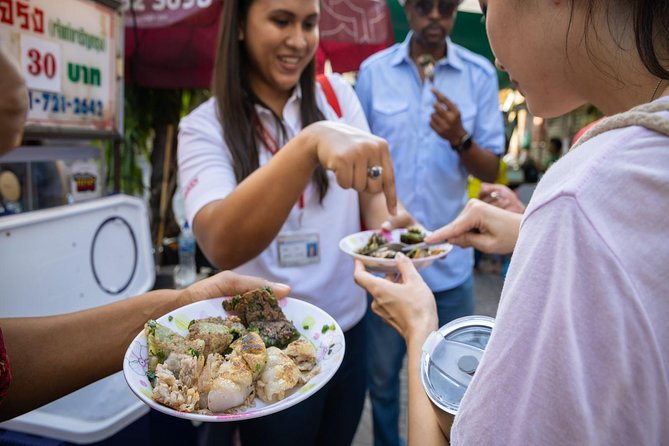
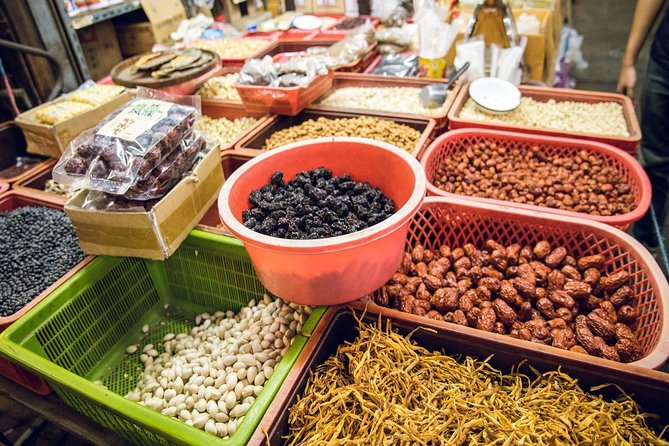
Food is the strongest practical reason to book this walk. Bangkok’s street stalls can be hard to read when you do not know the dishes, the ordering system, or which foods are worth trying. Here, several tastings are included, and the guide explains what you are eating as the route goes along.
The listed food samples include:
- Turnip cake, a Chinese dim sum dish
- Chwee kueh, a steamed rice cake served with preserved radish
- Chao Tha duck noodle soup
- Pad Thai from Uncle Pom
- Other Thai, Chinese, and fusion dishes selected during the walk
The food is not presented as one large restaurant meal. Think of it as a series of tastes spread across the route. That format suits Bangkok because you can compare textures, cooking styles, and Chinese-Thai influences without committing to a single dish.
I especially like that you can ask questions as you eat. Guides such as Nana and Pam have been praised for making sure people received food they could manage and for suggesting other things to eat during a Bangkok stay. Vegetarian food can be arranged if you provide the request at least 24 hours ahead.
Other dietary needs are not listed as available, so do not assume that allergies, vegan meals, or special medical diets can be handled. If food is central to your booking decision, contact the operator before reserving.
The food stops can also change. Bangkok’s street stalls do not operate like a fixed museum schedule. If a stall is closed, the guide can select another food stop. That flexibility is useful, though it means the exact tasting list may not be identical on every departure.
Chow Sue Kong Shrine and the quieter side of Chinatown
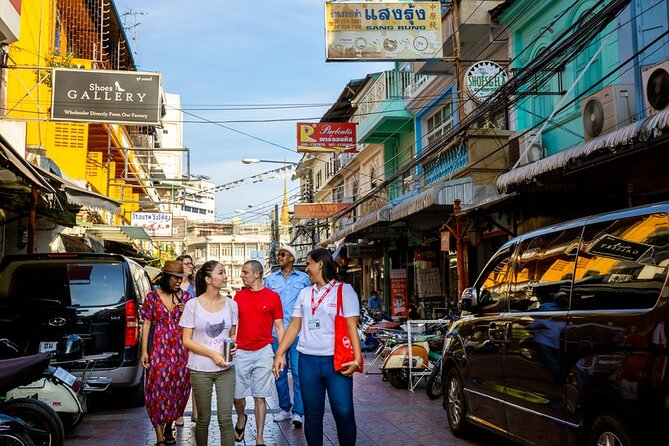
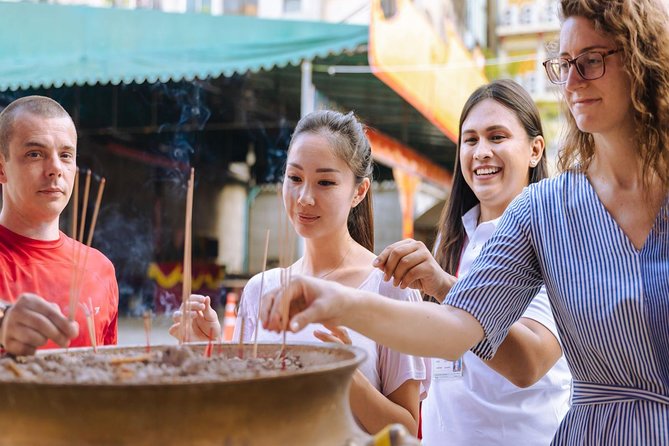
After eating, you visit Chow Sue Kong Shrine, a more than 200-year-old Hokkien shrine. It offers a very different mood from the church, with Chinese religious traditions, incense, and a smaller devotional setting.
You can ask for blessings related to well-being, protection, and guidance. The important point is not simply checking off another building. The shrine helps explain the Hokkien presence in the district and shows how faith remains part of everyday neighborhood life.
The visit lasts about 15 minutes. Wear clothing that lets you enter religious places respectfully, and follow your guide’s instructions. The route may also pass the Sol Heng Tai Mansion, one of Bangkok’s remaining traditional Chinese houses. This is an appealing detail for anyone interested in old domestic architecture, although the supplied schedule does not give a separate visit length for it.
The walk through Talad Noi can feel repetitive if you want a tightly packed list of major monuments. Several lanes contain similar shopfronts, market goods, and old walls. For me, that repetition is part of the point: you are seeing a living district rather than a collection of polished attractions. Still, shoppers may find the pace too quick for careful browsing.
More Chinatown Food Tours in Thailand
- Bangkok: Chinatown Food Tour with Michelin Food Stalls
★ 4.8 · 226 reviews - Night Street Food Tour of Bangkok’s Chinatown
★ 5.0 · 173 reviews - Local Life, Culture & Food Walking Tour at Chinatown
★ 4.7 · 119 reviews - Taste of Bangkok: A 3-Hour Chinatown Food Feast
★ 4.8 · 59 reviews
Hong Sieng Kong beside the Chao Phraya
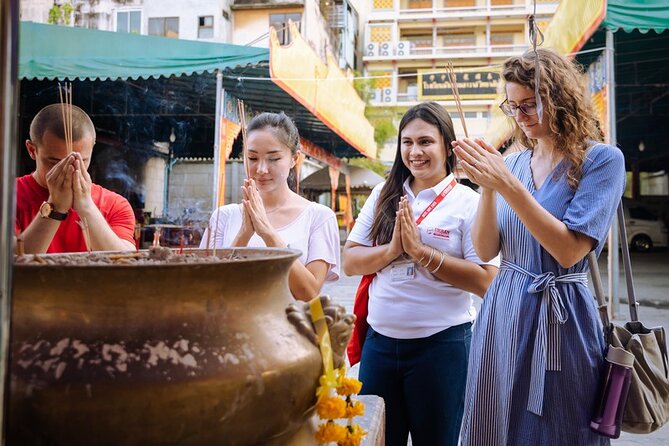
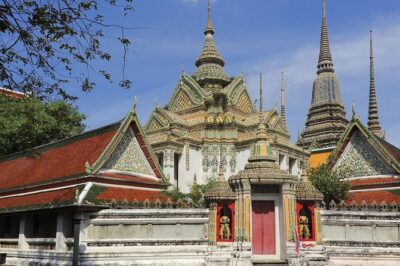
The café stop at Hong Sieng Kong gives your legs a break. The café occupies a building dating to the reign of King Rama II and the Rattanakosin era, beside the Chao Phraya River. You can relax with coffee or tea and take in a slower view of the neighborhood.
This is one of the route’s best contrasts. Talad Noi can feel cramped and crowded in its lanes, while the river opens the view and gives you a moment to reset. The stop is scheduled for about 30 minutes, making it longer than the church or shrine visits.
A local artist’s gallery is also part of this section. The combination of art, old architecture, drinks, and river views keeps the tour from becoming only a food crawl.
Do not treat this as a full café outing. The purpose is a short pause within a walking route, not a long sit-down meal. The food samples make up the main eating experience.
Entering Chinatown as the afternoon turns busy
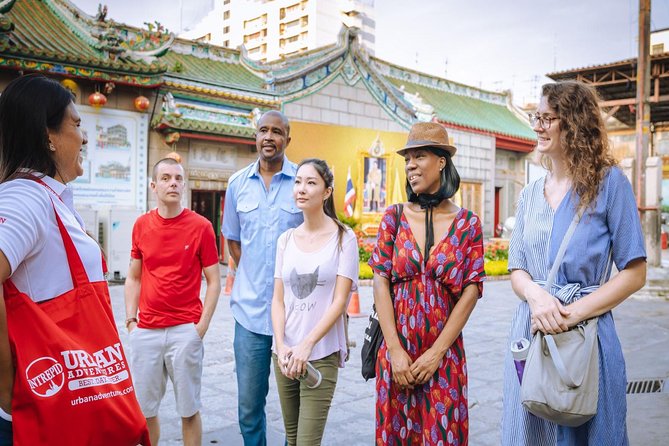
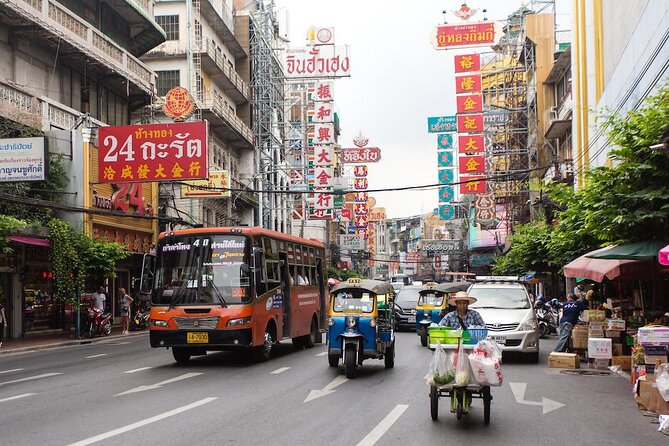
The final major section crosses into Bangkok’s Chinatown. Here the mood changes quickly. The streets are more commercial, the crowds can be thicker, and the Chinese influence appears in shops, food stalls, signs, and market activity.
The tour is designed to show how old and new Bangkok overlap. You may pass traditional goods, modern businesses, street art, and busy food areas within a short walk. Your guide helps you read the area instead of simply leading you through it.
This is also where the group size matters. With a maximum of 12 people, the guide can keep an eye on the group and explain things without using a microphone. Guides have been praised for helping people stay together during especially crowded periods, including Chinese New Year.
Crowds, weather, and city events can affect the experience. Streets have sometimes been closed for official celebrations or other events, forcing the guide to change the route. Heavy rain can also slow the walk. One guide, Dong, was noted for handling a downpour with practical help, while another guide bought plastic raincoats for a couple during bad weather. That kind of care is valuable in Bangkok, but you should still bring protection for sudden rain.
The route ends near Wat Mangkon, an MRT station area that makes it easier to continue around the city. The meeting information also lists River City as the end point, so check the current voucher instructions. The practical takeaway is that you should finish with access toward Chinatown and MRT Wat Mangkon, rather than assuming you will return to your hotel.
What the $42.48 price buys you
At $42.48 per person, this is not the cheapest way to walk around Chinatown. You can enter many streets and shrines independently, and food in Bangkok remains affordable.
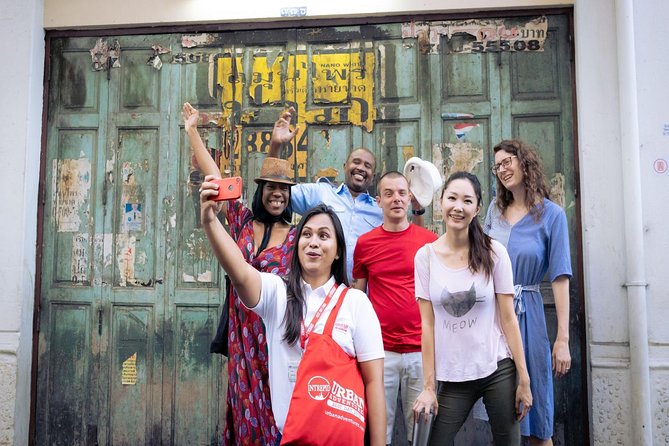
The value comes from combining several small costs and decisions: a local English-speaking guide, multiple tastings, an organized route through lanes that can be confusing, and context for places you might otherwise pass without understanding. If you already know Chinatown well, you may feel you are paying mainly for company and food access.
For a first Bangkok visit, I think the price is fair if you want an introduction rather than a self-guided wander. The included food is important. You are not paying extra each time the group stops, and you avoid ordering a full dish simply to discover that it is not to your taste.
The tour also gives you ideas for later. Your guide can suggest other places to eat, visit, and explore during your stay. That advice may be worth more than the short route itself, especially if this is your first time in Bangkok.
How demanding is the walk?
The advertised walk covers about 2 kilometers, which is not a long distance on paper. The real effort comes from standing, stopping, navigating uneven or crowded lanes, and walking in Bangkok’s heat and humidity.
The official duration is about 2 hours and 30 minutes. Some past departures connected with longer routes or added stops, but you should plan around the published two-and-a-half-hour schedule. The tour begins at 4 pm, when the worst midday heat may have eased, and finishes after the evening atmosphere begins to develop.
I would choose this for anyone comfortable walking and standing for a couple of hours. It may not suit you if you have mobility limits, dislike crowded markets, or need a slow pace. A few people have found the route too much walking, while others have praised the guide for taking time and not rushing.
Wear shoes with a good grip, carry water, and bring a light rain layer. You will not need formal hiking gear, but flip-flops can be awkward on wet streets.
Which kind of visitor should book?
I would book this tour if you are visiting Bangkok for the first time and want a guided introduction to Talad Noi and Chinatown. It is also a good choice if you enjoy trying unfamiliar foods but want someone local to help you decide what to eat.
It suits solo visitors particularly well. A small group gives you company without the feel of a large coach tour, and guides have sometimes led very small groups or even private-feeling departures when bookings were light.
Families can join if children are at least 8 years old and are comfortable with walking and street food. The tour is less suitable for anyone seeking a polished sightseeing route with long visits inside major monuments.
Food-focused visitors should note that the tastings are local and informal. This is not a cooking class, a restaurant tasting menu, or a full Chinese dinner. It is a moving sample of Thai-Chinese neighborhood food.
Should you book the Talad Noi and Chinatown walk?
Book it if you want local food, old neighborhoods, and a human-scale introduction to Bangkok. The strongest parts are the guide’s explanations, the mix of Portuguese and Chinese heritage, the included tastings, and the small group.
Skip it if you mainly want famous temples, extended shopping time, or a boat cruise. The route can change, Chinatown can feel repetitive, and the short stop times leave little room for lingering.
For most first-time visitors, I see this as a useful opening look at Bangkok’s riverfront Chinese districts. It gives you enough food and history to understand the area, then leaves you near Wat Mangkon so you can keep exploring on your own.
FAQ
Where does the tour begin?
It begins at River City Bangkok, at Gate 1 in front of Starbucks on the first floor. The address is 23 Soi Charoen Krung 24, near Si Phraya Pier.
What time does the tour start?
The scheduled start time is 4 pm.
How long is the tour?
The advertised duration is approximately 2 hours and 30 minutes.
How far do you walk?
The tour covers about 2 kilometers, or 1.2 miles, through Talad Noi and Chinatown.
What food is included?
Food samples can include turnip cake, chwee kueh, duck noodle soup, Pad Thai from Uncle Pom, and other Thai, Chinese, and fusion dishes.
Can vegetarians join?
Yes. Vegetarian requirements can be accommodated if you provide the information at least 24 hours before the tour date.
How large is the group?
The maximum group size is 12 people.
What happens if a site or food stall is closed?
The guide may replace a closed site with an alternative stop. If a planned food stall is unavailable, another food stop can be selected.
What is the minimum age?
The minimum age is 8 years.
Can I cancel for a refund?
You can cancel at least 24 hours before the start time for a full refund. Changes or cancellations made less than 24 hours before the start time are not accepted.
More Hidden Gem Food Tours in Bangkok
- Bangkok: Michelin Guide Street Food Tour by Tuk Tuk
★ 4.4 · 1,274 reviews - Bangkok Hidden Paths Night Biking Tour with Street-food Meal
★ 5.0 · 81 reviews - Bangkok: Michelin Guide Street Food Tour by Tuk Tuk
★ 4.5 · 56 reviews - Bangkok: Talad Noi Hidden Gems & Street Food Adventure
★ 4.6 · 29 reviews
Just added around Bangkok
- 4-Hour Hidden Bangkok TukTuk Street Food Guided Tour★ 5.0 · 23 reviews
- 3-Hour Bangkok Walking Tour: Wat Pho and Wat Arun★ 5.0 · 102 reviews
- Bangkok 3-in-1 Tour: Longtail Boat,TukTuk & Street Food Adventure★ 5.0 · 73 reviews
- Thai Costume Photography at Wat Arun/Pho Temple: Bangkok★ 5.0 · 3 reviews
- Visit Wat Pho and Wat Arun with Local Expert★ 4.0 · 14 reviews
- Famous Thai Street Food Tasting Experience!★ 5.0 · 4 reviews
- Tuk Tuk Bangkok Private Tour: WW2 Pad Thai, 360-Viewpoint, Chinatown (Pickup)★ 5.0 · 9 reviews
- LR-01 TaLad NangLerng, ride along the old town and try local street foods★ 4.5 · 13 reviews
Bangkok Street Food Tours, compared.
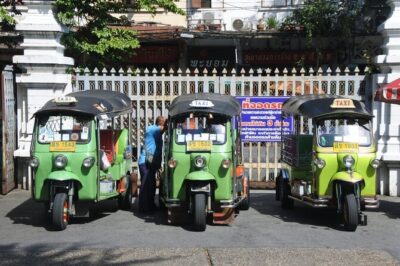
Bangkok: Michelin Guide Street Food Tour by Tuk Tuk
Read our review →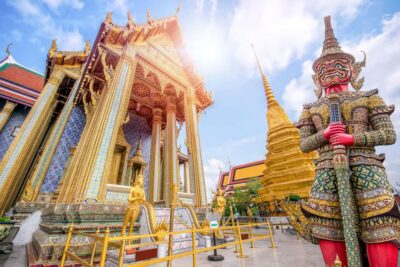
Bangkok: Grand Palace, Wat Pho, and Wat Arun Private Tour
Read our review →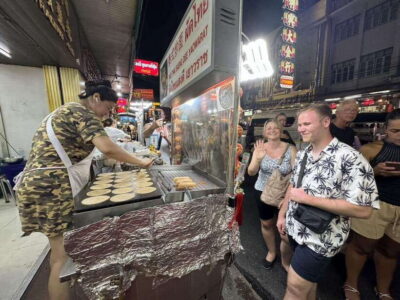
Bangkok Authentic Tasting Thai-Chinatown Walking Food Tour
Read our review →
Bangkok: Evening Tour with Wat Arun, Wat Pho & Tuk Tuk Ride
Read our review →
Bangkok Tuk-Tuk Tour by Night with Chinatown Street Food Meal
Read our review →
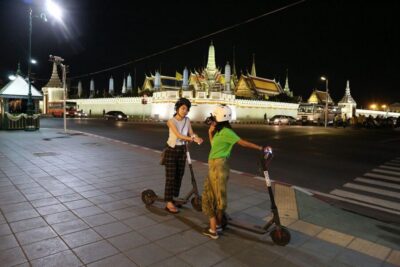
Bangkok: E-Scooter Night Tour with Local Street Food
Read our review →