
REVIEW · BARCELONA STREET FOOD TOURS
Barcelona Street Food Tour: Boqueria Market & Barrio Gotico
Barcelona’s best food experiences often happen on foot, with a market stall or small bite providing the excuse to explore another old lane. This 2.5-hour street food tour links La Boqueria, Barrio Gótico, and El Born, giving you a useful first look at the city while you sample Catalan specialties along the way.
I like the easy mix of eating and sightseeing, especially the stop for Jamón Ibérico and the final pastry tasting. I also like that an English-speaking local guide explains how Catalan food reflects Barcelona’s many cultural influences, rather than simply handing you a plate and naming the dish.
The main tradeoff is pace. You will walk through busy streets and a crowded market, and the tour’s $50 price does not include drinks. If you want a slow, sit-down meal, this is not the right format.
Key points to know before booking
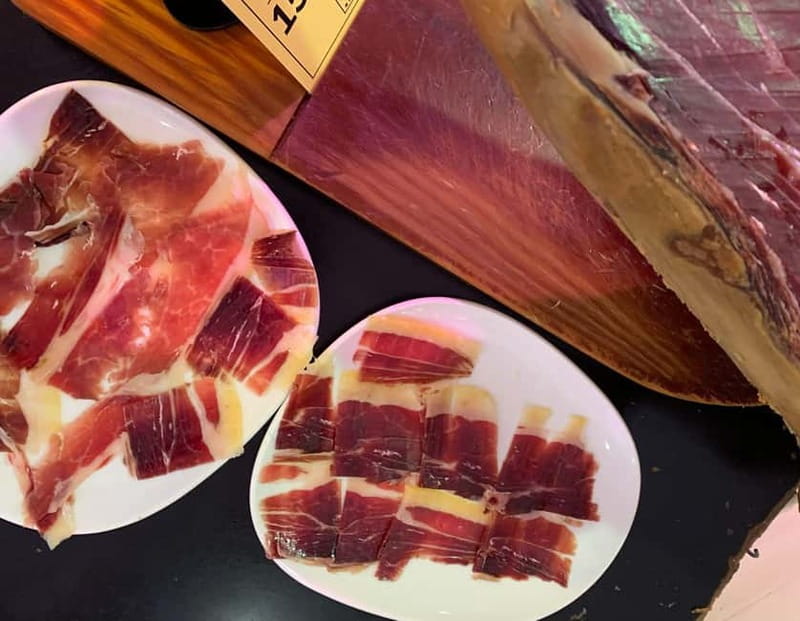
- La Boqueria is the food centerpiece: Expect colorful produce, strong aromas, fresh ingredients, and a taste of prized Spanish cured ham.
- The route covers three central areas: You move between the city center, Barrio Gótico, and El Born rather than staying in one market.
- The food comes in small samples: You will try several Catalan and Spanish specialties, including cheeses, appetizers, street food, and pastries.
- The guide adds cultural context: The English-language tour connects traditional Catalan cooking with Barcelona’s wider multicultural food scene.
- Drinks are not included: Budget separately if you want something to drink during or after the walk.
- Comfortable shoes matter: This is a walking tour through streets and markets, not a seated tasting.
Starting beside Miro’s mosaic at Liceu
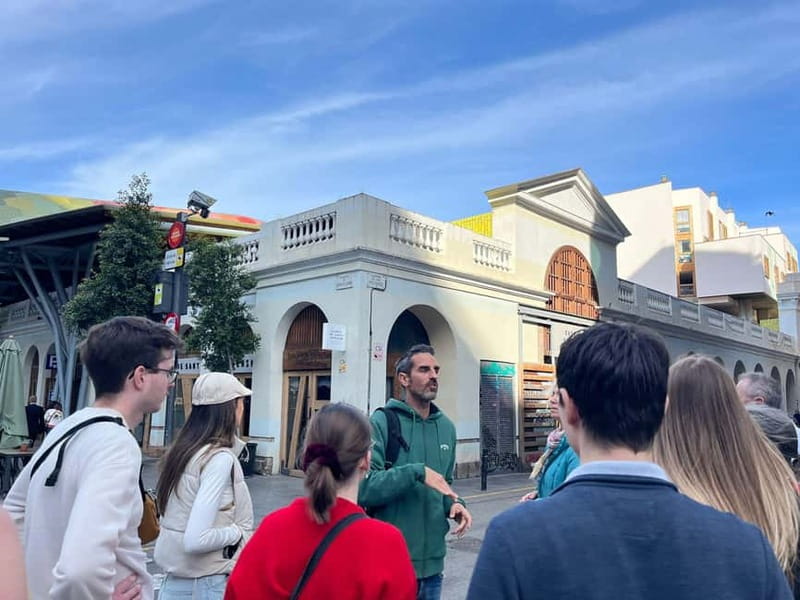
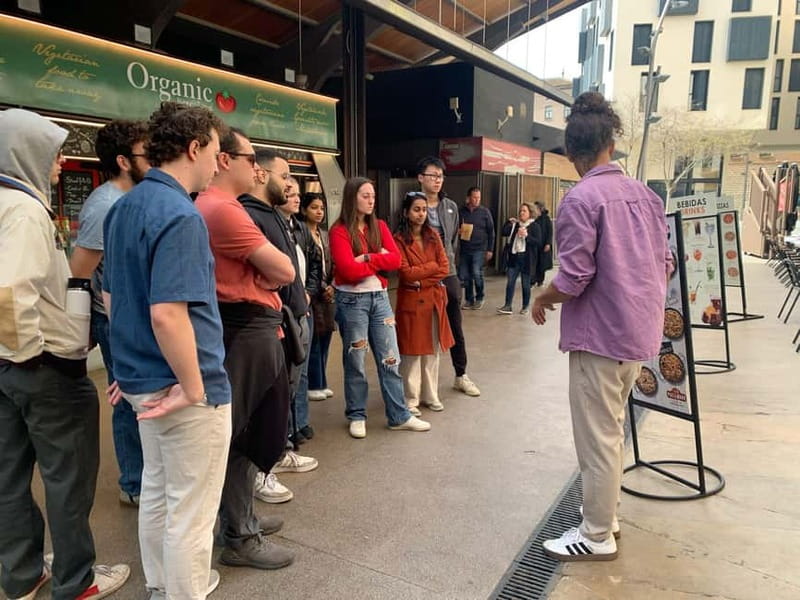
The meeting point is Miro’s mosaic, a colorful floor mosaic just outside the Liceu metro station. Searching for Miro’s mosaic on Google Maps should help you recognize it. Give yourself a few extra minutes to find the correct spot, since a metro exit and a public square can be easy to confuse when you are arriving for the first time.
This is a practical starting point. Liceu places you in the center of Barcelona, close to La Rambla and within reach of the Gothic Quarter. The tour begins with the city already around you: old buildings, narrow streets, shops, pedestrians, and the constant movement of central Barcelona.
You meet a live English-speaking guide here, then set out on foot. No transportation is included or needed. That matters because the route’s appeal is not only the food. You are also learning how the city’s older districts connect.
Wear shoes you can walk in for two and a half hours. The tour takes place on city streets and inside a popular market, so you should expect a fair amount of standing, stopping, and moving through active public spaces.
More Street Food Market Tours in Spain
- Barcelona: Street Food & Sightseeing Tour with Local Market
★ 4.9 · 84 reviews - Barcelona Market Food Tour, Local & Artisanal Tastings
★ 4.7 · 30 reviews - Tasty Barcelona Street Food Tour With Local Market Visit
★ 4.5 · 24 reviews
La Boqueria, where the tasting begins
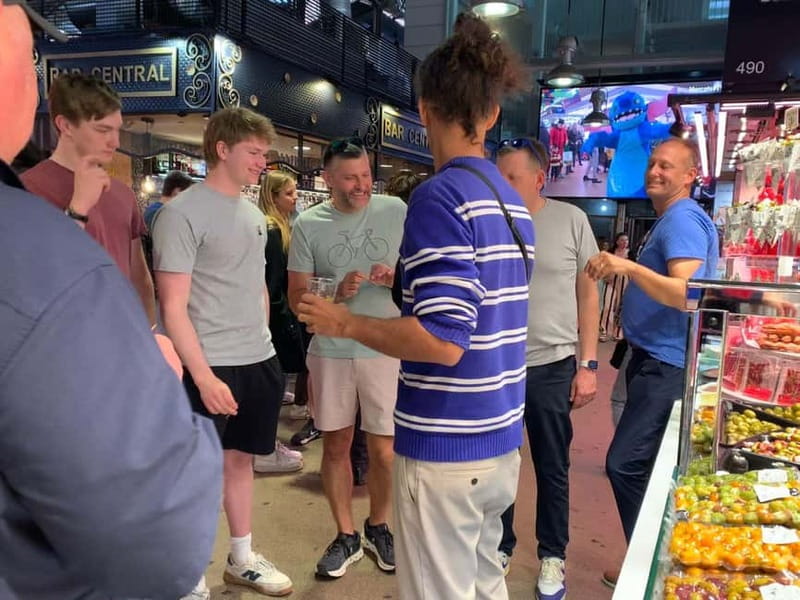
La Boqueria is the most obvious food landmark on the route, and it gives the tour its strongest visual opening. The market is known for colorful displays, fresh ingredients, and the aromas of prepared and preserved foods. Even before you taste anything, you get a quick lesson in how food is presented and sold in Barcelona.
The market can feel crowded, especially in the middle of the day. That is part of its character, but it also means you should stay close to your guide and keep your belongings secure. This is not a quiet place for a long conversation. It is a place to look, listen, taste, and keep moving.
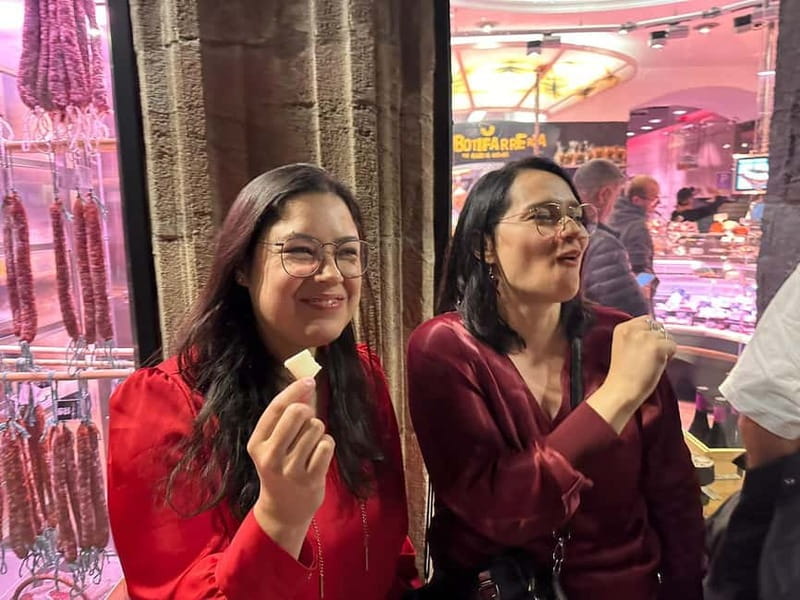
The key sample here is Jamón Ibérico, Spain’s prized aged cured ham. Its texture is soft and its flavor is concentrated, with the long curing process doing most of the work. If you have only encountered ordinary deli ham, this is a very different food, and the tasting gives you a useful reference point for Spanish cuisine.
You also sample traditional Catalan appetizers at the market. The exact items can vary, so do not book this expecting a fixed restaurant menu. The value is in trying several flavors while your guide explains the traditions behind them.
La Boqueria is also a good place to understand the difference between seeing food and eating it. A market may offer everything from raw ingredients to ready-to-eat snacks, but this tour focuses on selected tastings rather than asking you to shop for a full meal. You get an introduction without having to decide what every unfamiliar item is.
Catalan flavors beyond the market
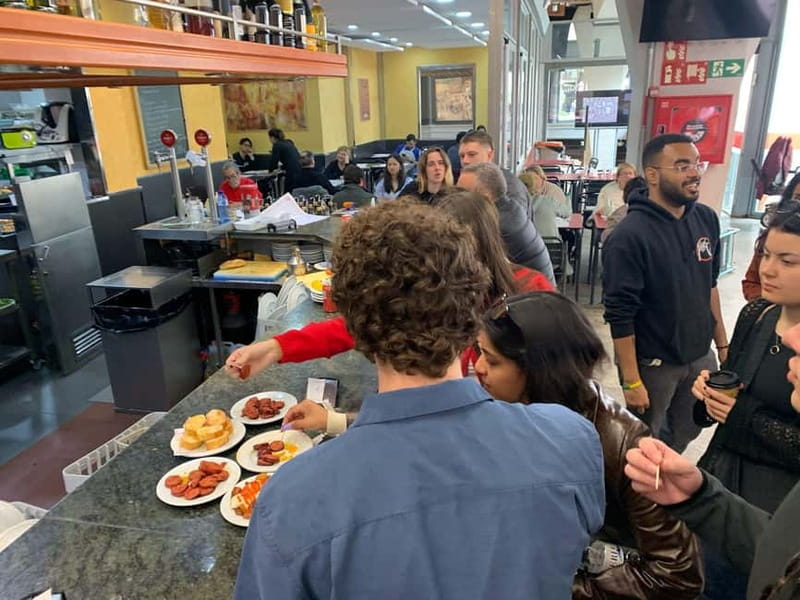
After La Boqueria, the tour continues through Barcelona’s older streets. This section shifts the emphasis from market atmosphere to the connection between food, neighborhoods, and local culture.
You will sample Spanish cheeses with distinct, developed flavors. The description does not promise a specific cheese list, which is useful to remember. You should expect a selection rather than a formal cheese course, with the guide offering context as you taste.
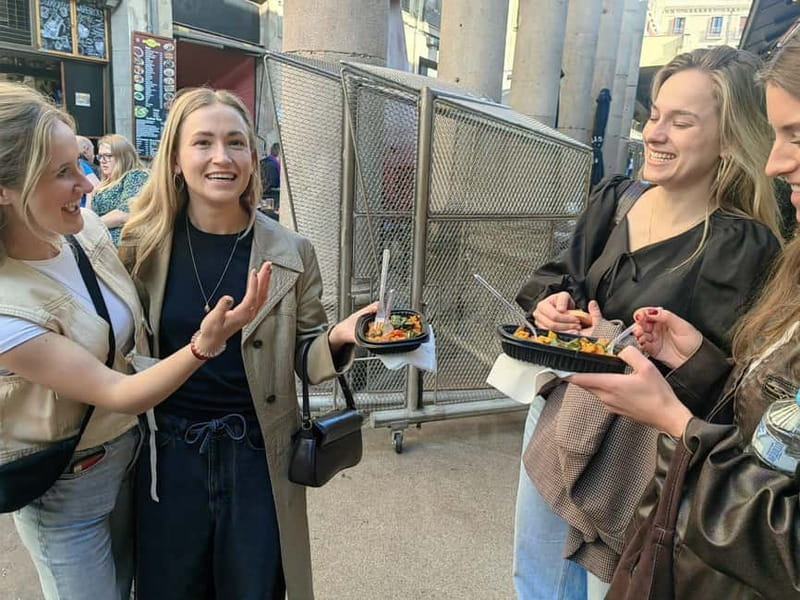
There are also several street food stops. One is described as a crisp, flavorful coastal specialty, though the exact dish is not specified. That leaves some uncertainty, but it also means the experience is not presented as a rigid menu. You are trying a range of familiar and less familiar foods as part of a moving introduction to Barcelona’s eating culture.
The guide discusses Catalan cuisine and the city’s multicultural influences. That context is one of the tour’s more useful features. Barcelona’s food traditions are not presented as a single, sealed-off category. Instead, you hear how older Catalan specialties sit alongside a modern street food scene shaped by many communities.
For you, the practical benefit is simple: a guide can explain what you are tasting while you are tasting it. That is especially helpful when a dish has a name you do not recognize or when the flavor is not what you expected from its appearance.
Walking through Barrio Gótico
The tour finishes in the Gothic Quarter, also called Barrio Gótico. Its medieval streets provide a fitting setting for the last part of the walk, when food gives way to pastries and the route winds toward its farewell point.
The Gothic Quarter is made for slow wandering, but this tour has a fixed length and several tastings to fit in. You will see the area as part of a food walk, not as a full architectural tour. The guide may point out cultural details as you move, but the central purpose remains eating and learning about local food.
This is a good arrangement if you are new to Barcelona and want an early orientation to the center. You get a sense of the relationship between La Rambla, the market, the Gothic streets, and nearby El Born. You also learn which parts of the city are best explored on foot.
It is less suitable if you have already planned a detailed visit to every lane and monument in the Gothic Quarter. Food tours necessarily pause for samples, and the group’s pace may not match your preferred pace for taking photographs or reading every historical plaque.
More Market Food Tours in Barcelona:
- Barcelona: Boqueria Market & Barrio Gotico Street Food Tour
★ 5.0 · 12 reviews - Barcelona Food Markets Private Tour with Tastings
★ 5.0 · 8 reviews - Barcelona Street Food Tour with Local Market & City Center Visit
★ 4.5 · 7 reviews - Barcelona: Local Market & Street Food Walking Tour
★ 4.9 · 6 reviews
El Born and Barcelona’s wider food culture
El Born is included as part of the route, adding another historic district to the experience. The tour uses these neighborhoods to show Barcelona as a city where food and urban life overlap.
The emphasis here is not on a single famous dish. Instead, the guide brings together traditional Catalan food, Spanish specialties, market ingredients, and contemporary street food. That range helps you see why the city’s food culture feels broader than a list of standard regional recipes.
You may find the multicultural discussion especially useful if you want more than tastings. Barcelona’s food scene reflects its position as a major city, and the tour presents that mix through the guide’s explanations and the foods selected along the way.
Still, keep your expectations realistic. A 2.5-hour walk can introduce the districts and provide several samples, but it cannot cover every part of Catalan cuisine. Think of it as a well-paced orientation and tasting session, not a complete food history of Barcelona.
The pastry finish
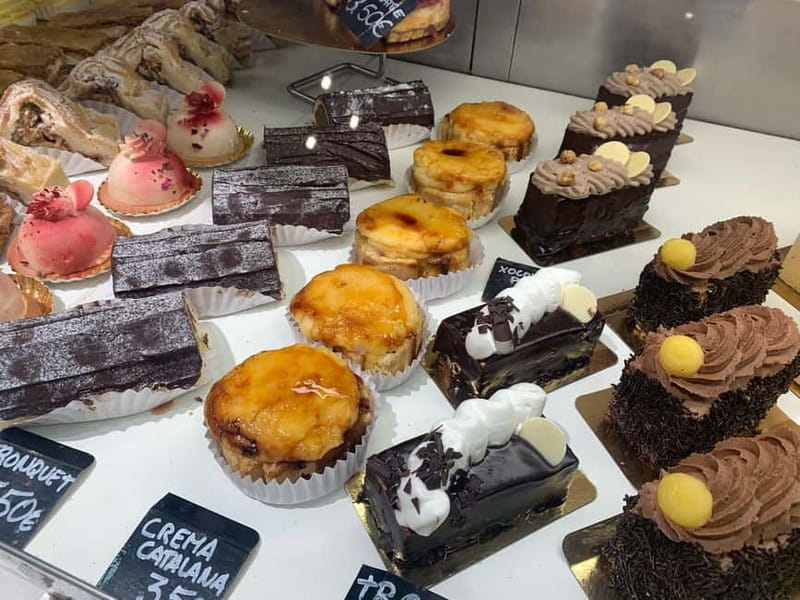
The final tasting is a sweet one. Possible examples include flaky ensaimada, sugary churros, or creamy crema catalana. The exact pastry is not guaranteed, but the choices all point to different parts of Spanish and Catalan dessert culture.
This ending works well because the tour moves from savory foods to something familiar and comforting. Crema catalana offers a creamy finish, churros bring a crisp and sugary note, and ensaimada provides a lighter pastry option. If you have a strong preference or a food allergy, ask the guide what is being served when the tour begins.
Pastries also make a practical final stop. You leave with a clear memory of the food side of the walk, rather than ending with a vague collection of small savory bites. The dessert is not meant to replace lunch, but several tastings over two and a half hours should give you a useful introduction to local flavors.
Bring an appetite, but do not assume the tour includes a large, seated meal. The experience is built around samples taken at different points along the route.
What the $50 price really covers
At $50 per person, the price covers the 2.5-hour walking tour, an English-speaking local guide, and samples of traditional Catalan food. It does not include drinks.
I see the value mainly in the combination of food and orientation. If you were already planning to visit La Boqueria, the Gothic Quarter, and El Born, the guide adds structure and explanations to places you might otherwise experience on your own. You also get to try several foods without ordering full portions at separate stops.
The value is lower if your main goal is a substantial meal. You are paying for guided tastings, local context, and a planned walking route, not a long restaurant lunch. You may still want a separate meal before or after the tour, depending on your appetite.
Drinks being excluded is a small but important detail. Carry water, and budget for any additional drink you want. The tour details do not specify a group size or a set number of tastings, so I would judge the price mainly by your interest in guided food sampling rather than by expecting a precise quantity of food.
Who will enjoy this walking food tour
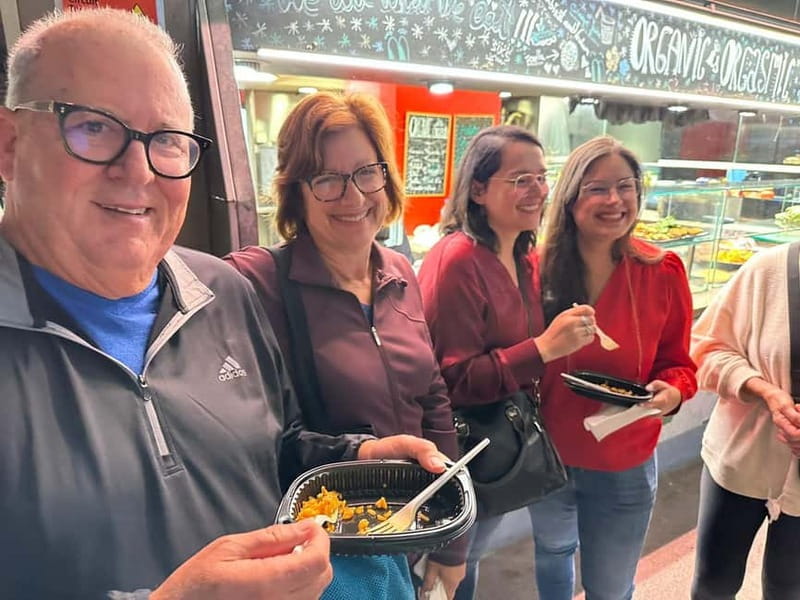
This tour fits first-time visitors who want a simple introduction to Barcelona’s central districts and local food. It is also useful for anyone who likes to sample several things rather than commit to one unfamiliar dish at a restaurant.
You should consider booking it if you enjoy:
- Walking through historic neighborhoods while learning about food
- Trying cured ham, Catalan appetizers, cheeses, street food, and pastries
- Having an English-speaking guide explain cultural influences
- Visiting La Boqueria with some structure and direction
- Using a food tour to get ideas for later meals
Families may appreciate the variety, though the tour involves market crowds and steady walking. People with limited interest in food history may find the explanations less useful, since the cultural background is a major part of the experience.
It may not suit you if you want a private tour, a quiet tasting room, a large meal, or a precise menu confirmed in advance. The activity information names possible pastries and a coastal street food specialty, but it does not promise every item by name.
Practical advice for a smoother experience
Meet at Miro’s mosaic outside Liceu metro station. Search for Miro’s mosaic in Google Maps before leaving your accommodation, and arrive with enough time to identify the mosaic and locate your guide.
Wear comfortable shoes. This advice is more than a formality, since the route passes through streets, a market, and historic districts. You will be walking and standing while eating.
Bring an appetite, but do not skip all food beforehand if you become uncomfortable when walking hungry. The samples are spread across the tour, and the experience is not described as a full meal.
Keep drinks in mind. They are not included, so bring water or plan to purchase something separately. The tour is offered in English, which makes it a practical choice for visitors who want explanations in that language.
The activity allows cancellation up to 24 hours in advance for a full refund, and you can reserve now and pay later. Those options are useful if your Barcelona schedule is still changing.
Should you book the Barcelona Street Food Tour?
Book it if you want your first taste of Barcelona to include both food and place. The combination of La Boqueria, Jamón Ibérico, Catalan appetizers, cheeses, street food, pastries, Barrio Gótico, and El Born gives you a broad introduction in a manageable 2.5 hours.
Skip it if you want a long sit-down meal, a fixed menu, or a specialist food class. The route is active, the market can be crowded, and drinks cost extra.
For most first-time visitors who like walking and sampling, $50 is a fair price for a guided introduction to central Barcelona. You get the most from it when you treat the tour as a starting point: listen closely, note the foods you like, and return later to explore the market or neighborhoods at your own pace.
FAQ
How long does the Barcelona Street Food Tour last?
The tour lasts 2.5 hours.
Where does the tour meet?
Meet your guide by Miro’s mosaic, the mosaic on the floor just outside the Liceu metro station.
How can I find the meeting point?
Search for Miro’s mosaic on Google Maps so you can see what it looks like and locate it more easily.
What language is the tour offered in?
The live tour guide speaks English.
Is La Boqueria Market included?
Yes. The tour visits La Boqueria Market and includes food tastings there.
What food can I expect to sample?
The tour includes traditional Catalan food, Jamón Ibérico, Catalan appetizers, Spanish cheeses, street food specialties, and pastries. Specific items may vary, and possible pastries include ensaimada, churros, or crema catalana.
Are drinks included?
No. Drinks are not included in the tour price.
Does the tour visit the Gothic Quarter?
Yes. The tour concludes in the heart of the Gothic Quarter, also known as Barrio Gótico.
Does the tour include El Born?
Yes. El Born is included among the districts visited during the walking route.
What should I bring?
Wear comfortable shoes and bring an appetite. You should also be prepared to walk through busy streets and markets in Barcelona.
Just added around Barcelona
- Tasty Barcelona Street Food Tour With Local Market Visit★ 4.5 · 24 reviews
- Barcelona Gracia Neighborhood Local Food & History Tour★ 5.0 · 92 reviews
- Barcelona Food Markets Private Tour with Tastings★ 5.0 · 8 reviews
- Barcelona Street Food Tour with Local Market & City Center Visit★ 4.5 · 7 reviews
- Barcelona Tapas Food Walking Tour with Wine in El Born★ 4.5 · 15 reviews
- Barcelona: Gothic, Tapas & Churros Small Group Tour★ 5.0 · 13 reviews
- Barcelona Tapas Tour with a Local Foodie: Personalized & Private★ 5.0 · 26 reviews
- Barcelona : Gothic, Tapas, Churros & Vermouth★ 5.0 · 65 reviews
Barcelona Street Food Tours, compared.
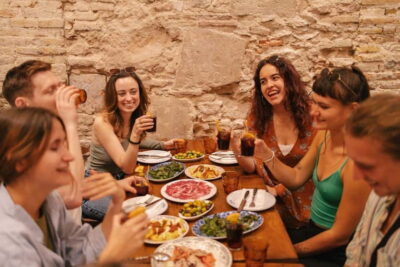
Barcelona: Food Walking Tour with Tapas and Wine
Read our review →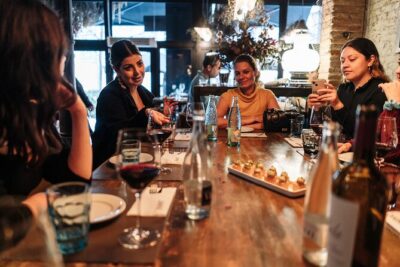
Barcelona: Guided Food Walking Tour with Tapas and Wine
Read our review →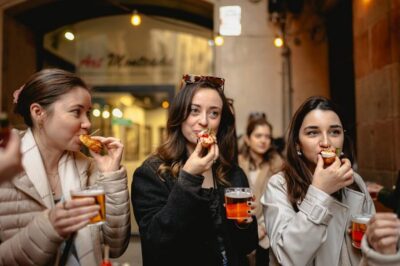
Barcelona: El Born Food Walking Tour with Tapas and Drinks
Read our review →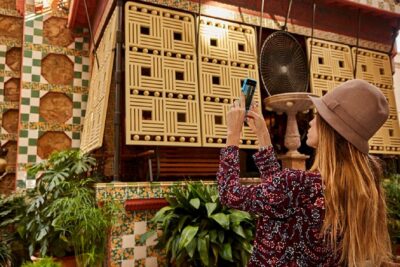
Sweet Gaudi: the most delicious visit to Casa Vicens
Read our review →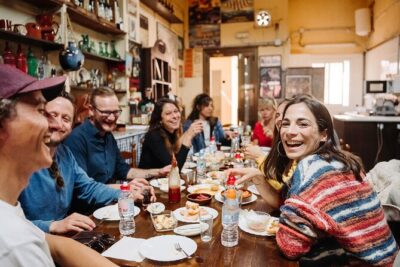
Barcelona Gracia Neighborhood Local Food & History Tour
Read our review →
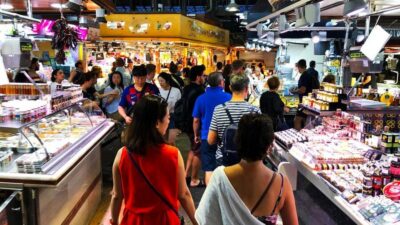
Barcelona: Street Food & Sightseeing Tour with Local Market
Read our review →
Family Private Tour: Churros, Hot Chocolate & Games in Barcelona
Read our review →Browse the lists this tour appears in