
REVIEW · STREET FOOD MARKET TOURS
Lima: Historic Center Street Food, Market, and Eateries Tour
Lima’s historic center is best understood with something in your hand and a good snack waiting around the corner. This four-hour food walk combines colonial squares, local markets, street carts, small eateries, and old drink stops in a way that gives you both a taste of Peru and a useful introduction to central Lima. I especially like the visit to Mercado Central and the chance to try comida al paso, the quick food locals eat during an ordinary day.
I also like the range: anticuchos, tamales, chifa, churros, picarones, fruit, and chilcanos all make an appearance. Guides such as Marcos, Aura, Valeria, and Sheyla are repeatedly praised for explaining the food and the city clearly. The main caution is that this is not a tour for vegetarians, vegans, or people with severe gluten or nut allergies. It can also lean sweet, and the four hours include a fair amount of walking.
Key points to know before you book
- The meeting point is easy to recognize: Begin at the main entrance of Gran Hotel Bolivar on Plaza San Martín.
- You taste food across several settings: Expect local restaurants, food carts, Mercado Central, Chinatown, a dessert stop, and a historic bar.
- The food is substantial: Small savory portions are balanced by generous sweets, and several people finish too full for dinner.
- The sightseeing is woven into the walk: You’ll see Plaza San Martín, Plaza Mayor, La Merced, San Francisco, and Lima Cathedral from outside.
- The tour is English only: The shared tour does not provide simultaneous Spanish or multilingual guiding.
- Dietary limits matter: Vegetarian, vegan, pescatarian, severe gluten, and severe nut allergies are not accommodated.
A food-first introduction to central Lima
At $69 per person, this tour costs more than simply buying snacks on your own. The value comes from the work between the bites: a guide chooses the stops, explains unfamiliar foods, handles the route through the center, and connects Lima’s buildings with daily eating habits.
That matters in a city where a food cart can look ordinary until someone explains what is being grilled, why a drink is served there, or how Peruvian and Chinese cooking meet in chifa. You’re paying for a guided introduction, not just a meal.
The tour lasts four hours and finishes at Alameda Chabuca Granda, rather than returning you to the hotel. Hotel pickup and drop-off are not included, so plan your own ride afterward. The route begins at Gran Hotel Bolivar, a useful landmark on Plaza San Martín, and moves through the central streets on foot.
The group size is not specified, but the experience can feel quite personal when numbers are low. One participant described having only one other person in the group, while other accounts point to guides giving individual attention and adjusting the pace. You should still expect a shared tour rather than a private outing.
More Market Food Tours in the world:
- Seoul Street Food Market Tour
★ 5.0 · 1,226 reviews - Venice Street Food Tour with Local Guide with Local Food Market Visit
★ 5.0 · 822 reviews - Cancun Street Food Tour with Food Stalls, Local Market and Murals
★ 5.0 · 723 reviews
Starting at Plaza San Martín and Gran Hotel Bolivar
Your guide meets you at the main door of Gran Hotel Bolivar, at Jirón de la Unión 958. This is a practical starting point because Plaza San Martín is one of the main public spaces in Lima’s historic center and an easy place to identify.
The first sightseeing pause is brief, about five minutes, so think of it as an orientation rather than a long architectural talk. You’ll get your bearings, look across the plaza, and begin walking toward the first food stop.
That early transition is useful. Instead of spending the opening hour in a formal lecture, the tour quickly puts food into the center of the experience. You begin to see the historic district as a working part of Lima, not only as a collection of grand facades.
Local eateries and the first Peruvian flavors
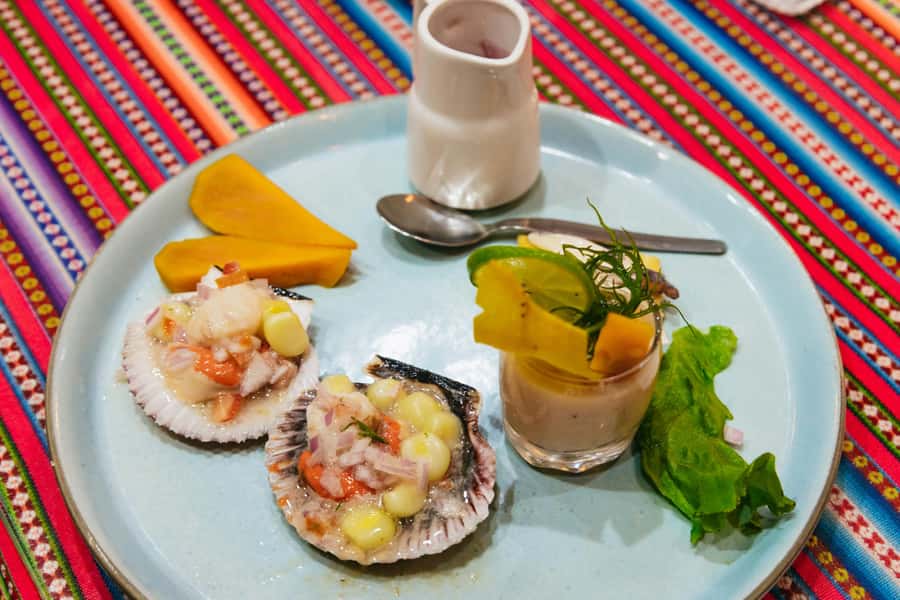
The first restaurant stop includes a drink and regional food, with around 30 minutes set aside. This is where the tour begins to explain how traditional dishes fit into ordinary life. The exact menu can change, but the experience includes classic Peruvian bites and drinks rather than a single sit-down meal.
A second local restaurant stop lasts about 20 minutes. Short visits like this are helpful because you can sample more than one style of food without committing to a full plate at every address. They also keep the route moving through the center.
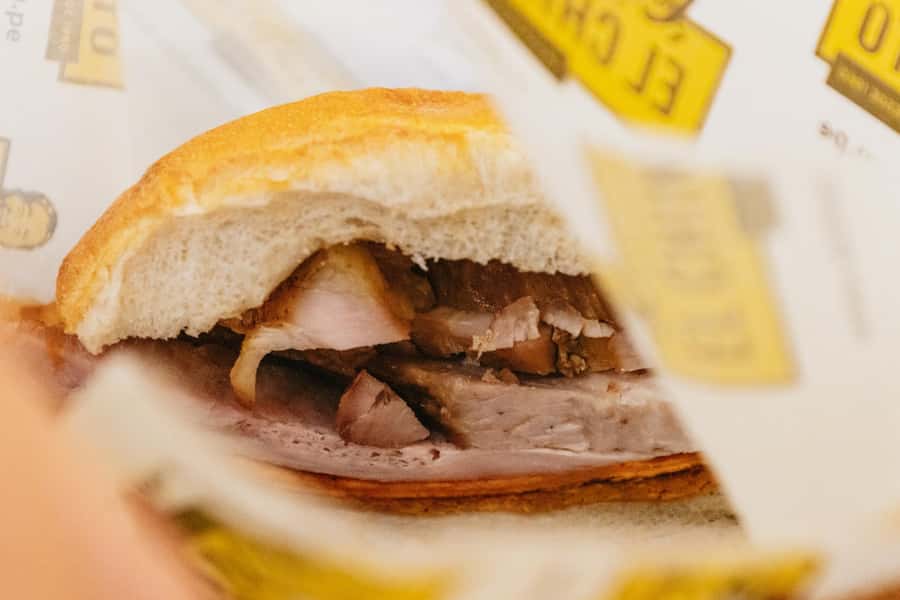
Expect food such as anticuchos, tamales, and a sandwich de chicharrón. Anticuchos, often made with beef heart, can be a useful test of your appetite for less familiar cuts. The grilled meat is one of the dishes most often singled out as a favorite, especially for its strong seasoning and smoky flavor.
The sandwich de chicharrón gives you a different side of Peruvian street food: pork, bread, and substantial texture. Portions are not always full restaurant servings, but the overall amount adds up quickly. If you want to enjoy every stop, pace yourself from the beginning.
Colonial facades between bites
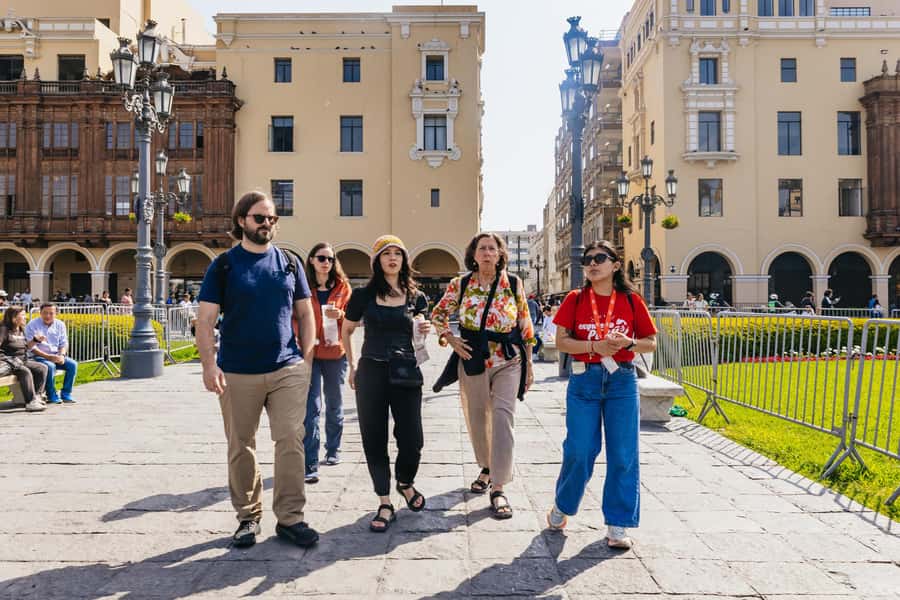
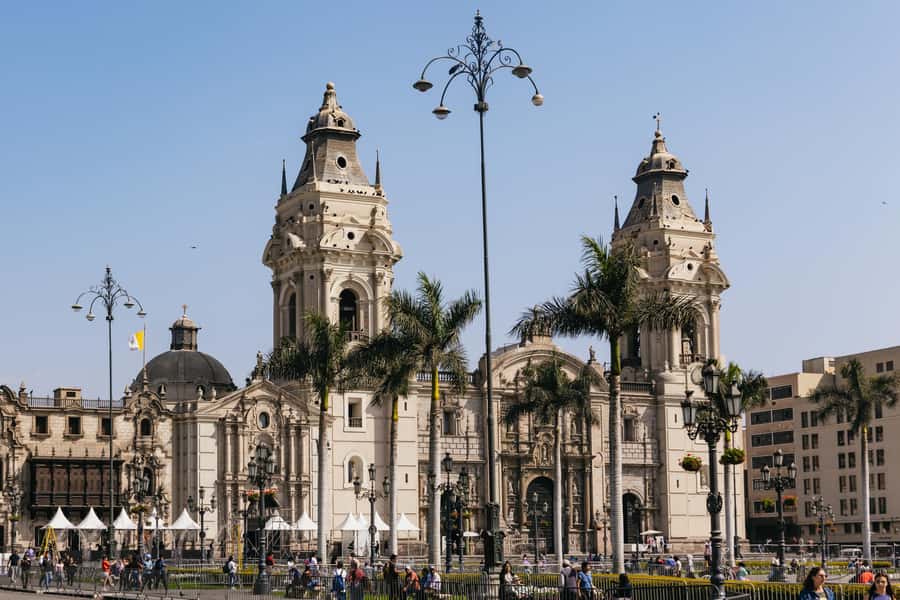
The walking route takes in Iglesia de La Merced, Plaza Mayor, the Cathedral of Lima, and the Basílica y Convento de San Francisco. Most of these are outside photo stops, so this is not a substitute for a dedicated church or museum tour.
Still, the pairing of food and architecture works well. You might hear about Lima’s political and religious centers, then turn onto a commercial street where people are buying snacks or produce. That contrast helps explain how the historic center functions today.
Plaza Mayor is the grandest pause. The Government Palace and Cathedral face this central square, and the stop gives you time for photographs and a short explanation of the city’s past. Later, the Cathedral and San Francisco appear as separate photo stops, giving you more chances to look closely without spending too long in one place.
The walking sections are usually 10 to 15 minutes at a time, with stops for food and drinks in between. One useful practical point is that the tour is not four straight hours of walking. You sit or pause several times, though you should still wear comfortable shoes.
More Heritage Tours in the world:
- Palermo: Street Food and History Walking Tour
★ 4.9 · 1,486 reviews - Old Cairo Guided Walk Tour: History, Culture & Street Bites
★ 4.6 · 633 reviews - Walking Tour and street food Tour Palermo / History and Food
★ 5.0 · 386 reviews - Discover Palermo in 3 hours. Art, history, markets and street food
★ 5.0 · 352 reviews
Mercado Central and the everyday food of Lima
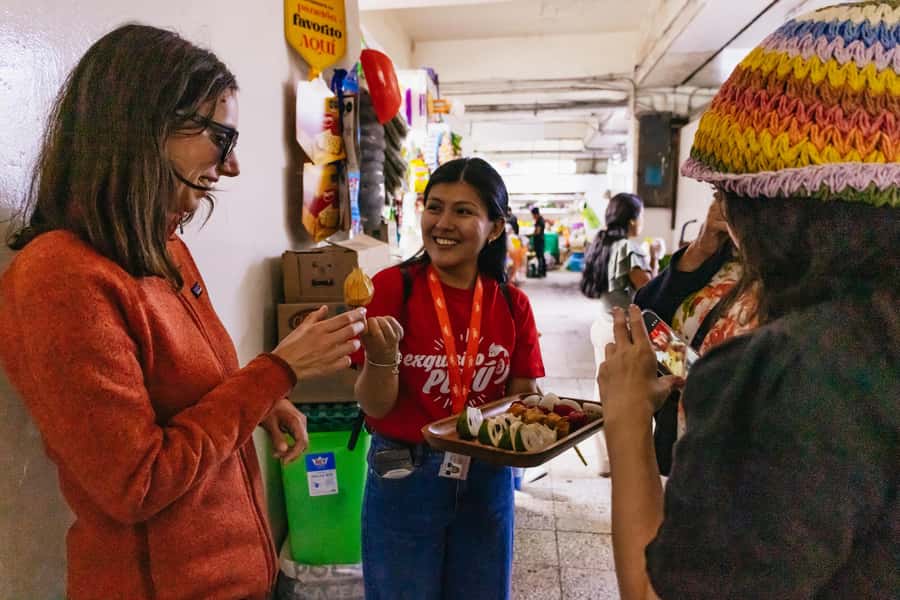
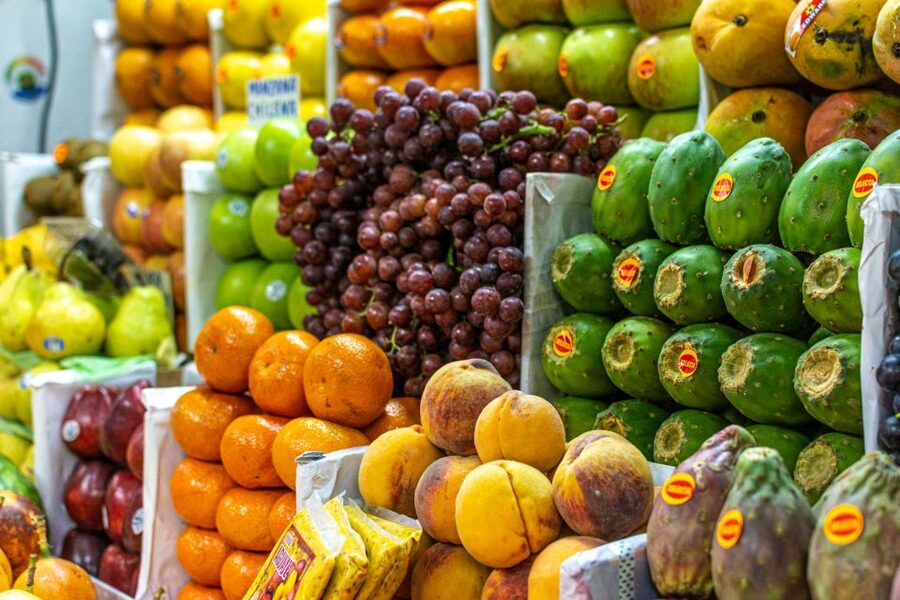
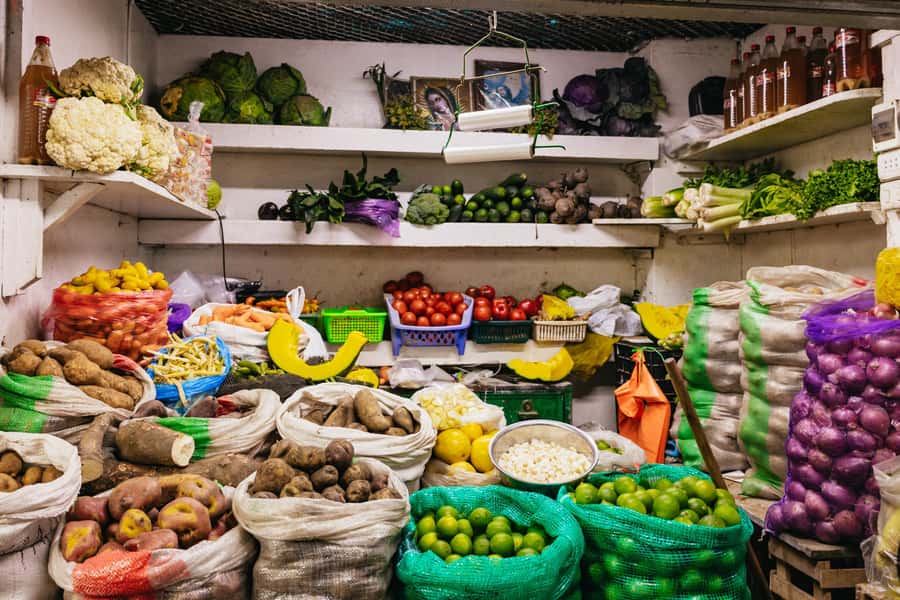
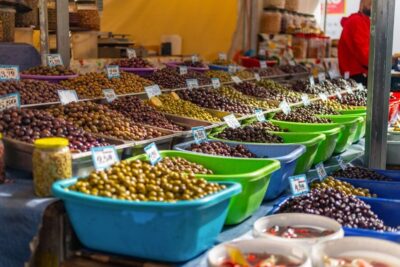
The visit to Mercado Central is one of the strongest parts of the route. You spend about 25 minutes in Lima’s largest market, looking at produce, spices, fruit, and local specialties.
A market gives you information that a polished restaurant cannot. You see the raw materials behind the dishes, the scale of everyday shopping, and the kinds of foods that appear in local kitchens. Depending on the day and the exact stops, you may taste fruit or other market items here.
This is also a good place to ask questions. If you see something unfamiliar, ask what it is used for and how locals eat it. The guide can provide context that is hard to get while walking past a stall on your own.
The market may feel crowded and noisy, and the route is not designed as a leisurely shopping trip. Large bags and luggage are not allowed, so arrive with only what you need. A small crossbody bag is more practical than a suitcase or bulky daypack.
Chinatowns flavors and the chifa connection
The route continues into Barrio Chino, Lima’s Chinatown, for street food and sightseeing. This is a short stop of around 15 minutes, but it adds an important chapter to the food story.
Chifa is the Peruvian name for the cooking tradition that grew from Chinese influence in Peru. It is not simply Chinese food served in Lima. It is a local fusion shaped by Peruvian ingredients, habits, and tastes. Tasting something in Chinatown helps you understand why Peruvian food is so varied.
The stop is brief, so don’t expect a full Chinatown walking tour. Its purpose is to show how migration and local culture shaped what people eat. It also breaks up the sequence of traditional dishes with a different set of flavors.
Street carts, anticuchos, and food on the move
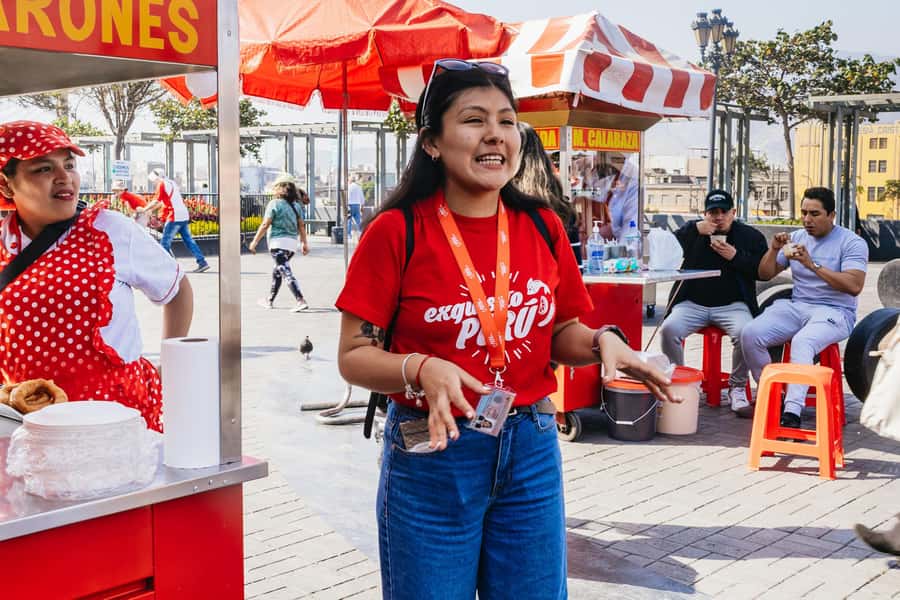
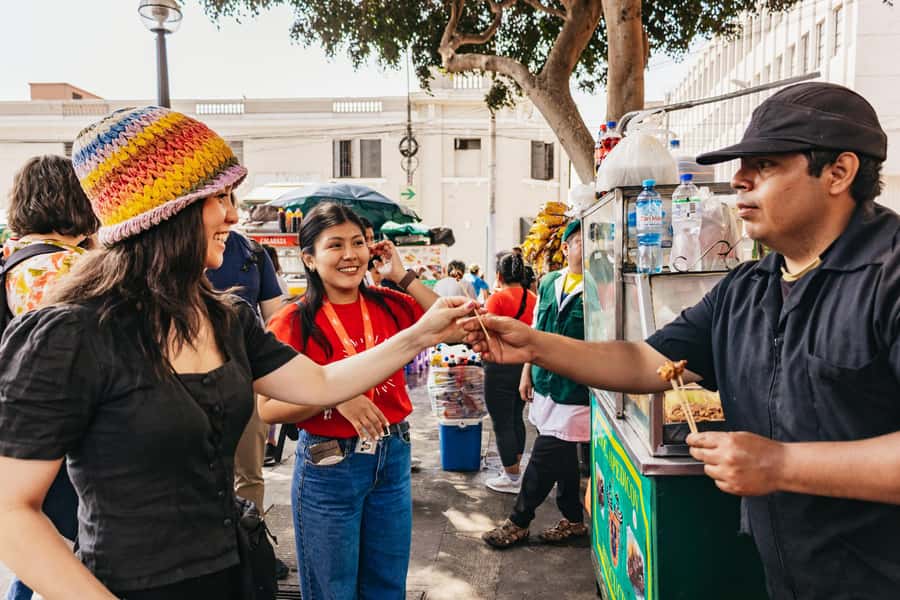
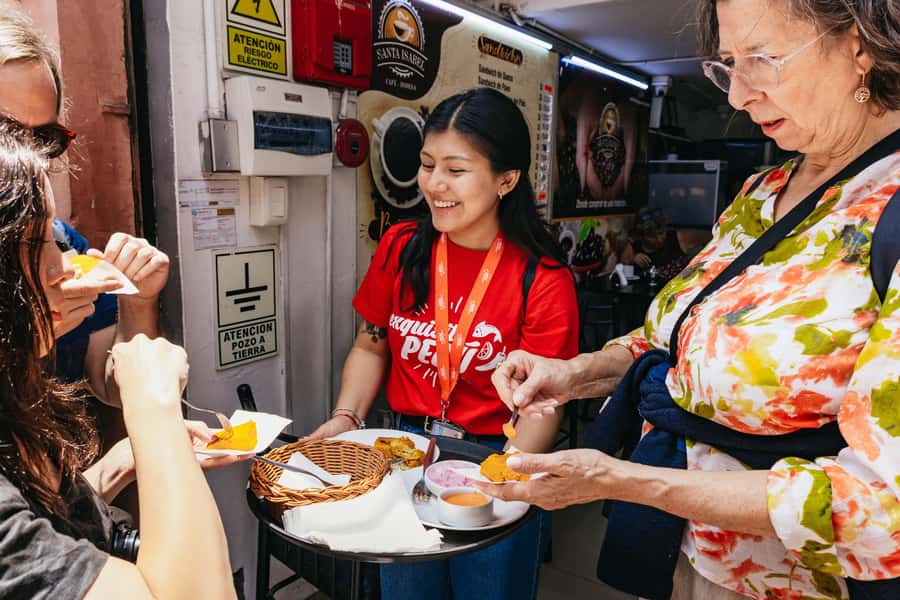
Several short stops focus on comida al paso, or food eaten quickly while going about your day. This is the part of the experience most difficult to recreate without a guide.
Street food often comes with practical questions. What is the dish? How is it cooked? Is it normally breakfast, a snack, or a late-night bite? How do you order it? Your guide can answer those questions while making sure the group reaches each stop on time.
Anticuchos are a highlight for many people, but the tour may also include other small savory tastings. The portions are designed to leave room for later stops, though the total amount can be more than you expect. One person described skipping dinner after the tour, and that is a realistic possibility if you try everything.
If you are a cautious eater, tell the guide early which flavors or ingredients concern you. The tour includes traditional foods, and some may be unfamiliar in texture as well as taste.
Churros, picarones, and the sweet side of the tour
The dessert portion is generous. Expect creole churros and picarones, Peruvian-style doughnuts made with squash and sweet potato, along with another dessert or sweet street-food stop near the end.
The churros receive especially strong praise, and the final sweets can be a real treat if you have a serious sweet tooth. Picarones are worth trying because they are distinctly Peruvian and different from a standard doughnut.
The balance is not perfect for everyone. Some of the savory tastings may be small, while a churro or full picaron can feel large after several earlier stops. If you prefer savory food, ask your guide how much is coming later before accepting a full dessert portion.
That said, the sweets make the tour feel like a progression rather than a series of meat samples. You get salty, smoky, fried, fresh, spicy, and sweet flavors across the afternoon or evening.
Chilcanos in an old Lima casona
The drink stop takes about 30 minutes at a local bar, and the experience includes chilcanos. These are classic Peruvian cocktails made with pisco, ginger ale, lime, and bitters, though the exact preparation may vary.
Having a chilcano in one of Lima’s old casonas gives the drink a sense of place. This is not just a cocktail break added to fill time. It gives your guide a chance to explain pisco culture, drinking customs, and the role of historic buildings in the center.
The tour also includes a drink at an earlier restaurant stop. Alcohol is part of the experience, so this is worth considering if you do not drink. The provided information does not list a nonalcoholic replacement, so ask before booking if that matters to you.
The bar stop can also be a welcome rest. After several walks and tastings, sitting down with a drink helps the four-hour route feel more manageable.
What the guides add to the experience
The strongest part of the tour is the guide’s role. Marcos is often praised for combining humor, food knowledge, and clear explanations of Lima and Peru. Aura is noted for taking time with questions and explaining local eating habits. Valeria is described as well organized and good at connecting food with the city’s culture.
Other named guides include Sheyla, Shainy, David, and Manuel. The exact guide depends on the departure, but you should expect an English-speaking guide rather than a printed food list or self-guided route.
The best guides do more than name each dish. They explain why it matters, how locals eat it, and what it tells you about Peru. They also manage timing, which is important when the route includes many short stops.
The tour is conducted only in English. The shared guide will not provide several languages at once, even if some members of the group speak Spanish. If you need another language, the provider asks you to book a private tour instead.
Who should book this Lima food walk?
I would choose this tour for a first visit to Lima, especially if you want an easy introduction to the historic center before exploring alone. It suits curious eaters who want both local snacks and a basic understanding of the city’s buildings, markets, and neighborhoods.
It also works well as an opening activity for a Peru trip. Several people found that learning the dishes early made them more confident ordering food later. You may leave with a list of foods to seek out again, along with a better sense of which parts of central Lima deserve more time.
This is less suitable if you want a slow, formal architectural tour. The sightseeing stops are short and mostly outside. It is also a poor fit for vegetarians, vegans, pescatarians, and people with severe gluten or nut allergies. Some foods can contain traces of gluten or nuts, and alternatives are not promised.
Tell the provider about dietary restrictions at least 24 hours before the start. Even then, the tour is not designed for plant-based diets or serious allergies.
Practical value at $69
The $69 price is fair if you would otherwise spend money on several snacks, drinks, and a guided walk separately. You receive food tastings, drinks, an English-speaking guide, market access as part of the route, and an organized look at several areas of central Lima.
The value drops if you are a light eater, avoid alcohol, or want a private architectural tour. You may not enjoy every tasting, and the tour does not include entry into the Cathedral or San Francisco.
Food portions are meant to be shared or sampled, but the cumulative amount is considerable. Have a light meal beforehand rather than arriving starving. You want enough appetite for the later churro, picaron, and chilcano without feeling uncomfortable.
The provider offers free cancellation up to 24 hours before the start and allows you to reserve and pay later. Those policies make it easier to fit the tour around changing Lima plans.
Should you book it?
Book this tour if you want Lima’s historic center explained through what people eat, not just what they build. The combination of Mercado Central, Barrio Chino, street carts, local eateries, colonial landmarks, and chilcanos gives you a broad first look at the city in four hours.
Skip it if you need vegetarian or allergy-safe substitutions, dislike sweets, or prefer a short food crawl with little sightseeing. For most omnivorous visitors who enjoy trying unfamiliar dishes, the price is justified by the number of stops and the guide’s local context. Arrive hungry but not empty, wear good walking shoes, carry a small bag, and leave room for dessert.
FAQ
Where does the Lima food tour start?
It starts at the main door of Gran Hotel Bolivar, located at Jirón de la Unión 958 in Cercado de Lima, on Plaza San Martín.
Where does the tour finish?
The tour finishes at Alameda Chabuca Granda. Hotel pickup and drop-off are not included.
How long does the tour last?
The experience lasts four hours and includes walking, food tastings, sightseeing stops, market time, dessert, and drinks.
Is the tour available in languages other than English?
No. The shared tour is conducted in English only. Non-English speakers are asked to book a private tour.
Can vegetarians, vegans, or pescatarians join?
No. The provider states that alternatives cannot be provided for vegetarian, vegan, or pescatarian diets.
Are severe gluten or nut allergies accommodated?
No. Some foods may contain small traces of gluten or nuts, so people with severe allergies should not book this tour.
Just added around the world
- 1 Istanbul Tour: Highlights, Street Food & Hidden Pearls★ 5.0 · 9 reviews
- Evening Hyderabad Street Food Walk with Hyderabad Biryani★ 4.5 · 24 reviews
- Hyderabad Street Food Crawl (2 Hours Guided Food Tasting Tour)★ 4.0 · 5 reviews
- Japanese Street Food Class in Beech Grove★ 5.0 · 9 reviews
- Small-group Street food tour in Ischia★ 3.5 · 2 reviews
- Hyderabad : Evening Street Food Tasting with Guided Old City Tour★ 5.0 · 10 reviews
- Hyderabad Street Food Experience with Local Expert★ 4.5 · 2 reviews
- Hue Street Food On Foot (Daily Tour – Group Tour | 12 pax max)★ 5.0 · 15 reviews
Street Food Market Tours, compared.
Tokyo Tsukiji Fish Market Food and Culture Walking Tour
Read our review →
London Bridge & Borough Market Food Tour with 7 Authentic Dishes
Read our review →
Tokyo: Tsukiji Fish Market Food and Walking tour
Read our review →
Small Group Cooking Class & Market Food Tour in Florence
Read our review →
Tokyo: Tsukiji Fish Market Guided Walking Tour
Read our review →
Nishiki Market Brunch Walking Tour (7 Tastings + Brunch)
Read our review →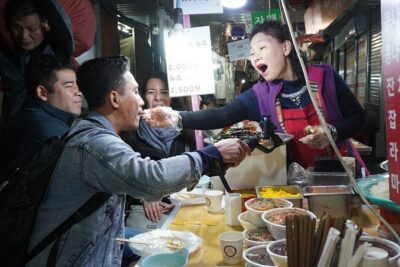
Food Market Visit and Cooking Class with Wine
Read our review →Browse the lists this tour appears in