
REVIEW · MARRAKECH STREET FOOD TOURS
Medina Tasting Tour: Experience Local Street Food & Culture!
Marrakech’s best food lesson may happen while you are walking. This four-hour Medina tour moves from Jemaa el Fnaa to spice stalls, bakeries, snack counters, and a traditional tanjia restaurant, with local guide Youssef explaining what you are eating and why it matters. You finish with a full meal, not just a few sample bites.
I like the good balance between sweet and savory food, and I like that the tour includes real street stops rather than only a sit-down restaurant. Youssef is also praised for tying food to Berber culture, Marrakech history, and daily life. The main drawback is simple: there is a lot to eat, so this is not the right outing if you prefer a light evening meal or need complete control over every ingredient.
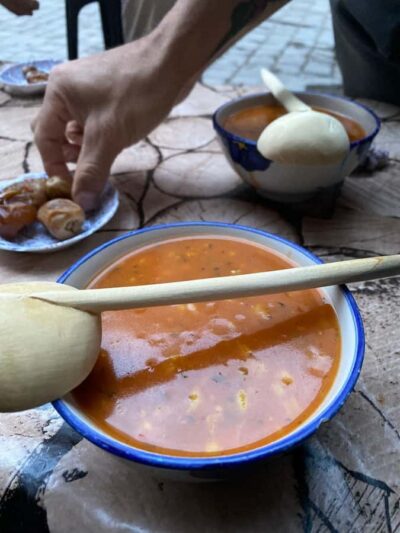
- Tanjia finale: End with harira soup and beef tanjia or vegetarian tajine at Chez Lamine Hadj Mustapha.
- Food beyond pastries: Sample fruit juice, nuts, dried fruit, Moroccan pastries, local snacks, and savory street foods.
- A guide-led Medina walk: Youssef brings context about Marrakech, Berber culture, food customs, and the city’s daily life.
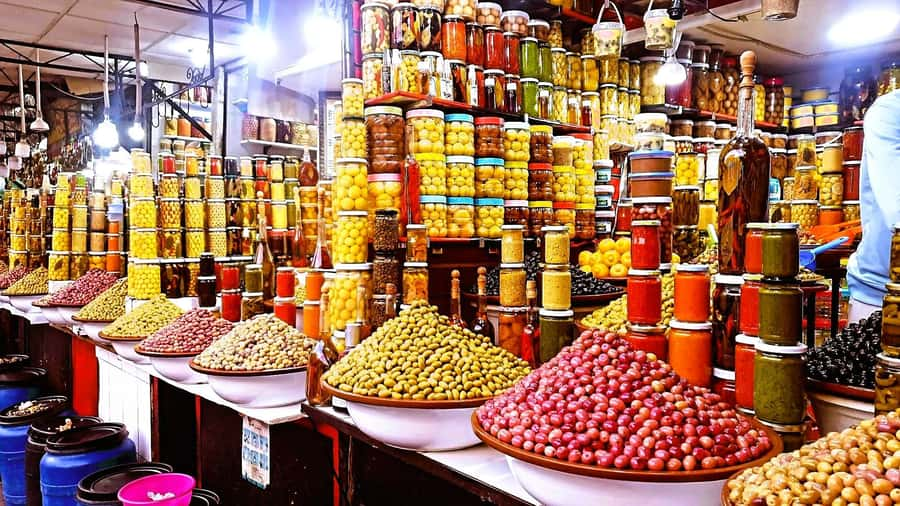
- Markets with a purpose: Visit the spice and olive markets, including Rahba Lakdima and Souk Semmarine.
- Four hours on foot: Wear comfortable shoes and arrive hungry, since the tastings build into a full dinner.
- Flexible booking: Cancel up to 24 hours ahead for a full refund, or reserve now and pay later.
A Food Tour That Begins at Jemaa el Fnaa
The meeting point is easy to identify: the main gate of the Maroc Post Office, facing Jemaa el Fnaa square. Look for a guide wearing an official red and green ribbon and badge.
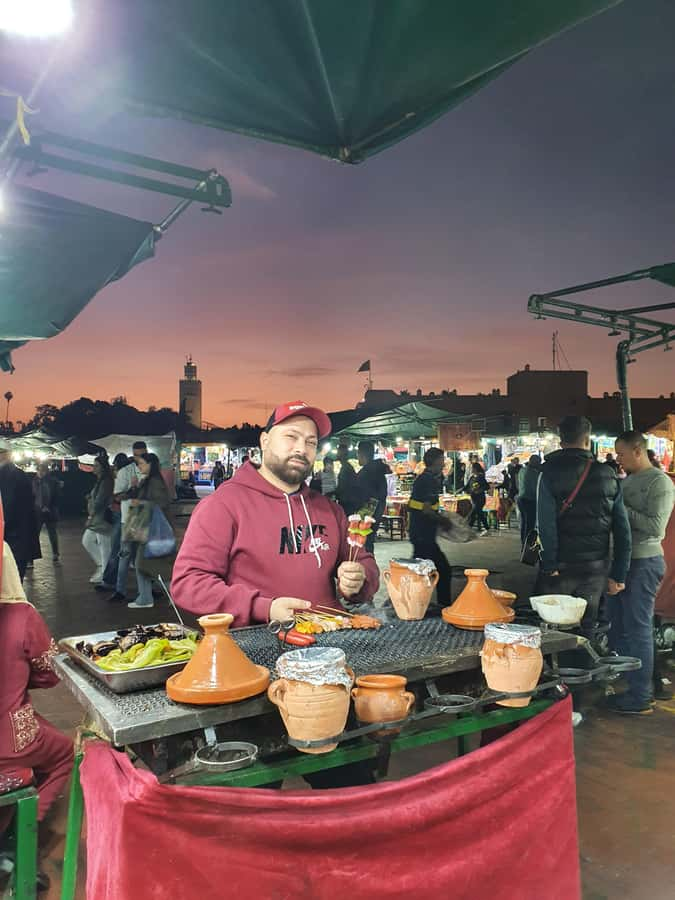
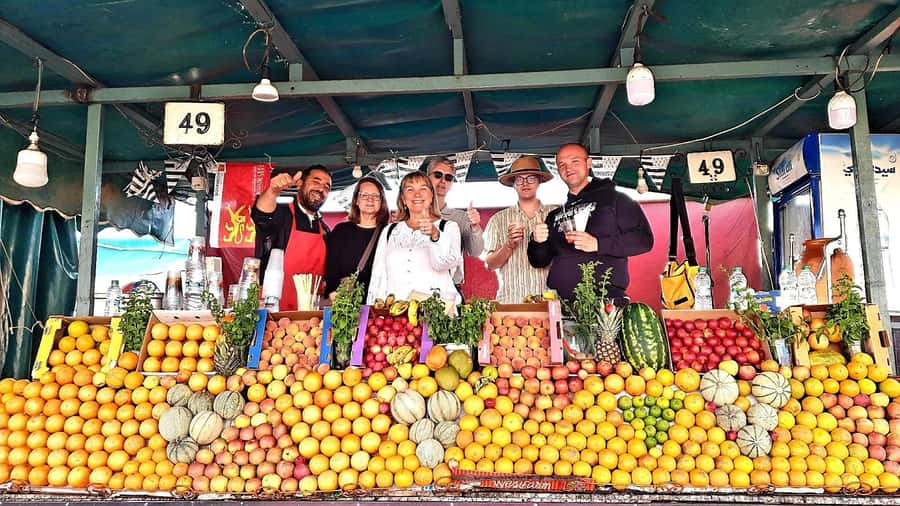
The square is more than a starting point. Jemaa el Fnaa is a UNESCO World Heritage site and one of Marrakech’s great public stages. The tour may begin with a welcome refreshment, a fruit juice of your choice, and a short look at the food stalls and street life around the square.
I like starting here because it gives you an immediate sense of how food fits into Marrakech’s public life. You are not being led straight into a quiet restaurant. You begin where locals and visitors gather, with food carts, performers, passing shoppers, and the evening energy of the Medina all around you.
The square can also be confusing, especially after dark. Starting and ending at the post office gives you a fixed landmark. That is useful if you are still getting your bearings in Marrakech.
Small Tastings Before the Main Meal
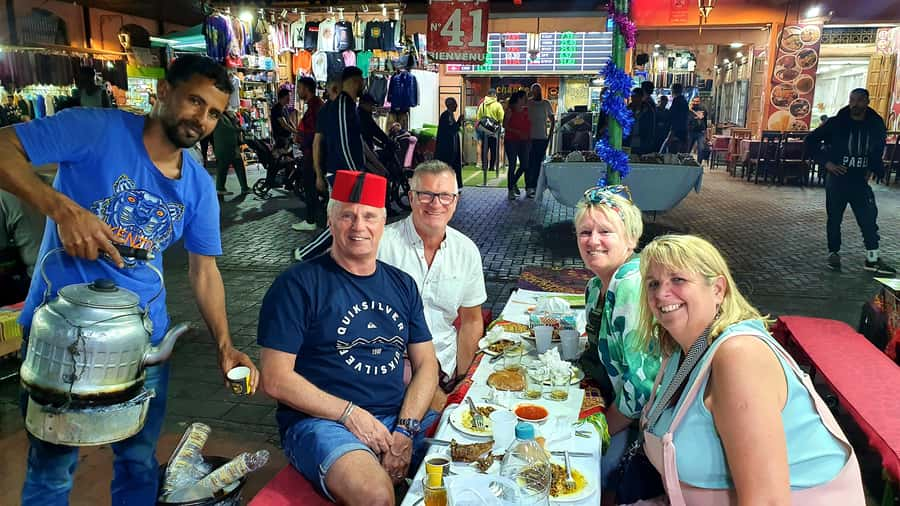
From Jemaa el Fnaa, the group walks about five minutes to a local café. This is a short stop, around 15 minutes, focused on food tasting rather than a long coffee break.
You may begin to understand the structure of the experience here. The tour does not ask you to choose one unfamiliar dish and hope for the best. Instead, Youssef introduces several tastes in small portions, giving you a chance to notice different spices, textures, and cooking styles.
The tour also includes a mix of dried fruits and nuts, along with Moroccan sweet and savory pastries. This is useful for anyone who wants an introduction to Moroccan food without committing to a large plate at the first stop.
A word of caution: even small tastes add up quickly. Several people who joined the tour found they could not finish the final dinner. I would treat the first hour as the beginning of a long meal, not as a series of harmless nibbles.
A few more street food tours around Morocco worth a look
- Marrakech: Street Food Tour with a Local Guide
★ 4.9 · 3,119 reviews - Marrakech: Street Food Tour by Night
★ 4.8 · 2,838 reviews - The Original Marrakech Street Food Tour
★ 5.0 · 248 reviews
Spice Markets, Olive Stalls, and Local Food Knowledge
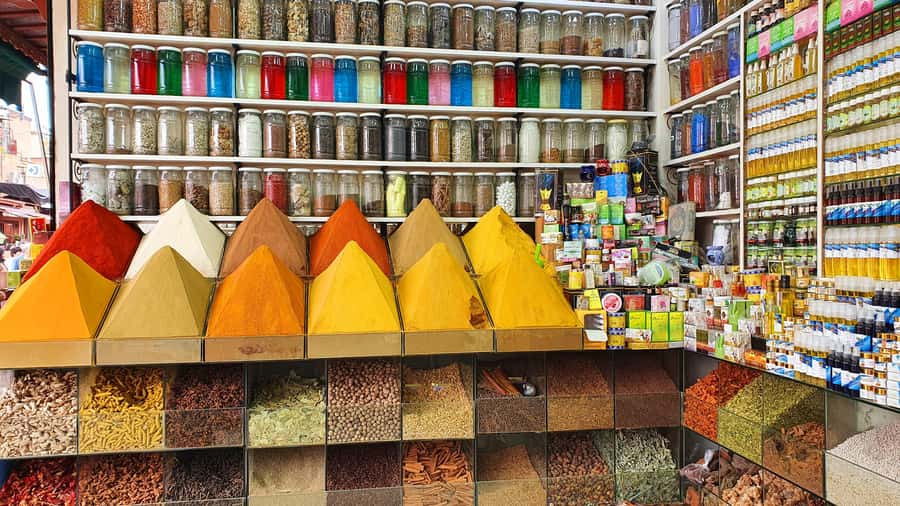
The next stops take you farther into the Medina, including a food market and a spice discovery workshop. The route includes Rahba Lakdima, the old spice market, where you have time for photographs, a market visit, and some shopping.
This part is especially helpful if you are unsure what you are looking at in Moroccan markets. A guide can explain how different spices are used, how local foods are prepared, and which purchases deserve care. The tour also promises advice on avoiding tourist traps, a practical benefit when you are surrounded by colorful powders, dried goods, and sales pitches.
One unusual feature is access to a private terrace overlooking the spice market. That offers a calmer view of the market below and gives you a break from the narrow lanes. The experience also includes an underground mechoui oven, which adds a look at traditional cooking methods beyond the usual restaurant setting.
I like this section because it connects the food on your plate with the work behind it. You are not simply told that Moroccan cooking uses spices. You get to see the places where ingredients are sold and hear how they fit into local dishes.
The shopping element may not suit everyone. If you are not interested in buying spices, olives, or food products, you can focus on the explanations and atmosphere instead. The tour includes market visits, but it is not presented as a dedicated shopping trip.
Bakeries and Savory Street Food
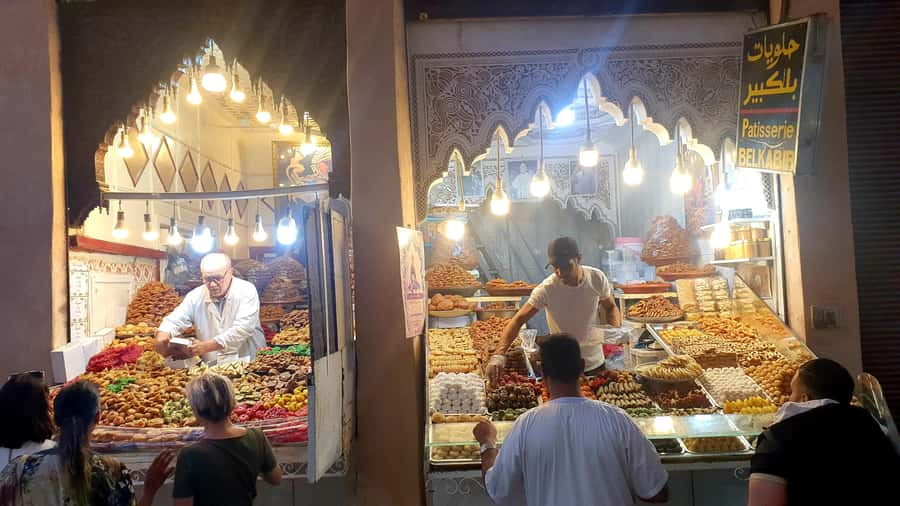
A stop at a local bakery follows, with about ten minutes set aside for tasting. Moroccan bakeries are a useful part of the food story because bread and baked items often sit at the center of everyday meals.
After the bakery, the route continues to a place identified as مطعم تزنيت, where you can taste more street food and local snacks. The exact stops can change during Ramadan and local holidays, so the food available on your date may not match every example described in advance.
That flexibility is worth understanding. A food tour in a working market depends on opening hours, religious observances, and what is fresh that day. You gain a more local experience, but you should not expect a rigid menu with every item guaranteed.
The tour includes two or three additional snack stops. These may cover more pastries, savory bites, fruit, or other local specialties. The aim is variety. If you are an adventurous eater, this is the strongest part of the tour. If you have a narrow diet, tell the operator about allergies or dietary needs at least four hours before the tour so the stops can be planned.
Walking the Medina Between Bites
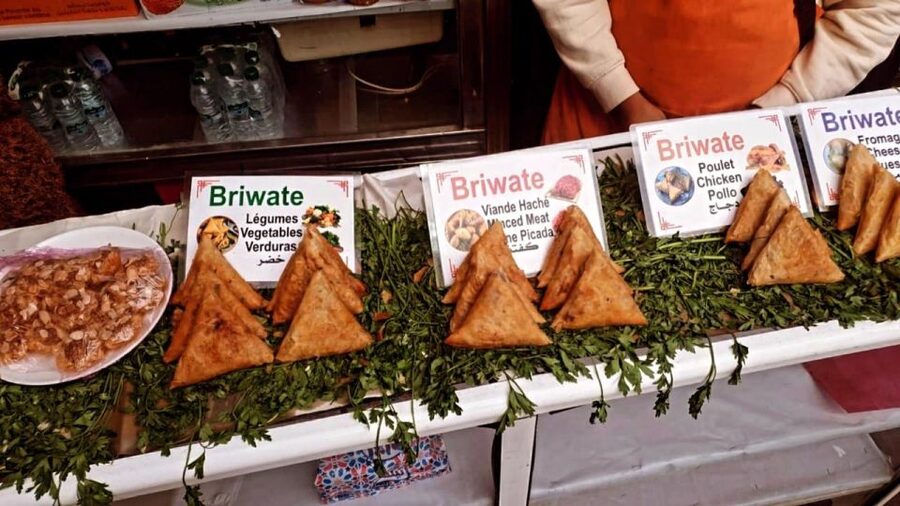
The tour includes several walks of five to 15 minutes. One stretch from the food stop to Rahba Lakdima takes about 15 minutes, and another 15-minute walk leads toward Souk Semmarine.
These distances are not extreme, but the Medina’s lanes can be crowded and uneven. Comfortable shoes are essential. You will also spend time standing at market counters and food stops, so sturdy footwear matters more than dressing for a formal dinner.
The listed activity is wheelchair accessible, but the route is still a walking tour through markets and souks. If you use a wheelchair or have limited mobility, confirm the exact route and stop access before booking, especially because conditions in the old city can vary.
Souk Semmarine adds another market atmosphere to the evening. Here you pass through one of the main souks, with another chance to sample street food and local snacks. This section is less about one landmark and more about seeing how food stalls fit into the wider commercial life of the Medina.
Same city, a different plate:
- Marrakech: Authentic Moroccan Food Walking Tour & Dinner
★ 4.8 · 261 reviews - Marrakech Street Food Tour
★ 5.0 · 220 reviews - Marrakech Night Street Food Tour / Taste The Real Marrakech
★ 4.9 · 200 reviews - Casablanca Food Tour – Moroccan Street Food Tour
★ 5.0 · 86 reviews
The Tanjia Dinner at Chez Lamine Hadj Mustapha
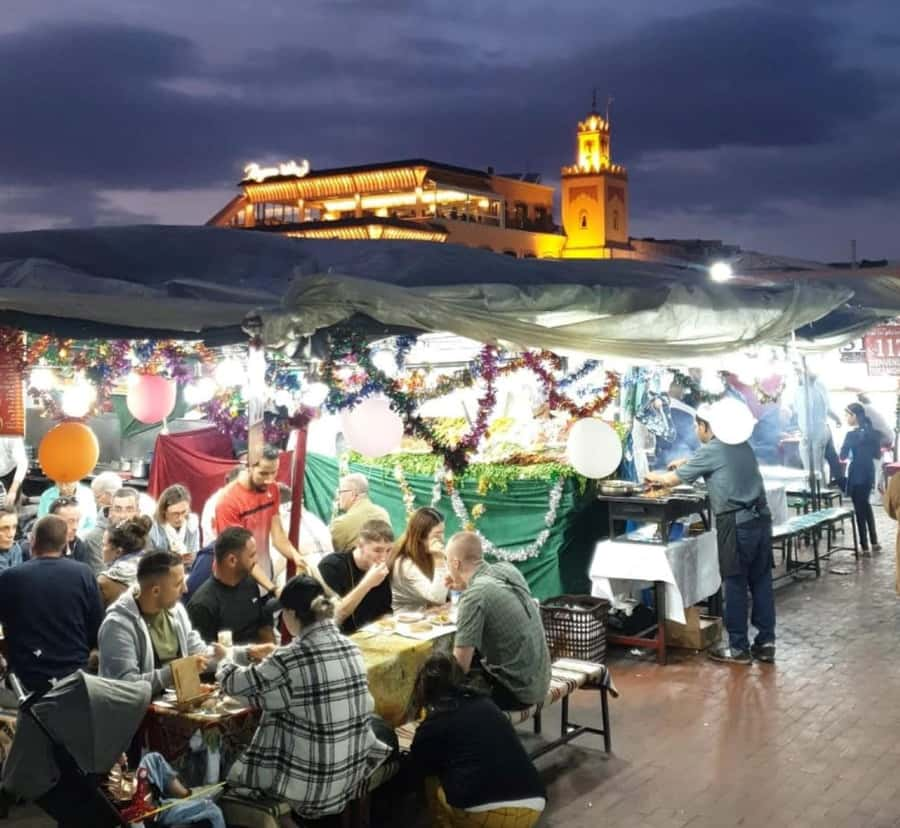
The centerpiece comes at Chez Lamine Hadj Mustapha, also referred to as the Haj Lamine restaurant. You spend about an hour here for tea and dinner.
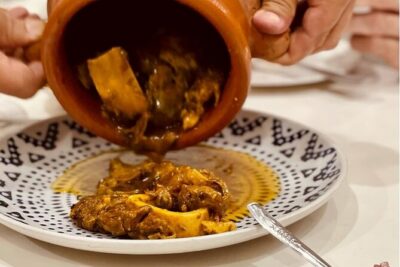
The included meal is a two-course menu. The starter is harira soup in or around Jemaa el Fnaa, and the main course is beef tanjia or a vegetarian tajine. Tanjia is one of Marrakech’s signature dishes, so this is an important distinction from a general Moroccan meal. You are getting a dish closely linked with the city rather than only the better-known tagines found across the country.
The beef option may not suit everyone, but the vegetarian tajine gives non-meat eaters a clear alternative. Communicate dietary requirements well before the tour rather than waiting until the evening begins.
Two mint teas are included per person, and bottled water is provided during dinner. Additional drinks are not included, so bring some cash or be prepared to pay separately if you want something beyond the included juice, tea, and water.
This final meal changes the value calculation. At $66 per person, you are not paying only for a guide and a few samples. You are also receiving a substantial dinner, several tastings, a fruit juice, tea, market interpretation, and access to food stops that may be difficult to find on your own.
A Final Viewpoint and Tea Ceremony
After dinner, the route continues on foot for about five minutes to a viewpoint. The stop includes street food, tea, and a traditional dance show, with about ten minutes set aside.
It is a short ending rather than a long performance. Think of it as a final taste of local culture before returning to the post office, not a full evening show with reserved seating.
The tour then walks about five minutes back to the starting point. Ending where you began is handy, particularly if this is your first night in Marrakech and you do not yet feel confident navigating the Medina alone.
What Makes Youssef a Strong Guide
The clearest strength of this experience is the guide. Youssef is repeatedly praised for being warm, easy to talk with, and able to explain food in a wider cultural setting.
That matters on a food tour. Without context, harira is just soup, tanjia is just meat, and a spice market is just a row of colorful displays. A good guide explains how those things connect to Marrakech’s customs, Berber culture, local work, and daily meals.
Youssef has also handled private departures when only one person booked. That may not be guaranteed, and you should not book expecting a private tour, but the option of a private group is available. English and French are the tour languages.
The guide’s storytelling is another reason to consider this experience. The focus is not only on facts about ingredients. You can expect discussion of the city’s past and present, with food used as a way into the culture.
Is $66 a Fair Price?
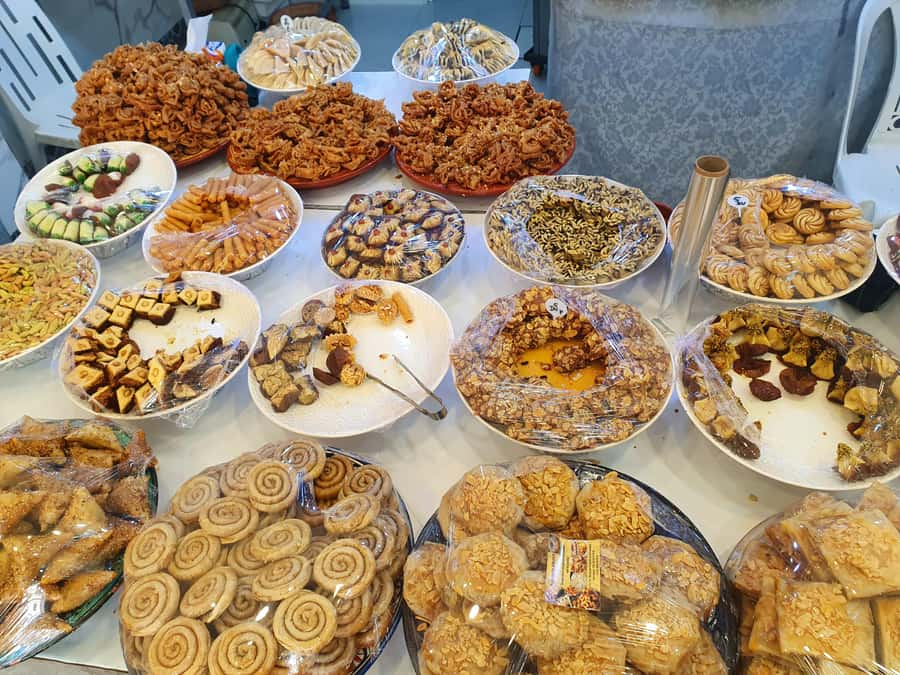
For four hours, the price is reasonable if you plan to eat a full dinner anyway. You receive multiple street-food tastings, pastries, dried fruit and nuts, a fresh juice, two mint teas, a two-course dinner, and guided access through several market areas.
You are also paying for convenience. Finding an underground mechoui oven, a suitable bakery, a trusted tanjia restaurant, and the right stalls in the Medina would take time and some trial and error. The guide helps you avoid spending an evening on mediocre food or falling for an overly touristy stop.
The value is weaker if you only want a short food sampling. This is a long evening with plenty of food, walking, cultural explanation, and a full main course. You may also spend extra on drinks or market purchases.
I see this as particularly good value for a first night in Marrakech. It gives you a meal, an introduction to the Medina, and practical advice before you explore the markets alone.
Who Should Book This Experience?
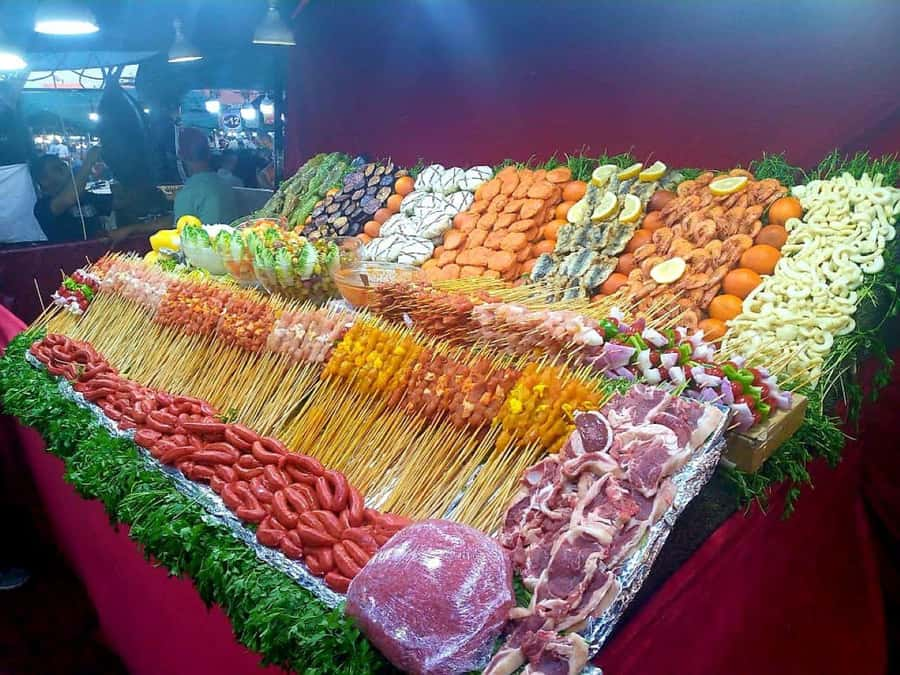
I would recommend it to you if you enjoy trying unfamiliar food, want local context, and prefer walking through real markets to sitting in one restaurant. It is also a useful choice for solo visitors, couples, and small private groups who want an organized introduction to Marrakech.
Food lovers should arrive very hungry. The savory and sweet balance is better than a route built around bread and pastries alone, but there is still a great deal to eat.
Families and people with dietary restrictions should communicate clearly in advance. The operator can plan for special requirements if told at least four hours before the tour, but the changing market route means you should not assume every dietary need can be handled on the spot.
This may not be ideal for you if you dislike crowded markets, need a quiet seated experience, or want exact control over the evening’s menu. It also requires walking and standing, even though the activity is listed as wheelchair accessible.
Final Verdict: A Strong First Evening in Marrakech
Book this Medina tasting tour if you want your first real lesson in Marrakech to come through food. The route covers much more than snacks, with spice markets, local bakeries, street food, cultural stories, and a proper tanjia dinner.
The biggest reason to choose it is Youssef’s personal approach and the balance between eating and learning. The biggest caution is the generous amount of food and the walking involved. Arrive hungry, wear comfortable shoes, share any allergies early, and leave room for the tanjia finale.
FAQ
Where does the Medina tasting tour meet?
Meet in front of the main gate of the Maroc Post Office, facing Jemaa el Fnaa Square. The guide wears an official red and green ribbon and badge.
How long does the tour last?
The activity lasts four hours, with starting times available depending on the date.
What food is included?
The tour includes several street-food tastings, fresh fruit juice, dried fruits and nuts, Moroccan sweet and savory pastries, two or three additional snack stops, and a two-course dinner.
What is served for dinner?
The dinner includes harira soup and a choice of beef tanjia or vegetarian tajine. The meal takes place at Chez Lamine Hadj Mustapha, also known as the Haj Lamine restaurant.
Are drinks included?
Fresh fruit juice, two mint teas per person, and bottled water during dinner are included. Additional drinks are not included.
Is the tour suitable for vegetarians?
A vegetarian tajine is available as the main course. You should communicate any dietary requirements or allergies at least four hours before the tour.
Which languages are available?
The live tour guide is available in English and French.
Is the tour wheelchair accessible?
The activity is listed as wheelchair accessible. Since the route includes walking through markets and souks, confirm the practical details of the route if you need step-free access throughout.
Can I cancel or pay later?
You can cancel up to 24 hours in advance for a full refund. Reserve now and pay later is also available, and private groups can be arranged.
Just added around Morocco
- Fez Street Food Tour★ 4.5 · 33 reviews
- The Sunday Market in Had Draa & Local Food Tasting.★ 5.0 · 33 reviews
- Essaouira Guided Tour: 3 on 1 – Nightlife tour, Live like a local & Street food★ 4.5 · 32 reviews
- Marrakech Guided Day Trip from Casablanca: Djemaa el-Fna Square and Bahia Palace★ 4.0 · 3 reviews
- Casablanca Food Tour – Moroccan Street Food Tour★ 5.0 · 86 reviews
- Casablanca Market and Street Food Walking Tour★ 5.0 · 3 reviews
- Agadir with a Local–Balade Authentic & Tasting Street Food★ 5.0 · 21 reviews
- Tangier: Food Walking Tour★ 4.9 · 43 reviews
Marrakech Street Food Tours, compared.
Marrakech: Authentic Moroccan Food Walking Tour & Dinner
Read our review →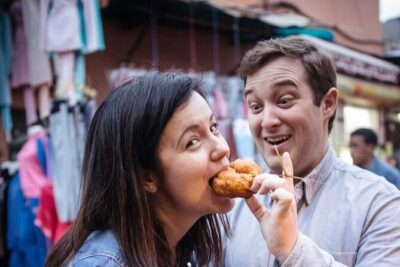
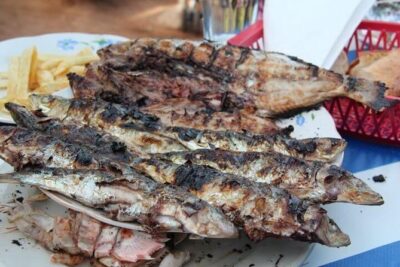
Marrakech Night Street Food Tour / Taste The Real Marrakech
Read our review →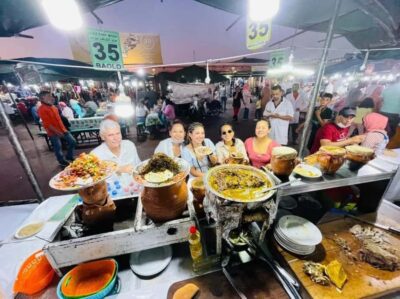

Discover Marrakech Street Food with a Local Guide
Read our review →Browse the lists this tour appears in