
REVIEW · STREET FOOD MARKET TOURS
Seoul: Fearless Foodie Gwangjang Market Food Adventure
Gwangjang Market is a fine place to test your Korean food courage without committing to a full plate of every unfamiliar dish. This two-hour challenge takes you from one taste to the next, with a stamp for each successful bite and a small traditional souvenir at the end. I like the 10 to 12 dishes and the way the stamp card gives the meal a playful purpose. I also like the small group size, capped at 10, which makes it easier to ask questions and keep pace.
The main caution is the food itself. Some dishes are spicy, and the menu can include meat, poultry, eggs, dairy, and alcoholic drinks. Vegans and vegetarians should skip this tour, while anyone with allergies or dietary limits should explain them when booking and confirm what can be changed.
Key points to know before you book
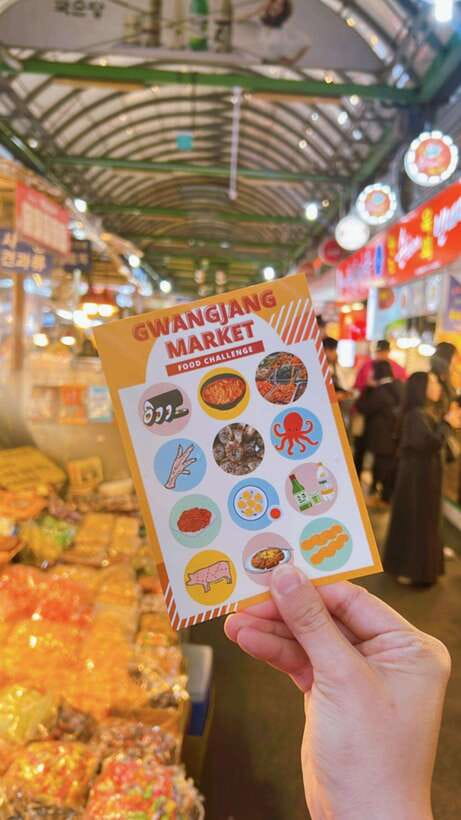
- A food challenge, not a standard market walk: You earn one stamp after trying each dish.
- Around 10 to 12 foods are included: Small portions let you sample widely without ordering a full serving of every item.
- Gwangjang Market is the setting: The tour combines dinner, street food, food stalls, and market sightseeing.
- Guides add stories and practical help: Gina, Helena, and Cecilia are among the English-speaking guides associated with the experience.
- Spicy dishes are part of the test: Come ready for unfamiliar flavors and some heat.
- The $81 price buys guidance and variety: It is most useful if you want a structured introduction rather than a self-guided meal.
Why the stamp challenge works at Gwangjang Market
Many market food tours ask you to follow a guide and eat whatever appears next. This one gives you a simple mission: try each dish, collect the stamp, and complete the card.
That small change matters. If you are nervous about Korean food, the challenge keeps you from backing away at the first unfamiliar plate. You are not ordering a large portion and hoping for the best. You take a manageable taste, decide how far you want to go, and move on to the next stop.
It also keeps the two-hour visit moving. Gwangjang Market offers plenty to look at, and it would be easy to lose time choosing between stalls. Your guide handles the food choices while you focus on tasting, asking questions, and keeping your stamp count alive.
The reward at the end is a small traditional Korean souvenir. It is not the main reason to book, but it gives the evening a clear finish and a physical reminder of the challenge.
More Street Food Market Tours in South Korea
- Seoul Street Food Market Tour
★ 5.0 · 1,226 reviews - Seoul: Night Market Food Tour with Local Guide
★ 4.9 · 943 reviews - Mangwon Market Food tour By Locals; Cheap Eats to Fancy Feast
★ 5.0 · 38 reviews
Meeting at Jongno 5-ga Station Exit 8
The experience begins at Jongno 5-ga Station, Exit 8. That clear meeting point is useful in central Seoul, especially if you are still learning how to navigate the city’s station exits.
You should arrive ready to eat. The tour lasts two hours, and the included food is spread across the market visit rather than served as one conventional meal. Starting hungry makes it easier to appreciate the range of dishes and gives you a fair shot at finishing the challenge.
The tour is conducted in English, with a live guide. Group size is limited to 10 participants, so this is not a large coach-style outing. A small group suits a market well: you can stay together more easily, hear explanations, and ask about ingredients without shouting across a crowd.
The exact guide can vary. Names connected with this experience include Gina, Helena, and Cecilia. Gina is especially associated with a lively style, helpful tips, market discoveries, and taking photos during the outing. You should not assume a particular guide will lead your departure, but the English-speaking format is part of the booking.
Inside Gwangjang Market, one taste at a time
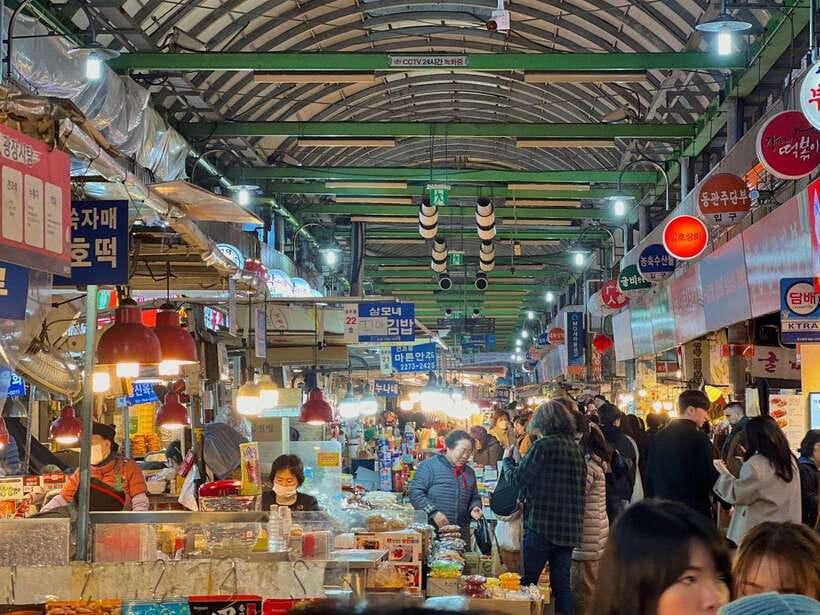
The main stop is Gwangjang Market, where the tour combines food tasting with a look at the market itself. The setting is important. You are not eating Korean dishes in a hotel dining room or a tourist restaurant designed around a fixed menu. You are sampling foods connected to the everyday market scene.
The food list is described as around 10 to 12 dishes and beverages. Exact dishes can vary, so you should treat the menu as a tasting route rather than a guaranteed list. The experience is designed around distinctive Korean foods, including choices that may be unfamiliar if you normally stick to barbecue, fried chicken, or bibimbap.
Two foods singled out by name are sundae and mungbean pancake. Korean sundae is a sausage-style dish that can surprise people who associate the name only with ice cream. The mungbean pancake offers a different experience, with a crisp surface and a savory center. These kinds of contrasts are the point of the tour: soft and crisp, mild and spicy, familiar-looking and completely new.
Your guide helps you understand what is in front of you and how to approach it. That is valuable at a market, where a dish’s appearance may not tell you much about its texture, seasoning, or ingredients. The explanations also connect the food to Korean customs and market life, rather than treating each sample as an isolated snack.
How the stamps shape the meal
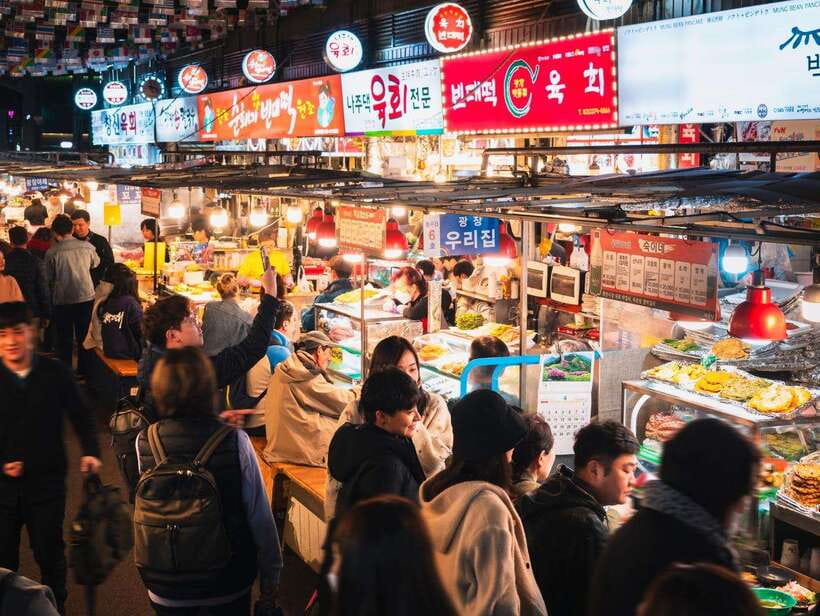
The first dish begins the challenge. If you eat it, you receive a stamp and continue to the next stop. You repeat the process until the card is complete.
This format is particularly good for curious eaters who need a little encouragement. You can treat each dish as a small experiment instead of judging the entire cuisine based on one unfamiliar bite. The stamp system also adds a light competitive edge for couples, friends, or families with older children who enjoy a clear goal.
Still, you should know what the challenge asks of you. The description says you need to successfully eat each dish to earn its stamp. This is not simply a walk where you can sample one safe item and watch the rest. If you are highly cautious with food, the format may feel demanding.
Spice is another part of the test. Some dishes can be very hot, and the tour encourages you to try your best. Your tolerance may differ from everyone else’s, so pace yourself and ask the guide about heat when possible. The supplied information does not promise substitutions for spicy dishes, so do not book expecting a fully adjustable menu.
More Market Food Tours in Seoul:
- Seoul: Namdaemun Market Food Tour
★ 4.9 · 34 reviews - Seoul: The Biggest Sea-food Noryangjin Market Tour
★ 4.3 · 30 reviews - Seoul: Guided Street Food Tour at Namdaemun Market
★ 5.0 · 10 reviews - Mangwon Market Food tour By Locals;Cheap Eats to Fancy Feast
★ 4.9 · 9 reviews
What the food selection means for different diets
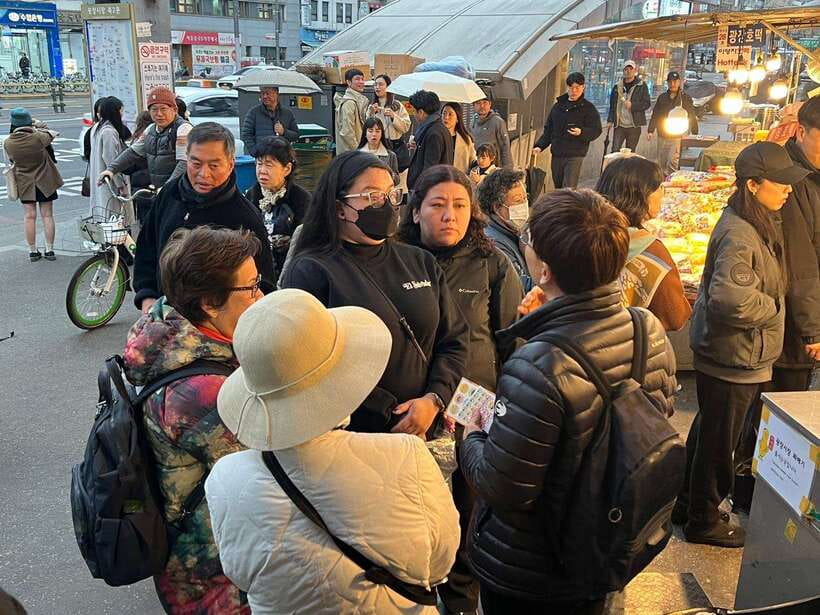
This tour is not suitable for vegans or vegetarians. The food may include meat, poultry, eggs, and dairy, along with alcoholic and non-alcoholic beverages.
That makes the tour a stronger fit for an omnivore who wants a broad introduction to Korean food. It is less suitable if you need strict control over cross-contact, ingredients, or preparation methods. Anyone with allergies or dietary restrictions should provide that information during the reservation process, but you should still confirm what the guide can safely offer.
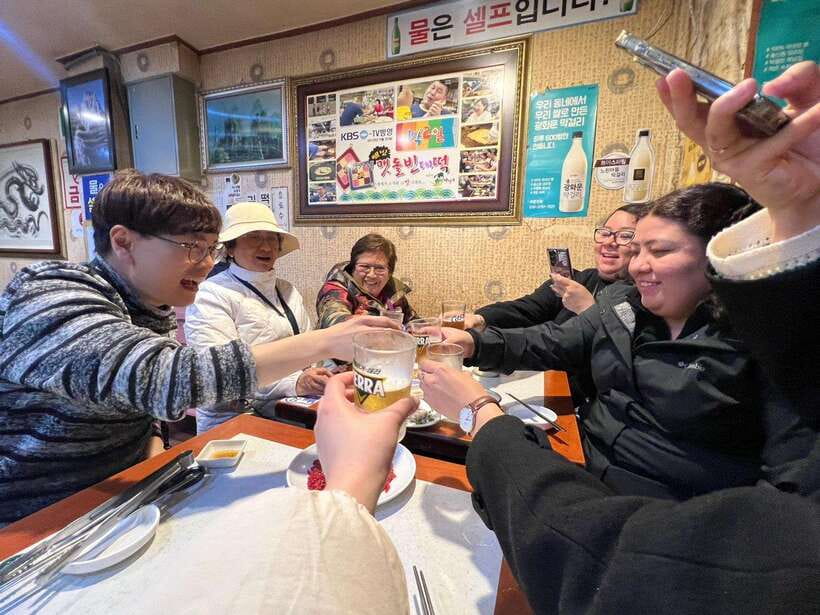
Alcohol may be included among the drinks. If you do not drink, the experience also offers non-alcoholic options, according to the activity details. If you have a strong preference, state it ahead of time rather than waiting until you are at the market.
The broad menu is one of the tour’s attractions, but it is also why this is not a one-size-fits-all food outing. You are signing up for variety, not a carefully limited menu.
Is $81 good value for two hours?
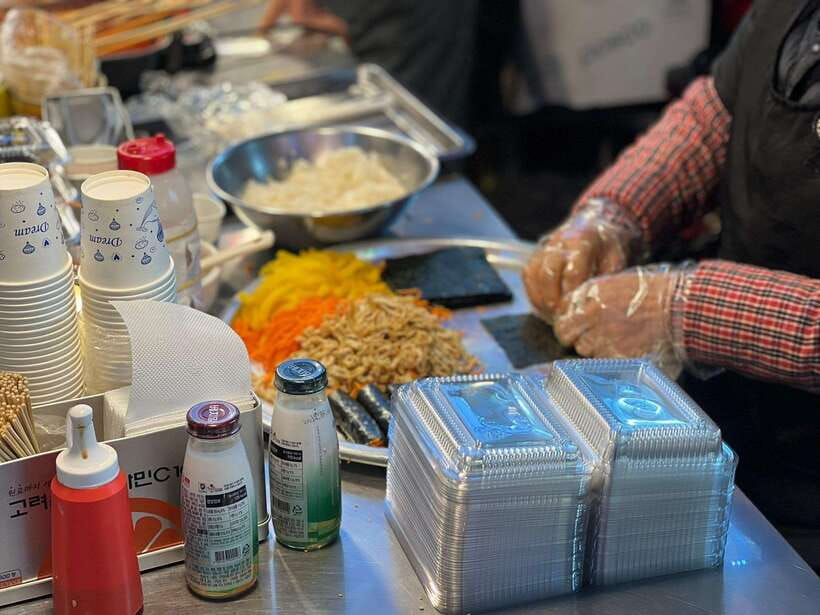
The price is $81 per person. That is not the cheapest way to eat at Gwangjang Market. If you already know what you want, speak some Korean, and feel comfortable choosing stalls on your own, you could likely spend less by buying individual portions directly.
The value comes from the structure. You receive around 10 to 12 market foods, an English-speaking guide, explanations, a planned route, and the food challenge. You also avoid the common problem of ordering too much of one item because you cannot tell how filling it will be.
For a first visit to Seoul, the price can make sense if you want a guided introduction and prefer tasting many small portions. It is especially useful for solo visitors who do not have companions with whom to split dishes. A group of two or more can also benefit because you get variety without each person needing to order everything.
The souvenir adds a modest extra, but I would not use it to justify the cost. Think of the $81 as payment for access, guidance, food, and a low-stress way to sample a wide range of dishes. If your main goal is the lowest possible meal cost, choose another plan.
The guide’s role is more than pointing at food
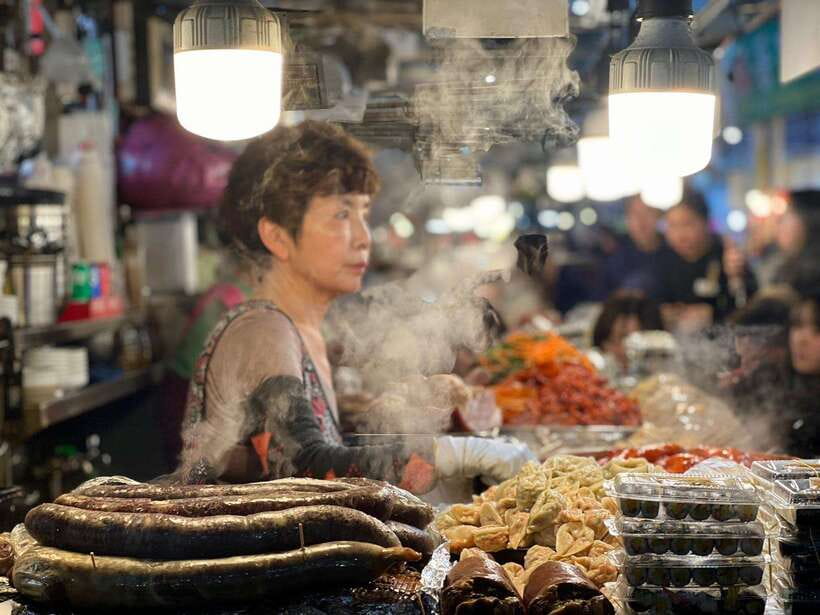
A good market guide needs to do several jobs at once. The guide must keep the group together, explain unfamiliar dishes, manage the challenge, and help you understand the market’s food culture.
This experience places real weight on that role. Food tastes better when you know what you are trying and why it matters. The guide also gives you a buffer when you are unsure how to order, what to do with a dish, or how spicy an item may be.
The strongest praise connected with this tour focuses on the hosts’ friendliness, stories, and practical help. Gina is noted for adding useful tips, introducing less obvious market stops, and taking photos. Other named guides include Helena and Cecilia, both associated with highly rated departures.
Guide quality can vary from one departure to another, as it does on any small-group tour. Still, the limited group size and English-language format give the host room to interact with you instead of delivering a speech to a large crowd.
Who will enjoy this most?
I would recommend this experience to you if you meet several of these conditions:
- You want to try Korean foods beyond the dishes you already know.
- You prefer tasting portions to ordering full plates.
- You enjoy a playful goal, such as collecting stamps.
- You want help understanding market food and ingredients.
- You are comfortable with meat, eggs, dairy, and possible alcohol.
- You have a moderate or high tolerance for spice.
- You value a guide and planned route more than the lowest food price.
It is also a good first-night activity for someone who wants an introduction to Korean food culture before exploring more markets and restaurants independently. The tour gives you a vocabulary of flavors and textures to remember later.
I would be cautious about booking if you dislike surprises on your plate, need a strict vegetarian or vegan menu, or want to choose every dish yourself. The challenge works best when you accept some uncertainty.
Practical timing and cancellation details
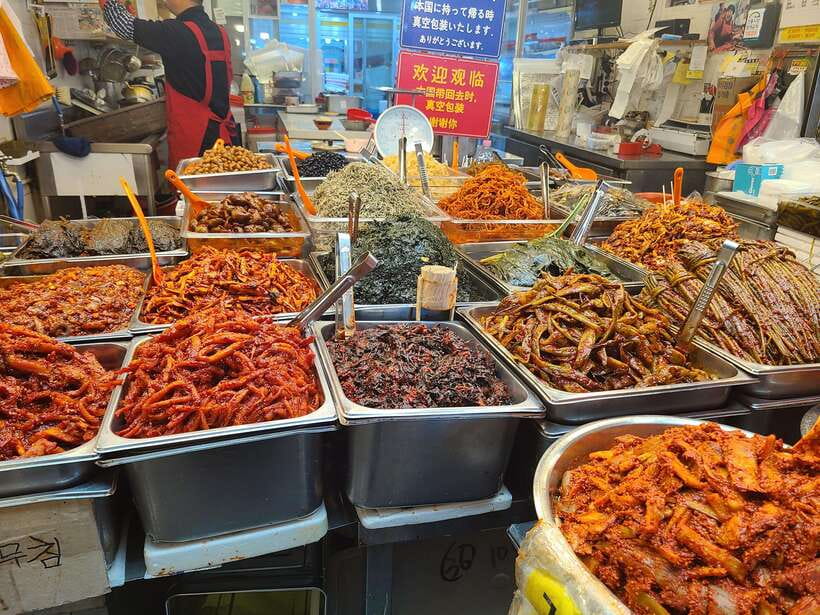
The activity lasts two hours, with the market portion covering dinner, street food, sightseeing, and tastings. Starting times depend on availability, so check the schedule before booking.
You meet at Jongno 5-ga Station Exit 8. The tour includes the guide and the market food, but not travel insurance or other personal expenses. Keep a little extra money with you for anything outside the included tasting menu.
You can cancel up to 24 hours in advance for a full refund. The reserve-now, pay-later option also helps if your Seoul plans are still shifting.
Should you book the Gwangjang Market food challenge?
Book it if you want a lively, guided way to sample 10 to 12 Korean foods without ordering large portions. The stamp card gives the meal focus, the small group keeps the outing personal, and the market setting offers a more direct connection to Seoul’s everyday food culture than a standard restaurant meal.
Skip it if you are vegan or vegetarian, highly sensitive to spice, or mainly looking for the cheapest possible dinner. For everyone else, the $81 cost is reasonable when you value variety, explanations, and the confidence to try dishes you might otherwise pass by.
FAQ
Where does the tour meet?
You meet at Jongno 5-ga Station, Exit 8, in Seoul.
How long does the experience last?
The food tour lasts two hours.
What is included in the price?
The price includes an English-speaking guide and around 10 to 12 Gwangjang Market foods.
Are drinks included?
The tour offers a variety of alcoholic and non-alcoholic foods and beverages. Tell the provider about your preferences or restrictions when reserving.
Is the tour suitable for vegetarians or vegans?
No. The tour is not suitable for vegetarians or vegans, and some dishes may contain meat, poultry, eggs, or dairy.
Can the food be spicy?
Yes. Some dishes can be very spicy, so you should be prepared to try food with significant heat.
How large is the group?
The tour is a small-group experience limited to 10 participants.
Can I cancel the booking?
Yes. You can cancel up to 24 hours in advance for a full refund. You can also reserve now and pay later.
Just added around Seoul
- Taste hidden street food in Seoul with a 2.5h food tour★ 4.4 · 12 reviews
- Suwon: Baseball Game with Fortress and Local Food Tour★ 5.0 · 3 reviews
- Seoul: UNESCO Palace and Street Foods Guided Tour★ 5.0 · 6 reviews
- Seoul: Watching Sports Match & Local Food Experience★ 4.8 · 17 reviews
- Seoul Gwangjang Market Foody Walking Tour★ 4.1 · 7 reviews
- Seoul: The Biggest Sea-food Noryangjin Market Tour★ 4.3 · 30 reviews
- Seoul: Jongno 3-Ga and Ikseon-Dong Tour with Street Food★ 3.9 · 12 reviews
- Seoul: Guided Street Food Tour at Namdaemun Market★ 5.0 · 10 reviews
Street Food Market Tours, compared.
Tokyo Tsukiji Fish Market Food and Culture Walking Tour
Read our review →
London Bridge & Borough Market Food Tour with 7 Authentic Dishes
Read our review →
Tokyo: Tsukiji Fish Market Food and Walking tour
Read our review →
Small Group Cooking Class & Market Food Tour in Florence
Read our review →
Tokyo: Tsukiji Fish Market Guided Walking Tour
Read our review →
Nishiki Market Brunch Walking Tour (7 Tastings + Brunch)
Read our review →
Food Market Visit and Cooking Class with Wine
Read our review →Browse the lists this tour appears in