
REVIEW · STREET FOOD MARKET TOURS
Seoul: The Biggest Sea-food Noryangjin Market Tour
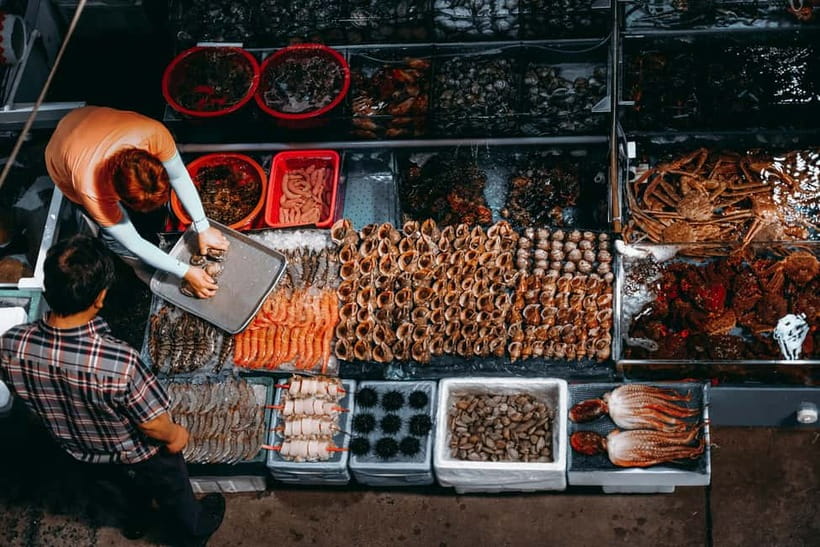
Noryangjin Fish Market is not a quiet museum of Korean food. It is a working seafood exchange that handles roughly 250 to 300 tons of products a day, and this two-hour tour takes you past the tanks, stalls, and cutting boards with a local guide to explain what you are seeing. You finish with seasonal sashimi and spicy fish stew, served market-style.
I like the clear cultural focus, especially the explanation of seafood Koreans eat and how it is prepared. I also like the small group limit of 10, which makes it easier to ask questions and avoid feeling lost in a huge market. The main drawback is the price: at $110 per person, this is far more than simply buying a meal at the market, and the tour needs at least four participants to run.
Key points
- See a working seafood market: Noryangjin trades huge volumes of fish, shellfish, and other products every day.
- Learn what unfamiliar seafood means: Your English-speaking guide explains ingredients, customs, preparation, and food traditions.
- Watch fish become a meal: A trusted vendor demonstrates filleting and seafood preparation before you eat.
- Eat seasonal market food: The included meal features assorted sashimi and spicy fish stew, with live octopus possible.
- Keep the group manageable: The tour is limited to 10 people and is wheelchair accessible.
- Plan around the restrictions: Weekend and holiday reservations cannot be confirmed, and same-day cancellations receive no refund.
Entering Noryangjin, Seoul’s Seafood Powerhouse
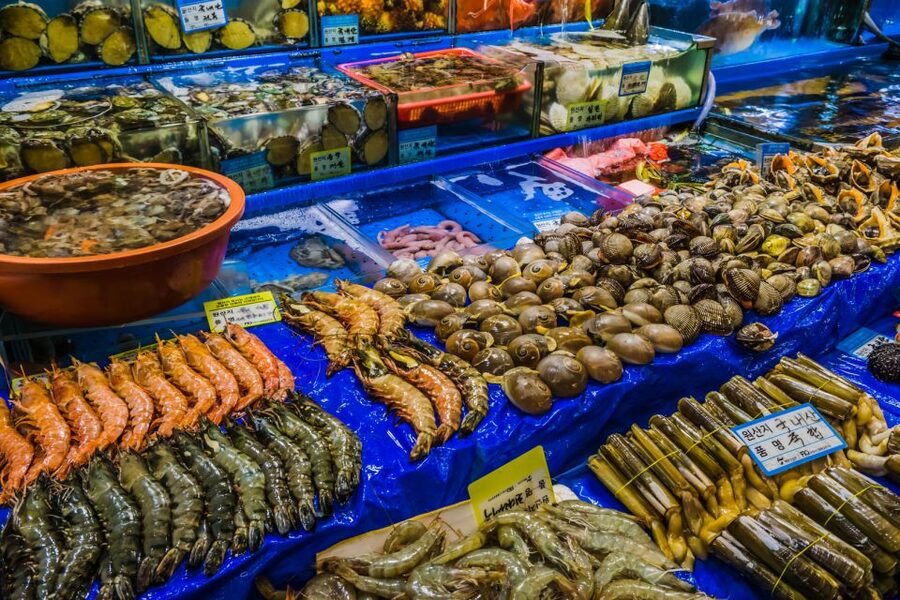
Noryangjin Fish Market gives you a direct look at Korea’s long relationship with seafood. This is not a polished food hall built mainly for sightseeing. It is a major working market where seafood is sold, prepared, and sent on to the meal that follows.
That distinction matters. You are not simply looking at unusual fish through glass. You are walking through the place where ordinary seafood buying happens, with the sounds, smells, tanks, stalls, and constant handling that go with it.
The market trades around 250 to 300 tons of seafood each day. That number helps explain the scale, but your guide gives the number a human meaning by pointing out what people actually buy and eat. I would not expect a dry lecture about the seafood business. The useful part is learning how Korean food habits connect to the products in front of you.
Meet at Exit 7 of Noryangjin Station. The meeting point is straightforward, but I would allow enough time to find the correct exit without rushing. The tour provider sends the meeting place and time by email or WhatsApp, so check those messages before you set out.
More Street Food Market Tours in South Korea
- Seoul Street Food Market Tour
★ 5.0 · 1,226 reviews - Seoul: Night Market Food Tour with Local Guide
★ 4.9 · 943 reviews - Mangwon Market Food tour By Locals; Cheap Eats to Fancy Feast
★ 5.0 · 38 reviews
A Guided Walk Through Tanks, Stalls, and Seafood Customs
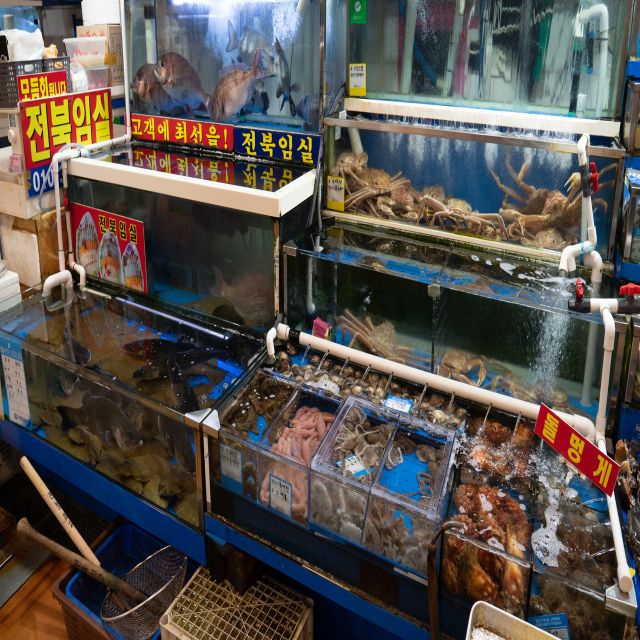
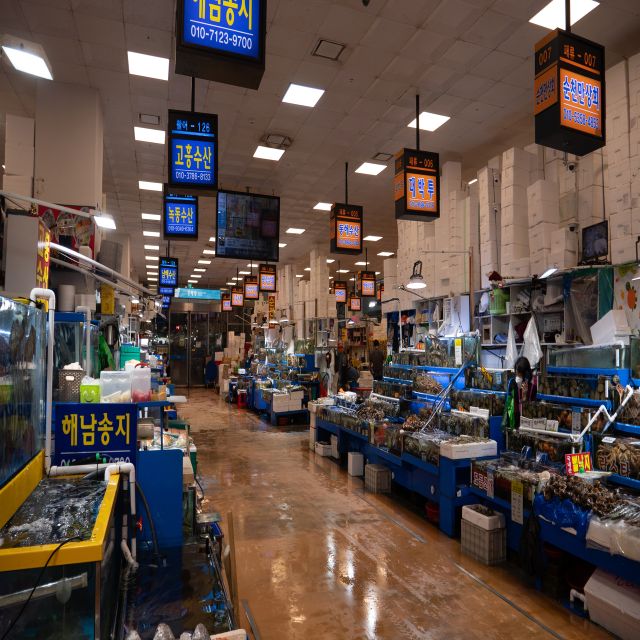
The first part of the tour is a guided walk through the market. Your guide introduces the layout and explains how to make sense of the many stalls. Without help, you could easily see a lot of fish and still understand very little about what you are looking at.
The focus is on seafood that may be unfamiliar outside Korea. You learn which ingredients are common in Korean meals, how they are prepared, and why certain eating habits developed. This cultural explanation is one of the strongest reasons to book rather than simply wander through the market alone.
Guides who have led this experience include Sophie, Joy, Sally, Sujin, and Steve. The exact person depends on the date, but the tour is designed for English-speaking international visitors. Several guides have been praised for explaining food, history, and market customs in a friendly way, which is important in a place where language can otherwise become a barrier.
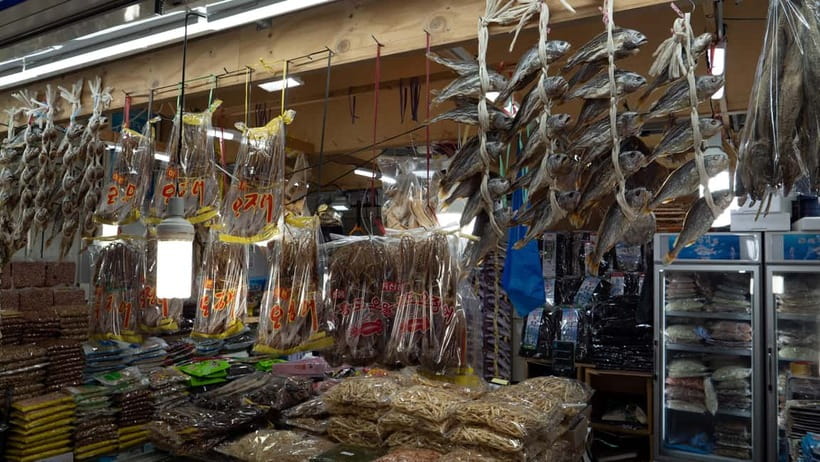
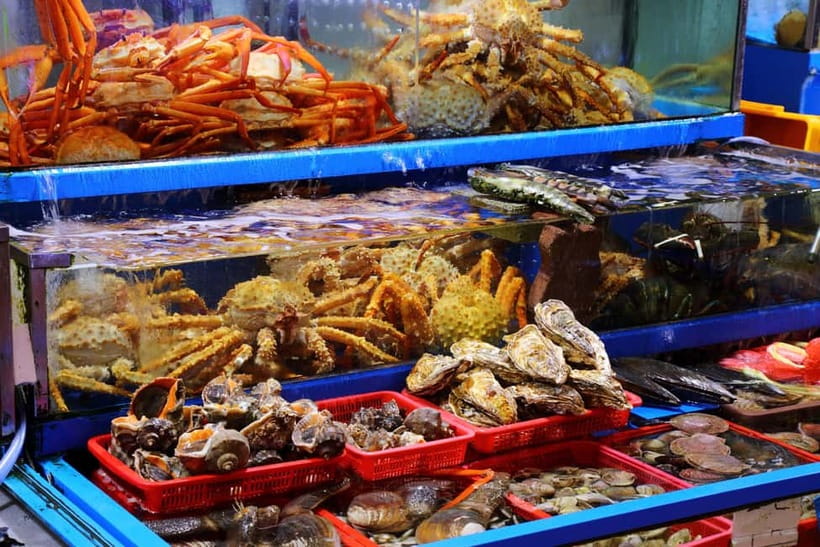
You may see live, freshly cut, and dried seafood during the walk. One useful tip is to wear waterproof shoes if you have them, or at least walk carefully. Market floors can be wet, and seafood stalls are working areas rather than tidy display rooms.
The small group size helps here. With no more than 10 people, you have a better chance of hearing the guide and asking about a particular fish or shellfish. The tour also suits people who might feel hesitant about approaching a vendor or ordering in an unfamiliar market on their own.
Learning Why Koreans Eat Seafood This Way
A good food tour should tell you more than the name of each ingredient. This one aims to explain the customs around seafood, including how people traditionally prepare and eat it.
That can mean learning how sashimi is enjoyed in Korean style, rather than assuming every raw fish dish follows Japanese customs. You may also pick up details about sauces, side dishes, or the way a spicy fish stew fits into the meal. One guide even helped a participant find a sauce they had enjoyed after the meal, which shows the practical value of having a local food expert beside you.
The historical context adds another useful layer. The tour connects Korea’s seafood habits with the country’s food culture and daily life. I like this approach because it turns an unfamiliar ingredient into something understandable. Instead of asking only, What is that?, you can ask, How do people here normally eat it?
The experience is especially useful if Korean seafood menus seem difficult to read or if you want to try something beyond familiar grilled fish. You do not need to arrive with detailed food knowledge. The guide’s role is to explain what you are seeing in plain English.
Watching Fresh Fish Become Lunch
A key part of the experience is a visit to a trusted seafood vendor. Here, you can watch fish being filleted and prepared. This is the point where the market stops being a collection of tanks and stalls and becomes a direct link between product and meal.
The preparation demonstration gives you a close view of the work involved. You see how freshly handled seafood is turned into something ready to serve, rather than receiving a dish with no idea where it came from.
I find this useful for another reason: it helps you decide how comfortable you are with very fresh seafood. The process is visible and direct. If you prefer seafood that is cooked and fully familiar, the sight of live or freshly prepared ingredients may be more intense than expected.
That is not a flaw, but it is worth knowing before you book. This is not a tour built around mild tastes or a carefully staged restaurant meal. It presents seafood as Koreans often encounter it at a major market, including ingredients that may still be moving when they reach the table.
More Market Food Tours in Seoul:
- Seoul: Namdaemun Market Food Tour
★ 4.9 · 34 reviews - Seoul: Fearless Foodie Gwangjang Market Food Adventure
★ 5.0 · 10 reviews - Seoul: Guided Street Food Tour at Namdaemun Market
★ 5.0 · 10 reviews - Mangwon Market Food tour By Locals;Cheap Eats to Fancy Feast
★ 4.9 · 9 reviews
Seasonal Sashimi, Spicy Fish Stew, and Live Octopus
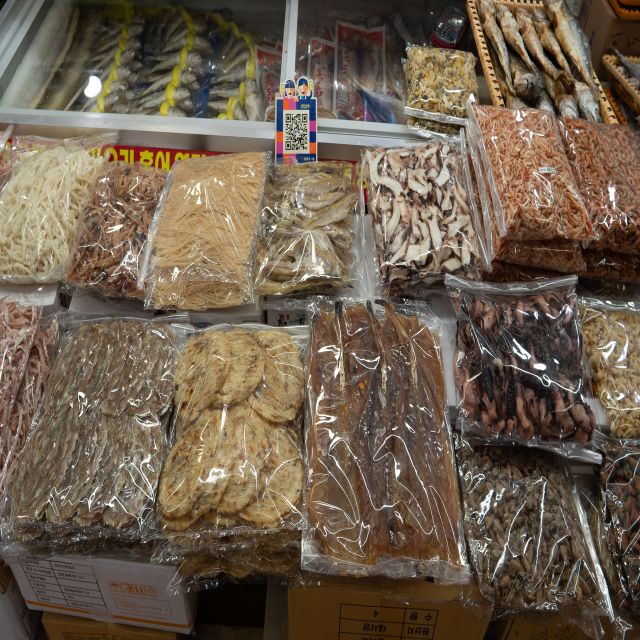
After the market walk and preparation visit, you eat a meal made with the seafood. The included food is seasonal assorted sashimi and spicy fish stew. This gives you two different sides of Korean seafood dining: raw fish served fresh, and a hot, strongly flavored soup.
The seasonal element matters. The exact fish and shellfish can vary, so you should not book expecting one fixed menu. Instead, the meal reflects what is available at the market and what suits the season.
You may also try live octopus. It has been part of the meal for some groups, and the experience can be memorable, though it will not suit everyone. If you are curious about Korean food, it is an unusual chance to try something in the setting where it is sold and prepared. If you dislike strong textures or prefer cautious tasting, you can tell the guide about your concerns.
Allergies should be reported in advance. That is particularly important here because the meal centers on seafood and may include ingredients you do not recognize. The supplied details do not promise substitutions, so do not assume that every allergy can be accommodated at the last minute.
The meal is one of the main reasons the $110 price can make sense. You are paying not just for a plate of food, but for the guide, the explanations, the vendor visit, and help navigating a market that may feel difficult to handle alone. Still, the value depends on your interests. If you mainly want a cheap seafood lunch, the tour is expensive. If you want context and confidence along with the meal, the price is easier to justify.
What Two Hours Really Gives You
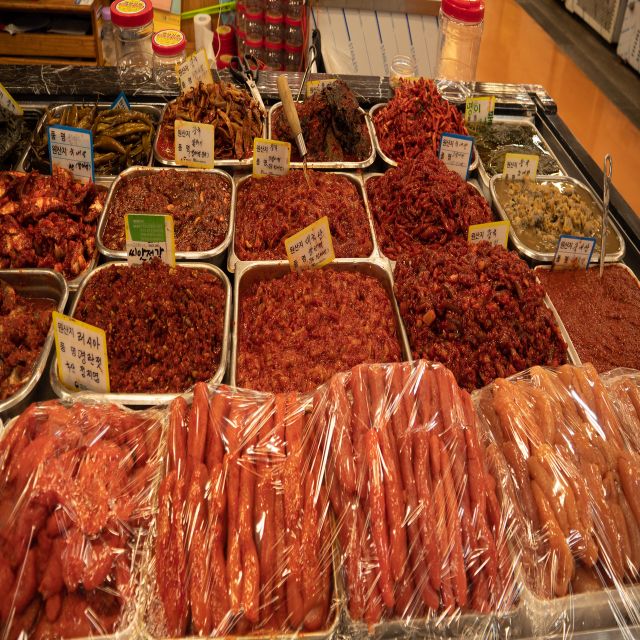
Two hours is enough for a focused introduction, not an exhaustive market study. You get a walk through the main areas, explanations of seafood and customs, a preparation demonstration, and the meal.
One described pace included about 45 minutes walking through the market before moving to the restaurant area, followed by the food experience. Your timing may differ, but you should think of the tour as a compact orientation rather than a full morning spent browsing every stall.
That short format works well for a first visit to Seoul. You can fit it into a busy day and still gain enough background to return to Noryangjin independently. It also suits people who want a clear introduction without committing to a long food crawl.
The meal may continue after the guide’s scheduled portion ends. One participant stayed longer to finish eating and talk with the other members of the group. Do not assume, however, that the guide will remain beyond the two-hour tour.
Who Will Get the Most From This Tour
I would recommend this experience to first-time visitors who want local food explained in English. It is also a good choice for anyone who has looked at Korean seafood and thought, I have no idea what to order here.
It suits curious eaters who want to try sashimi, spicy fish stew, and possibly live octopus. It is also useful for people who enjoy seeing how food is handled before it reaches the table. The guide removes much of the guesswork and helps you understand the customs behind the meal.
The tour may be less suitable if you want a relaxed restaurant tasting with no strong smells, wet floors, raw seafood, or unfamiliar textures. It is also not the best choice if your main goal is to save money on lunch. You could spend much less by eating independently, though you would lose the guidance and cultural explanation.
Families and groups should consider the small-group format. A maximum of 10 people keeps the experience personal, but children or cautious eaters may need advance preparation for the live-market setting. The activity is wheelchair accessible, though the practical details of moving through individual stalls are not specified, so it is sensible to confirm any particular access needs before booking.
Booking Details That Matter
The tour costs $110 per person and lasts two hours. A local English-speaking guide is included, as is the seafood meal. Travel insurance is not included.
You can cancel up to 24 hours before the start for a full refund. A no-show or same-day cancellation receives no refund. The tour also requires at least four participants, and if that number is not reached, the experience may be canceled with notice sent by WhatsApp.
Weekend and holiday reservations cannot be confirmed. That is an important planning point if your Seoul schedule is built around Saturday or Sunday. Reserve early enough to allow for confirmation, and watch your email and WhatsApp for the final meeting information.
The activity offers reserve-now, pay-later booking, which helps if your itinerary is still changing. Even so, I would not leave this until the last moment, particularly if you have only one available day for Noryangjin.
Is the Noryangjin Market Tour Worth $110?
I think this tour is worth considering if you want food knowledge, local context, and a meal in one short experience. The strongest parts are the guide’s explanations, the view of fish preparation, and the chance to eat seafood in a market setting rather than receiving a generic restaurant dish.
I would book it if I were nervous about handling Noryangjin alone or wanted to understand Korean seafood customs rather than simply photograph the stalls. I would skip it if I already know the market well, speak Korean comfortably, or only want an inexpensive meal.
For most first-time visitors, the best reason to book is confidence. You get help identifying the food, understanding the customs, and making sense of a huge working market. Just arrive ready for a real seafood environment, not a polished tasting room, and tell the provider about allergies before the day.
FAQ
Where does the Noryangjin Market tour meet?
Meet at Exit 7 of Noryangjin Station. The provider also sends meeting-place and timing information by email or WhatsApp.
How long does the tour last?
The tour lasts two hours.
What food is included?
The included meal is seasonal assorted sashimi and spicy fish stew. Live octopus may also be part of the seafood experience.
Is the tour conducted in English?
Yes. The tour includes a live English-speaking guide.
How many people can join the tour?
The tour is limited to 10 participants. It may be canceled if fewer than four people participate.
Can I cancel for a refund?
You can cancel up to 24 hours in advance for a full refund. No refund is provided for a no-show or cancellation on the day of the tour.
Just added around Seoul
- Taste hidden street food in Seoul with a 2.5h food tour★ 4.4 · 12 reviews
- Suwon: Baseball Game with Fortress and Local Food Tour★ 5.0 · 3 reviews
- Seoul: UNESCO Palace and Street Foods Guided Tour★ 5.0 · 6 reviews
- Seoul: Watching Sports Match & Local Food Experience★ 4.8 · 17 reviews
- Seoul Gwangjang Market Foody Walking Tour★ 4.1 · 7 reviews
- Seoul: Jongno 3-Ga and Ikseon-Dong Tour with Street Food★ 3.9 · 12 reviews
- Seoul: Fearless Foodie Gwangjang Market Food Adventure★ 5.0 · 10 reviews
- Seoul: Guided Street Food Tour at Namdaemun Market★ 5.0 · 10 reviews
Street Food Market Tours, compared.
Tokyo Tsukiji Fish Market Food and Culture Walking Tour
Read our review →
London Bridge & Borough Market Food Tour with 7 Authentic Dishes
Read our review →
Tokyo: Tsukiji Fish Market Food and Walking tour
Read our review →
Small Group Cooking Class & Market Food Tour in Florence
Read our review →
Tokyo: Tsukiji Fish Market Guided Walking Tour
Read our review →
Nishiki Market Brunch Walking Tour (7 Tastings + Brunch)
Read our review →
Food Market Visit and Cooking Class with Wine
Read our review →Browse the lists this tour appears in