
REVIEW · JAPAN STREET FOOD TOURS
Takoyaki making experience ~Japan’s popular street food~
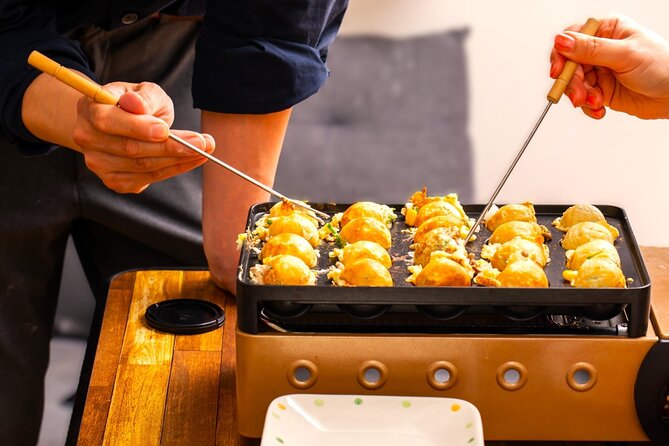
Takoyaki looks simple until you try to turn it. This Shinjuku class lets you pour batter into round molds, add chopped octopus, and work the little balls with sticks until they become crisp outside and soft inside. You finish them with sauce, mayonnaise, bonito flakes, and aonori, then eat them hot.
I like the small maximum group of six, which keeps this hands-on rather than turning it into a demonstration. I also like the family-friendly format: children can take part, and one cooker is shared by two people. The main consideration is communication. Some staff members speak limited English, so instructions may come through a translation machine or printed steps rather than a long spoken lesson.
Key points at a glance
- Make up to 12 takoyaki per person, with two people sharing one cooker.
- Work through the full cooking process, from batter and octopus to sauces and toppings.
- Meet in central Kabukicho, near the Godzilla Hotel and public transportation.
- Plan about one hour, including cooking and eating what you make.
- Expect a small group of no more than six people, useful for families and friends.
- Look for help from staff such as Mai, praised for patience, while remembering that English ability can vary.
Turning street food into your own lunch in Kabukicho
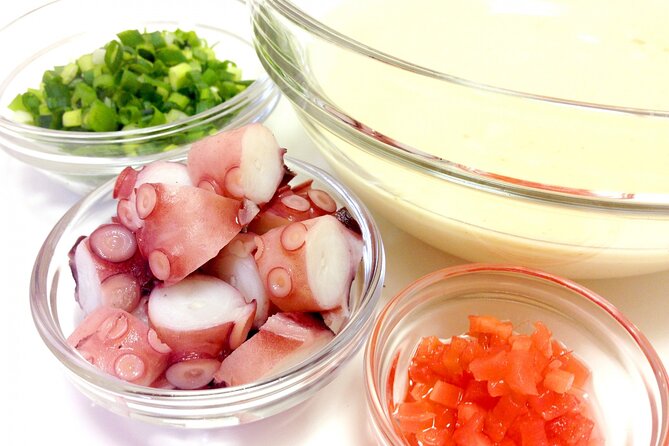
Takoyaki is one of Japan’s most recognizable street foods. The basic recipe is direct: flour batter mixed with water and eggs goes into a round-hole griddle, chopped octopus is added, and the mixture cooks into small balls.
The skill comes next. You use sticks to turn each piece as the outside firms up. Done well, the result is browned and crisp on the outside, fluffy inside, and hot enough to require a careful first bite. The cooking is not difficult to understand, but the turning takes practice. That small challenge is what gives this class its appeal.
This is not a sightseeing tour through Tokyo. You spend the hour at the restaurant, cooking and eating. For me, that is a good match for a busy Shinjuku day. You can fit it between shopping, nightlife, or a visit to nearby attractions without giving up half a day.
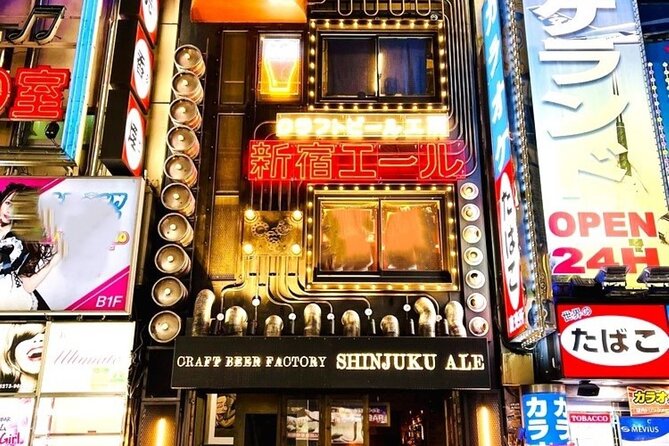
The setting is in Kabukicho, a central part of Shinjuku. The meeting point is Shinjuku Ale, at 1-chōme-14-5 Kabukichō. The activity ends at the same place, so you do not need to arrange a separate ride back to your hotel or another attraction.
A few more street food tours around Japan worth a look
- Hungry Osaka Street Food Tour:15 Tastings & 3 Drinks with a Local
★ 5.0 · 1,727 reviews - Osaka Local Foodie Walking Tour in Dotonbori and Shinsekai
★ 5.0 · 985 reviews - Hungry Osaka Street Food Tour: 15 Dishes & 3 Drinks
★ 4.9 · 694 reviews
What happens when you arrive at Shinjuku Ale
When you reach the restaurant, tell the staff that you have reserved the takoyaki class. This matters because the venue may also handle regular food and drink service, and you want to be directed to the correct activity.
The group limit is six people. Two people use one takoyaki cooker, so couples, friends, and parent-child pairs can work together. If you come alone, the supplied details do not specify how solo participants are paired, so it is sensible to confirm the arrangement when booking or on arrival.
The class is short and focused. You are not sitting through a long introduction. Instead, the process moves toward preparing the batter, filling the molds, cooking the pieces, and adding toppings.
English support can vary. Some staff members are not fluent in English, and a translation machine may be used. One staff member named Mai received praise for being patient and helpful, but staffing can change, so you should not assume she will lead every session.
A translation device is workable for a step-by-step cooking task, especially when the actions are visible. Still, if you want a detailed lesson about takoyaki technique or Japanese food culture, this may feel light on explanation. The class is strongest as a practical activity, not as a formal cooking lecture.
Filling the cooker with batter and octopus
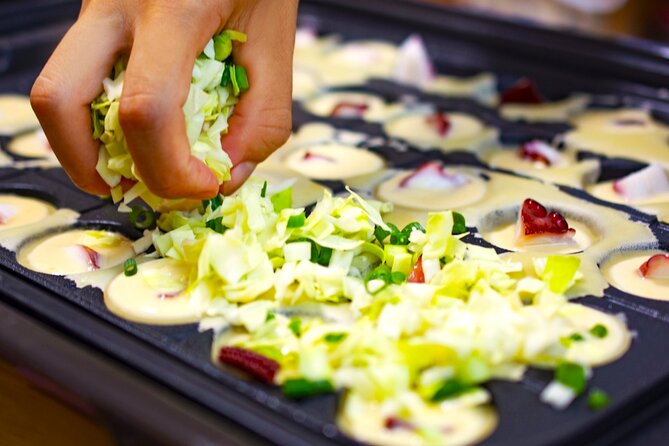
The first real task is getting the ingredients into the cooker. You pour the batter into the round holes, then add chopped octopus. The ingredients are simple, but the timing matters because the batter begins to set around the edges while the middle stays soft.
The supplied instructions do not list every ingredient beyond the batter and octopus, so you should not expect a full market-style cooking lesson or a long menu of fillings. The central focus is classic takoyaki, cooked in the round molds and finished with familiar toppings.
This is where younger participants can take part without facing a difficult recipe. The work is tactile and easy to see. Adults may find the next step more demanding than expected, since making neat balls takes a little hand control.
Take care around the hot cooker. The finished pieces are served hot, and the steam inside can burn your mouth if you rush. Letting one cool slightly is practical, especially with children.
Learning the tricky part, turning the takoyaki
Turning takoyaki is the heart of the class. As the outside cooks, you use sticks to rotate each piece, pulling in loose batter and shaping it into a ball. At first, the pieces may look uneven. That is normal. The skill is in making small, quick movements rather than trying to force a full turn too early.
This is also the part where staff assistance matters most. A patient instructor can show you when the outside is firm enough and how to guide the batter back into the mold. The class has received strong praise for this kind of patient help, particularly from families with tween children.
You should keep your expectations sensible. You are learning a street-food technique in roughly an hour, not becoming a takoyaki chef. The point is to try the method, enjoy the small successes, and eat the results.
The limited group size helps here. With no more than six participants, the staff can watch the cookers and offer practical help. That is more useful than a large class where you only watch someone else turn the food.
Same city, a different plate:
- Tokyo Tsukiji Fish Market Food and Culture Walking Tour
★ 5.0 · 3,184 reviews - Tokyo: Tsukiji Fish Market Food and Walking tour
★ 5.0 · 1,724 reviews - Tokyo: Tsukiji Fish Market Guided Walking Tour
★ 4.9 · 1,397 reviews - Nishiki Market Brunch Walking Tour (7 Tastings + Brunch)
★ 5.0 · 1,355 reviews
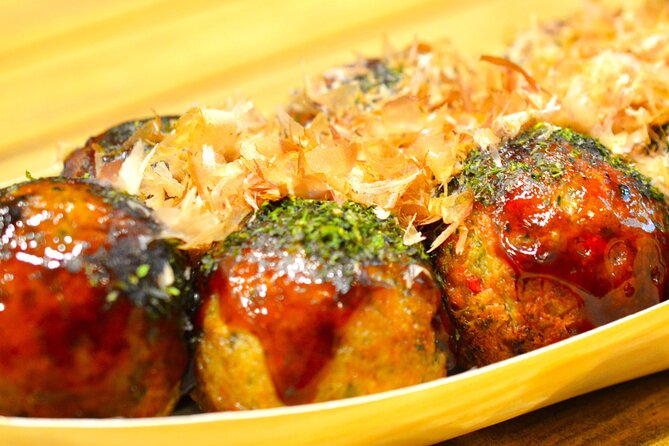
Sauce, mayonnaise, bonito flakes, and aonori
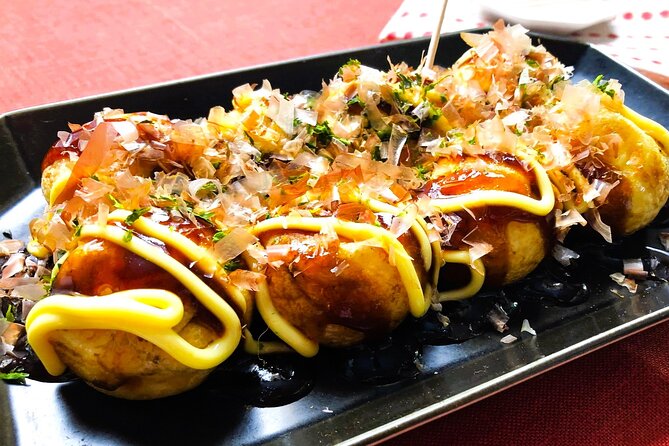
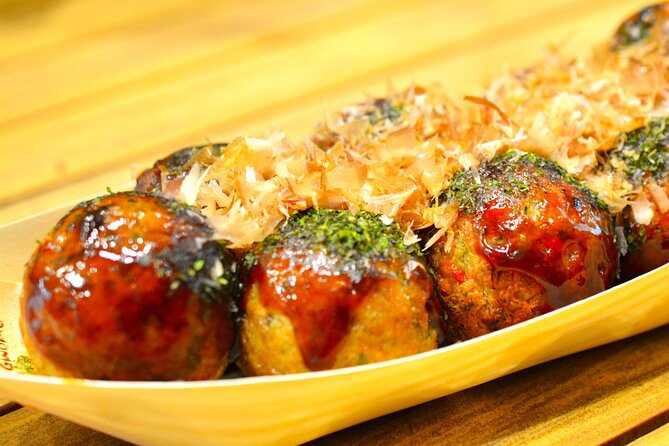
Once the takoyaki is cooked, you plate it and add the toppings. The basic finish includes sauce, mayonnaise, dried bonito flakes, and aonori, also called green laver.
These toppings bring different textures and flavors. The sauce adds a sweet and savory coating, mayonnaise gives richness, and the bonito flakes and aonori supply the familiar Japanese street-food finish. You can see the flakes move from the heat of the takoyaki, which is part of the fun when the plate first arrives.
The result should be crisp outside and fluffy inside. It also pairs well with beer, though drinks are not included in the price. You can order additional food and drinks at your own expense, but be aware that one family account found the drinks pricey. They are optional, so the basic activity does not require you to add them.
The class ends when you finish eating. There is no separate walking portion afterward, and no transportation is included or needed for the return because you finish at the meeting point.
Is $26.43 a fair price?
At $26.43 per person, this is not the cheapest way to eat takoyaki in Tokyo. You can buy prepared takoyaki from many casual food shops for much less. The value here comes from the activity, not from the amount of food alone.
You are paying for the cooker, ingredients, staff assistance, the chance to make up to 12 pieces, and the social part of cooking with someone else. Two people share one cooker, but each person can make up to 12 takoyaki. That gives you a generous amount to work with during the hour.
For a family, the price can make sense because children are not simply waiting for adults to finish a meal. They get a clear task and a result they can eat. For a couple or two friends, it is a light, hands-on break in the middle of a Shinjuku day.
The value is less convincing if you only want a quick snack or expect an advanced cooking course. You may also feel the cost more sharply if you add drinks, since those are separate. I would treat the booking as a food activity with a meal at the end, not as a bargain restaurant visit.
The fact that people typically book about 29 days ahead suggests that planning early is wise, especially if you want a certain time during a busy Tokyo visit. Confirmation is provided at booking, and the mobile ticket makes it easy to keep the reservation on your phone.
Who will enjoy this most?
This class fits families particularly well. Children under 20 must be accompanied by a parent or guardian, and underage drinking is prohibited. Since alcoholic drinks are optional and not included, the activity can remain focused on food and cooking for younger participants.
It also suits friends who want a low-pressure activity near Shinjuku nightlife. Kabukicho is a convenient base, and the one-hour format does not take over your evening.
Couples may enjoy the shared cooker because you can divide the tasks, compare your shaping skills, and eat the results together. Solo participants can still consider it, but the information does not explain the pairing arrangement, so check how the cooker will be assigned.
I would be more cautious about booking this for someone who wants detailed English instruction. The class may use a translation machine, and staff language ability varies. The cooking process remains understandable, but the amount of spoken guidance may be limited.
It is also not the right pick if you need a full meal with drinks included. Bottled water, extra meals, and beverages are not part of the price.
Location, timing, and practical planning
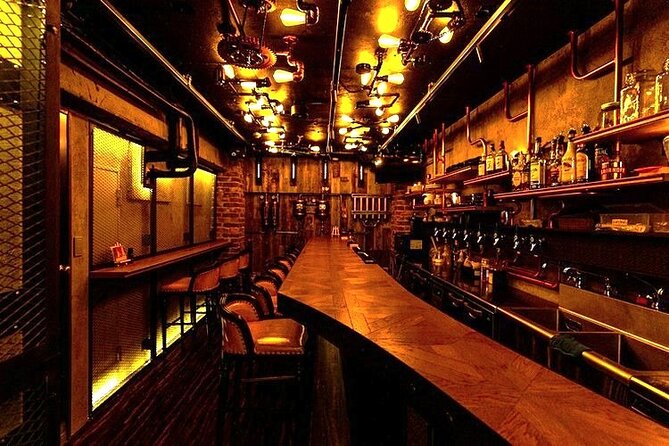
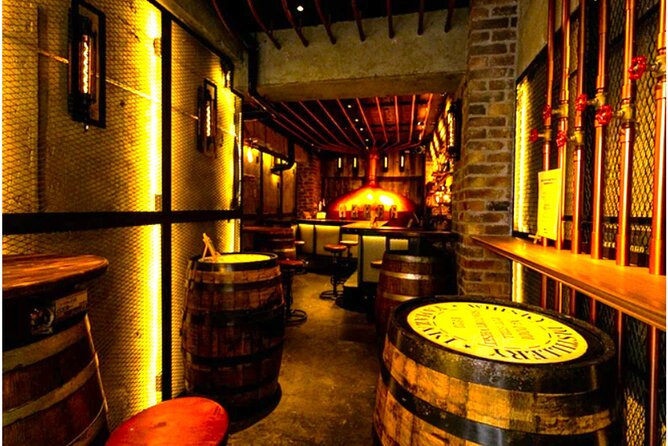
The meeting point is Shinjuku Ale, on the first and second floors at 1-chōme-14-5 Kabukichō, Shinjuku City, Tokyo 160-0021. The venue is near public transportation, which makes it practical to reach from other parts of Tokyo.
Allow about one hour for the class and eating. Since the end point is the same as the start, you can plan your next stop from Kabukicho without arranging a pickup.
Arrive ready to identify your reservation. The instructions specifically ask you to tell the staff about the booking when you come in. Keep the mobile ticket available on your phone.
The maximum group size is six, but the cooker arrangement is for two people per cooker. That distinction matters. You get a small class, but not necessarily one cooker per person.
Free cancellation is available if you cancel at least 24 hours before the start time. Changes or cancellations made within 24 hours are not accepted for a refund, and the cut-off uses local Tokyo time. If your schedule is uncertain, keep that deadline in mind.
What the strong rating tells you, and what it does not
The overall rating is 4.9 from 102 ratings, with 99 percent recommending the activity. The most praised points are clear: the class is family-friendly, the food is enjoyable, and patient staff can help you learn the turning technique.
One particularly useful detail is that the activity is not as easy as it first appears. Turning the balls takes finesse. That makes the class more satisfying for people who want to do something rather than simply watch a cook.
There is also a clear warning. At least one participant felt the instruction was too limited and that staff relied on written, step-by-step directions rather than explaining each stage. The provider apologized for shortcomings involving the class and optional alcoholic beverages.
I would read this as a sign to set your expectations correctly. You should expect a friendly, hands-on cooking session with basic support. You should not assume a long, polished English lesson from a professional culinary instructor.
Should you book this takoyaki class?
Book it if you want a short, central Tokyo activity where you can cook a famous snack with family or friends. The small group, generous number of takoyaki, shared cooker, and patient staff support give it real appeal, especially for families with children.
Think twice if your main goal is cheap food, fluent English instruction, or a detailed cooking course. The price pays for participation as much as for the meal, and drinks cost extra.
For most people, I would book this as a fun Shinjuku break, particularly if you have never made takoyaki before. Keep the class practical, arrive with your mobile ticket, and give the hot centers time to cool before taking that first bite.
FAQ
Where does the takoyaki class take place?
It takes place at Shinjuku Ale, 1-chōme-14-5 Kabukichō, Shinjuku City, Tokyo 160-0021, Japan.
How long does the activity last?
The activity takes about one hour, ending after you finish eating the takoyaki you make.
Where does the activity end?
It ends back at the meeting point, Shinjuku Ale.
How many people can join?
The activity has a maximum of six participants.
How many people share one takoyaki cooker?
Two people can use one takoyaki cooker.
How many takoyaki can each person make?
Each person can make up to 12 takoyaki.
What is included in the price?
All fees and taxes are included.
Are drinks included?
No. Bottled water, additional meals, and drinks are not included. Alcoholic drinks are optional, and underage drinking is prohibited.
Is English support available?
Some staff members are not fluent in English, so a translation machine may be used.
Can children join the activity?
Participants under 20 must be accompanied by a parent or guardian.
Can I cancel for a full refund?
Yes, if you cancel at least 24 hours before the experience start time. Cancellations or changes made less than 24 hours before the start time are not accepted for a refund.
Just added around Japan
- Savor Setouchi inland sea Local Food & Bike Tour with Local Guide★ 5.0 · 3 reviews
- Okonomiyaki Counter: Hiroshima Edition★ 5.0 · 2 reviews
- Private Fukuoka Bar Hopping and Food Walking Tour★ 5.0 · 3 reviews
- Fukuoka Evening Tours: Yatai, Izakaya, Karaoke and more★ 5.0 · 21 reviews
- Samurai Food Walk in Kakunodate★ 5.0 · 10 reviews
- Tokyo: Tsukiji walk & sushi private tour with Uni Students★ 5.0 · 17 reviews
- Tokyo: Private Tsukiji Street Food & Sake with Local Guide★ 5.0 · 3 reviews
- Tokyo: Tsukiji Market Guided Tour & Sushi-Making Experience★ 4.4 · 11 reviews
Japan Street Food Tours, compared.
Tokyo Tsukiji Fish Market Food and Culture Walking Tour
Read our review →
Hungry Osaka Street Food Tour:15 Tastings & 3 Drinks with a Local
Read our review →
Tokyo: Tsukiji Fish Market Food and Walking tour
Read our review →
Tokyo: Tsukiji Fish Market Guided Walking Tour
Read our review →
Nishiki Market Brunch Walking Tour (7 Tastings + Brunch)
Read our review →
Tokyo Sushi Making Class in Tsukiji with Professional Chef
Read our review →
Osaka Local Foodie Walking Tour in Dotonbori and Shinsekai
Read our review →
Browse the lists this tour appears in