REVIEW · CHINA STREET FOOD TOURS
Xi’an Muslim Quarter Night Market Foodie Walking Tour
Xi’an’s Muslim Quarter is best understood one bite at a time. Your private guide leads you past coal-fired woks, steaming dumpling baskets, butcher shops, mosques behind wooden doors, and small food stalls before steering you away from the main street toward Sajinqiao, where local cooking takes center stage.
I like the private format, since your guide can adjust the food stops for your appetite and dietary needs. I also like the choice between the Great Mosque and Gaojia Courtyard, two worthwhile sights that add culture and architecture to what could otherwise be only a snack crawl.
The main catch is price. At $66 per person, food and entrance tickets are extra, so the final cost can rise. You are paying for personal guidance, translation, and local judgment rather than a prepaid meal.
Key Points to Know Before You Book
- Sajinqiao is the food payoff: The guide takes you beyond the busiest part of the Muslim Quarter to smaller lanes with local snacks.
- Seven classic foods are suggested: Look for roujiamo, liangpi, yangrou paomo, biang biang noodles, zenggao, suan tang shuijiao, and Jiasan guantangbao.
- You choose one cultural stop: Visit the Great Mosque or Gaojia Courtyard, with admission paid separately.
- Private guiding changes the pace: Guides such as Sasha, Noble, and Summer have adjusted routes and food choices to suit different tastes.
- Food is not included: You can pay your guide a meal budget of CNY 100 per person for one or two people, CNY 80 for three to five, or CNY 60 for six to ten.
- Plan for real walking: Comfortable shoes matter, and the tour is not suitable for people over 80.
Entering Xi’an’s Muslim Quarter After Dark
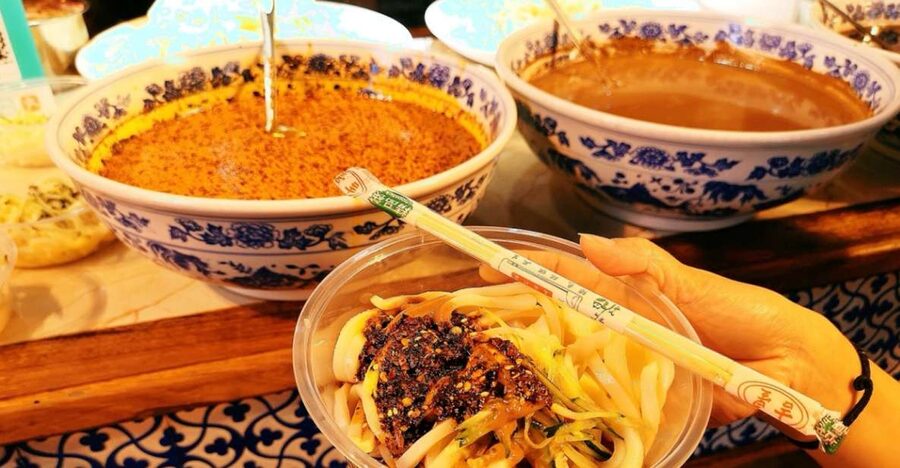
The Muslim Quarter is not a single restaurant street. It is a large neighborhood of narrow lanes, food stalls, shops, residential corners, and religious buildings tied to Xi’an’s Muslim community.
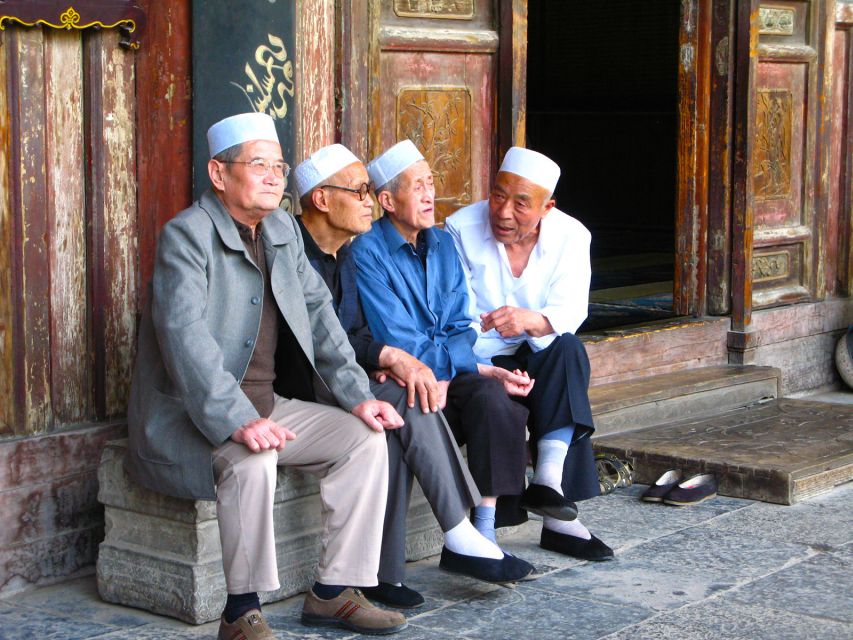
Its roots reach back to the 7th century, when Muslim communities began settling in the city. Food traditions have changed little in many places. You will see men in white skullcaps, women wearing colorful headscarves, and small mosques tucked behind large wooden doors.
That setting gives the food more meaning. A plate of noodles is not just a quick dinner stop. It belongs to a neighborhood shaped by trade, faith, family cooking, and centuries of contact between Chinese and Muslim cultures.
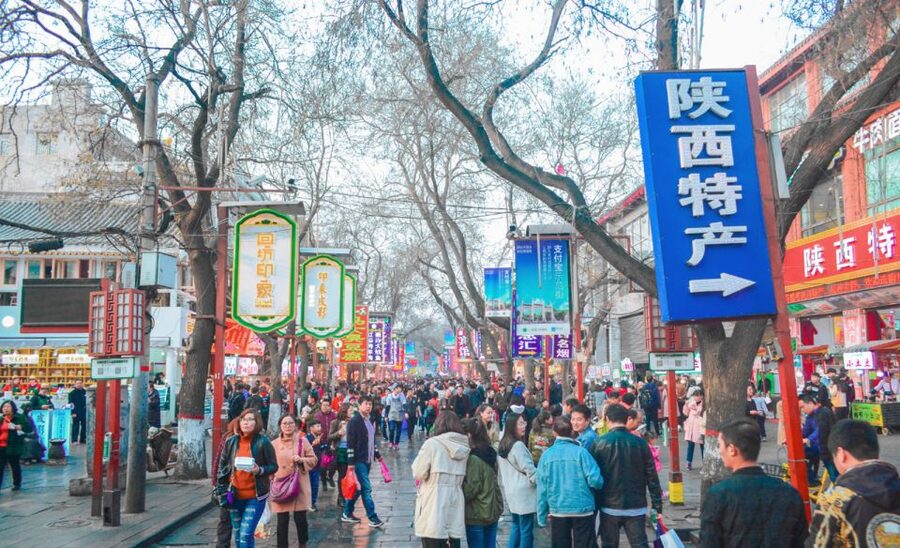
The main street can be crowded and geared toward visitors, with bright signs and plenty of snack sellers. That is part of the fun, but it is not the whole story. The guide’s most useful job is taking you toward the smaller lanes around Sajinqiao, where the food focus becomes more local and less showy.
You meet your guide at Xi’an Bell Tower Hotel unless you select hotel pickup. If you choose the transfer option, pickup is available from hotels within Xi’an’s Second Ring Road area. The listed transport segment takes about 30 minutes, so allow room in your evening schedule for the ride as well as the walking.
Look for a guide carrying a GetYourGuide logo at the meeting point. The guide speaks English, and the group is private rather than shared with strangers. That matters here because the best part of the experience is making small choices as you go.
More Night Market Food Tours in China
- Private Shanghai Evening Street Food Walking and Cruise Tour
★ 5.0 · 123 reviews - Kowloon Night Street Food Tour with a Local: Private & Customized
★ 4.5 · 72 reviews - Shanghai Evening Tour: Huangpu River Cruise and Street Food
★ 4.5 · 18 reviews
A Private Walk With Room for Food Choices
This tour works better as a guided food walk than as a fixed tasting menu. You are not handed a set number of dishes at a single restaurant. Instead, your guide points out stalls and helps you decide what to try.
That format has a clear benefit. If you are hungry, you can order more. If you are already full after noodles and dumplings, you can slow down. A private guide can also explain what you are ordering and help with basic communication at the stall.
Previous guide names associated with this experience include Sasha, Noble, and Summer. Sasha has been praised for being patient, flexible, and able to create a spontaneous evening. Noble has helped visitors combine food with city history and practical assistance, including buying tea, jade, and arranging a tuk-tuk ride back to the hotel. Summer has guided visitors through several local dishes without pushing them into one oversized bowl of noodles.
Those details point to the real strength of the tour: the guide can shape the evening around you. A person who wants to focus on food can do so. Someone who wants more context about Xi’an and local life can ask for it along the way.
The tradeoff is that the quality of the evening depends heavily on your individual guide. The listed guides have received strong praise, but the service is not a scripted performance with identical stops every night. Go in expecting a flexible food walk, not a tightly timed restaurant itinerary.
Seven Foods Worth Looking For
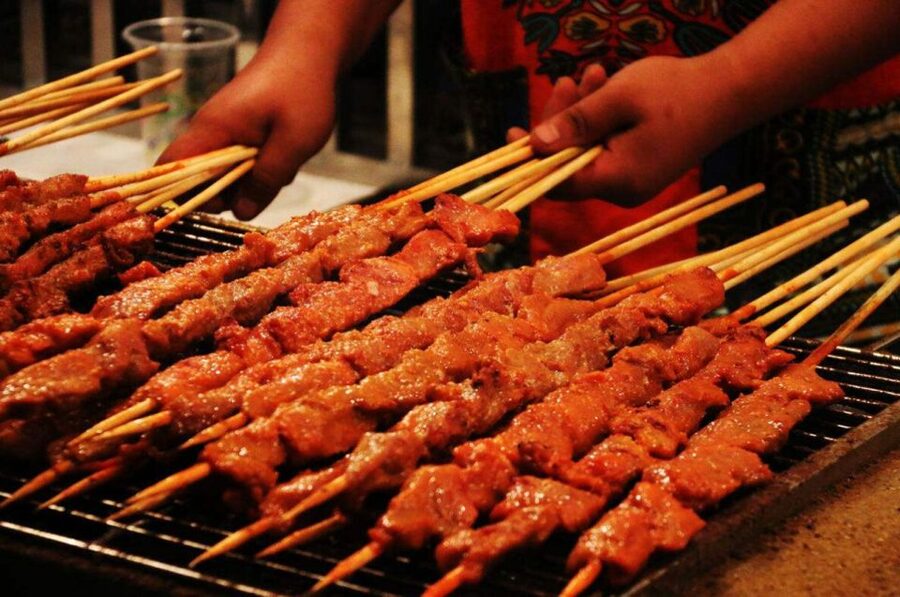
Food is paid separately, but the guide can direct you to places serving classic Xi’an dishes. These are the specialties you should keep in mind.
Roujiamo, Xi’an’s Stuffed Flatbread
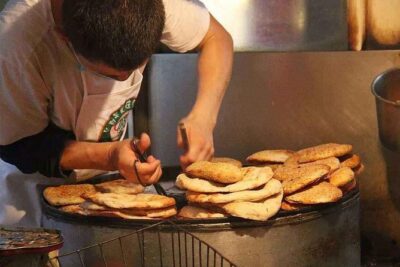
Roujiamo is often described as a Chinese hamburger, though that label only gets you partway there. It is a flatbread filled with seasoned meat, commonly pork in some parts of China but often beef or lamb in the Muslim Quarter.
It makes a useful first snack because it is easy to share and does not require a full restaurant meal. Ask your guide which version suits the group.
More Street Food Market Tours in China
- Organic Chinese Dumpling Class with Market Walk
★ 5.0 · 88 reviews - Organic Xiao Long Bao Soup Dumpling Class & Market Walk
★ 5.0 · 62 reviews - Private Guangzhou Food Tour Michelin Restaurant&Local Food Market
★ 5.0 · 32 reviews - Organic Combo Dumplings & Xiao Long Bao Class with Market Walk)
★ 5.0 · 12 reviews
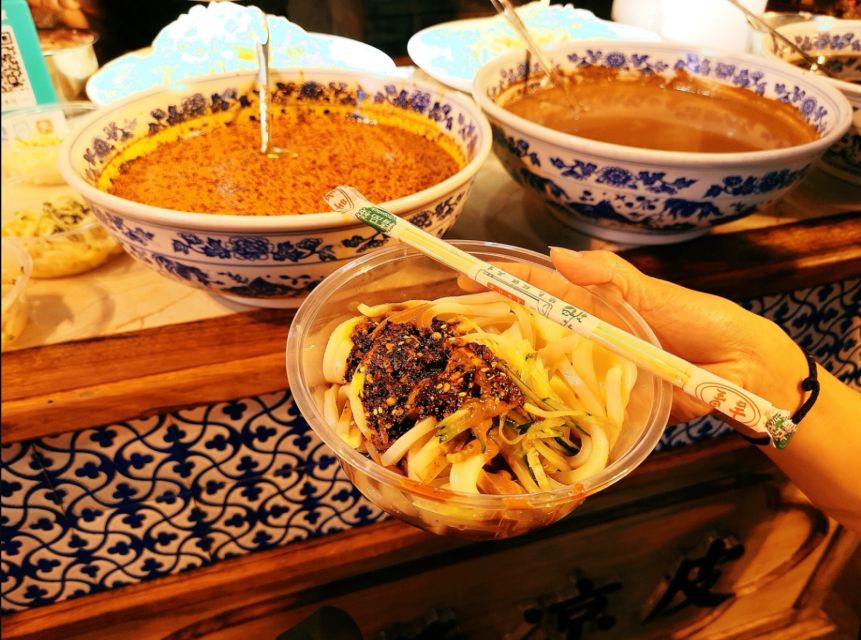
Liangpi, Cool Rice Noodles
Liangpi is served cold, usually with a sauce and seasonings. It offers a change from hot grilled meat and heavy noodles, especially on a long food walk.
The texture is part of the appeal. If you prefer lighter or cooler food, tell your guide early so liangpi can be part of the plan.
Yangrou Paomo, Mutton and Bread in Soup
Yangrou paomo combines mutton broth with small pieces of torn bread. The traditional experience involves breaking the bread into pieces before it is served with soup.
This is more filling than a quick snack, so it may be best shared or saved for the middle of the walk. It gives you a taste of Xi’an comfort food rather than a simple street nibble.
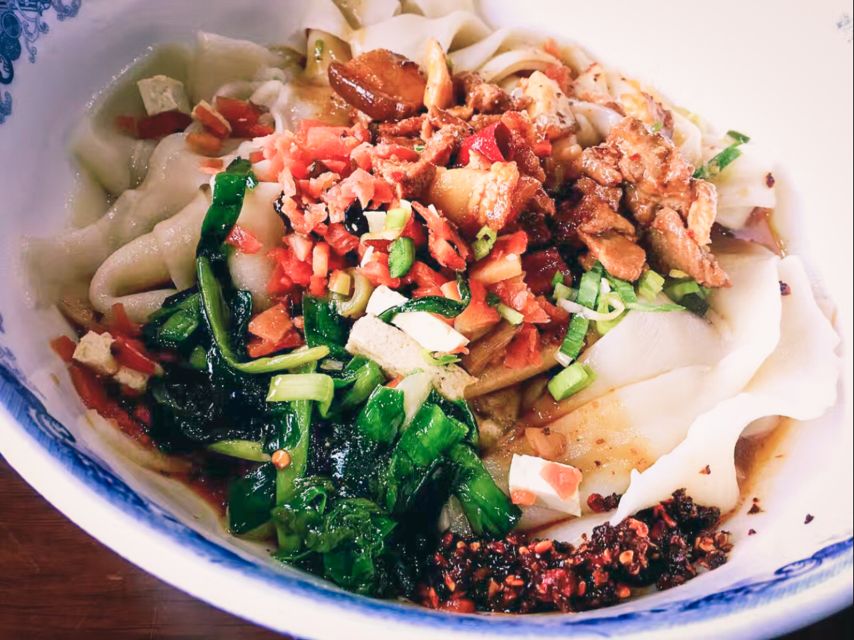
Biang Biang Noodles
These broad, hand-pulled noodles are one of Xi’an’s best-known dishes. The noodles are thick and substantial, often served with strong seasoning and other toppings.
Biang biang noodles can easily become the largest meal of the evening. A guide can help you decide whether to order a portion for sharing. One evening included a memorable biang biang meal followed by ice cream, showing how the route can move beyond the standard list.
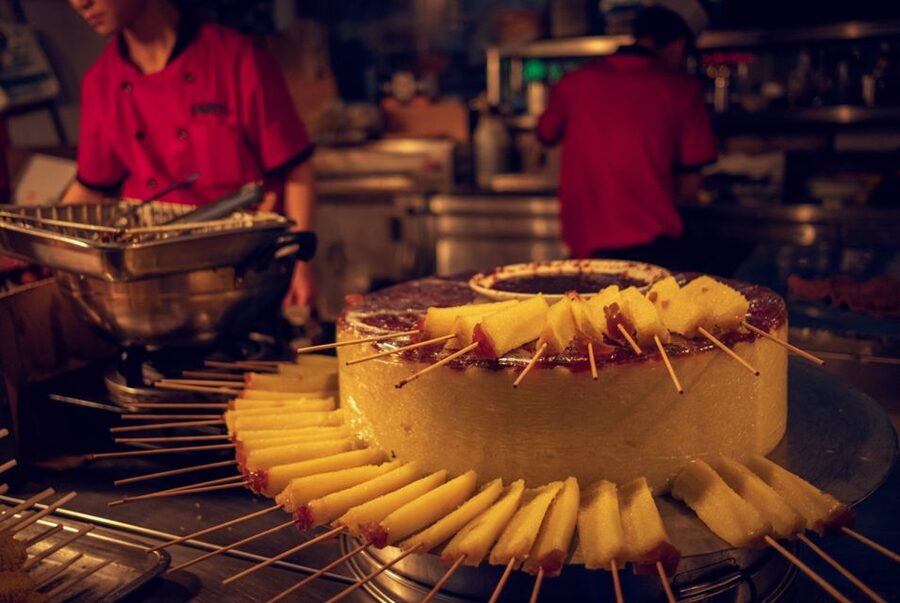
Zenggao, Sticky Rice and Date Cake
Zenggao is a sweet dish made with glutinous rice and dates. It is a good counterpoint to spicy, salty, and savory foods.
Because the texture is dense, a small serving may be enough for several people. If you are tasting many dishes, sharing makes sense.
Suan Tang Shuijiao, Hot and Sour Soup Dumplings
These dumplings come in a hot and sour soup. They combine the comfort of dumplings with a sharper broth, giving the meal a different flavor from fried or grilled snacks.
Be careful with the heat of the soup when you first taste them. Your guide can help you understand the portion and preparation before you order.
Jiasan Guantangbao, Soup Dumplings
Jiasan guantangbao are soup-filled dumplings. They are delicate, hot, and best approached with care so the broth does not spill too quickly.
They are particularly suited to a guided visit because your guide can explain how to eat them and direct you to a reliable stall. They are also easy to share, which helps you try more than one specialty.
Why Sajinqiao Matters
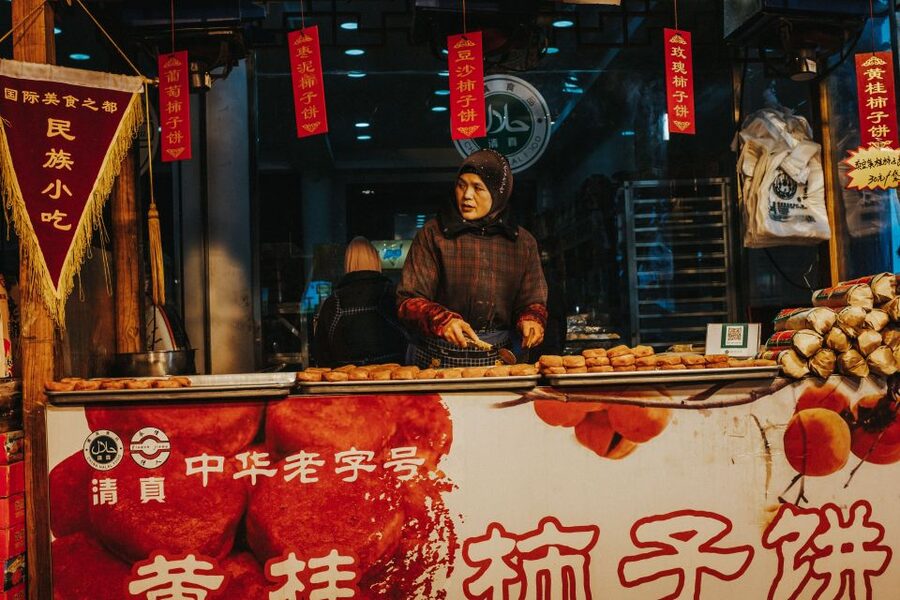
After the main street, the walk continues toward Sajinqiao. This is where the experience becomes more useful for someone who could otherwise simply wander the Muslim Quarter alone.
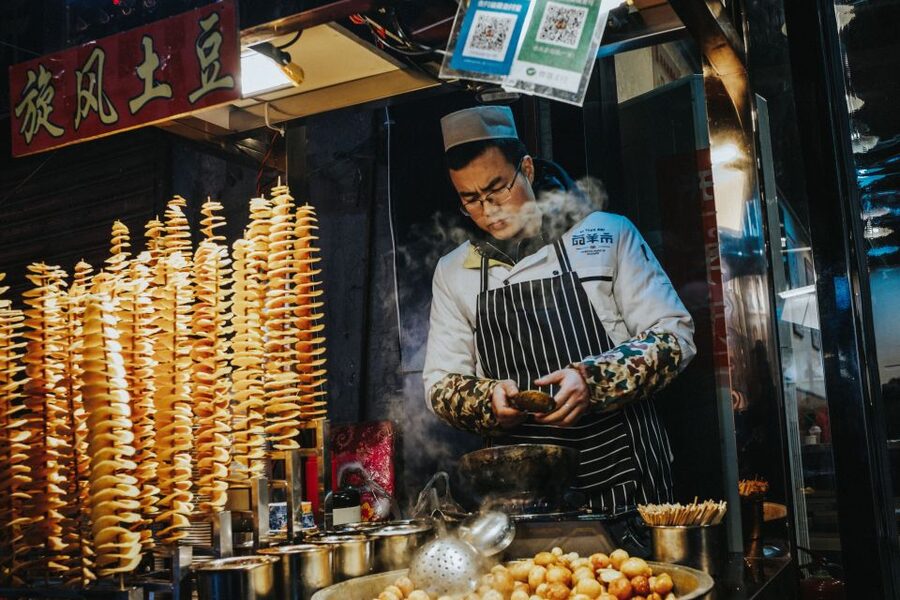
The area includes smaller food lanes, local shops, roasting stalls, dumpling sellers, and older cooking traditions. You might see chefs stir-frying lamb and spices over hot coal ovens, vendors roasting walnuts, sellers sorting prunes, and women cooking potatoes in large pans.
The scenes are ordinary working life rather than a staged cultural display. That is the appeal. You are seeing the neighborhood as a place where people shop, cook, eat, and worship, not only as a sightseeing stop.
The guide also helps with the small decisions that can be difficult on your own. Which dumpling stall should you choose? How much food is enough? What does a dish contain? What is a reasonable amount to order? Those questions matter when you are moving through unfamiliar lanes with many similar-looking options.
Still, keep your expectations realistic. This is not a luxury food tour with a private dining room and a fixed tasting menu. It is a walk through active market streets. You may stand while eating, share small portions, and move between stops.
Choosing the Great Mosque or Gaojia Courtyard
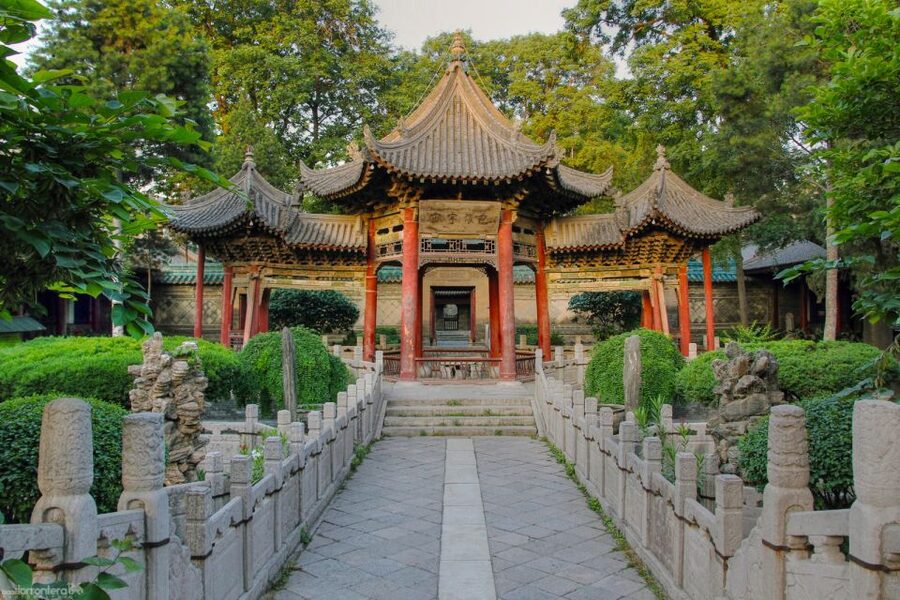
You can add one of two cultural visits, depending on the selected option and the evening’s route.
The Great Mosque is the stronger choice if you want to understand the neighborhood’s religious and architectural character. It is one of China’s largest and best-preserved early mosques, with a form shaped by Chinese architectural traditions. Expect Chinese design elements combined with the function and setting of a mosque.
The building offers a useful reminder that Muslim culture in China has developed in its own local style. The visit also gives you a quieter contrast to the food lanes outside.
Gaojia Courtyard is a good choice if you prefer historic domestic architecture. The courtyard is preserved from the Ming and Qing periods and offers a look at older residential design.
Neither admission ticket is included. Bring your passport if you want to enter the Great Mosque or Gaojia Courtyard, and budget separately for the entrance fee. Since the cultural stop is optional within the tour choices, confirm your preference when arranging the experience rather than assuming both are included.
What the $66 Price Really Covers
The price is $66 per person. That includes an English-speaking guide and, if selected, direct transfer to the meeting point. It does not include food or entrance fees.
That distinction is important. The advertised meal budget is CNY 100 per person for one or two people, CNY 80 per person for three to five, and CNY 60 per person for six to ten. You can pay the guide that amount to handle the food arrangements, or you can pay at stalls yourself.
For a solo visitor or a couple, the total can therefore be noticeably more than the headline price. The value depends on how much you want help with ordering, translation, neighborhood context, and route planning.
I would not book this solely to save money. You can walk through the Muslim Quarter without a guide. The reason to pay is to find the better food lanes faster, understand what you are eating, and have someone adjust the route to your interests.
The private format also makes the price easier to justify for a small group. Several people can share dishes, and the per-person food budget drops with larger groups. It can be less appealing if you are comfortable choosing stalls alone and mainly want a cheap dinner.
Timing, Walking, and Practical Comfort
The food portion lasts about 2.5 hours, while the full activity is listed at 2.5 to 3 hours. Starting times depend on availability, so check the schedule before you book.
Wear comfortable shoes. The route uses narrow streets and food lanes, and you will be on your feet for much of the evening. The activity is not suitable for people over 80, according to the tour information.
Tell the guide about food allergies or vegetarian requirements in advance. The tour can accommodate different preferences more easily because it is private, but you should not wait until the first stall to explain a serious allergy.
If you eat only chicken, the guide can help with that too. One successful route included a chicken-only preference without difficulty. Still, the Muslim Quarter’s signature dishes center on beef, lamb, mutton, noodles, dumplings, and other foods, so be clear about your limits.
The tour ends with drop-off at two listed locations, Yanta or Sajin Bridge. If you select hotel pickup, provide your hotel name and reservation number when possible.
Who Will Get the Most From This Tour?
I would recommend this walk to first-time visitors who want food guidance without joining a large group. It suits people who enjoy trying several small dishes and want some history along with dinner.
It is also a good fit if you are unsure how to order, cannot read local menus, or want to ask questions about Muslim life in Xi’an. The English-speaking guide can make the neighborhood easier to navigate and can adjust the pace to your interests.
Families and small groups may appreciate the private setup, especially if some people want meat while others prefer lighter dishes. The food budget can also work better when several people share.
I would be more cautious if you want every meal cost included upfront. The extra food and admission charges make the final bill less predictable. I would also skip it if you dislike crowded lanes, standing to eat, or strong regional flavors.
The rating of 4.2 from 22 ratings suggests a generally positive experience with some disagreement about value. That makes sense. The guiding can be excellent, but the experience does not include a large prepaid meal, and the same food street is open to independent visitors.
Should You Book the Muslim Quarter Food Walk?
Book it if you want a personal introduction to Xi’an’s Muslim Quarter, especially if this is your first evening in the city. The strongest reasons are the private guide, the route to Sajinqiao, the chance to sample several famous dishes, and the choice of a mosque or historic courtyard.
Before booking, add up the likely food cost and any entrance fee. If $66 feels high for a walking guide without included food, explore the quarter independently. If you value local direction, translation, and a flexible route, the price can be fair.
Choose the Great Mosque for religious architecture and cultural context. Choose Gaojia Courtyard for historic Chinese residential design. Tell the guide your food limits in advance, arrive in comfortable shoes, and treat the night as a series of small tastings rather than one formal dinner.
FAQ
How long does the Xi’an Muslim Quarter food tour last?
The activity lasts about 2.5 to 3 hours. The main food-tasting portion is listed as approximately 2.5 hours.
What is the tour price?
The listed price is $66 per person.
Is food included in the tour price?
No. Food is paid separately. You can pay the guide a food budget of CNY 100 per person for one or two people, CNY 80 per person for three to five people, or CNY 60 per person for six to ten people.
Where does the tour meet?
The meeting point is Xi’an Bell Tower Hotel. Your guide will wait with a GetYourGuide logo.
Is hotel pickup available?
Yes. Pickup is optional from hotels within Xi’an’s Second Ring Road area. Provide your hotel name and reservation number when possible.
Which foods can I try?
The suggested foods include roujiamo, liangpi, yangrou paomo, biang biang noodles, zenggao, suan tang shuijiao, and Jiasan guantangbao.
Can I visit the Great Mosque?
Yes, the tour offers the option to visit the Great Mosque. Its entrance fee is not included, and you should bring your passport.
Can I visit Gaojia Courtyard instead?
Yes. Gaojia Courtyard is the alternative cultural visit listed for the tour. Its entrance fee is also paid separately, and you should bring your passport.
Is the tour private?
Yes. It is arranged as a private group with an English-speaking guide.
Can the tour accommodate food allergies or vegetarian preferences?
You should tell the guide about food allergies or vegetarian requirements in advance. The private format allows the food choices to be adjusted to your needs.
More Market Food Tours in China
- Beijing: Dumpling-Making Class with wet Market visit
★ 5.0 · 9 reviews - Night Market Haggling Adventure with an English Guide!
★ 4.8 · 7 reviews - Dumpling Cooking Class and Local Market Tour
★ 5.0 · 3 reviews - Tokyo Tsukiji Fish Market Food and Culture Walking Tour
★ 5.0 · 3,184 reviews
More Street Food Walking Tours in China
- Beijing Private Hutong Food Walking Tour
★ 5.0 · 299 reviews - Half-Day Private Beijing Hutong Walking Tour with Dim Sum
★ 5.0 · 48 reviews
Just added around China
- Private Kowloon Michelin Rated Street Food & Culture Tour★ 5.0 · 42 reviews
- Kowloon Street Food Tour Private & Personalized with a Local★ 4.5 · 20 reviews
- Organic Combo Dumplings & Xiao Long Bao Class with Market Walk)★ 5.0 · 12 reviews
- Hong Kong ‘Aqua Luna’ Dim Sum Cruise★ 5.0 · 34 reviews
- Top-Rated Hong Kong Tour: Peak Tram, Dim Sum & Cultural Sights★ 4.5 · 99 reviews
- Hong Kong Private Food Tour with Michelin Street Food★ 5.0 · 6 reviews
- Hong Kong Private & Personalized Street Food Tour with a Local★ 4.5 · 6 reviews
- Cantonese Dim Sum Dinner with Pearl River Night Cruise in Guangzhou★ 4.5 · 3 reviews
China Street Food Tours, compared.
Authentic Local Food Tour in Central Shanghai
Read our review →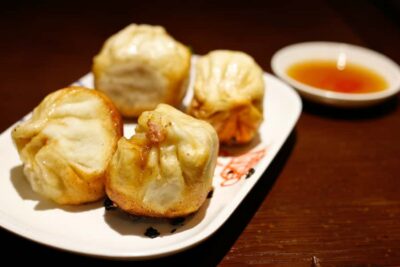
Xi’an: Great Tang Dynasty Night Show & Dumpling Meal Option
Read our review →
Small Group Kowloon Michelin Rated Street Food and Culture Tour
Read our review →