
REVIEW · MARRAKECH STREET FOOD TOURS
Marrakech: Local Food Tasting Tour with a Guide
Marrakech’s best food often sits away from the polished restaurant menus. This three-and-a-half-hour walk takes you through the medina and Mellah for msemen, harira, tanjia, barbecue, sfenj, herbal tea, and other local specialties. The tour is led by a local guide, with Mohamed, Mohammed, and Medhi among the guides associated with the experience.
I like two things right away: the small group of no more than eight makes it easier to ask questions, and the tasting list goes well beyond the usual tagine-and-couscous routine. You may try steamed sheep’s head with cumin, smoky clay-pot tanjia, and a fruit drink called panache, while also hearing about Moroccan food customs and daily life.
The main consideration is quantity. Ten tastings over 210 minutes can become a serious meal, not a few polite samples. Bring an appetite, wear shoes made for uneven streets, and note the conflicting accessibility information: the activity is described as wheelchair accessible in one place but not suitable for wheelchair users elsewhere.
What makes this Marrakech food walk worth considering
- Ten local tastings: Expect msemen, harira, dates, chebakia, kefta, sfenj, tanjia, barbecue, steamed sheep’s head, panache, and herbal tea.
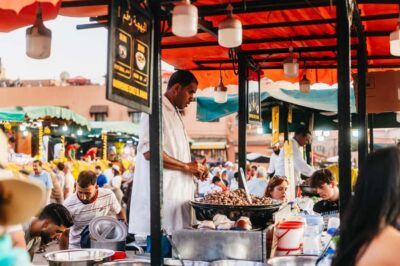
- A real medina route: The walk includes Jemaa el-Fna, the Mellah, and local parts of the old city rather than only restaurant-lined stops.
- Guides with a personal touch: Mohamed, Mohammed, and Medhi are among the guides connected with this experience, and the guide stays with you from start to finish.
- A cultural meal, not just a food crawl: The stops bring in hammam traditions, wood-fire cooking, Moroccan spices, neighborhood customs, and everyday drinks.
- Good for mixed diets: Vegetarian options are available, though you should tell the guide about your needs before eating.
- Flexible booking: You can cancel up to 24 hours before the start for a full refund, and reserve now while paying later.
Starting at Argana beside Jemaa el-Fna
The meeting point is in Jemaa el-Fna Square, in front of Argana Cafe. This is a sensible place to begin because the square is easy to recognize, though it can be crowded and confusing at busy times. Give yourself enough time to find the cafe rather than arriving at the last second.
From there, your guide takes over for the full experience. You do not need to arrange transport between food stops because the route is on foot. Transportation to the meeting point is not included, so plan your own way to Argana Cafe.
The scheduled duration is 210 minutes, or three and a half hours. That is long enough for a real meal and conversation, but short enough to fit into a morning or evening in Marrakech. Starting times vary, so check the available slot when booking.
The group limit of eight is one of the better features here. Food tours lose their charm when a guide has to shout down a large crowd, or when half the group is waiting to order. A small group should make the narrow streets easier to manage and give you more room to ask about ingredients, cooking methods, and local customs.
A few more street food tours around Morocco worth a look
- Marrakech: Street Food Tour with a Local Guide
★ 4.9 · 3,119 reviews - Marrakesh: Guided Street Food Tasting by Locals
★ 4.6 · 47 reviews - Essaouira Guided Tour: 3 on 1 – Nightlife tour, Live like a local & Street food
★ 4.5 · 32 reviews
Msemen, harira, dates, and the sweet beginning
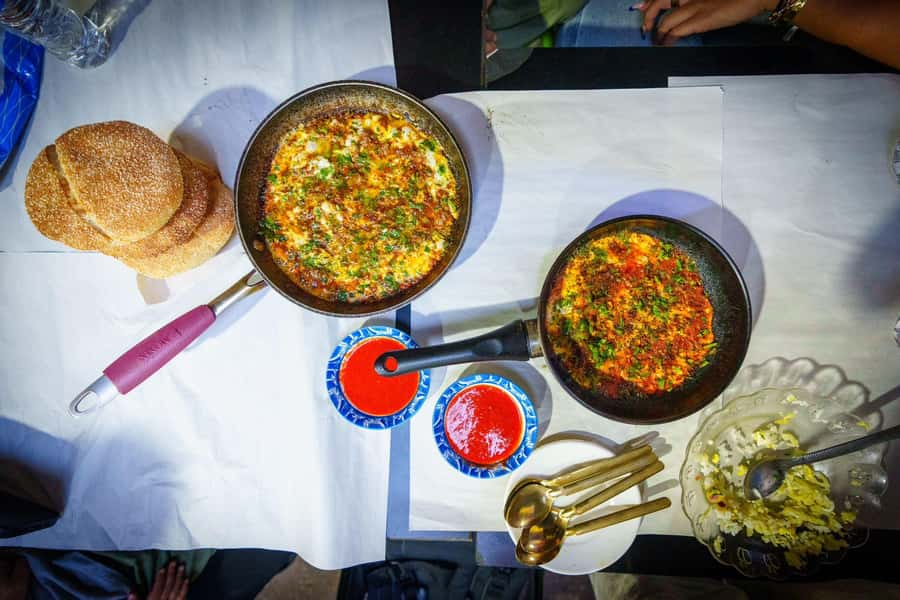
One of the early tastes is msemen, a square Moroccan flatbread with a layered, slightly crisp texture. Here it is served with tomato sauce, onion, coriander, and spices. It is a modest dish, but it gives you a useful introduction to the balance of bread, herbs, and seasoning found throughout Moroccan cooking.
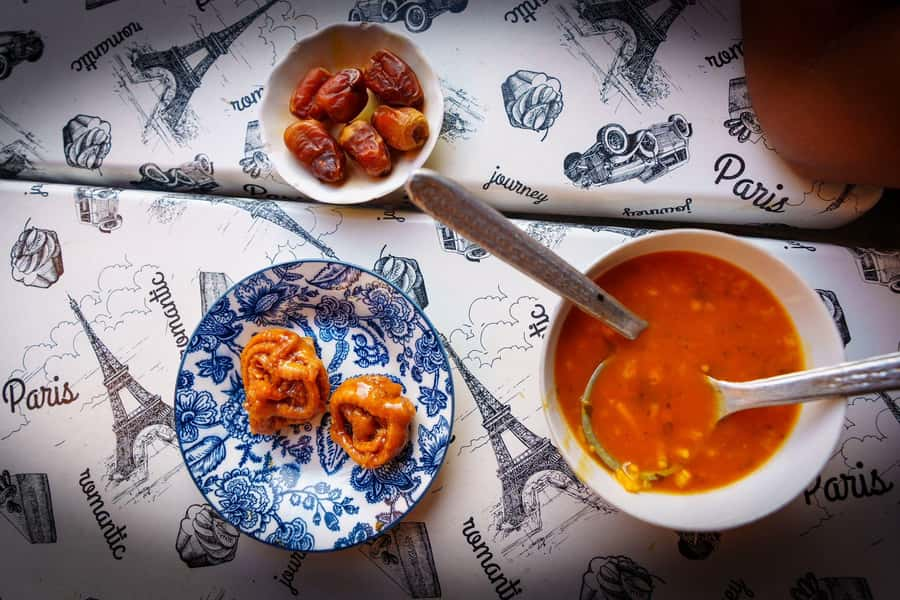
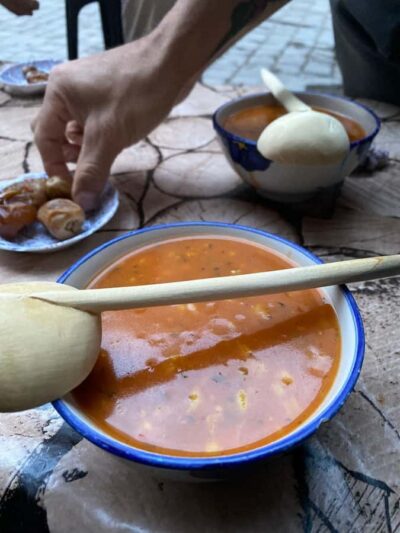
You also try harira, Morocco’s well-known soup, with dates and chebakia. Harira is warm and filling, while the dates and honeyed sesame pastry bring a sweet contrast. This combination is especially associated with the breaking of the fast during Ramadan, although the tour itself is not described as a Ramadan-only activity.
I like this part because it shows that Moroccan food is not built around one giant main course. Bread, soup, fruit, pastry, and tea all have their place. You get a better sense of how people eat when several small tastes are explained together.
If you arrive hungry, these opening dishes can already make a dent in your appetite. Pace yourself. The more unusual foods come later.
Kefta, sfenj, and the everyday food of the medina
The route continues with Makkla bel Kefta, a kefta preparation. Kefta generally refers to seasoned minced meat, but the exact presentation is not specified here. Your guide can explain what you are eating and how it fits into Moroccan home and street cooking.
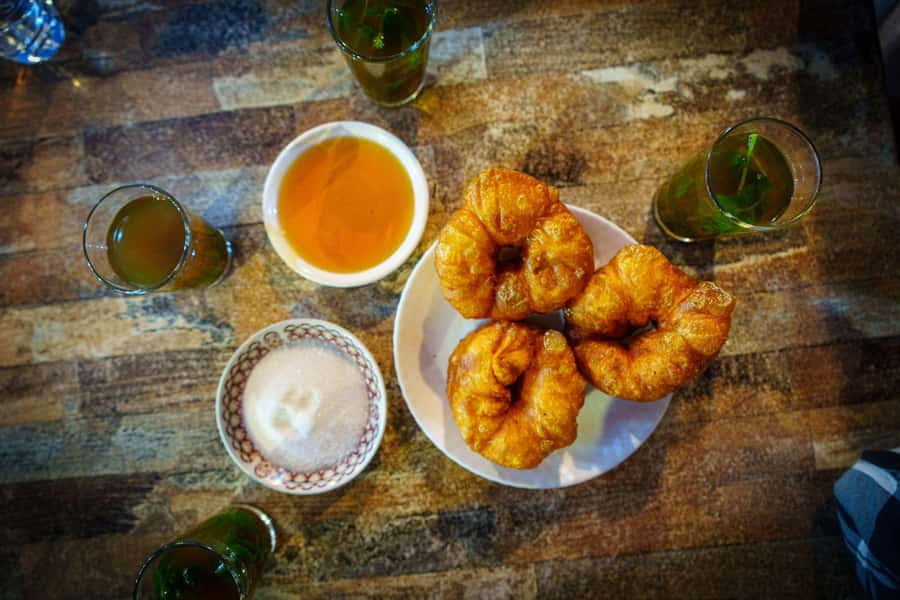
Sfenj follows, a Moroccan doughnut that is usually fried and eaten as a snack. It is a useful reminder that a medina food walk is not only about formal dishes. Some of the most memorable tastes may be quick, inexpensive foods eaten by local people during the day.
This is also where the guide matters. The value of the experience is not simply receiving a plate. A local guide can point out why one stall or neighborhood stop is chosen, how the food is prepared, and what you might otherwise miss while walking through the old city.
You should expect a walking route rather than a series of seated restaurant meals. Wear comfortable shoes, use sunscreen, and bring a hat. A camera is welcome, though it is worth staying aware of people working and eating around you before taking photographs.
Seeing Lfranatchi and the smoky world of tanjia
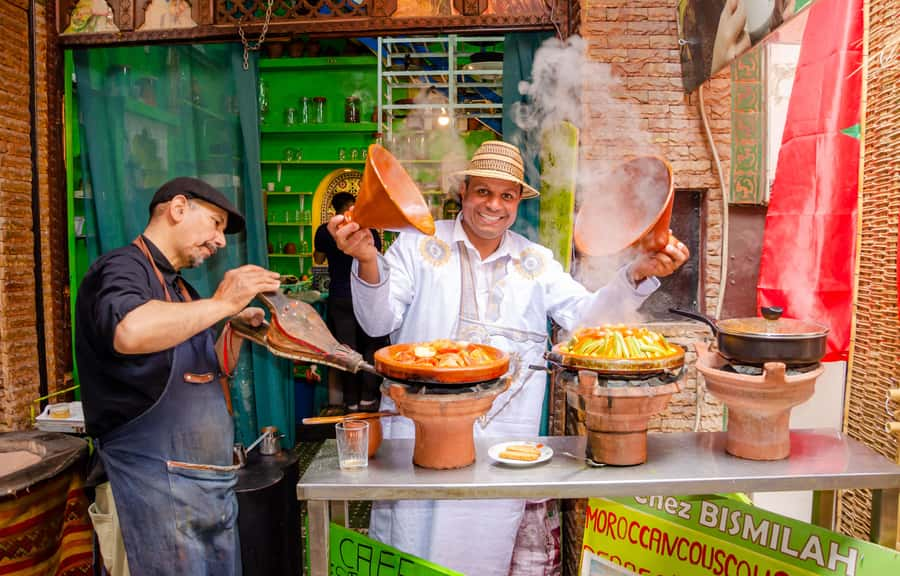
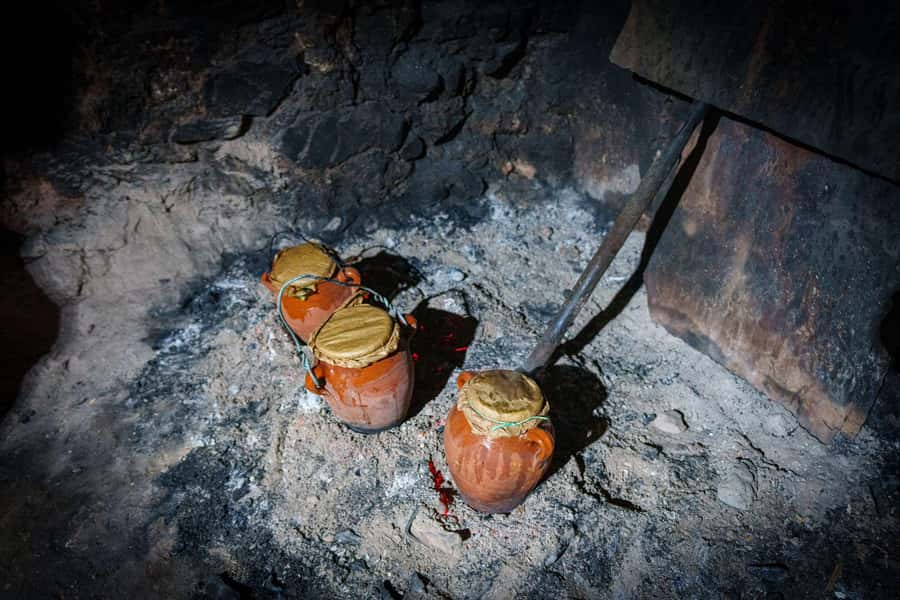
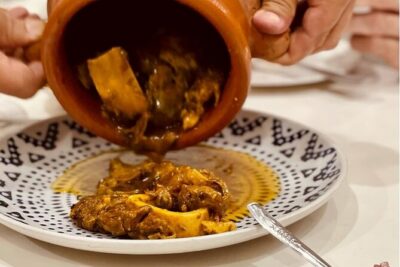
One of the most unusual stops is Lfranatchi, a traditional oven area where wood fire is used to heat hammams and cook tanjia. Tanjia is a Moroccan clay-pot dish known for slow cooking and smoky flavor.
This stop adds useful context because the oven is tied to more than food. The same wood-fire tradition serves the hammam, the Moroccan bathhouse, while also producing a local specialty. You see how cooking, neighborhood services, and daily routines can share the same setting.
Tanjia is also a good example of why a guide-led route has value. On your own, you could eat the dish without understanding how it was made or why the cooking place matters. Here, the method becomes part of the meal.
The listing describes many surprises beyond the named tastings, so the exact order and final selection may change. Do not expect a fixed restaurant tasting menu with every item served in a precise sequence. Think of it as a guided food route with a stated group of specialties and possible extras.
Same city, a different plate:
- Marrakech: Street Food Tour by Night
★ 4.8 · 2,838 reviews - Marrakech: Authentic Moroccan Food Walking Tour & Dinner
★ 4.8 · 261 reviews - The Original Marrakech Street Food Tour
★ 5.0 · 248 reviews - Marrakech Street Food Tour
★ 5.0 · 220 reviews
Barbecue and steamed sheep’s head
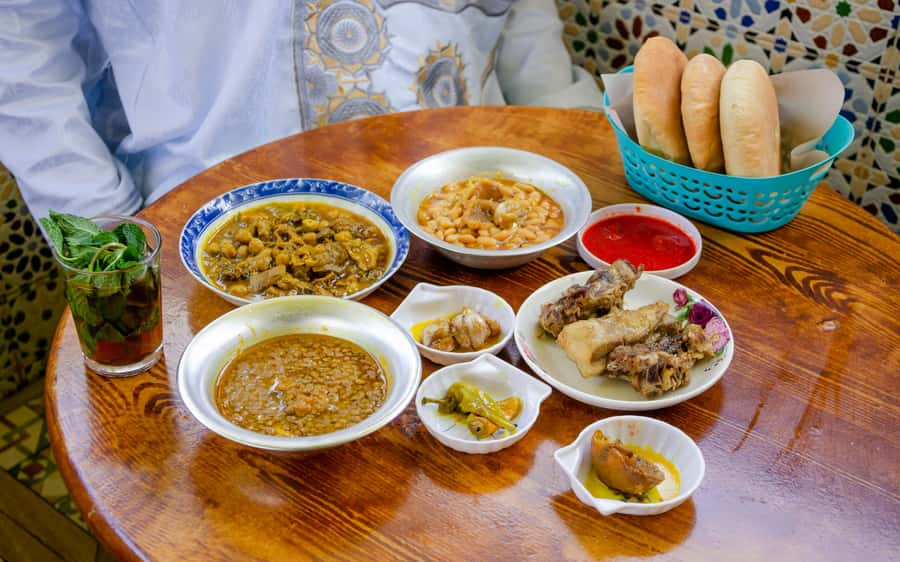
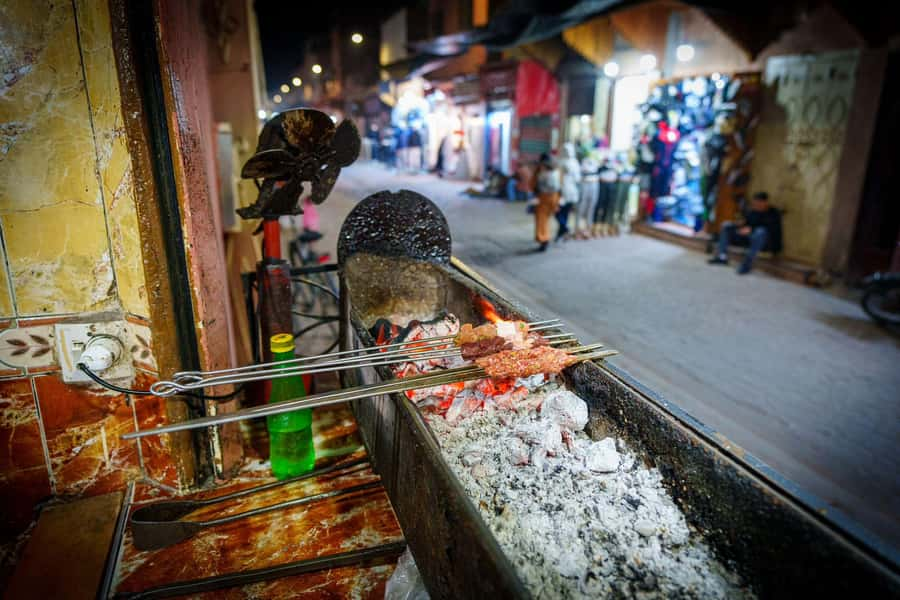
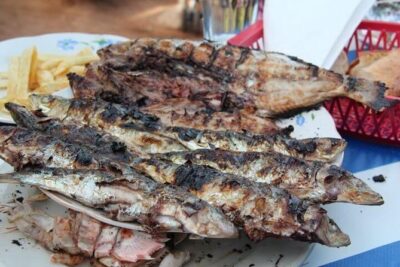
The food becomes more adventurous with shwa, Moroccan barbecue. The choices listed include beef, turkey, and liver. If you enjoy grilled food, this should be one of the easiest stops to appreciate, with the guide helping you understand the cut and preparation.
Then comes Rass Lmbkher, steamed sheep’s head with cumin. This is not a token sample chosen for novelty. It is a traditional food that some visitors would not think to order alone, especially when faced with an unfamiliar stall or menu.
You do not have to pretend every dish will suit you. Ask questions, take a small portion, and tell your guide about dietary limits. The tour includes vegetarian options, but the named menu is heavily focused on meat, so vegetarians should confirm what substitutions are available before booking.
The food safety concern is understandable in a street-food setting. One useful feature of a local guide is that you are not choosing every unfamiliar stall without context. Still, normal care applies. Eat only what you feel comfortable trying, and be clear about allergies or restrictions.
Panache, khodnjal, and a change of pace
After several savory stops, the tour offers panache, a refreshing smoothie made with seasonal fruit blended with milk or an orange juice base. It is a useful change of pace after grilled meat, bread, and fried dough.
You may also try khodnjal, a hot herbal infusion with eucalyptus. It is described as soothing, helpful for clearing the senses, and suitable for aiding digestion. The drink gives the walk a calmer finish and shows that Moroccan food culture includes herbal drinks as well as mint tea.
Local sweets and tea are included too. The exact sweets are not specified, so you should treat this as part of the tasting experience rather than expect a named dessert course.
Alcohol is not included, and alcohol and drugs are not allowed on the activity. That is unlikely to trouble most people booking a traditional food walk, but it is useful to know before you arrive.
Mellah and the old city beyond the food stalls
The route includes a stop in the Mellah, Marrakech’s historic Jewish quarter, followed by time in the medina. The supplied schedule gives about 20 minutes in the Mellah and another 20 minutes in the medina before the longer guided walk, which is listed at two hours.
These pauses are important because the tour is not simply a hunt for the next bite. Food makes more sense when you see the streets, quarters, and working areas where it is bought and prepared. The guide can connect dishes with neighborhood life rather than leaving you to remember a list of unfamiliar names.
There is also a short visit and photo stop at a local restaurant, listed at about 30 minutes. Expect the route to mix walking, brief explanations, food stops, and standing around counters or local eating places. This may not suit you if you want a long, quiet restaurant lunch with your own table.
The old city can be busy, and the route takes place on foot. Keep your belongings close and stay with the group, especially when moving through crowded sections. Comfortable shoes are not a minor suggestion here. The tour lasts three and a half hours and includes roughly two hours of guided walking.
What the $45 price really covers
At $45 per person, this tour sits in a reasonable range for a guided meal in Marrakech, provided you sample most of the listed foods. You are paying for more than ten small portions. The price also covers a personal guide, local sweets and tea, a small group, and access to food stops you might not feel confident choosing alone.
The value is strongest if you want to taste widely in one outing. Ordering each dish separately, finding the stalls, working through unfamiliar menus, and deciding what looks safe would take time and may cost more than expected. The guide also saves you from spending your first day guessing which foods are worth trying.
The value is weaker if you are a very light eater or dislike offal. Sheep’s head, liver, and several meat dishes are part of the food story. You can ask for vegetarian options, but you should not book this expecting a gentle dessert-and-tea stroll.
You should also remember what is not covered. Transport to Argana Cafe, alcoholic drinks, personal expenses, and extra food outside the tasting menu are your responsibility. The named tasting list is generous, so most people should not need to buy more during the walk.
Who will enjoy this food tour most
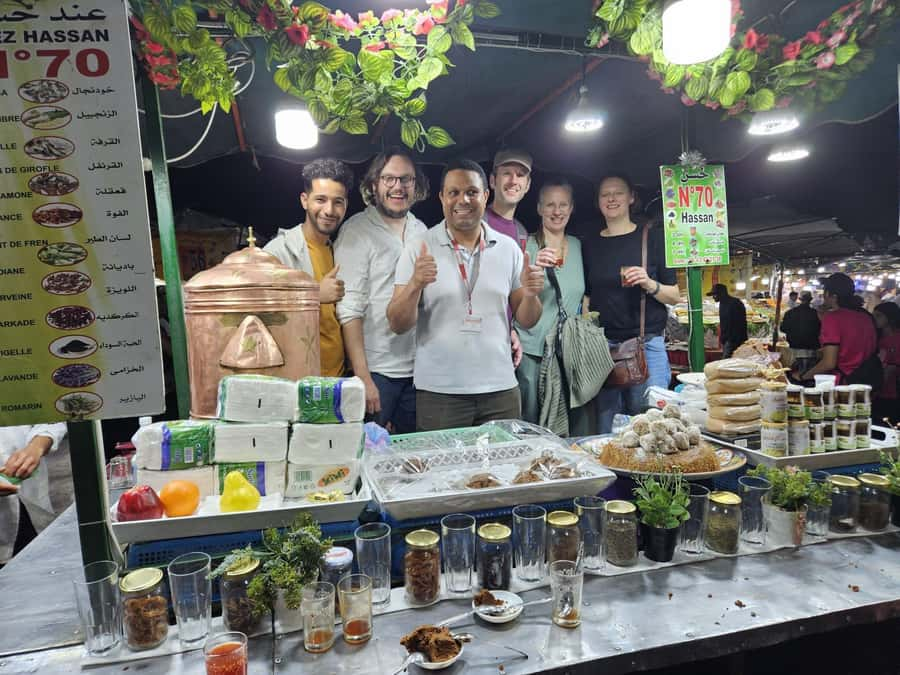
I would choose this experience for a first visit to Marrakech, especially if you want food to help you understand the city. It suits curious eaters who like trying several small portions and asking a local guide what they are seeing.
It is also a good match for couples, friends, and solo visitors who prefer a small group rather than a private tour. English and French are offered, and the guide remains with the group from the meeting point until the return to Argana.
Families may enjoy the variety, but the long walking time and unfamiliar dishes may not suit very young children. The activity data does not give a minimum age, so confirm that point if you are booking for children.
Vegetarians can participate because vegetarian options are available. Still, meat is central to several named tastings, so explain your diet clearly before the first stop rather than hoping each food stand will have an alternative.
The accessibility information needs care. One section describes the tour as wheelchair accessible, while another says it is not suitable for wheelchair users. Because the route includes the medina, Mellah, narrow streets, and about two hours of walking, contact the provider before booking if accessibility affects your decision.
Practical advice before you go
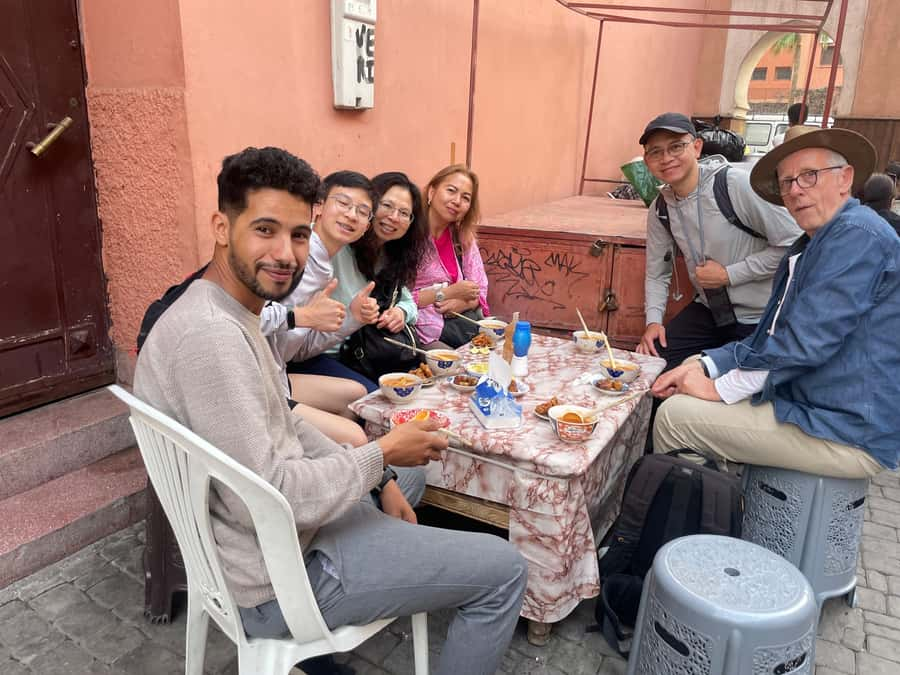
Eat lightly before meeting the guide, but do not arrive after a large meal. The tastings add up quickly, and one booking guest found the group was already full after the first few stops but still managed to keep eating.
Wear shoes that can handle a long walk and uneven pavement. Add sunscreen and a sun hat, especially for a daytime start, and bring a camera if you want to record the food and streets.
Tell the guide about allergies, vegetarian needs, or foods you do not eat. The menu includes meat, liver, sheep’s head, milk-based panache, and a range of breads and sweets, so clear communication matters.
Keep your schedule flexible after the tour. The listed duration is 210 minutes, and the final return point is Argana Cafe, but the pace may vary depending on food stops and the size of the group.
Free cancellation is available up to 24 hours before the start, and you can reserve while paying later. That is helpful when you are still arranging a Marrakech itinerary.
Should you book this Marrakech food walk?
Book it if you want a full meal, local street food, and cultural explanation in one outing. The strongest reasons are the small group, the unusual tasting list, and the chance to leave the most tourist-focused streets with a guide who can introduce local eating places.
Skip it if you want a short tasting session, a formal restaurant setting, or a menu built mainly around familiar foods. The route is long, the dishes are filling, and sheep’s head and liver may be outside your comfort zone.
For most curious eaters, $45 is a fair price for the amount of food and guiding included. Go hungry, wear proper shoes, and confirm the accessibility details before paying. If Mohamed, Mohammed, or Medhi is leading your group, expect the guide to be central to the experience, not just someone who points you toward the next plate.
FAQ
Where does the Marrakech food tour start and finish?
The tour starts at Jemaa el-Fna Square, in front of Argana Cafe, and returns to Argana Cafe at the end.
How long does the food tour last?
The activity lasts 210 minutes, or three and a half hours.
What languages are available?
The live guide service is available in English and French.
How many people are in the group?
The experience is limited to eight participants.
Are vegetarian options available?
Yes, vegetarian options are available. Tell the guide about your dietary needs before tasting.
Can I cancel the booking?
Yes. You can cancel up to 24 hours in advance for a full refund. You can also reserve now and pay later.
Just added around Morocco
- Fez Street Food Tour★ 4.5 · 33 reviews
- The Sunday Market in Had Draa & Local Food Tasting.★ 5.0 · 33 reviews
- Essaouira Guided Tour: 3 on 1 – Nightlife tour, Live like a local & Street food★ 4.5 · 32 reviews
- Marrakech Guided Day Trip from Casablanca: Djemaa el-Fna Square and Bahia Palace★ 4.0 · 3 reviews
- Casablanca Market and Street Food Walking Tour★ 5.0 · 3 reviews
- Casablanca Food Tour – Moroccan Street Food Tour★ 5.0 · 86 reviews
- Agadir with a Local–Balade Authentic & Tasting Street Food★ 5.0 · 21 reviews
- Tangier: Food Walking Tour★ 4.9 · 43 reviews
Marrakech Street Food Tours, compared.
Marrakech: Authentic Moroccan Food Walking Tour & Dinner
Read our review →
Marrakech Night Street Food Tour / Taste The Real Marrakech
Read our review →
Medina Tasting Tour: Experience Local Street Food & Culture!
Read our review →
Discover Marrakech Street Food with a Local Guide
Read our review →Browse the lists this tour appears in